BACTERIAL TAXONOMY
COLLEGE OF MEDICINE AND ALLIED HEALTH SCIENCES
FACULTY OF MEDICAL LABORATORY SCIENCE AND DIAGNOSTICS
BSc, YEAR 2
LECTURER - ZEIN SOUMA
TAXONOMY
– Comes from the Greek word
taxis – arrangement;
nomos - rules
– Is a science of organismal classification
– It is a system that creates an universal name for
an organism
– Presents a reference point to classify organisms
– Taxonomy is made up of
i. classification
ii. nomenclature and
iii. identification
TAXONOMY
• Classification is the arrangement of
organisms into groups (taxa) according to
similarities and evolutionary connections
• Nomenclature is a branch that is involved
in the processing of naming a taxonomical
group according to a series of rules
• Identification determines taxa for organism
that were isolated
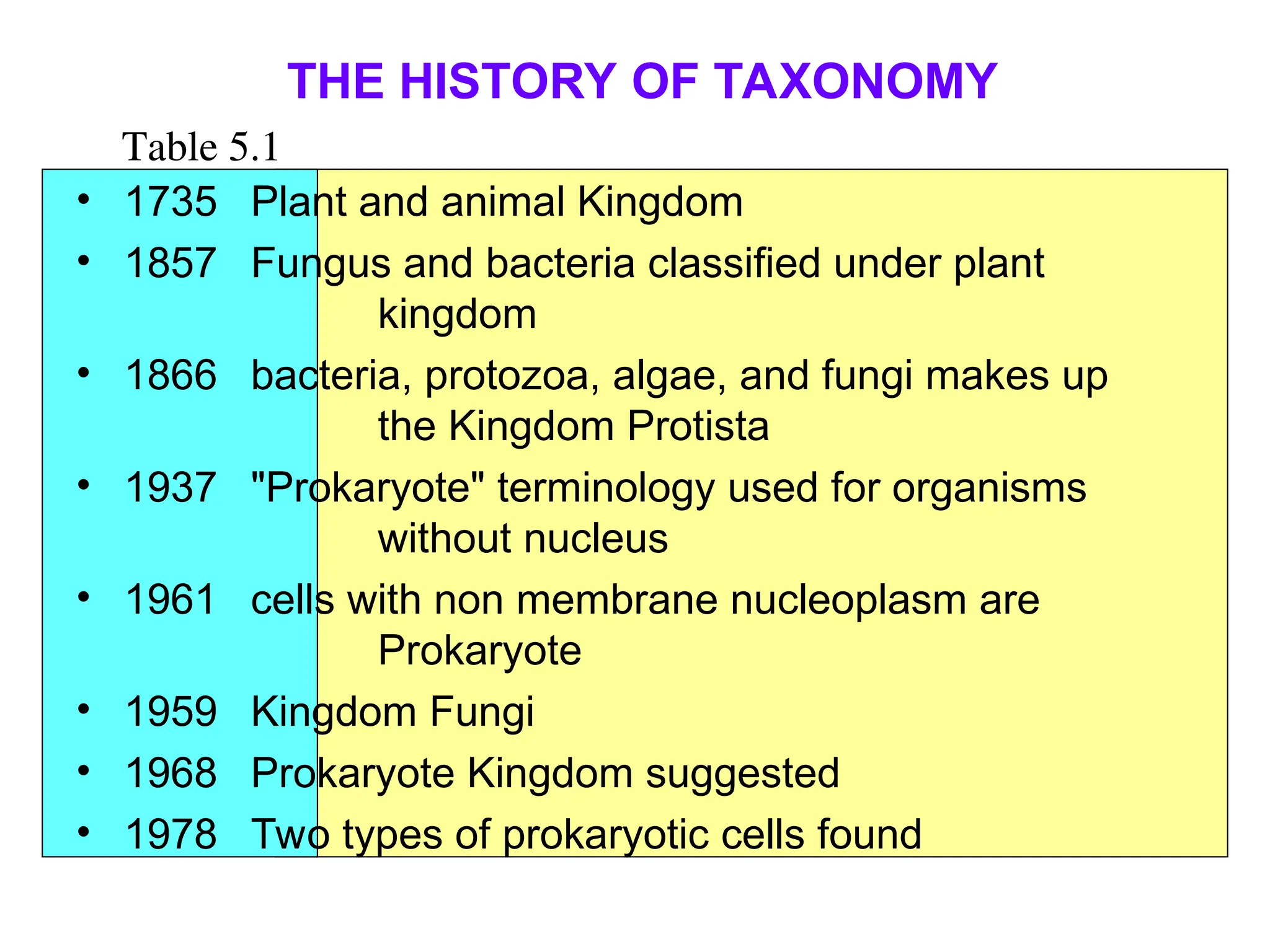
THE HISTORY OF TAXONOMY
• 1735 Plant and animal Kingdom
• 1857 Fungus and bacteria classified under plant
kingdom
• 1866 bacteria, protozoa, algae, and fungi makes up
the Kingdom Protista
• 1937 "Prokaryote" terminology used for organisms
without nucleus
• 1961 cells with non membrane nucleoplasm are
Prokaryote
• 1959 Kingdom Fungi
• 1968 Prokaryote Kingdom suggested
• 1978 Two types of prokaryotic cells found
Table 5.1
TAXONOMY
• Systematic or phylogeny
- Is the study of the evolutionary history of an
organism
• All Species Inventory (2001-2025)
– Was formed to identify all species on Earth
• Binomial Nomenclature – was proposed by Carolus
Linnaeus in the18 Century. This system introduced
• Genus
• Specific epithet
• Strain – is the subgroup of species
• Strain can be written as a name, nomber or an alphabet
• There are several rules that need to be observed in
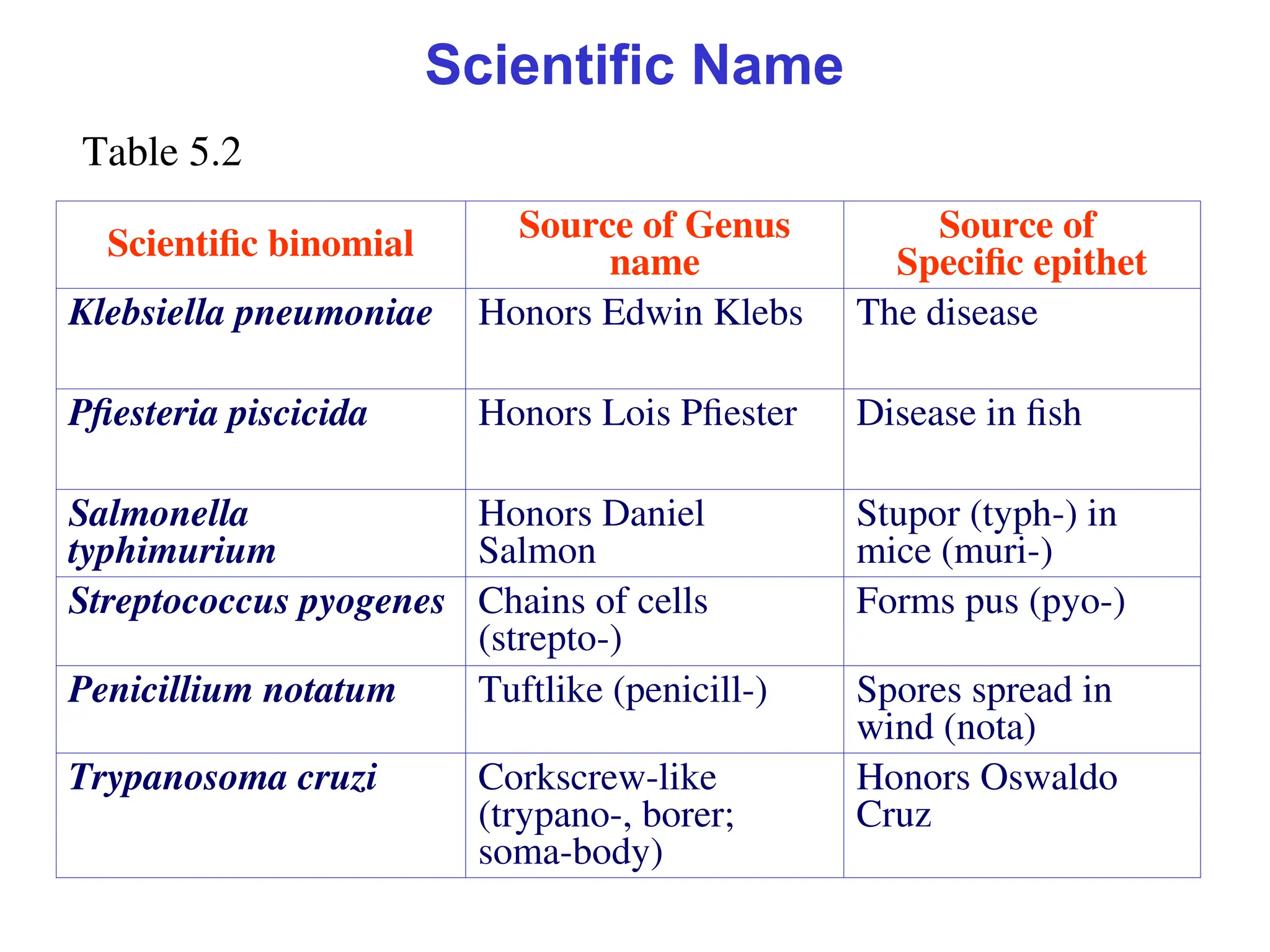
writing a scientific name (see Table 5.2)
Carolus Linnaeus
Scientific Name
Scientific binomial Source of Genus
name
Source of
Specific epithet
Klebsiella pneumoniae Honors Edwin Klebs The disease
Pfiesteria piscicida Honors Lois Pfiester Disease in fish
Salmonella
typhimurium
Honors Daniel
Salmon
Stupor (typh-) in
mice (muri-)
Streptococcus pyogenes Chains of cells
(strepto-)
Forms pus (pyo-)
Penicillium notatum Tuftlike (penicill-) Spores spread in
wind (nota)
Trypanosoma cruzi Corkscrew-like
(trypano-, borer;
soma-body)
Honors Oswaldo
Cruz
Table 5.2
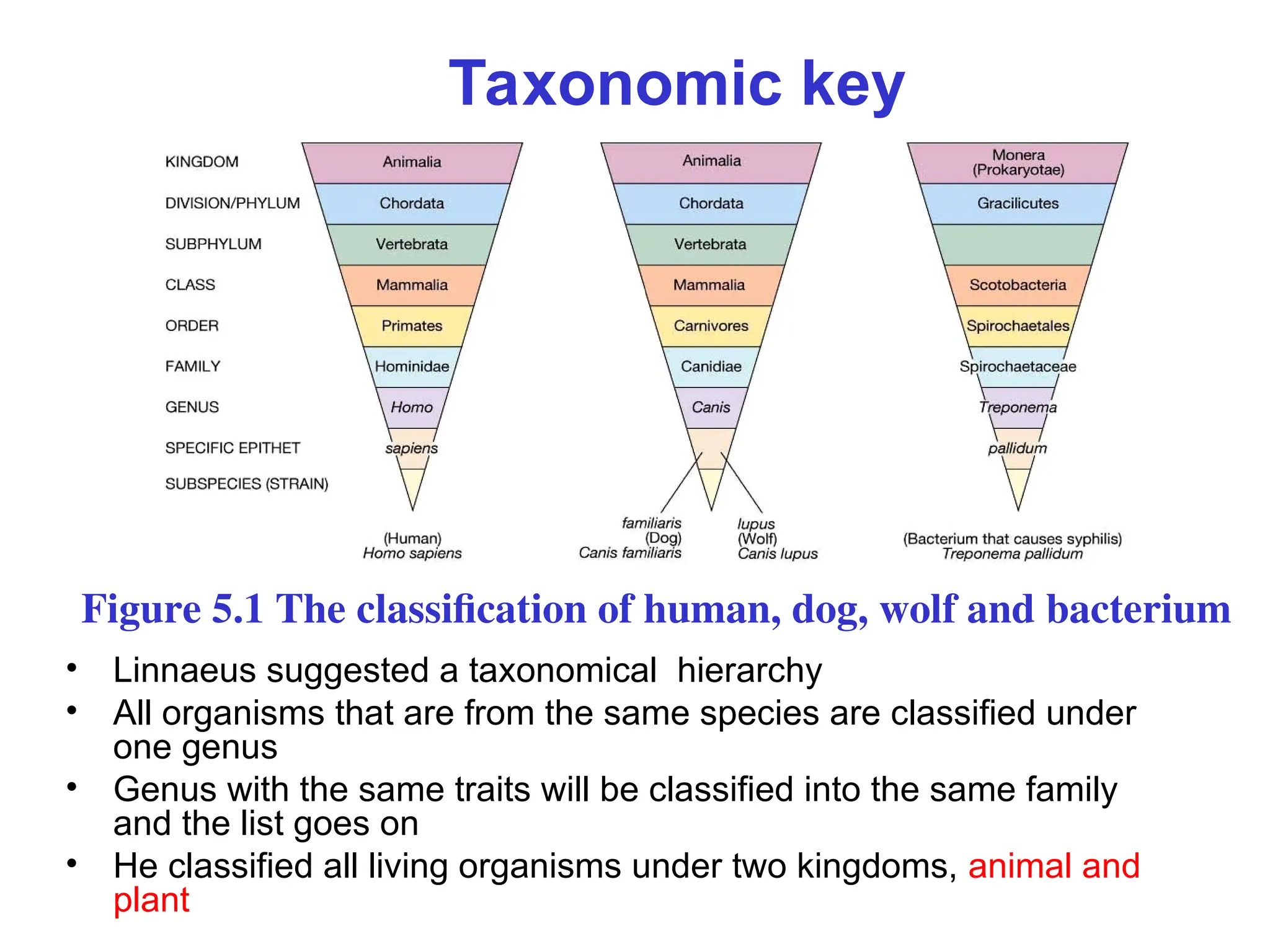
Taxonomic key
• Linnaeus suggested a taxonomical hierarchy
• All organisms that are from the same species are classified under
one genus
• Genus with the same traits will be classified into the same family
and the list goes on
• He classified all living organisms under two kingdoms, animal and
plant
Figure 5.1 The classification of human, dog, wolf and bacterium
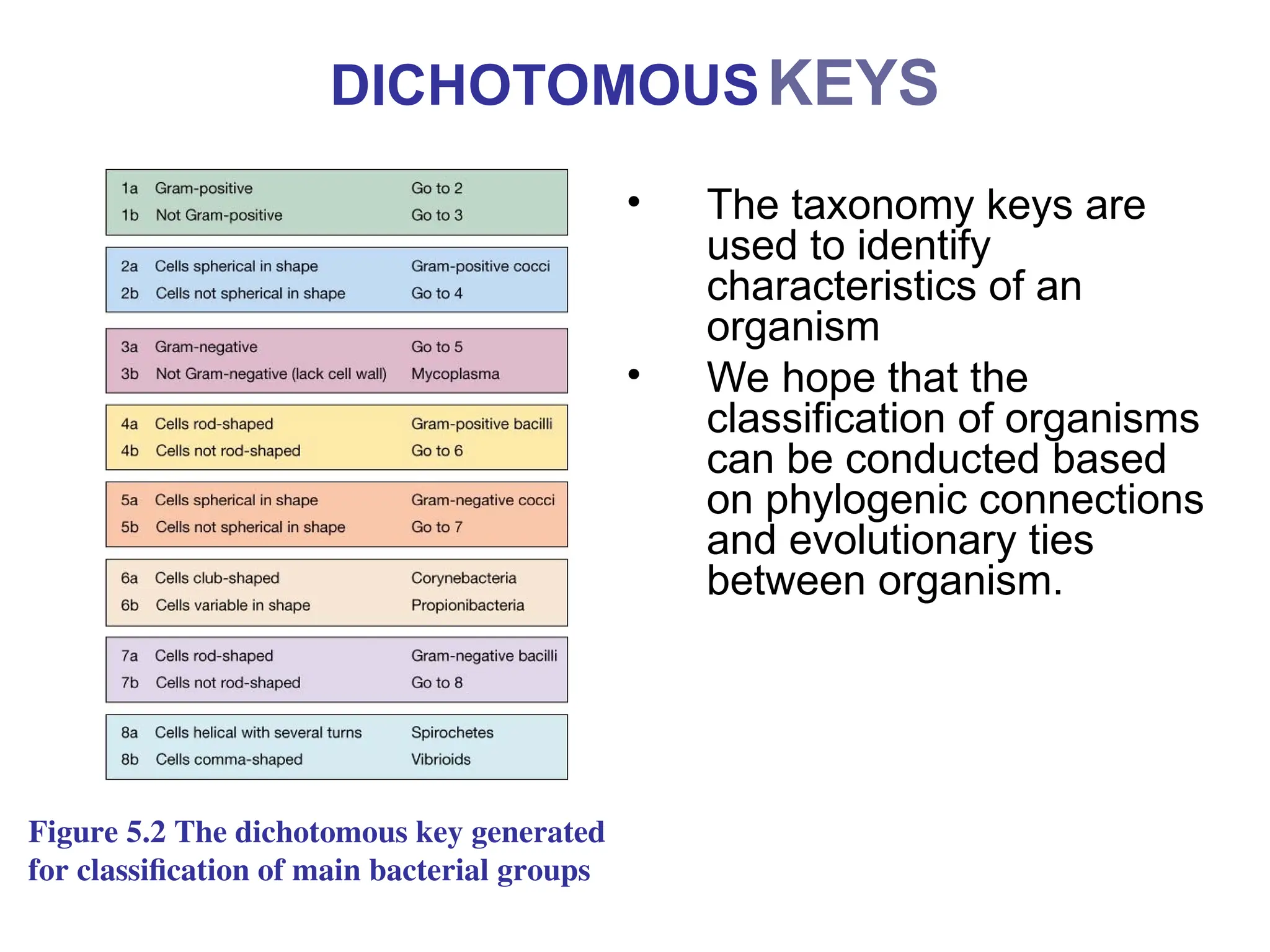
DICHOTOMOUSKEYS
• The taxonomy keys are
used to identify
characteristics of an
organism
• We hope that the
classification of organisms
can be conducted based
on phylogenic connections
and evolutionary ties
between organism.
Figure 5.2 The dichotomous key generated
for classification of main bacterial groups
Problems in taxonomy
• Problems that crop up in taxonomy studies are
i. To determine members in a species
ii.To identify members of a kingdom and
kingdoms that are in a domain
• In an advanced organism such as plants and
animals, classification is conducted according to
the ability to reproduce, morphology and
geography
• genetic transfer and changes in morphology can
not be used in the classification of bacteria
Problems in taxonomy
• Bacteria is classified according to
i. chemical reaction
ii. Chemical composition
iii. Cell structure
iv. Genetic characteristic and
v. Immunological characteristic
Development since LINNAEUS
• 1866- Ernst H.Haeckel created the third kingdom
PROTISTA – which contains algae,
protozoa,bacteria,fungi and sponge
• 1956- Lynn Marguilis and H.F Copeland
introduced the 4 kingdoms classification scheme
for prokaryote and eukaryote
• i. Monera – inclu. all prokaryotes i.e. true
bacteria and blue green algae
ii. Protoctista- all eukaryotes as algae, fungi
and protozoa
iii. Plantae- all green plants
iv. Animalia – all animals created from zygotes
Development since LINNAEUS
• R.H. Whittaker does not accept the theory of
endosymbiosis for eukaryotic and prokaryotic
diversity
• Suggested a means of classification according
to the dietary requirements
• 1969- Whittaker suggested the division of
Protoctista to Prostista and Fungi
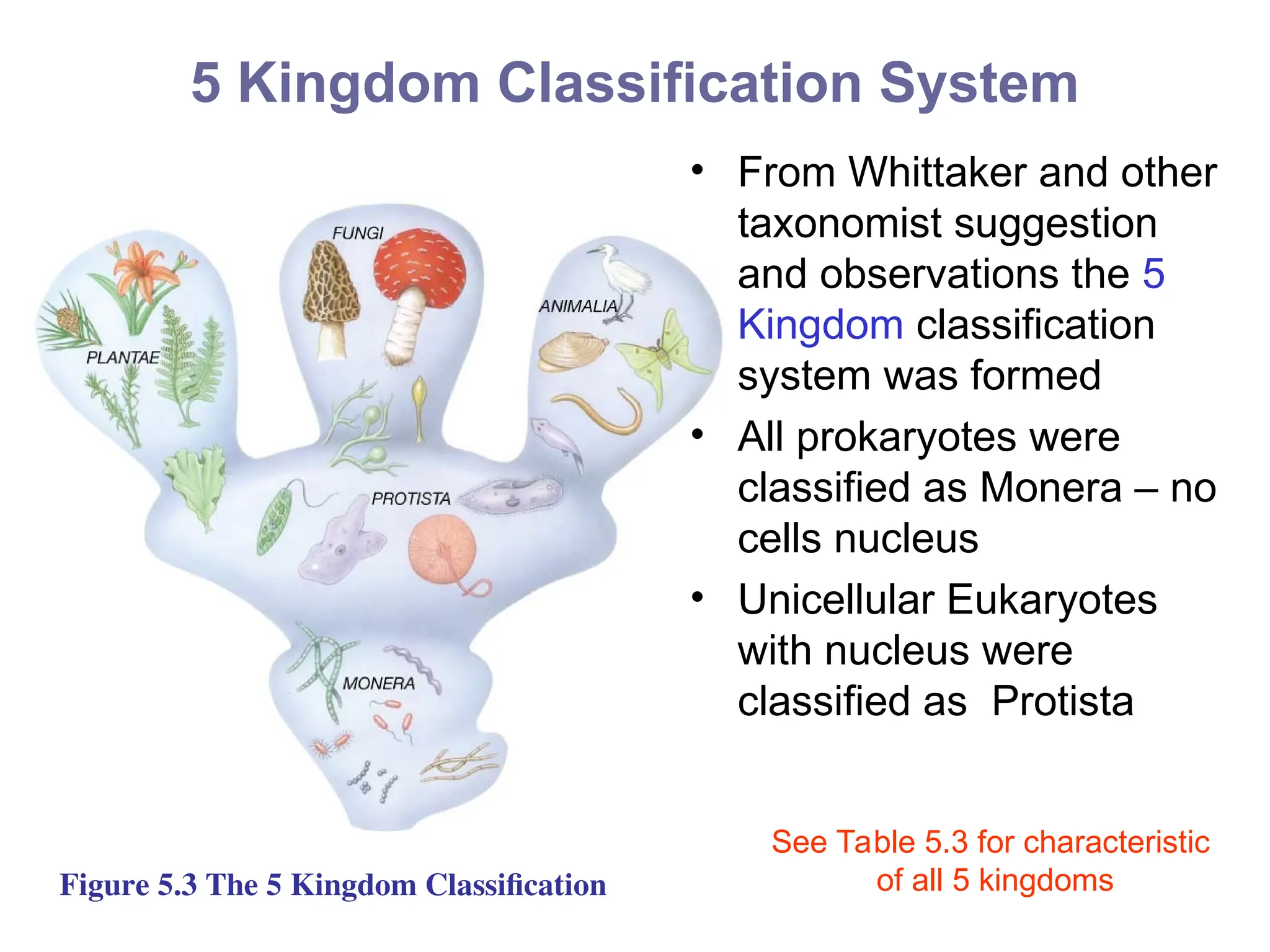
5 Kingdom Classification System
• From Whittaker and other
taxonomist suggestion
and observations the 5
Kingdom classification
system was formed
• All prokaryotes were
classified as Monera – no
cells nucleus
• Unicellular Eukaryotes
with nucleus were
classified as Protista
Figure 5.3 The 5 Kingdom Classification
See Table 5.3 for characteristic
of all 5 kingdoms
Table 5.3 Characteristics of the 5kingdom classification
Kingdom Monera
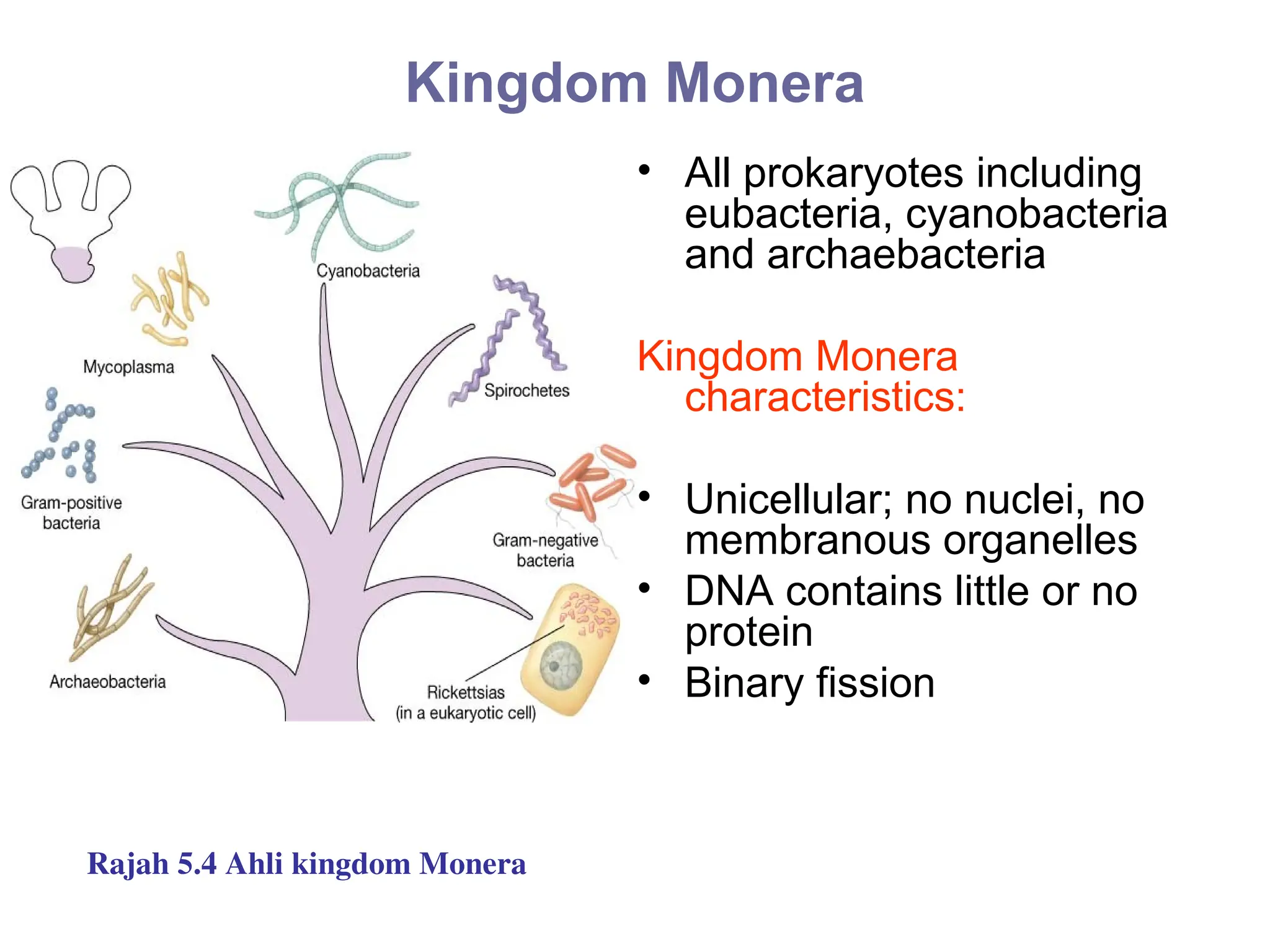
• All prokaryotes including
eubacteria, cyanobacteria
and archaebacteria
Kingdom Monera
characteristics:
• Unicellular; no nuclei, no
membranous organelles
• DNA contains little or no
protein
• Binary fission
Rajah 5.4 Ahli kingdom Monera
Kingdom Monera
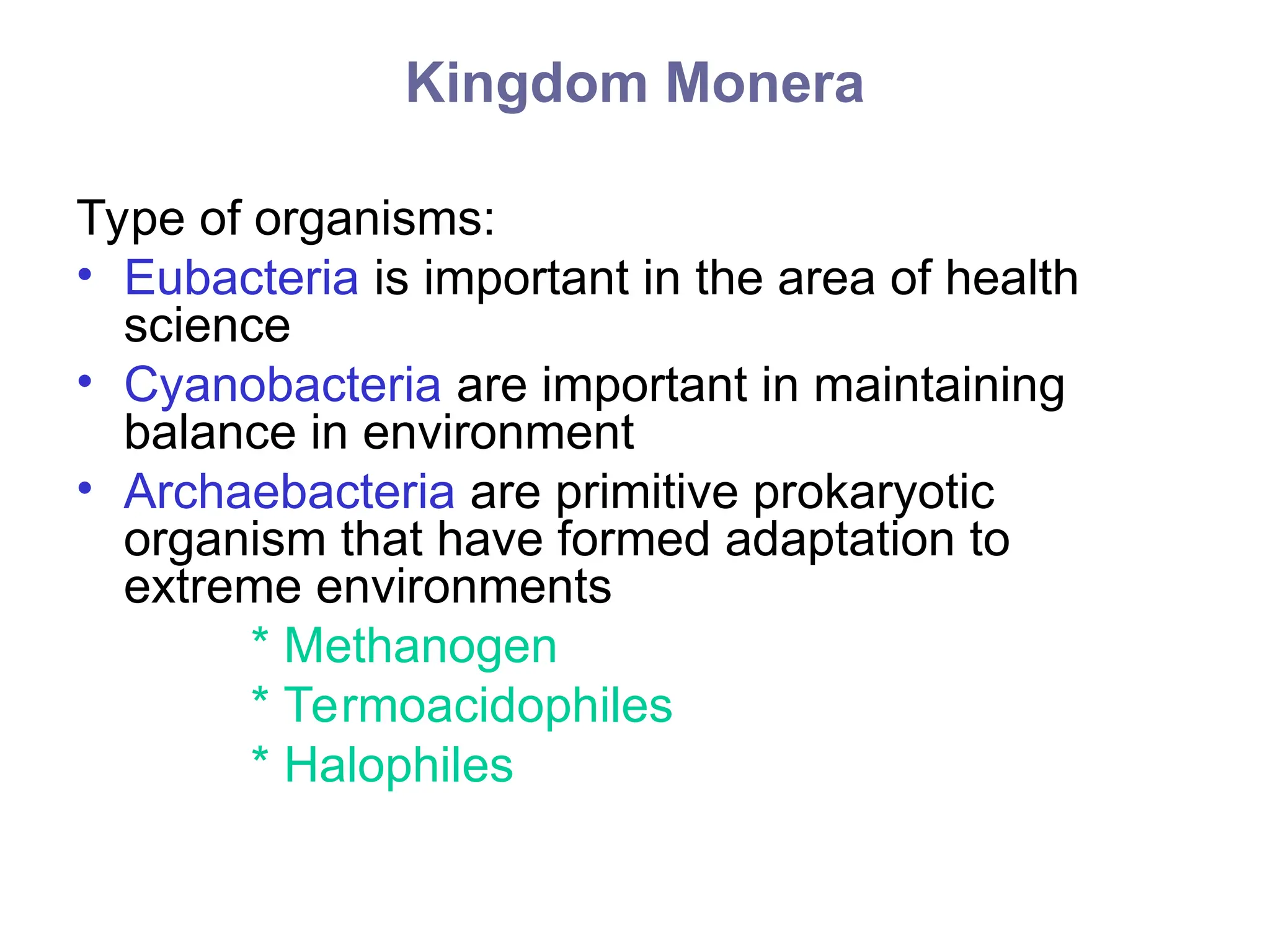
Type of organisms:
• Eubacteria is important in the area of health
science
• Cyanobacteria are important in maintaining
balance in environment
• Archaebacteria are primitive prokaryotic
organism that have formed adaptation to
extreme environments
* Methanogen
* Termoacidophiles
* Halophiles
KINGDOM PROTISTA
• Is unicellular; contains
nucleus with
membrane
• Lives in freshwater,
sea water and also in
soil
Figure 5.5 Member of the Kingdom Protista
• Members are mostly
multicellular with
some that are
unicellular
• Obtains nutrients via
absorption
• Produces spores
Figure 5.6 Members of the Fungal Kingdom
KINGDOM FUNGI
• Are animals that are
produced by zygote
formation
• Members are
macroscopic or
microscopic
• Includes many types
of animals including
Helminths and
Arthropods
Figure 5.7 Members of the Animal Kingdom
KINGDOM ANIMALIA
PROCESS OF PROKAROTIC
EVOLUTION
Figure 5.8 Evolutionary Model since the
identification of archaebacteria
Carl Woese, G.E.Fox 1970s
• The proof that was obtained
from research on
Archaebacteria and
stromatolites suggested that
there are three branches to
the “tree of life’ that was
produced in “Age of
Microorganism”
• Each of this branch
produces a different group
of organism
Tree of life
PROCESS OF PROKAROTIC
EVOLUTION
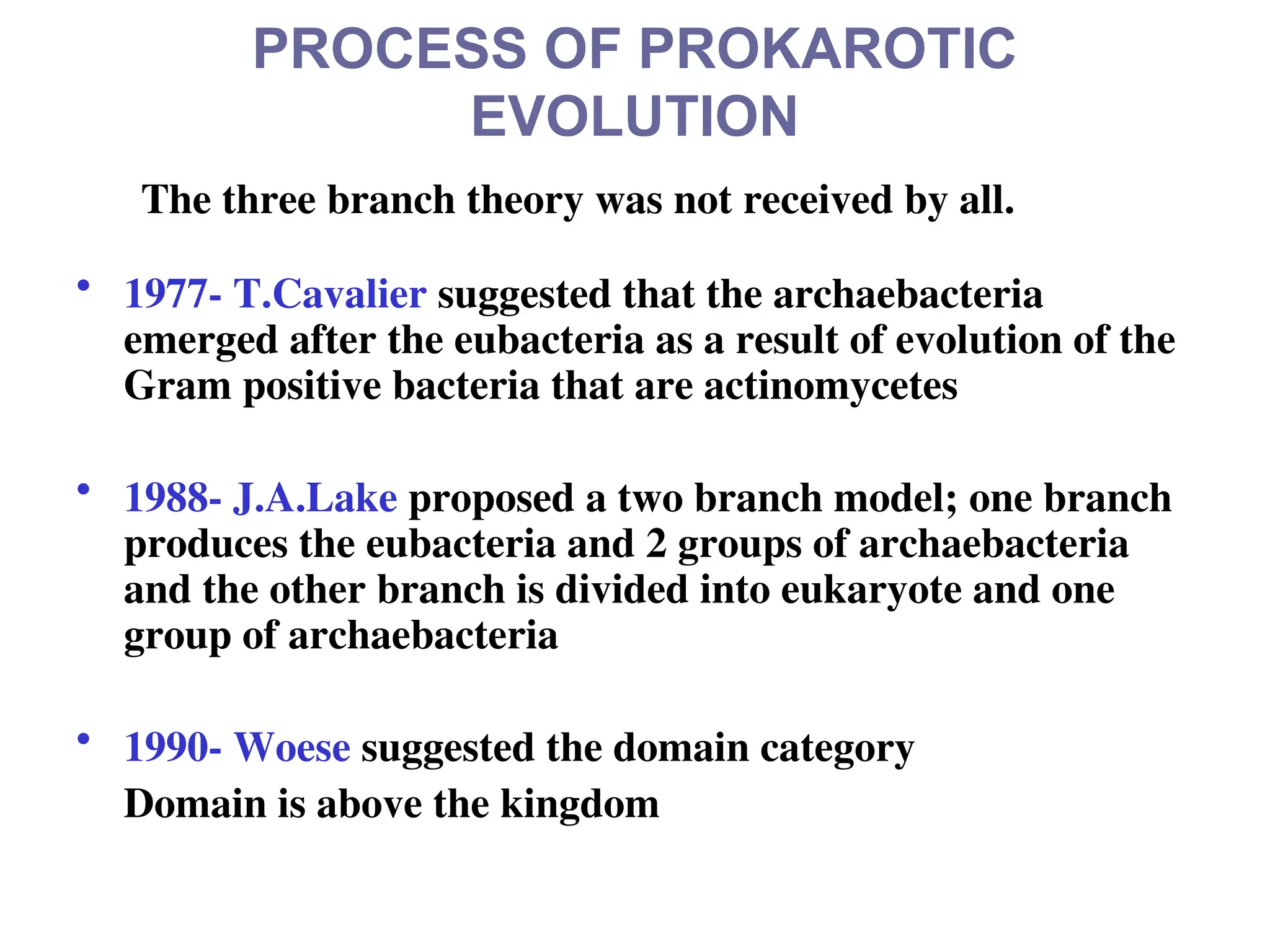
• 1977- T.Cavalier suggested that the archaebacteria
emerged after the eubacteria as a result of evolution of the
Gram positive bacteria that are actinomycetes
• 1988- J.A.Lake proposed a two branch model; one branch
produces the eubacteria and 2 groups of archaebacteria
and the other branch is divided into eukaryote and one
group of archaebacteria
• 1990- Woese suggested the domain category
Domain is above the kingdom
The three branch theory was not received by all.
THREE DOMAIN THEORY OF WOESE
• Before the three domain theory was proposed by Woese in 1998;
there were 3 views held by taxonomist
• 1st
view- from a general ancestor it branched out to bacteria and
archae, and the archae branched into eukaryote
• 2nd
view –all three domains existed together and this allowed for
the exchange of genetic content between all – universal genetic
code
• 3rd
view – there are 4 domains and the members of the 4th domain
that produced the eukaryote; this domain has become extinct
ENDOSYMBIOSIS THEORY
Figure 5.9
THREE DOMAIN THEORY OF WOESE
Figure 5.10
This diagram explains the three domain theory of Woese
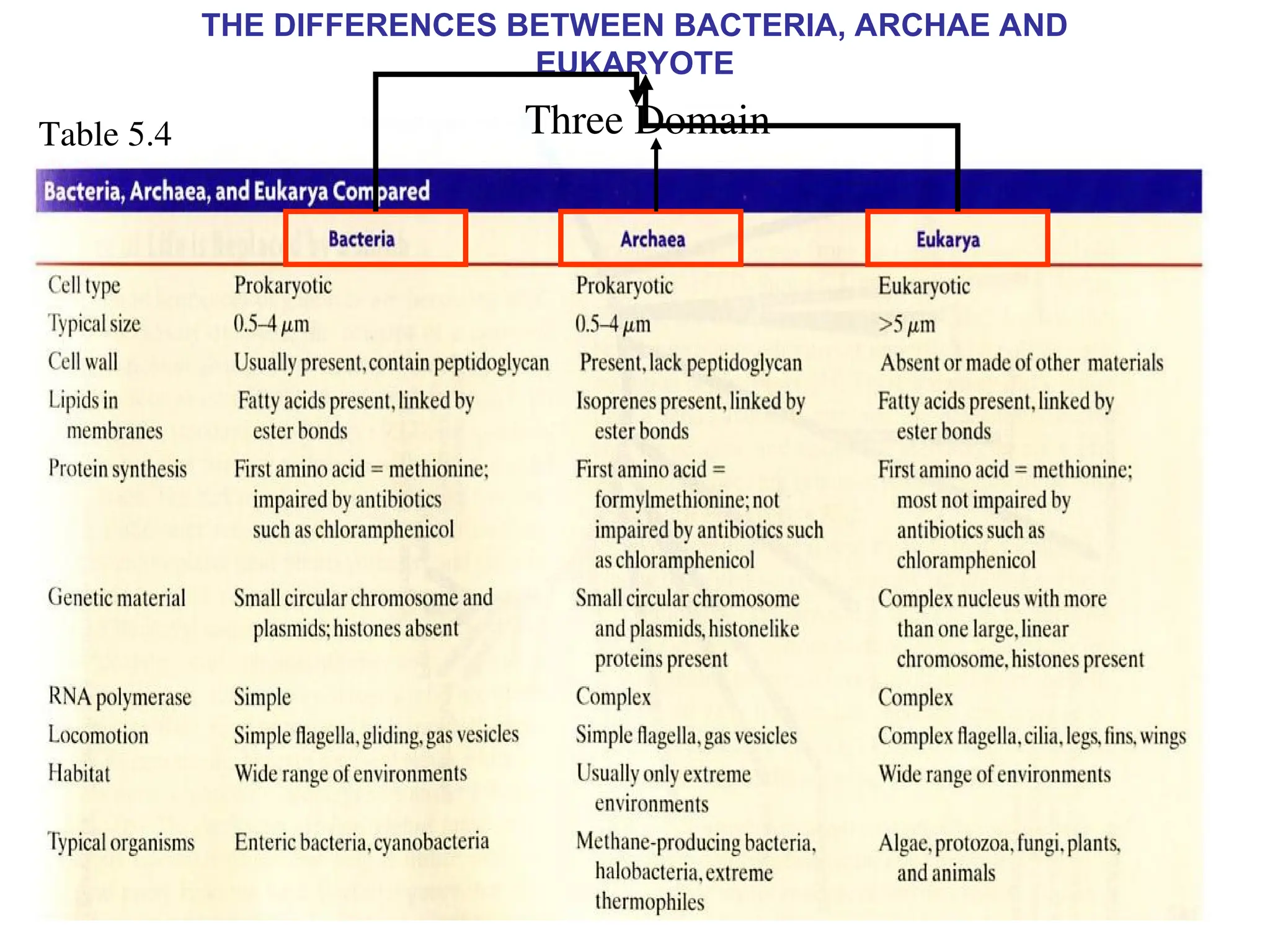
THE DIFFERENCES BETWEEN BACTERIA, ARCHAE AND
EUKARYOTE
Table 5.4 Three Domain
WOESE’S THREE DOMAINS
Kingdom
Monera
All eucaryotes
Table 5.11
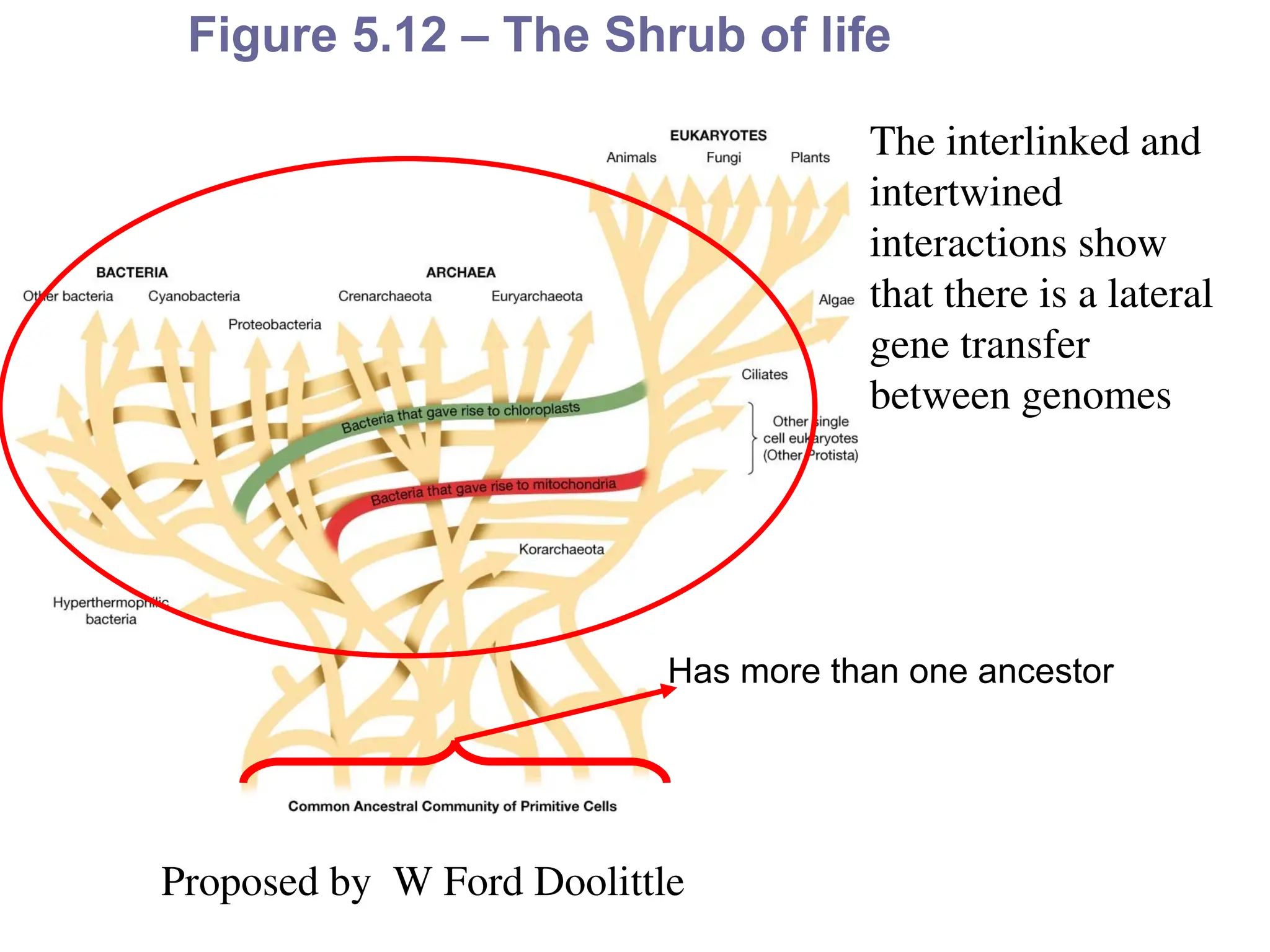
Figure 5.12 – The Shrub of life
Proposed by W Ford Doolittle
Has more than one ancestor
The interlinked and
intertwined
interactions show
that there is a lateral
gene transfer
between genomes
Lateral gene transfer
The different colored line that comes from different ancestors shows that
there is lateral gene transfer from one cell to another. When genes from
different sources are united, a new cell with ancestral diversity will be
Generated.
Figure 5.13
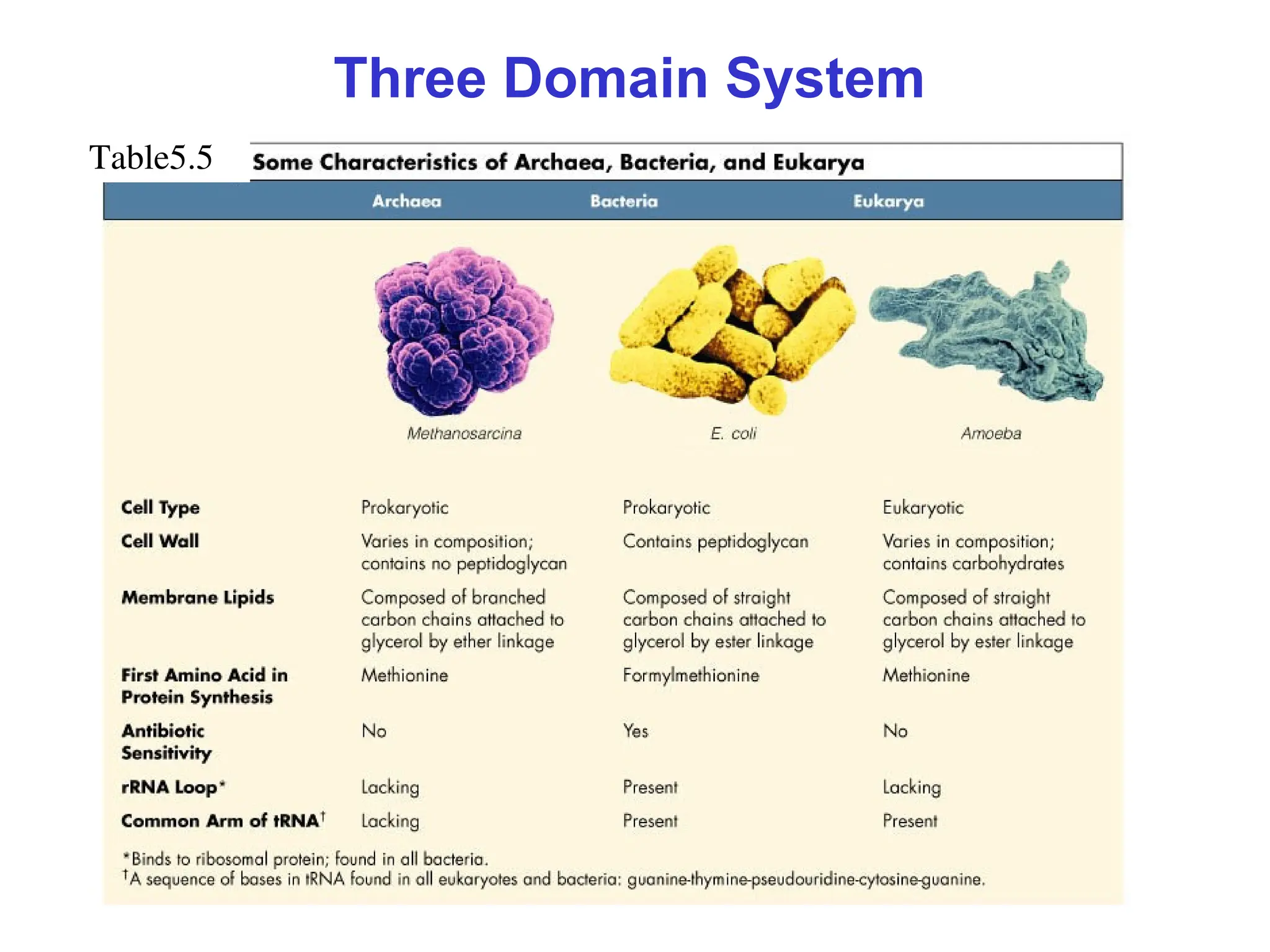
Three Domain System
Table5.5
Figure 5.14 Evolution Tree Generated
through Numerical Taxonomy
• Numerical Taxonomy – more
traits observed in an organism
will increase the accuracy by
which the similarities between
organism is determined
• When two organism have 90%
similarities in all traits that are
observed therefore both
organisms can be assumed to
be in the same species
Figure 5.14
NUMERICAL IDENTIFICATION
Figure 5.15
Genetic Homology
• Can be studied by :
i. studying the base composition
ii. Sequencing of DNA and RNA
iii. Through the hybridization of DNA
iv. Studying protein profile
• DNA base composition
– Guanine + cytosine
mol % (GC)
• DNA fingerprinting
– Electrophoresis of
restriction enzyme
digested product
• rRNA sequencing
• Polymerase Chain
Reaction (PCR)
Base composition, fingerprinting and PCR
Acid nucleic hybridization:DNA probes
Figure 5.16
Acid nucleic hybridization: DNA Chip
Figure 5.17
Western Blotting
Figure 5.18
Other methods used
• The difference in the
flow of electric between
species
• Cells are stained
selectively with
Antibodies and
fluorescent stain
Flow cytometry
• antiserum mixture
that is known with
unknown bacteria
– Agglutination slide
– ELISA
– Western blot
Serology
Figure 5.19
Phage Typing
Figure 5.20
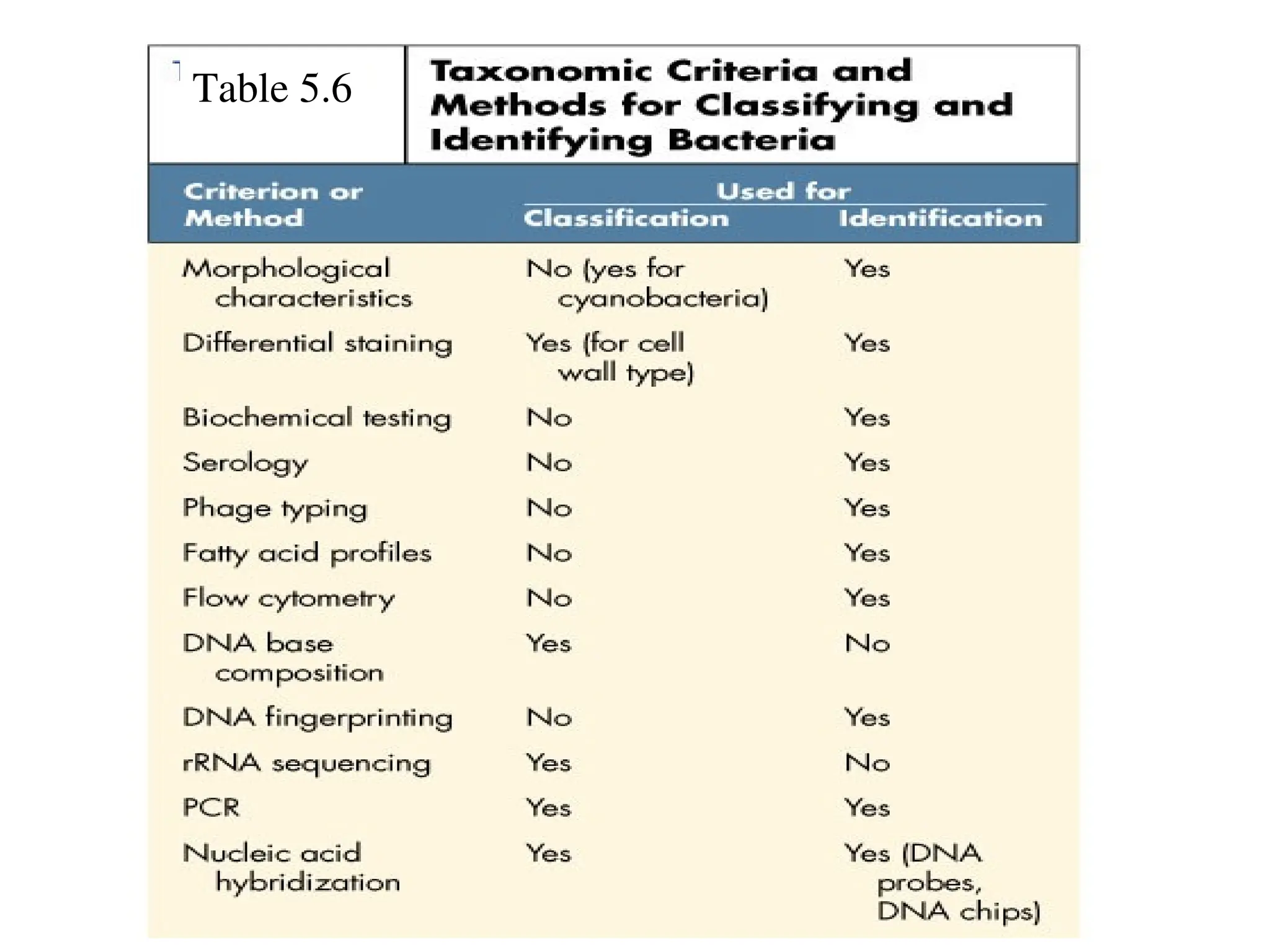
Table 5.6
Differential evolution
• When a group of organism that are
connected is identified, it is presumed
that both have the same ancestor and
any differences observed is present
due to differential evolution
(divergent evolution)
• Divergent evolution happens when a
subgroup of organism have
experienced mutation where the two
organisms are differentiated into two
groups.
• Eubacteria can produce Gram
positive and Gram negative
Figure 5.21 divergent evolution
Characteristics used in classifying
bacteria
Table 5.7
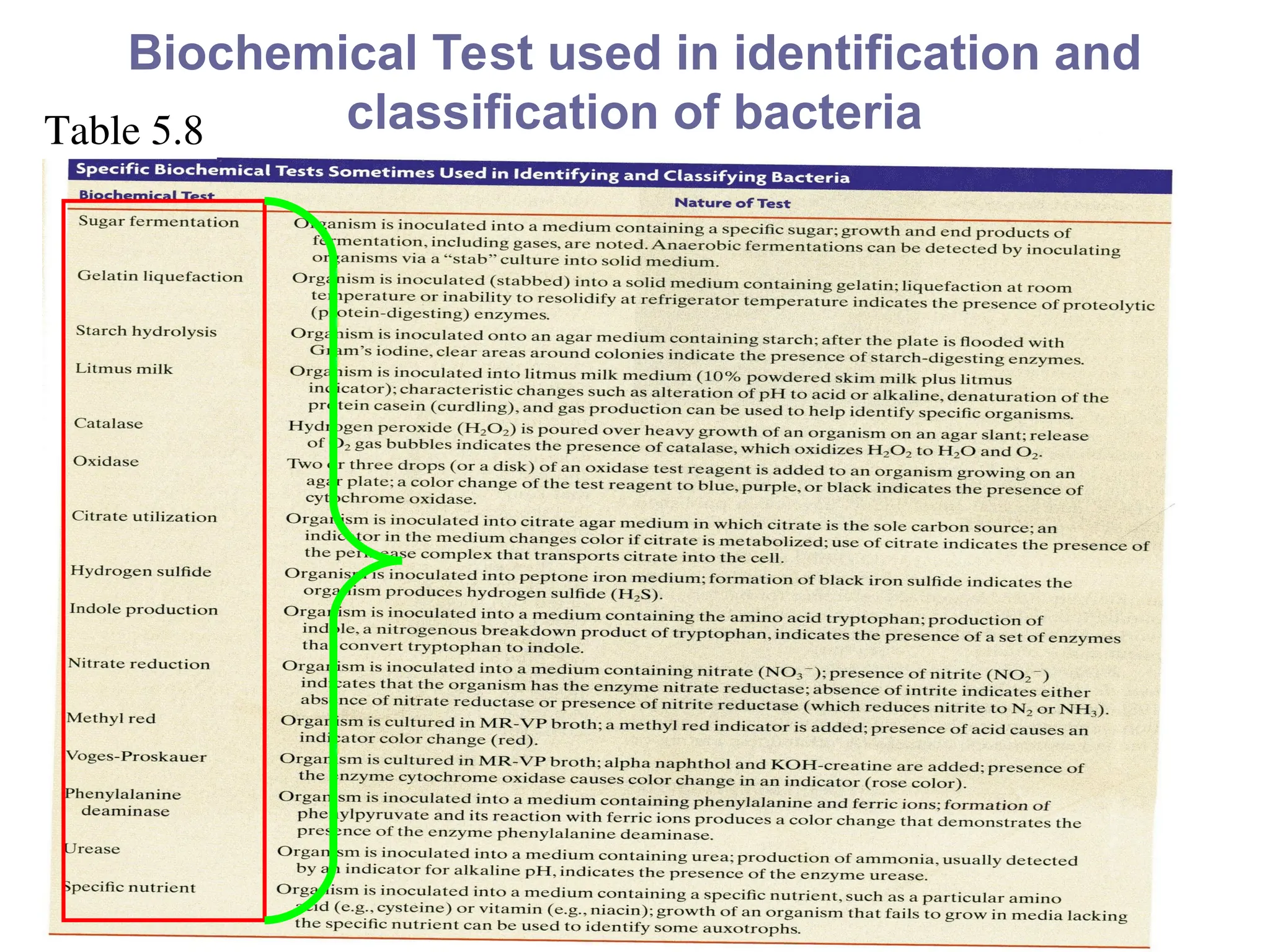
Biochemical Test used in identification and
classification of bacteria
Table 5.8
Characteristics of bacteria that have
medical importance
Table 5.9
Characteristics of bacteria that have medical
importance
Table 5.10

Bacteria taxonomy epidemiology morphology

  • 1.
    BACTERIAL TAXONOMY COLLEGE OFMEDICINE AND ALLIED HEALTH SCIENCES FACULTY OF MEDICAL LABORATORY SCIENCE AND DIAGNOSTICS BSc, YEAR 2 LECTURER - ZEIN SOUMA
  • 2.
    TAXONOMY – Comes fromthe Greek word taxis – arrangement; nomos - rules – Is a science of organismal classification – It is a system that creates an universal name for an organism – Presents a reference point to classify organisms – Taxonomy is made up of i. classification ii. nomenclature and iii. identification
  • 3.
    TAXONOMY • Classification isthe arrangement of organisms into groups (taxa) according to similarities and evolutionary connections • Nomenclature is a branch that is involved in the processing of naming a taxonomical group according to a series of rules • Identification determines taxa for organism that were isolated
  • 4.
    THE HISTORY OFTAXONOMY • 1735 Plant and animal Kingdom • 1857 Fungus and bacteria classified under plant kingdom • 1866 bacteria, protozoa, algae, and fungi makes up the Kingdom Protista • 1937 "Prokaryote" terminology used for organisms without nucleus • 1961 cells with non membrane nucleoplasm are Prokaryote • 1959 Kingdom Fungi • 1968 Prokaryote Kingdom suggested • 1978 Two types of prokaryotic cells found Table 5.1
  • 5.
    TAXONOMY • Systematic orphylogeny - Is the study of the evolutionary history of an organism • All Species Inventory (2001-2025) – Was formed to identify all species on Earth • Binomial Nomenclature – was proposed by Carolus Linnaeus in the18 Century. This system introduced • Genus • Specific epithet • Strain – is the subgroup of species • Strain can be written as a name, nomber or an alphabet • There are several rules that need to be observed in writing a scientific name (see Table 5.2)
  • 6.
  • 7.
    Scientific Name Scientific binomialSource of Genus name Source of Specific epithet Klebsiella pneumoniae Honors Edwin Klebs The disease Pfiesteria piscicida Honors Lois Pfiester Disease in fish Salmonella typhimurium Honors Daniel Salmon Stupor (typh-) in mice (muri-) Streptococcus pyogenes Chains of cells (strepto-) Forms pus (pyo-) Penicillium notatum Tuftlike (penicill-) Spores spread in wind (nota) Trypanosoma cruzi Corkscrew-like (trypano-, borer; soma-body) Honors Oswaldo Cruz Table 5.2
  • 8.
    Taxonomic key • Linnaeussuggested a taxonomical hierarchy • All organisms that are from the same species are classified under one genus • Genus with the same traits will be classified into the same family and the list goes on • He classified all living organisms under two kingdoms, animal and plant Figure 5.1 The classification of human, dog, wolf and bacterium
  • 9.
    DICHOTOMOUSKEYS • The taxonomykeys are used to identify characteristics of an organism • We hope that the classification of organisms can be conducted based on phylogenic connections and evolutionary ties between organism. Figure 5.2 The dichotomous key generated for classification of main bacterial groups
  • 10.
    Problems in taxonomy •Problems that crop up in taxonomy studies are i. To determine members in a species ii.To identify members of a kingdom and kingdoms that are in a domain • In an advanced organism such as plants and animals, classification is conducted according to the ability to reproduce, morphology and geography • genetic transfer and changes in morphology can not be used in the classification of bacteria
  • 11.
    Problems in taxonomy •Bacteria is classified according to i. chemical reaction ii. Chemical composition iii. Cell structure iv. Genetic characteristic and v. Immunological characteristic
  • 12.
    Development since LINNAEUS •1866- Ernst H.Haeckel created the third kingdom PROTISTA – which contains algae, protozoa,bacteria,fungi and sponge • 1956- Lynn Marguilis and H.F Copeland introduced the 4 kingdoms classification scheme for prokaryote and eukaryote • i. Monera – inclu. all prokaryotes i.e. true bacteria and blue green algae ii. Protoctista- all eukaryotes as algae, fungi and protozoa iii. Plantae- all green plants iv. Animalia – all animals created from zygotes
  • 13.
    Development since LINNAEUS •R.H. Whittaker does not accept the theory of endosymbiosis for eukaryotic and prokaryotic diversity • Suggested a means of classification according to the dietary requirements • 1969- Whittaker suggested the division of Protoctista to Prostista and Fungi
  • 14.
    5 Kingdom ClassificationSystem • From Whittaker and other taxonomist suggestion and observations the 5 Kingdom classification system was formed • All prokaryotes were classified as Monera – no cells nucleus • Unicellular Eukaryotes with nucleus were classified as Protista Figure 5.3 The 5 Kingdom Classification See Table 5.3 for characteristic of all 5 kingdoms
  • 15.
    Table 5.3 Characteristicsof the 5kingdom classification
  • 16.
    Kingdom Monera • Allprokaryotes including eubacteria, cyanobacteria and archaebacteria Kingdom Monera characteristics: • Unicellular; no nuclei, no membranous organelles • DNA contains little or no protein • Binary fission Rajah 5.4 Ahli kingdom Monera
  • 17.
    Kingdom Monera Type oforganisms: • Eubacteria is important in the area of health science • Cyanobacteria are important in maintaining balance in environment • Archaebacteria are primitive prokaryotic organism that have formed adaptation to extreme environments * Methanogen * Termoacidophiles * Halophiles
  • 18.
    KINGDOM PROTISTA • Isunicellular; contains nucleus with membrane • Lives in freshwater, sea water and also in soil Figure 5.5 Member of the Kingdom Protista
  • 19.
    • Members aremostly multicellular with some that are unicellular • Obtains nutrients via absorption • Produces spores Figure 5.6 Members of the Fungal Kingdom KINGDOM FUNGI
  • 20.
    • Are animalsthat are produced by zygote formation • Members are macroscopic or microscopic • Includes many types of animals including Helminths and Arthropods Figure 5.7 Members of the Animal Kingdom KINGDOM ANIMALIA
  • 21.
    PROCESS OF PROKAROTIC EVOLUTION Figure5.8 Evolutionary Model since the identification of archaebacteria Carl Woese, G.E.Fox 1970s • The proof that was obtained from research on Archaebacteria and stromatolites suggested that there are three branches to the “tree of life’ that was produced in “Age of Microorganism” • Each of this branch produces a different group of organism Tree of life
  • 22.
    PROCESS OF PROKAROTIC EVOLUTION •1977- T.Cavalier suggested that the archaebacteria emerged after the eubacteria as a result of evolution of the Gram positive bacteria that are actinomycetes • 1988- J.A.Lake proposed a two branch model; one branch produces the eubacteria and 2 groups of archaebacteria and the other branch is divided into eukaryote and one group of archaebacteria • 1990- Woese suggested the domain category Domain is above the kingdom The three branch theory was not received by all.
  • 23.
    THREE DOMAIN THEORYOF WOESE • Before the three domain theory was proposed by Woese in 1998; there were 3 views held by taxonomist • 1st view- from a general ancestor it branched out to bacteria and archae, and the archae branched into eukaryote • 2nd view –all three domains existed together and this allowed for the exchange of genetic content between all – universal genetic code • 3rd view – there are 4 domains and the members of the 4th domain that produced the eukaryote; this domain has become extinct
  • 24.
  • 25.
    THREE DOMAIN THEORYOF WOESE Figure 5.10 This diagram explains the three domain theory of Woese
  • 26.
    THE DIFFERENCES BETWEENBACTERIA, ARCHAE AND EUKARYOTE Table 5.4 Three Domain
  • 27.
  • 28.
    Figure 5.12 –The Shrub of life Proposed by W Ford Doolittle Has more than one ancestor The interlinked and intertwined interactions show that there is a lateral gene transfer between genomes
  • 29.
    Lateral gene transfer Thedifferent colored line that comes from different ancestors shows that there is lateral gene transfer from one cell to another. When genes from different sources are united, a new cell with ancestral diversity will be Generated. Figure 5.13
  • 30.
  • 31.
    Figure 5.14 EvolutionTree Generated through Numerical Taxonomy • Numerical Taxonomy – more traits observed in an organism will increase the accuracy by which the similarities between organism is determined • When two organism have 90% similarities in all traits that are observed therefore both organisms can be assumed to be in the same species Figure 5.14
  • 32.
  • 33.
    Genetic Homology • Canbe studied by : i. studying the base composition ii. Sequencing of DNA and RNA iii. Through the hybridization of DNA iv. Studying protein profile
  • 34.
    • DNA basecomposition – Guanine + cytosine mol % (GC) • DNA fingerprinting – Electrophoresis of restriction enzyme digested product • rRNA sequencing • Polymerase Chain Reaction (PCR) Base composition, fingerprinting and PCR
  • 35.
  • 36.
    Acid nucleic hybridization:DNA Chip Figure 5.17
  • 37.
  • 38.
  • 39.
    • The differencein the flow of electric between species • Cells are stained selectively with Antibodies and fluorescent stain Flow cytometry
  • 40.
    • antiserum mixture thatis known with unknown bacteria – Agglutination slide – ELISA – Western blot Serology Figure 5.19
  • 41.
  • 42.
  • 43.
    Differential evolution • Whena group of organism that are connected is identified, it is presumed that both have the same ancestor and any differences observed is present due to differential evolution (divergent evolution) • Divergent evolution happens when a subgroup of organism have experienced mutation where the two organisms are differentiated into two groups. • Eubacteria can produce Gram positive and Gram negative Figure 5.21 divergent evolution
  • 44.
    Characteristics used inclassifying bacteria Table 5.7
  • 45.
    Biochemical Test usedin identification and classification of bacteria Table 5.8
  • 46.
    Characteristics of bacteriathat have medical importance Table 5.9
  • 47.
    Characteristics of bacteriathat have medical importance Table 5.10