Marketing Information System
        Dr. Vũ Thế Dũng
Outline


     Marketing Information System

     Marketing Research
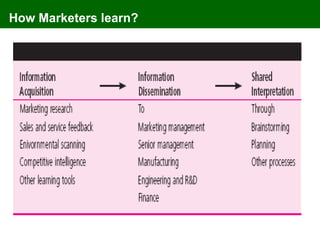
How Marketers learn?
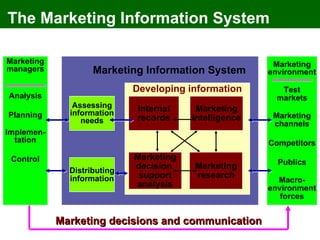
The Marketing Information System

Marketing                                                Marketing
managers            Marketing Information System        environment

                             Developing information       Test
Analysis                                                 markets
               Assessing     Internal     Marketing
Planning      information                                Marketing
                 needs       records     intelligence
                                                         channels
Implemen-
  tation                                                Competitors

 Control                     Marketing
                                                          Publics
              Distributing
                             decision    Marketing
              information     support    research
                                                          Macro-
                             analysis                   environment
                                                           forces


            Marketing decisions and communication
Marketing Intelligence System

 A marketing intelligence system is a set of
   procedures and sources used by managers to
   obtain everyday information about developments
   in the marketing environment.
 Marketing managers collect marketing intelligence
   by reading books, newspapers, and trade
   publications; talking to customers,
   suppliers, and distributors; checking
   Internet sources; and meeting with other
   company managers.
Marketing Intelligence System
   Train and motivate the sales force to spot and report new
    developments.
   Motivate distributors, retailers, and other intermediaries to
    pass along important intelligence.
   Learn about competitors by purchasing their products;
    attending trade shows; scanning Web sites; attending
    stockholders’ meetings; talking to employees, dealers,
    suppliers, and shippers; collecting rivals’ ads; and reading
    business and trade publications.
   Set up a customer advisory panel.
   Purchase information from outside suppliers
   Set up marketing information center to collect and circulate
    marketing intelligence throughout the organization.
MDSS

Marketing decision support system (MDSS) is a
 coordinated collection of data, systems, tools,
 and techniques with supporting software and
 hardware by which an organization gathers and
 interprets information from business and the
 environment and turns it into a basis for
 marketing action
Marketing Research

 Marketing research as the systematic design,
  collection, analysis, and reporting of data and
  findings that are relevant to a specific marketing
  situation facing the company.
Differences between MR in B2B and B2C

    Respondent differences;
    Sample and sample size differences;
    Content differences
Database Marketing

    What to get?
    How to get?
    How to maintain and update?
    How to use?
Database Marketing

    What to get
      Transaction   history
      Demographic: job position, job responsibilities, job
       relationships, and contact addresses, decision maker,
       purchaser, influencers, gate keeper, initiators
      Psychographic information: attitude, belief,
       opinion
   How to get
     Sales  forces
     Distributors
     Trade shows
     Customer database, software
     Accounting information
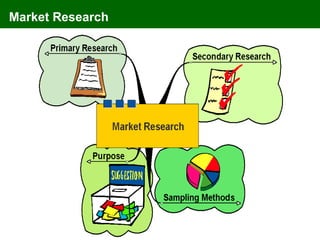
Market Research
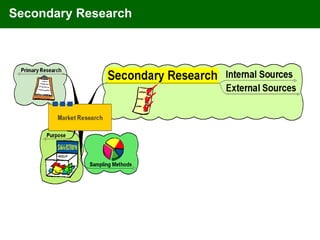
Secondary Research
Internal Sources


  Company    Accounts
  Internal Reports and Analysis
  Stock Analysis
  Retail data - loyalty cards, till data,
   etc.
External Sources

     Government Statistics (ONS)
     EU - Euro Stat
     Trade publications
     Commercial Data - Gallup, Mintel, etc.
     Household Expenditure Survey
     Magazine surveys
     Other firms’ research
     Research documents – publications,
      journals, etc.
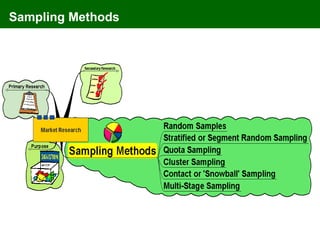
Sampling Methods
Market Research

    Sampling Methods:
    Random Samples – equal chance of anyone
     being picked
      May  select those not in the target group –
       indiscriminate
      Sample sizes may need to be large
       to be representative
      Can be very expensive
Market Research

    Stratified or Segment Random Sampling
      Samples   on the basis of a representative strata or
       segment
      Still random but more focussed
      May give more relevant information
      May be more cost effective
Market Research

    Quota Sampling
      Again – by segment
      Not randomly selected
      Specific number on each segment are interviewed,
       etc.
      May not be fully representative
      Cheaper method
Market Research

  Cluster   Sampling
   Primarily   based on geographical areas or
     ‘clusters’ that can be seen as being
     representative of the whole population
  Multi-Stage   Sampling
   Sample   selected from multi-stage
     sub-groups
  Snowball     Sampling
   Samples     developed from contacts
     of existing customers – ‘word of mouth’ type
     approach!
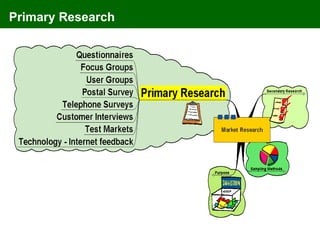
Primary Research
Market Research

  Primary   Research
   Firsthand information
   Expensive to collect, analyse and evaluate
   Can be highly focussed and relevant
   Care needs to be taken with the approach and
    methodology to ensure accuracy
   Types of question – closed – limited
    information gained; open – useful information
    but difficult to analyse
Market Research

    Quantitative and Qualitative Information:
    Quantitative – based on numbers – 56% of 18
     year olds drink alcohol at least four times a week
     - doesn’t tell you why, when, how
    Qualitative – more detail – tells you why, when
     and how!
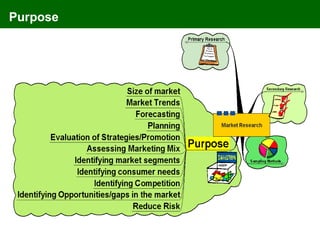
Purpose
Market Research

  Advantages     of Market Research
   Helps  focus attention on objectives
   Aids forecasting, planning and strategic
    development
   May help to reduce risk of new product
    development
   Communicates image, vision, etc.
   Globalisation makes market information
    valuable (HSBC adverts!!)
Market Research

  Disadvantages   of Market Research
   Information  only as good
    as the methodology used
   Can be inaccurate or unreliable
   Results may not be what the business wants
    to hear!
   May stifle initiative and ‘gut feeling’
   Always a problem that we may never know
    enough to be sure!

B2B Marketing - Chapter 3: Marketing Information System

  • 1.
    Marketing Information System Dr. Vũ Thế Dũng
  • 2.
    Outline Marketing Information System Marketing Research
  • 3.
  • 4.
    The Marketing InformationSystem Marketing Marketing managers Marketing Information System environment Developing information Test Analysis markets Assessing Internal Marketing Planning information Marketing needs records intelligence channels Implemen- tation Competitors Control Marketing Publics Distributing decision Marketing information support research Macro- analysis environment forces Marketing decisions and communication
  • 5.
    Marketing Intelligence System A marketing intelligence system is a set of procedures and sources used by managers to obtain everyday information about developments in the marketing environment. Marketing managers collect marketing intelligence by reading books, newspapers, and trade publications; talking to customers, suppliers, and distributors; checking Internet sources; and meeting with other company managers.
  • 6.
    Marketing Intelligence System  Train and motivate the sales force to spot and report new developments.  Motivate distributors, retailers, and other intermediaries to pass along important intelligence.  Learn about competitors by purchasing their products; attending trade shows; scanning Web sites; attending stockholders’ meetings; talking to employees, dealers, suppliers, and shippers; collecting rivals’ ads; and reading business and trade publications.  Set up a customer advisory panel.  Purchase information from outside suppliers  Set up marketing information center to collect and circulate marketing intelligence throughout the organization.
  • 7.
    MDSS Marketing decision supportsystem (MDSS) is a coordinated collection of data, systems, tools, and techniques with supporting software and hardware by which an organization gathers and interprets information from business and the environment and turns it into a basis for marketing action
  • 8.
    Marketing Research Marketingresearch as the systematic design, collection, analysis, and reporting of data and findings that are relevant to a specific marketing situation facing the company.
  • 9.
    Differences between MRin B2B and B2C  Respondent differences;  Sample and sample size differences;  Content differences
  • 10.
    Database Marketing  What to get?  How to get?  How to maintain and update?  How to use?
  • 11.
    Database Marketing  What to get  Transaction history  Demographic: job position, job responsibilities, job relationships, and contact addresses, decision maker, purchaser, influencers, gate keeper, initiators  Psychographic information: attitude, belief, opinion
  • 12.
    How to get  Sales forces  Distributors  Trade shows  Customer database, software  Accounting information
  • 13.
  • 14.
  • 15.
    Internal Sources Company Accounts  Internal Reports and Analysis  Stock Analysis  Retail data - loyalty cards, till data, etc.
  • 16.
    External Sources  Government Statistics (ONS)  EU - Euro Stat  Trade publications  Commercial Data - Gallup, Mintel, etc.  Household Expenditure Survey  Magazine surveys  Other firms’ research  Research documents – publications, journals, etc.
  • 17.
  • 18.
    Market Research  Sampling Methods:  Random Samples – equal chance of anyone being picked  May select those not in the target group – indiscriminate  Sample sizes may need to be large to be representative  Can be very expensive
  • 19.
    Market Research  Stratified or Segment Random Sampling  Samples on the basis of a representative strata or segment  Still random but more focussed  May give more relevant information  May be more cost effective
  • 20.
    Market Research  Quota Sampling  Again – by segment  Not randomly selected  Specific number on each segment are interviewed, etc.  May not be fully representative  Cheaper method
  • 21.
    Market Research Cluster Sampling Primarily based on geographical areas or ‘clusters’ that can be seen as being representative of the whole population  Multi-Stage Sampling Sample selected from multi-stage sub-groups  Snowball Sampling Samples developed from contacts of existing customers – ‘word of mouth’ type approach!
  • 22.
  • 23.
    Market Research Primary Research Firsthand information Expensive to collect, analyse and evaluate Can be highly focussed and relevant Care needs to be taken with the approach and methodology to ensure accuracy Types of question – closed – limited information gained; open – useful information but difficult to analyse
  • 24.
    Market Research  Quantitative and Qualitative Information:  Quantitative – based on numbers – 56% of 18 year olds drink alcohol at least four times a week - doesn’t tell you why, when, how  Qualitative – more detail – tells you why, when and how!
  • 25.
  • 26.
    Market Research Advantages of Market Research Helps focus attention on objectives Aids forecasting, planning and strategic development May help to reduce risk of new product development Communicates image, vision, etc. Globalisation makes market information valuable (HSBC adverts!!)
  • 27.
    Market Research Disadvantages of Market Research Information only as good as the methodology used Can be inaccurate or unreliable Results may not be what the business wants to hear! May stifle initiative and ‘gut feeling’ Always a problem that we may never know enough to be sure!

Editor's Notes

  • #2 ©MPDF 2005. All rights reserved. Core Consultant Course Module 14 - Consulting Presentation Skills INSTRUCTIONAL NOTES: 0min All the slides will require 2hours 28mins to present. FOCUS POINT: Presentation skills for consultants Analysis of the situation How to choose Charts and Graphs Bringing in the Audience Controlling the Question-and –Answer Session Handout  No Activity  Presentation Slides
  • #5 1