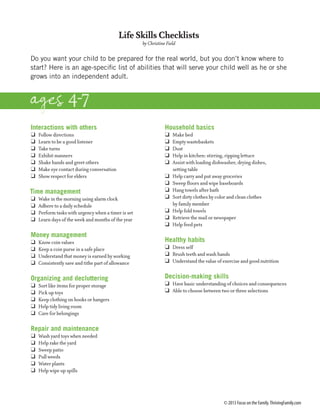
Life Skills Checklists
by Christine Field

Do you want your child to be prepared for the real world, but you don’t know where to
start? Here is an age-specific list of abilities that will serve your child well as he or she
grows into an independent adult.

ages 4-7
Interactions with others
❑
❑
❑
❑
❑
❑
❑

Follow directions
Learn to be a good listener
Take turns
Exhibit manners
Shake hands and greet others
Make eye contact during conversation
Show respect for elders

Time management
❑
❑
❑
❑

Wake in the morning using alarm clock
Adhere to a daily schedule
Perform tasks with urgency when a timer is set
Learn days of the week and months of the year

Money management
❑
❑
❑
❑

Know coin values
Keep a coin purse in a safe place
Understand that money is earned by working
Consistently save and tithe part of allowance

Organizing and decluttering
❑
❑
❑
❑
❑

Sort like items for proper storage
Pick up toys
Keep clothing on hooks or hangers
Help tidy living room
Care for belongings

Household basics
❑
❑
❑
❑
❑
❑
❑
❑
❑
❑
❑
❑

Make bed
Empty wastebaskets
Dust
Help in kitchen: stirring, ripping lettuce
Assist with loading dishwasher, drying dishes,
setting table
Help carry and put away groceries
Sweep floors and wipe baseboards
Hang towels after bath
Sort dirty clothes by color and clean clothes
by family member
Help fold towels
Retrieve the mail or newspaper
Help feed pets

Healthy habits
❑ Dress self
❑ Brush teeth and wash hands
❑ Understand the value of exercise and good nutrition

Decision-making skills
❑ Have basic understanding of choices and consequences
❑ Able to choose between two or three selections

Repair and maintenance
❑
❑
❑
❑
❑
❑

Wash yard toys when needed
Help rake the yard
Sweep patio
Pull weeds
Water plants
Help wipe up spills

© 2013 Focus on the Family. ThrivingFamily.com
ages 8-12
Any of the skills on the 4-7 list, plus

Interactions with others
Serve others and ask, “How can I help?”
Know how to make a good first impression
Ask a service person for help
Resolve conflict
Take a phone message
Able to compromise
Carry on a conversation with an adult and ask
clear questions
❑ Understand appropriate behavior according
to occasion
❑
❑
❑
❑
❑
❑
❑

Time management
❑
❑
❑
❑
❑

Read an analog clock
Rearrange tasks to stay on time
Show concern for turning assignments in on time
Keep a school planner of assignments
Work through a checklist of daily tasks

Money management
❑ Able to perform a transaction with a cashier
or bank teller
❑ Save toward a long-term purchase
❑ Track spending and saving
❑ Identify a charitable cause to donate to
❑ Earn payment for extra chores

Organizing and decluttering
❑
❑
❑
❑

Keep school papers in order
Gather supplies needed for a task
Sort belongings and keep room tidy
Know which materials are required for the

day’s schedule

Repair and maintenance
Wash windows — inside and out
Help wash car
Help with yard work
Shovel snow
Know how to use basic tools such as hammers
and screwdrivers
❑ Maintain a bicycle — fill tires with air, apply oil
for squeaks
❑ Change light bulbs
❑
❑
❑
❑
❑

Household basics
❑
❑
❑
❑
❑
❑
❑
❑
❑
❑

Follow a simple recipe
Wash, dry and put away dishes
Make school lunches
Use washer and dryer
Hang and fold laundry
Strip and change bed linens
Vacuum, sweep and mop
Tidy the house
Clean bathroom completely
Take out trash

Healthy habits
❑ Floss teeth
❑ Trim nails or file sharp edges
❑ Choose nutritious snacks and understand the

components of a balanced meal
❑ Know basic first aid

Decision-making skills
❑ Can gather facts necessary for making informed

decisions
❑ Prioritize tasks
❑ Determine the most efficient course of action
for completing a task
❑ Respond to peer pressure appropriately

© 2013 Focus on the Family. ThrivingFamily.com
ages 13-15
Any from the previous list, plus

Interactions with others

Repair and maintenance

Schedule or cancel an appointment
Tip service people
Understand how body language communicates to others
Use public transportation with a group
Demonstrate empathy toward others
Talk to teachers about assignments or academic

struggles
❑ Seek permission for time spent away from home and
keep parents notified if plans change
❑ Participate in service activities without the family,
with supervision
❑ Show respect for the opposite sex

❑ Mow and trim the lawn
❑ Detail a car
❑ Help paint and caulk

❑
❑
❑
❑
❑
❑

Time management
❑
❑
❑
❑
❑

Manage homework
Be consistently on time for class and school activities
Be accountable to parents for extracurricular activities
Go to bed at an appropriate time
Use a calendar to keep track of important dates

Money management
❑ Create and keep a budget
❑ Count correct change in a money transaction
❑ Understand the difference between a debit and

a credit card
❑ Take responsibility for cellphone

Household basics
❑
❑
❑
❑
❑
❑
❑

Prepare a meal
Make grocery lists
Shop for groceries
Do all laundry tasks
Do clothes mending
Clean out refrigerator
Clean stove and oven

Healthy habits
❑
❑
❑
❑

Understand the dangers of drugs and alcohol
Eat at least five fruit and vegetable servings a day
Eat three meals a day
Know what meal portions are appropriate

Decision-making skills
❑
❑
❑
❑

Read and decipher fine print, with a parent’s help
Develop a pros and cons list when making a decision
Understand why some laws have been enacted
Talk with others about which politicians would be
best for office

Organizing and decluttering
❑ Able to break down complicated projects into
simpler tasks
❑ Organize room biannually to toss things that are
no longer needed
❑ Study for the written driving test independently

© 2013 Focus on the Family. ThrivingFamily.com
ages 16-18
Any from the previous list, plus

Interactions with others
Know how and when to negotiate and compromise
Hold others accountable
Use public transportation alone
Fill out an application and interview for a job
Initiate contact with colleges and/or employers
Keep parents notified of whereabouts and time
expected home
❑ Understand what facts to keep personal to avoid
identity theft and what can be made public
❑ Fill out medical/dental forms
❑
❑
❑
❑
❑
❑

Time management
❑ Use a day planner or app to keep track of

multiple obligations
❑ Manage extracurricular activities
❑ Identify activities that are time wasters
❑ Be consistently on time for work and commitments

Money management
❑ Set up a bank account
❑ Understand basics of compound interest
❑ Know the risks of credit cards — and the importance
of creditworthiness
❑ Understand basic premise of investing
❑ Understand basics of insurance
❑ Know what to do if a purse or wallet is stolen
❑ Understand how to read a pay stub with Social Security
and income tax withdrawals
❑ Understand student loan offers and terms of repayment

Organizing and decluttering
❑ Keep a vehicle free of trash, especially if sharing

it with the family

Repair and maintenance
❑ Check car tire pressure, air filter, oil and fluid levels
❑ Know when to take car to garage for maintenance
or repair
❑ Use jumper cables
❑ Change a tire

Household basics
❑ Understand plumbing basics
❑ Know electricity basics

Healthy habits
❑ Know importance of preventive dental and
medical care
❑ Know safe use of over-the-counter and
prescription drugs
❑ Maintain a consistent exercise routine

Decision-making skills
❑
❑
❑
❑

Read and decipher fine print
Talk with a career counselor
Vote (18 only)
Understand a rental contract for housing (18 only)

© 2013 Focus on the Family. ThrivingFamily.com

Checklist for life kills

  • 1.
    Life Skills Checklists byChristine Field Do you want your child to be prepared for the real world, but you don’t know where to start? Here is an age-specific list of abilities that will serve your child well as he or she grows into an independent adult. ages 4-7 Interactions with others ❑ ❑ ❑ ❑ ❑ ❑ ❑ Follow directions Learn to be a good listener Take turns Exhibit manners Shake hands and greet others Make eye contact during conversation Show respect for elders Time management ❑ ❑ ❑ ❑ Wake in the morning using alarm clock Adhere to a daily schedule Perform tasks with urgency when a timer is set Learn days of the week and months of the year Money management ❑ ❑ ❑ ❑ Know coin values Keep a coin purse in a safe place Understand that money is earned by working Consistently save and tithe part of allowance Organizing and decluttering ❑ ❑ ❑ ❑ ❑ Sort like items for proper storage Pick up toys Keep clothing on hooks or hangers Help tidy living room Care for belongings Household basics ❑ ❑ ❑ ❑ ❑ ❑ ❑ ❑ ❑ ❑ ❑ ❑ Make bed Empty wastebaskets Dust Help in kitchen: stirring, ripping lettuce Assist with loading dishwasher, drying dishes, setting table Help carry and put away groceries Sweep floors and wipe baseboards Hang towels after bath Sort dirty clothes by color and clean clothes by family member Help fold towels Retrieve the mail or newspaper Help feed pets Healthy habits ❑ Dress self ❑ Brush teeth and wash hands ❑ Understand the value of exercise and good nutrition Decision-making skills ❑ Have basic understanding of choices and consequences ❑ Able to choose between two or three selections Repair and maintenance ❑ ❑ ❑ ❑ ❑ ❑ Wash yard toys when needed Help rake the yard Sweep patio Pull weeds Water plants Help wipe up spills © 2013 Focus on the Family. ThrivingFamily.com
  • 2.
    ages 8-12 Any ofthe skills on the 4-7 list, plus Interactions with others Serve others and ask, “How can I help?” Know how to make a good first impression Ask a service person for help Resolve conflict Take a phone message Able to compromise Carry on a conversation with an adult and ask clear questions ❑ Understand appropriate behavior according to occasion ❑ ❑ ❑ ❑ ❑ ❑ ❑ Time management ❑ ❑ ❑ ❑ ❑ Read an analog clock Rearrange tasks to stay on time Show concern for turning assignments in on time Keep a school planner of assignments Work through a checklist of daily tasks Money management ❑ Able to perform a transaction with a cashier or bank teller ❑ Save toward a long-term purchase ❑ Track spending and saving ❑ Identify a charitable cause to donate to ❑ Earn payment for extra chores Organizing and decluttering ❑ ❑ ❑ ❑ Keep school papers in order Gather supplies needed for a task Sort belongings and keep room tidy Know which materials are required for the day’s schedule Repair and maintenance Wash windows — inside and out Help wash car Help with yard work Shovel snow Know how to use basic tools such as hammers and screwdrivers ❑ Maintain a bicycle — fill tires with air, apply oil for squeaks ❑ Change light bulbs ❑ ❑ ❑ ❑ ❑ Household basics ❑ ❑ ❑ ❑ ❑ ❑ ❑ ❑ ❑ ❑ Follow a simple recipe Wash, dry and put away dishes Make school lunches Use washer and dryer Hang and fold laundry Strip and change bed linens Vacuum, sweep and mop Tidy the house Clean bathroom completely Take out trash Healthy habits ❑ Floss teeth ❑ Trim nails or file sharp edges ❑ Choose nutritious snacks and understand the components of a balanced meal ❑ Know basic first aid Decision-making skills ❑ Can gather facts necessary for making informed decisions ❑ Prioritize tasks ❑ Determine the most efficient course of action for completing a task ❑ Respond to peer pressure appropriately © 2013 Focus on the Family. ThrivingFamily.com
  • 3.
    ages 13-15 Any fromthe previous list, plus Interactions with others Repair and maintenance Schedule or cancel an appointment Tip service people Understand how body language communicates to others Use public transportation with a group Demonstrate empathy toward others Talk to teachers about assignments or academic struggles ❑ Seek permission for time spent away from home and keep parents notified if plans change ❑ Participate in service activities without the family, with supervision ❑ Show respect for the opposite sex ❑ Mow and trim the lawn ❑ Detail a car ❑ Help paint and caulk ❑ ❑ ❑ ❑ ❑ ❑ Time management ❑ ❑ ❑ ❑ ❑ Manage homework Be consistently on time for class and school activities Be accountable to parents for extracurricular activities Go to bed at an appropriate time Use a calendar to keep track of important dates Money management ❑ Create and keep a budget ❑ Count correct change in a money transaction ❑ Understand the difference between a debit and a credit card ❑ Take responsibility for cellphone Household basics ❑ ❑ ❑ ❑ ❑ ❑ ❑ Prepare a meal Make grocery lists Shop for groceries Do all laundry tasks Do clothes mending Clean out refrigerator Clean stove and oven Healthy habits ❑ ❑ ❑ ❑ Understand the dangers of drugs and alcohol Eat at least five fruit and vegetable servings a day Eat three meals a day Know what meal portions are appropriate Decision-making skills ❑ ❑ ❑ ❑ Read and decipher fine print, with a parent’s help Develop a pros and cons list when making a decision Understand why some laws have been enacted Talk with others about which politicians would be best for office Organizing and decluttering ❑ Able to break down complicated projects into simpler tasks ❑ Organize room biannually to toss things that are no longer needed ❑ Study for the written driving test independently © 2013 Focus on the Family. ThrivingFamily.com
  • 4.
    ages 16-18 Any fromthe previous list, plus Interactions with others Know how and when to negotiate and compromise Hold others accountable Use public transportation alone Fill out an application and interview for a job Initiate contact with colleges and/or employers Keep parents notified of whereabouts and time expected home ❑ Understand what facts to keep personal to avoid identity theft and what can be made public ❑ Fill out medical/dental forms ❑ ❑ ❑ ❑ ❑ ❑ Time management ❑ Use a day planner or app to keep track of multiple obligations ❑ Manage extracurricular activities ❑ Identify activities that are time wasters ❑ Be consistently on time for work and commitments Money management ❑ Set up a bank account ❑ Understand basics of compound interest ❑ Know the risks of credit cards — and the importance of creditworthiness ❑ Understand basic premise of investing ❑ Understand basics of insurance ❑ Know what to do if a purse or wallet is stolen ❑ Understand how to read a pay stub with Social Security and income tax withdrawals ❑ Understand student loan offers and terms of repayment Organizing and decluttering ❑ Keep a vehicle free of trash, especially if sharing it with the family Repair and maintenance ❑ Check car tire pressure, air filter, oil and fluid levels ❑ Know when to take car to garage for maintenance or repair ❑ Use jumper cables ❑ Change a tire Household basics ❑ Understand plumbing basics ❑ Know electricity basics Healthy habits ❑ Know importance of preventive dental and medical care ❑ Know safe use of over-the-counter and prescription drugs ❑ Maintain a consistent exercise routine Decision-making skills ❑ ❑ ❑ ❑ Read and decipher fine print Talk with a career counselor Vote (18 only) Understand a rental contract for housing (18 only) © 2013 Focus on the Family. ThrivingFamily.com