Volcanic Hazards: Be
Prepared Before,
During, and After an
Eruption
A Guide to Staying Safe Before, During, and
After a Volcanic Eruption
What are volcanic
hazards?
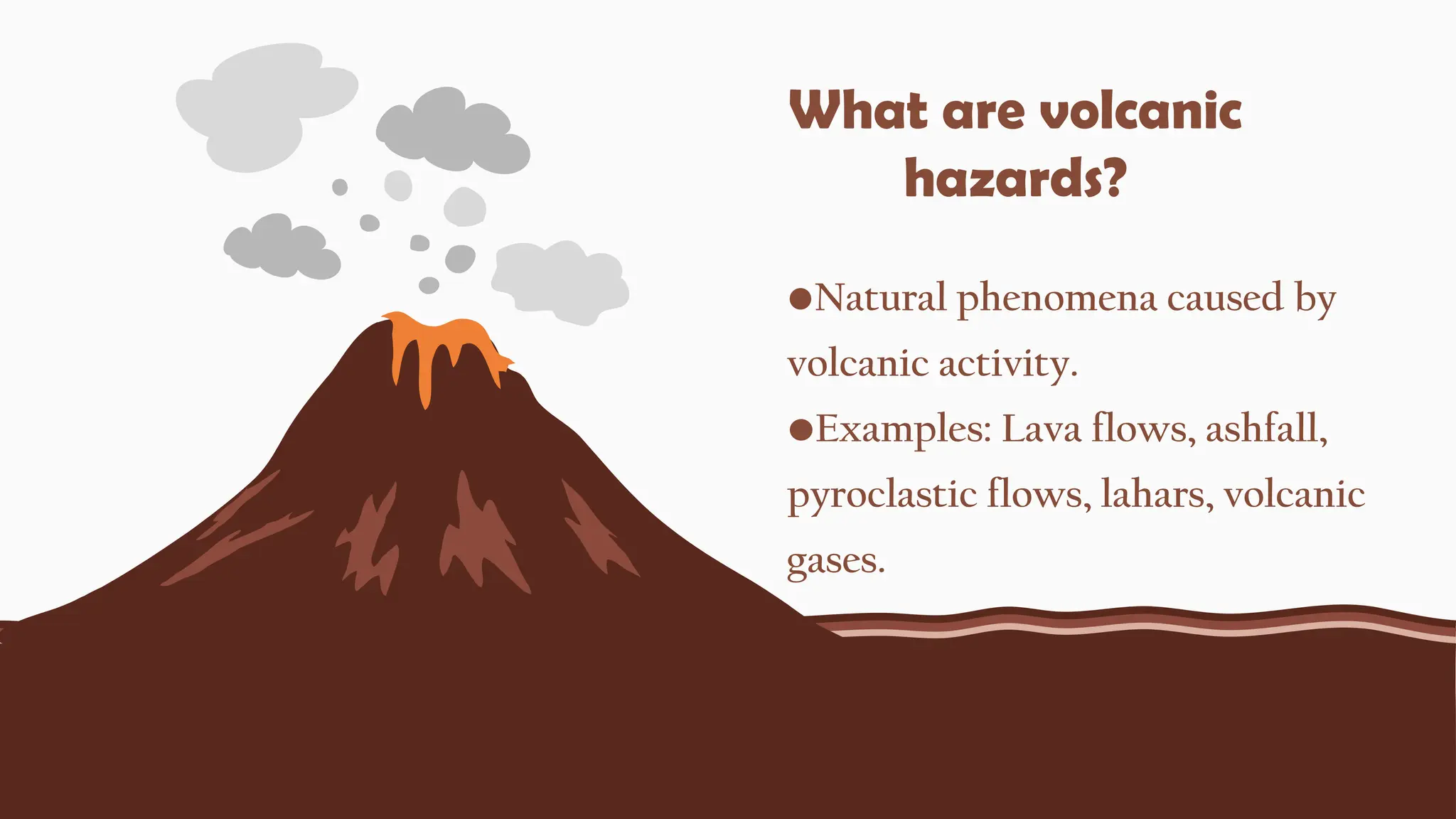
•Natural phenomena caused by
volcanic activity.
•Examples: Lava flows, ashfall,
pyroclastic flows, lahars, volcanic
gases.
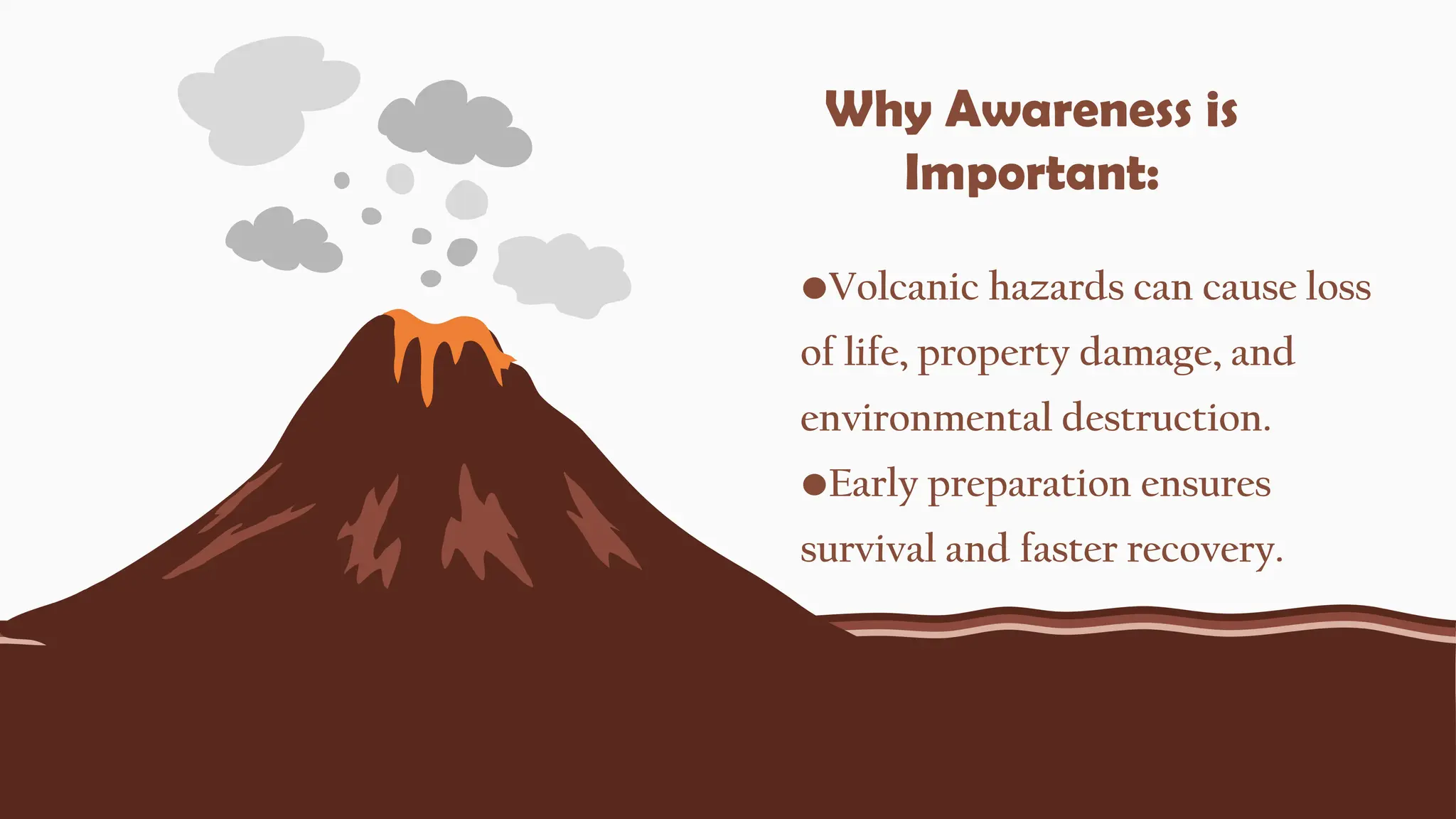
Why Awareness is
Important:
•Volcanic hazards can cause loss
of life, property damage, and
environmental destruction.
•Early preparation ensures
survival and faster recovery.
01
Before an eruption
Before an eruption:
 Know the warning signs: Listen to emergency alerts and
follow evacuation orders.
 Stay informed: Listen to a battery-operated radio or
television for the latest emergency information.
 Prepare your family: Make sure everyone knows what
to do in the event of a volcanic eruption.
Before an eruption:
Create a Go-Bag:
•Water (3-day supply), non-perishable food, flashlight,
batteries, masks, goggles, first aid kit, and important documents.
Family Evacuation Plan:
•Designate meeting points and discuss evacuation routes.
Community Engagement:
•Participate in local disaster preparedness drills.
Secure Your Property:
•Reinforce roofs to withstand ashfall.
•Seal doors and windows to prevent ash from entering.
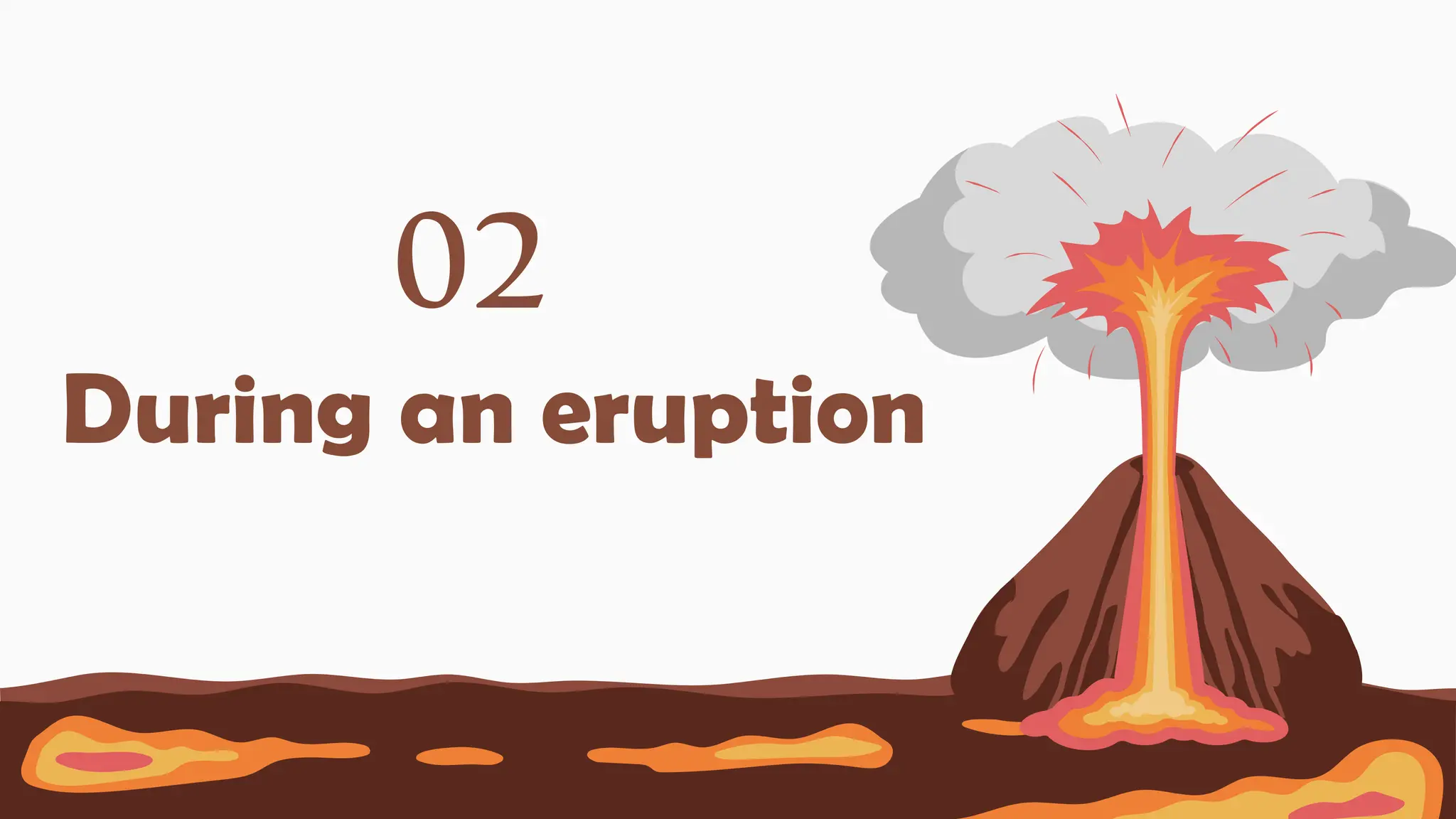
02
During an eruption
During an eruption
● Follow Authorities’ Instructions: Evacuate
immediately when advised.
● Stay away from restricted areas: Avoid river valleys,
low-lying areas, and the restricted zone defined by
government officials.
●Stay indoors: If you're inside, move away from
windows, doors, and heavy objects.
 Reduce ash exposure: Limit your time outdoors and
wear a dust mask or cloth mask.
03
After an eruption
After an eruption
Wait for Official Updates:
• Do not return home until authorities declare it safe.
•Be cautious of aftershocks or secondary eruptions.
Wear a respirator:
 Wear a NIOSH Approved N95 respirator to protect
your lungs from ash.
Stay away from ashfall areas:
 Stay indoors and away from areas where ash has
fallen.
Help others:
 If you're trained, provide first aid to those in need.
That’s all,
thank you!
GROUP MEMBER’S:
OSING, REHANNA
CAYUNDA, SHEMIERY
ASDILLO, JEMUEL
ANDRES, KIARA
ANDAO, JULIENNE

Before, during and after volcanic eruption

  • 1.
    Volcanic Hazards: Be PreparedBefore, During, and After an Eruption A Guide to Staying Safe Before, During, and After a Volcanic Eruption
  • 2.
    What are volcanic hazards? •Naturalphenomena caused by volcanic activity. •Examples: Lava flows, ashfall, pyroclastic flows, lahars, volcanic gases.
  • 3.
    Why Awareness is Important: •Volcanichazards can cause loss of life, property damage, and environmental destruction. •Early preparation ensures survival and faster recovery.
  • 4.
  • 5.
    Before an eruption: Know the warning signs: Listen to emergency alerts and follow evacuation orders.  Stay informed: Listen to a battery-operated radio or television for the latest emergency information.  Prepare your family: Make sure everyone knows what to do in the event of a volcanic eruption.
  • 6.
    Before an eruption: Createa Go-Bag: •Water (3-day supply), non-perishable food, flashlight, batteries, masks, goggles, first aid kit, and important documents. Family Evacuation Plan: •Designate meeting points and discuss evacuation routes. Community Engagement: •Participate in local disaster preparedness drills. Secure Your Property: •Reinforce roofs to withstand ashfall. •Seal doors and windows to prevent ash from entering.
  • 7.
  • 8.
    During an eruption ●Follow Authorities’ Instructions: Evacuate immediately when advised. ● Stay away from restricted areas: Avoid river valleys, low-lying areas, and the restricted zone defined by government officials. ●Stay indoors: If you're inside, move away from windows, doors, and heavy objects.  Reduce ash exposure: Limit your time outdoors and wear a dust mask or cloth mask.
  • 9.
  • 10.
    After an eruption Waitfor Official Updates: • Do not return home until authorities declare it safe. •Be cautious of aftershocks or secondary eruptions. Wear a respirator:  Wear a NIOSH Approved N95 respirator to protect your lungs from ash. Stay away from ashfall areas:  Stay indoors and away from areas where ash has fallen. Help others:  If you're trained, provide first aid to those in need.
  • 11.
  • 12.
    GROUP MEMBER’S: OSING, REHANNA CAYUNDA,SHEMIERY ASDILLO, JEMUEL ANDRES, KIARA ANDAO, JULIENNE