St. Clare’s College   LIBRARY      PLAGIARISM
Plagiarism is: using other people’s   original words   or   ideas   without clearly acknowledging the source of the information.
Plagiarism   often happens accidentally because students: don’t understand what it is  or its implications  or their information research and processing skills need to be improved Hmmmm….confused?
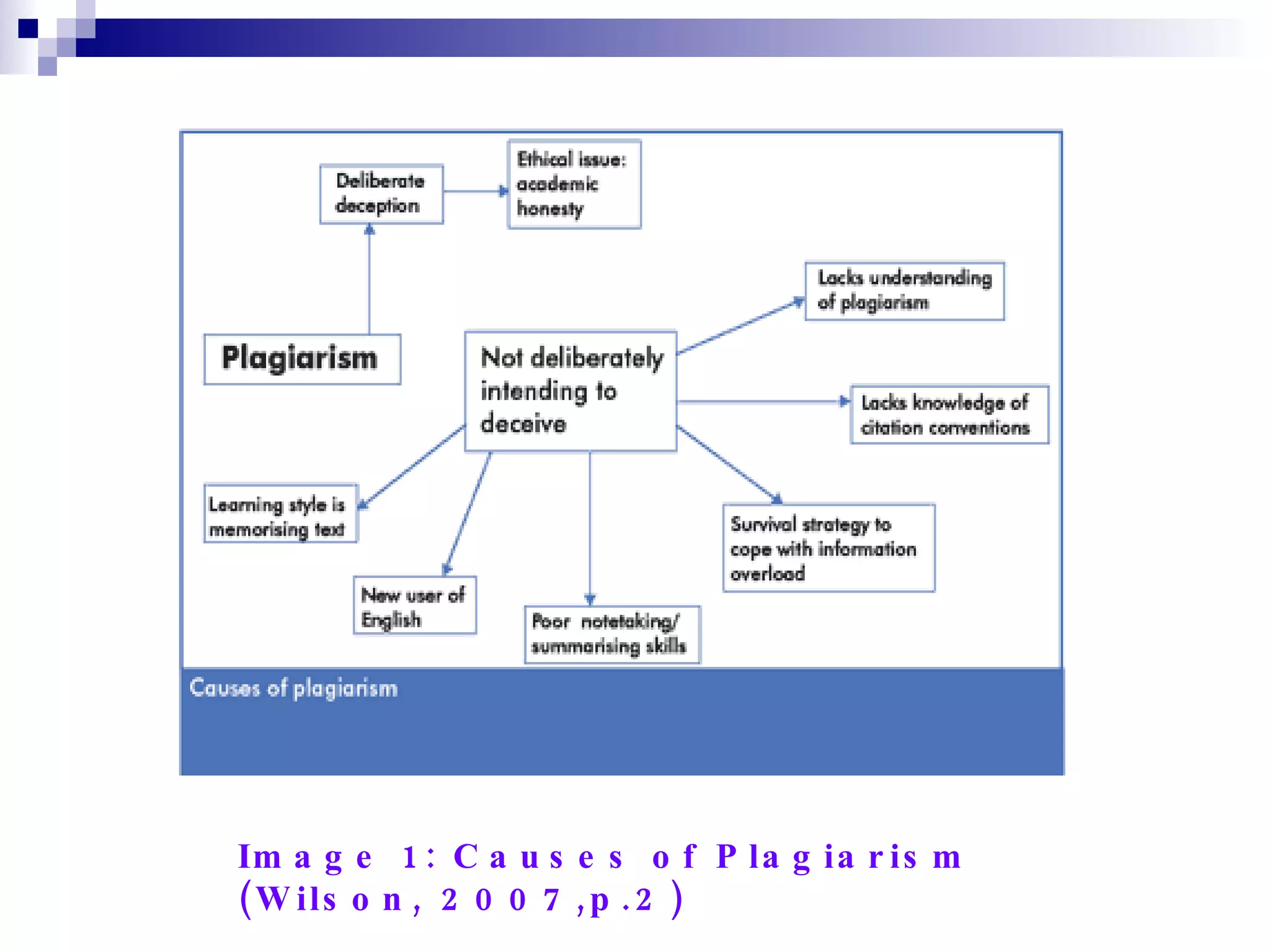
Image 1: Causes of Plagiarism (Wilson, 2007,p.2)
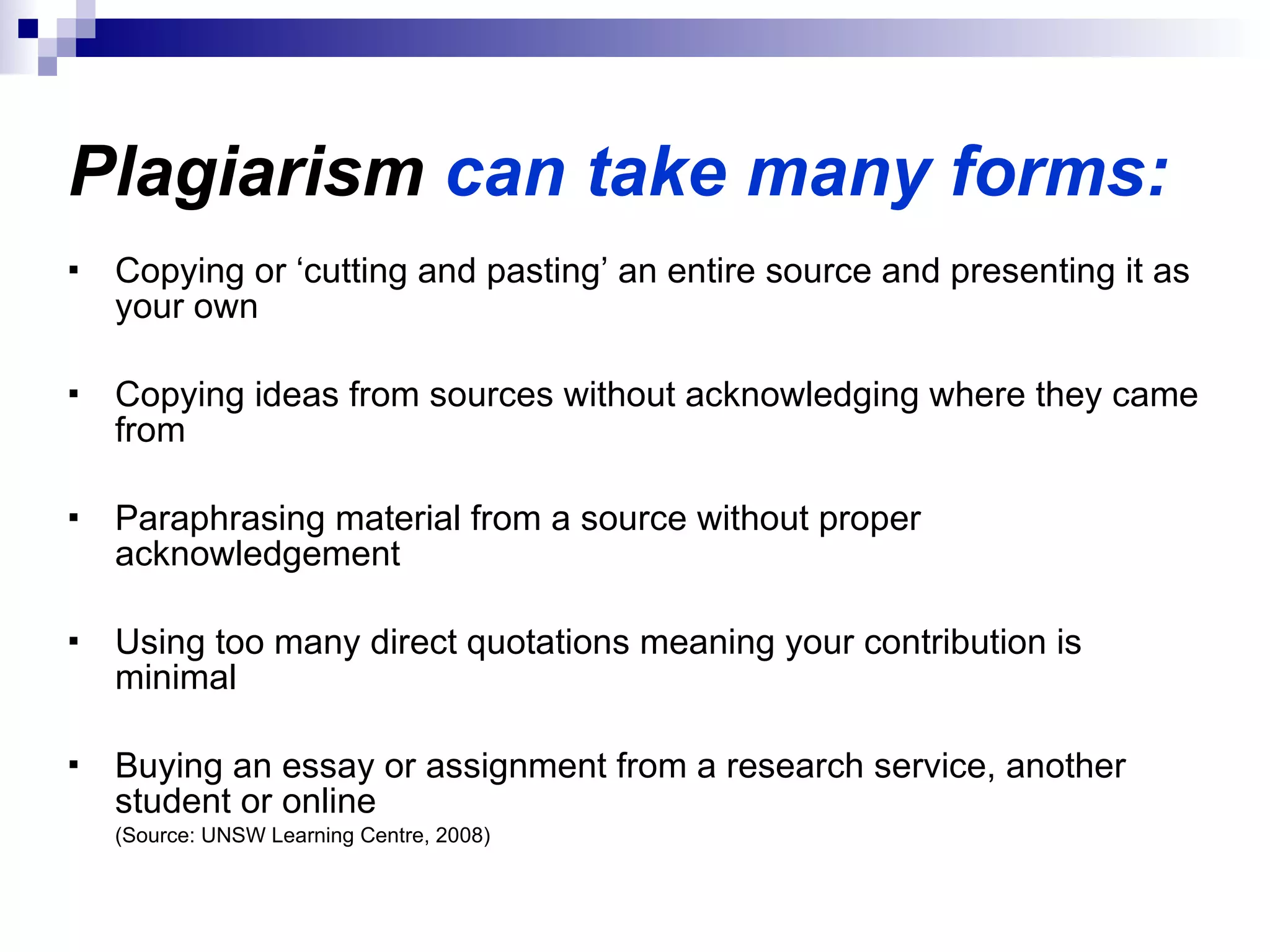
Plagiarism  can take many forms: Copying or ‘cutting and pasting’ an entire source and presenting it as your own Copying ideas from sources without acknowledging where they came from Paraphrasing material from a source without proper acknowledgement Using too many direct quotations meaning your contribution is minimal  Buying an essay or assignment from a research service, another student or online  (Source: UNSW Learning Centre, 2008)
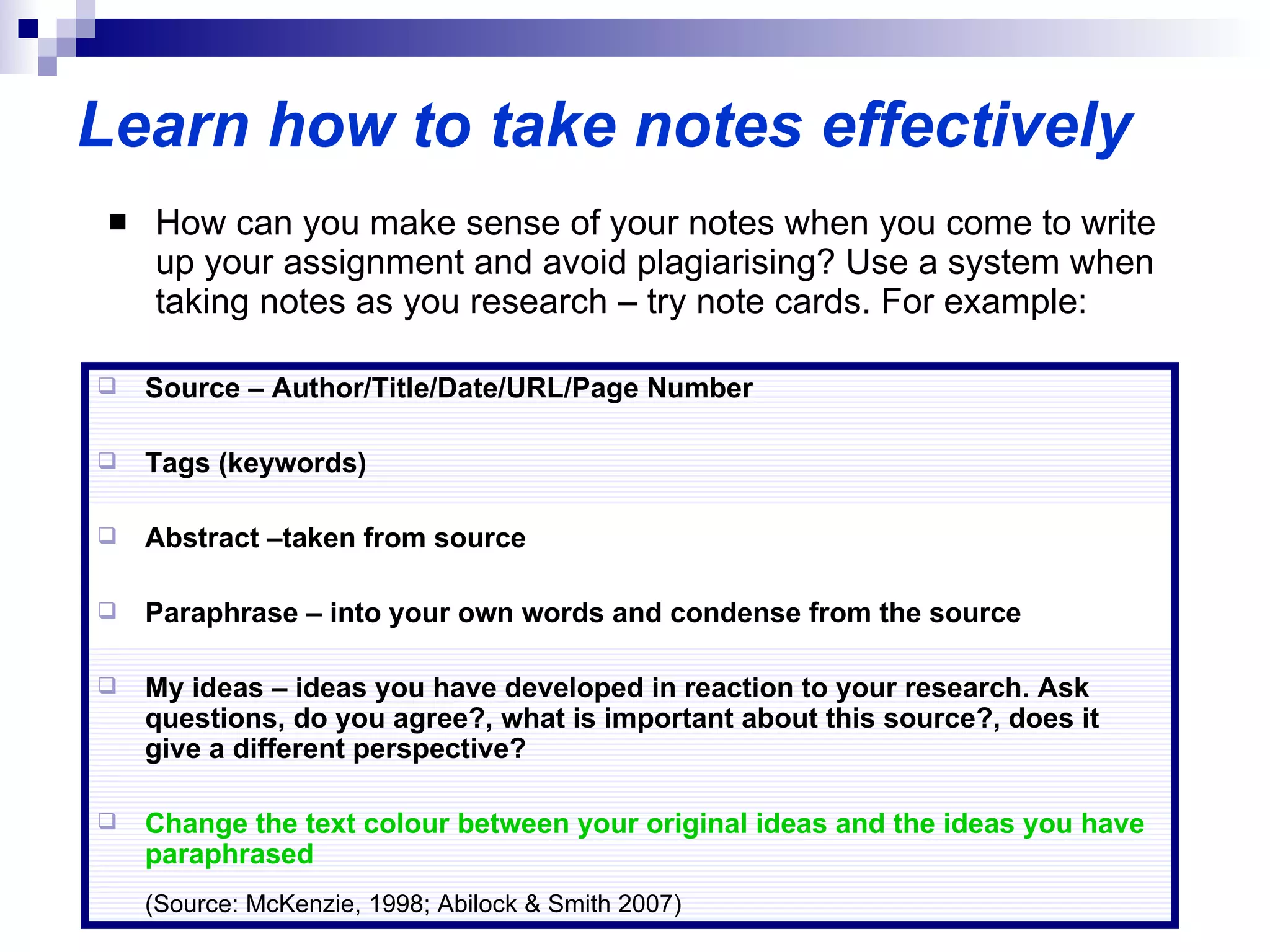
Learn how to take notes effectively How can you make sense of your notes when you come to write up your assignment and avoid plagiarising? Use a system when taking notes as you research – try note cards. For example: Source – Author/Title/Date/URL/Page Number Tags (keywords) Abstract –taken from source Paraphrase – into your own words and condense from the source My ideas – ideas you have developed in reaction to your research. Ask questions, do you agree?, what is important about this source?, does it give a different perspective? Change the text colour between your original ideas and the ideas you have paraphrased  (Source: McKenzie, 1998; Abilock & Smith 2007)
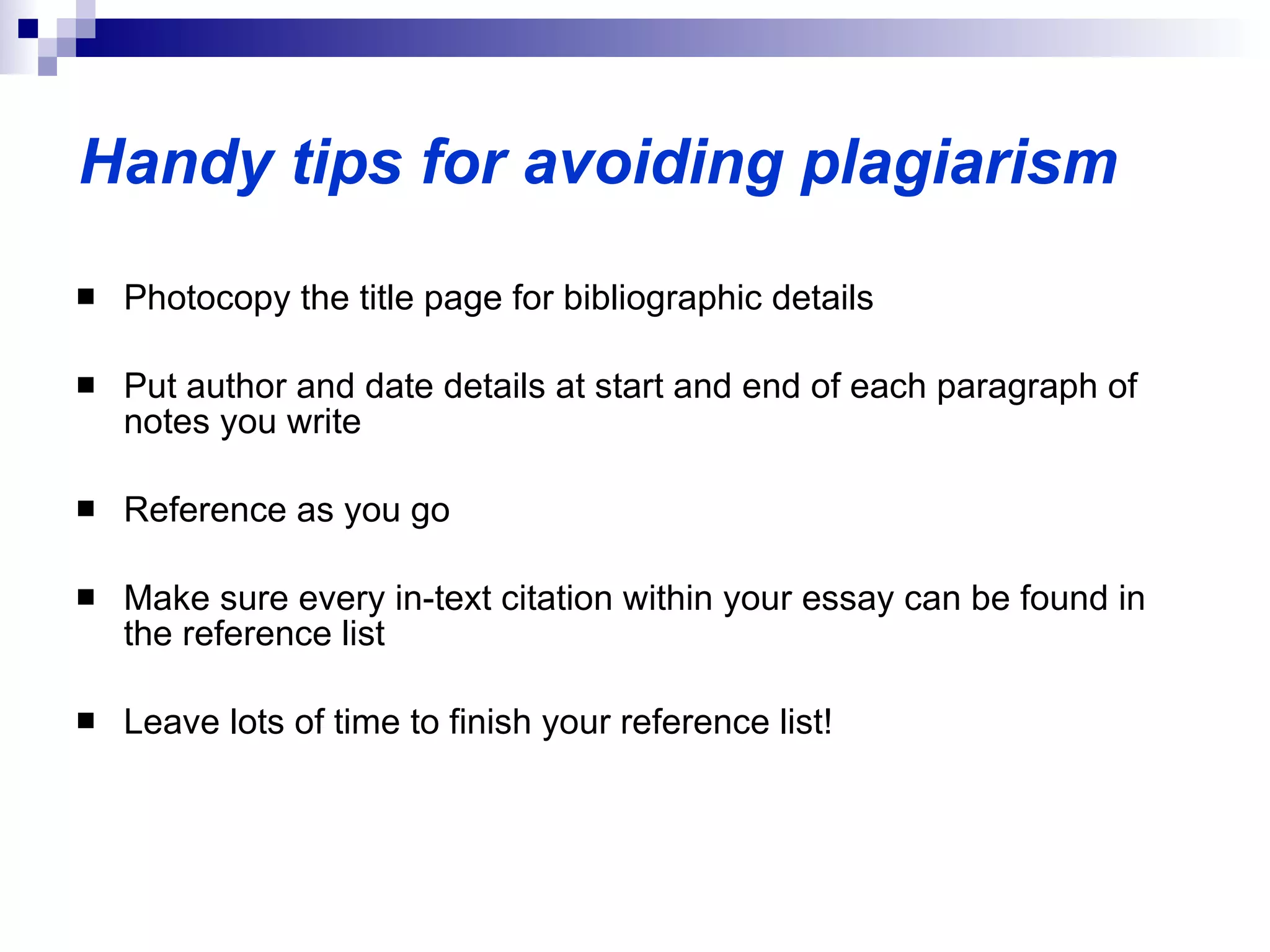
Photocopy the title page for bibliographic details Put author and date details at start and end of each paragraph of notes you write Reference as you go Make sure every in-text citation within your essay can be found in the reference list Leave lots of time to finish your reference list! Handy tips for avoiding plagiarism
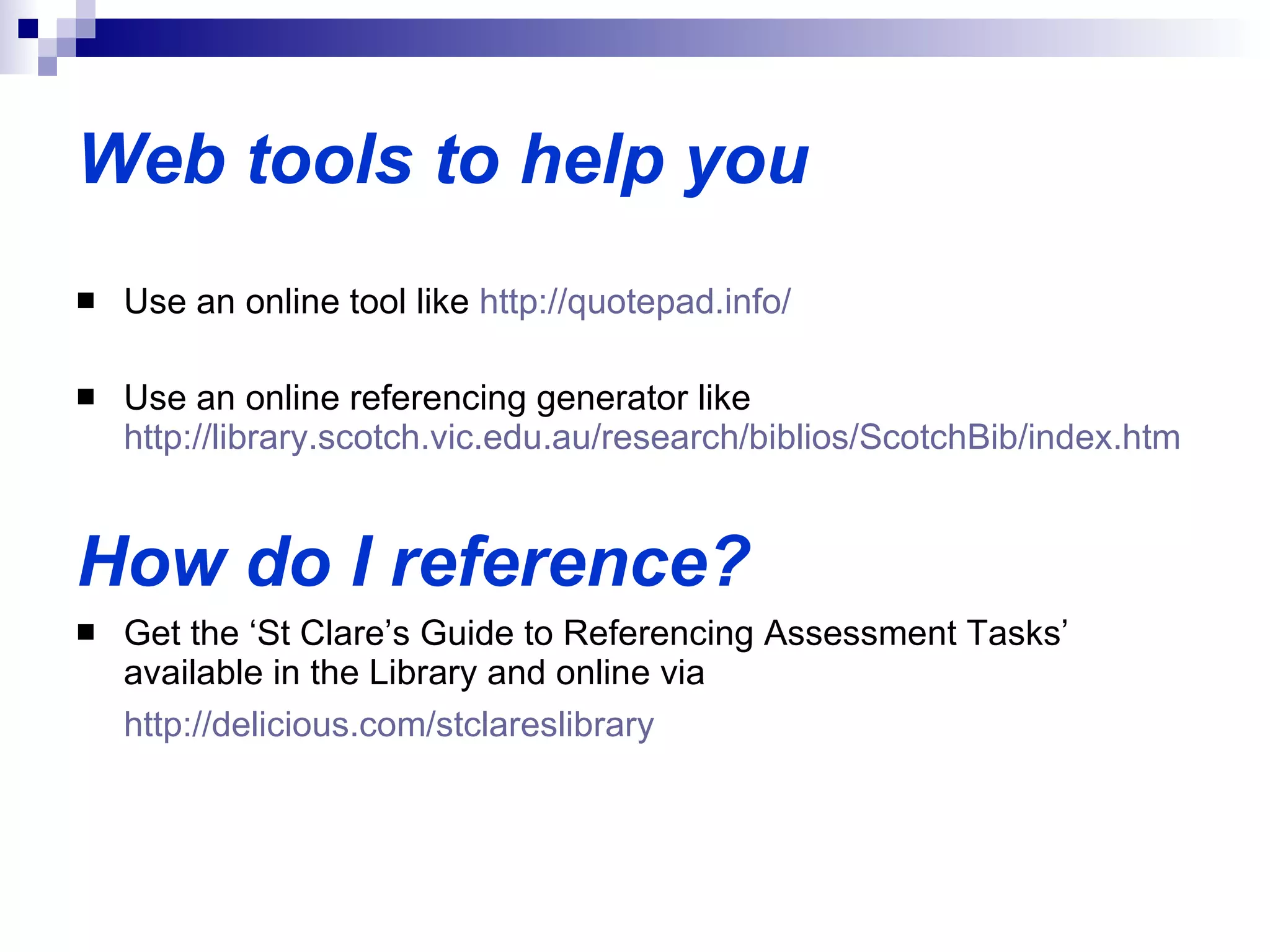
Web tools to help you Use an online tool like  http:// quotepad.info /  Use an online referencing generator like  http://library.scotch.vic.edu.au/research/biblios/ScotchBib/index.htm   How do I reference? Get the ‘St Clare’s Guide to Referencing Assessment Tasks’ available in the Library and online via  http://delicious.com/stclareslibrary
What do you need to reference? Words and ideas from others from all sources including the Internet, study guides, books, journal articles, radio transcripts, personal interviews, films, online videos, blogs, wikis, images, diagrams, emails. No need to reference… Your own experiences; your own critical analysis, comments or conclusion; common facts and knowledge (eg. the world is round). (Source: The Learning Centre, 2008, p.3)
Cite correctly to avoid plagiarism Know the difference between… paraphrasing ,  quoting  and  summarising !!! When you  use other people’s original words  or ideas: place their words between “…..”  and after the quote, place the surname, and year of publication, page number in parenthesis  Eg: “lorem ipsem” (Smith, 2008, p.3).  When you  paraphrase  other people’s words or ideas: at the end of the sentence or paragraph, place the surname and year of publication in parenthesis. If there is more than one source, cite them all Eg: (Smith, 2008; Wall, 2006) Check out the UNSW Learning Centre online document covering this topic at  http:// www.lc.unsw.edu.au/onlib/pdf/paraquo.pdf
If in doubt… Don’t pretend if you don’t have the source Ask for help from Library staff or your teacher
References for this Presentation Abilock, D. & Smith, S. 2007, ‘Beyond cut and paste’, accessed 4 November 2008 from  http://www.noodletools.com/debbie/ethical/catandmouse2.pdf   McKenzie, J. 1998,The new plagiarism: Seven antidotes to prevent highway robbery in an electronic age.  From Now On: The Educational Technology Journal,7(8),  accessed 4 November, 2008 from  http://fno.org/may98/cov98may.html   The Learning Centre UNSW, 2008, ‘Avoiding plagiarism’, accessed 4 th  November, 2008 from  http://www.lc.unsw.edu.au/onlib/pdf/plag.pdf Wilson, D. 2007, Crime or confusion – why do students plagiarise?, Connections  60(1), pp.1-2. Useful Links Plagiarism and Academic Integrity, UNSW http://www.lc.unsw.edu.au/plagiarism/index.html   Plagiarism: What do you value? Available through  Clickview . http://library.acadiau.ca/tutorials/plagiarism/   - online interactive plagiarism tutorial Plagiarism and Academic Honesty, Sydney University  http://elearning.library.usyd.edu.au/learn/plagiarism/index.php   (interactive tutorial) - this is excellent tutorial. It has a university focus but is still highly applicable. All My Own Work – Board of Studies site for Yr 10 – Yr 12 students  http:// amow.boardofstudies.nsw.edu.au /   THE END

Avoiding Plagiarism

  • 1.
    St. Clare’s College LIBRARY PLAGIARISM
  • 2.
    Plagiarism is: usingother people’s original words or ideas without clearly acknowledging the source of the information.
  • 3.
    Plagiarism often happens accidentally because students: don’t understand what it is or its implications or their information research and processing skills need to be improved Hmmmm….confused?
  • 4.
    Image 1: Causesof Plagiarism (Wilson, 2007,p.2)
  • 5.
    Plagiarism cantake many forms: Copying or ‘cutting and pasting’ an entire source and presenting it as your own Copying ideas from sources without acknowledging where they came from Paraphrasing material from a source without proper acknowledgement Using too many direct quotations meaning your contribution is minimal Buying an essay or assignment from a research service, another student or online (Source: UNSW Learning Centre, 2008)
  • 6.
    Learn how totake notes effectively How can you make sense of your notes when you come to write up your assignment and avoid plagiarising? Use a system when taking notes as you research – try note cards. For example: Source – Author/Title/Date/URL/Page Number Tags (keywords) Abstract –taken from source Paraphrase – into your own words and condense from the source My ideas – ideas you have developed in reaction to your research. Ask questions, do you agree?, what is important about this source?, does it give a different perspective? Change the text colour between your original ideas and the ideas you have paraphrased (Source: McKenzie, 1998; Abilock & Smith 2007)
  • 7.
    Photocopy the titlepage for bibliographic details Put author and date details at start and end of each paragraph of notes you write Reference as you go Make sure every in-text citation within your essay can be found in the reference list Leave lots of time to finish your reference list! Handy tips for avoiding plagiarism
  • 8.
    Web tools tohelp you Use an online tool like http:// quotepad.info / Use an online referencing generator like http://library.scotch.vic.edu.au/research/biblios/ScotchBib/index.htm How do I reference? Get the ‘St Clare’s Guide to Referencing Assessment Tasks’ available in the Library and online via http://delicious.com/stclareslibrary
  • 9.
    What do youneed to reference? Words and ideas from others from all sources including the Internet, study guides, books, journal articles, radio transcripts, personal interviews, films, online videos, blogs, wikis, images, diagrams, emails. No need to reference… Your own experiences; your own critical analysis, comments or conclusion; common facts and knowledge (eg. the world is round). (Source: The Learning Centre, 2008, p.3)
  • 10.
    Cite correctly toavoid plagiarism Know the difference between… paraphrasing , quoting and summarising !!! When you use other people’s original words or ideas: place their words between “…..” and after the quote, place the surname, and year of publication, page number in parenthesis Eg: “lorem ipsem” (Smith, 2008, p.3). When you paraphrase other people’s words or ideas: at the end of the sentence or paragraph, place the surname and year of publication in parenthesis. If there is more than one source, cite them all Eg: (Smith, 2008; Wall, 2006) Check out the UNSW Learning Centre online document covering this topic at http:// www.lc.unsw.edu.au/onlib/pdf/paraquo.pdf
  • 11.
    If in doubt…Don’t pretend if you don’t have the source Ask for help from Library staff or your teacher
  • 12.
    References for thisPresentation Abilock, D. & Smith, S. 2007, ‘Beyond cut and paste’, accessed 4 November 2008 from http://www.noodletools.com/debbie/ethical/catandmouse2.pdf McKenzie, J. 1998,The new plagiarism: Seven antidotes to prevent highway robbery in an electronic age. From Now On: The Educational Technology Journal,7(8), accessed 4 November, 2008 from http://fno.org/may98/cov98may.html The Learning Centre UNSW, 2008, ‘Avoiding plagiarism’, accessed 4 th November, 2008 from http://www.lc.unsw.edu.au/onlib/pdf/plag.pdf Wilson, D. 2007, Crime or confusion – why do students plagiarise?, Connections 60(1), pp.1-2. Useful Links Plagiarism and Academic Integrity, UNSW http://www.lc.unsw.edu.au/plagiarism/index.html Plagiarism: What do you value? Available through Clickview . http://library.acadiau.ca/tutorials/plagiarism/ - online interactive plagiarism tutorial Plagiarism and Academic Honesty, Sydney University http://elearning.library.usyd.edu.au/learn/plagiarism/index.php (interactive tutorial) - this is excellent tutorial. It has a university focus but is still highly applicable. All My Own Work – Board of Studies site for Yr 10 – Yr 12 students http:// amow.boardofstudies.nsw.edu.au / THE END