Plagiarism @ AT St Mary’s
Do we have a problem Have you discovered plagiarism? Have you suspected plagiarism?
Do we have a problem? Do you teach note-taking? Do you teach bibliographies and citations? Do you set anti-plagiarism questions? Do you teach safe-searching? Do you teach academic ethics?
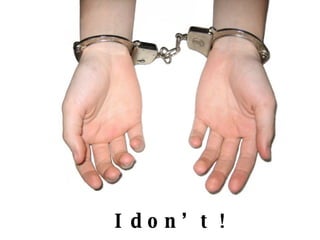
I don’t !
What is the problem? Students don’t know what plagiarism is. Students don’t recognise intellectual property in a digital world. Resources are immediately available. Students share with each other. Our tasks often beg for plagiarism. Students don’t manage time well.
What is the problem? Students believe the ‘right’ answer has already been written. Students believe the resources they have found are so much better than their own ideas. Students believe their peers may find or write better stuff.
What is the problem? Academic integrity and ethics in  assessment are values and skills that must be taught. These values and skills must be taught consistently across the College. We must model these values and  skills.
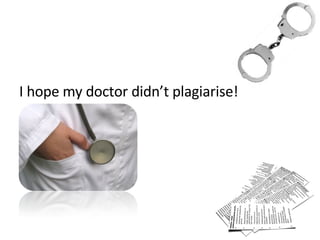
I hope my doctor didn’t plagiarise!
Our response Teach students what plagiarism is: PLAGIARISM:  Using the words, ideas or creations of a person without giving credit.  Passing off someone else’s words, ideas or creations as if they were  your own.
Our response Take a stand!  If you hear these,  make our position clear: “ everyone does it” “ there was no copyright notice” “ I changed some of the words” “ The website had no author name” “ If it is on the net it is  free ” “ no one gets caught”
Our response Show examples of plagiarism Let students in on the ways we use  to discover plagiarism: Phrase check on Google Mismatched citations Inconsistent bibliography Scholarly vocabulary
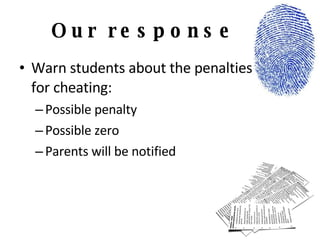
Our response Warn students about the penalties  for cheating: Possible penalty Possible zero Parents will be notified
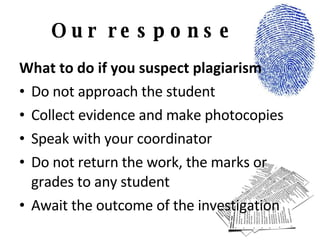
Our response What to do if you suspect plagiarism Do not approach the student Collect evidence and make photocopies Speak with your coordinator Do not return the work, the marks or grades to any student Await the outcome of the investigation
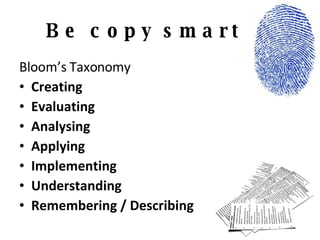
Be copy smart Bloom’s Taxonomy Creating Evaluating Analysing Applying Implementing Understanding Remembering / Describing
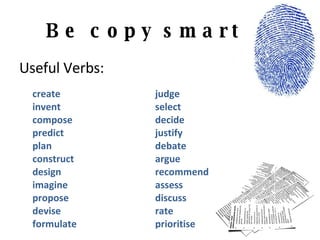
Be copy smart Useful Verbs: create invent compose predict plan construct design imagine propose devise formulate judge select decide justify debate argue recommend assess discuss rate prioritise
Be copy smart Assessment Design: Check an annotated bibliography in  the week before submission. Help students plan their time and their workload. Assess less and teach more.
resources Online Bibliography Tool www.bibme.org www.creativecommons.org Works that the creators are happy to share under a broad range of conditions Google Images are  not  free of copyright
IMAGES Check the conditions on each image www.sxc.hu  – Stock Exchange www.photobucket.com  – Photobucket www.flickr.com  – Flickr www.deviantart.com  – Art sharing DO NOT USE GOOGLE IMAGES
I would have finished this presentation with a funny cartoon, but the artist wanted $95 and I didn’t want to steal his intellectual property! All images in this presentation were downloaded from Stock Exchange ( www.sxc.hu ) and are royalty free and licensed under Creative Commons.
This presentation is available on Slideshare at: www.slideshare.net/old_roofrat/plagiarism

Plagiarism

  • 1.
    Plagiarism @ ATSt Mary’s
  • 2.
    Do we havea problem Have you discovered plagiarism? Have you suspected plagiarism?
  • 3.
    Do we havea problem? Do you teach note-taking? Do you teach bibliographies and citations? Do you set anti-plagiarism questions? Do you teach safe-searching? Do you teach academic ethics?
  • 4.
  • 5.
    What is theproblem? Students don’t know what plagiarism is. Students don’t recognise intellectual property in a digital world. Resources are immediately available. Students share with each other. Our tasks often beg for plagiarism. Students don’t manage time well.
  • 6.
    What is theproblem? Students believe the ‘right’ answer has already been written. Students believe the resources they have found are so much better than their own ideas. Students believe their peers may find or write better stuff.
  • 7.
    What is theproblem? Academic integrity and ethics in assessment are values and skills that must be taught. These values and skills must be taught consistently across the College. We must model these values and skills.
  • 8.
    I hope mydoctor didn’t plagiarise!
  • 9.
    Our response Teachstudents what plagiarism is: PLAGIARISM: Using the words, ideas or creations of a person without giving credit. Passing off someone else’s words, ideas or creations as if they were your own.
  • 10.
    Our response Takea stand! If you hear these, make our position clear: “ everyone does it” “ there was no copyright notice” “ I changed some of the words” “ The website had no author name” “ If it is on the net it is free ” “ no one gets caught”
  • 11.
    Our response Showexamples of plagiarism Let students in on the ways we use to discover plagiarism: Phrase check on Google Mismatched citations Inconsistent bibliography Scholarly vocabulary
  • 12.
    Our response Warnstudents about the penalties for cheating: Possible penalty Possible zero Parents will be notified
  • 13.
    Our response Whatto do if you suspect plagiarism Do not approach the student Collect evidence and make photocopies Speak with your coordinator Do not return the work, the marks or grades to any student Await the outcome of the investigation
  • 14.
    Be copy smartBloom’s Taxonomy Creating Evaluating Analysing Applying Implementing Understanding Remembering / Describing
  • 15.
    Be copy smartUseful Verbs: create invent compose predict plan construct design imagine propose devise formulate judge select decide justify debate argue recommend assess discuss rate prioritise
  • 16.
    Be copy smartAssessment Design: Check an annotated bibliography in the week before submission. Help students plan their time and their workload. Assess less and teach more.
  • 17.
    resources Online BibliographyTool www.bibme.org www.creativecommons.org Works that the creators are happy to share under a broad range of conditions Google Images are not free of copyright
  • 18.
    IMAGES Check theconditions on each image www.sxc.hu – Stock Exchange www.photobucket.com – Photobucket www.flickr.com – Flickr www.deviantart.com – Art sharing DO NOT USE GOOGLE IMAGES
  • 19.
    I would havefinished this presentation with a funny cartoon, but the artist wanted $95 and I didn’t want to steal his intellectual property! All images in this presentation were downloaded from Stock Exchange ( www.sxc.hu ) and are royalty free and licensed under Creative Commons.
  • 20.
    This presentation isavailable on Slideshare at: www.slideshare.net/old_roofrat/plagiarism