Introduction to
Running Lean Startups
Agile Egypt Meetup
Prepared by: Amr Medhat
Date: 21/2/2015
Introduction
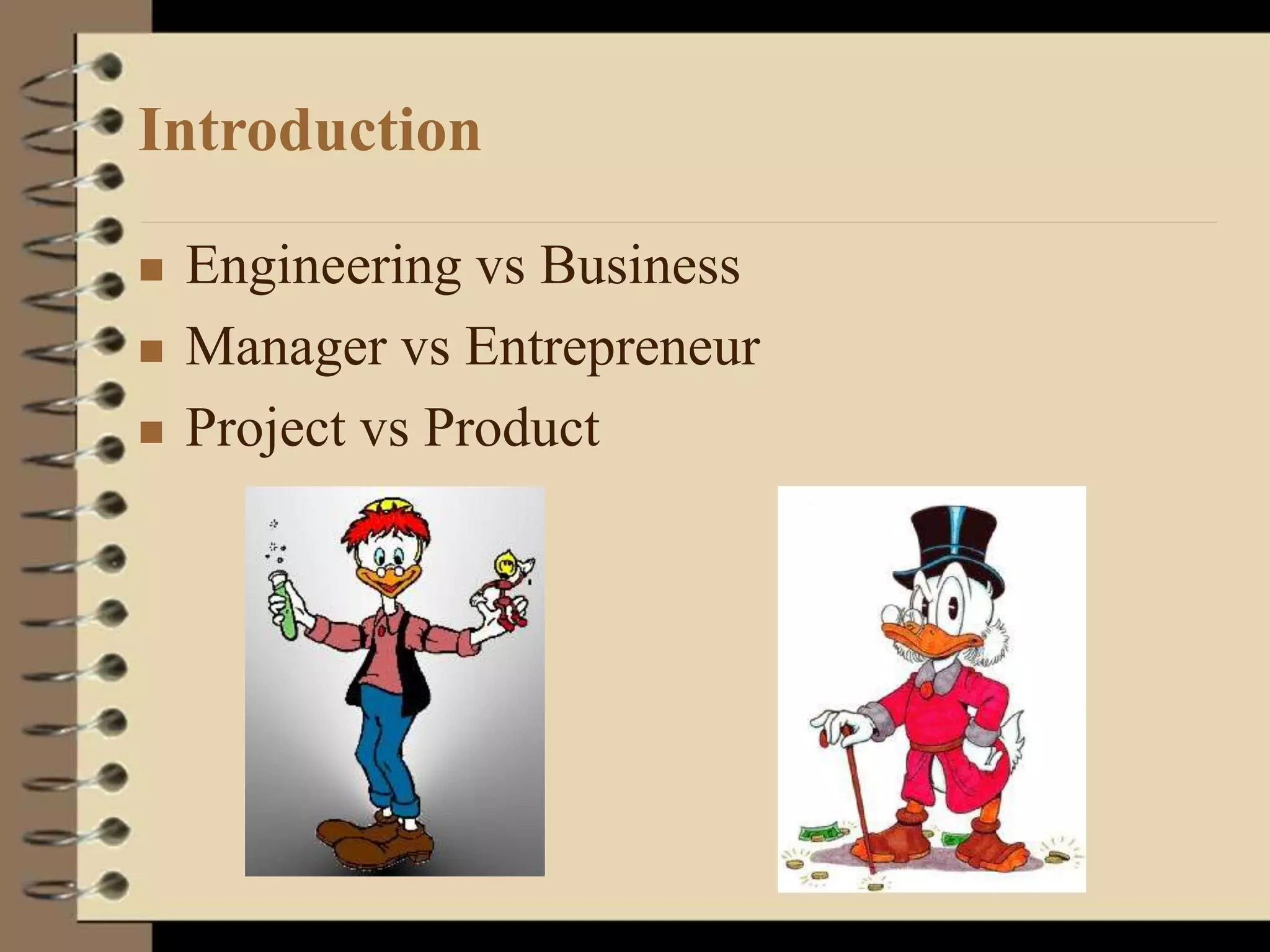
 Engineering vs Business
 Manager vs Entrepreneur
 Project vs Product
What's Lean?
 Toyota Production System
 Lean Principles
1. Eliminate Waste
(waste = anything with no value to customer)
2. Amplify Learning / Create Knowledge
3. Decide as Late as Possible / Defer Commitment
4. Deliver as Fast as Possible / Deliver Fast
5. Empower the Team / Respect People
6. Build Integrity / Quality in
7. See / Optimize the Whole
Lean Meets Agile
 Agile Values
1. Individuals and interactions over processes and tools
2. Working software over comprehensive documentation
3. Customer collaboration over contract negotiation
4. Responding to change over following a plan
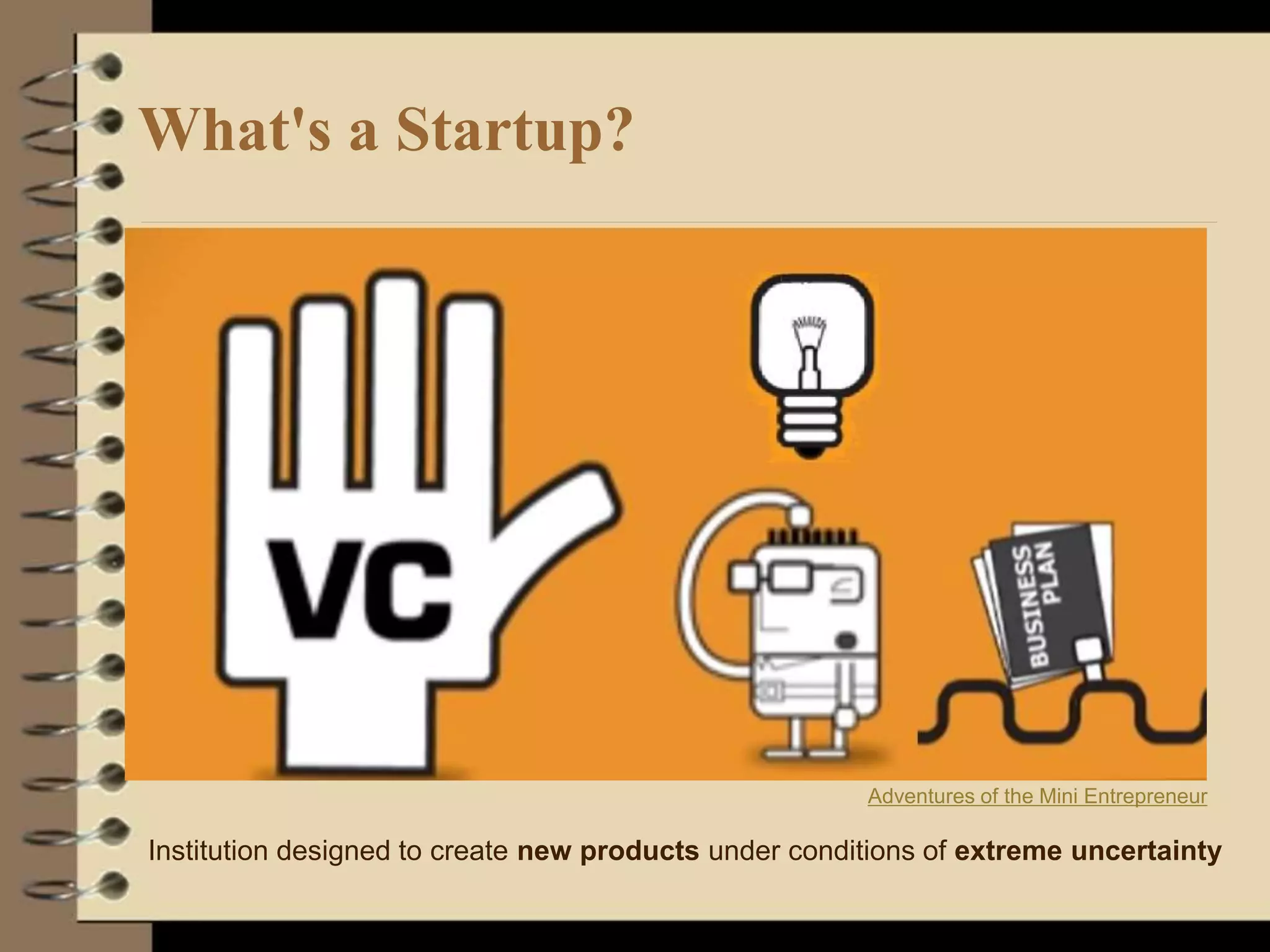
What's a Startup?
Adventures of the Mini Entrepreneur
Institution designed to create new products under conditions of extreme uncertainty
Why Lean Startups?
 Toyota productivity with lean increased 4
times than it competitors
 Toyota quality reached 12 times better
While ..
 90% of startups fail to launch their products
 50% of first-time CEOs get fired by their
investors
Why Startups Fail?
 You think your idea is brilliant?
=> Ideas are everywhere
 Idea is nothing without implementation
=> You implemented the perfect solution, for whom?
 A shiny business plan full of figures, speculations
& forecasting?
=> It's hard to predict the future without history
 You love chaos &"just do it" hoping they'll come?
=> Agility and dynamism are still management
* Your excuse: a lesson leaned? but how?
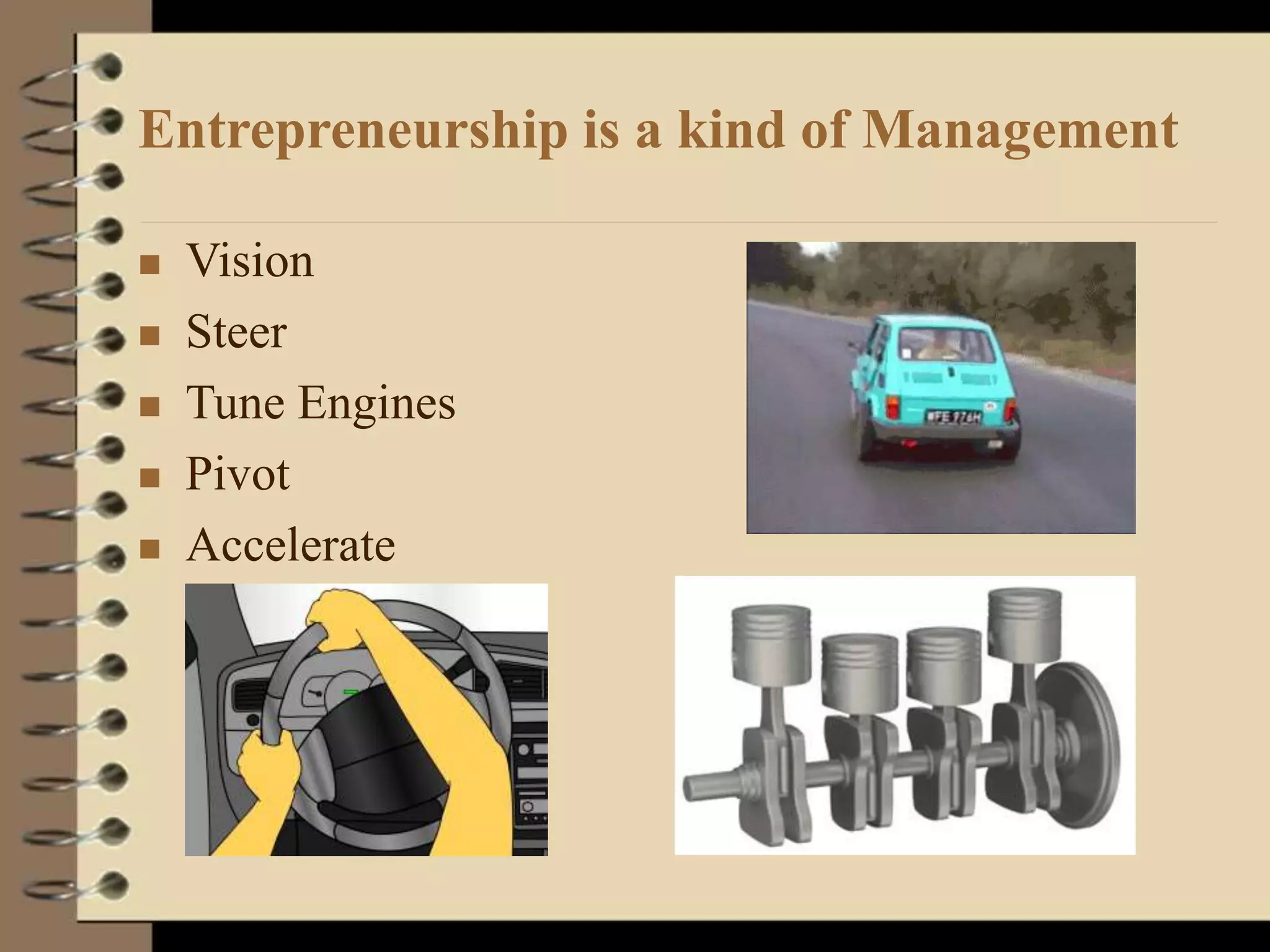
Entrepreneurship is a kind of Management
 Vision
 Steer
 Tune Engines
 Pivot
 Accelerate
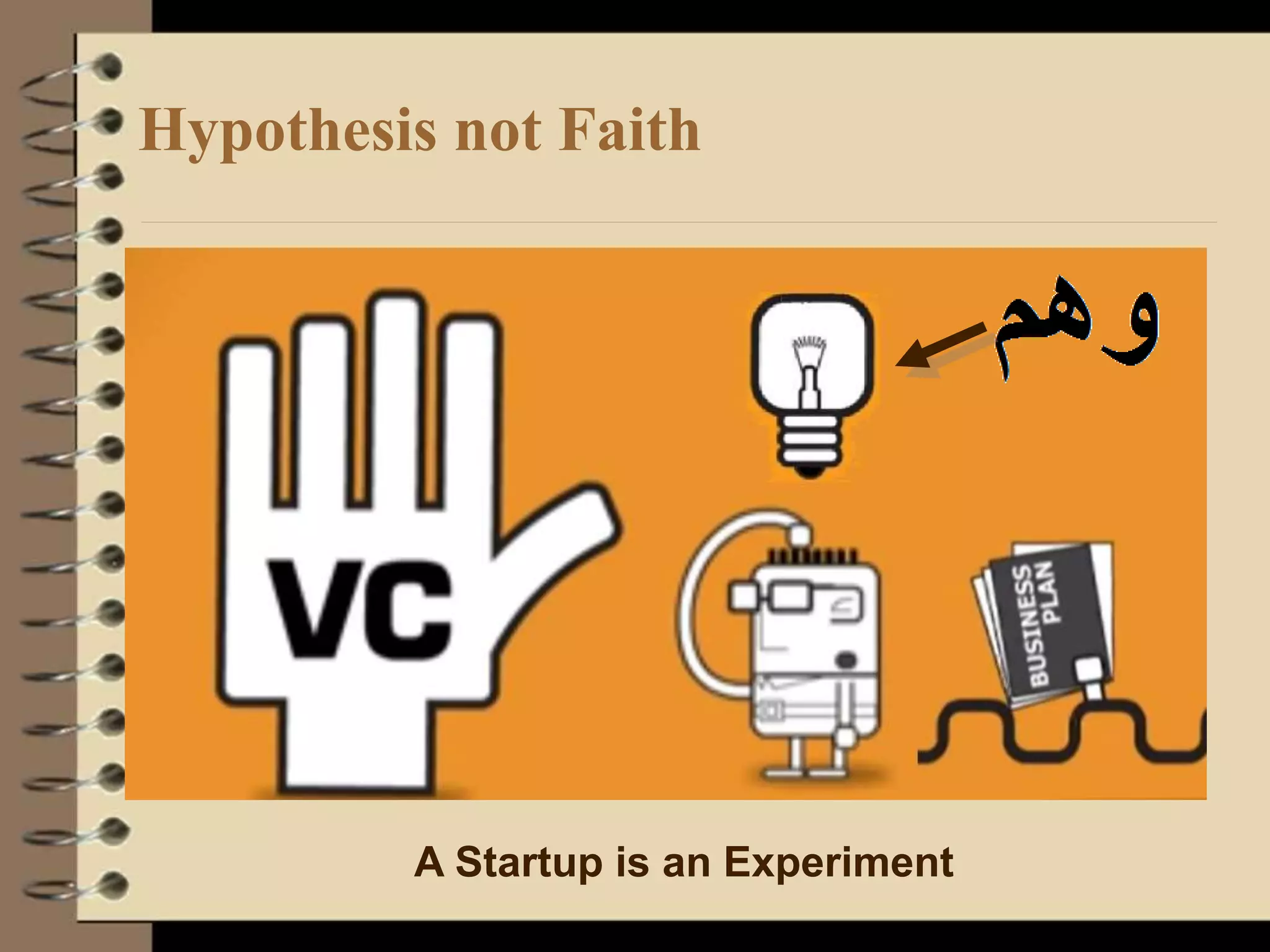
Hypothesis not Faith
A Startup is an Experiment
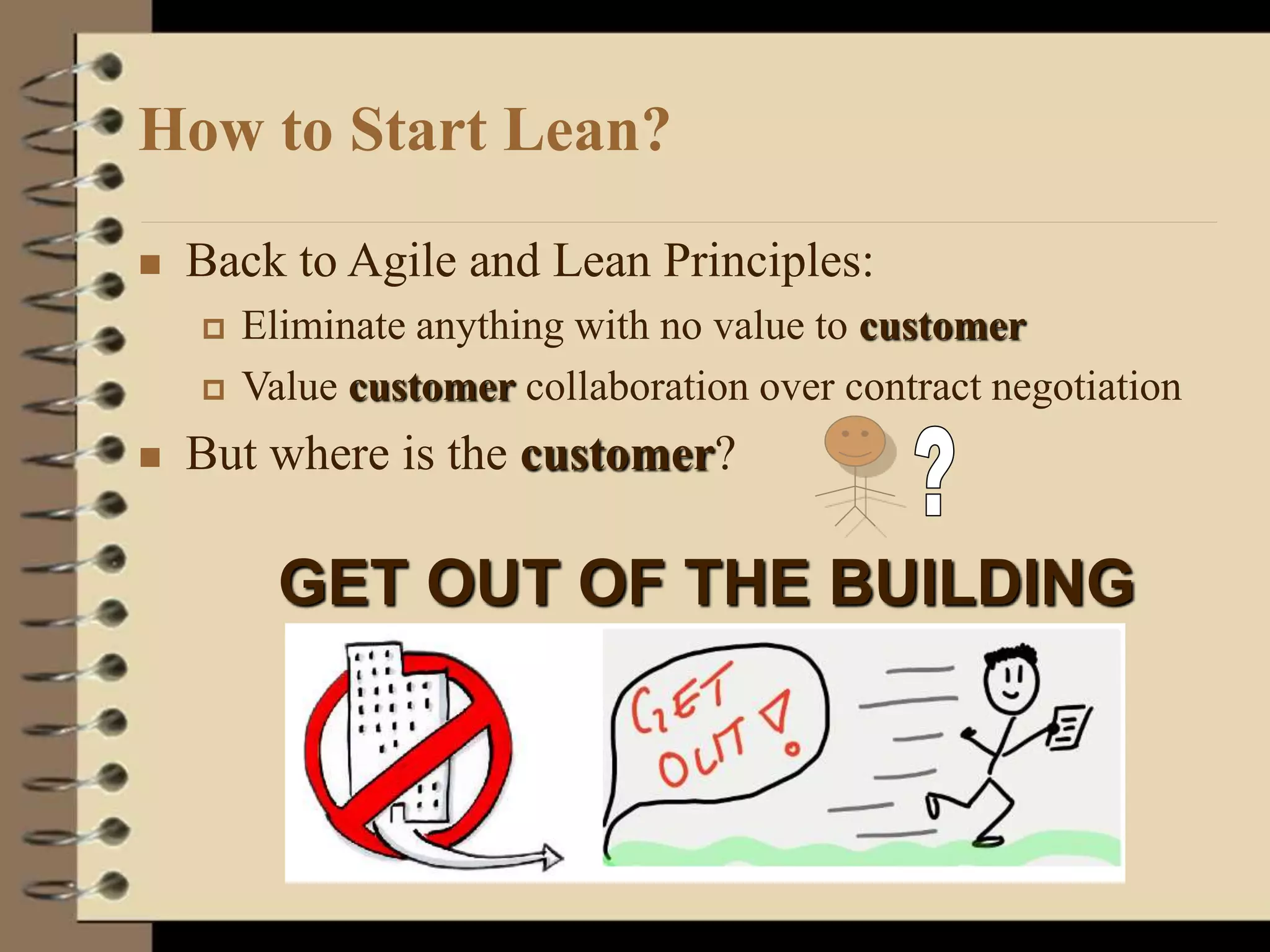
 Back to Agile and Lean Principles:
 Eliminate anything with no value to customer
 Value customer collaboration over contract negotiation
 But where is the customer?
How to Start Lean?
GET OUT OF THE BUILDING
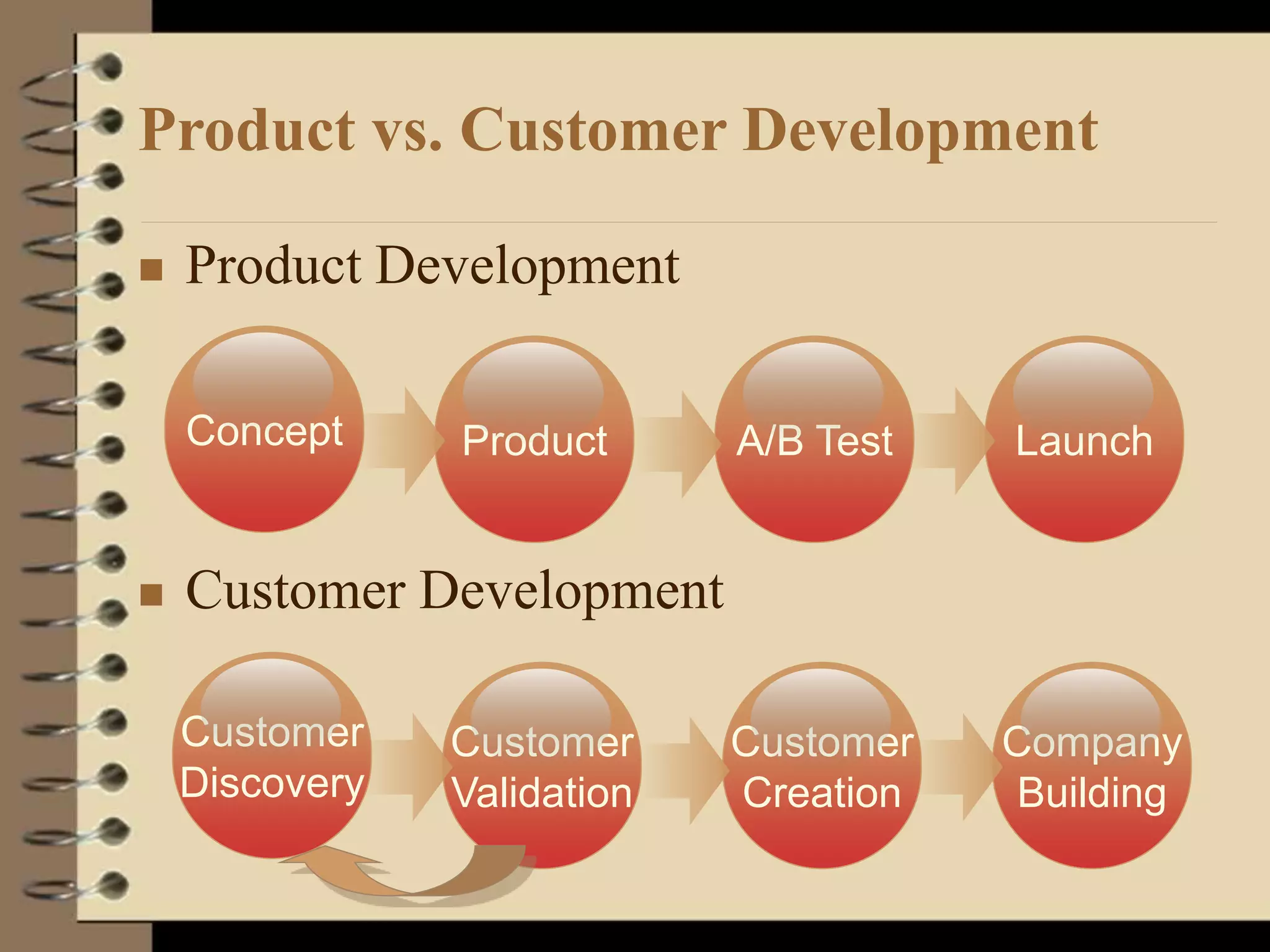
Product vs. Customer Development
 Product Development
 Customer Development
Concept Product A/B Test Launch
Customer
Discovery
Customer
Validation
Customer
Creation
Company
Building
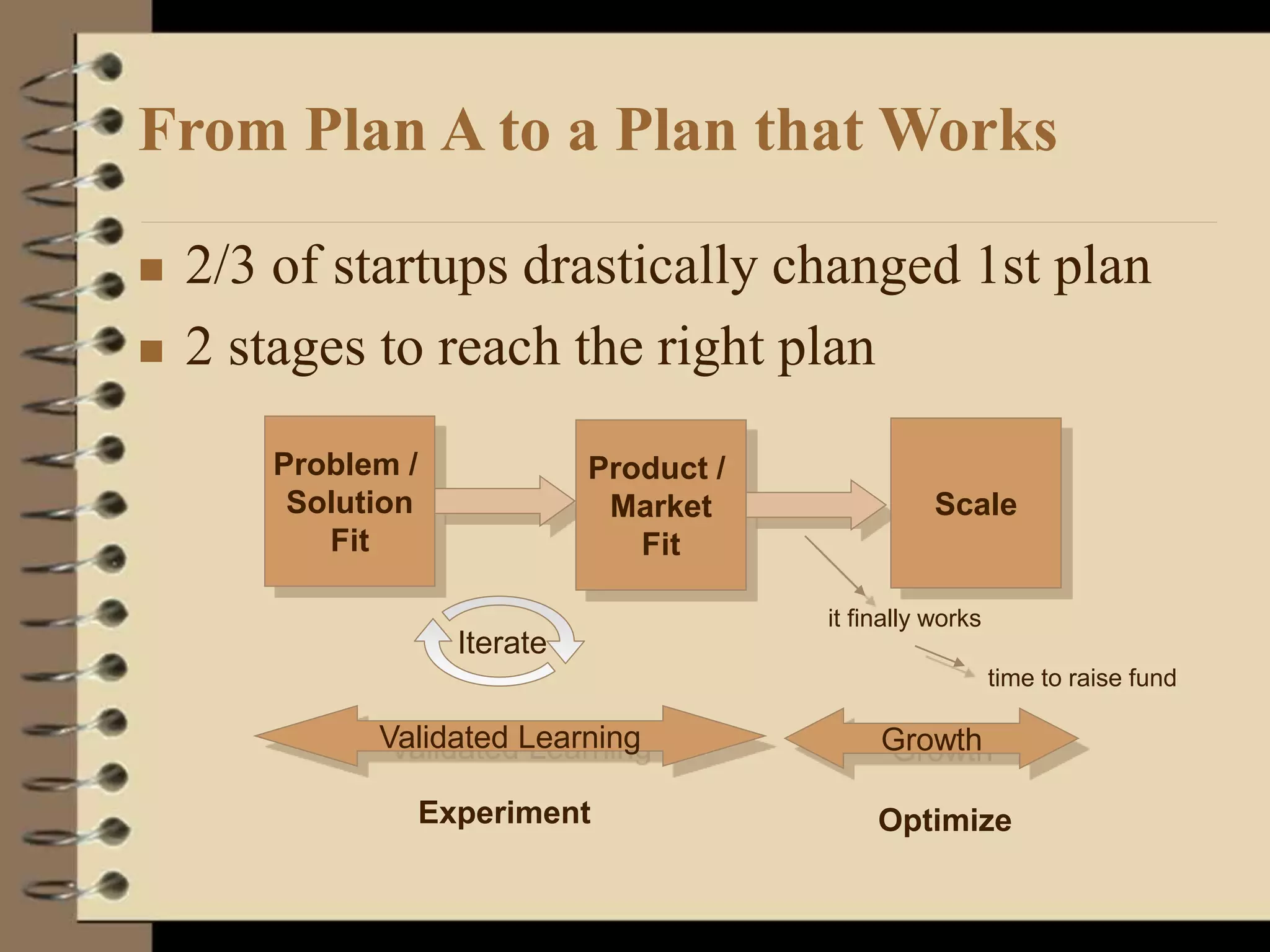
From Plan A to a Plan that Works
 2/3 of startups drastically changed 1st plan
 2 stages to reach the right plan
Problem /
Solution
Fit
Product /
Market
Fit
Scale
Iterate
Validated Learning Growth
Experiment Optimize
it finally works
time to raise fund
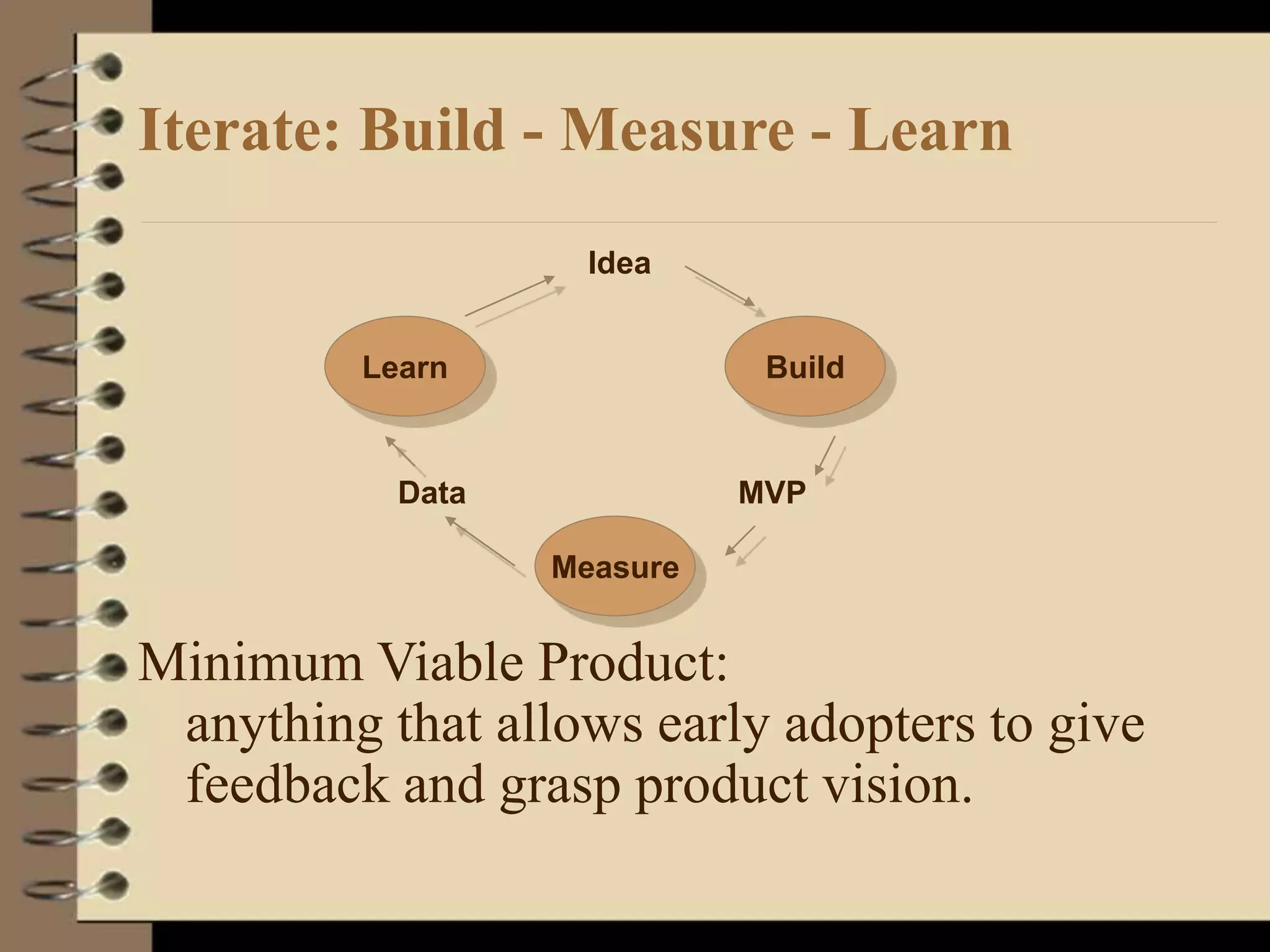
Iterate: Build - Measure - Learn
Minimum Viable Product:
anything that allows early adopters to give
feedback and grasp product vision.
Idea
Build
MVP
Measure
Data
Learn
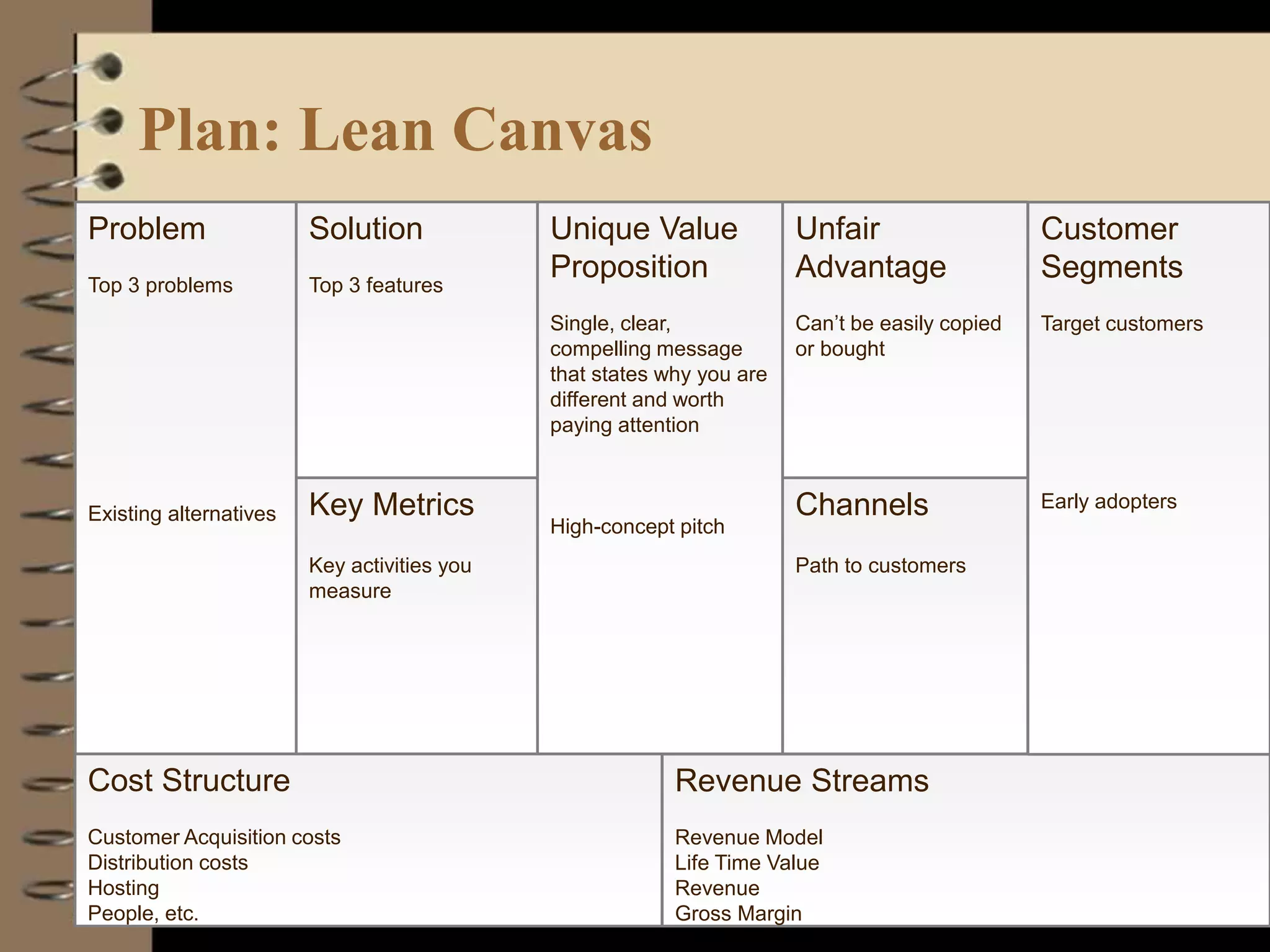
Plan: Lean Canvas
Cost Structure
Customer Acquisition costs
Distribution costs
Hosting
People, etc.
Revenue Streams
Revenue Model
Life Time Value
Revenue
Gross Margin
Problem
Top 3 problems
Existing alternatives
Solution
Top 3 features
Key Metrics
Key activities you
measure
Unique Value
Proposition
Single, clear,
compelling message
that states why you are
different and worth
paying attention
High-concept pitch
Unfair
Advantage
Can’t be easily copied
or bought
Channels
Path to customers
Customer
Segments
Target customers
Early adopters
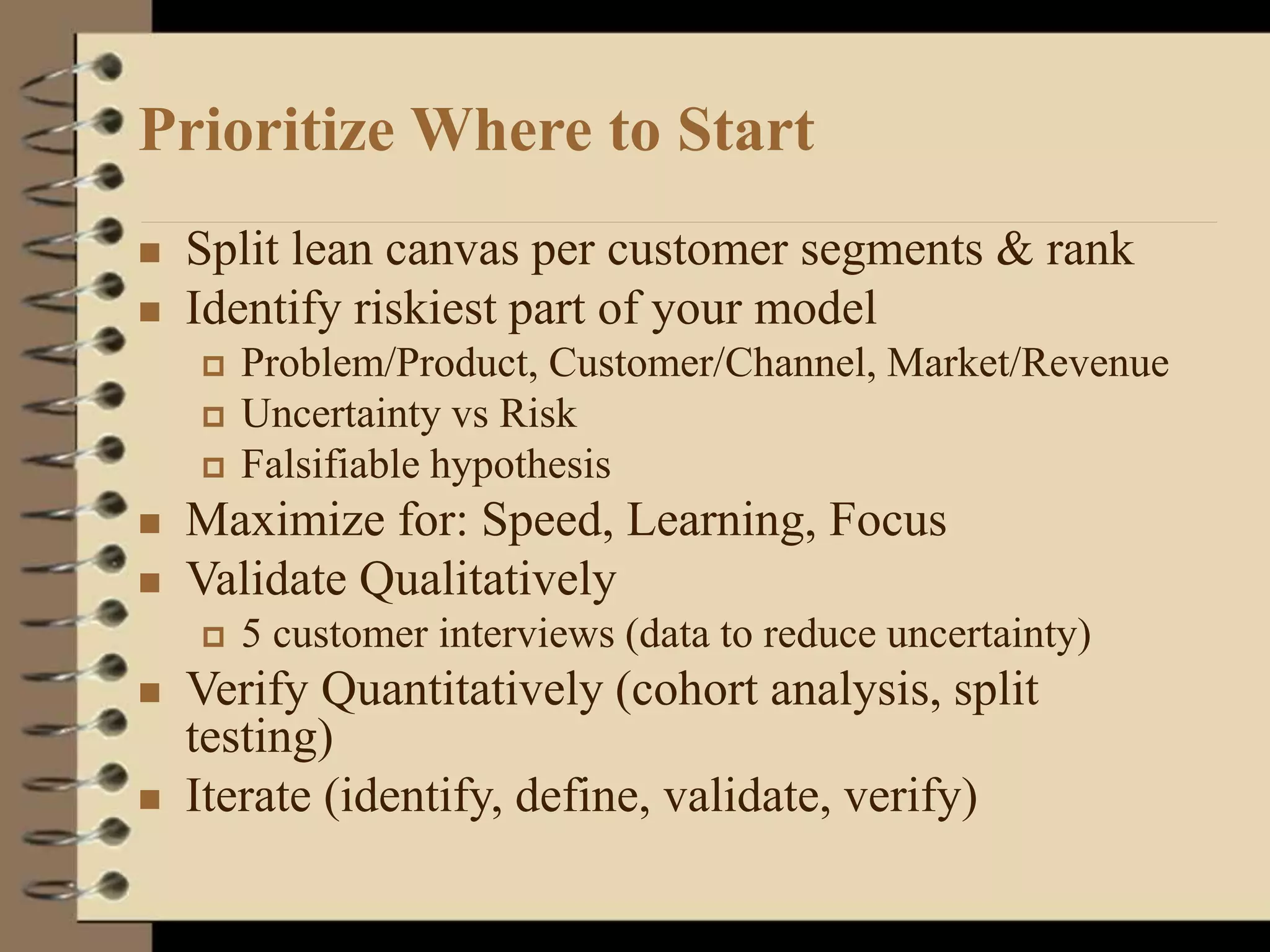
Prioritize Where to Start
 Split lean canvas per customer segments & rank
 Identify riskiest part of your model
 Problem/Product, Customer/Channel, Market/Revenue
 Uncertainty vs Risk
 Falsifiable hypothesis
 Maximize for: Speed, Learning, Focus
 Validate Qualitatively
 5 customer interviews (data to reduce uncertainty)
 Verify Quantitatively (cohort analysis, split
testing)
 Iterate (identify, define, validate, verify)
Customer Interview Guidelines
 No surveys
 No focus groups
 No pitching
 Measure what they do, not what they want
 Stick to a script
 Start with people you know
 then ask them to introduce you to others
 Neutral place - coffee shop
 20 - 30 minutes
 Document immediately
 don't record
 30-60 people (or till you're able to predict their answers)
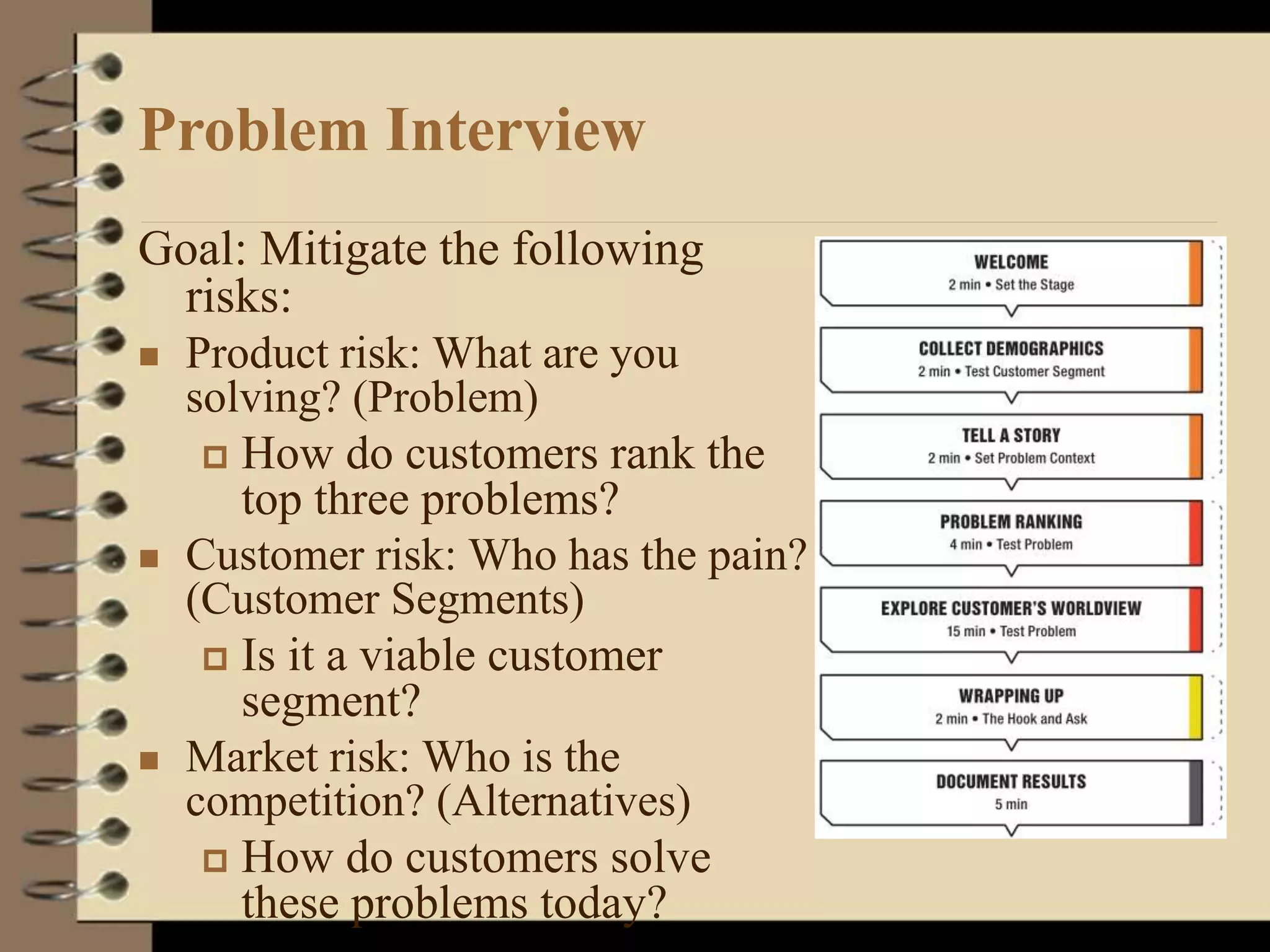
Problem Interview
Goal: Mitigate the following
risks:
 Product risk: What are you
solving? (Problem)
 How do customers rank the
top three problems?
 Customer risk: Who has the pain?
(Customer Segments)
 Is it a viable customer
segment?
 Market risk: Who is the
competition? (Alternatives)
 How do customers solve
these problems today?
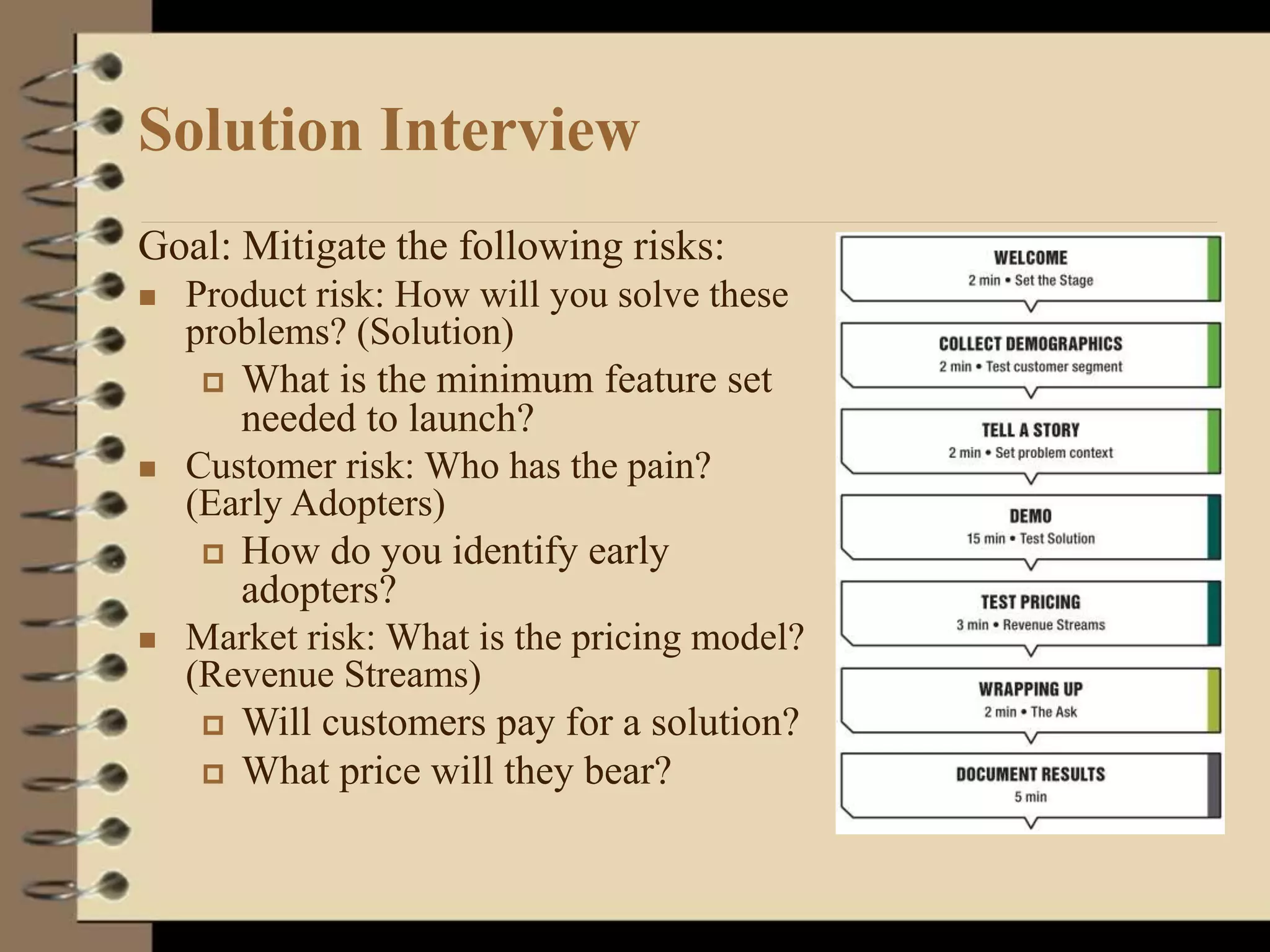
Solution Interview
Goal: Mitigate the following risks:
 Product risk: How will you solve these
problems? (Solution)
 What is the minimum feature set
needed to launch?
 Customer risk: Who has the pain?
(Early Adopters)
 How do you identify early
adopters?
 Market risk: What is the pricing model?
(Revenue Streams)
 Will customers pay for a solution?
 What price will they bear?
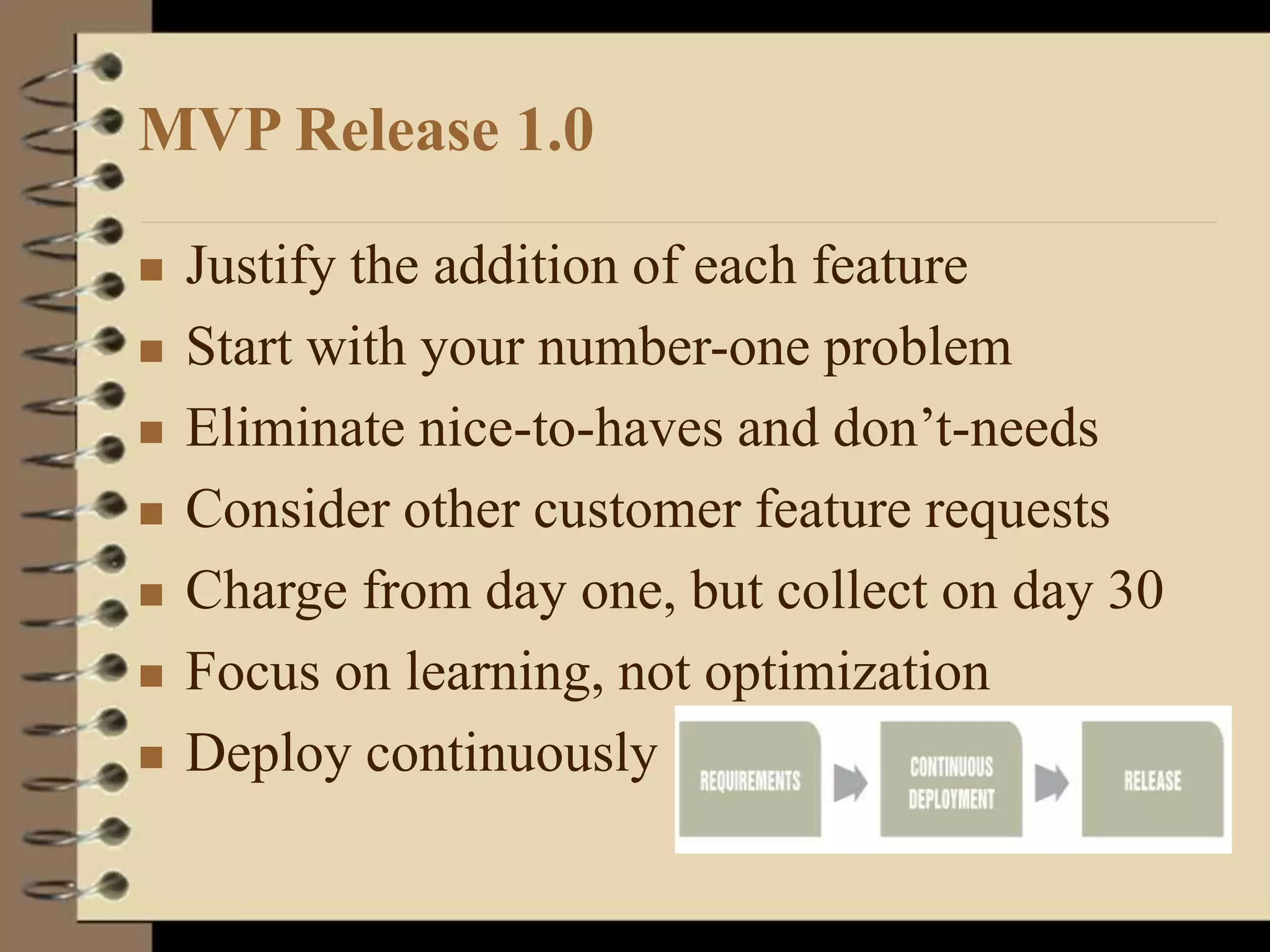
MVP Release 1.0
 Justify the addition of each feature
 Start with your number-one problem
 Eliminate nice-to-haves and don’t-needs
 Consider other customer feature requests
 Charge from day one, but collect on day 30
 Focus on learning, not optimization
 Deploy continuously
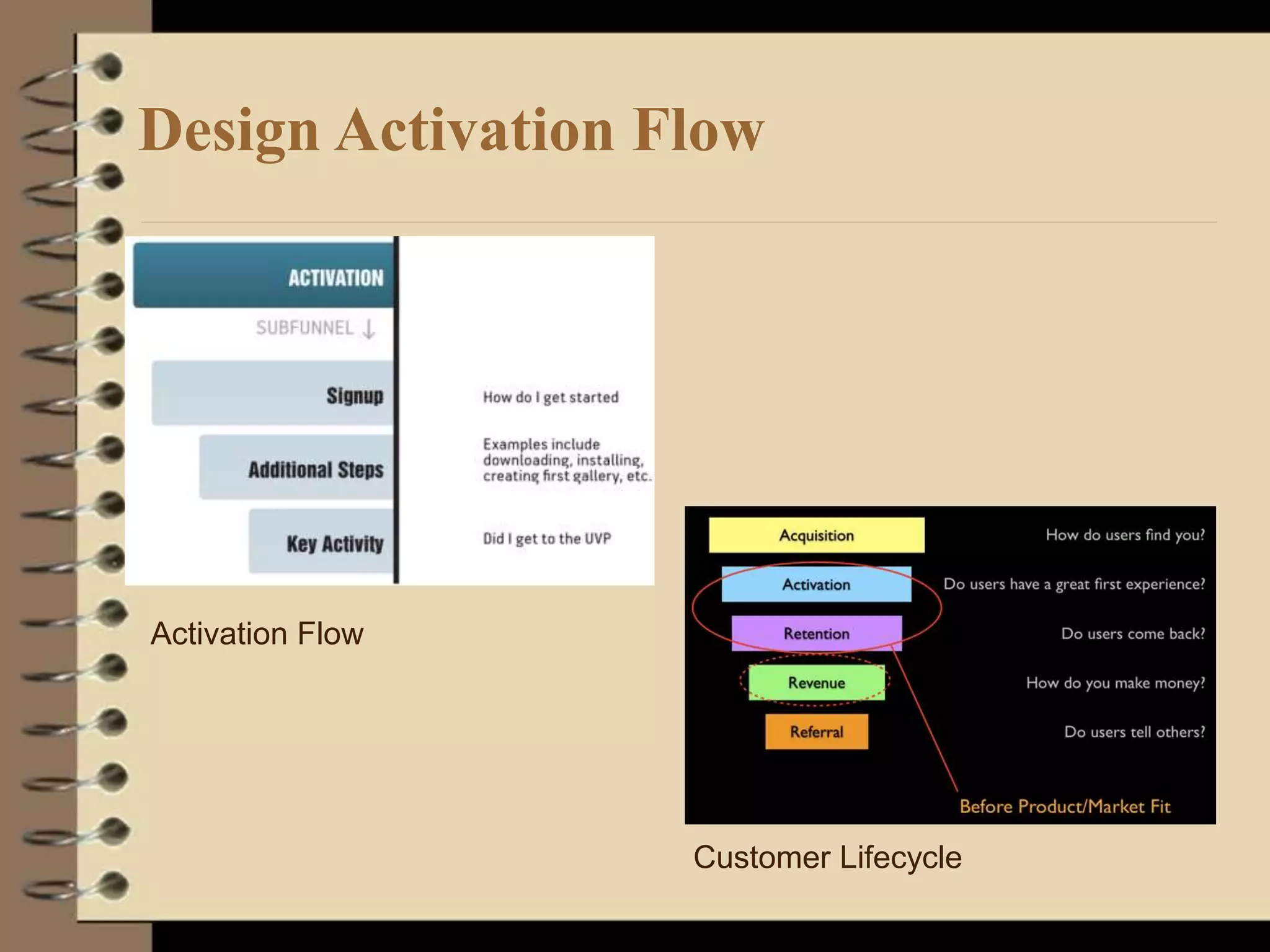
Design Activation Flow
Activation Flow
Customer Lifecycle
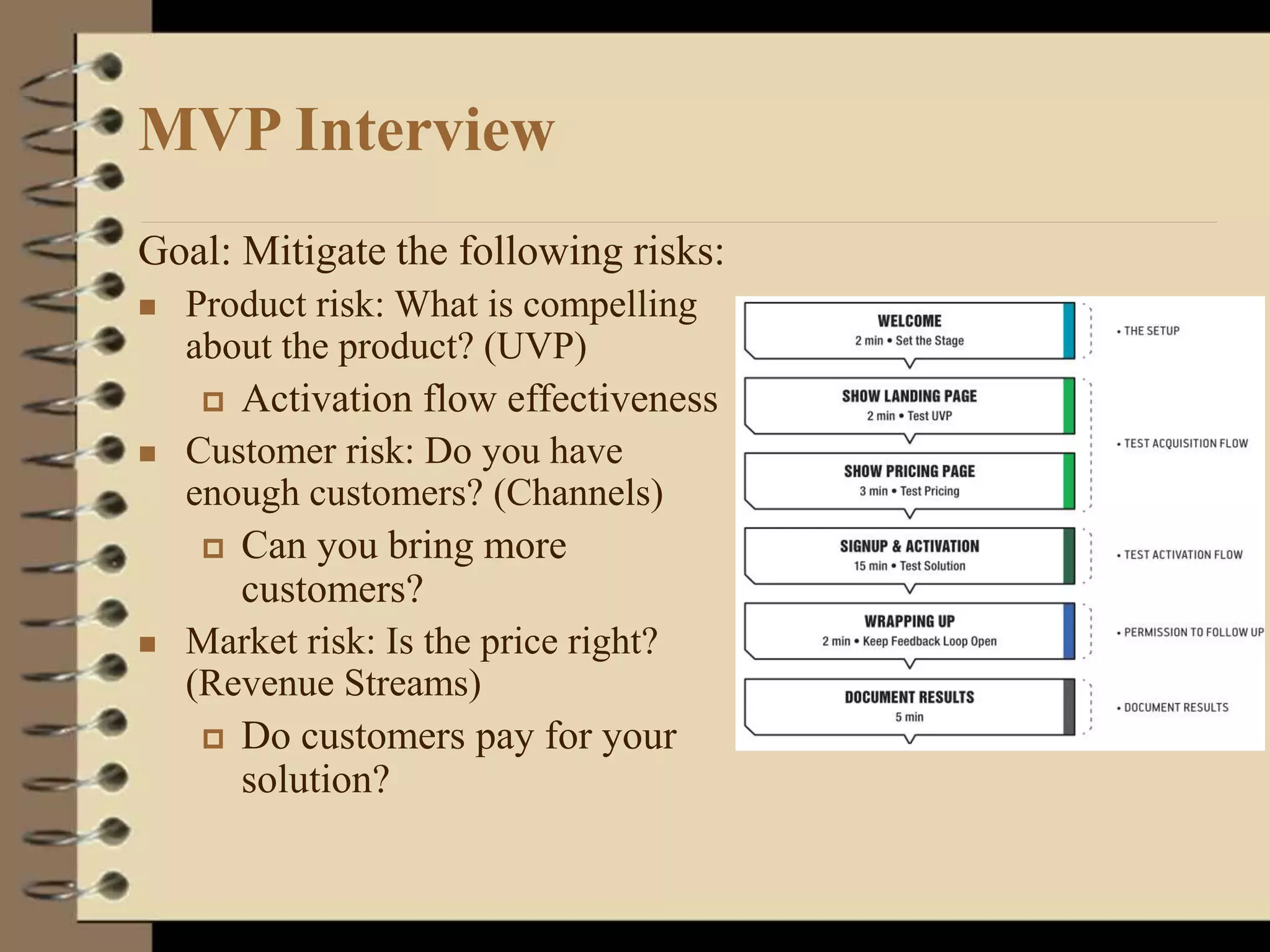
MVP Interview
Goal: Mitigate the following risks:
 Product risk: What is compelling
about the product? (UVP)
 Activation flow effectiveness
 Customer risk: Do you have
enough customers? (Channels)
 Can you bring more
customers?
 Market risk: Is the price right?
(Revenue Streams)
 Do customers pay for your
solution?
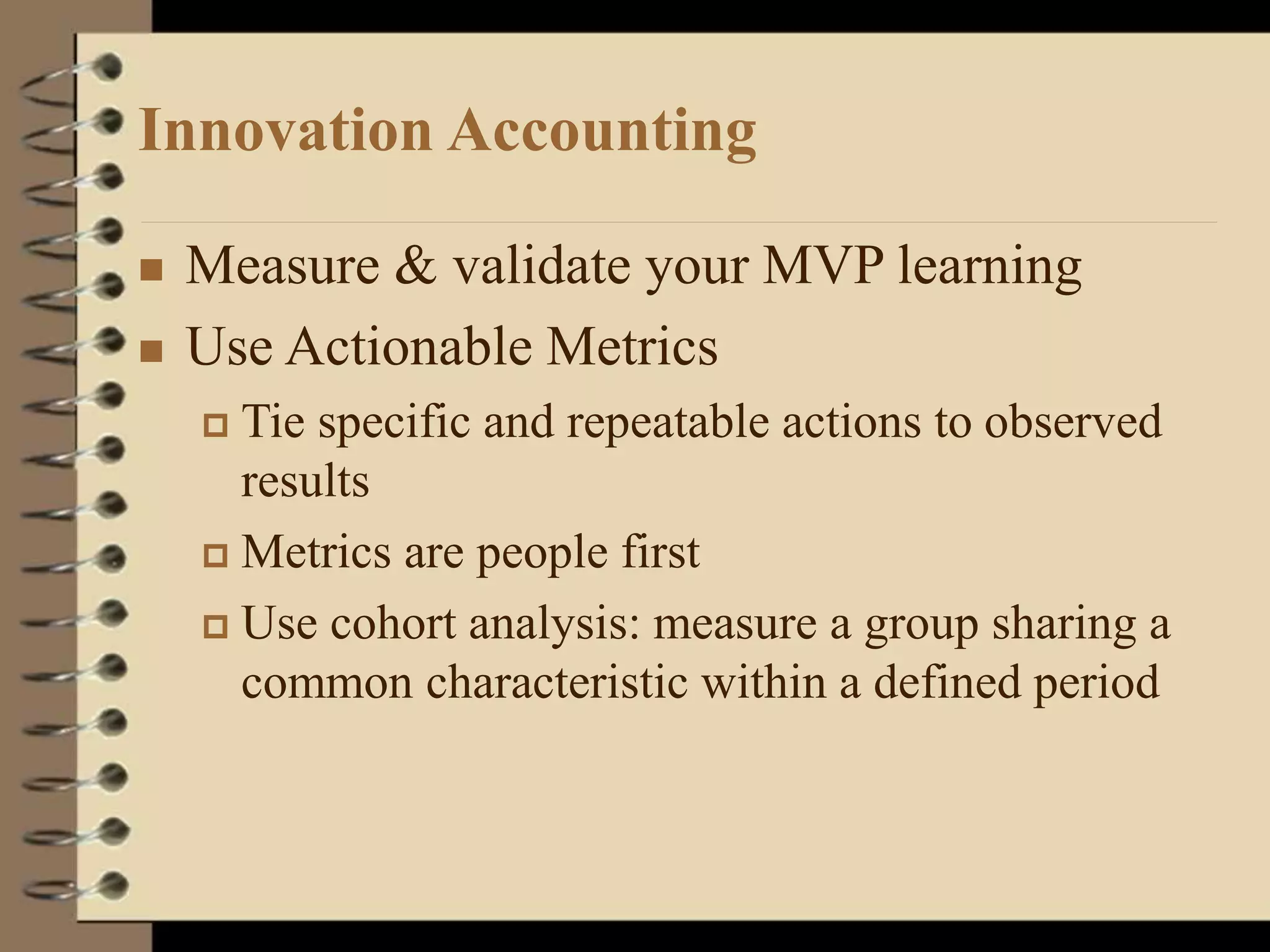
Innovation Accounting
 Measure & validate your MVP learning
 Use Actionable Metrics
 Tie specific and repeatable actions to observed
results
 Metrics are people first
 Use cohort analysis: measure a group sharing a
common characteristic within a defined period
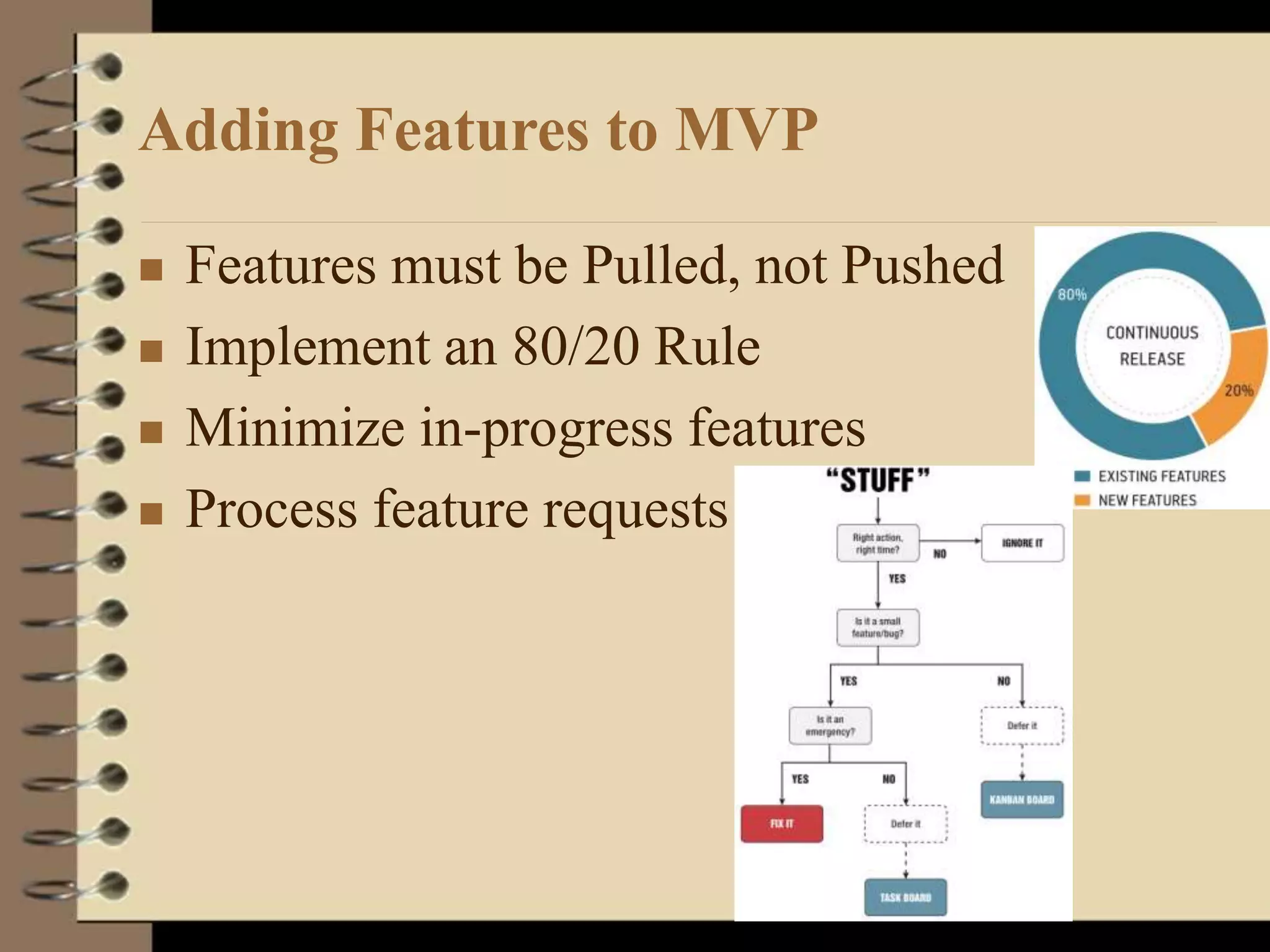
Adding Features to MVP
 Features must be Pulled, not Pushed
 Implement an 80/20 Rule
 Minimize in-progress features
 Process feature requests
Accelerate
 4 Sources (fuel) of Sustainable Growth
 Word of mouth
 Side effect of product usage (fashion, paypal)
 Funded ads (consumer products / services)
 Repeat use (subscription)
 3 Engines of Growth
 Sticky (long term customer)
 Viral (hotmail)
 Paid (sales power)
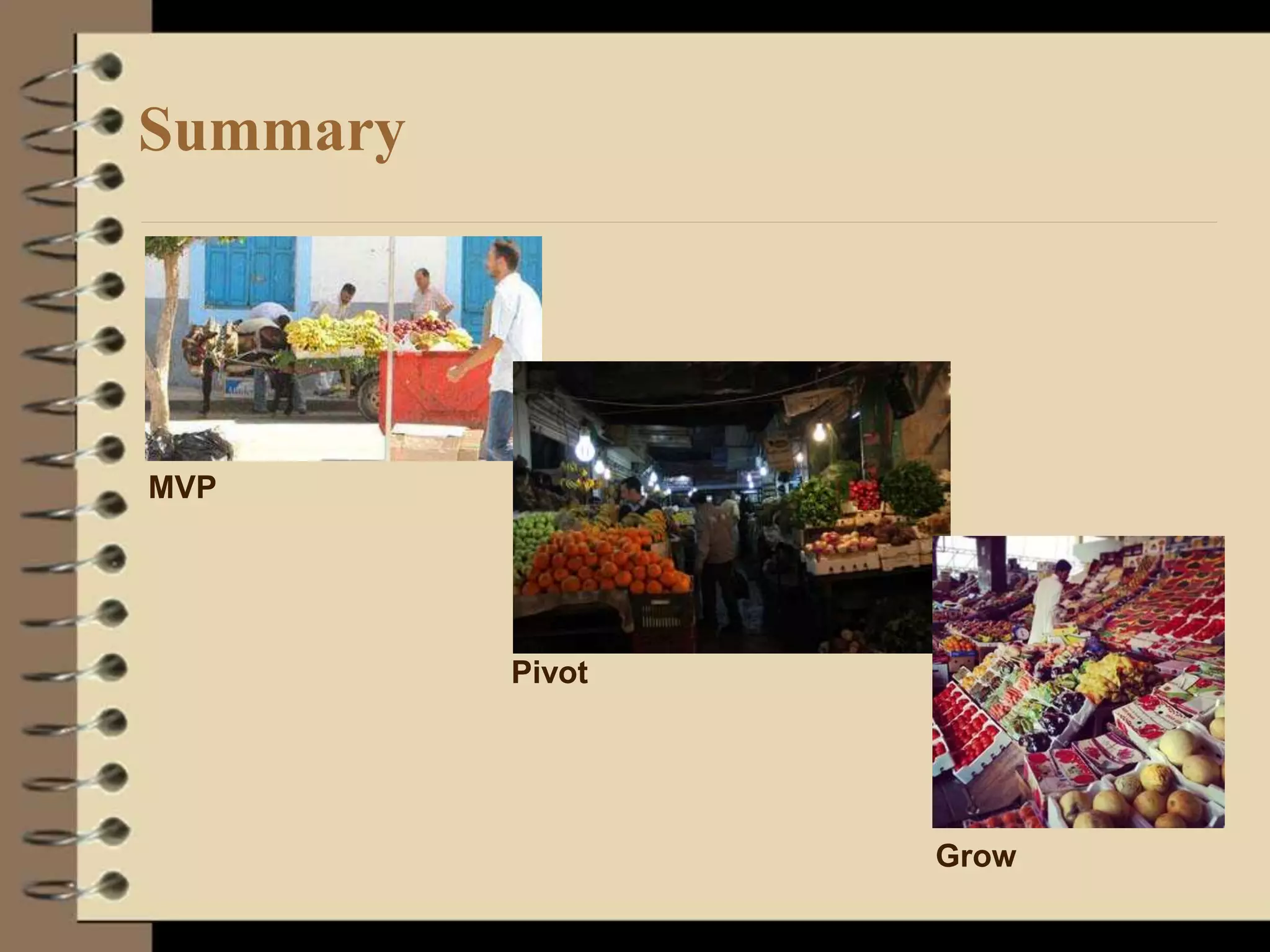
Summary
MVP
Pivot
Grow
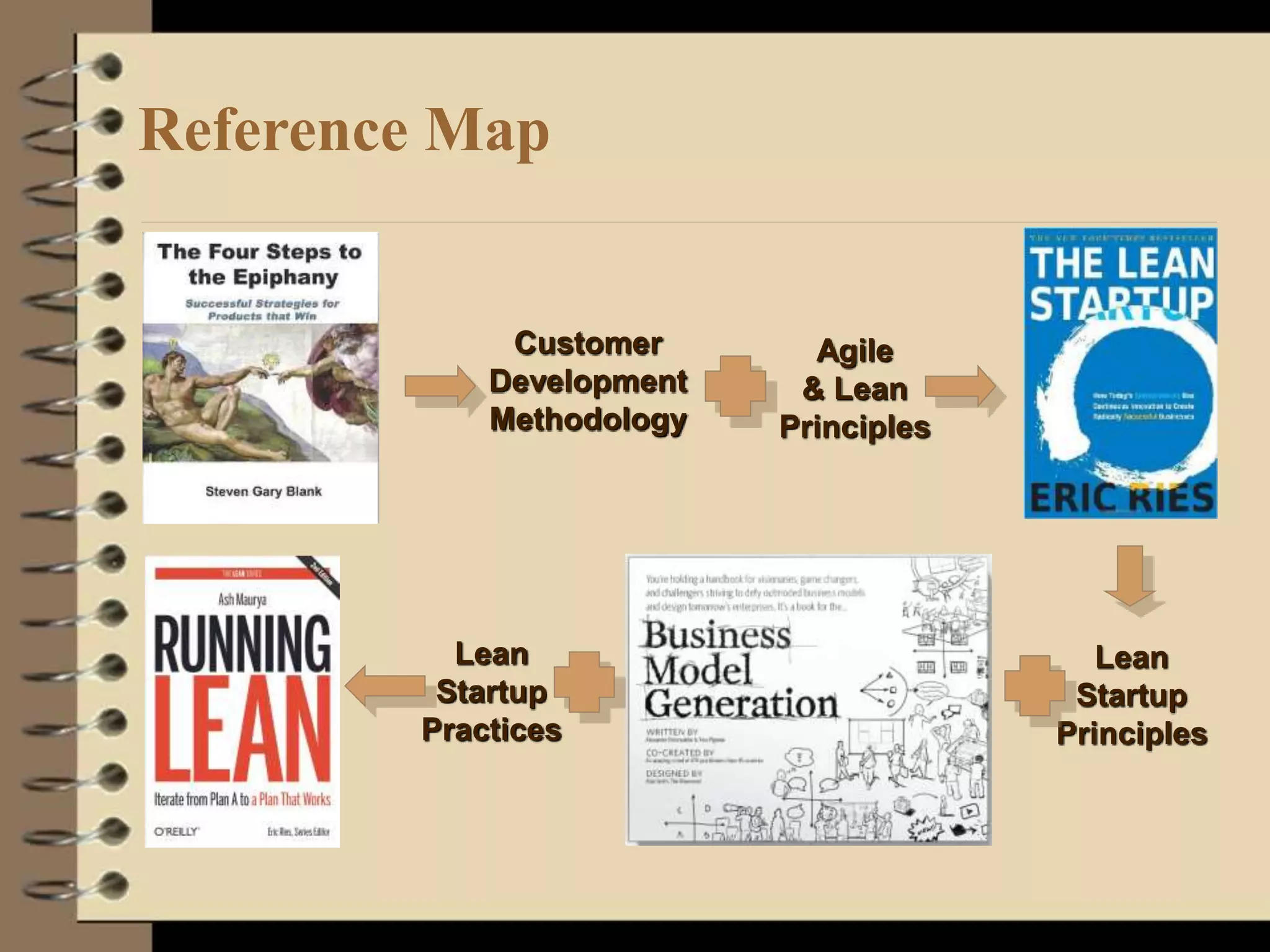
Reference Map
Customer
Development
Methodology
Agile
& Lean
Principles
Lean
Startup
Principles
Lean
Startup
Practices
Thank you!

Introduction to Running Lean Startups

  • 1.
    Introduction to Running LeanStartups Agile Egypt Meetup Prepared by: Amr Medhat Date: 21/2/2015
  • 2.
    Introduction  Engineering vsBusiness  Manager vs Entrepreneur  Project vs Product
  • 3.
    What's Lean?  ToyotaProduction System  Lean Principles 1. Eliminate Waste (waste = anything with no value to customer) 2. Amplify Learning / Create Knowledge 3. Decide as Late as Possible / Defer Commitment 4. Deliver as Fast as Possible / Deliver Fast 5. Empower the Team / Respect People 6. Build Integrity / Quality in 7. See / Optimize the Whole
  • 4.
    Lean Meets Agile Agile Values 1. Individuals and interactions over processes and tools 2. Working software over comprehensive documentation 3. Customer collaboration over contract negotiation 4. Responding to change over following a plan
  • 5.
    What's a Startup? Adventuresof the Mini Entrepreneur Institution designed to create new products under conditions of extreme uncertainty
  • 6.
    Why Lean Startups? Toyota productivity with lean increased 4 times than it competitors  Toyota quality reached 12 times better While ..  90% of startups fail to launch their products  50% of first-time CEOs get fired by their investors
  • 7.
    Why Startups Fail? You think your idea is brilliant? => Ideas are everywhere  Idea is nothing without implementation => You implemented the perfect solution, for whom?  A shiny business plan full of figures, speculations & forecasting? => It's hard to predict the future without history  You love chaos &"just do it" hoping they'll come? => Agility and dynamism are still management * Your excuse: a lesson leaned? but how?
  • 8.
    Entrepreneurship is akind of Management  Vision  Steer  Tune Engines  Pivot  Accelerate
  • 9.
    Hypothesis not Faith AStartup is an Experiment
  • 10.
     Back toAgile and Lean Principles:  Eliminate anything with no value to customer  Value customer collaboration over contract negotiation  But where is the customer? How to Start Lean? GET OUT OF THE BUILDING
  • 11.
    Product vs. CustomerDevelopment  Product Development  Customer Development Concept Product A/B Test Launch Customer Discovery Customer Validation Customer Creation Company Building
  • 12.
    From Plan Ato a Plan that Works  2/3 of startups drastically changed 1st plan  2 stages to reach the right plan Problem / Solution Fit Product / Market Fit Scale Iterate Validated Learning Growth Experiment Optimize it finally works time to raise fund
  • 13.
    Iterate: Build -Measure - Learn Minimum Viable Product: anything that allows early adopters to give feedback and grasp product vision. Idea Build MVP Measure Data Learn
  • 14.
    Plan: Lean Canvas CostStructure Customer Acquisition costs Distribution costs Hosting People, etc. Revenue Streams Revenue Model Life Time Value Revenue Gross Margin Problem Top 3 problems Existing alternatives Solution Top 3 features Key Metrics Key activities you measure Unique Value Proposition Single, clear, compelling message that states why you are different and worth paying attention High-concept pitch Unfair Advantage Can’t be easily copied or bought Channels Path to customers Customer Segments Target customers Early adopters
  • 15.
    Prioritize Where toStart  Split lean canvas per customer segments & rank  Identify riskiest part of your model  Problem/Product, Customer/Channel, Market/Revenue  Uncertainty vs Risk  Falsifiable hypothesis  Maximize for: Speed, Learning, Focus  Validate Qualitatively  5 customer interviews (data to reduce uncertainty)  Verify Quantitatively (cohort analysis, split testing)  Iterate (identify, define, validate, verify)
  • 16.
    Customer Interview Guidelines No surveys  No focus groups  No pitching  Measure what they do, not what they want  Stick to a script  Start with people you know  then ask them to introduce you to others  Neutral place - coffee shop  20 - 30 minutes  Document immediately  don't record  30-60 people (or till you're able to predict their answers)
  • 17.
    Problem Interview Goal: Mitigatethe following risks:  Product risk: What are you solving? (Problem)  How do customers rank the top three problems?  Customer risk: Who has the pain? (Customer Segments)  Is it a viable customer segment?  Market risk: Who is the competition? (Alternatives)  How do customers solve these problems today?
  • 18.
    Solution Interview Goal: Mitigatethe following risks:  Product risk: How will you solve these problems? (Solution)  What is the minimum feature set needed to launch?  Customer risk: Who has the pain? (Early Adopters)  How do you identify early adopters?  Market risk: What is the pricing model? (Revenue Streams)  Will customers pay for a solution?  What price will they bear?
  • 19.
    MVP Release 1.0 Justify the addition of each feature  Start with your number-one problem  Eliminate nice-to-haves and don’t-needs  Consider other customer feature requests  Charge from day one, but collect on day 30  Focus on learning, not optimization  Deploy continuously
  • 20.
    Design Activation Flow ActivationFlow Customer Lifecycle
  • 21.
    MVP Interview Goal: Mitigatethe following risks:  Product risk: What is compelling about the product? (UVP)  Activation flow effectiveness  Customer risk: Do you have enough customers? (Channels)  Can you bring more customers?  Market risk: Is the price right? (Revenue Streams)  Do customers pay for your solution?
  • 22.
    Innovation Accounting  Measure& validate your MVP learning  Use Actionable Metrics  Tie specific and repeatable actions to observed results  Metrics are people first  Use cohort analysis: measure a group sharing a common characteristic within a defined period
  • 23.
    Adding Features toMVP  Features must be Pulled, not Pushed  Implement an 80/20 Rule  Minimize in-progress features  Process feature requests
  • 24.
    Accelerate  4 Sources(fuel) of Sustainable Growth  Word of mouth  Side effect of product usage (fashion, paypal)  Funded ads (consumer products / services)  Repeat use (subscription)  3 Engines of Growth  Sticky (long term customer)  Viral (hotmail)  Paid (sales power)
  • 25.
  • 26.
  • 27.

Editor's Notes

  • #3 - High tech vs MBAs - Heavy load processes PMI, CMM, ISO, vs agility - Requirements Gathering, bids, specs.. - customer is defined in a project , but who's he in a new product idea? * Startups are not a smaller version of a larger company http://humbledmba.com/beware-of-mbas-the-business-school-curriculum image source: wikimedia
  • #4 Although we left the industrial revolution to the information era, manufacturing is still leading management sciences, while software engineering is lagging try to copy from here and there as it's still a new discipline with short time of only half a century and cannot cope with its fast movement. Traditional linear waterfall is gone away in industry Modern manufacturing has left Frederick Taylor's scientific management and mass production principles more than 20 years ago, yet software industry still tries to copy old practices from manufacturing and civil engineering Ref: Lean Software Development: An Agile Toolkit - Poppendick
  • #5 Agile methodologies are proven application of lean thinking to software
  • #6 Ignore what you see in movies! Startup is a state that any company of any size can be in (uncertainty) from too little size like boys playing in a garage to a large enterprise or even government initiating a new venture (e.g بطاقات التموين الذكية أو البنزين) examples: from spotify, dropbox, volunteerism in hp, ellon musk of spacex If you can take a loan from a bank or from a development fund, then it's not a startup
  • #7 * profit in new market after 5 years, in existing market in 18 months Ref: - Implementing Lean Software Development from Concept to Cash - Poppendick - 4 steps to Epiphany - Steve Blank
  • #8 * "build and they will come" is not a strategy, it's a prayer! -Steve * in a startup no facts exist inside the building, only opinions - Steve - you have to put the process that measures your validated learning
  • #9 You don't launch a rocket ship (Eric) Can you write down the path and turn of your way that you drive every day from home to work ahead? You respond to feedback till it becomes a nature without too much planning but also without dispensing with plan at all Always rely on your engines, not za2a for zooba temporarily, that is not repeatable (news coverage, non-repetitive paid ads ..) Pivot: a change in strategy without change in vision http://www.fastcompany.com/1836238/how-eric-ries-coined-pivot-and-what-your-business-can-learn-it image source: wikihow and others
  • #10 Don't believe too much! Today we can build anything , not like at Taylor's time, but should it be built? -- Ries No great man theory here.
  • #11 it's not the customer's job to know that they want (jobs) if we asked people, they'll ask for faster horses - Ford (but they said faster) image source: http://free-thinking-cap.blogspot.com/2013/01/validation-board-get-out-of-building.html http://qualityswdev.com/2013/08/20/lean-startup-distilled/
  • #12 the difference: the first is (one way)
  • #13 Ref - Ash Eric's pyramid of continuous innovation (change layers): base: vision - either go or give up , middle: strategy - pivot around the vision , top: product - optimize within the strategy
  • #14 Early customers are forgiving, don't care about quality nor excessive features MVP: can be any thing from a video, prototype, real not-automated service workflow, blog, twitter hashtag, facebook page, forum, a minimally working product ..etc.
  • #15 template source: http://debane.org/franck/wp-content/uploads/lean-canvas-powerpoint-template.pptx
  • #16 Incorrect prioritization of risk is one of the top contributors of waste. Uncertainty: The lack of compete certainty, that is, the existence of more than one possibility Risk: A state of uncertainty where some of the possibilities involve a loss, catastrophe, or other undesirable outcome. Rank your business model: Your objective is to find a model with a big enough market you can reach with customers who need your product that you can build a business around. A falsifiable hypothesis is a statement that can be clearly proven wrong. Ash's iteration meta diagram for each risk (identify problem, define solution, validate qualitatively, verify quantitatively)
  • #18 Identify early adopters Test Problem
  • #19 Identify early adopters Test solution Test pricing
  • #21 Ref: http://practicetrumpstheory.com/3-rules-to-actionable-metrics/
  • #22 Usability test format - Rocket surgery made easy
  • #23 Innovation accounting - not innovative accounting --> accountability in adjusting the plan and business model by fast validated learning with measured actionable metrics that are scalable on growth - not vanity metrics of raw data with real value or timely indications http://www.inc.com/eric-ries/entrepreneur-eric-ries-innovation-accounting-secret-to-fast-growth.html http://www.youtube.com/watch?v=gU3MZXW3uXw
  • #25 http://larslofgren.com/marketingbasics/the-three-engines-of-growth-with-eric-ries http://larslofgren.com/growth/eric-ries-only-two-engines-of-growth
  • #26 قصة حياة أيي انطربونور: عم محمد - مش البوعزيزي - قرر يبيع فاكهة من غير أي خبرة سابقة، بدأ يلف ويقابل عملا في الشارع لحد ما عرف ذوق الناس ونوعية الفاكهة اللي بيحبوها، لكن لقى ان نمط سلوكهم الشرا من السوق، فعمل بيفوت بالفلوس اللي جابها من البيع في الشارع وأجر أرضية في السوق والموضوع مشي وكبر وعمل سكيل لحد ما بقى عنده محل بتاعه وبعدها سلسلة محلات image source: youm7 and others