AUTONOMY
MASTERY
PURPOSE
QUICK
BACKGROUND
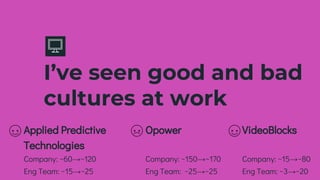
I’ve seen good and bad
cultures at work
VideoBlocks
Company: ~15→~80
Eng Team: ~3→~20
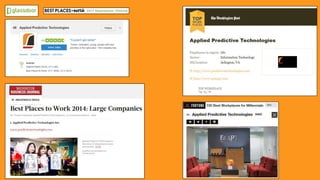
Applied Predictive
Technologies
Company: ~60→~120
Eng Team: ~15→~25
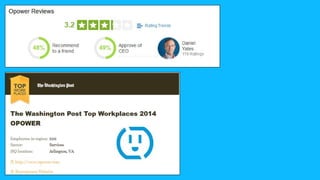
Opower
Company: ~150→~170
Eng Team: ~25→~25
WHO
CARES
“Culture eats strategy
for breakfast”
- Peter Drucker
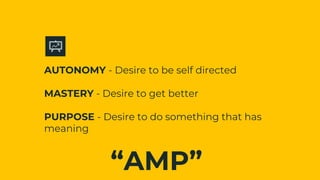
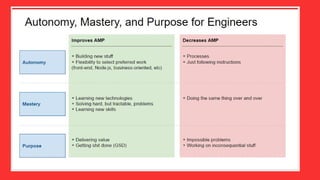
AUTONOMY - Desire to be self directed
MASTERY - Desire to get better
PURPOSE - Desire to do something that has
meaning
“AMP”
Benefits of
AMP well
researched
The
Candle
Problem
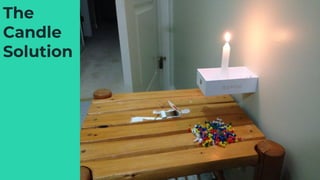
The
Candle
Solution
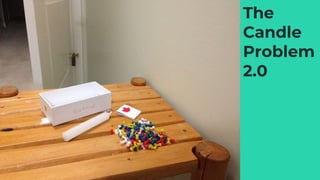
The
Candle
Problem
2.0
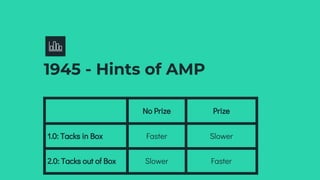
1945 - Hints of AMP
No Prize Prize
1.0: Tacks in Box Faster Slower
2.0: Tacks out of Box Slower Faster
Large
tasks?
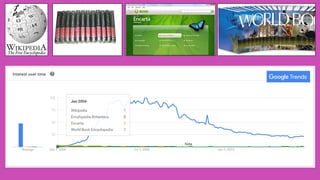
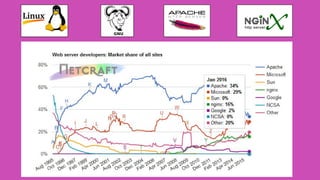
What about
Transformations
driven by AMP
well documented
AMP Creates a Culture
of Innovation
Majority of employees who
leave a company, are
“quitting their managers”
What can
you do?
AUTONOMY
∎ Hire Self-Starters
∎ Foster Ownership
∎ Provide Guardrails
∎ Tolerate Failure
∎ Ensure Social Safety Net
∎ Loosely Defined Job Roles
MASTERY
∎ Match Projects With Interests
∎ Prioritize Learning
∎ Push Outside Comfort Zone
∎ Encourage “Scaffolding”
PURPOSE
∎ Engage at High Level
∎ Foster Trust
∎ Transparency
∎ Celebrate Wins
∎ Say Thanks
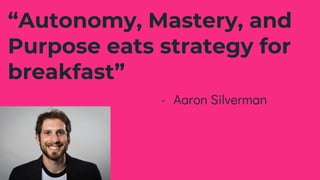
“Autonomy, Mastery, and
Purpose eats strategy for
breakfast”
- Aaron Silverman
THANKS!
Any questions?
Appendix
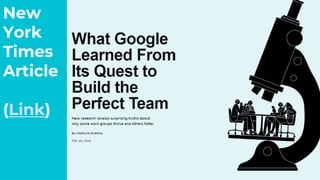
New
York
Times
Article
(Link)
AMP
Detailed
Breakdown
Hire Self Starters
∎ Self starters have a track record of having the internal drive and motivation to
begin and continue tasks without external prodding or extra rewards
∎ Indications of self starters include extracurricular activities, participation and
speaking at meetups and conferences, self study, and side projects
∎ When asked about a favorite project, self starters often give an example of when
they had to come up to speed with a new technology or process and learn on the
job
Foster Ownership
∎ Allow team members to own problems
∎ Communicate the high level problem to be solved and give owners the whole
picture
∎ Step back and let owners decide how they want to best solve the problem
∎ Listen to and Trust owners--do not micromanage or dominate decisions
Provide Guardrails
∎ Clearly communicate expectations and desired outcomes
∎ Break large projects into major milestones
∎ Provide timely feedback (positive and negative) as work is completed
∎ If something isn’t going well, offer to work on it together rather than take it over
Tolerate Failures
∎ Foster a culture of innovation, experimentation, and calculated risks
∎ Remind the team that some failures are inevitable
∎ Don’t point fingers or witch hunt
∎ Conduct blameless retrospectives that include lessons learned and
recommendations going forward to minimize the chance of a similar failure
Ensure Social
Safety Net
∎ Do not embarrass, reject, or punish somebody for speaking up
∎ When discussing or brainstorming, strive for equal participation among team
members regardless of seniority or expertise
∎ Get to know each other beyond work (e.g. lunch, coffee breaks, small talk, offsites,
happy hours, etc.)
Loosely Defined
Job Roles
∎ Encourage framing discussions around what is best for the company as a
whole, not just the team
∎ Allow employees to contribute where interested and productive regardless
of their official job description
∎ Break down barriers to inter-team interactions
∎ Proactively seek out ideas and feedback from other teams
Match Projects
With Interests
∎ Prioritize interest when assigning projects
∎ Focus on the strengths of team members
∎ Ensure all team members get an equal chance at projects that interest
them
∎ Allow team members to take on small side projects of their choice
Prioritize Learning
∎ Actively participate in the development of your team members
∎ Tie professional development to business goals
∎ Be on the lookout and adopt new trends, technologies, and tools that
would excite your team to use
∎ Factor in professional development when prioritizing and assigning
tasks
Push Outside
Comfort Zone
∎ Encourage team members to take on projects different and more challenging
than those they’ve tackled before
∎ Involve team members in tasks tangential to their typical responsibilities
∎ Explain why you think they will succeed and how you will support them
Encourage
“Scaffolding”
∎ Encourage team members to network and learn outside the company
∎ Suggest conferences and meetups your team members should consider attending
∎ Recommend and discuss books that will help professional development
∎ Share good articles and blog posts
∎ Leverage applicable online classes and workshops
Engage at High
Level
∎ Communicate overarching company strategic vision
∎ Connect personal and team goals to the strategic vision
∎ Ask team members for input and advice in achieving goals and vision
∎ Ensure team members feel like their ideas are welcome and will be
factored into strategic decisions
Foster Trust
∎ Consistently communicate honestly and openly
∎ Lead by example
∎ Deliver on the commitments you make
∎ Be vulnerable and acknowledge your own mistakes
∎ Give out credit, take the blame
∎ Step in and help when team members encounter problems
∎ Seek to improve your team’s quality of life
Transparency
∎ Openly share company and team performance
∎ Allow those interested in a meeting or slack channel to join
∎ Avoid indirect communication
∎ Explain why decisions were made as well as other options considered
∎ Solicit and give timely feedback
Celebrate Wins
∎ Take the time to celebrate wins small and large
∎ Broadcast bigger victories
∎ Name those most involved
∎ Share positive customer feedback
∎ Celebrate big wins in a meaningful and memorable way (e.g. fancy
lunch, designated happy hour, swag, team outing)
Say Thanks
∎ Ensure team members know their good work was appreciated
∎ Be sincere and personalize the message
∎ Be prompt and spontaneous
∎ Establish a culture of peer recognition
Slide Template
Credit:
SlidesCarnival

Autonomy Mastery Purpose

  • 1.
  • 2.
  • 3.
    I’ve seen goodand bad cultures at work VideoBlocks Company: ~15→~80 Eng Team: ~3→~20 Applied Predictive Technologies Company: ~60→~120 Eng Team: ~15→~25 Opower Company: ~150→~170 Eng Team: ~25→~25
  • 7.
  • 8.
    “Culture eats strategy forbreakfast” - Peter Drucker
  • 9.
    AUTONOMY - Desireto be self directed MASTERY - Desire to get better PURPOSE - Desire to do something that has meaning “AMP”
  • 10.
  • 11.
  • 12.
  • 13.
  • 14.
    1945 - Hintsof AMP No Prize Prize 1.0: Tacks in Box Faster Slower 2.0: Tacks out of Box Slower Faster
  • 16.
  • 19.
  • 20.
    AMP Creates aCulture of Innovation
  • 21.
    Majority of employeeswho leave a company, are “quitting their managers”
  • 22.
  • 23.
    AUTONOMY ∎ Hire Self-Starters ∎Foster Ownership ∎ Provide Guardrails ∎ Tolerate Failure ∎ Ensure Social Safety Net ∎ Loosely Defined Job Roles
  • 24.
    MASTERY ∎ Match ProjectsWith Interests ∎ Prioritize Learning ∎ Push Outside Comfort Zone ∎ Encourage “Scaffolding”
  • 25.
    PURPOSE ∎ Engage atHigh Level ∎ Foster Trust ∎ Transparency ∎ Celebrate Wins ∎ Say Thanks
  • 26.
    “Autonomy, Mastery, and Purposeeats strategy for breakfast” - Aaron Silverman
  • 27.
  • 28.
  • 33.
  • 35.
  • 36.
    Hire Self Starters ∎Self starters have a track record of having the internal drive and motivation to begin and continue tasks without external prodding or extra rewards ∎ Indications of self starters include extracurricular activities, participation and speaking at meetups and conferences, self study, and side projects ∎ When asked about a favorite project, self starters often give an example of when they had to come up to speed with a new technology or process and learn on the job
  • 37.
    Foster Ownership ∎ Allowteam members to own problems ∎ Communicate the high level problem to be solved and give owners the whole picture ∎ Step back and let owners decide how they want to best solve the problem ∎ Listen to and Trust owners--do not micromanage or dominate decisions
  • 38.
    Provide Guardrails ∎ Clearlycommunicate expectations and desired outcomes ∎ Break large projects into major milestones ∎ Provide timely feedback (positive and negative) as work is completed ∎ If something isn’t going well, offer to work on it together rather than take it over
  • 39.
    Tolerate Failures ∎ Fostera culture of innovation, experimentation, and calculated risks ∎ Remind the team that some failures are inevitable ∎ Don’t point fingers or witch hunt ∎ Conduct blameless retrospectives that include lessons learned and recommendations going forward to minimize the chance of a similar failure
  • 40.
    Ensure Social Safety Net ∎Do not embarrass, reject, or punish somebody for speaking up ∎ When discussing or brainstorming, strive for equal participation among team members regardless of seniority or expertise ∎ Get to know each other beyond work (e.g. lunch, coffee breaks, small talk, offsites, happy hours, etc.)
  • 41.
    Loosely Defined Job Roles ∎Encourage framing discussions around what is best for the company as a whole, not just the team ∎ Allow employees to contribute where interested and productive regardless of their official job description ∎ Break down barriers to inter-team interactions ∎ Proactively seek out ideas and feedback from other teams
  • 42.
    Match Projects With Interests ∎Prioritize interest when assigning projects ∎ Focus on the strengths of team members ∎ Ensure all team members get an equal chance at projects that interest them ∎ Allow team members to take on small side projects of their choice
  • 43.
    Prioritize Learning ∎ Activelyparticipate in the development of your team members ∎ Tie professional development to business goals ∎ Be on the lookout and adopt new trends, technologies, and tools that would excite your team to use ∎ Factor in professional development when prioritizing and assigning tasks
  • 44.
    Push Outside Comfort Zone ∎Encourage team members to take on projects different and more challenging than those they’ve tackled before ∎ Involve team members in tasks tangential to their typical responsibilities ∎ Explain why you think they will succeed and how you will support them
  • 45.
    Encourage “Scaffolding” ∎ Encourage teammembers to network and learn outside the company ∎ Suggest conferences and meetups your team members should consider attending ∎ Recommend and discuss books that will help professional development ∎ Share good articles and blog posts ∎ Leverage applicable online classes and workshops
  • 46.
    Engage at High Level ∎Communicate overarching company strategic vision ∎ Connect personal and team goals to the strategic vision ∎ Ask team members for input and advice in achieving goals and vision ∎ Ensure team members feel like their ideas are welcome and will be factored into strategic decisions
  • 47.
    Foster Trust ∎ Consistentlycommunicate honestly and openly ∎ Lead by example ∎ Deliver on the commitments you make ∎ Be vulnerable and acknowledge your own mistakes ∎ Give out credit, take the blame ∎ Step in and help when team members encounter problems ∎ Seek to improve your team’s quality of life
  • 48.
    Transparency ∎ Openly sharecompany and team performance ∎ Allow those interested in a meeting or slack channel to join ∎ Avoid indirect communication ∎ Explain why decisions were made as well as other options considered ∎ Solicit and give timely feedback
  • 49.
    Celebrate Wins ∎ Takethe time to celebrate wins small and large ∎ Broadcast bigger victories ∎ Name those most involved ∎ Share positive customer feedback ∎ Celebrate big wins in a meaningful and memorable way (e.g. fancy lunch, designated happy hour, swag, team outing)
  • 50.
    Say Thanks ∎ Ensureteam members know their good work was appreciated ∎ Be sincere and personalize the message ∎ Be prompt and spontaneous ∎ Establish a culture of peer recognition
  • 51.