AUDIO LINGUAL METHOD
IKE       HENI   Rika


ATIN    Syaikhu
Contents of presentation

         Back ground
         Approach, design & procedure
         The Decline of ALM
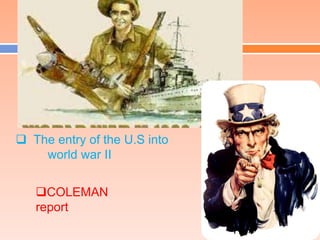
 The entry of the U.S into
    world war II


   COLEMAN
   report
 The U.S Government
                            Necessary


                                   ASTP
                          Army Specialized Training
                                 Program


Dr. Charles Fries
(1939)

Michigan University.
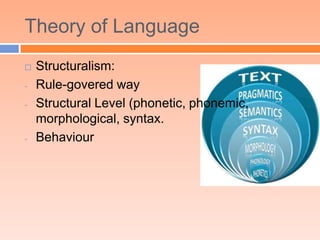
Theory of Language
   Structuralism:
-   Rule-govered way
-   Structural Level (phonetic, phonemic,
    morphological, syntax.
-   Behaviour
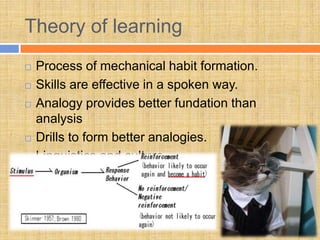
Theory of learning
   Process of mechanical habit formation.
   Skills are effective in a spoken way.
   Analogy provides better fundation than
    analysis
   Drills to form better analogies.
   Linguistics and culture.
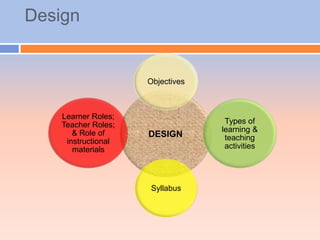
Design


                     Objectives


    Learner Roles;
    Teacher Roles;                 Types of
       & Role of                  learning &
                     DESIGN        teaching
     instructional
       materials                   activities


                     Syllabus
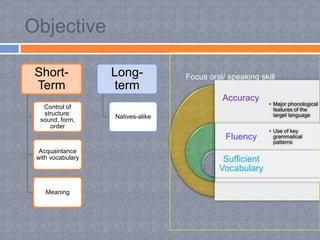
Objective

 Short-            Long-           Focus oral/ speaking skill
 Term               term
                                             Accuracy
                                                           • Major phonological
   Control of                                                features of the
   structure:                                                target language
                   Natives-alike
  sound, form,
     order
                                                           • Use of key
                                              Fluency        grammatical
                                                             patterns
  Acquaintance
 with vocabulary                             Sufficient
                                            Vocabulary

    Meaning
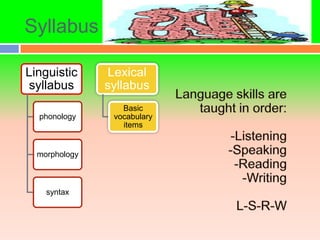
Syllabus

Linguistic      Lexical
 syllabus      syllabus
                  Basic
  phonology     vocabulary
                  items


  morphology


    syntax
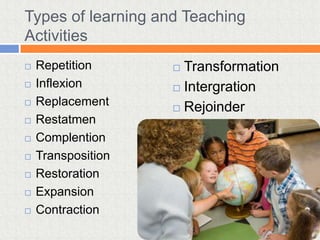
Types of learning and Teaching
Activities
   Repetition       Transformation
   Inflexion        Intergration
   Replacement      Rejoinder
   Restatmen
   Complention
   Transposition
   Restoration
   Expansion
   Contraction
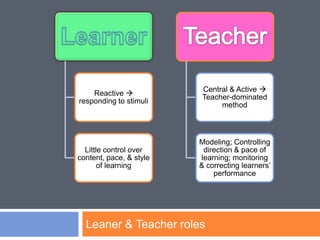
Central & Active 
    Reactive 
                         Teacher-dominated
responding to stimuli
                              method


                         Modeling; Controlling
  Little control over     direction & pace of
content, pace, & style   learning; monitoring
       of learning       & correcting learners’
                             performance


  Leaner & Teacher roles
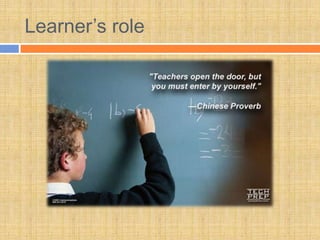
Learner’s role
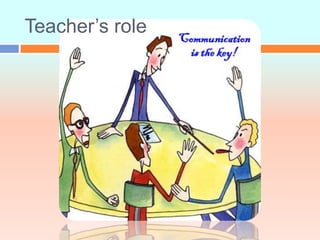
Teacher’s role
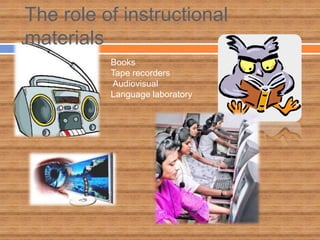
The role of instructional
materials
          Books
          Tape recorders
          Audiovisual
          Language laboratory
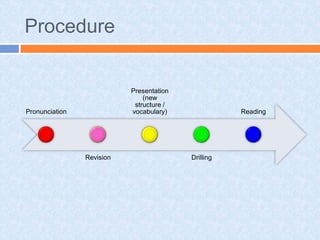
Procedure


                           Presentation
                               (new
                            structure /
Pronunciation              vocabulary)               Reading


                Revision                  Drilling
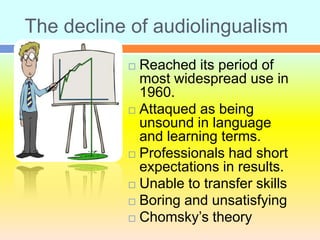
The decline of audiolingualism
            Reached its period of
             most widespread use in
             1960.
            Attaqued as being
             unsound in language
             and learning terms.
            Professionals had short
             expectations in results.
            Unable to transfer skills
            Boring and unsatisfying
            Chomsky’s theory
Audiolingualmethod

Audiolingualmethod

  • 1.
  • 2.
    IKE HENI Rika ATIN Syaikhu
  • 3.
    Contents of presentation  Back ground  Approach, design & procedure  The Decline of ALM
  • 4.
     The entryof the U.S into world war II COLEMAN report
  • 5.
     The U.SGovernment Necessary ASTP Army Specialized Training Program Dr. Charles Fries (1939) Michigan University.
  • 6.
    Theory of Language  Structuralism: - Rule-govered way - Structural Level (phonetic, phonemic, morphological, syntax. - Behaviour
  • 7.
    Theory of learning  Process of mechanical habit formation.  Skills are effective in a spoken way.  Analogy provides better fundation than analysis  Drills to form better analogies.  Linguistics and culture.
  • 8.
    Design Objectives Learner Roles; Teacher Roles; Types of & Role of learning & DESIGN teaching instructional materials activities Syllabus
  • 9.
    Objective Short- Long- Focus oral/ speaking skill Term term Accuracy • Major phonological Control of features of the structure: target language Natives-alike sound, form, order • Use of key Fluency grammatical patterns Acquaintance with vocabulary Sufficient Vocabulary Meaning
  • 10.
    Syllabus Linguistic Lexical syllabus syllabus Basic phonology vocabulary items morphology syntax
  • 11.
    Types of learningand Teaching Activities  Repetition  Transformation  Inflexion  Intergration  Replacement  Rejoinder  Restatmen  Complention  Transposition  Restoration  Expansion  Contraction
  • 12.
    Central & Active Reactive  Teacher-dominated responding to stimuli method Modeling; Controlling Little control over direction & pace of content, pace, & style learning; monitoring of learning & correcting learners’ performance Leaner & Teacher roles
  • 13.
  • 14.
  • 15.
    The role ofinstructional materials Books Tape recorders Audiovisual Language laboratory
  • 16.
    Procedure Presentation (new structure / Pronunciation vocabulary) Reading Revision Drilling
  • 17.
    The decline ofaudiolingualism  Reached its period of most widespread use in 1960.  Attaqued as being unsound in language and learning terms.  Professionals had short expectations in results.  Unable to transfer skills  Boring and unsatisfying  Chomsky’s theory