Audiences and Institutions
                           Revision Pack
                                                   KKS


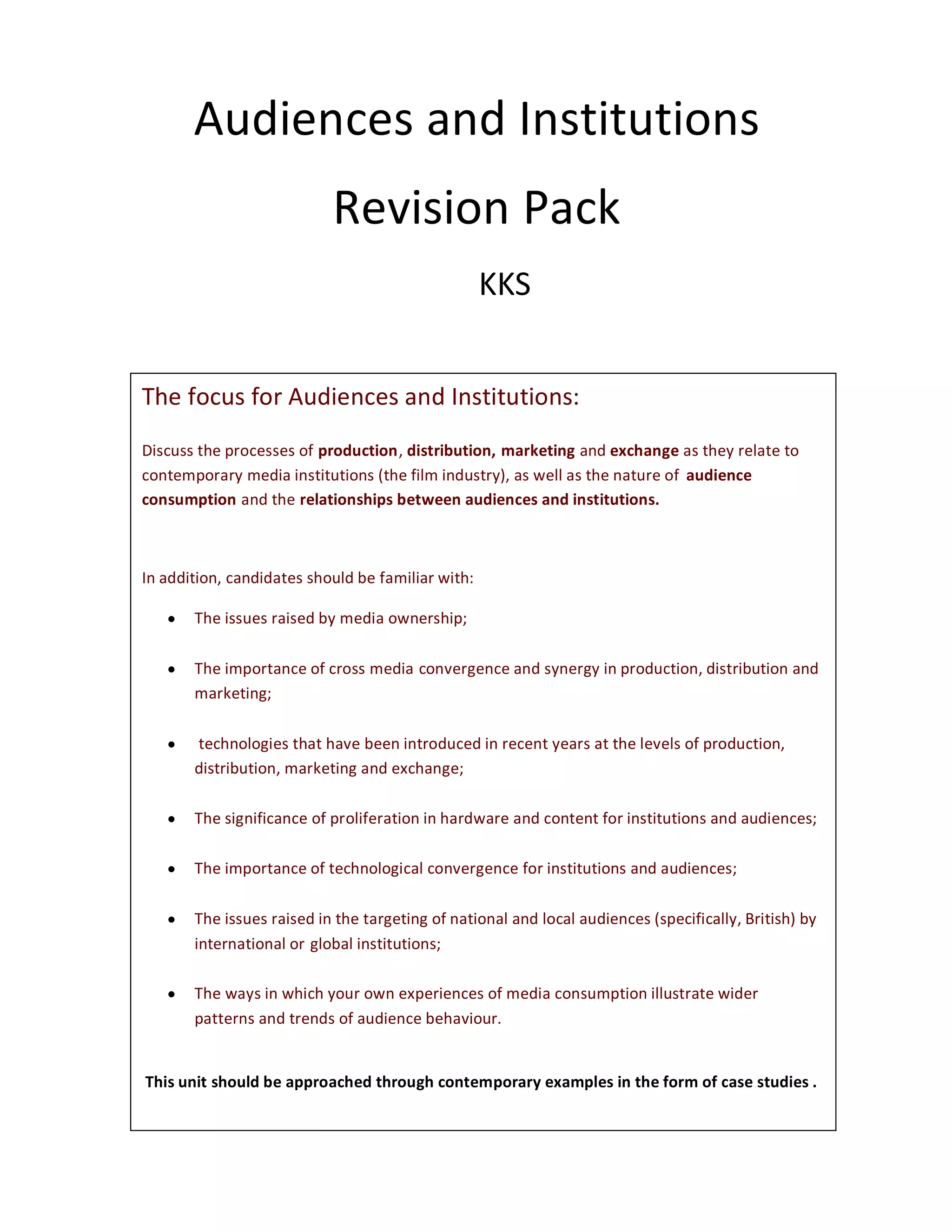
The focus for Audiences and Institutions:
Discuss the processes of production, distribution, marketing and exchange as they relate to
contemporary media institutions (the film industry), as well as the nature of audience
consumption and the relationships between audiences and institutions.


In addition, candidates should be familiar with:

   y   The issues raised by media ownership;

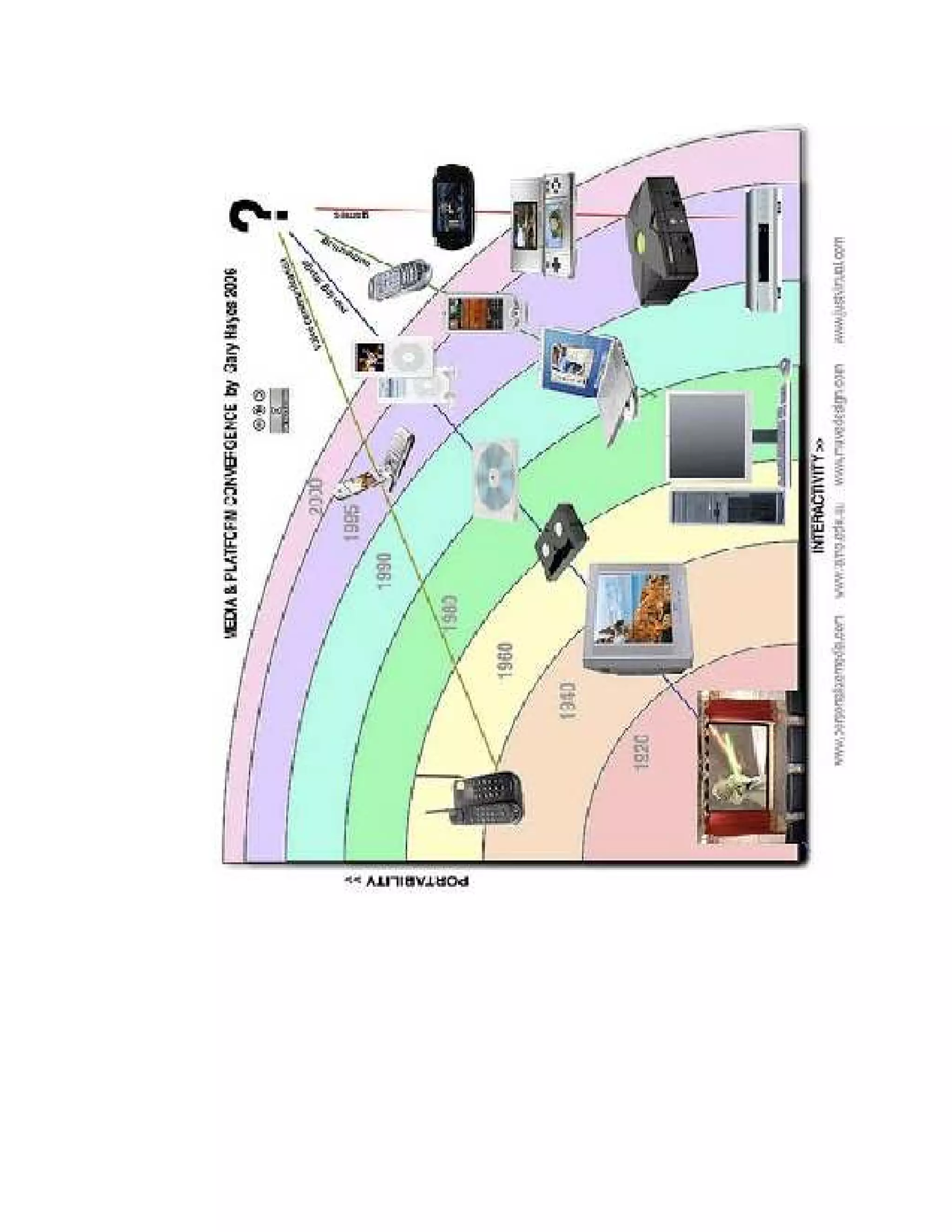
   y   The importance of cross media convergence and synergy in production, distribution and
       marketing;

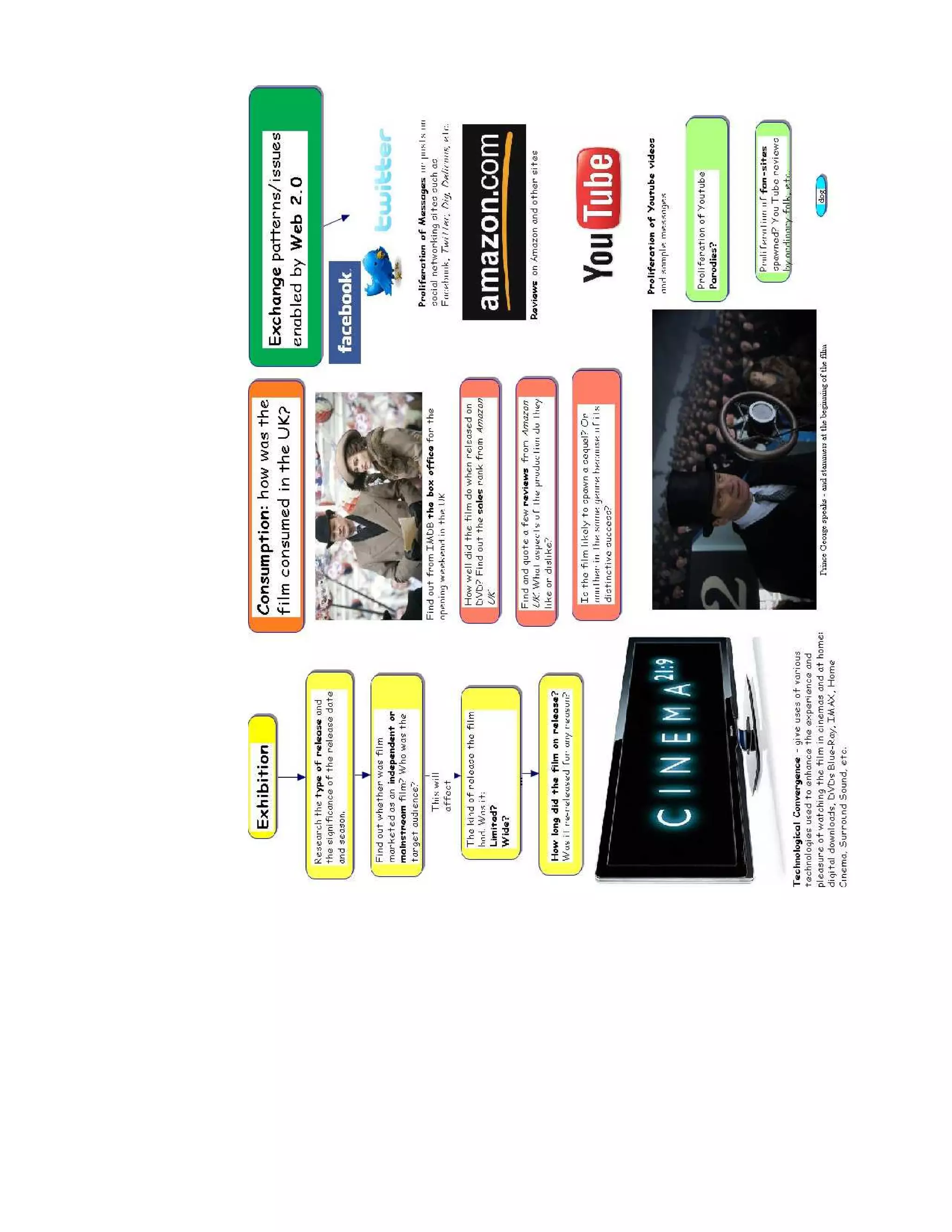
   y   technologies that have been introduced in recent years at the levels of production,
       distribution, marketing and exchange;

   y   The significance of proliferation in hardware and content for institutions and audiences;

   y   The importance of technological convergence for institutions and audiences;

   y   The issues raised in the targeting of national and local audiences (specifically, British) by
       international or global institutions;

   y   The ways in which your own experiences of media consumption illustrate wider
       patterns and trends of audience behaviour.


This unit should be approached through contemporary examples in the form of case studies .
Glossary:

TERM:   DEFINITION:
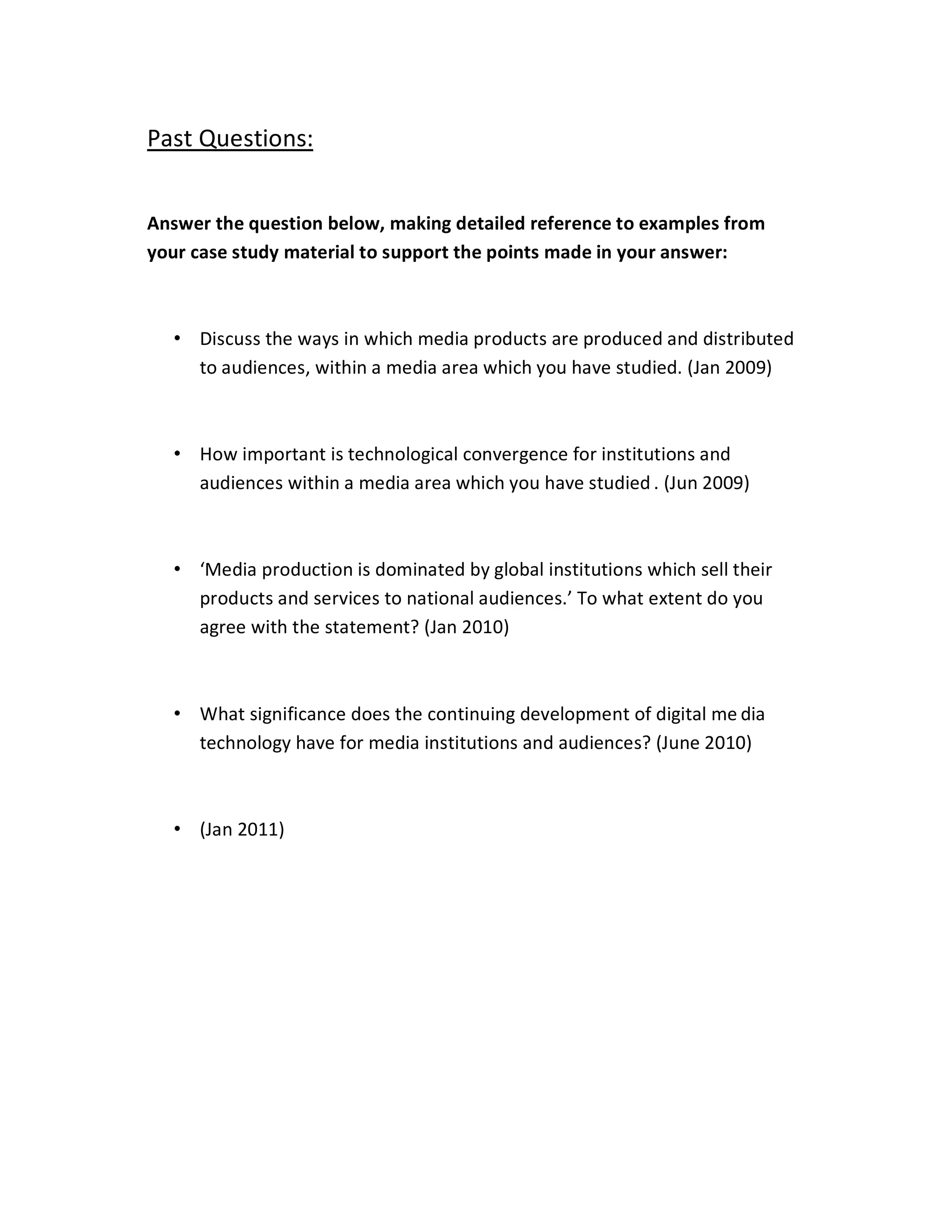
Past Questions:


Answer the question below, making detailed reference to examples from
your case study material to support the points made in your answer:


  ‡ Discuss the ways in which media products are produced and distributed
    to audiences, within a media area which you have studied. (Jan 2009)


  ‡ How important is technological convergence for institutions and
    audiences within a media area which you have studied . (Jun 2009)


  ‡ ͚Media production is dominated by global institutions which sell their
    products and services to national audiences.͛ To what extent do you
    agree with the statement? (Jan 2010)


  ‡ What significance does the continuing development of digital me dia
    technology have for media institutions and audiences? (June 2010)


  ‡ (Jan 2011)
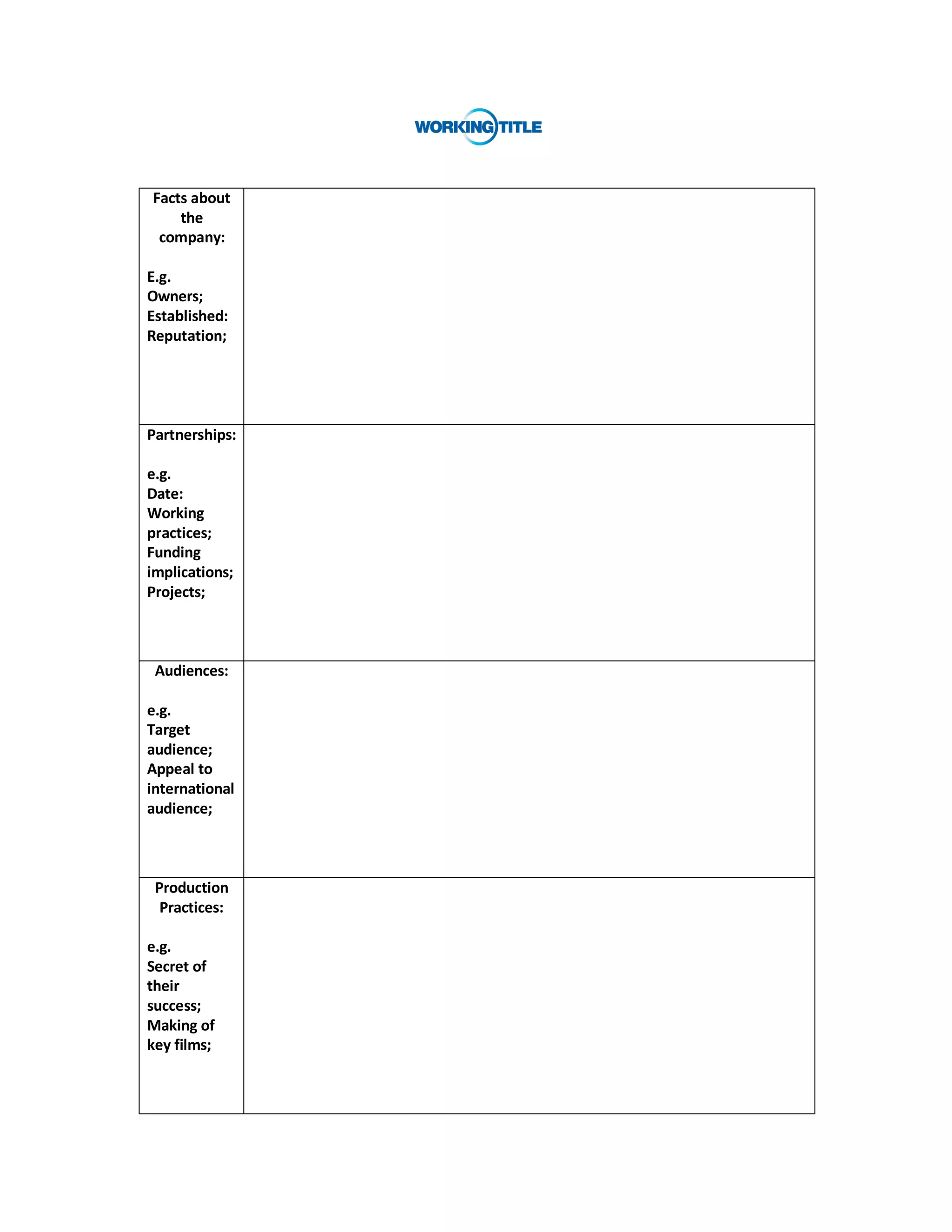
Facts about
    the
 company:

E.g.
Owners;
Established:
Reputation;


Partnerships:

e.g.
Date:
Working
practices;
Funding
implications;
Projects;


 Audiences:

e.g.
Target
audience;
Appeal to
international
audience;


 Production
  Practices:

e.g.
Secret of
their
success;
Making of
key films;
Distribution
 Practices:

e.g.
Universal͛s
role;
Marketing
strategies
with
examples;


 Exhibition
 Practices:

e.g.
Who
showing
films;
where?
Internet/
website;
DVD special
features;


Additional
info:
Facts about
    the
 company:

E.g.
Owners/
directors;
Established;
Reputation;

Partnerships:

e.g.
Working
practices;
Funding
implications;
Projects;


 Audiences:

e.g.
Target
audience;
Appeal to
international
audience;


 Production
  Practices:

e.g.
Secret of
their
success;
Making of
key films;
Distribution
 Practices:


e.g.
Marketing
strategies
with
examples;


 Exhibition
 Practices:


e.g.
Who
showing
films;
where?
Internet/
website;
DVD special


Additional
info:
Facts:


Partnerships:


 Audiences:


 Production
  Practices:
Distribution
 Practices:


Exhibition
Practices:
My Case Studies Portfolio


        Film            Importance as case study example:
(plus date, director
     company)
j
audiences-and-institutions-revision-pack

audiences-and-institutions-revision-pack

  • 1.
    Audiences and Institutions Revision Pack KKS The focus for Audiences and Institutions: Discuss the processes of production, distribution, marketing and exchange as they relate to contemporary media institutions (the film industry), as well as the nature of audience consumption and the relationships between audiences and institutions. In addition, candidates should be familiar with: y The issues raised by media ownership; y The importance of cross media convergence and synergy in production, distribution and marketing; y technologies that have been introduced in recent years at the levels of production, distribution, marketing and exchange; y The significance of proliferation in hardware and content for institutions and audiences; y The importance of technological convergence for institutions and audiences; y The issues raised in the targeting of national and local audiences (specifically, British) by international or global institutions; y The ways in which your own experiences of media consumption illustrate wider patterns and trends of audience behaviour. This unit should be approached through contemporary examples in the form of case studies .
  • 2.
    Glossary: TERM: DEFINITION:
  • 3.
    Past Questions: Answer thequestion below, making detailed reference to examples from your case study material to support the points made in your answer: ‡ Discuss the ways in which media products are produced and distributed to audiences, within a media area which you have studied. (Jan 2009) ‡ How important is technological convergence for institutions and audiences within a media area which you have studied . (Jun 2009) ‡ ͚Media production is dominated by global institutions which sell their products and services to national audiences.͛ To what extent do you agree with the statement? (Jan 2010) ‡ What significance does the continuing development of digital me dia technology have for media institutions and audiences? (June 2010) ‡ (Jan 2011)
  • 4.
    Facts about the company: E.g. Owners; Established: Reputation; Partnerships: e.g. Date: Working practices; Funding implications; Projects; Audiences: e.g. Target audience; Appeal to international audience; Production Practices: e.g. Secret of their success; Making of key films;
  • 5.
    Distribution Practices: e.g. Universal͛s role; Marketing strategies with examples; Exhibition Practices: e.g. Who showing films; where? Internet/ website; DVD special features; Additional info:
  • 6.
    Facts about the company: E.g. Owners/ directors; Established; Reputation; Partnerships: e.g. Working practices; Funding implications; Projects; Audiences: e.g. Target audience; Appeal to international audience; Production Practices: e.g. Secret of their success; Making of key films;
  • 7.
    Distribution Practices: e.g. Marketing strategies with examples; Exhibition Practices: e.g. Who showing films; where? Internet/ website; DVD special Additional info:
  • 8.
  • 9.
  • 10.
    My Case StudiesPortfolio Film Importance as case study example: (plus date, director company)
  • 14.