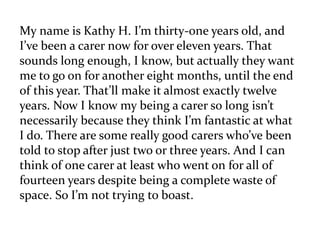
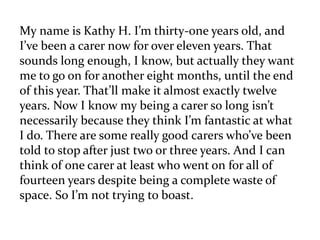
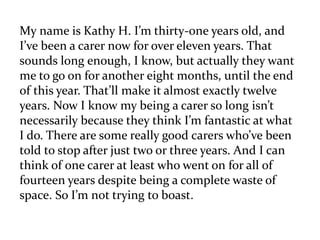
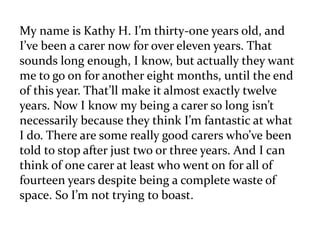
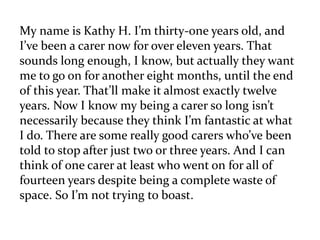
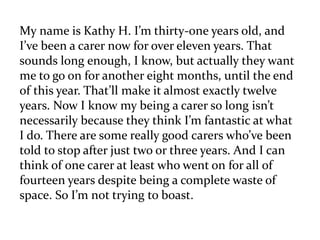
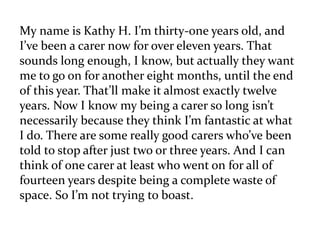
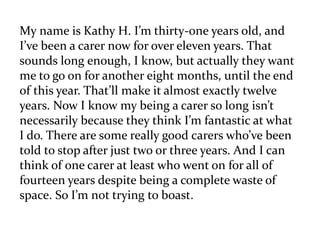
My name is Kathy H. I’m thirty-one years old, and 
I’ve been a carer now for over eleven years. That 
sounds long enough, I know, but actually they want 
me to go on for another eight months, until the end 
of this year. That’ll make it almost exactly twelve 
years. Now I know my being a carer so long isn’t 
necessarily because they think I’m fantastic at what 
I do. There are some really good carers who’ve been 
told to stop after just two or three years. And I can 
think of one carer at least who went on for all of 
fourteen years despite being a complete waste of 
space. So I’m not trying to boast.
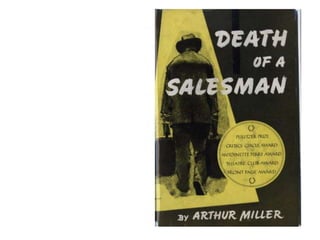
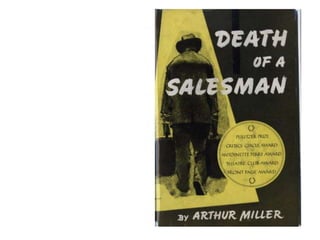
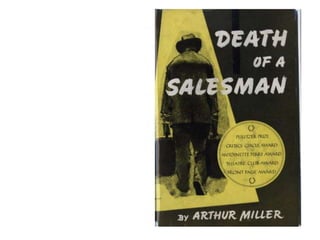
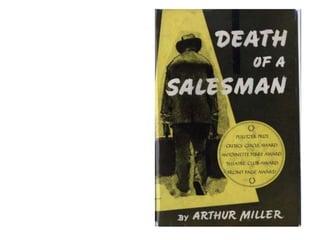
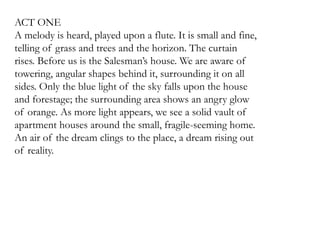
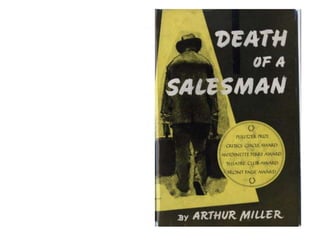
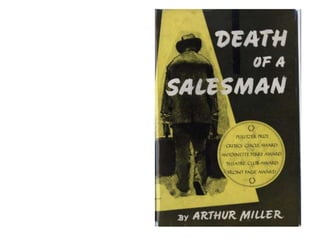
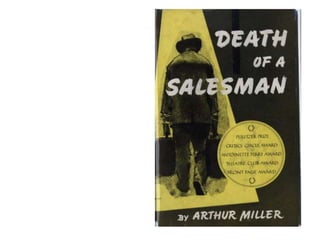
ACT ONE 
A melody is heard, played upon a flute. It is small and fine, 
telling of grass and trees and the horizon. The curtain 
rises. Before us is the Salesman’s house. We are aware of 
towering, angular shapes behind it, surrounding it on all 
sides. Only the blue light of the sky falls upon the house 
and forestage; the surrounding area shows an angry glow 
of orange. As more light appears, we see a solid vault of 
apartment houses around the small, fragile-seeming home. 
An air of the dream clings to the place, a dream rising out 
of reality.
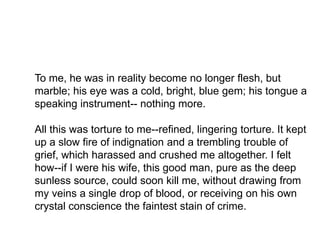
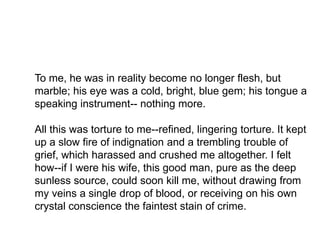
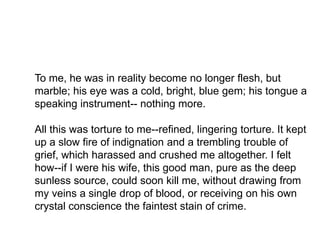
To me, he was in reality become no longer flesh, but 
marble; his eye was a cold, bright, blue gem; his tongue a 
speaking instrument-- nothing more. 
All this was torture to me--refined, lingering torture. It kept 
up a slow fire of indignation and a trembling trouble of 
grief, which harassed and crushed me altogether. I felt 
how--if I were his wife, this good man, pure as the deep 
sunless source, could soon kill me, without drawing from 
my veins a single drop of blood, or receiving on his own 
crystal conscience the faintest stain of crime.
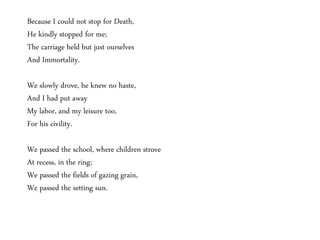
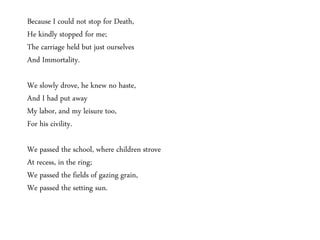
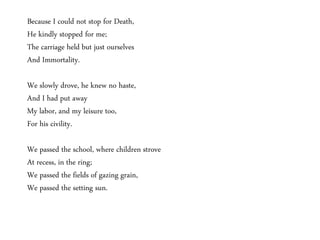
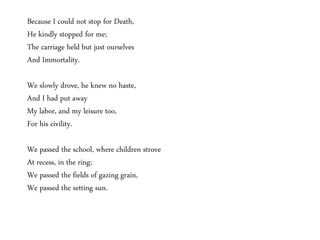
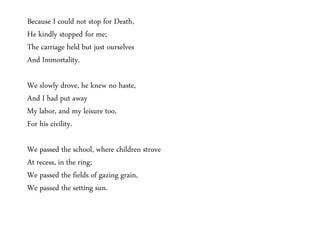
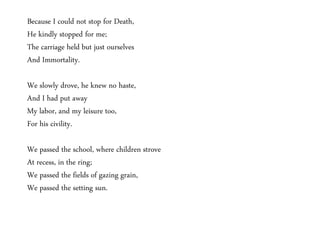
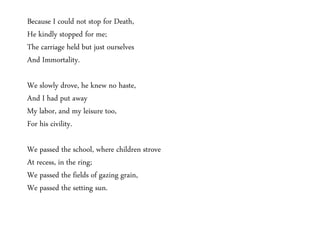
Because I could not stop for Death, 
He kindly stopped for me; 
The carriage held but just ourselves 
And Immortality. 
We slowly drove, he knew no haste, 
And I had put away 
My labor, and my leisure too, 
For his civility. 
We passed the school, where children strove 
At recess, in the ring; 
We passed the fields of gazing grain, 
We passed the setting sun.
context
My name is Kathy H. I’m thirty-one years old, and 
I’ve been a carer now for over eleven years. That 
sounds long enough, I know, but actually they want 
me to go on for another eight months, until the end 
of this year. That’ll make it almost exactly twelve 
years. Now I know my being a carer so long isn’t 
necessarily because they think I’m fantastic at what 
I do. There are some really good carers who’ve been 
told to stop after just two or three years. And I can 
think of one carer at least who went on for all of 
fourteen years despite being a complete waste of 
space. So I’m not trying to boast.
ACT ONE 
A melody is heard, played upon a flute. It is small and fine, 
telling of grass and trees and the horizon. The curtain 
rises. Before us is the Salesman’s house. We are aware of 
towering, angular shapes behind it, surrounding it on all 
sides. Only the blue light of the sky falls upon the house 
and forestage; the surrounding area shows an angry glow 
of orange. As more light appears, we see a solid vault of 
apartment houses around the small, fragile-seeming home. 
An air of the dream clings to the place, a dream rising out 
of reality.
To me, he was in reality become no longer flesh, but 
marble; his eye was a cold, bright, blue gem; his tongue a 
speaking instrument-- nothing more. 
All this was torture to me--refined, lingering torture. It kept 
up a slow fire of indignation and a trembling trouble of 
grief, which harassed and crushed me altogether. I felt 
how--if I were his wife, this good man, pure as the deep 
sunless source, could soon kill me, without drawing from 
my veins a single drop of blood, or receiving on his own 
crystal conscience the faintest stain of crime.
Because I could not stop for Death, 
He kindly stopped for me; 
The carriage held but just ourselves 
And Immortality. 
We slowly drove, he knew no haste, 
And I had put away 
My labor, and my leisure too, 
For his civility. 
We passed the school, where children strove 
At recess, in the ring; 
We passed the fields of gazing grain, 
We passed the setting sun.
context
My name is Kathy H. I’m thirty-one years old, and 
I’ve been a carer now for over eleven years. That 
sounds long enough, I know, but actually they want 
me to go on for another eight months, until the end 
of this year. That’ll make it almost exactly twelve 
years. Now I know my being a carer so long isn’t 
necessarily because they think I’m fantastic at what 
I do. There are some really good carers who’ve been 
told to stop after just two or three years. And I can 
think of one carer at least who went on for all of 
fourteen years despite being a complete waste of 
space. So I’m not trying to boast.
ACT ONE 
A melody is heard, played upon a flute. It is small and fine, 
telling of grass and trees and the horizon. The curtain 
rises. Before us is the Salesman’s house. We are aware of 
towering, angular shapes behind it, surrounding it on all 
sides. Only the blue light of the sky falls upon the house 
and forestage; the surrounding area shows an angry glow 
of orange. As more light appears, we see a solid vault of 
apartment houses around the small, fragile-seeming home. 
An air of the dream clings to the place, a dream rising out 
of reality.
To me, he was in reality become no longer flesh, but 
marble; his eye was a cold, bright, blue gem; his tongue a 
speaking instrument-- nothing more. 
All this was torture to me--refined, lingering torture. It kept 
up a slow fire of indignation and a trembling trouble of 
grief, which harassed and crushed me altogether. I felt 
how--if I were his wife, this good man, pure as the deep 
sunless source, could soon kill me, without drawing from 
my veins a single drop of blood, or receiving on his own 
crystal conscience the faintest stain of crime.
Because I could not stop for Death, 
He kindly stopped for me; 
The carriage held but just ourselves 
And Immortality. 
We slowly drove, he knew no haste, 
And I had put away 
My labor, and my leisure too, 
For his civility. 
We passed the school, where children strove 
At recess, in the ring; 
We passed the fields of gazing grain, 
We passed the setting sun.
context
My name is Kathy H. I’m thirty-one years old, and 
I’ve been a carer now for over eleven years. That 
sounds long enough, I know, but actually they want 
me to go on for another eight months, until the end 
of this year. That’ll make it almost exactly twelve 
years. Now I know my being a carer so long isn’t 
necessarily because they think I’m fantastic at what 
I do. There are some really good carers who’ve been 
told to stop after just two or three years. And I can 
think of one carer at least who went on for all of 
fourteen years despite being a complete waste of 
space. So I’m not trying to boast.
ACT ONE 
A melody is heard, played upon a flute. It is small and fine, 
telling of grass and trees and the horizon. The curtain 
rises. Before us is the Salesman’s house. We are aware of 
towering, angular shapes behind it, surrounding it on all 
sides. Only the blue light of the sky falls upon the house 
and forestage; the surrounding area shows an angry glow 
of orange. As more light appears, we see a solid vault of 
apartment houses around the small, fragile-seeming home. 
An air of the dream clings to the place, a dream rising out 
of reality.
To me, he was in reality become no longer flesh, but 
marble; his eye was a cold, bright, blue gem; his tongue a 
speaking instrument-- nothing more. 
All this was torture to me--refined, lingering torture. It kept 
up a slow fire of indignation and a trembling trouble of 
grief, which harassed and crushed me altogether. I felt 
how--if I were his wife, this good man, pure as the deep 
sunless source, could soon kill me, without drawing from 
my veins a single drop of blood, or receiving on his own 
crystal conscience the faintest stain of crime.
Because I could not stop for Death, 
He kindly stopped for me; 
The carriage held but just ourselves 
And Immortality. 
We slowly drove, he knew no haste, 
And I had put away 
My labor, and my leisure too, 
For his civility. 
We passed the school, where children strove 
At recess, in the ring; 
We passed the fields of gazing grain, 
We passed the setting sun.
context
My name is Kathy H. I’m thirty-one years old, and 
I’ve been a carer now for over eleven years. That 
sounds long enough, I know, but actually they want 
me to go on for another eight months, until the end 
of this year. That’ll make it almost exactly twelve 
years. Now I know my being a carer so long isn’t 
necessarily because they think I’m fantastic at what 
I do. There are some really good carers who’ve been 
told to stop after just two or three years. And I can 
think of one carer at least who went on for all of 
fourteen years despite being a complete waste of 
space. So I’m not trying to boast.
ACT ONE 
A melody is heard, played upon a flute. It is small and fine, 
telling of grass and trees and the horizon. The curtain 
rises. Before us is the Salesman’s house. We are aware of 
towering, angular shapes behind it, surrounding it on all 
sides. Only the blue light of the sky falls upon the house 
and forestage; the surrounding area shows an angry glow 
of orange. As more light appears, we see a solid vault of 
apartment houses around the small, fragile-seeming home. 
An air of the dream clings to the place, a dream rising out 
of reality.
To me, he was in reality become no longer flesh, but 
marble; his eye was a cold, bright, blue gem; his tongue a 
speaking instrument-- nothing more. 
All this was torture to me--refined, lingering torture. It kept 
up a slow fire of indignation and a trembling trouble of 
grief, which harassed and crushed me altogether. I felt 
how--if I were his wife, this good man, pure as the deep 
sunless source, could soon kill me, without drawing from 
my veins a single drop of blood, or receiving on his own 
crystal conscience the faintest stain of crime.
Because I could not stop for Death, 
He kindly stopped for me; 
The carriage held but just ourselves 
And Immortality. 
We slowly drove, he knew no haste, 
And I had put away 
My labor, and my leisure too, 
For his civility. 
We passed the school, where children strove 
At recess, in the ring; 
We passed the fields of gazing grain, 
We passed the setting sun.
context
My name is Kathy H. I’m thirty-one years old, and 
I’ve been a carer now for over eleven years. That 
sounds long enough, I know, but actually they want 
me to go on for another eight months, until the end 
of this year. That’ll make it almost exactly twelve 
years. Now I know my being a carer so long isn’t 
necessarily because they think I’m fantastic at what 
I do. There are some really good carers who’ve been 
told to stop after just two or three years. And I can 
think of one carer at least who went on for all of 
fourteen years despite being a complete waste of 
space. So I’m not trying to boast.
ACT ONE 
A melody is heard, played upon a flute. It is small and fine, 
telling of grass and trees and the horizon. The curtain 
rises. Before us is the Salesman’s house. We are aware of 
towering, angular shapes behind it, surrounding it on all 
sides. Only the blue light of the sky falls upon the house 
and forestage; the surrounding area shows an angry glow 
of orange. As more light appears, we see a solid vault of 
apartment houses around the small, fragile-seeming home. 
An air of the dream clings to the place, a dream rising out 
of reality.
To me, he was in reality become no longer flesh, but 
marble; his eye was a cold, bright, blue gem; his tongue a 
speaking instrument-- nothing more. 
All this was torture to me--refined, lingering torture. It kept 
up a slow fire of indignation and a trembling trouble of 
grief, which harassed and crushed me altogether. I felt 
how--if I were his wife, this good man, pure as the deep 
sunless source, could soon kill me, without drawing from 
my veins a single drop of blood, or receiving on his own 
crystal conscience the faintest stain of crime.
Because I could not stop for Death, 
He kindly stopped for me; 
The carriage held but just ourselves 
And Immortality. 
We slowly drove, he knew no haste, 
And I had put away 
My labor, and my leisure too, 
For his civility. 
We passed the school, where children strove 
At recess, in the ring; 
We passed the fields of gazing grain, 
We passed the setting sun.
context
My name is Kathy H. I’m thirty-one years old, and 
I’ve been a carer now for over eleven years. That 
sounds long enough, I know, but actually they want 
me to go on for another eight months, until the end 
of this year. That’ll make it almost exactly twelve 
years. Now I know my being a carer so long isn’t 
necessarily because they think I’m fantastic at what 
I do. There are some really good carers who’ve been 
told to stop after just two or three years. And I can 
think of one carer at least who went on for all of 
fourteen years despite being a complete waste of 
space. So I’m not trying to boast.
ACT ONE 
A melody is heard, played upon a flute. It is small and fine, 
telling of grass and trees and the horizon. The curtain 
rises. Before us is the Salesman’s house. We are aware of 
towering, angular shapes behind it, surrounding it on all 
sides. Only the blue light of the sky falls upon the house 
and forestage; the surrounding area shows an angry glow 
of orange. As more light appears, we see a solid vault of 
apartment houses around the small, fragile-seeming home. 
An air of the dream clings to the place, a dream rising out 
of reality.
To me, he was in reality become no longer flesh, but 
marble; his eye was a cold, bright, blue gem; his tongue a 
speaking instrument-- nothing more. 
All this was torture to me--refined, lingering torture. It kept 
up a slow fire of indignation and a trembling trouble of 
grief, which harassed and crushed me altogether. I felt 
how--if I were his wife, this good man, pure as the deep 
sunless source, could soon kill me, without drawing from 
my veins a single drop of blood, or receiving on his own 
crystal conscience the faintest stain of crime.
Because I could not stop for Death, 
He kindly stopped for me; 
The carriage held but just ourselves 
And Immortality. 
We slowly drove, he knew no haste, 
And I had put away 
My labor, and my leisure too, 
For his civility. 
We passed the school, where children strove 
At recess, in the ring; 
We passed the fields of gazing grain, 
We passed the setting sun.
context
My name is Kathy H. I’m thirty-one years old, and 
I’ve been a carer now for over eleven years. That 
sounds long enough, I know, but actually they want 
me to go on for another eight months, until the end 
of this year. That’ll make it almost exactly twelve 
years. Now I know my being a carer so long isn’t 
necessarily because they think I’m fantastic at what 
I do. There are some really good carers who’ve been 
told to stop after just two or three years. And I can 
think of one carer at least who went on for all of 
fourteen years despite being a complete waste of 
space. So I’m not trying to boast.
ACT ONE 
A melody is heard, played upon a flute. It is small and fine, 
telling of grass and trees and the horizon. The curtain 
rises. Before us is the Salesman’s house. We are aware of 
towering, angular shapes behind it, surrounding it on all 
sides. Only the blue light of the sky falls upon the house 
and forestage; the surrounding area shows an angry glow 
of orange. As more light appears, we see a solid vault of 
apartment houses around the small, fragile-seeming home. 
An air of the dream clings to the place, a dream rising out 
of reality.
To me, he was in reality become no longer flesh, but 
marble; his eye was a cold, bright, blue gem; his tongue a 
speaking instrument-- nothing more. 
All this was torture to me--refined, lingering torture. It kept 
up a slow fire of indignation and a trembling trouble of 
grief, which harassed and crushed me altogether. I felt 
how--if I were his wife, this good man, pure as the deep 
sunless source, could soon kill me, without drawing from 
my veins a single drop of blood, or receiving on his own 
crystal conscience the faintest stain of crime.
Because I could not stop for Death, 
He kindly stopped for me; 
The carriage held but just ourselves 
And Immortality. 
We slowly drove, he knew no haste, 
And I had put away 
My labor, and my leisure too, 
For his civility. 
We passed the school, where children strove 
At recess, in the ring; 
We passed the fields of gazing grain, 
We passed the setting sun.
context
My name is Kathy H. I’m thirty-one years old, and 
I’ve been a carer now for over eleven years. That 
sounds long enough, I know, but actually they want 
me to go on for another eight months, until the end 
of this year. That’ll make it almost exactly twelve 
years. Now I know my being a carer so long isn’t 
necessarily because they think I’m fantastic at what 
I do. There are some really good carers who’ve been 
told to stop after just two or three years. And I can 
think of one carer at least who went on for all of 
fourteen years despite being a complete waste of 
space. So I’m not trying to boast.
ACT ONE 
A melody is heard, played upon a flute. It is small and fine, 
telling of grass and trees and the horizon. The curtain 
rises. Before us is the Salesman’s house. We are aware of 
towering, angular shapes behind it, surrounding it on all 
sides. Only the blue light of the sky falls upon the house 
and forestage; the surrounding area shows an angry glow 
of orange. As more light appears, we see a solid vault of 
apartment houses around the small, fragile-seeming home. 
An air of the dream clings to the place, a dream rising out 
of reality.
To me, he was in reality become no longer flesh, but 
marble; his eye was a cold, bright, blue gem; his tongue a 
speaking instrument-- nothing more. 
All this was torture to me--refined, lingering torture. It kept 
up a slow fire of indignation and a trembling trouble of 
grief, which harassed and crushed me altogether. I felt 
how--if I were his wife, this good man, pure as the deep 
sunless source, could soon kill me, without drawing from 
my veins a single drop of blood, or receiving on his own 
crystal conscience the faintest stain of crime.
Because I could not stop for Death, 
He kindly stopped for me; 
The carriage held but just ourselves 
And Immortality. 
We slowly drove, he knew no haste, 
And I had put away 
My labor, and my leisure too, 
For his civility. 
We passed the school, where children strove 
At recess, in the ring; 
We passed the fields of gazing grain, 
We passed the setting sun.
context
My name is Kathy H. I’m thirty-one years old, and 
I’ve been a carer now for over eleven years. That 
sounds long enough, I know, but actually they want 
me to go on for another eight months, until the end 
of this year. That’ll make it almost exactly twelve 
years. Now I know my being a carer so long isn’t 
necessarily because they think I’m fantastic at what 
I do. There are some really good carers who’ve been 
told to stop after just two or three years. And I can 
think of one carer at least who went on for all of 
fourteen years despite being a complete waste of 
space. So I’m not trying to boast.
ACT ONE 
A melody is heard, played upon a flute. It is small and fine, 
telling of grass and trees and the horizon. The curtain 
rises. Before us is the Salesman’s house. We are aware of 
towering, angular shapes behind it, surrounding it on all 
sides. Only the blue light of the sky falls upon the house 
and forestage; the surrounding area shows an angry glow 
of orange. As more light appears, we see a solid vault of 
apartment houses around the small, fragile-seeming home. 
An air of the dream clings to the place, a dream rising out 
of reality.
To me, he was in reality become no longer flesh, but 
marble; his eye was a cold, bright, blue gem; his tongue a 
speaking instrument-- nothing more. 
All this was torture to me--refined, lingering torture. It kept 
up a slow fire of indignation and a trembling trouble of 
grief, which harassed and crushed me altogether. I felt 
how--if I were his wife, this good man, pure as the deep 
sunless source, could soon kill me, without drawing from 
my veins a single drop of blood, or receiving on his own 
crystal conscience the faintest stain of crime.
Because I could not stop for Death, 
He kindly stopped for me; 
The carriage held but just ourselves 
And Immortality. 
We slowly drove, he knew no haste, 
And I had put away 
My labor, and my leisure too, 
For his civility. 
We passed the school, where children strove 
At recess, in the ring; 
We passed the fields of gazing grain, 
We passed the setting sun.
context
My name is Kathy H. I’m thirty-one years old, and 
I’ve been a carer now for over eleven years. That 
sounds long enough, I know, but actually they want 
me to go on for another eight months, until the end 
of this year. That’ll make it almost exactly twelve 
years. Now I know my being a carer so long isn’t 
necessarily because they think I’m fantastic at what 
I do. There are some really good carers who’ve been 
told to stop after just two or three years. And I can 
think of one carer at least who went on for all of 
fourteen years despite being a complete waste of 
space. So I’m not trying to boast.
ACT ONE 
A melody is heard, played upon a flute. It is small and fine, 
telling of grass and trees and the horizon. The curtain 
rises. Before us is the Salesman’s house. We are aware of 
towering, angular shapes behind it, surrounding it on all 
sides. Only the blue light of the sky falls upon the house 
and forestage; the surrounding area shows an angry glow 
of orange. As more light appears, we see a solid vault of 
apartment houses around the small, fragile-seeming home. 
An air of the dream clings to the place, a dream rising out 
of reality.
To me, he was in reality become no longer flesh, but 
marble; his eye was a cold, bright, blue gem; his tongue a 
speaking instrument-- nothing more. 
All this was torture to me--refined, lingering torture. It kept 
up a slow fire of indignation and a trembling trouble of 
grief, which harassed and crushed me altogether. I felt 
how--if I were his wife, this good man, pure as the deep 
sunless source, could soon kill me, without drawing from 
my veins a single drop of blood, or receiving on his own 
crystal conscience the faintest stain of crime.
Because I could not stop for Death, 
He kindly stopped for me; 
The carriage held but just ourselves 
And Immortality. 
We slowly drove, he knew no haste, 
And I had put away 
My labor, and my leisure too, 
For his civility. 
We passed the school, where children strove 
At recess, in the ring; 
We passed the fields of gazing grain, 
We passed the setting sun.
My name is Kathy H. I’m thirty-one years old, and 
I’ve been a carer now for over eleven years. That 
sounds long enough, I know, but actually they want 
me to go on for another eight months, until the end 
of this year. That’ll make it almost exactly twelve 
years. Now I know my being a carer so long isn’t 
necessarily because they think I’m fantastic at what 
I do. There are some really good carers who’ve been 
told to stop after just two or three years. And I can 
think of one carer at least who went on for all of 
fourteen years despite being a complete waste of 
space. So I’m not trying to boast.
ACT ONE 
A melody is heard, played upon a flute. It is small and fine, 
telling of grass and trees and the horizon. The curtain 
rises. Before us is the Salesman’s house. We are aware of 
towering, angular shapes behind it, surrounding it on all 
sides. Only the blue light of the sky falls upon the house 
and forestage; the surrounding area shows an angry glow 
of orange. As more light appears, we see a solid vault of 
apartment houses around the small, fragile-seeming home. 
An air of the dream clings to the place, a dream rising out 
of reality.
To me, he was in reality become no longer flesh, but 
marble; his eye was a cold, bright, blue gem; his tongue a 
speaking instrument-- nothing more. 
All this was torture to me--refined, lingering torture. It kept 
up a slow fire of indignation and a trembling trouble of 
grief, which harassed and crushed me altogether. I felt 
how--if I were his wife, this good man, pure as the deep 
sunless source, could soon kill me, without drawing from 
my veins a single drop of blood, or receiving on his own 
crystal conscience the faintest stain of crime.
Because I could not stop for Death, 
He kindly stopped for me; 
The carriage held but just ourselves 
And Immortality. 
We slowly drove, he knew no haste, 
And I had put away 
My labor, and my leisure too, 
For his civility. 
We passed the school, where children strove 
At recess, in the ring; 
We passed the fields of gazing grain, 
We passed the setting sun.
context
My name is Kathy H. I’m thirty-one years old, and 
I’ve been a carer now for over eleven years. That 
sounds long enough, I know, but actually they want 
me to go on for another eight months, until the end 
of this year. That’ll make it almost exactly twelve 
years. Now I know my being a carer so long isn’t 
necessarily because they think I’m fantastic at what 
I do. There are some really good carers who’ve been 
told to stop after just two or three years. And I can 
think of one carer at least who went on for all of 
fourteen years despite being a complete waste of 
space. So I’m not trying to boast.
ACT ONE 
A melody is heard, played upon a flute. It is small and fine, 
telling of grass and trees and the horizon. The curtain 
rises. Before us is the Salesman’s house. We are aware of 
towering, angular shapes behind it, surrounding it on all 
sides. Only the blue light of the sky falls upon the house 
and forestage; the surrounding area shows an angry glow 
of orange. As more light appears, we see a solid vault of 
apartment houses around the small, fragile-seeming home. 
An air of the dream clings to the place, a dream rising out 
of reality.
To me, he was in reality become no longer flesh, but 
marble; his eye was a cold, bright, blue gem; his tongue a 
speaking instrument-- nothing more. 
All this was torture to me--refined, lingering torture. It kept 
up a slow fire of indignation and a trembling trouble of 
grief, which harassed and crushed me altogether. I felt 
how--if I were his wife, this good man, pure as the deep 
sunless source, could soon kill me, without drawing from 
my veins a single drop of blood, or receiving on his own 
crystal conscience the faintest stain of crime.
Because I could not stop for Death, 
He kindly stopped for me; 
The carriage held but just ourselves 
And Immortality. 
We slowly drove, he knew no haste, 
And I had put away 
My labor, and my leisure too, 
For his civility. 
We passed the school, where children strove 
At recess, in the ring; 
We passed the fields of gazing grain, 
We passed the setting sun.
context
My name is Kathy H. I’m thirty-one years old, and 
I’ve been a carer now for over eleven years. That 
sounds long enough, I know, but actually they want 
me to go on for another eight months, until the end 
of this year. That’ll make it almost exactly twelve 
years. Now I know my being a carer so long isn’t 
necessarily because they think I’m fantastic at what 
I do. There are some really good carers who’ve been 
told to stop after just two or three years. And I can 
think of one carer at least who went on for all of 
fourteen years despite being a complete waste of 
space. So I’m not trying to boast.
ACT ONE 
A melody is heard, played upon a flute. It is small and fine, 
telling of grass and trees and the horizon. The curtain 
rises. Before us is the Salesman’s house. We are aware of 
towering, angular shapes behind it, surrounding it on all 
sides. Only the blue light of the sky falls upon the house 
and forestage; the surrounding area shows an angry glow 
of orange. As more light appears, we see a solid vault of 
apartment houses around the small, fragile-seeming home. 
An air of the dream clings to the place, a dream rising out 
of reality.
To me, he was in reality become no longer flesh, but 
marble; his eye was a cold, bright, blue gem; his tongue a 
speaking instrument-- nothing more. 
All this was torture to me--refined, lingering torture. It kept 
up a slow fire of indignation and a trembling trouble of 
grief, which harassed and crushed me altogether. I felt 
how--if I were his wife, this good man, pure as the deep 
sunless source, could soon kill me, without drawing from 
my veins a single drop of blood, or receiving on his own 
crystal conscience the faintest stain of crime.
Because I could not stop for Death, 
He kindly stopped for me; 
The carriage held but just ourselves 
And Immortality. 
We slowly drove, he knew no haste, 
And I had put away 
My labor, and my leisure too, 
For his civility. 
We passed the school, where children strove 
At recess, in the ring; 
We passed the fields of gazing grain, 
We passed the setting sun.
My name is Kathy H. I’m thirty-one years old, and 
I’ve been a carer now for over eleven years. That 
sounds long enough, I know, but actually they want 
me to go on for another eight months, until the end 
of this year. That’ll make it almost exactly twelve 
years. Now I know my being a carer so long isn’t 
necessarily because they think I’m fantastic at what 
I do. There are some really good carers who’ve been 
told to stop after just two or three years. And I can 
think of one carer at least who went on for all of 
fourteen years despite being a complete waste of 
space. So I’m not trying to boast.
ACT ONE 
A melody is heard, played upon a flute. It is small and fine, 
telling of grass and trees and the horizon. The curtain 
rises. Before us is the Salesman’s house. We are aware of 
towering, angular shapes behind it, surrounding it on all 
sides. Only the blue light of the sky falls upon the house 
and forestage; the surrounding area shows an angry glow 
of orange. As more light appears, we see a solid vault of 
apartment houses around the small, fragile-seeming home. 
An air of the dream clings to the place, a dream rising out 
of reality.
To me, he was in reality become no longer flesh, but 
marble; his eye was a cold, bright, blue gem; his tongue a 
speaking instrument-- nothing more. 
All this was torture to me--refined, lingering torture. It kept 
up a slow fire of indignation and a trembling trouble of 
grief, which harassed and crushed me altogether. I felt 
how--if I were his wife, this good man, pure as the deep 
sunless source, could soon kill me, without drawing from 
my veins a single drop of blood, or receiving on his own 
crystal conscience the faintest stain of crime.
Because I could not stop for Death, 
He kindly stopped for me; 
The carriage held but just ourselves 
And Immortality. 
We slowly drove, he knew no haste, 
And I had put away 
My labor, and my leisure too, 
For his civility. 
We passed the school, where children strove 
At recess, in the ring; 
We passed the fields of gazing grain, 
We passed the setting sun.
context
My name is Kathy H. I’m thirty-one years old, and 
I’ve been a carer now for over eleven years. That 
sounds long enough, I know, but actually they want 
me to go on for another eight months, until the end 
of this year. That’ll make it almost exactly twelve 
years. Now I know my being a carer so long isn’t 
necessarily because they think I’m fantastic at what 
I do. There are some really good carers who’ve been 
told to stop after just two or three years. And I can 
think of one carer at least who went on for all of 
fourteen years despite being a complete waste of 
space. So I’m not trying to boast.
ACT ONE 
A melody is heard, played upon a flute. It is small and fine, 
telling of grass and trees and the horizon. The curtain 
rises. Before us is the Salesman’s house. We are aware of 
towering, angular shapes behind it, surrounding it on all 
sides. Only the blue light of the sky falls upon the house 
and forestage; the surrounding area shows an angry glow 
of orange. As more light appears, we see a solid vault of 
apartment houses around the small, fragile-seeming home. 
An air of the dream clings to the place, a dream rising out 
of reality.
To me, he was in reality become no longer flesh, but 
marble; his eye was a cold, bright, blue gem; his tongue a 
speaking instrument-- nothing more. 
All this was torture to me--refined, lingering torture. It kept 
up a slow fire of indignation and a trembling trouble of 
grief, which harassed and crushed me altogether. I felt 
how--if I were his wife, this good man, pure as the deep 
sunless source, could soon kill me, without drawing from 
my veins a single drop of blood, or receiving on his own 
crystal conscience the faintest stain of crime.
Because I could not stop for Death, 
He kindly stopped for me; 
The carriage held but just ourselves 
And Immortality. 
We slowly drove, he knew no haste, 
And I had put away 
My labor, and my leisure too, 
For his civility. 
We passed the school, where children strove 
At recess, in the ring; 
We passed the fields of gazing grain, 
We passed the setting sun.
context
My name is Kathy H. I’m thirty-one years old, and 
I’ve been a carer now for over eleven years. That 
sounds long enough, I know, but actually they want 
me to go on for another eight months, until the end 
of this year. That’ll make it almost exactly twelve 
years. Now I know my being a carer so long isn’t 
necessarily because they think I’m fantastic at what 
I do. There are some really good carers who’ve been 
told to stop after just two or three years. And I can 
think of one carer at least who went on for all of 
fourteen years despite being a complete waste of 
space. So I’m not trying to boast.
ACT ONE 
A melody is heard, played upon a flute. It is small and fine, 
telling of grass and trees and the horizon. The curtain 
rises. Before us is the Salesman’s house. We are aware of 
towering, angular shapes behind it, surrounding it on all 
sides. Only the blue light of the sky falls upon the house 
and forestage; the surrounding area shows an angry glow 
of orange. As more light appears, we see a solid vault of 
apartment houses around the small, fragile-seeming home. 
An air of the dream clings to the place, a dream rising out 
of reality.
To me, he was in reality become no longer flesh, but 
marble; his eye was a cold, bright, blue gem; his tongue a 
speaking instrument-- nothing more. 
All this was torture to me--refined, lingering torture. It kept 
up a slow fire of indignation and a trembling trouble of 
grief, which harassed and crushed me altogether. I felt 
how--if I were his wife, this good man, pure as the deep 
sunless source, could soon kill me, without drawing from 
my veins a single drop of blood, or receiving on his own 
crystal conscience the faintest stain of crime.
Because I could not stop for Death, 
He kindly stopped for me; 
The carriage held but just ourselves 
And Immortality. 
We slowly drove, he knew no haste, 
And I had put away 
My labor, and my leisure too, 
For his civility. 
We passed the school, where children strove 
At recess, in the ring; 
We passed the fields of gazing grain, 
We passed the setting sun.
My name is Kathy H. I’m thirty-one years old, and 
I’ve been a carer now for over eleven years. That 
sounds long enough, I know, but actually they want 
me to go on for another eight months, until the end 
of this year. That’ll make it almost exactly twelve 
years. Now I know my being a carer so long isn’t 
necessarily because they think I’m fantastic at what 
I do. There are some really good carers who’ve been 
told to stop after just two or three years. And I can 
think of one carer at least who went on for all of 
fourteen years despite being a complete waste of 
space. So I’m not trying to boast.
ACT ONE 
A melody is heard, played upon a flute. It is small and fine, 
telling of grass and trees and the horizon. The curtain 
rises. Before us is the Salesman’s house. We are aware of 
towering, angular shapes behind it, surrounding it on all 
sides. Only the blue light of the sky falls upon the house 
and forestage; the surrounding area shows an angry glow 
of orange. As more light appears, we see a solid vault of 
apartment houses around the small, fragile-seeming home. 
An air of the dream clings to the place, a dream rising out 
of reality.
To me, he was in reality become no longer flesh, but 
marble; his eye was a cold, bright, blue gem; his tongue a 
speaking instrument-- nothing more. 
All this was torture to me--refined, lingering torture. It kept 
up a slow fire of indignation and a trembling trouble of 
grief, which harassed and crushed me altogether. I felt 
how--if I were his wife, this good man, pure as the deep 
sunless source, could soon kill me, without drawing from 
my veins a single drop of blood, or receiving on his own 
crystal conscience the faintest stain of crime.
Because I could not stop for Death, 
He kindly stopped for me; 
The carriage held but just ourselves 
And Immortality. 
We slowly drove, he knew no haste, 
And I had put away 
My labor, and my leisure too, 
For his civility. 
We passed the school, where children strove 
At recess, in the ring; 
We passed the fields of gazing grain, 
We passed the setting sun.
context
My name is Kathy H. I’m thirty-one years old, and 
I’ve been a carer now for over eleven years. That 
sounds long enough, I know, but actually they want 
me to go on for another eight months, until the end 
of this year. That’ll make it almost exactly twelve 
years. Now I know my being a carer so long isn’t 
necessarily because they think I’m fantastic at what 
I do. There are some really good carers who’ve been 
told to stop after just two or three years. And I can 
think of one carer at least who went on for all of 
fourteen years despite being a complete waste of 
space. So I’m not trying to boast.
ACT ONE 
A melody is heard, played upon a flute. It is small and fine, 
telling of grass and trees and the horizon. The curtain 
rises. Before us is the Salesman’s house. We are aware of 
towering, angular shapes behind it, surrounding it on all 
sides. Only the blue light of the sky falls upon the house 
and forestage; the surrounding area shows an angry glow 
of orange. As more light appears, we see a solid vault of 
apartment houses around the small, fragile-seeming home. 
An air of the dream clings to the place, a dream rising out 
of reality.
To me, he was in reality become no longer flesh, but 
marble; his eye was a cold, bright, blue gem; his tongue a 
speaking instrument-- nothing more. 
All this was torture to me--refined, lingering torture. It kept 
up a slow fire of indignation and a trembling trouble of 
grief, which harassed and crushed me altogether. I felt 
how--if I were his wife, this good man, pure as the deep 
sunless source, could soon kill me, without drawing from 
my veins a single drop of blood, or receiving on his own 
crystal conscience the faintest stain of crime.
Because I could not stop for Death, 
He kindly stopped for me; 
The carriage held but just ourselves 
And Immortality. 
We slowly drove, he knew no haste, 
And I had put away 
My labor, and my leisure too, 
For his civility. 
We passed the school, where children strove 
At recess, in the ring; 
We passed the fields of gazing grain, 
We passed the setting sun.
context
My name is Kathy H. I’m thirty-one years old, and 
I’ve been a carer now for over eleven years. That 
sounds long enough, I know, but actually they want 
me to go on for another eight months, until the end 
of this year. That’ll make it almost exactly twelve 
years. Now I know my being a carer so long isn’t 
necessarily because they think I’m fantastic at what 
I do. There are some really good carers who’ve been 
told to stop after just two or three years. And I can 
think of one carer at least who went on for all of 
fourteen years despite being a complete waste of 
space. So I’m not trying to boast.
ACT ONE 
A melody is heard, played upon a flute. It is small and fine, 
telling of grass and trees and the horizon. The curtain 
rises. Before us is the Salesman’s house. We are aware of 
towering, angular shapes behind it, surrounding it on all 
sides. Only the blue light of the sky falls upon the house 
and forestage; the surrounding area shows an angry glow 
of orange. As more light appears, we see a solid vault of 
apartment houses around the small, fragile-seeming home. 
An air of the dream clings to the place, a dream rising out 
of reality.
To me, he was in reality become no longer flesh, but 
marble; his eye was a cold, bright, blue gem; his tongue a 
speaking instrument-- nothing more. 
All this was torture to me--refined, lingering torture. It kept 
up a slow fire of indignation and a trembling trouble of 
grief, which harassed and crushed me altogether. I felt 
how--if I were his wife, this good man, pure as the deep 
sunless source, could soon kill me, without drawing from 
my veins a single drop of blood, or receiving on his own 
crystal conscience the faintest stain of crime.
Because I could not stop for Death, 
He kindly stopped for me; 
The carriage held but just ourselves 
And Immortality. 
We slowly drove, he knew no haste, 
And I had put away 
My labor, and my leisure too, 
For his civility. 
We passed the school, where children strove 
At recess, in the ring; 
We passed the fields of gazing grain, 
We passed the setting sun.

Words open evening

  • 1.
    My name isKathy H. I’m thirty-one years old, and I’ve been a carer now for over eleven years. That sounds long enough, I know, but actually they want me to go on for another eight months, until the end of this year. That’ll make it almost exactly twelve years. Now I know my being a carer so long isn’t necessarily because they think I’m fantastic at what I do. There are some really good carers who’ve been told to stop after just two or three years. And I can think of one carer at least who went on for all of fourteen years despite being a complete waste of space. So I’m not trying to boast.
  • 3.
    ACT ONE Amelody is heard, played upon a flute. It is small and fine, telling of grass and trees and the horizon. The curtain rises. Before us is the Salesman’s house. We are aware of towering, angular shapes behind it, surrounding it on all sides. Only the blue light of the sky falls upon the house and forestage; the surrounding area shows an angry glow of orange. As more light appears, we see a solid vault of apartment houses around the small, fragile-seeming home. An air of the dream clings to the place, a dream rising out of reality.
  • 6.
    To me, hewas in reality become no longer flesh, but marble; his eye was a cold, bright, blue gem; his tongue a speaking instrument-- nothing more. All this was torture to me--refined, lingering torture. It kept up a slow fire of indignation and a trembling trouble of grief, which harassed and crushed me altogether. I felt how--if I were his wife, this good man, pure as the deep sunless source, could soon kill me, without drawing from my veins a single drop of blood, or receiving on his own crystal conscience the faintest stain of crime.
  • 8.
    Because I couldnot stop for Death, He kindly stopped for me; The carriage held but just ourselves And Immortality. We slowly drove, he knew no haste, And I had put away My labor, and my leisure too, For his civility. We passed the school, where children strove At recess, in the ring; We passed the fields of gazing grain, We passed the setting sun.
  • 11.
  • 13.
    My name isKathy H. I’m thirty-one years old, and I’ve been a carer now for over eleven years. That sounds long enough, I know, but actually they want me to go on for another eight months, until the end of this year. That’ll make it almost exactly twelve years. Now I know my being a carer so long isn’t necessarily because they think I’m fantastic at what I do. There are some really good carers who’ve been told to stop after just two or three years. And I can think of one carer at least who went on for all of fourteen years despite being a complete waste of space. So I’m not trying to boast.
  • 15.
    ACT ONE Amelody is heard, played upon a flute. It is small and fine, telling of grass and trees and the horizon. The curtain rises. Before us is the Salesman’s house. We are aware of towering, angular shapes behind it, surrounding it on all sides. Only the blue light of the sky falls upon the house and forestage; the surrounding area shows an angry glow of orange. As more light appears, we see a solid vault of apartment houses around the small, fragile-seeming home. An air of the dream clings to the place, a dream rising out of reality.
  • 18.
    To me, hewas in reality become no longer flesh, but marble; his eye was a cold, bright, blue gem; his tongue a speaking instrument-- nothing more. All this was torture to me--refined, lingering torture. It kept up a slow fire of indignation and a trembling trouble of grief, which harassed and crushed me altogether. I felt how--if I were his wife, this good man, pure as the deep sunless source, could soon kill me, without drawing from my veins a single drop of blood, or receiving on his own crystal conscience the faintest stain of crime.
  • 20.
    Because I couldnot stop for Death, He kindly stopped for me; The carriage held but just ourselves And Immortality. We slowly drove, he knew no haste, And I had put away My labor, and my leisure too, For his civility. We passed the school, where children strove At recess, in the ring; We passed the fields of gazing grain, We passed the setting sun.
  • 23.
  • 25.
    My name isKathy H. I’m thirty-one years old, and I’ve been a carer now for over eleven years. That sounds long enough, I know, but actually they want me to go on for another eight months, until the end of this year. That’ll make it almost exactly twelve years. Now I know my being a carer so long isn’t necessarily because they think I’m fantastic at what I do. There are some really good carers who’ve been told to stop after just two or three years. And I can think of one carer at least who went on for all of fourteen years despite being a complete waste of space. So I’m not trying to boast.
  • 27.
    ACT ONE Amelody is heard, played upon a flute. It is small and fine, telling of grass and trees and the horizon. The curtain rises. Before us is the Salesman’s house. We are aware of towering, angular shapes behind it, surrounding it on all sides. Only the blue light of the sky falls upon the house and forestage; the surrounding area shows an angry glow of orange. As more light appears, we see a solid vault of apartment houses around the small, fragile-seeming home. An air of the dream clings to the place, a dream rising out of reality.
  • 30.
    To me, hewas in reality become no longer flesh, but marble; his eye was a cold, bright, blue gem; his tongue a speaking instrument-- nothing more. All this was torture to me--refined, lingering torture. It kept up a slow fire of indignation and a trembling trouble of grief, which harassed and crushed me altogether. I felt how--if I were his wife, this good man, pure as the deep sunless source, could soon kill me, without drawing from my veins a single drop of blood, or receiving on his own crystal conscience the faintest stain of crime.
  • 32.
    Because I couldnot stop for Death, He kindly stopped for me; The carriage held but just ourselves And Immortality. We slowly drove, he knew no haste, And I had put away My labor, and my leisure too, For his civility. We passed the school, where children strove At recess, in the ring; We passed the fields of gazing grain, We passed the setting sun.
  • 35.
  • 37.
    My name isKathy H. I’m thirty-one years old, and I’ve been a carer now for over eleven years. That sounds long enough, I know, but actually they want me to go on for another eight months, until the end of this year. That’ll make it almost exactly twelve years. Now I know my being a carer so long isn’t necessarily because they think I’m fantastic at what I do. There are some really good carers who’ve been told to stop after just two or three years. And I can think of one carer at least who went on for all of fourteen years despite being a complete waste of space. So I’m not trying to boast.
  • 39.
    ACT ONE Amelody is heard, played upon a flute. It is small and fine, telling of grass and trees and the horizon. The curtain rises. Before us is the Salesman’s house. We are aware of towering, angular shapes behind it, surrounding it on all sides. Only the blue light of the sky falls upon the house and forestage; the surrounding area shows an angry glow of orange. As more light appears, we see a solid vault of apartment houses around the small, fragile-seeming home. An air of the dream clings to the place, a dream rising out of reality.
  • 42.
    To me, hewas in reality become no longer flesh, but marble; his eye was a cold, bright, blue gem; his tongue a speaking instrument-- nothing more. All this was torture to me--refined, lingering torture. It kept up a slow fire of indignation and a trembling trouble of grief, which harassed and crushed me altogether. I felt how--if I were his wife, this good man, pure as the deep sunless source, could soon kill me, without drawing from my veins a single drop of blood, or receiving on his own crystal conscience the faintest stain of crime.
  • 44.
    Because I couldnot stop for Death, He kindly stopped for me; The carriage held but just ourselves And Immortality. We slowly drove, he knew no haste, And I had put away My labor, and my leisure too, For his civility. We passed the school, where children strove At recess, in the ring; We passed the fields of gazing grain, We passed the setting sun.
  • 47.
  • 49.
    My name isKathy H. I’m thirty-one years old, and I’ve been a carer now for over eleven years. That sounds long enough, I know, but actually they want me to go on for another eight months, until the end of this year. That’ll make it almost exactly twelve years. Now I know my being a carer so long isn’t necessarily because they think I’m fantastic at what I do. There are some really good carers who’ve been told to stop after just two or three years. And I can think of one carer at least who went on for all of fourteen years despite being a complete waste of space. So I’m not trying to boast.
  • 51.
    ACT ONE Amelody is heard, played upon a flute. It is small and fine, telling of grass and trees and the horizon. The curtain rises. Before us is the Salesman’s house. We are aware of towering, angular shapes behind it, surrounding it on all sides. Only the blue light of the sky falls upon the house and forestage; the surrounding area shows an angry glow of orange. As more light appears, we see a solid vault of apartment houses around the small, fragile-seeming home. An air of the dream clings to the place, a dream rising out of reality.
  • 54.
    To me, hewas in reality become no longer flesh, but marble; his eye was a cold, bright, blue gem; his tongue a speaking instrument-- nothing more. All this was torture to me--refined, lingering torture. It kept up a slow fire of indignation and a trembling trouble of grief, which harassed and crushed me altogether. I felt how--if I were his wife, this good man, pure as the deep sunless source, could soon kill me, without drawing from my veins a single drop of blood, or receiving on his own crystal conscience the faintest stain of crime.
  • 56.
    Because I couldnot stop for Death, He kindly stopped for me; The carriage held but just ourselves And Immortality. We slowly drove, he knew no haste, And I had put away My labor, and my leisure too, For his civility. We passed the school, where children strove At recess, in the ring; We passed the fields of gazing grain, We passed the setting sun.
  • 59.
  • 61.
    My name isKathy H. I’m thirty-one years old, and I’ve been a carer now for over eleven years. That sounds long enough, I know, but actually they want me to go on for another eight months, until the end of this year. That’ll make it almost exactly twelve years. Now I know my being a carer so long isn’t necessarily because they think I’m fantastic at what I do. There are some really good carers who’ve been told to stop after just two or three years. And I can think of one carer at least who went on for all of fourteen years despite being a complete waste of space. So I’m not trying to boast.
  • 63.
    ACT ONE Amelody is heard, played upon a flute. It is small and fine, telling of grass and trees and the horizon. The curtain rises. Before us is the Salesman’s house. We are aware of towering, angular shapes behind it, surrounding it on all sides. Only the blue light of the sky falls upon the house and forestage; the surrounding area shows an angry glow of orange. As more light appears, we see a solid vault of apartment houses around the small, fragile-seeming home. An air of the dream clings to the place, a dream rising out of reality.
  • 66.
    To me, hewas in reality become no longer flesh, but marble; his eye was a cold, bright, blue gem; his tongue a speaking instrument-- nothing more. All this was torture to me--refined, lingering torture. It kept up a slow fire of indignation and a trembling trouble of grief, which harassed and crushed me altogether. I felt how--if I were his wife, this good man, pure as the deep sunless source, could soon kill me, without drawing from my veins a single drop of blood, or receiving on his own crystal conscience the faintest stain of crime.
  • 68.
    Because I couldnot stop for Death, He kindly stopped for me; The carriage held but just ourselves And Immortality. We slowly drove, he knew no haste, And I had put away My labor, and my leisure too, For his civility. We passed the school, where children strove At recess, in the ring; We passed the fields of gazing grain, We passed the setting sun.
  • 71.
  • 73.
    My name isKathy H. I’m thirty-one years old, and I’ve been a carer now for over eleven years. That sounds long enough, I know, but actually they want me to go on for another eight months, until the end of this year. That’ll make it almost exactly twelve years. Now I know my being a carer so long isn’t necessarily because they think I’m fantastic at what I do. There are some really good carers who’ve been told to stop after just two or three years. And I can think of one carer at least who went on for all of fourteen years despite being a complete waste of space. So I’m not trying to boast.
  • 75.
    ACT ONE Amelody is heard, played upon a flute. It is small and fine, telling of grass and trees and the horizon. The curtain rises. Before us is the Salesman’s house. We are aware of towering, angular shapes behind it, surrounding it on all sides. Only the blue light of the sky falls upon the house and forestage; the surrounding area shows an angry glow of orange. As more light appears, we see a solid vault of apartment houses around the small, fragile-seeming home. An air of the dream clings to the place, a dream rising out of reality.
  • 78.
    To me, hewas in reality become no longer flesh, but marble; his eye was a cold, bright, blue gem; his tongue a speaking instrument-- nothing more. All this was torture to me--refined, lingering torture. It kept up a slow fire of indignation and a trembling trouble of grief, which harassed and crushed me altogether. I felt how--if I were his wife, this good man, pure as the deep sunless source, could soon kill me, without drawing from my veins a single drop of blood, or receiving on his own crystal conscience the faintest stain of crime.
  • 80.
    Because I couldnot stop for Death, He kindly stopped for me; The carriage held but just ourselves And Immortality. We slowly drove, he knew no haste, And I had put away My labor, and my leisure too, For his civility. We passed the school, where children strove At recess, in the ring; We passed the fields of gazing grain, We passed the setting sun.
  • 83.
  • 85.
    My name isKathy H. I’m thirty-one years old, and I’ve been a carer now for over eleven years. That sounds long enough, I know, but actually they want me to go on for another eight months, until the end of this year. That’ll make it almost exactly twelve years. Now I know my being a carer so long isn’t necessarily because they think I’m fantastic at what I do. There are some really good carers who’ve been told to stop after just two or three years. And I can think of one carer at least who went on for all of fourteen years despite being a complete waste of space. So I’m not trying to boast.
  • 87.
    ACT ONE Amelody is heard, played upon a flute. It is small and fine, telling of grass and trees and the horizon. The curtain rises. Before us is the Salesman’s house. We are aware of towering, angular shapes behind it, surrounding it on all sides. Only the blue light of the sky falls upon the house and forestage; the surrounding area shows an angry glow of orange. As more light appears, we see a solid vault of apartment houses around the small, fragile-seeming home. An air of the dream clings to the place, a dream rising out of reality.
  • 90.
    To me, hewas in reality become no longer flesh, but marble; his eye was a cold, bright, blue gem; his tongue a speaking instrument-- nothing more. All this was torture to me--refined, lingering torture. It kept up a slow fire of indignation and a trembling trouble of grief, which harassed and crushed me altogether. I felt how--if I were his wife, this good man, pure as the deep sunless source, could soon kill me, without drawing from my veins a single drop of blood, or receiving on his own crystal conscience the faintest stain of crime.
  • 92.
    Because I couldnot stop for Death, He kindly stopped for me; The carriage held but just ourselves And Immortality. We slowly drove, he knew no haste, And I had put away My labor, and my leisure too, For his civility. We passed the school, where children strove At recess, in the ring; We passed the fields of gazing grain, We passed the setting sun.
  • 95.
  • 97.
    My name isKathy H. I’m thirty-one years old, and I’ve been a carer now for over eleven years. That sounds long enough, I know, but actually they want me to go on for another eight months, until the end of this year. That’ll make it almost exactly twelve years. Now I know my being a carer so long isn’t necessarily because they think I’m fantastic at what I do. There are some really good carers who’ve been told to stop after just two or three years. And I can think of one carer at least who went on for all of fourteen years despite being a complete waste of space. So I’m not trying to boast.
  • 99.
    ACT ONE Amelody is heard, played upon a flute. It is small and fine, telling of grass and trees and the horizon. The curtain rises. Before us is the Salesman’s house. We are aware of towering, angular shapes behind it, surrounding it on all sides. Only the blue light of the sky falls upon the house and forestage; the surrounding area shows an angry glow of orange. As more light appears, we see a solid vault of apartment houses around the small, fragile-seeming home. An air of the dream clings to the place, a dream rising out of reality.
  • 102.
    To me, hewas in reality become no longer flesh, but marble; his eye was a cold, bright, blue gem; his tongue a speaking instrument-- nothing more. All this was torture to me--refined, lingering torture. It kept up a slow fire of indignation and a trembling trouble of grief, which harassed and crushed me altogether. I felt how--if I were his wife, this good man, pure as the deep sunless source, could soon kill me, without drawing from my veins a single drop of blood, or receiving on his own crystal conscience the faintest stain of crime.
  • 104.
    Because I couldnot stop for Death, He kindly stopped for me; The carriage held but just ourselves And Immortality. We slowly drove, he knew no haste, And I had put away My labor, and my leisure too, For his civility. We passed the school, where children strove At recess, in the ring; We passed the fields of gazing grain, We passed the setting sun.
  • 107.
  • 109.
    My name isKathy H. I’m thirty-one years old, and I’ve been a carer now for over eleven years. That sounds long enough, I know, but actually they want me to go on for another eight months, until the end of this year. That’ll make it almost exactly twelve years. Now I know my being a carer so long isn’t necessarily because they think I’m fantastic at what I do. There are some really good carers who’ve been told to stop after just two or three years. And I can think of one carer at least who went on for all of fourteen years despite being a complete waste of space. So I’m not trying to boast.
  • 111.
    ACT ONE Amelody is heard, played upon a flute. It is small and fine, telling of grass and trees and the horizon. The curtain rises. Before us is the Salesman’s house. We are aware of towering, angular shapes behind it, surrounding it on all sides. Only the blue light of the sky falls upon the house and forestage; the surrounding area shows an angry glow of orange. As more light appears, we see a solid vault of apartment houses around the small, fragile-seeming home. An air of the dream clings to the place, a dream rising out of reality.
  • 114.
    To me, hewas in reality become no longer flesh, but marble; his eye was a cold, bright, blue gem; his tongue a speaking instrument-- nothing more. All this was torture to me--refined, lingering torture. It kept up a slow fire of indignation and a trembling trouble of grief, which harassed and crushed me altogether. I felt how--if I were his wife, this good man, pure as the deep sunless source, could soon kill me, without drawing from my veins a single drop of blood, or receiving on his own crystal conscience the faintest stain of crime.
  • 116.
    Because I couldnot stop for Death, He kindly stopped for me; The carriage held but just ourselves And Immortality. We slowly drove, he knew no haste, And I had put away My labor, and my leisure too, For his civility. We passed the school, where children strove At recess, in the ring; We passed the fields of gazing grain, We passed the setting sun.
  • 119.
  • 121.
    My name isKathy H. I’m thirty-one years old, and I’ve been a carer now for over eleven years. That sounds long enough, I know, but actually they want me to go on for another eight months, until the end of this year. That’ll make it almost exactly twelve years. Now I know my being a carer so long isn’t necessarily because they think I’m fantastic at what I do. There are some really good carers who’ve been told to stop after just two or three years. And I can think of one carer at least who went on for all of fourteen years despite being a complete waste of space. So I’m not trying to boast.
  • 123.
    ACT ONE Amelody is heard, played upon a flute. It is small and fine, telling of grass and trees and the horizon. The curtain rises. Before us is the Salesman’s house. We are aware of towering, angular shapes behind it, surrounding it on all sides. Only the blue light of the sky falls upon the house and forestage; the surrounding area shows an angry glow of orange. As more light appears, we see a solid vault of apartment houses around the small, fragile-seeming home. An air of the dream clings to the place, a dream rising out of reality.
  • 126.
    To me, hewas in reality become no longer flesh, but marble; his eye was a cold, bright, blue gem; his tongue a speaking instrument-- nothing more. All this was torture to me--refined, lingering torture. It kept up a slow fire of indignation and a trembling trouble of grief, which harassed and crushed me altogether. I felt how--if I were his wife, this good man, pure as the deep sunless source, could soon kill me, without drawing from my veins a single drop of blood, or receiving on his own crystal conscience the faintest stain of crime.
  • 128.
    Because I couldnot stop for Death, He kindly stopped for me; The carriage held but just ourselves And Immortality. We slowly drove, he knew no haste, And I had put away My labor, and my leisure too, For his civility. We passed the school, where children strove At recess, in the ring; We passed the fields of gazing grain, We passed the setting sun.
  • 129.
    My name isKathy H. I’m thirty-one years old, and I’ve been a carer now for over eleven years. That sounds long enough, I know, but actually they want me to go on for another eight months, until the end of this year. That’ll make it almost exactly twelve years. Now I know my being a carer so long isn’t necessarily because they think I’m fantastic at what I do. There are some really good carers who’ve been told to stop after just two or three years. And I can think of one carer at least who went on for all of fourteen years despite being a complete waste of space. So I’m not trying to boast.
  • 131.
    ACT ONE Amelody is heard, played upon a flute. It is small and fine, telling of grass and trees and the horizon. The curtain rises. Before us is the Salesman’s house. We are aware of towering, angular shapes behind it, surrounding it on all sides. Only the blue light of the sky falls upon the house and forestage; the surrounding area shows an angry glow of orange. As more light appears, we see a solid vault of apartment houses around the small, fragile-seeming home. An air of the dream clings to the place, a dream rising out of reality.
  • 134.
    To me, hewas in reality become no longer flesh, but marble; his eye was a cold, bright, blue gem; his tongue a speaking instrument-- nothing more. All this was torture to me--refined, lingering torture. It kept up a slow fire of indignation and a trembling trouble of grief, which harassed and crushed me altogether. I felt how--if I were his wife, this good man, pure as the deep sunless source, could soon kill me, without drawing from my veins a single drop of blood, or receiving on his own crystal conscience the faintest stain of crime.
  • 136.
    Because I couldnot stop for Death, He kindly stopped for me; The carriage held but just ourselves And Immortality. We slowly drove, he knew no haste, And I had put away My labor, and my leisure too, For his civility. We passed the school, where children strove At recess, in the ring; We passed the fields of gazing grain, We passed the setting sun.
  • 139.
  • 141.
    My name isKathy H. I’m thirty-one years old, and I’ve been a carer now for over eleven years. That sounds long enough, I know, but actually they want me to go on for another eight months, until the end of this year. That’ll make it almost exactly twelve years. Now I know my being a carer so long isn’t necessarily because they think I’m fantastic at what I do. There are some really good carers who’ve been told to stop after just two or three years. And I can think of one carer at least who went on for all of fourteen years despite being a complete waste of space. So I’m not trying to boast.
  • 143.
    ACT ONE Amelody is heard, played upon a flute. It is small and fine, telling of grass and trees and the horizon. The curtain rises. Before us is the Salesman’s house. We are aware of towering, angular shapes behind it, surrounding it on all sides. Only the blue light of the sky falls upon the house and forestage; the surrounding area shows an angry glow of orange. As more light appears, we see a solid vault of apartment houses around the small, fragile-seeming home. An air of the dream clings to the place, a dream rising out of reality.
  • 146.
    To me, hewas in reality become no longer flesh, but marble; his eye was a cold, bright, blue gem; his tongue a speaking instrument-- nothing more. All this was torture to me--refined, lingering torture. It kept up a slow fire of indignation and a trembling trouble of grief, which harassed and crushed me altogether. I felt how--if I were his wife, this good man, pure as the deep sunless source, could soon kill me, without drawing from my veins a single drop of blood, or receiving on his own crystal conscience the faintest stain of crime.
  • 148.
    Because I couldnot stop for Death, He kindly stopped for me; The carriage held but just ourselves And Immortality. We slowly drove, he knew no haste, And I had put away My labor, and my leisure too, For his civility. We passed the school, where children strove At recess, in the ring; We passed the fields of gazing grain, We passed the setting sun.
  • 151.
  • 153.
    My name isKathy H. I’m thirty-one years old, and I’ve been a carer now for over eleven years. That sounds long enough, I know, but actually they want me to go on for another eight months, until the end of this year. That’ll make it almost exactly twelve years. Now I know my being a carer so long isn’t necessarily because they think I’m fantastic at what I do. There are some really good carers who’ve been told to stop after just two or three years. And I can think of one carer at least who went on for all of fourteen years despite being a complete waste of space. So I’m not trying to boast.
  • 155.
    ACT ONE Amelody is heard, played upon a flute. It is small and fine, telling of grass and trees and the horizon. The curtain rises. Before us is the Salesman’s house. We are aware of towering, angular shapes behind it, surrounding it on all sides. Only the blue light of the sky falls upon the house and forestage; the surrounding area shows an angry glow of orange. As more light appears, we see a solid vault of apartment houses around the small, fragile-seeming home. An air of the dream clings to the place, a dream rising out of reality.
  • 158.
    To me, hewas in reality become no longer flesh, but marble; his eye was a cold, bright, blue gem; his tongue a speaking instrument-- nothing more. All this was torture to me--refined, lingering torture. It kept up a slow fire of indignation and a trembling trouble of grief, which harassed and crushed me altogether. I felt how--if I were his wife, this good man, pure as the deep sunless source, could soon kill me, without drawing from my veins a single drop of blood, or receiving on his own crystal conscience the faintest stain of crime.
  • 160.
    Because I couldnot stop for Death, He kindly stopped for me; The carriage held but just ourselves And Immortality. We slowly drove, he knew no haste, And I had put away My labor, and my leisure too, For his civility. We passed the school, where children strove At recess, in the ring; We passed the fields of gazing grain, We passed the setting sun.
  • 161.
    My name isKathy H. I’m thirty-one years old, and I’ve been a carer now for over eleven years. That sounds long enough, I know, but actually they want me to go on for another eight months, until the end of this year. That’ll make it almost exactly twelve years. Now I know my being a carer so long isn’t necessarily because they think I’m fantastic at what I do. There are some really good carers who’ve been told to stop after just two or three years. And I can think of one carer at least who went on for all of fourteen years despite being a complete waste of space. So I’m not trying to boast.
  • 163.
    ACT ONE Amelody is heard, played upon a flute. It is small and fine, telling of grass and trees and the horizon. The curtain rises. Before us is the Salesman’s house. We are aware of towering, angular shapes behind it, surrounding it on all sides. Only the blue light of the sky falls upon the house and forestage; the surrounding area shows an angry glow of orange. As more light appears, we see a solid vault of apartment houses around the small, fragile-seeming home. An air of the dream clings to the place, a dream rising out of reality.
  • 166.
    To me, hewas in reality become no longer flesh, but marble; his eye was a cold, bright, blue gem; his tongue a speaking instrument-- nothing more. All this was torture to me--refined, lingering torture. It kept up a slow fire of indignation and a trembling trouble of grief, which harassed and crushed me altogether. I felt how--if I were his wife, this good man, pure as the deep sunless source, could soon kill me, without drawing from my veins a single drop of blood, or receiving on his own crystal conscience the faintest stain of crime.
  • 168.
    Because I couldnot stop for Death, He kindly stopped for me; The carriage held but just ourselves And Immortality. We slowly drove, he knew no haste, And I had put away My labor, and my leisure too, For his civility. We passed the school, where children strove At recess, in the ring; We passed the fields of gazing grain, We passed the setting sun.
  • 171.
  • 173.
    My name isKathy H. I’m thirty-one years old, and I’ve been a carer now for over eleven years. That sounds long enough, I know, but actually they want me to go on for another eight months, until the end of this year. That’ll make it almost exactly twelve years. Now I know my being a carer so long isn’t necessarily because they think I’m fantastic at what I do. There are some really good carers who’ve been told to stop after just two or three years. And I can think of one carer at least who went on for all of fourteen years despite being a complete waste of space. So I’m not trying to boast.
  • 175.
    ACT ONE Amelody is heard, played upon a flute. It is small and fine, telling of grass and trees and the horizon. The curtain rises. Before us is the Salesman’s house. We are aware of towering, angular shapes behind it, surrounding it on all sides. Only the blue light of the sky falls upon the house and forestage; the surrounding area shows an angry glow of orange. As more light appears, we see a solid vault of apartment houses around the small, fragile-seeming home. An air of the dream clings to the place, a dream rising out of reality.
  • 178.
    To me, hewas in reality become no longer flesh, but marble; his eye was a cold, bright, blue gem; his tongue a speaking instrument-- nothing more. All this was torture to me--refined, lingering torture. It kept up a slow fire of indignation and a trembling trouble of grief, which harassed and crushed me altogether. I felt how--if I were his wife, this good man, pure as the deep sunless source, could soon kill me, without drawing from my veins a single drop of blood, or receiving on his own crystal conscience the faintest stain of crime.
  • 180.
    Because I couldnot stop for Death, He kindly stopped for me; The carriage held but just ourselves And Immortality. We slowly drove, he knew no haste, And I had put away My labor, and my leisure too, For his civility. We passed the school, where children strove At recess, in the ring; We passed the fields of gazing grain, We passed the setting sun.
  • 183.
  • 185.
    My name isKathy H. I’m thirty-one years old, and I’ve been a carer now for over eleven years. That sounds long enough, I know, but actually they want me to go on for another eight months, until the end of this year. That’ll make it almost exactly twelve years. Now I know my being a carer so long isn’t necessarily because they think I’m fantastic at what I do. There are some really good carers who’ve been told to stop after just two or three years. And I can think of one carer at least who went on for all of fourteen years despite being a complete waste of space. So I’m not trying to boast.
  • 187.
    ACT ONE Amelody is heard, played upon a flute. It is small and fine, telling of grass and trees and the horizon. The curtain rises. Before us is the Salesman’s house. We are aware of towering, angular shapes behind it, surrounding it on all sides. Only the blue light of the sky falls upon the house and forestage; the surrounding area shows an angry glow of orange. As more light appears, we see a solid vault of apartment houses around the small, fragile-seeming home. An air of the dream clings to the place, a dream rising out of reality.
  • 190.
    To me, hewas in reality become no longer flesh, but marble; his eye was a cold, bright, blue gem; his tongue a speaking instrument-- nothing more. All this was torture to me--refined, lingering torture. It kept up a slow fire of indignation and a trembling trouble of grief, which harassed and crushed me altogether. I felt how--if I were his wife, this good man, pure as the deep sunless source, could soon kill me, without drawing from my veins a single drop of blood, or receiving on his own crystal conscience the faintest stain of crime.
  • 192.
    Because I couldnot stop for Death, He kindly stopped for me; The carriage held but just ourselves And Immortality. We slowly drove, he knew no haste, And I had put away My labor, and my leisure too, For his civility. We passed the school, where children strove At recess, in the ring; We passed the fields of gazing grain, We passed the setting sun.
  • 193.
    My name isKathy H. I’m thirty-one years old, and I’ve been a carer now for over eleven years. That sounds long enough, I know, but actually they want me to go on for another eight months, until the end of this year. That’ll make it almost exactly twelve years. Now I know my being a carer so long isn’t necessarily because they think I’m fantastic at what I do. There are some really good carers who’ve been told to stop after just two or three years. And I can think of one carer at least who went on for all of fourteen years despite being a complete waste of space. So I’m not trying to boast.
  • 195.
    ACT ONE Amelody is heard, played upon a flute. It is small and fine, telling of grass and trees and the horizon. The curtain rises. Before us is the Salesman’s house. We are aware of towering, angular shapes behind it, surrounding it on all sides. Only the blue light of the sky falls upon the house and forestage; the surrounding area shows an angry glow of orange. As more light appears, we see a solid vault of apartment houses around the small, fragile-seeming home. An air of the dream clings to the place, a dream rising out of reality.
  • 198.
    To me, hewas in reality become no longer flesh, but marble; his eye was a cold, bright, blue gem; his tongue a speaking instrument-- nothing more. All this was torture to me--refined, lingering torture. It kept up a slow fire of indignation and a trembling trouble of grief, which harassed and crushed me altogether. I felt how--if I were his wife, this good man, pure as the deep sunless source, could soon kill me, without drawing from my veins a single drop of blood, or receiving on his own crystal conscience the faintest stain of crime.
  • 200.
    Because I couldnot stop for Death, He kindly stopped for me; The carriage held but just ourselves And Immortality. We slowly drove, he knew no haste, And I had put away My labor, and my leisure too, For his civility. We passed the school, where children strove At recess, in the ring; We passed the fields of gazing grain, We passed the setting sun.
  • 203.
  • 205.
    My name isKathy H. I’m thirty-one years old, and I’ve been a carer now for over eleven years. That sounds long enough, I know, but actually they want me to go on for another eight months, until the end of this year. That’ll make it almost exactly twelve years. Now I know my being a carer so long isn’t necessarily because they think I’m fantastic at what I do. There are some really good carers who’ve been told to stop after just two or three years. And I can think of one carer at least who went on for all of fourteen years despite being a complete waste of space. So I’m not trying to boast.
  • 207.
    ACT ONE Amelody is heard, played upon a flute. It is small and fine, telling of grass and trees and the horizon. The curtain rises. Before us is the Salesman’s house. We are aware of towering, angular shapes behind it, surrounding it on all sides. Only the blue light of the sky falls upon the house and forestage; the surrounding area shows an angry glow of orange. As more light appears, we see a solid vault of apartment houses around the small, fragile-seeming home. An air of the dream clings to the place, a dream rising out of reality.
  • 210.
    To me, hewas in reality become no longer flesh, but marble; his eye was a cold, bright, blue gem; his tongue a speaking instrument-- nothing more. All this was torture to me--refined, lingering torture. It kept up a slow fire of indignation and a trembling trouble of grief, which harassed and crushed me altogether. I felt how--if I were his wife, this good man, pure as the deep sunless source, could soon kill me, without drawing from my veins a single drop of blood, or receiving on his own crystal conscience the faintest stain of crime.
  • 212.
    Because I couldnot stop for Death, He kindly stopped for me; The carriage held but just ourselves And Immortality. We slowly drove, he knew no haste, And I had put away My labor, and my leisure too, For his civility. We passed the school, where children strove At recess, in the ring; We passed the fields of gazing grain, We passed the setting sun.
  • 215.
  • 217.
    My name isKathy H. I’m thirty-one years old, and I’ve been a carer now for over eleven years. That sounds long enough, I know, but actually they want me to go on for another eight months, until the end of this year. That’ll make it almost exactly twelve years. Now I know my being a carer so long isn’t necessarily because they think I’m fantastic at what I do. There are some really good carers who’ve been told to stop after just two or three years. And I can think of one carer at least who went on for all of fourteen years despite being a complete waste of space. So I’m not trying to boast.
  • 219.
    ACT ONE Amelody is heard, played upon a flute. It is small and fine, telling of grass and trees and the horizon. The curtain rises. Before us is the Salesman’s house. We are aware of towering, angular shapes behind it, surrounding it on all sides. Only the blue light of the sky falls upon the house and forestage; the surrounding area shows an angry glow of orange. As more light appears, we see a solid vault of apartment houses around the small, fragile-seeming home. An air of the dream clings to the place, a dream rising out of reality.
  • 222.
    To me, hewas in reality become no longer flesh, but marble; his eye was a cold, bright, blue gem; his tongue a speaking instrument-- nothing more. All this was torture to me--refined, lingering torture. It kept up a slow fire of indignation and a trembling trouble of grief, which harassed and crushed me altogether. I felt how--if I were his wife, this good man, pure as the deep sunless source, could soon kill me, without drawing from my veins a single drop of blood, or receiving on his own crystal conscience the faintest stain of crime.
  • 224.
    Because I couldnot stop for Death, He kindly stopped for me; The carriage held but just ourselves And Immortality. We slowly drove, he knew no haste, And I had put away My labor, and my leisure too, For his civility. We passed the school, where children strove At recess, in the ring; We passed the fields of gazing grain, We passed the setting sun.