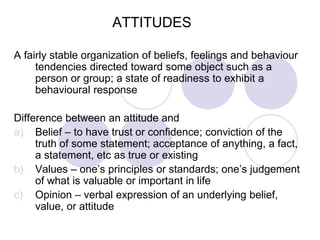
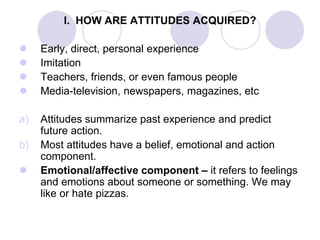
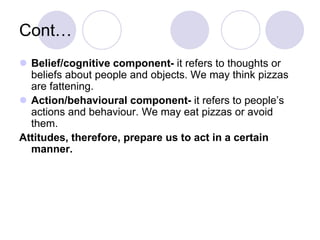
Attitudes are stable organizations of beliefs, feelings, and behaviors towards objects like people or groups. Attitudes are acquired through early experiences, imitation of others, and media influences. They consist of cognitive, affective, and behavioral components and prepare people to act in certain ways.
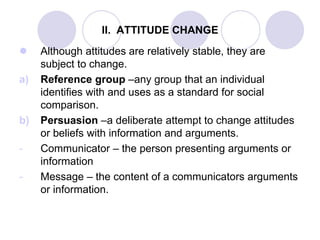
Attitudes can change through social influences like reference groups, persuasion techniques that appeal to emotions, role-playing personal experiences, and cognitive dissonance when actions contradict attitudes. Common cognitive biases that influence how we perceive others include the fundamental attribution error, self-serving bias, halo effect, and effects of labeling. Social compliance techniques used to influence others include the foot-in-the-door effect, door-in-the-face effect