Atomic and Molecular
Physicsin Laser
Technology
This presentation will explore the fundamental role of atomic and
molecular physics in the development of laser technology. From energy
levels and transitions in atoms to vibrational and rotational states in
molecules, we will investigate how these concepts contribute to the
functionality of laser systems.
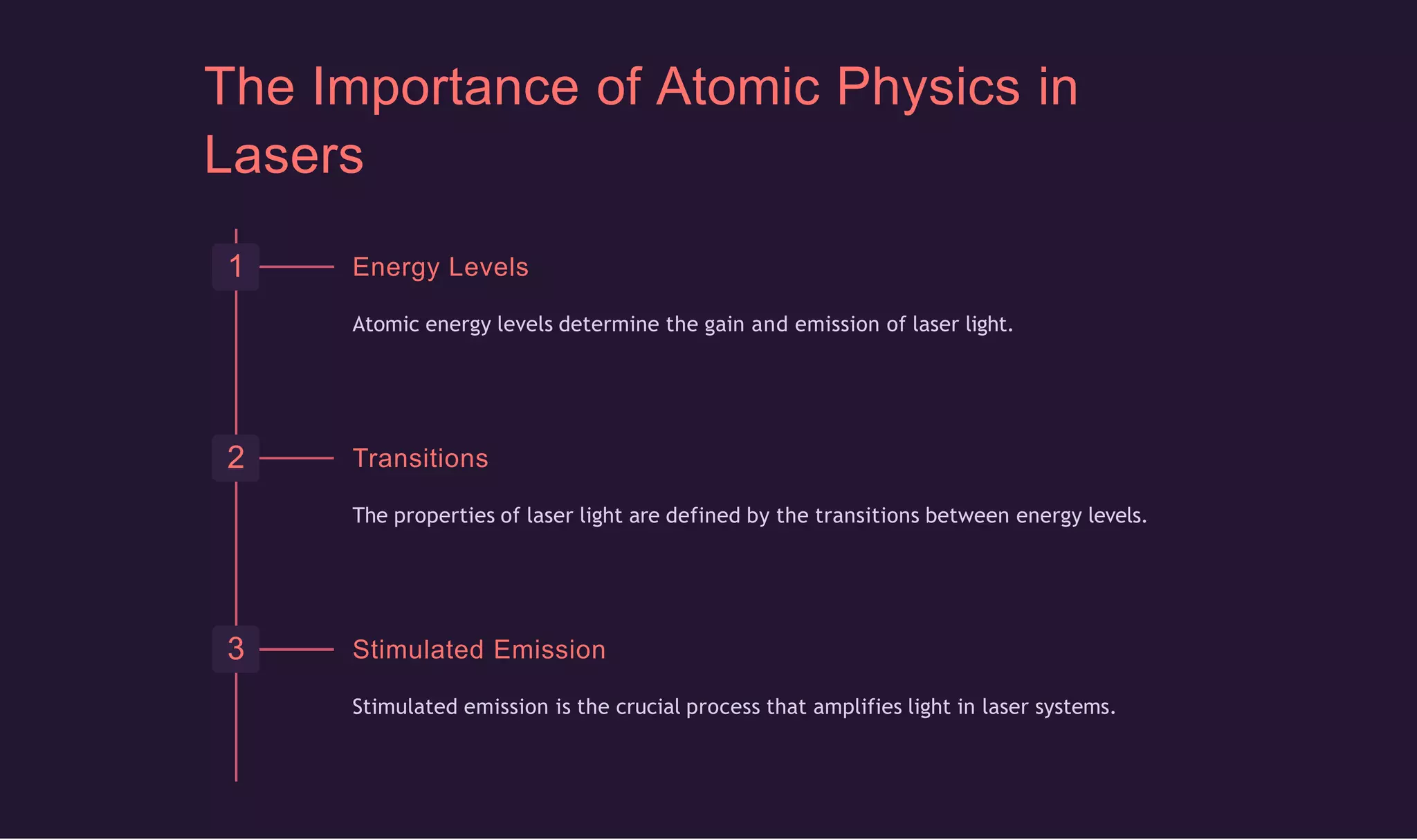
The Importance of Atomic Physics in
Lasers
1 Energy Levels
Atomic energy levels determine the gain and emission of laser light.
2 Transitions
The properties of laser light are defined by the transitions between energy levels.
3 Stimulated Emission
Stimulated emission is the crucial process that amplifies light in laser systems.
Molecular Physics and Laser Applications
Vibrational
States
Vibrational states in
molecules determine the
color and intensity of
laser light.
1
2
Rotational States
Rotational states in
molecules dictate the
direction and
polarization of laser light.
3 Molecular
Transitions
Molecular transitions
contribute to the
diversity of laser
applications, from
medical procedures to
manufacturing processes.
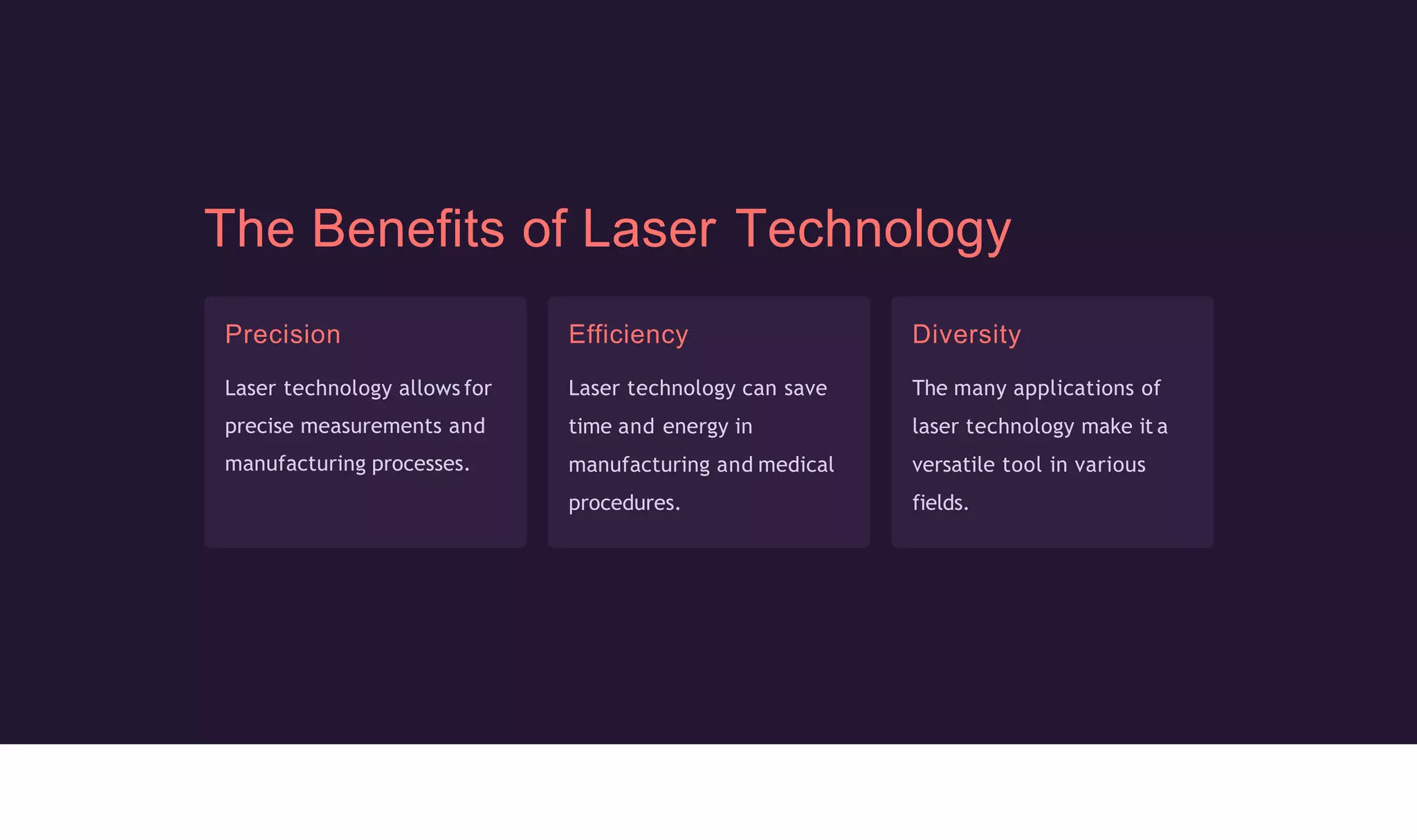
The Benefits of Laser Technology
Precision
Laser technology allows for
precise measurements and
manufacturing processes.
Efficiency
Laser technology can save
time and energy in
manufacturing and medical
procedures.
Diversity
The many applications of
laser technology make it a
versatile tool in various
fields.
TECHNOLOGICAL
APPLICATIONS
OF ATOMIC AND MOLECULAR PHYSICS
5
Atomic and Molecular Physics is the study of atoms and molecules, their behavior and interactions with
electromagnetic radiation. It has several applications in technology, including fields such as:
• Lasers
• Medical Imaging
• Nanotechnology
• Industrial Applications
• Scientific Research
6
SCIENTIFIC
RESEARCH
7
Foundation for understanding the fundamental
properties and behavior of matter at the atomic
and molecular level
Spectroscopic techniques provide detailed
information about the energy levels, structure, and
dynamics of atoms and molecules.
Atomic and molecular physics techniques, such as
scanning probe microscopy (SPM) and surface-
enhanced Raman spectroscopy (SERS), enable the
characterization of molecular structures and
interactions at surfaces
AMP & THE INDUSTRY
ATOMIC AND MOLECULAR
PHYSICS TECHNIQUES LIKE
MBE AND CVD ENABLE
PRECISE FABRICATION OF
SEMICONDUCTOR DEVICES,
CRUCIAL FOR ELECTRONICS IN
COMPUTERS, SMARTPHONES,
AND COMMUNICATION
SYSTEMS.
ATOMIC AND MOLECULAR
PHYSICS UNDERPIN THE
DEVELOPMENT AND
WIDESPREAD USE OF LASERS
FOR CUTTING, WELDING,
MARKING, AND MEDICAL
APPLICATIONS,
REVOLUTIONIZING
INDUSTRIES FROM
MANUFACTURING TO
HEALTHCARE.
TECHNIQUES SUCH AS X-RAY
DIFFRACTION AND ELECTRON
MICROSCOPY, ROOTED IN
ATOMIC AND MOLECULAR
PHYSICS, PROVIDE VALUABLE
INSIGHTS INTO MATERIAL
PROPERTIES, AIDING
INDUSTRIES LIKE
METALLURGY,
NANOTECHNOLOGY, AND
MATERIALS SCIENCE IN
QUALITY CONTROL AND
INNOVATION.
8
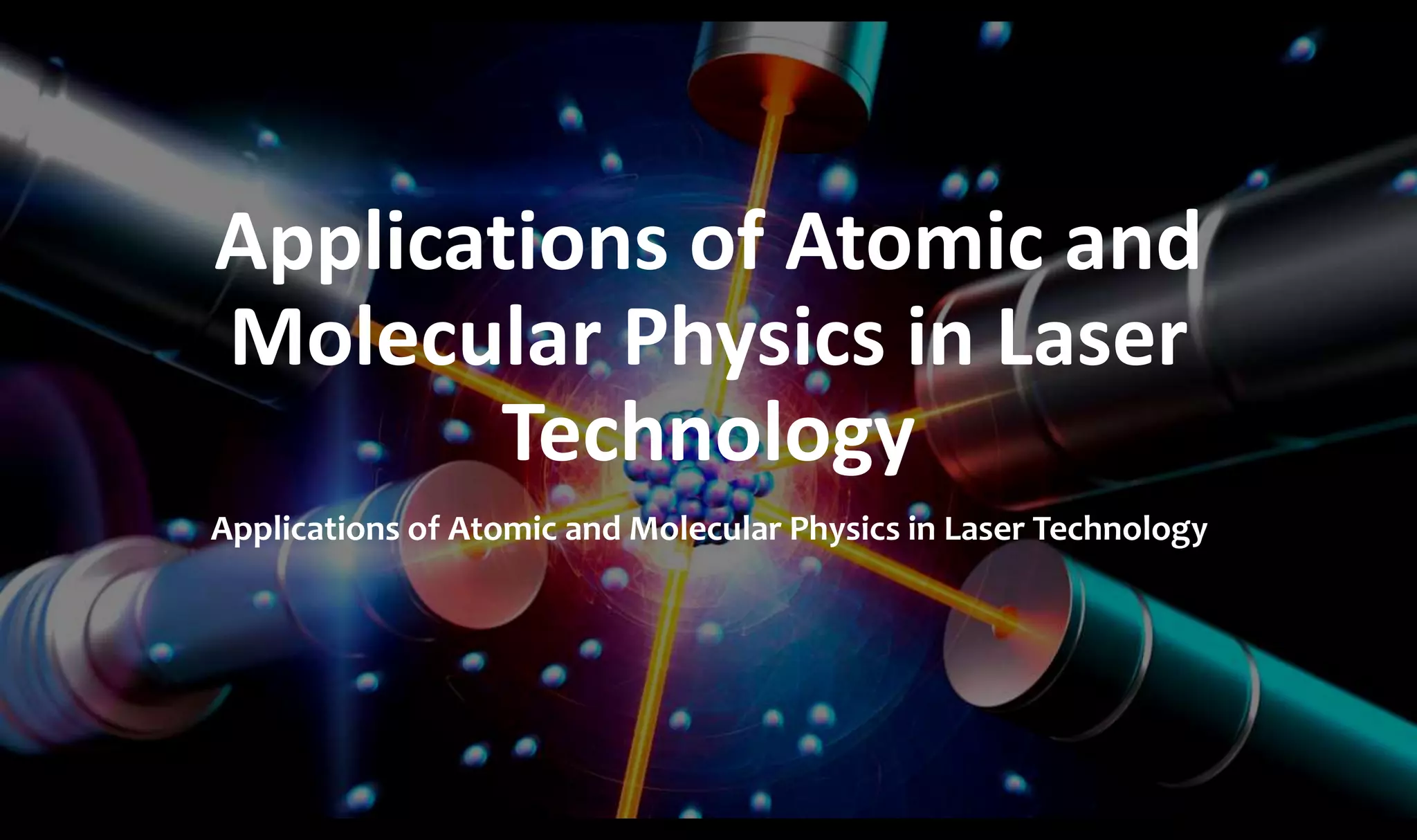
Applications of Atomic and
Molecular Physics in Laser
Technology
Applications of Atomic and Molecular Physics in Laser Technology
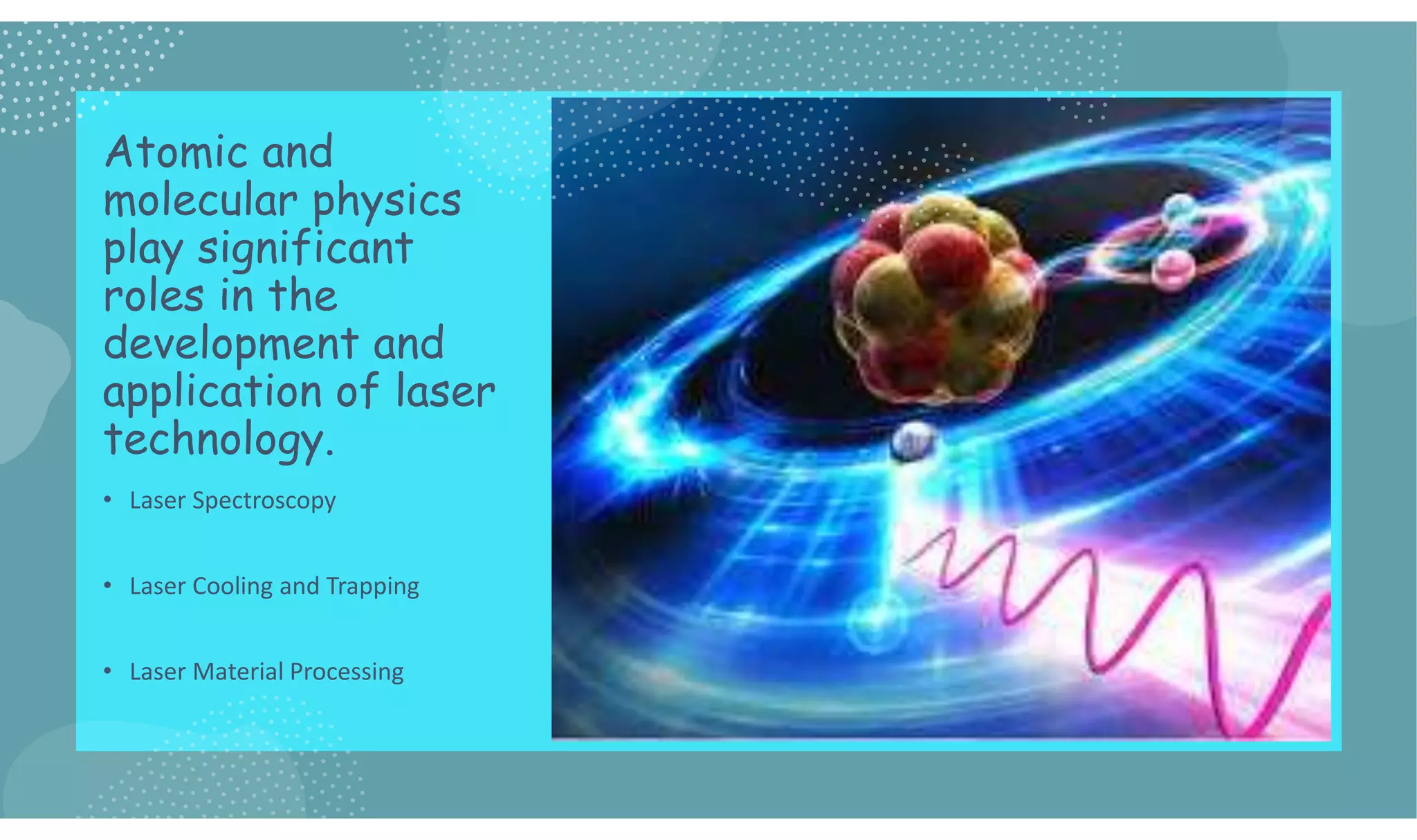
Atomic and
molecular physics
play significant
roles in the
development and
application of laser
technology.
• Laser Spectroscopy
• Laser Cooling and Trapping
• Laser Material Processing
Medical Applications (Laser surgery,
therapy, diagnostics)
Laser Diagnostics: Lasers have enabled the development of
advanced diagnostic techniques in medicine.
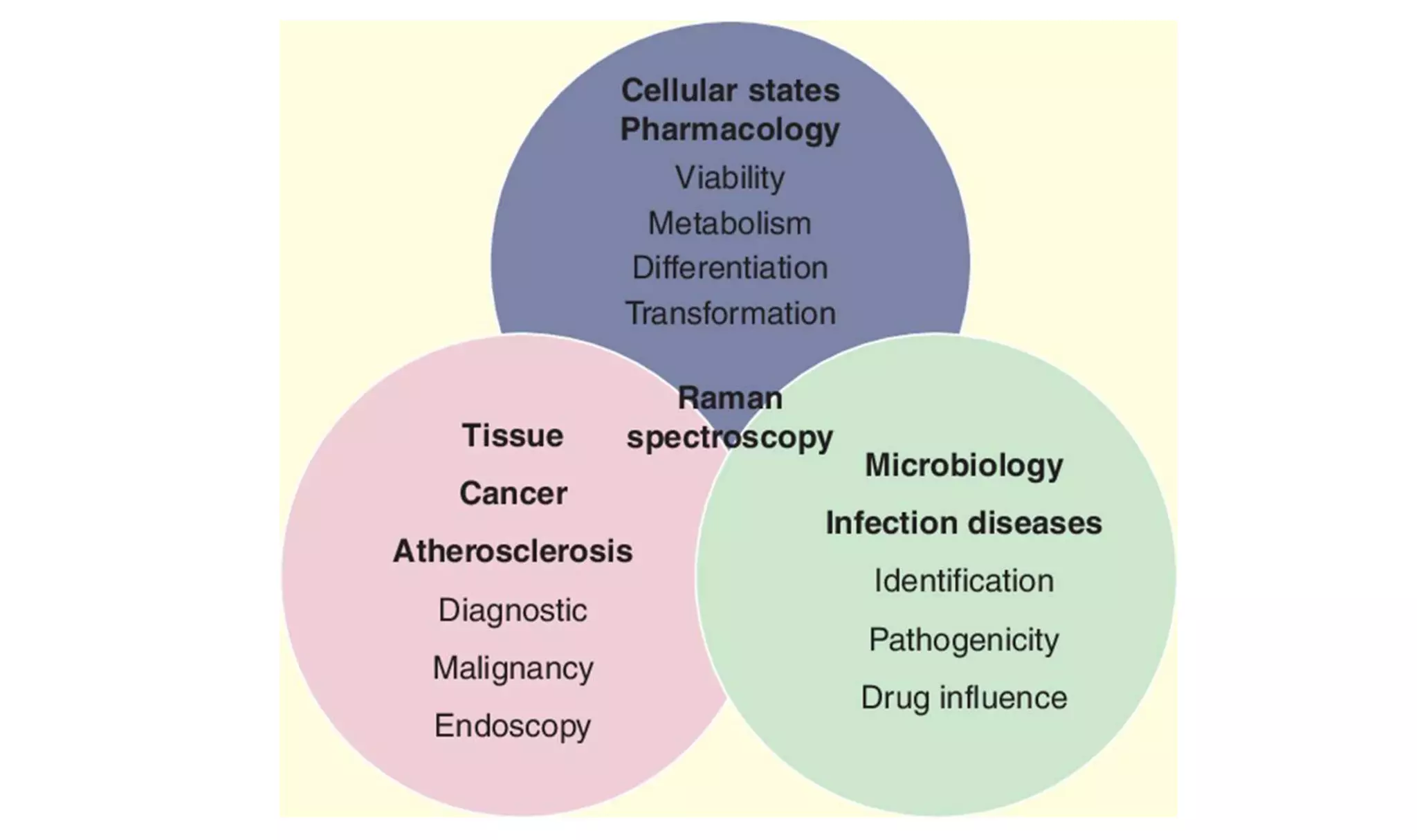
Raman spectroscopy is used for real-time
identification of tissues during surgeries,
helping surgeons differentiate between
healthy and diseased tissues.
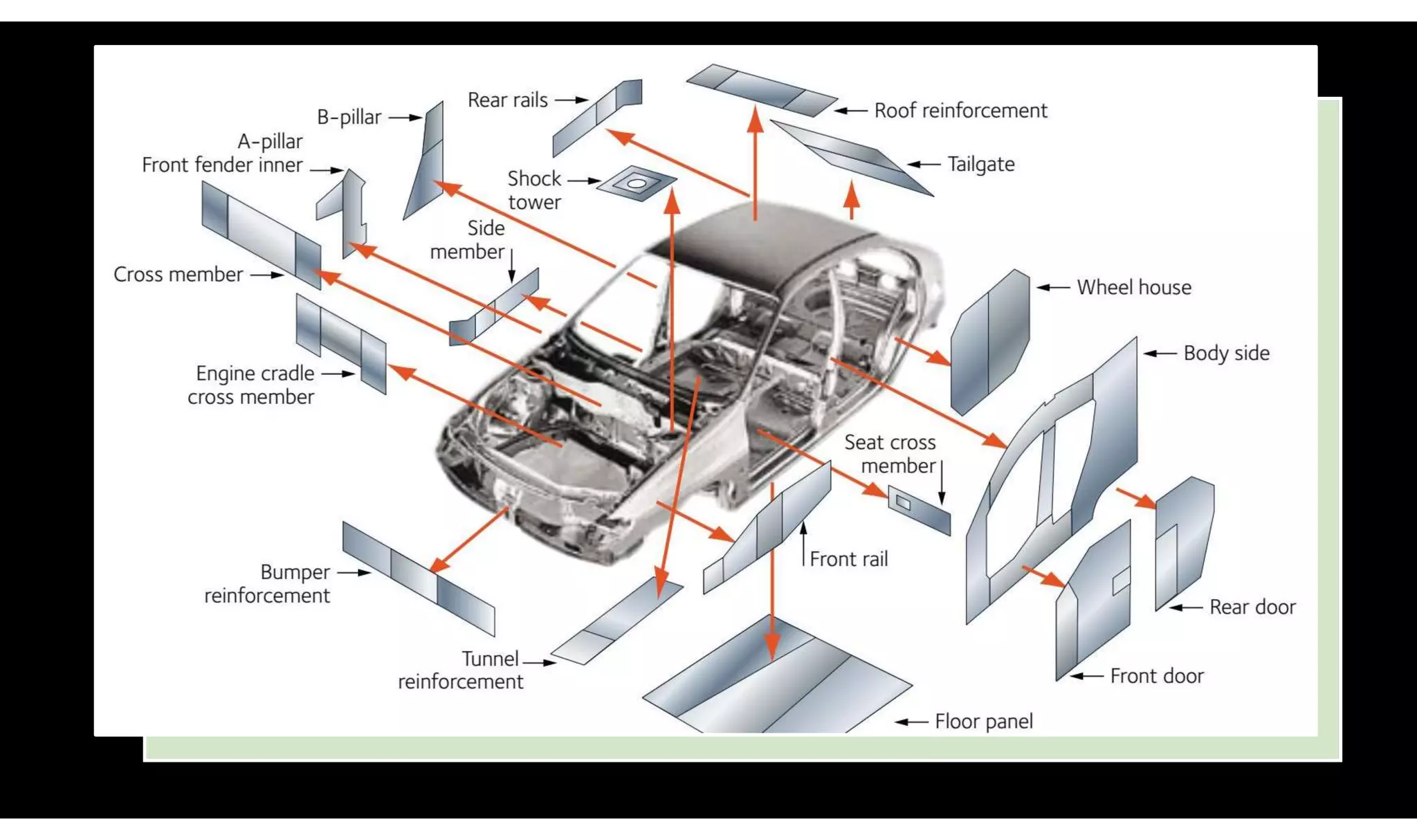
Industrial Applications (Cutting, welding,
material processing)
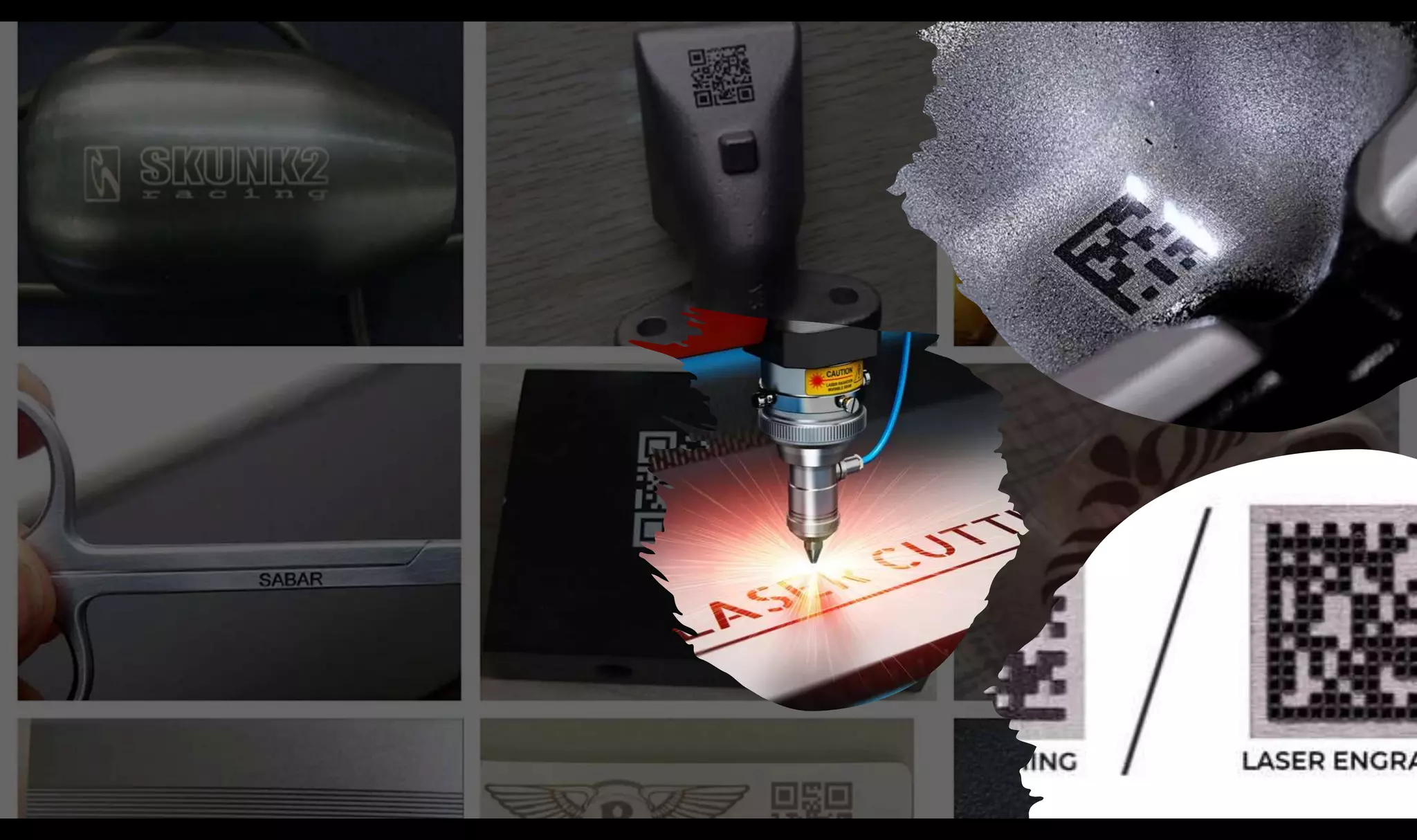
• Laser Cutting
• Laser Welding
• Laser Marking and Engraving
• Laser Additive Manufacturing (3D Printing)
Future Innovations in Atomic
and Molecular Physics in Laser
Technology
• introduction of the topic
• Importance of atomic and molecular physics in advancing laser
technology
Quantum computing
Atomic and molecular physics
enables the development of
quantum computing
Lasers used to manipulate and
control individual atoms or ions
as qubits
Advancements needed for
improving qubit coherence and
stability
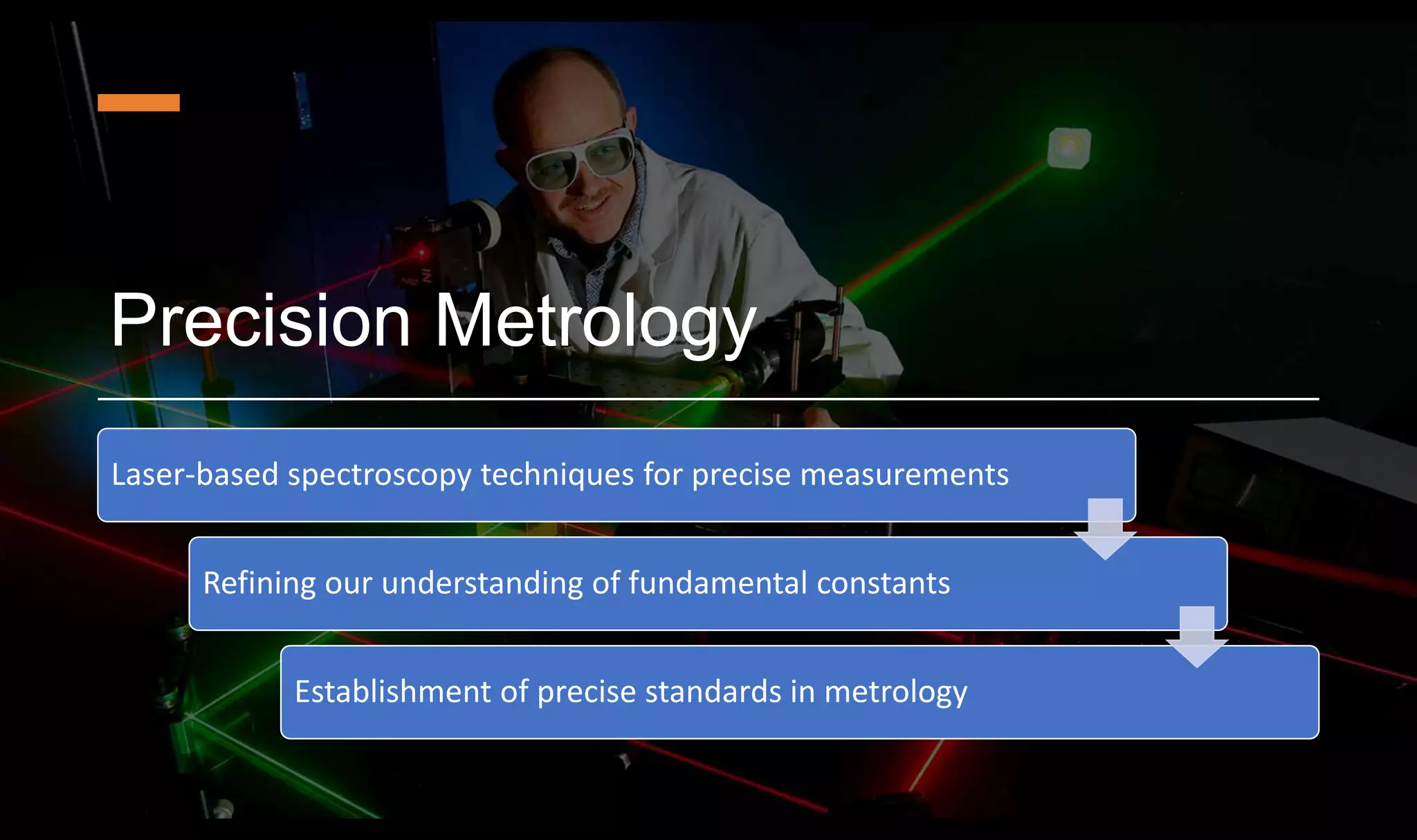
Precision Metrology
Laser-based spectroscopy techniques for precise measurements
Refining our understanding of fundamental constants
Establishment of precise standards in metrology
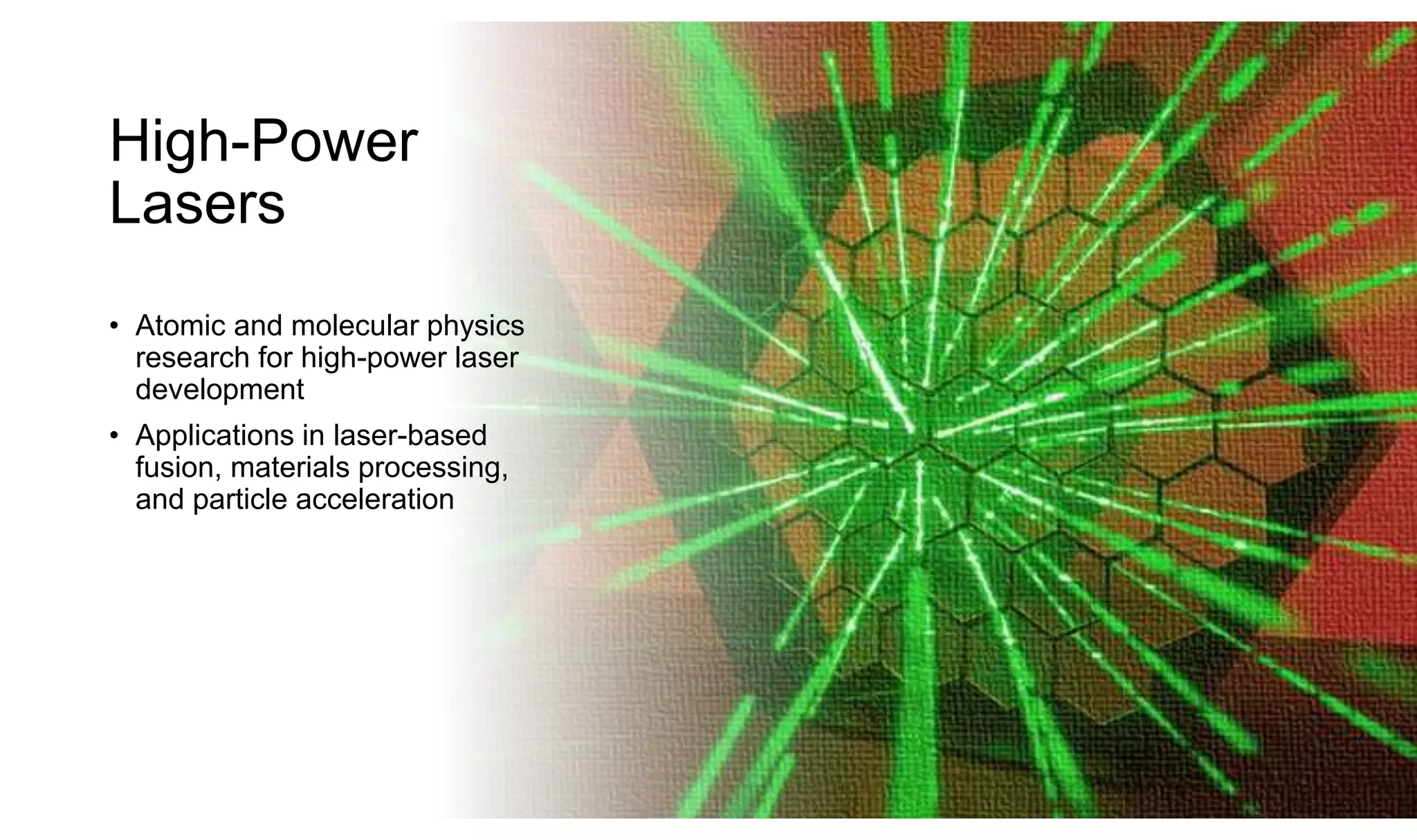
High-Power
Lasers
• Atomic and molecular physics
research for high-power laser
development
• Applications in laser-based
fusion, materials processing,
and particle acceleration
Atomic-and-Molecular-Physics-in-Laser-Technology.pptx

Atomic-and-Molecular-Physics-in-Laser-Technology.pptx

  • 1.
    Atomic and Molecular PhysicsinLaser Technology This presentation will explore the fundamental role of atomic and molecular physics in the development of laser technology. From energy levels and transitions in atoms to vibrational and rotational states in molecules, we will investigate how these concepts contribute to the functionality of laser systems.
  • 2.
    The Importance ofAtomic Physics in Lasers 1 Energy Levels Atomic energy levels determine the gain and emission of laser light. 2 Transitions The properties of laser light are defined by the transitions between energy levels. 3 Stimulated Emission Stimulated emission is the crucial process that amplifies light in laser systems.
  • 3.
    Molecular Physics andLaser Applications Vibrational States Vibrational states in molecules determine the color and intensity of laser light. 1 2 Rotational States Rotational states in molecules dictate the direction and polarization of laser light. 3 Molecular Transitions Molecular transitions contribute to the diversity of laser applications, from medical procedures to manufacturing processes.
  • 4.
    The Benefits ofLaser Technology Precision Laser technology allows for precise measurements and manufacturing processes. Efficiency Laser technology can save time and energy in manufacturing and medical procedures. Diversity The many applications of laser technology make it a versatile tool in various fields.
  • 5.
  • 6.
    Atomic and MolecularPhysics is the study of atoms and molecules, their behavior and interactions with electromagnetic radiation. It has several applications in technology, including fields such as: • Lasers • Medical Imaging • Nanotechnology • Industrial Applications • Scientific Research 6
  • 7.
    SCIENTIFIC RESEARCH 7 Foundation for understandingthe fundamental properties and behavior of matter at the atomic and molecular level Spectroscopic techniques provide detailed information about the energy levels, structure, and dynamics of atoms and molecules. Atomic and molecular physics techniques, such as scanning probe microscopy (SPM) and surface- enhanced Raman spectroscopy (SERS), enable the characterization of molecular structures and interactions at surfaces
  • 8.
    AMP & THEINDUSTRY ATOMIC AND MOLECULAR PHYSICS TECHNIQUES LIKE MBE AND CVD ENABLE PRECISE FABRICATION OF SEMICONDUCTOR DEVICES, CRUCIAL FOR ELECTRONICS IN COMPUTERS, SMARTPHONES, AND COMMUNICATION SYSTEMS. ATOMIC AND MOLECULAR PHYSICS UNDERPIN THE DEVELOPMENT AND WIDESPREAD USE OF LASERS FOR CUTTING, WELDING, MARKING, AND MEDICAL APPLICATIONS, REVOLUTIONIZING INDUSTRIES FROM MANUFACTURING TO HEALTHCARE. TECHNIQUES SUCH AS X-RAY DIFFRACTION AND ELECTRON MICROSCOPY, ROOTED IN ATOMIC AND MOLECULAR PHYSICS, PROVIDE VALUABLE INSIGHTS INTO MATERIAL PROPERTIES, AIDING INDUSTRIES LIKE METALLURGY, NANOTECHNOLOGY, AND MATERIALS SCIENCE IN QUALITY CONTROL AND INNOVATION. 8
  • 9.
    Applications of Atomicand Molecular Physics in Laser Technology Applications of Atomic and Molecular Physics in Laser Technology
  • 10.
    Atomic and molecular physics playsignificant roles in the development and application of laser technology. • Laser Spectroscopy • Laser Cooling and Trapping • Laser Material Processing
  • 11.
    Medical Applications (Lasersurgery, therapy, diagnostics) Laser Diagnostics: Lasers have enabled the development of advanced diagnostic techniques in medicine. Raman spectroscopy is used for real-time identification of tissues during surgeries, helping surgeons differentiate between healthy and diseased tissues.
  • 13.
    Industrial Applications (Cutting,welding, material processing) • Laser Cutting • Laser Welding • Laser Marking and Engraving • Laser Additive Manufacturing (3D Printing)
  • 16.
    Future Innovations inAtomic and Molecular Physics in Laser Technology • introduction of the topic • Importance of atomic and molecular physics in advancing laser technology
  • 17.
    Quantum computing Atomic andmolecular physics enables the development of quantum computing Lasers used to manipulate and control individual atoms or ions as qubits Advancements needed for improving qubit coherence and stability
  • 18.
    Precision Metrology Laser-based spectroscopytechniques for precise measurements Refining our understanding of fundamental constants Establishment of precise standards in metrology
  • 19.
    High-Power Lasers • Atomic andmolecular physics research for high-power laser development • Applications in laser-based fusion, materials processing, and particle acceleration