A Comprehensive Guide
On Tunable Laser Source
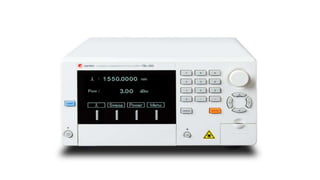
 Tunable laser sources are versatile tools used in various scientific,
industrial, and commercial applications due to their ability to emit
light across a wide range of wavelengths.
 Read out more by Tunable Laser Source Suppliers in India –
Spectroscopy
 Tunable lasers are used in spectroscopy to study how light interacts with
matter.
 By adjusting the laser’s wavelength, scientists can target specific
molecular or atomic properties.
 This helps in identifying and analyzing substances based on how they
absorb or emit light.
 Applications include studying chemicals in laboratories, detecting
pollutants in the environment, and analyzing biological samples.
 They provide detailed insights into molecular structures and processes,
crucial for scientific research and practical applications.
Telecommunications
 In telecommunications, they help send multiple signals through one optical
fiber.
 They create different wavelengths of light that each carry separate streams
of data.
 This method, called wavelength-division multiplexing (WDM), maximizes
the fiber’s capacity by allowing many channels of information to travel
together without interference.
 They are essential because they can adjust their output wavelength to
match specific requirements of the optical network.
 It maintains efficient and reliable data transmission over long distances.
Biomedical Imaging
 In medicine and biology, they are like adjustable flashlights used
for seeing inside tissues.
 They help in techniques such as optical coherence tomography
(OCT), which takes detailed pictures of body parts like eyes and
skin.
 By changing their light, these lasers reveal different layers and
structures inside without harming the tissue.
 This helps doctors to diagnose diseases early and understand how
tissues work.
Metrology and Instrumentation
 They serve as calibration sources in metrology for precise
measurements of optical components and instruments.
 They are used in interferometry and other precision measurement
techniques.
 They provide a stable and adjustable light source that helps
calibrate and test the accuracy of various equipment used in
scientific research and industrial processes.
 This ensures that measurements are reliable and consistent, which
is essential for developing advanced technologies and
understanding the properties of materials at a microscopic level.
Material Processing
 They are employed in materials processing applications such as laser
machining, cutting, and welding.
 The ability to tune the wavelength allows for precise control over the
interaction between the laser and the material.
 They emit light that can be adjusted to match specific properties of
different materials.
 This adjustability allows precise control over how the laser interacts with
the material, ensuring accurate and efficient processes.
 They are crucial in industries where exact cutting and shaping of metals,
plastics, and other materials are required for manufacturing various
products.
Atomic and Molecular Physics
 Researchers use tunable lasers in experiments involving atoms
and molecules to study fundamental properties and interactions.
 Scientists adjust the laser’s wavelength to match specific energy
levels of atoms or molecules.
 This helps in experiments like cooling atoms to extremely low
temperatures or creating unique states of matter, such as Bose-
Einstein condensates.
 They are crucial tools for exploring the fundamental properties
and interactions of particles at a very detailed level.
Environmental Sensing
 Tunable lasers are employed in environmental monitoring
applications, such as remote sensing of atmospheric gases and
pollutants.
 They can be tuned to specific absorption lines of gases to detect
and measure their concentrations.
 They are used in environmental monitoring to detect gases and
pollutants in the air.
 By adjusting the laser’s wavelength, scientists can target specific
absorption lines of gases like methane or carbon dioxide.
 This allows them to measure the concentration of these gases in
the atmosphere accurately.
 Such technology helps in understanding air quality, climate
change, and industrial emissions, supporting efforts to monitor
and mitigate environmental impacts.
Life Sciences
 Tunable lasers are used in life sciences for advanced research
further added by GPON tester suppliers in India.
 They enable precise excitation of fluorophores and biomolecules
for imaging and analysis.
 They help in fluorescence microscopy to illuminate and study
cells and tissues with high precision.
 In flow cytometry, they enable precise analysis of cells based on
their fluorescent properties.
 Additionally, tunable lasers aid in DNA sequencing by accurately
reading genetic information.
 These applications in life sciences rely on tunable lasers’ ability
to emit specific wavelengths of light essential for detailed
biological studies.
Defense and Security
 They are used defense and security in lidar systems.
 These systems use laser light to detect objects and measure
distances with high accuracy.
 They help in adjusting the wavelength of the emitted light,
allowing lidar to operate effectively in various environmental
conditions.
 They play a crucial role in military applications for target
detection, reconnaissance, and navigation, as well as in civilian
uses such as autonomous vehicles and environmental monitoring.
Research and Development
 They are crucial in research labs for developing new technologies
and understanding materials.
 Scientists use them to study how light interacts with substances
and to create advanced optical devices.
 By adjusting the laser’s wavelength, researchers can explore
different properties of materials and develop innovations in fields
like physics, chemistry, and biology.
Contact US
 Khushi Communications
 Address - District Centre, Janak Puri, New Delhi
 Phone Number - 011-4161 5459, 98110 55459
 Mail id - info@khushicomms.com
 Website - https://www.khushicomms.com/

a comprehensive guide on tunable laser source.pptx

  • 1.
    A Comprehensive Guide OnTunable Laser Source
  • 2.
     Tunable lasersources are versatile tools used in various scientific, industrial, and commercial applications due to their ability to emit light across a wide range of wavelengths.  Read out more by Tunable Laser Source Suppliers in India –
  • 3.
    Spectroscopy  Tunable lasersare used in spectroscopy to study how light interacts with matter.  By adjusting the laser’s wavelength, scientists can target specific molecular or atomic properties.  This helps in identifying and analyzing substances based on how they absorb or emit light.  Applications include studying chemicals in laboratories, detecting pollutants in the environment, and analyzing biological samples.  They provide detailed insights into molecular structures and processes, crucial for scientific research and practical applications.
  • 4.
    Telecommunications  In telecommunications,they help send multiple signals through one optical fiber.  They create different wavelengths of light that each carry separate streams of data.  This method, called wavelength-division multiplexing (WDM), maximizes the fiber’s capacity by allowing many channels of information to travel together without interference.  They are essential because they can adjust their output wavelength to match specific requirements of the optical network.  It maintains efficient and reliable data transmission over long distances.
  • 6.
    Biomedical Imaging  Inmedicine and biology, they are like adjustable flashlights used for seeing inside tissues.  They help in techniques such as optical coherence tomography (OCT), which takes detailed pictures of body parts like eyes and skin.  By changing their light, these lasers reveal different layers and structures inside without harming the tissue.  This helps doctors to diagnose diseases early and understand how tissues work.
  • 7.
    Metrology and Instrumentation They serve as calibration sources in metrology for precise measurements of optical components and instruments.  They are used in interferometry and other precision measurement techniques.  They provide a stable and adjustable light source that helps calibrate and test the accuracy of various equipment used in scientific research and industrial processes.  This ensures that measurements are reliable and consistent, which is essential for developing advanced technologies and understanding the properties of materials at a microscopic level.
  • 8.
    Material Processing  Theyare employed in materials processing applications such as laser machining, cutting, and welding.  The ability to tune the wavelength allows for precise control over the interaction between the laser and the material.  They emit light that can be adjusted to match specific properties of different materials.  This adjustability allows precise control over how the laser interacts with the material, ensuring accurate and efficient processes.  They are crucial in industries where exact cutting and shaping of metals, plastics, and other materials are required for manufacturing various products.
  • 10.
    Atomic and MolecularPhysics  Researchers use tunable lasers in experiments involving atoms and molecules to study fundamental properties and interactions.  Scientists adjust the laser’s wavelength to match specific energy levels of atoms or molecules.  This helps in experiments like cooling atoms to extremely low temperatures or creating unique states of matter, such as Bose- Einstein condensates.  They are crucial tools for exploring the fundamental properties and interactions of particles at a very detailed level.
  • 11.
    Environmental Sensing  Tunablelasers are employed in environmental monitoring applications, such as remote sensing of atmospheric gases and pollutants.  They can be tuned to specific absorption lines of gases to detect and measure their concentrations.  They are used in environmental monitoring to detect gases and pollutants in the air.  By adjusting the laser’s wavelength, scientists can target specific absorption lines of gases like methane or carbon dioxide.
  • 12.
     This allowsthem to measure the concentration of these gases in the atmosphere accurately.  Such technology helps in understanding air quality, climate change, and industrial emissions, supporting efforts to monitor and mitigate environmental impacts.
  • 14.
    Life Sciences  Tunablelasers are used in life sciences for advanced research further added by GPON tester suppliers in India.  They enable precise excitation of fluorophores and biomolecules for imaging and analysis.  They help in fluorescence microscopy to illuminate and study cells and tissues with high precision.  In flow cytometry, they enable precise analysis of cells based on their fluorescent properties.
  • 15.
     Additionally, tunablelasers aid in DNA sequencing by accurately reading genetic information.  These applications in life sciences rely on tunable lasers’ ability to emit specific wavelengths of light essential for detailed biological studies.
  • 17.
    Defense and Security They are used defense and security in lidar systems.  These systems use laser light to detect objects and measure distances with high accuracy.  They help in adjusting the wavelength of the emitted light, allowing lidar to operate effectively in various environmental conditions.  They play a crucial role in military applications for target detection, reconnaissance, and navigation, as well as in civilian uses such as autonomous vehicles and environmental monitoring.
  • 18.
    Research and Development They are crucial in research labs for developing new technologies and understanding materials.  Scientists use them to study how light interacts with substances and to create advanced optical devices.  By adjusting the laser’s wavelength, researchers can explore different properties of materials and develop innovations in fields like physics, chemistry, and biology.
  • 19.
    Contact US  KhushiCommunications  Address - District Centre, Janak Puri, New Delhi  Phone Number - 011-4161 5459, 98110 55459  Mail id - info@khushicomms.com  Website - https://www.khushicomms.com/