ENVIRONMENTAL
STUDIES
PRESENTED BY -
8004-RAMESH RULETHIA
8005-POONAM PEDIWAL
8008-SAMRUDDHI SAHUJI
8021-SAKSHI BHAMBLE
8025-HIRAL SONI
• Definition
• Classification and sources of air
pollutants
• Effects of air pollution on human,
plant and material
• Air pollution control methods,
equipment and safety
Content
WHAT IS POLLUTION ???
● Pollution is the introduction of harmful materials into
the environment.
● These harmful materials are called pollutants.
● Pollutants can be natural, such as volcanic ash.
● They can also be created by human activity, such as
trash or runoff produced by factories.
● Pollutants damage the quality of air, water, and land.
Air Pollution
Type of Pollution
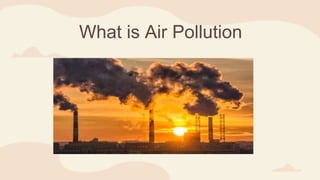
What is Air Pollution
Concept
● Air pollution is contamination of the indoor or outdoor
environment by any chemical, physical or biological
agent that modifies the natural characteristics of the
atmosphere.
● Air pollution refers to any physical, chemical or biological
change in the air.
● It is the contamination of air by harmful gases, dust and
smoke which affects plants, animals and humans
drastically.
What is Pollutant
● Any substance that makes the environment dirty or
contaminated is a pollutant.
● Substance dwelling temporarily or permanently in the air.
● Alters the environment by interfering with the health, the
comfort, or the food chain, or by interfering with the property
values of people.
● A pollutant can be solid (large or sub-molecular), liquid or
gas .
Indoor Air Pollutants
● The air pollutants which are generated from households are
called indoor air pollutants.
○ Cleaning agents
○ Mosquito repellents
○ Pesticides
○ Cigarette smoke
○ Gases from stoves etc.
Outdoor Air Pollutants
● The air pollutants which are generated outside the
buildings are called outdoor air pollutants.
● Automobile pollutants
● Industrial pollutants
● Mining pollutants
● Natural emissions from decaying matter and animals
etc.
Human Sources
• pollen grains
• volcanic eruptions
• forest fires
• dust storms
Causes of Air Pollution
• power plants and automobiles,
• burning wood stoves
• fireplaces
• industrial units
• fossil fuel burning
• mining
• nuclear explosions
Natural Sources
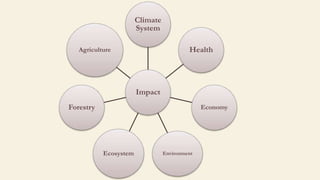
Impact
Climate
System
Health
Economy
Environment
Ecosystem
Forestry
Agriculture
Effects of air pollution on
environment
● Air pollution can damage crops and trees in a variety of
ways.
● Ground-level ozone can lead to reductions in agricultural
crop and commercial forest yields reduced growth and
survivability of tree seedlings, and increased plant
susceptibility to disease, pests and other environmental
stresses (such as harsh weather).
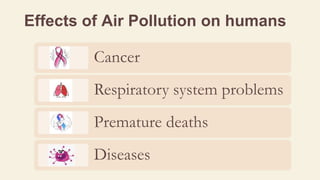
Effects of Air Pollution on humans
Cancer
Respiratory system problems
Premature deaths
Diseases
Preventive Measures
● Use of Public Transport
● Reduce the Consumption of Electricity
● Recycling and Reuse of Products
● Avoid Plastic Bags
● Avoid Burning of Plastics
● Avoid Air Conditioners and Use Fans
● Use Filters in Chimneys
● Reduce the Use of Chemicals
Preventive Measures
● Air pollution can be controlled by a thorough understanding of
its causes.
● Establishment of industries away from the towns and cities.
● Increasing the length of the chymeny in industries.
● Growing more plants and trees.
● Use of efficient engines in automobiles.
● Use of smokeless choola.
● Use of petrol without lead (Unleaded petrol)
Thank You

air pollution.pptx

  • 1.
    ENVIRONMENTAL STUDIES PRESENTED BY - 8004-RAMESHRULETHIA 8005-POONAM PEDIWAL 8008-SAMRUDDHI SAHUJI 8021-SAKSHI BHAMBLE 8025-HIRAL SONI
  • 2.
    • Definition • Classificationand sources of air pollutants • Effects of air pollution on human, plant and material • Air pollution control methods, equipment and safety Content
  • 3.
    WHAT IS POLLUTION??? ● Pollution is the introduction of harmful materials into the environment. ● These harmful materials are called pollutants. ● Pollutants can be natural, such as volcanic ash. ● They can also be created by human activity, such as trash or runoff produced by factories. ● Pollutants damage the quality of air, water, and land.
  • 4.
  • 5.
    What is AirPollution
  • 6.
    Concept ● Air pollutionis contamination of the indoor or outdoor environment by any chemical, physical or biological agent that modifies the natural characteristics of the atmosphere. ● Air pollution refers to any physical, chemical or biological change in the air. ● It is the contamination of air by harmful gases, dust and smoke which affects plants, animals and humans drastically.
  • 7.
    What is Pollutant ●Any substance that makes the environment dirty or contaminated is a pollutant. ● Substance dwelling temporarily or permanently in the air. ● Alters the environment by interfering with the health, the comfort, or the food chain, or by interfering with the property values of people. ● A pollutant can be solid (large or sub-molecular), liquid or gas .
  • 8.
    Indoor Air Pollutants ●The air pollutants which are generated from households are called indoor air pollutants. ○ Cleaning agents ○ Mosquito repellents ○ Pesticides ○ Cigarette smoke ○ Gases from stoves etc.
  • 9.
    Outdoor Air Pollutants ●The air pollutants which are generated outside the buildings are called outdoor air pollutants. ● Automobile pollutants ● Industrial pollutants ● Mining pollutants ● Natural emissions from decaying matter and animals etc.
  • 10.
    Human Sources • pollengrains • volcanic eruptions • forest fires • dust storms Causes of Air Pollution • power plants and automobiles, • burning wood stoves • fireplaces • industrial units • fossil fuel burning • mining • nuclear explosions Natural Sources
  • 11.
  • 12.
    Effects of airpollution on environment ● Air pollution can damage crops and trees in a variety of ways. ● Ground-level ozone can lead to reductions in agricultural crop and commercial forest yields reduced growth and survivability of tree seedlings, and increased plant susceptibility to disease, pests and other environmental stresses (such as harsh weather).
  • 13.
    Effects of AirPollution on humans Cancer Respiratory system problems Premature deaths Diseases
  • 14.
    Preventive Measures ● Useof Public Transport ● Reduce the Consumption of Electricity ● Recycling and Reuse of Products ● Avoid Plastic Bags ● Avoid Burning of Plastics ● Avoid Air Conditioners and Use Fans ● Use Filters in Chimneys ● Reduce the Use of Chemicals
  • 15.
    Preventive Measures ● Airpollution can be controlled by a thorough understanding of its causes. ● Establishment of industries away from the towns and cities. ● Increasing the length of the chymeny in industries. ● Growing more plants and trees. ● Use of efficient engines in automobiles. ● Use of smokeless choola. ● Use of petrol without lead (Unleaded petrol)
  • 16.