
Pollution
Definition:
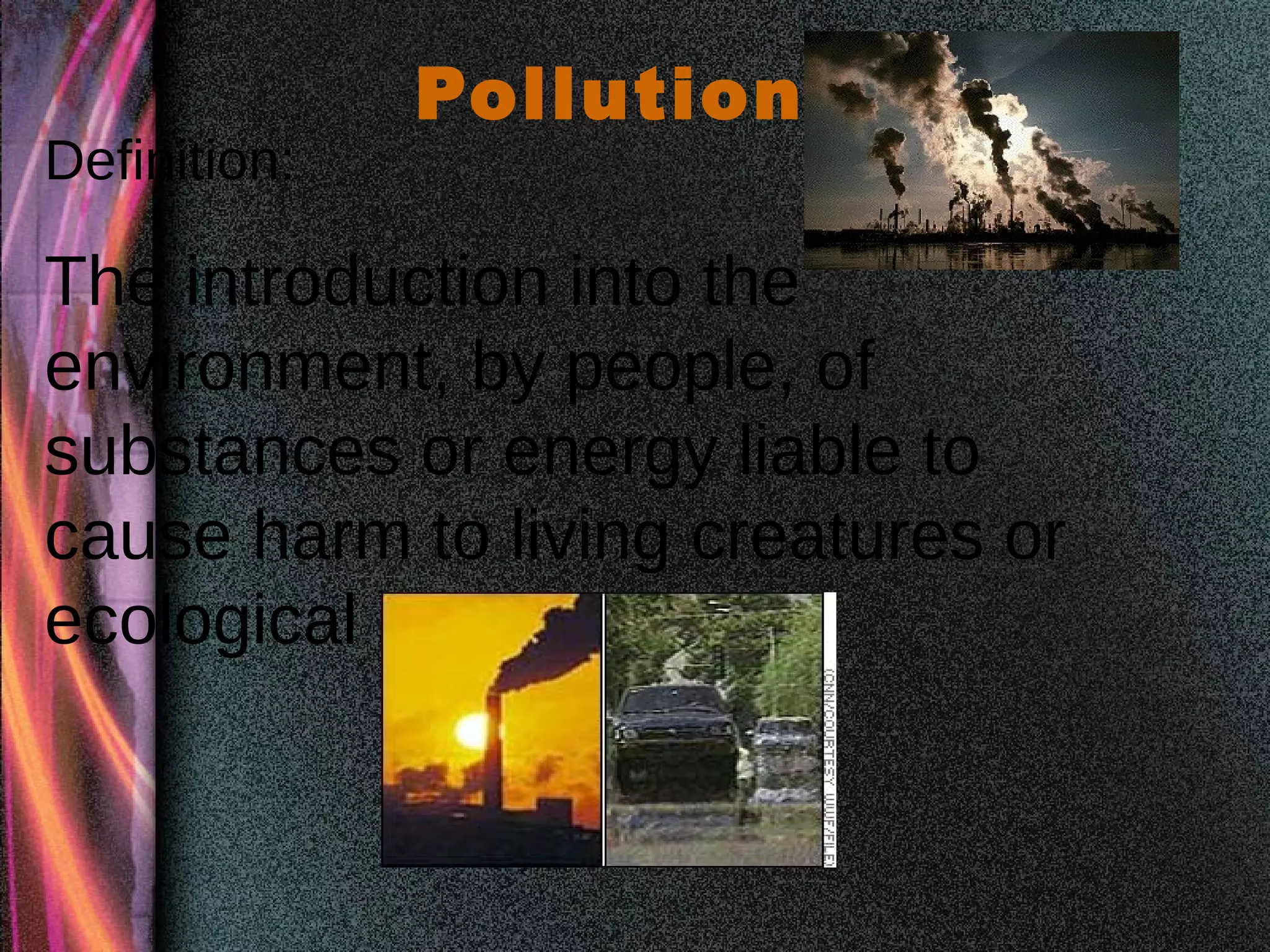
The introduction into the
environment, by people, of
substances or energy liable to
cause harm to living creatures or
ecological systems.
Pollution
How did pollution begin?
• More sophisticated lifestyles
• Growing needs of people.
• Accelerated rates of human
and economic
activities.
Pollution
Pollution
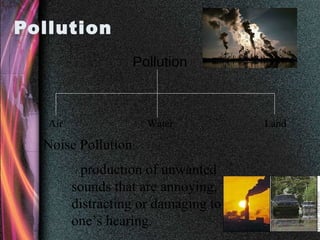
Air Water Land
Noise Pollution:
production of unwanted
sounds that are annoying,
distracting or damaging to
one’s hearing.
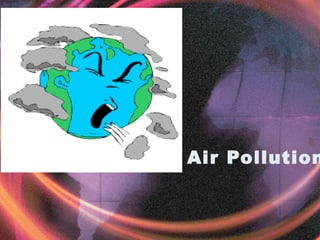
Air Pollution
What is air pollution?
• contamination of the air by
noxious gases and minute
particles of solid and liquid
matter (particulates) in
concentrations that have
undesirable effect on living
being.
Modernization and progress have led to air
getting more and more polluted over the
years. Industries, vehicles, increase in the
population, and urbanization are some of the
major factors responsible for air pollution.
The following industries are among those
that emit a great deal of pollutants into the
air: thermal power plants, cement, steel,
refineries, petro-chemicals, and mines.
PRIMARY AND SECONDARY
POLLUTANT
1. PRIMARY POLLUTAN
• Those emitted directly into air
2. SECONDARY POLLUTANT
• produced through reactions between
primary pollutants and natural
atmospheric compound
Pollutants of air :
Particulate pollutants -
are solids or liquids with size
< 100 microns that remain suspended
in the atmosphere.
Dust
Fumes
Smoke
Mist
Fog
Bacteria
Gaseous - Toxic and poisonous
e.g. CO, chlorine, NH3, H2S, SO2, NO2, CO2.
Major Pollutants
Ozone Transient damage
Permanent damage
-accelerated aging of the
lung
Carbon monoxide
- heart disease
- lung diseases
- central nervous system
↓ response to external stimuli
(symptoms similar of flu)
- Normal individual during strenuous
work
Sources of Outside Air
Pollution
• Combustion of gasoline and other hydrocarbon
fuels in cars, trucks, and airplanes
• Burning of fossil fuels (oil, coal, and dinosaur
bones)
• Insecticides
• Herbicides
• Everyday radioactive fallouts
• Dust from fertilizers
• Mining operations,Livestock feedlots
• Festives like diwali
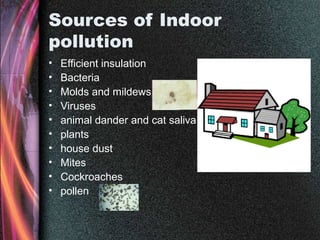
Sources of Indoor
pollution
• Efficient insulation
• Bacteria
• Molds and mildews
• Viruses
• animal dander and cat saliva
• plants
• house dust
• Mites
• Cockroaches
• pollen
Around 30-40% of cases
of asthma and 20-30% of
all respiratory diseases
may be linked to air
pollution
- increased acute respiratory
diseases
- lowered lung function in children
- increased sickness rates;
- increases in mortality
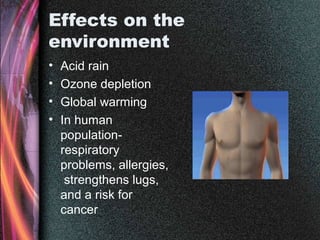
Effects on the
environment
• Acid rain
• Ozone depletion
• Global warming
• In human
population-
respiratory
problems, allergies,
strengthens lugs,
and a risk for
cancer
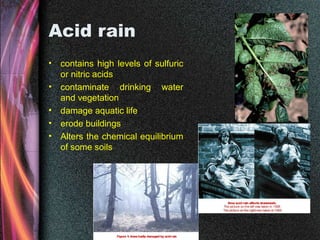
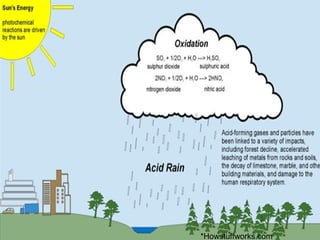
Acid rain
• contains high levels of sulfuric
or nitric acids
• contaminate drinking water
and vegetation
• damage aquatic life
• erode buildings
• Alters the chemical equilibrium
of some soils
*Howstuffworks.com
Control of air
pollution
Society
Industries
– Legislation
– guidelines for siting of industries
– emission standards for industries
– development of pollution prevention
technologies
Vehicular pollution
– cleaner fuel quality
And so…..
• "WHO would like to provide its 191
Member States with irrefutable
evidence that air pollution causes
disproportionately heavy burden of
disease"
Dr Michael Repacholi
WHO Coordinator,
Occupational and Environmental Health
Laws
• Various laws has been established to curb
the menace of air pollution
- Policy statement for Abatement of
Pollution, 1992.
- National Conservation Strategy & Policy
statement on environment &
development,1992.
-Air (Prevention & control of pollution)Act,
1981
-Air (Prevention & control of pollution )
Act,1981
Laws continued….
-The government is trying to
remove the use of leaded petrol,
a major cause of air pollution.
- the industrial acts are
implemented to control the
harmful emission of gases.
- the natural management team is is
hardcore work to minimise the effect of
various natural disaster like forest fire,
volcanic erruption that are causes of
airr pollution.
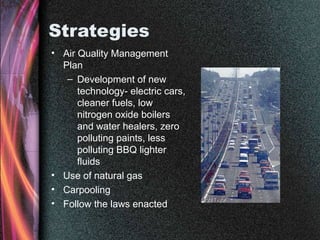
Strategies
• Air Quality Management
Plan
– Development of new
technology- electric cars,
cleaner fuels, low
nitrogen oxide boilers
and water healers, zero
polluting paints, less
polluting BBQ lighter
fluids
• Use of natural gas
• Carpooling
• Follow the laws enacted
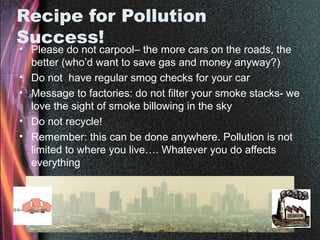
Recipe for Pollution
Success!
• Please do not carpool– the more cars on the roads, the
better (who’d want to save gas and money anyway?)
• Do not have regular smog checks for your car
• Message to factories: do not filter your smoke stacks- we
love the sight of smoke billowing in the sky
• Do not recycle!
• Remember: this can be done anywhere. Pollution is not
limited to where you live…. Whatever you do affects
everything
References:-
• www.edugreen.teri.res.in/explore/air
• http://en.wikipedia.org/wiki/Air_pollution
• www.controlairpollution.com
• Environmental studies by R. Rajgopalan
• www.nlm.nih.gov/medlineplus/airpollution
THANK YOU

Environmental Engineering (air pollution and its types)

  • 1.
    Pollution Definition: The introduction intothe environment, by people, of substances or energy liable to cause harm to living creatures or ecological systems.
  • 2.
    Pollution How did pollutionbegin? • More sophisticated lifestyles • Growing needs of people. • Accelerated rates of human and economic activities.
  • 3.
    Pollution Pollution Air Water Land NoisePollution: production of unwanted sounds that are annoying, distracting or damaging to one’s hearing.
  • 4.
  • 5.
    What is airpollution? • contamination of the air by noxious gases and minute particles of solid and liquid matter (particulates) in concentrations that have undesirable effect on living being.
  • 6.
    Modernization and progresshave led to air getting more and more polluted over the years. Industries, vehicles, increase in the population, and urbanization are some of the major factors responsible for air pollution. The following industries are among those that emit a great deal of pollutants into the air: thermal power plants, cement, steel, refineries, petro-chemicals, and mines.
  • 7.
    PRIMARY AND SECONDARY POLLUTANT 1.PRIMARY POLLUTAN • Those emitted directly into air 2. SECONDARY POLLUTANT • produced through reactions between primary pollutants and natural atmospheric compound
  • 8.
    Pollutants of air: Particulate pollutants - are solids or liquids with size < 100 microns that remain suspended in the atmosphere. Dust Fumes Smoke Mist Fog Bacteria Gaseous - Toxic and poisonous e.g. CO, chlorine, NH3, H2S, SO2, NO2, CO2.
  • 9.
    Major Pollutants Ozone Transientdamage Permanent damage -accelerated aging of the lung Carbon monoxide - heart disease - lung diseases - central nervous system ↓ response to external stimuli (symptoms similar of flu) - Normal individual during strenuous work
  • 10.
    Sources of OutsideAir Pollution • Combustion of gasoline and other hydrocarbon fuels in cars, trucks, and airplanes • Burning of fossil fuels (oil, coal, and dinosaur bones) • Insecticides • Herbicides • Everyday radioactive fallouts • Dust from fertilizers • Mining operations,Livestock feedlots • Festives like diwali
  • 11.
    Sources of Indoor pollution •Efficient insulation • Bacteria • Molds and mildews • Viruses • animal dander and cat saliva • plants • house dust • Mites • Cockroaches • pollen
  • 12.
    Around 30-40% ofcases of asthma and 20-30% of all respiratory diseases may be linked to air pollution
  • 13.
    - increased acuterespiratory diseases - lowered lung function in children - increased sickness rates; - increases in mortality
  • 14.
    Effects on the environment •Acid rain • Ozone depletion • Global warming • In human population- respiratory problems, allergies, strengthens lugs, and a risk for cancer
  • 15.
    Acid rain • containshigh levels of sulfuric or nitric acids • contaminate drinking water and vegetation • damage aquatic life • erode buildings • Alters the chemical equilibrium of some soils
  • 16.
  • 17.
  • 18.
    Society Industries – Legislation – guidelinesfor siting of industries – emission standards for industries – development of pollution prevention technologies Vehicular pollution – cleaner fuel quality
  • 19.
    And so….. • "WHOwould like to provide its 191 Member States with irrefutable evidence that air pollution causes disproportionately heavy burden of disease" Dr Michael Repacholi WHO Coordinator, Occupational and Environmental Health
  • 20.
    Laws • Various lawshas been established to curb the menace of air pollution - Policy statement for Abatement of Pollution, 1992. - National Conservation Strategy & Policy statement on environment & development,1992. -Air (Prevention & control of pollution)Act, 1981 -Air (Prevention & control of pollution ) Act,1981
  • 21.
    Laws continued…. -The governmentis trying to remove the use of leaded petrol, a major cause of air pollution. - the industrial acts are implemented to control the harmful emission of gases. - the natural management team is is hardcore work to minimise the effect of various natural disaster like forest fire, volcanic erruption that are causes of airr pollution.
  • 22.
    Strategies • Air QualityManagement Plan – Development of new technology- electric cars, cleaner fuels, low nitrogen oxide boilers and water healers, zero polluting paints, less polluting BBQ lighter fluids • Use of natural gas • Carpooling • Follow the laws enacted
  • 23.
    Recipe for Pollution Success! •Please do not carpool– the more cars on the roads, the better (who’d want to save gas and money anyway?) • Do not have regular smog checks for your car • Message to factories: do not filter your smoke stacks- we love the sight of smoke billowing in the sky • Do not recycle! • Remember: this can be done anywhere. Pollution is not limited to where you live…. Whatever you do affects everything
  • 24.
    References:- • www.edugreen.teri.res.in/explore/air • http://en.wikipedia.org/wiki/Air_pollution •www.controlairpollution.com • Environmental studies by R. Rajgopalan • www.nlm.nih.gov/medlineplus/airpollution
  • 25.

Editor's Notes

  • #24 K Vdfkv fmvl Vfdd D Dff Fv Ff