ATRIAL FIBRILLATION
Dr. G.W.M.Zahidul Hasan
SQUARE HOSPITALS LTD
BANGLADESH.
Tachycardia
Atrial Fibrillation
Atrial fibrillation is a rhythm resulting from multiple
ectopic foci bombarding ( 400to 700 beats/min) the
AV node, which physiologically cannot handle all of
the impulses.
Causes:
• Underlying heart diseases:
- Valvular heart diseases.
- Hyprttensive heart diseases.
- Coronary heart diseases.
- Cardiac muscle diseases.
Sign & Symptom of AF:
• Gradual onset that may related to fever,
dehydration ,pain or blood loss.
• Tachypnea.
• Blood pressure: Variable.
• Heart Rate: Usually < 150 beats/min.
• Peripheral pulse: Normal
• Skin: Pale & cold.
• Fatigue, dizziness.
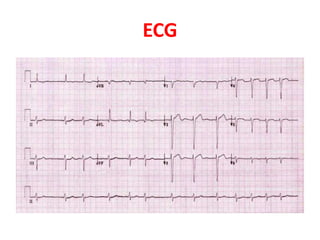
ECG Interpretation:
• Rate: Atrial rate 400-700 per min ( can not be
counted),ventricular rate 160-180 beats /min.
• Rhythm: Irregularly irregular.
• P waves: No P waves present. There are
fibrillatory waves. Resulting chaotic acitivity.
• P-R interval: None.
• QRS complex: Normal.
ECG
CLINICAL SIGNIFICANCE:
• The atria do not contract. So normal atrial is loss.
• Cardiac output is decrease by 20-25 %.
• If the rate is normal,the rhythm is usually well
tolerated.
• If the rate coupled with loss of the atrial kick,
causes further cardiovascular decompensation.
• Ventricular response less than 60 may
compromise cardiac output, suspect digitalis
toxicity.
TREATMENT:
If unstable:
Proceed to immediate sycronized
cardiovarsion.
If stable:
May attempt vagal maneuvers, carotid
massage or medication (Adenosine,
Amiodarone or procainamide).
Aterial fibrillation acls

Aterial fibrillation acls

  • 1.
    ATRIAL FIBRILLATION Dr. G.W.M.ZahidulHasan SQUARE HOSPITALS LTD BANGLADESH. Tachycardia
  • 2.
    Atrial Fibrillation Atrial fibrillationis a rhythm resulting from multiple ectopic foci bombarding ( 400to 700 beats/min) the AV node, which physiologically cannot handle all of the impulses. Causes: • Underlying heart diseases: - Valvular heart diseases. - Hyprttensive heart diseases. - Coronary heart diseases. - Cardiac muscle diseases.
  • 3.
    Sign & Symptomof AF: • Gradual onset that may related to fever, dehydration ,pain or blood loss. • Tachypnea. • Blood pressure: Variable. • Heart Rate: Usually < 150 beats/min. • Peripheral pulse: Normal • Skin: Pale & cold. • Fatigue, dizziness.
  • 4.
    ECG Interpretation: • Rate:Atrial rate 400-700 per min ( can not be counted),ventricular rate 160-180 beats /min. • Rhythm: Irregularly irregular. • P waves: No P waves present. There are fibrillatory waves. Resulting chaotic acitivity. • P-R interval: None. • QRS complex: Normal.
  • 5.
  • 6.
    CLINICAL SIGNIFICANCE: • Theatria do not contract. So normal atrial is loss. • Cardiac output is decrease by 20-25 %. • If the rate is normal,the rhythm is usually well tolerated. • If the rate coupled with loss of the atrial kick, causes further cardiovascular decompensation. • Ventricular response less than 60 may compromise cardiac output, suspect digitalis toxicity.
  • 7.
    TREATMENT: If unstable: Proceed toimmediate sycronized cardiovarsion. If stable: May attempt vagal maneuvers, carotid massage or medication (Adenosine, Amiodarone or procainamide).