WHAT IS
ASSISTIVE MEDIA?
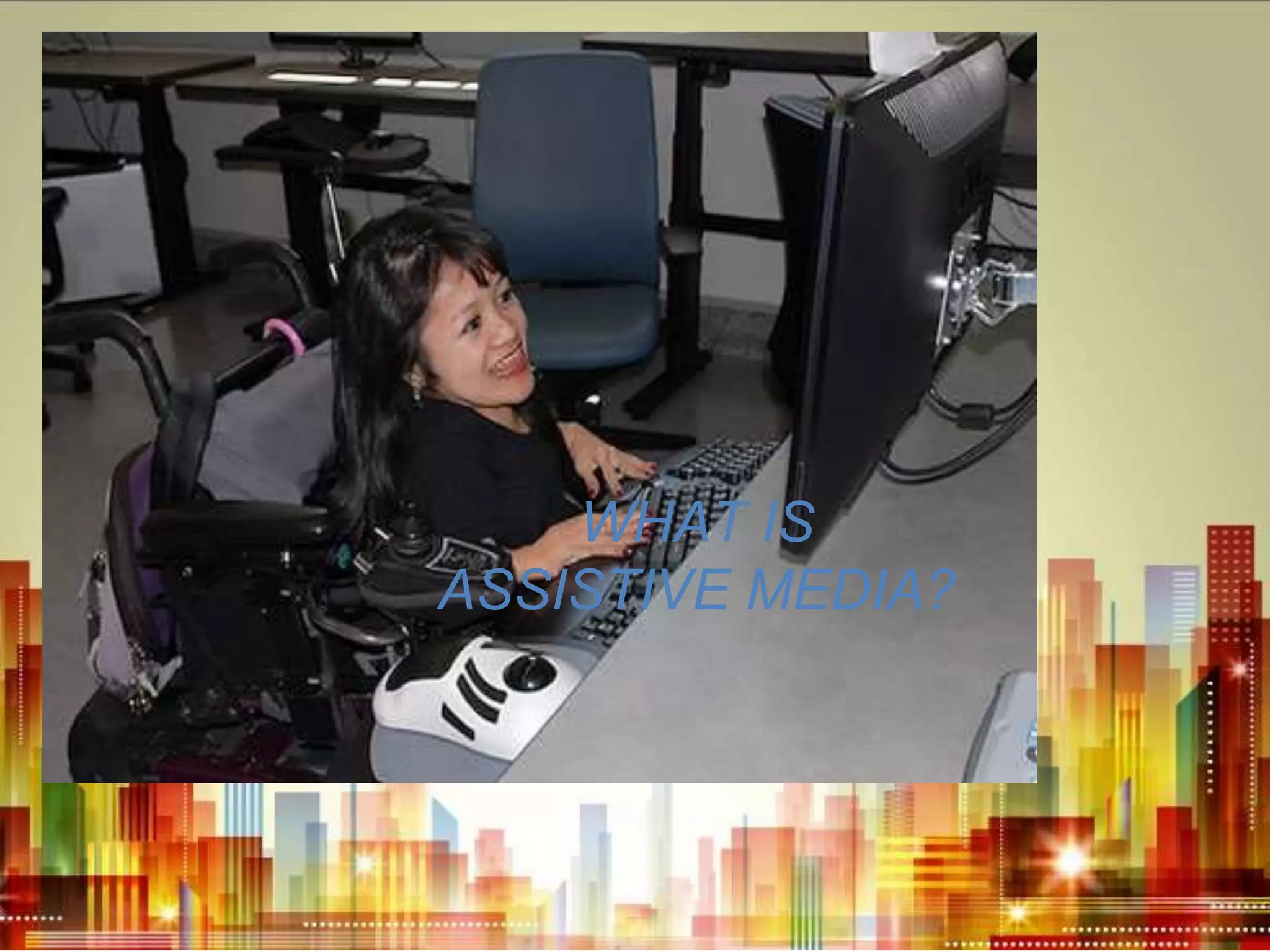
Founded in Ann Arbor, Michigan in 1996 Assistive Media
is an internet delivered audio reading service for people
with visual or perceptual reading impairments.
MISSION:
is to heighten educational, cultural, and
quality-of-living standards through the pure
enjoyment of reading via the good and useful of
not-for-profit service.
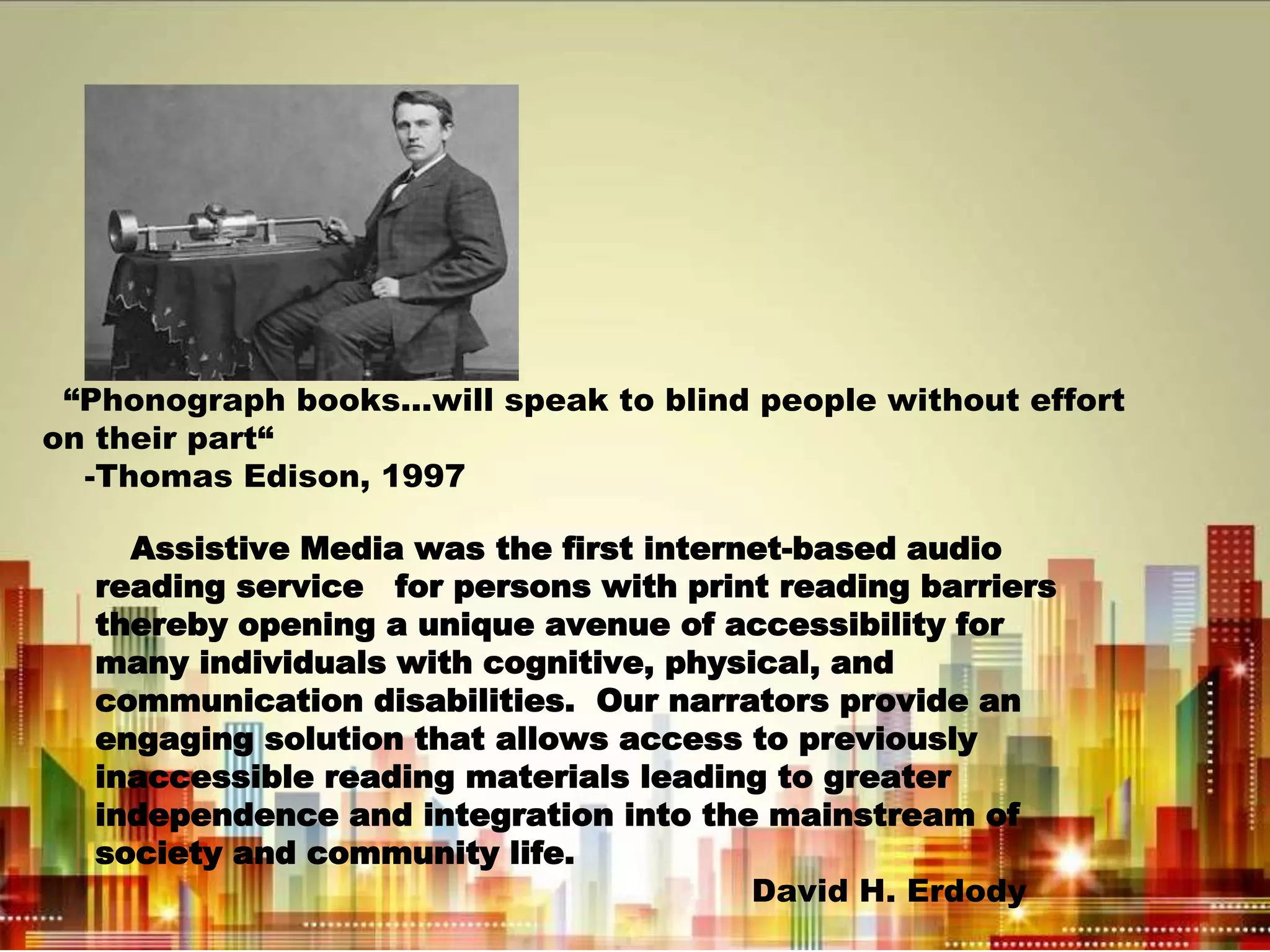
“Phonograph books...will speak to blind people without effort
on their part“
-Thomas Edison, 1997
Assistive Media was the first internet-based audio
reading service for persons with print reading barriers
thereby opening a unique avenue of accessibility for
many individuals with cognitive, physical, and
communication disabilities. Our narrators provide an
engaging solution that allows access to previously
inaccessible reading materials leading to greater
independence and integration into the mainstream of
society and community life.
David H. Erdody
REAL AUDIO
MP3
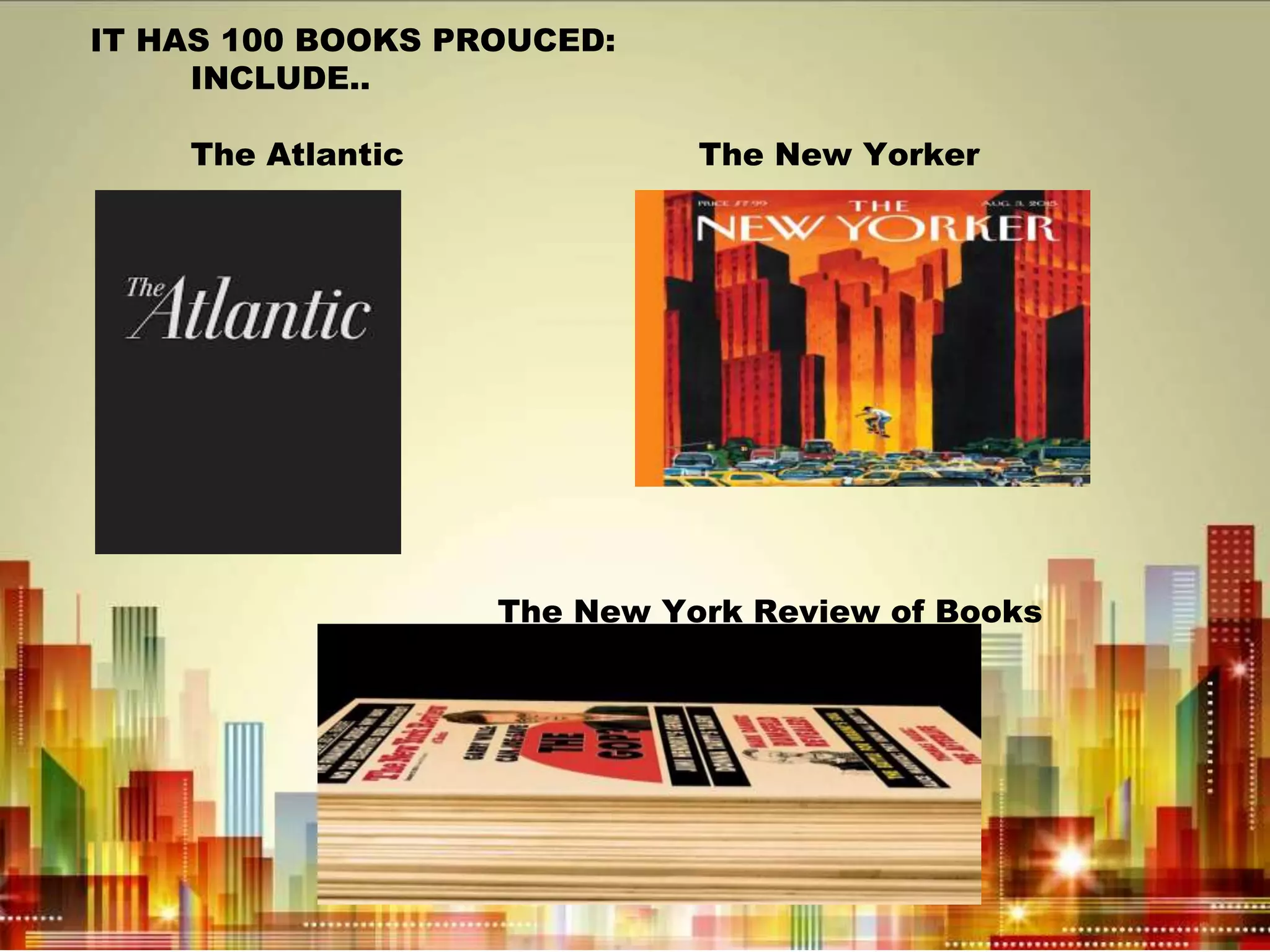
IT HAS 100 BOOKS PROUCED:
INCLUDE..
The Atlantic The New Yorker
The New York Review of Books
TECHNOLOGY EXAMPLES:
FM LISTENING SYSTEMS
-Frequency Modulation System can
reduce background noise in the class
room and amplify what the teachers say
this can help w/ auditory processing
issues as well as attention issues. Also
used to help kids with hearing impairment.
.
Reading guidelines.
Reading guides are good tools for kids who
have trouble with visual tracking or who need help
staying focused on the page. The plastic strip
highlights one line of text while blocking out
surrounding words that might be distracting. The
strip is also easy to move down the page as your
child reads.
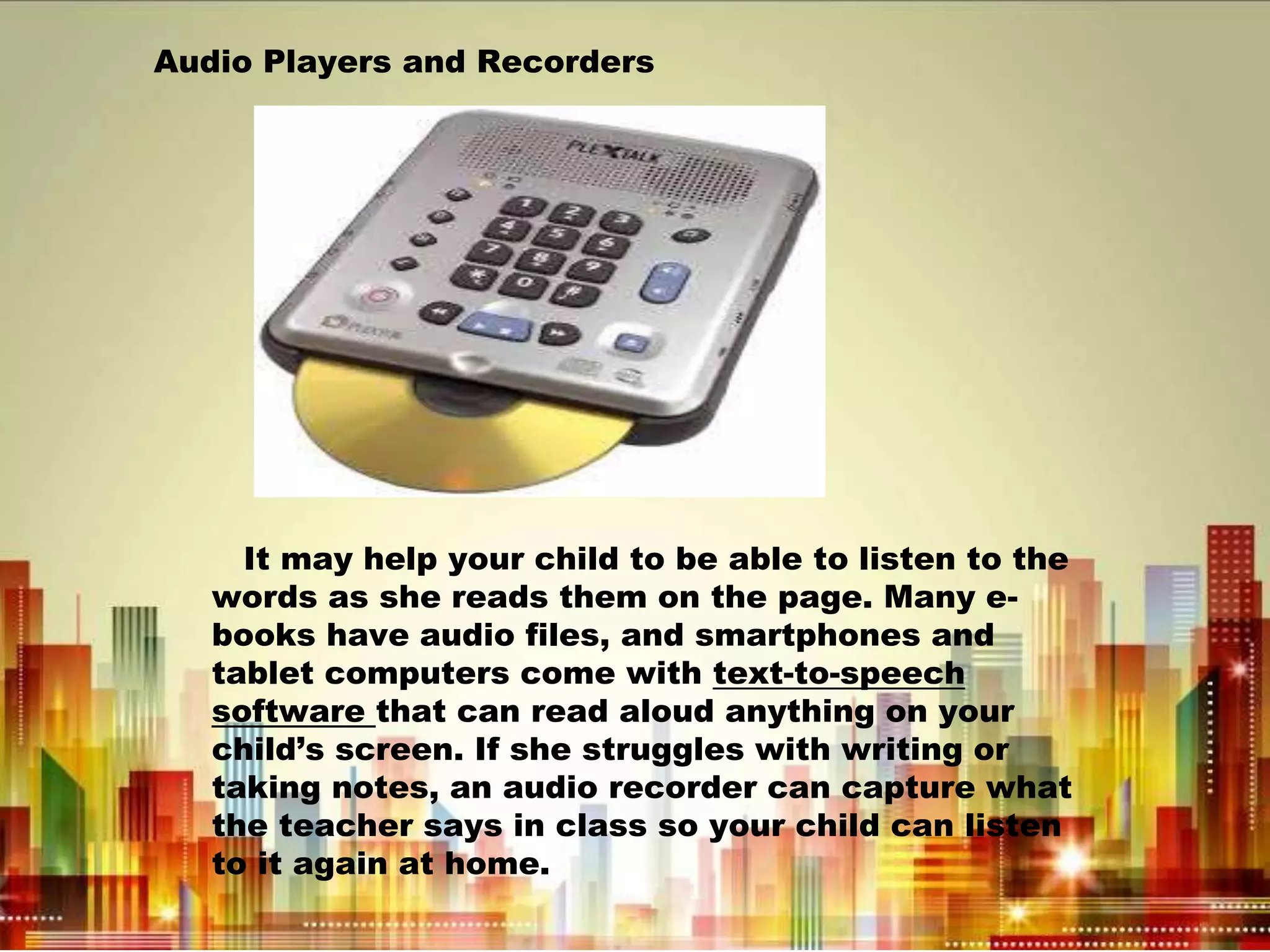
Audio Players and Recorders
It may help your child to be able to listen to the
words as she reads them on the page. Many e-
books have audio files, and smartphones and
tablet computers come with text-to-speech
software that can read aloud anything on your
child’s screen. If she struggles with writing or
taking notes, an audio recorder can capture what
the teacher says in class so your child can listen
to it again at home.
• Advantages in Assistive Media
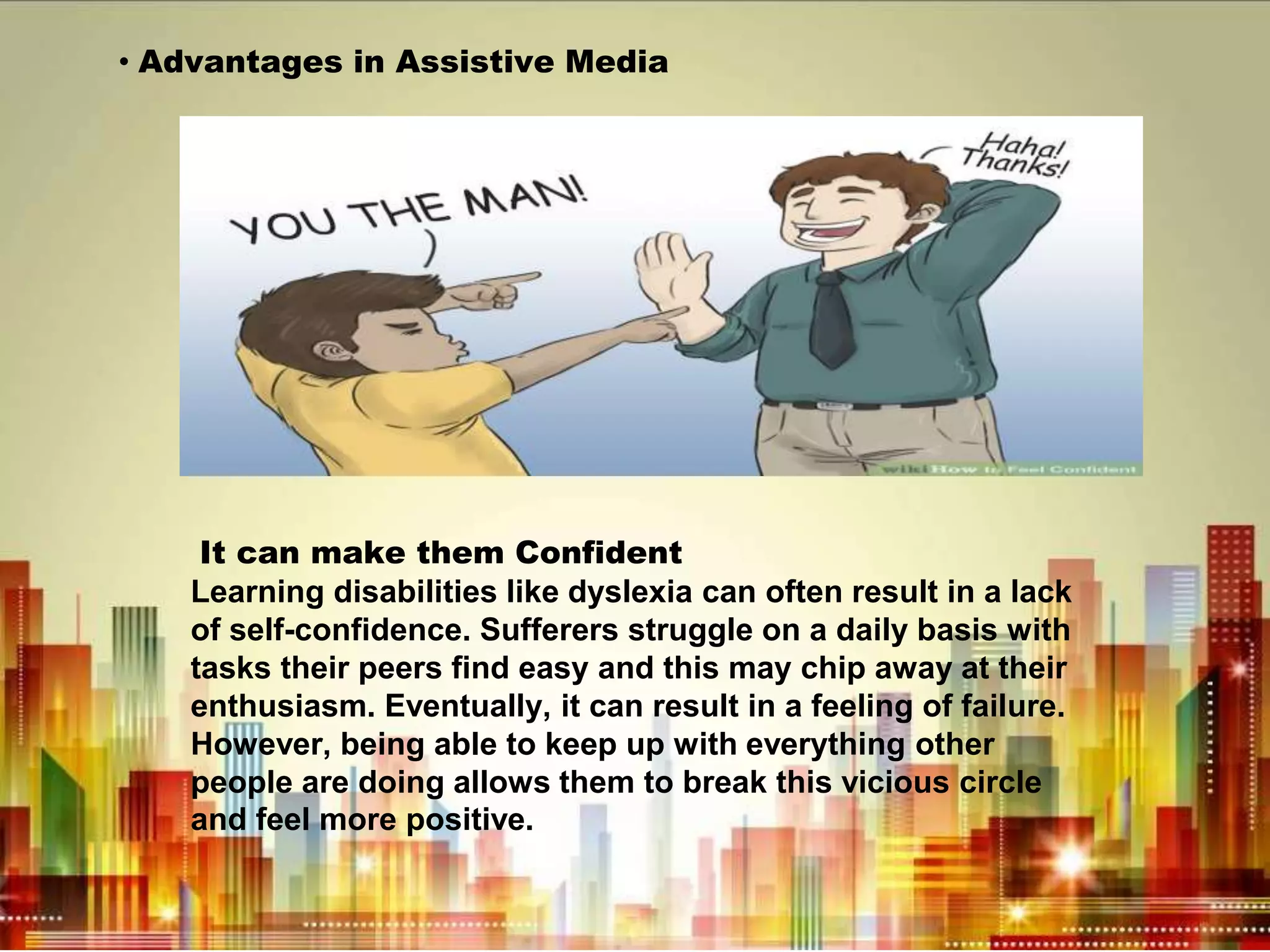
It can make them Confident
Learning disabilities like dyslexia can often result in a lack
of self-confidence. Sufferers struggle on a daily basis with
tasks their peers find easy and this may chip away at their
enthusiasm. Eventually, it can result in a feeling of failure.
However, being able to keep up with everything other
people are doing allows them to break this vicious circle
and feel more positive.
Students can better reach their potential
It is commonly assumed that children with disabilities are
not as intelligent as their peers without them, but this is
simply not true. In fact, they often have very high IQs, but
are not able to demonstrate this because of the obstacles
in their way.
For instance, a child who cannot speak may have been
placed in a special, segregated classroom and had to
spend significant amounts of time on speech therapy just
so educators could understand them.
It can help them be more independent;
Dyslexic children and those with limited mobility in their
hands used to be easy to pinpoint in the classroom or
examination room because they would have a note-taker
assigned to them, who would write down everything they
said so it would be legible to markers.
With speech recognition software or even LiveScribe pens
though, this isn't necessary. They can work alone and
build a sense of achievement and independence, yet
teachers and invigilators will still be able to mark their
work just as they would anyone else's.
Modern Technology nowadays is a big help in
each in everyone of us specially to those
incapacitated persons through this Assistive
Media it can make them feel that they are
belong in the world they’re living, they can
see what really the world is and make them
feel that they have worth.
THAT’S ALL
Assistive Media

Assistive Media

  • 1.
  • 2.
    Founded in AnnArbor, Michigan in 1996 Assistive Media is an internet delivered audio reading service for people with visual or perceptual reading impairments. MISSION: is to heighten educational, cultural, and quality-of-living standards through the pure enjoyment of reading via the good and useful of not-for-profit service.
  • 3.
    “Phonograph books...will speakto blind people without effort on their part“ -Thomas Edison, 1997 Assistive Media was the first internet-based audio reading service for persons with print reading barriers thereby opening a unique avenue of accessibility for many individuals with cognitive, physical, and communication disabilities. Our narrators provide an engaging solution that allows access to previously inaccessible reading materials leading to greater independence and integration into the mainstream of society and community life. David H. Erdody
  • 4.
  • 5.
    IT HAS 100BOOKS PROUCED: INCLUDE.. The Atlantic The New Yorker The New York Review of Books
  • 6.
    TECHNOLOGY EXAMPLES: FM LISTENINGSYSTEMS -Frequency Modulation System can reduce background noise in the class room and amplify what the teachers say this can help w/ auditory processing issues as well as attention issues. Also used to help kids with hearing impairment. .
  • 7.
    Reading guidelines. Reading guidesare good tools for kids who have trouble with visual tracking or who need help staying focused on the page. The plastic strip highlights one line of text while blocking out surrounding words that might be distracting. The strip is also easy to move down the page as your child reads.
  • 8.
    Audio Players andRecorders It may help your child to be able to listen to the words as she reads them on the page. Many e- books have audio files, and smartphones and tablet computers come with text-to-speech software that can read aloud anything on your child’s screen. If she struggles with writing or taking notes, an audio recorder can capture what the teacher says in class so your child can listen to it again at home.
  • 9.
    • Advantages inAssistive Media It can make them Confident Learning disabilities like dyslexia can often result in a lack of self-confidence. Sufferers struggle on a daily basis with tasks their peers find easy and this may chip away at their enthusiasm. Eventually, it can result in a feeling of failure. However, being able to keep up with everything other people are doing allows them to break this vicious circle and feel more positive.
  • 10.
    Students can betterreach their potential It is commonly assumed that children with disabilities are not as intelligent as their peers without them, but this is simply not true. In fact, they often have very high IQs, but are not able to demonstrate this because of the obstacles in their way. For instance, a child who cannot speak may have been placed in a special, segregated classroom and had to spend significant amounts of time on speech therapy just so educators could understand them.
  • 11.
    It can helpthem be more independent; Dyslexic children and those with limited mobility in their hands used to be easy to pinpoint in the classroom or examination room because they would have a note-taker assigned to them, who would write down everything they said so it would be legible to markers. With speech recognition software or even LiveScribe pens though, this isn't necessary. They can work alone and build a sense of achievement and independence, yet teachers and invigilators will still be able to mark their work just as they would anyone else's.
  • 12.
    Modern Technology nowadaysis a big help in each in everyone of us specially to those incapacitated persons through this Assistive Media it can make them feel that they are belong in the world they’re living, they can see what really the world is and make them feel that they have worth. THAT’S ALL