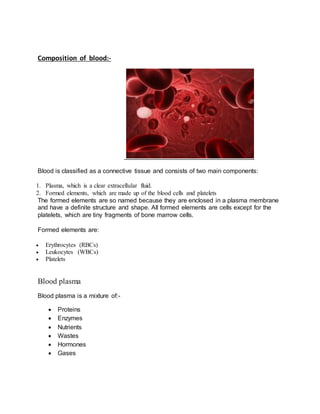
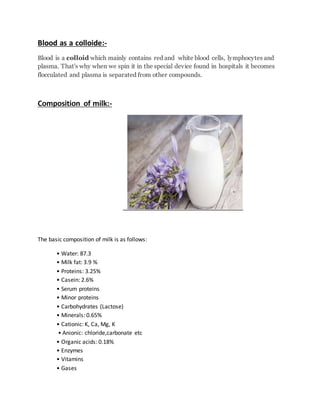
This document discusses natural examples of colloids, including blood and milk. It describes the composition of blood as plasma and formed elements such as red blood cells, white blood cells, and platelets. Milk is also described as a colloid due to its small fat and protein globules that do not settle after standing. The document concludes by explaining that colloidal stability in fluids like blood and milk is achieved through a balance of electrical forces between particles, interactions with the solvent, and stabilization techniques like cloaking and steric effects.