How the Americas Change: The Long
          19th Century

         By: Jessica Jefferson
         History 141 - 31136
The Americas in the 19th Century
Most lands in the western hemisphere
 won their independence from Europe
and had to deal with the legacy of
Enlightenment. The challenge to
create societies ingrained with
constitutional government, freedom,
and equality.

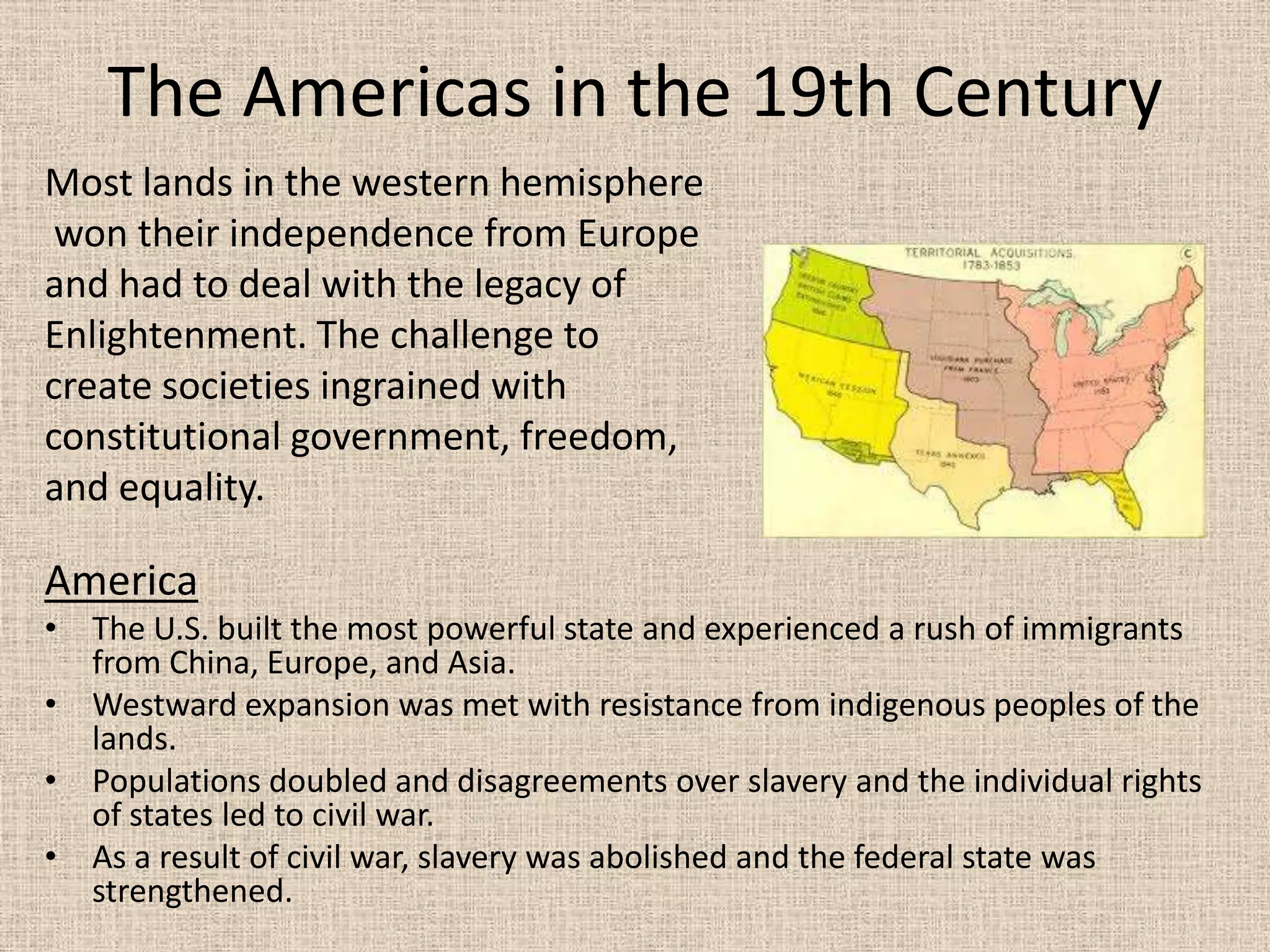
America
• The U.S. built the most powerful state and experienced a rush of immigrants
  from China, Europe, and Asia.
• Westward expansion was met with resistance from indigenous peoples of the
  lands.
• Populations doubled and disagreements over slavery and the individual rights
  of states led to civil war.
• As a result of civil war, slavery was abolished and the federal state was
  strengthened.
The Americas in the 19th Century
Canada
• Canada established a federal state under British Canadian Leadership.
• Differences between the British and French Canadians faded into the
  background as the external threat from the U.S. increased.
• The first Prime Minister of Canada, John A. McDonald, strengthened the
  dominion and oversaw the construction of a transcontinental railroad.


Latin America
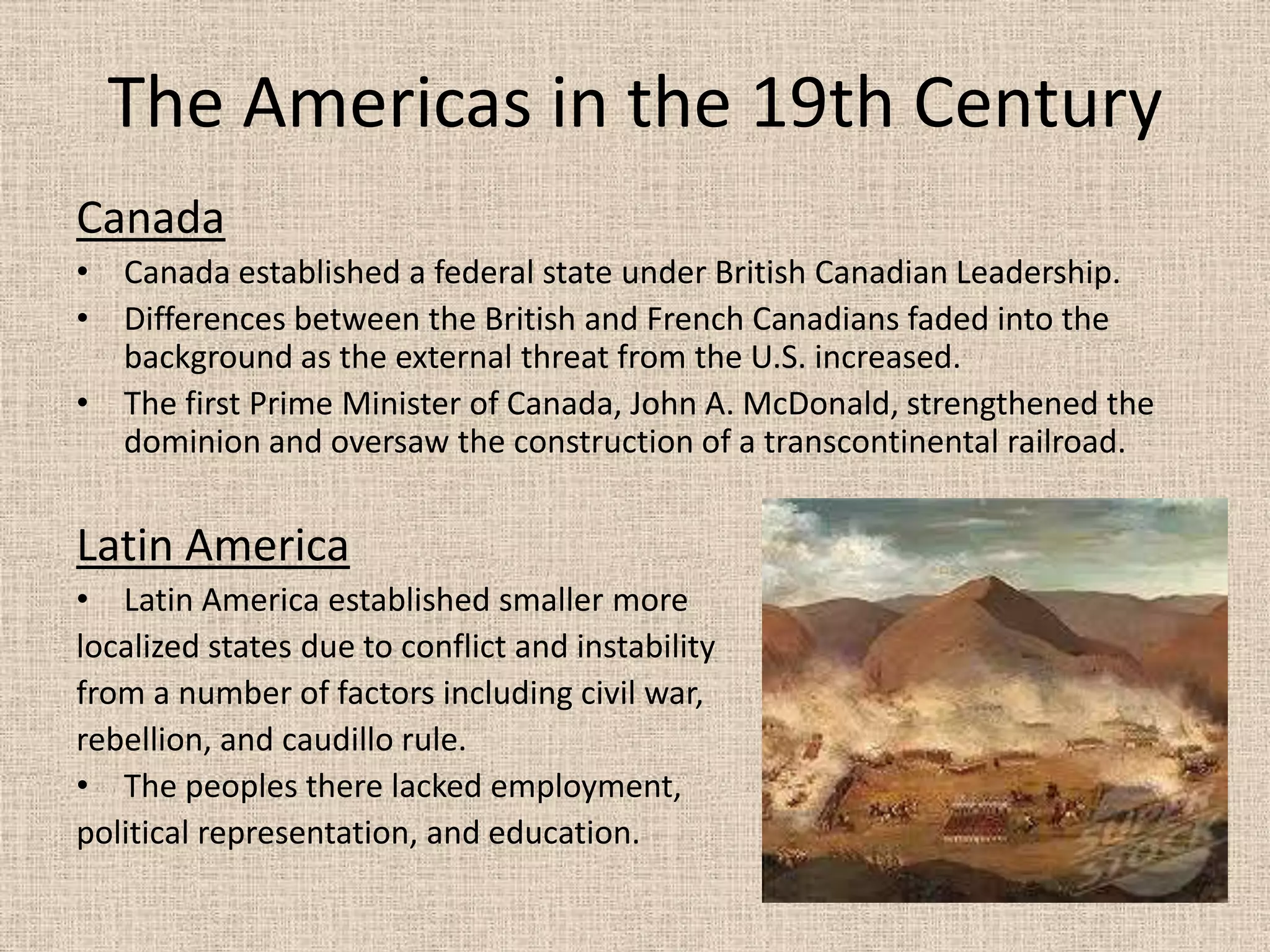
• Latin America established smaller more
localized states due to conflict and instability
from a number of factors including civil war,
rebellion, and caudillo rule.
• The peoples there lacked employment,
political representation, and education.
Frontiers of the Americas
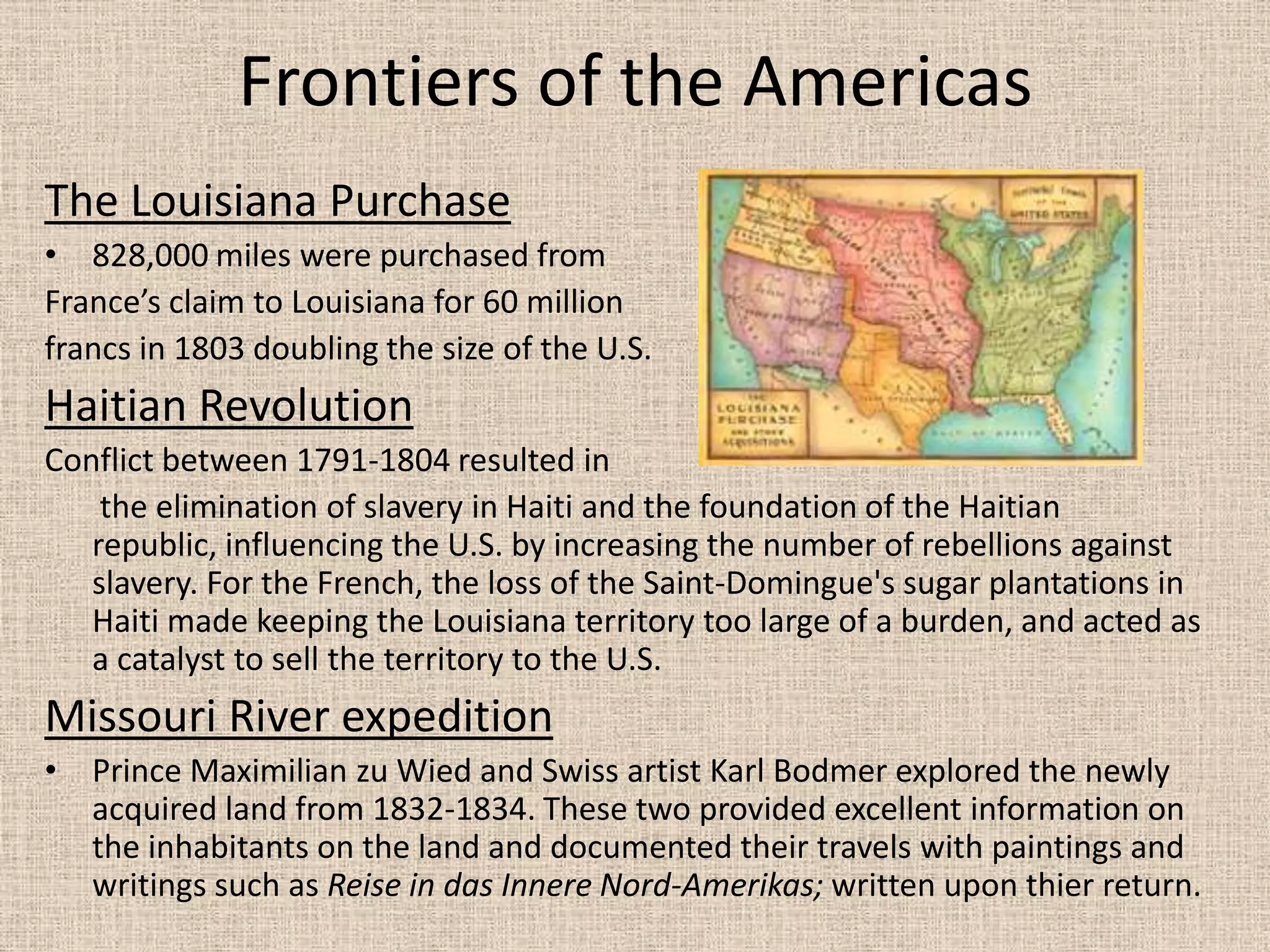
The Louisiana Purchase
• 828,000 miles were purchased from
France’s claim to Louisiana for 60 million
francs in 1803 doubling the size of the U.S.
Haitian Revolution
Conflict between 1791-1804 resulted in
    the elimination of slavery in Haiti and the foundation of the Haitian
   republic, influencing the U.S. by increasing the number of rebellions against
   slavery. For the French, the loss of the Saint-Domingue's sugar plantations in
   Haiti made keeping the Louisiana territory too large of a burden, and acted as
   a catalyst to sell the territory to the U.S.
Missouri River expedition
• Prince Maximilian zu Wied and Swiss artist Karl Bodmer explored the newly
  acquired land from 1832-1834. These two provided excellent information on
  the inhabitants on the land and documented their travels with paintings and
  writings such as Reise in das Innere Nord-Amerikas; written upon thier return.
Frontiers of the Americas
Frontier Violence in South America
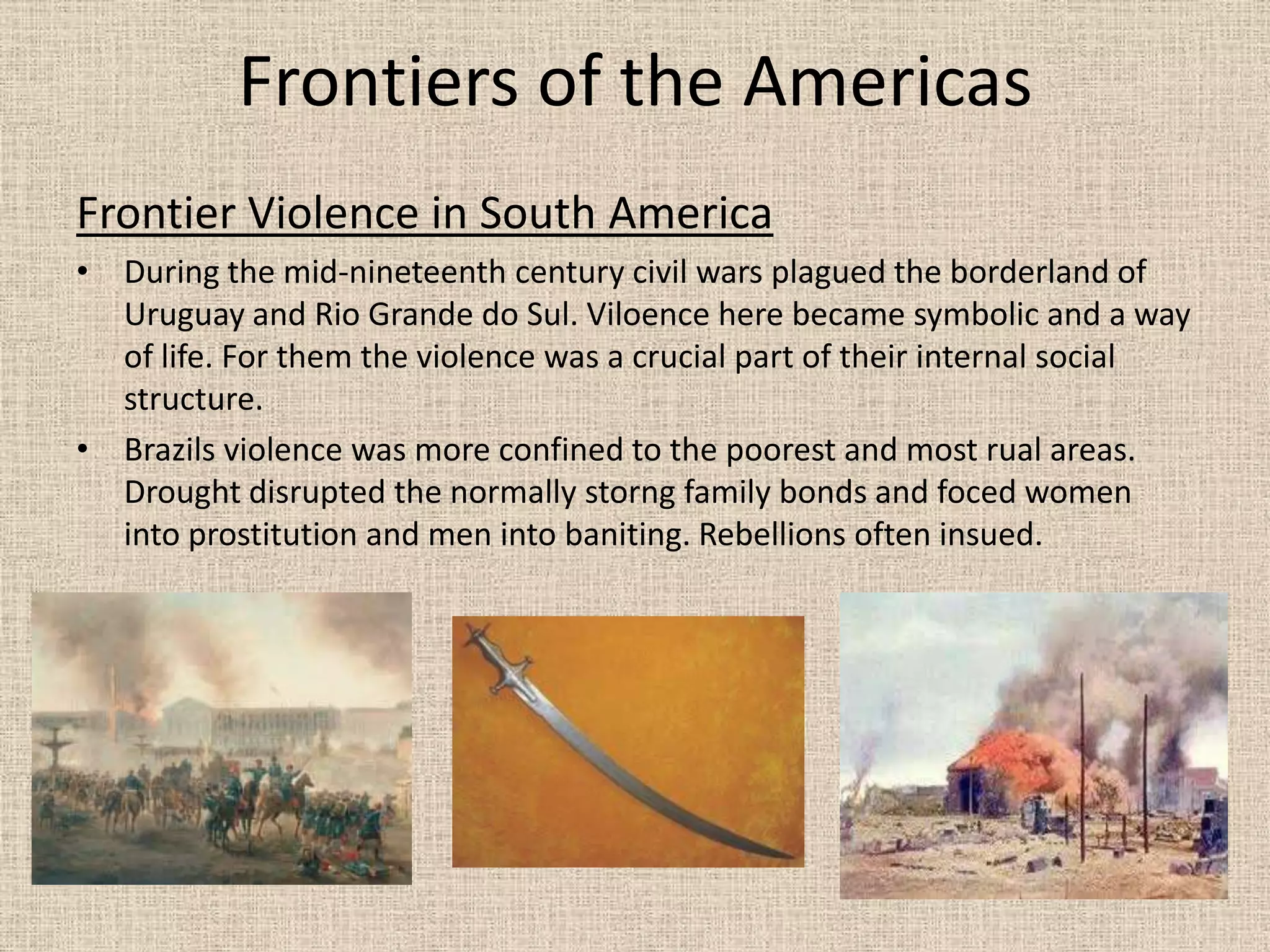
• During the mid-nineteenth century civil wars plagued the borderland of
  Uruguay and Rio Grande do Sul. Viloence here became symbolic and a way
  of life. For them the violence was a crucial part of their internal social
  structure.
• Brazils violence was more confined to the poorest and most rual areas.
  Drought disrupted the normally storng family bonds and foced women
  into prostitution and men into baniting. Rebellions often insued.
Crossroads of Freedom
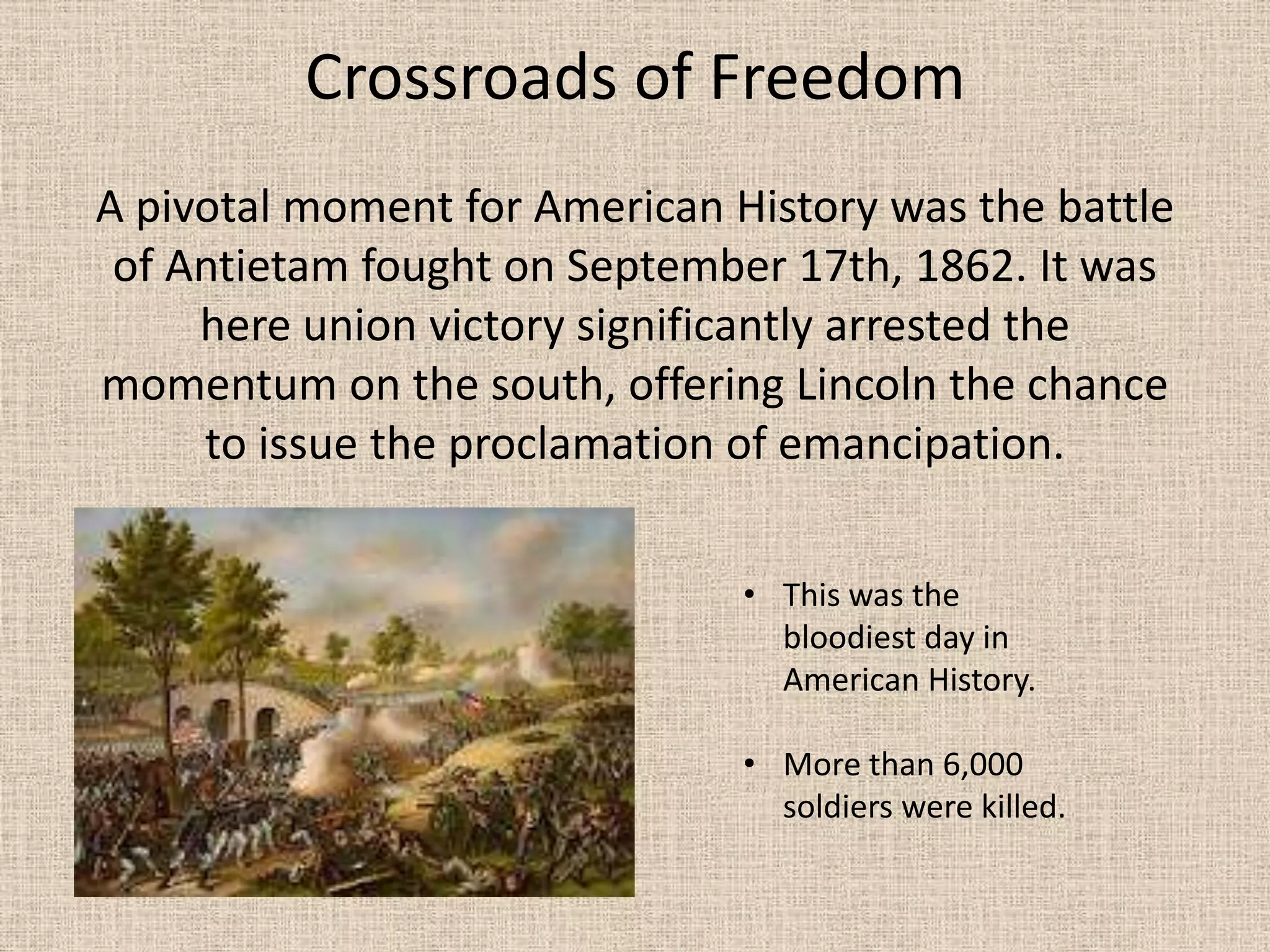
A pivotal moment for American History was the battle
 of Antietam fought on September 17th, 1862. It was
     here union victory significantly arrested the
momentum on the south, offering Lincoln the chance
     to issue the proclamation of emancipation.

                               • This was the
                                 bloodiest day in
                                 American History.

                               • More than 6,000
                                 soldiers were killed.
Crossroads of Freedom
James M. McPherson describes the events leading up
to this battle and how the result of this battle forever
changed both America and the world.
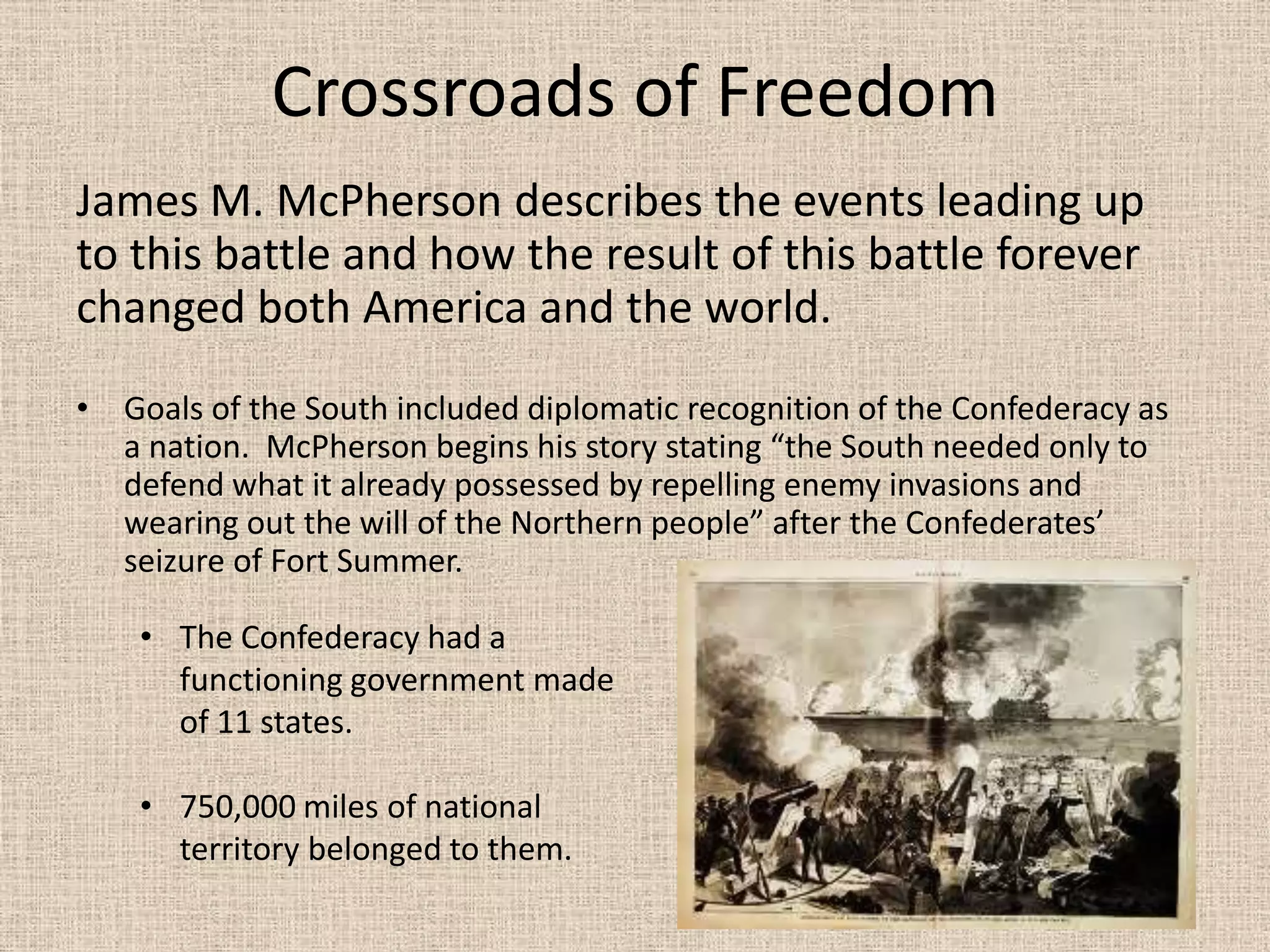
• Goals of the South included diplomatic recognition of the Confederacy as
  a nation. McPherson begins his story stating “the South needed only to
  defend what it already possessed by repelling enemy invasions and
  wearing out the will of the Northern people” after the Confederates’
  seizure of Fort Summer.

    • The Confederacy had a
      functioning government made
      of 11 states.

    • 750,000 miles of national
      territory belonged to them.
Crossroads of Freedom
           Motivation for the North included freedom
                         for the slaves.
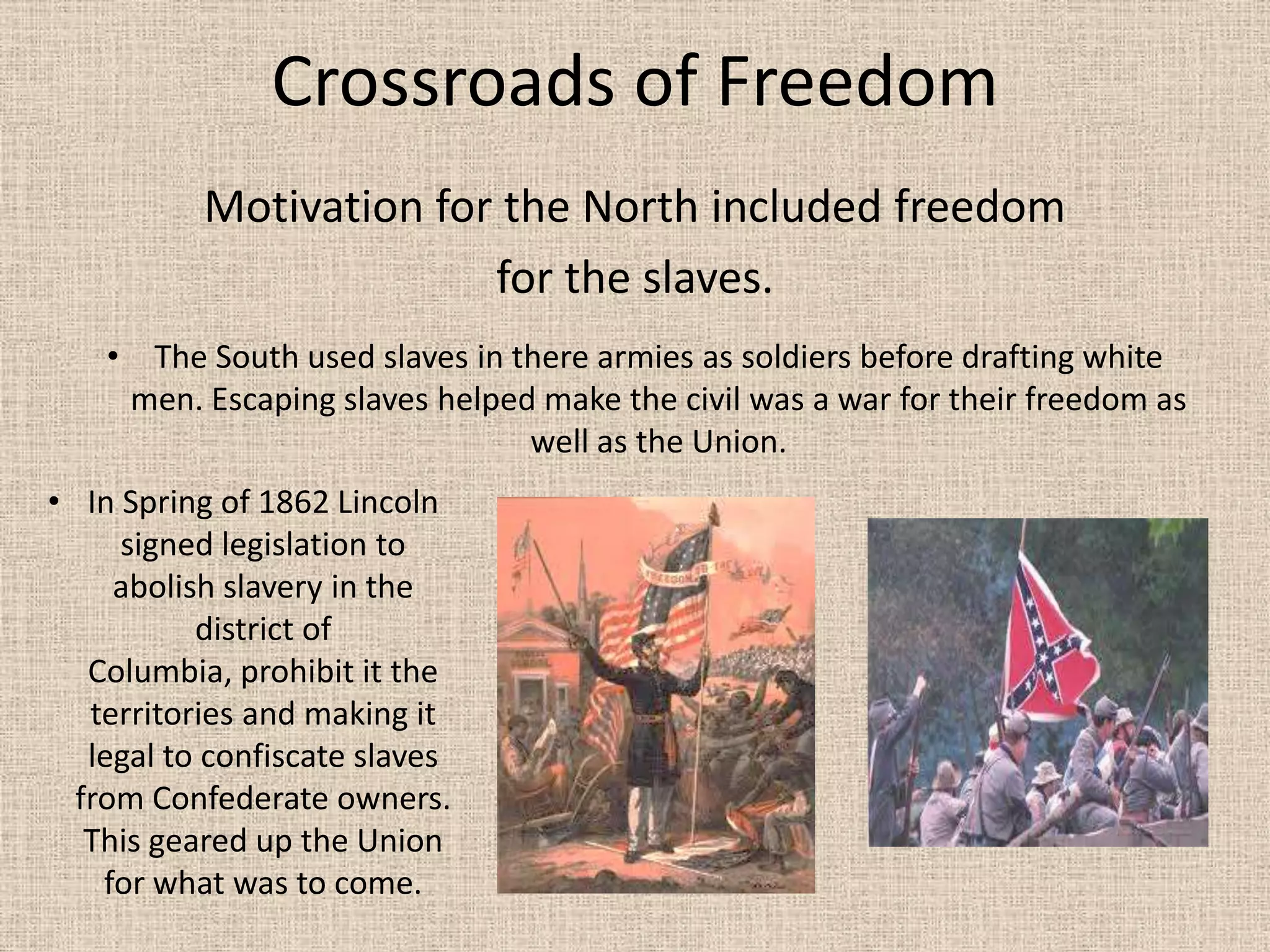
    • The South used slaves in there armies as soldiers before drafting white
     men. Escaping slaves helped make the civil was a war for their freedom as
                                well as the Union.
• In Spring of 1862 Lincoln
     signed legislation to
     abolish slavery in the
           district of
   Columbia, prohibit it the
   territories and making it
   legal to confiscate slaves
  from Confederate owners.
   This geared up the Union
    for what was to come.
Crossroads of Freedom
Battle of Antietam
• The South was outnumbered, and committed their entire force to the
  battle, while the North saved reserves for later.
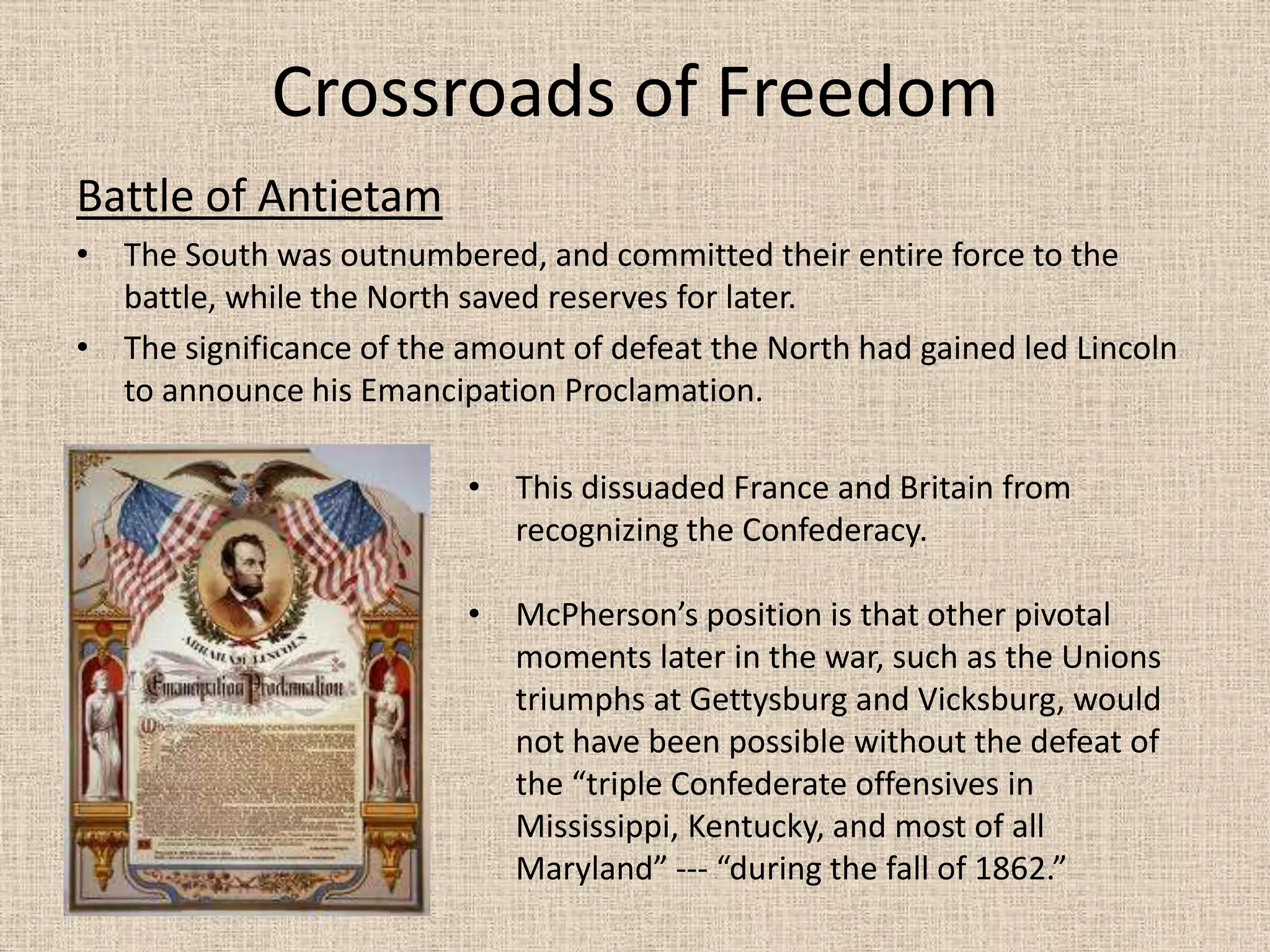
• The significance of the amount of defeat the North had gained led Lincoln
  to announce his Emancipation Proclamation.

                          • This dissuaded France and Britain from
                            recognizing the Confederacy.

                          • McPherson’s position is that other pivotal
                            moments later in the war, such as the Unions
                            triumphs at Gettysburg and Vicksburg, would
                            not have been possible without the defeat of
                            the “triple Confederate offensives in
                            Mississippi, Kentucky, and most of all
                            Maryland” --- “during the fall of 1862.”

How the americas change

  • 1.
    How the AmericasChange: The Long 19th Century By: Jessica Jefferson History 141 - 31136
  • 2.
    The Americas inthe 19th Century Most lands in the western hemisphere won their independence from Europe and had to deal with the legacy of Enlightenment. The challenge to create societies ingrained with constitutional government, freedom, and equality. America • The U.S. built the most powerful state and experienced a rush of immigrants from China, Europe, and Asia. • Westward expansion was met with resistance from indigenous peoples of the lands. • Populations doubled and disagreements over slavery and the individual rights of states led to civil war. • As a result of civil war, slavery was abolished and the federal state was strengthened.
  • 3.
    The Americas inthe 19th Century Canada • Canada established a federal state under British Canadian Leadership. • Differences between the British and French Canadians faded into the background as the external threat from the U.S. increased. • The first Prime Minister of Canada, John A. McDonald, strengthened the dominion and oversaw the construction of a transcontinental railroad. Latin America • Latin America established smaller more localized states due to conflict and instability from a number of factors including civil war, rebellion, and caudillo rule. • The peoples there lacked employment, political representation, and education.
  • 4.
    Frontiers of theAmericas The Louisiana Purchase • 828,000 miles were purchased from France’s claim to Louisiana for 60 million francs in 1803 doubling the size of the U.S. Haitian Revolution Conflict between 1791-1804 resulted in the elimination of slavery in Haiti and the foundation of the Haitian republic, influencing the U.S. by increasing the number of rebellions against slavery. For the French, the loss of the Saint-Domingue's sugar plantations in Haiti made keeping the Louisiana territory too large of a burden, and acted as a catalyst to sell the territory to the U.S. Missouri River expedition • Prince Maximilian zu Wied and Swiss artist Karl Bodmer explored the newly acquired land from 1832-1834. These two provided excellent information on the inhabitants on the land and documented their travels with paintings and writings such as Reise in das Innere Nord-Amerikas; written upon thier return.
  • 5.
    Frontiers of theAmericas Frontier Violence in South America • During the mid-nineteenth century civil wars plagued the borderland of Uruguay and Rio Grande do Sul. Viloence here became symbolic and a way of life. For them the violence was a crucial part of their internal social structure. • Brazils violence was more confined to the poorest and most rual areas. Drought disrupted the normally storng family bonds and foced women into prostitution and men into baniting. Rebellions often insued.
  • 6.
    Crossroads of Freedom Apivotal moment for American History was the battle of Antietam fought on September 17th, 1862. It was here union victory significantly arrested the momentum on the south, offering Lincoln the chance to issue the proclamation of emancipation. • This was the bloodiest day in American History. • More than 6,000 soldiers were killed.
  • 7.
    Crossroads of Freedom JamesM. McPherson describes the events leading up to this battle and how the result of this battle forever changed both America and the world. • Goals of the South included diplomatic recognition of the Confederacy as a nation. McPherson begins his story stating “the South needed only to defend what it already possessed by repelling enemy invasions and wearing out the will of the Northern people” after the Confederates’ seizure of Fort Summer. • The Confederacy had a functioning government made of 11 states. • 750,000 miles of national territory belonged to them.
  • 8.
    Crossroads of Freedom Motivation for the North included freedom for the slaves. • The South used slaves in there armies as soldiers before drafting white men. Escaping slaves helped make the civil was a war for their freedom as well as the Union. • In Spring of 1862 Lincoln signed legislation to abolish slavery in the district of Columbia, prohibit it the territories and making it legal to confiscate slaves from Confederate owners. This geared up the Union for what was to come.
  • 9.
    Crossroads of Freedom Battleof Antietam • The South was outnumbered, and committed their entire force to the battle, while the North saved reserves for later. • The significance of the amount of defeat the North had gained led Lincoln to announce his Emancipation Proclamation. • This dissuaded France and Britain from recognizing the Confederacy. • McPherson’s position is that other pivotal moments later in the war, such as the Unions triumphs at Gettysburg and Vicksburg, would not have been possible without the defeat of the “triple Confederate offensives in Mississippi, Kentucky, and most of all Maryland” --- “during the fall of 1862.”