TOPIC:
ASSESSING INFORMATION IN THE PERFORMING ARTS
GROUP MEMBERS:
 Ayesha Akram
 Hamza Hamad
 Faizan Irfan
CONTENT:
 What is performing Arts
 Elements of Performing Arts
 Division of Performing Arts
 Resources of Performing Arts
 Conclusion
PERFORMING ARTS
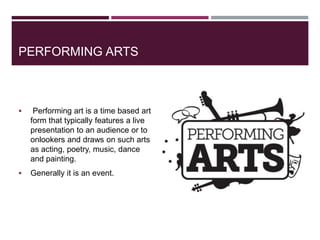
 Performing art is a time based art
form that typically features a live
presentation to an audience or to
onlookers and draws on such arts
as acting, poetry, music, dance
and painting.
 Generally it is an event.
ELEMENT OF PERFORMING ARTS
 There are three elements of performing arts:
 Performance.
 Performer or performers.
 Audience.
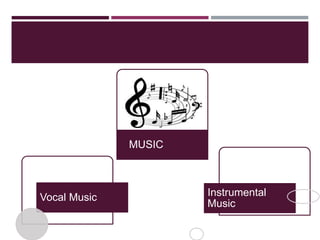
MUSIC
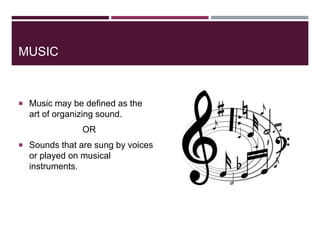
 Music may be defined as the
art of organizing sound.
OR
 Sounds that are sung by voices
or played on musical
instruments.
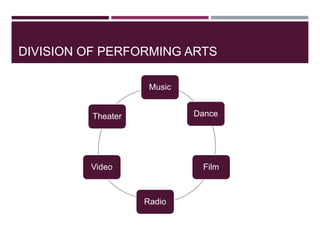
DIVISION OF PERFORMING ARTS
Music
Dance
Film
Radio
Video
Theater
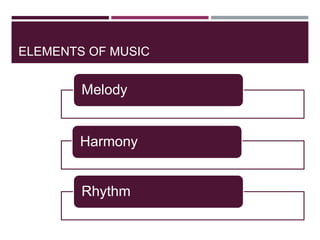
ELEMENTS OF MUSIC
Melody
Harmony
Rhythm
Vocal Music
MUSIC
Instrumental
Music
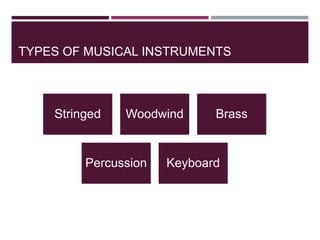
TYPES OF MUSICAL INSTRUMENTS
Stringed Woodwind Brass
Percussion Keyboard
 Librarians are responsible for a music collection will need to keep in
mind three elements:
 The music itself.
 The literature about music.
 The vast array of recordings on records.
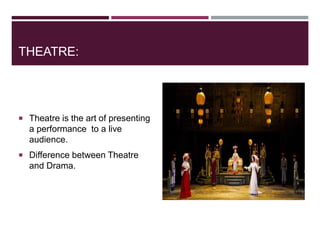
THEATRE:
 Theatre is the art of presenting
a performance to a live
audience.
 Difference between Theatre
and Drama.
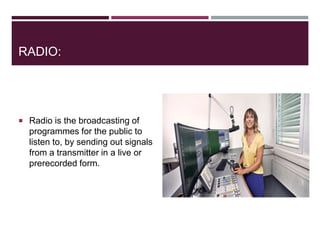
RADIO:
 Radio is the broadcasting of
programmes for the public to
listen to, by sending out signals
from a transmitter in a live or
prerecorded form.
DANCE :
 Dance is defined as movement of the body to a certain Rhythm.
( Encyclopedia)
 There are three major division of Dance
 Folk Dance
 Ballroom Dance
 Theatre Dance
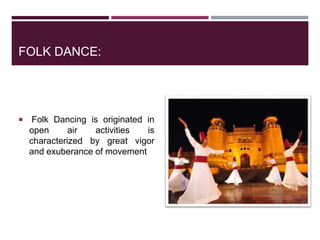
FOLK DANCE:
 Folk Dancing is originated in
open air activities is
characterized by great vigor
and exuberance of movement
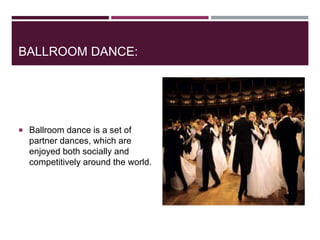
BALLROOM DANCE:
 Ballroom dance is a set of
partner dances, which are
enjoyed both socially and
competitively around the world.
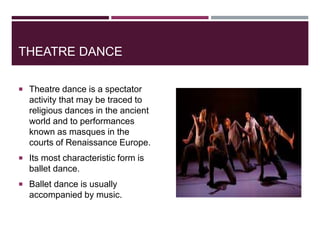
THEATRE DANCE
 Theatre dance is a spectator
activity that may be traced to
religious dances in the ancient
world and to performances
known as masques in the
courts of Renaissance Europe.
 Its most characteristic form is
ballet dance.
 Ballet dance is usually
accompanied by music.
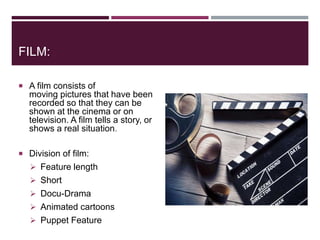
FILM:
 A film consists of
moving pictures that have been
recorded so that they can be
shown at the cinema or on
television. A film tells a story, or
shows a real situation.
 Division of film:
 Feature length
 Short
 Docu-Drama
 Animated cartoons
 Puppet Feature
VIDEO:
 A video is a film or television
programme recorded digitally
(or in the past on tape) for
people to watch on a television
set.
 Available on tapes for home
consumption.
HELPFUL RESOURCES IN PERFORMING ARTS:
1) Encyclopedia Britannica Online.
2) Anthony Storr’s Music and the Mind.
3) New Grove Dictionary of Music and Musicians.
4) Managing Performing Arts Collections in Academic and Public
Libraries.
5) Performing Arts journals online.
REFERENCES:
 The humanities: a selective guide to information sources
(Blazek, R and Aversa, E)
 Encyclopedia of Britannica online

Assessing information in performing Art

  • 1.
  • 2.
    GROUP MEMBERS:  AyeshaAkram  Hamza Hamad  Faizan Irfan
  • 3.
    CONTENT:  What isperforming Arts  Elements of Performing Arts  Division of Performing Arts  Resources of Performing Arts  Conclusion
  • 4.
    PERFORMING ARTS  Performingart is a time based art form that typically features a live presentation to an audience or to onlookers and draws on such arts as acting, poetry, music, dance and painting.  Generally it is an event.
  • 5.
    ELEMENT OF PERFORMINGARTS  There are three elements of performing arts:  Performance.  Performer or performers.  Audience.
  • 6.
    MUSIC  Music maybe defined as the art of organizing sound. OR  Sounds that are sung by voices or played on musical instruments.
  • 7.
    DIVISION OF PERFORMINGARTS Music Dance Film Radio Video Theater
  • 8.
  • 9.
  • 10.
    TYPES OF MUSICALINSTRUMENTS Stringed Woodwind Brass Percussion Keyboard
  • 11.
     Librarians areresponsible for a music collection will need to keep in mind three elements:  The music itself.  The literature about music.  The vast array of recordings on records.
  • 12.
    THEATRE:  Theatre isthe art of presenting a performance to a live audience.  Difference between Theatre and Drama.
  • 13.
    RADIO:  Radio isthe broadcasting of programmes for the public to listen to, by sending out signals from a transmitter in a live or prerecorded form.
  • 14.
    DANCE :  Danceis defined as movement of the body to a certain Rhythm. ( Encyclopedia)  There are three major division of Dance  Folk Dance  Ballroom Dance  Theatre Dance
  • 15.
    FOLK DANCE:  FolkDancing is originated in open air activities is characterized by great vigor and exuberance of movement
  • 16.
    BALLROOM DANCE:  Ballroomdance is a set of partner dances, which are enjoyed both socially and competitively around the world.
  • 17.
    THEATRE DANCE  Theatredance is a spectator activity that may be traced to religious dances in the ancient world and to performances known as masques in the courts of Renaissance Europe.  Its most characteristic form is ballet dance.  Ballet dance is usually accompanied by music.
  • 18.
    FILM:  A filmconsists of moving pictures that have been recorded so that they can be shown at the cinema or on television. A film tells a story, or shows a real situation.  Division of film:  Feature length  Short  Docu-Drama  Animated cartoons  Puppet Feature
  • 19.
    VIDEO:  A videois a film or television programme recorded digitally (or in the past on tape) for people to watch on a television set.  Available on tapes for home consumption.
  • 20.
    HELPFUL RESOURCES INPERFORMING ARTS: 1) Encyclopedia Britannica Online. 2) Anthony Storr’s Music and the Mind. 3) New Grove Dictionary of Music and Musicians. 4) Managing Performing Arts Collections in Academic and Public Libraries. 5) Performing Arts journals online.
  • 21.
    REFERENCES:  The humanities:a selective guide to information sources (Blazek, R and Aversa, E)  Encyclopedia of Britannica online