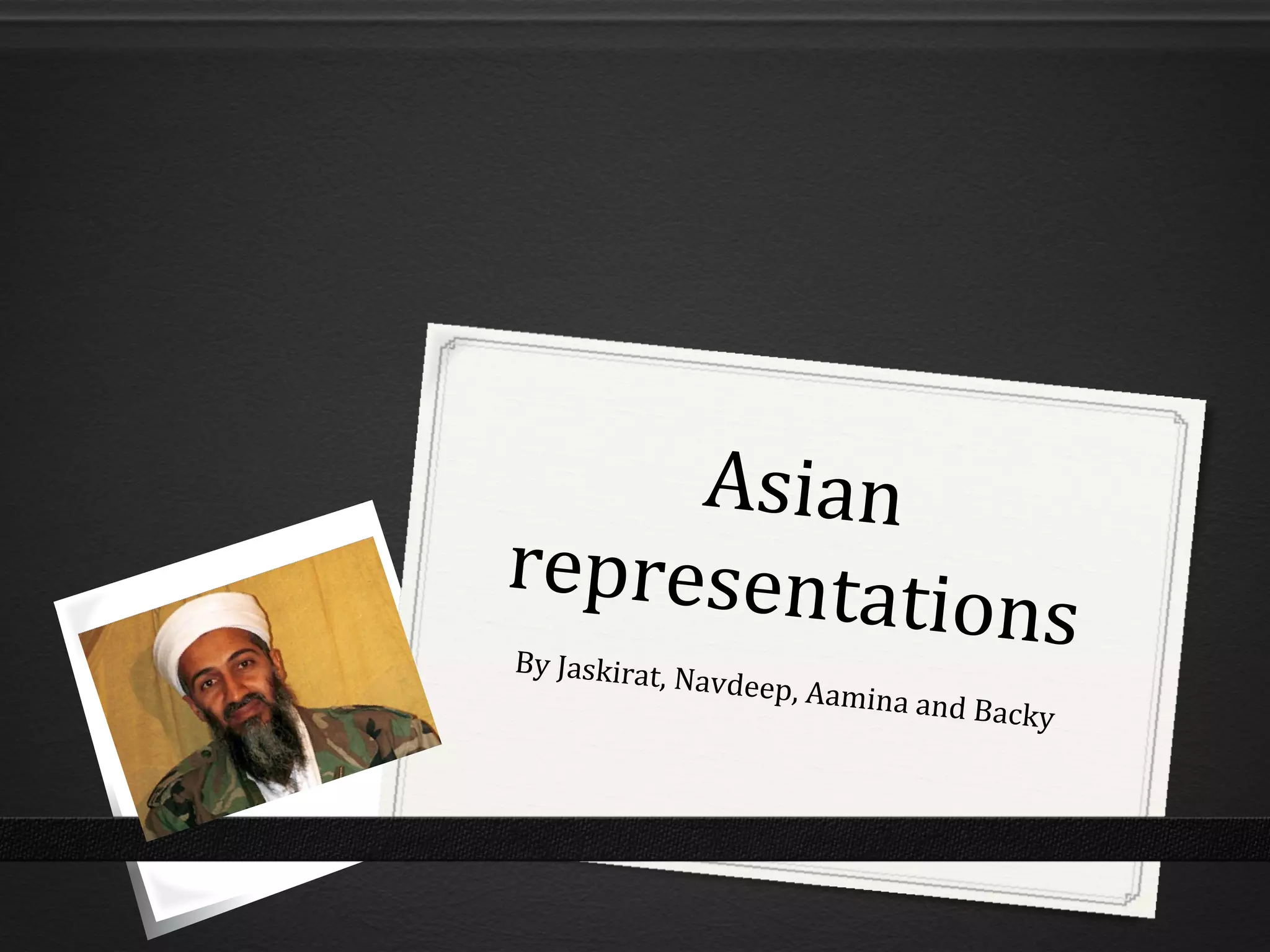
Asian 
representations 
By Jaskirat, Navdeep, Aamina and Backy
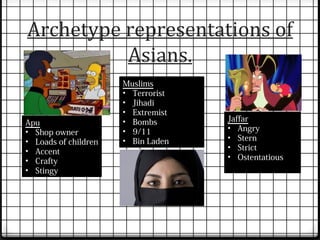
Archetype representations of 
Asians. 
Apu 
• Shop owner 
• Loads of children 
• Accent 
• Crafty 
• Stingy 
Jaffar 
• Angry 
• Stern 
• Strict 
• Ostentatious 
Muslims 
• Terrorist 
• Jihadi 
• Extremist 
• Bombs 
• 9/11 
• Bin Laden
Archetypes. 
One big archetype portrayed in the media is that all Asians – 
specifically Muslims are portrayed as terrorists. 
Due to the devastating terrorist attacks in the past decade, for 
example; 9/11 and 7/7, the media have taken advantage of the 
vulnerability of Asian and they have used them as a scapegoat to 
blame all of their issues. 
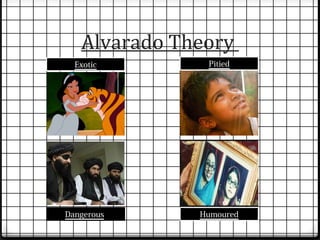
According to the Alvarado Theory, Asians are shown as dangerous, 
pitied, humoured and exotic, as a whole. However we know that 
dangerous and negative representations of groups tend to strike 
people more.
Alvarado Theory 
Exotic Pitied 
Dangerous Humoured
Historical Representations 
Before all of these stereotypes were created, many 
people had a different view on Asians. A lot of our 
historical stereotypes of Asians come from the time when 
Britain had colonised India, in the 19th/20th century. 
India was one of Britain’s most prized possession. It 
brought spices, jewels and textiles to Britain as well as 
the Indian army. They played a big part in WW1&2, as 
soldiering was an honourable tradition and the soldiers 
formed a backbone of British military power. 
This showed that Asians were determined and ready to 
fight as they were fighting for Britain. However, they 
were still seen as inferior to the white race. They were 
seen as puppets and tools. They were shown this way 
because the British empire still needed to have that 
power after they were weakened by the war. Suggesting 
that Britain had their hegemonic values to keep intact.
Representations Today 
Although time has moved on, these demeaning 
stereotypes have got worse. Modern day media depicts 
Asians to be evil, terrorists and heartless. Due to the 
ignorance of some people, innocent civilians are hit 
with racial abuse and hate crimes. 
The media are the root of this issue that has grown and 
they are solely to blame. According to the ‘cultivation 
theory’, the more that you are shown something 
through the media, the more you believe it. The media 
have planted a seed in the brains of ignorant young 
people, therefore the ideologies of people have not 
changed at all.
Representations Today 
The racial archetypes are caused by groups like 
the ISIS and the Taliban. These jihadist groups 
have been the cause. The religion of the minor 
groups has been emphasised. Just like this 
Muslims are used as scapegoats, the religion of 
these people, is what people believe is the issue. 
Therefore they view all Muslims badly. 
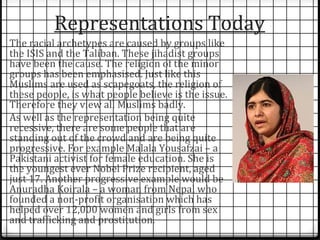
As well as the representation being quite 
recessive, there are some people that are 
standing out of the crowd and are being quite 
progressive. For example Malala Yousafzai – a 
Pakistani activist for female education. She is 
the youngest ever Nobel Prize recipient, aged 
just 17. Another progressive example would be 
Anuradha Koirala – a woman from Nepal who 
founded a non-profit organisation which has 
helped over 12,000 women and girls from sex 
and trafficking and prostitution.
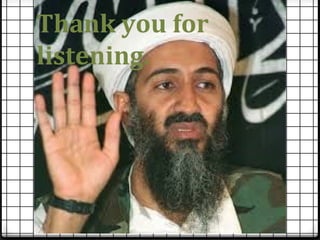
Thank you for 
listening.

Asian reps

  • 1.
    Asian representations ByJaskirat, Navdeep, Aamina and Backy
  • 2.
    Archetype representations of Asians. Apu • Shop owner • Loads of children • Accent • Crafty • Stingy Jaffar • Angry • Stern • Strict • Ostentatious Muslims • Terrorist • Jihadi • Extremist • Bombs • 9/11 • Bin Laden
  • 3.
    Archetypes. One bigarchetype portrayed in the media is that all Asians – specifically Muslims are portrayed as terrorists. Due to the devastating terrorist attacks in the past decade, for example; 9/11 and 7/7, the media have taken advantage of the vulnerability of Asian and they have used them as a scapegoat to blame all of their issues. According to the Alvarado Theory, Asians are shown as dangerous, pitied, humoured and exotic, as a whole. However we know that dangerous and negative representations of groups tend to strike people more.
  • 4.
    Alvarado Theory ExoticPitied Dangerous Humoured
  • 5.
    Historical Representations Beforeall of these stereotypes were created, many people had a different view on Asians. A lot of our historical stereotypes of Asians come from the time when Britain had colonised India, in the 19th/20th century. India was one of Britain’s most prized possession. It brought spices, jewels and textiles to Britain as well as the Indian army. They played a big part in WW1&2, as soldiering was an honourable tradition and the soldiers formed a backbone of British military power. This showed that Asians were determined and ready to fight as they were fighting for Britain. However, they were still seen as inferior to the white race. They were seen as puppets and tools. They were shown this way because the British empire still needed to have that power after they were weakened by the war. Suggesting that Britain had their hegemonic values to keep intact.
  • 6.
    Representations Today Althoughtime has moved on, these demeaning stereotypes have got worse. Modern day media depicts Asians to be evil, terrorists and heartless. Due to the ignorance of some people, innocent civilians are hit with racial abuse and hate crimes. The media are the root of this issue that has grown and they are solely to blame. According to the ‘cultivation theory’, the more that you are shown something through the media, the more you believe it. The media have planted a seed in the brains of ignorant young people, therefore the ideologies of people have not changed at all.
  • 7.
    Representations Today Theracial archetypes are caused by groups like the ISIS and the Taliban. These jihadist groups have been the cause. The religion of the minor groups has been emphasised. Just like this Muslims are used as scapegoats, the religion of these people, is what people believe is the issue. Therefore they view all Muslims badly. As well as the representation being quite recessive, there are some people that are standing out of the crowd and are being quite progressive. For example Malala Yousafzai – a Pakistani activist for female education. She is the youngest ever Nobel Prize recipient, aged just 17. Another progressive example would be Anuradha Koirala – a woman from Nepal who founded a non-profit organisation which has helped over 12,000 women and girls from sex and trafficking and prostitution.
  • 8.
    Thank you for listening.