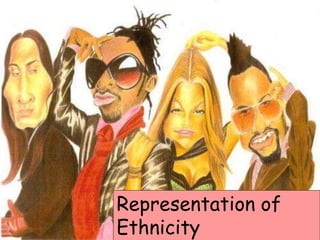
Representation of
Ethnicity
The Effects Model
•The Bobo Doll Experiment
• This was conducted in 1961 by Albert Bandura
Hypodermic needle theory
• The media inject messages into their audiences
• The audience is seen as passive and unable to resist these media messages
• Theory associated with Marxism academics - Marxists are traditionally hostile to the media
– seeing it as vehicle to enable ruling class to maintain their dominance over society
• The theory first articulated in a different era to our own – a time when the mass media was
still relatively new
• Effects young minds – Bobo Doll experiment
• Continues to apply to today: creates Moral panics
• Also creates feelings of ‘I want it’ / ‘I must have it’ / ‘I must look like this’.
What is a dominant group?
A group that has more population than the subordinate group.
What is a subordinate group?
Belonging to a lower or inferior class rank.
What is hegemony?
The socially accepted and agreed beliefs of those in the ruling class.
Recap
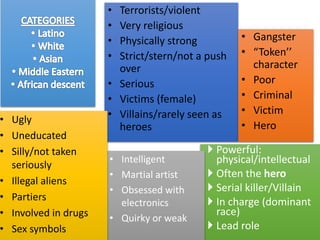
 Powerful:
physical/intellectual
 Often the hero
 Serial killer/Villain
 In charge (dominant
race)
 Lead role
• Intelligent
• Martial artist
• Obsessed with
electronics
• Quirky or weak
• Terrorists/violent
• Very religious
• Physically strong
• Strict/stern/not a push
over
• Serious
• Victims (female)
• Villains/rarely seen as
heroes
• Gangster
• “Token’’
character
• Poor
• Criminal
• Victim
• Hero
• Ugly
• Uneducated
• Silly/not taken
seriously
• Illegal aliens
• Partiers
• Involved in drugs
• Sex symbols
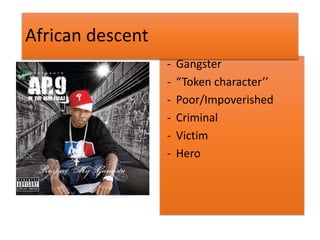
- Gangster
- “Token character’’
- Poor/Impoverished
- Criminal
- Victim
- Hero
African descent
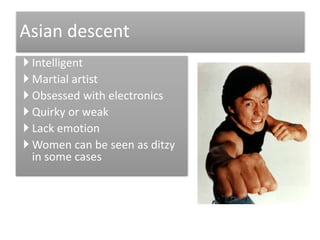
 Intelligent
 Martial artist
 Obsessed with electronics
 Quirky or weak
 Lack emotion
 Women can be seen as ditzy
in some cases
Asian descent
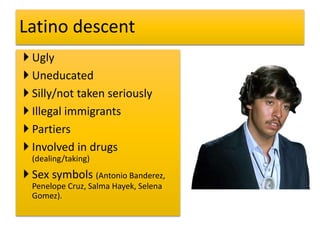
 Ugly
 Uneducated
 Silly/not taken seriously
 Illegal immigrants
 Partiers
 Involved in drugs
(dealing/taking)
 Sex symbols (Antonio Banderez,
Penelope Cruz, Salma Hayek, Selena
Gomez).
Latino descent
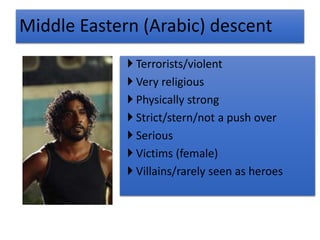
 Terrorists/violent
 Very religious
 Physically strong
 Strict/stern/not a push over
 Serious
 Victims (female)
 Villains/rarely seen as heroes
Middle Eastern (Arabic) descent
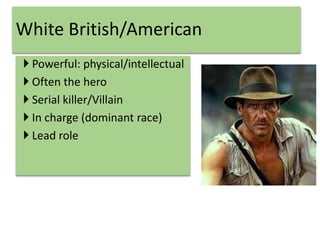
 Powerful: physical/intellectual
 Often the hero
 Serial killer/Villain
 In charge (dominant race)
 Lead role
White British/American
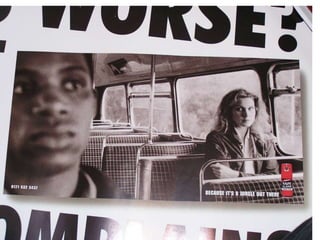
 Stereotyping of race is seen as more harmful than
stereotyping of gender, as media representation
may constitute the only experience of contact with
a particular ethnic group that an audience
(particularly an audience of children) may have.
Representation of Ethnicity
• Racial stereotypes are often based on social myth,
perpetuated down the ages. Thus, the media
depiction of, say, Native American Indians, might
provide a child with their only experience of Native
American Indian culture and characters, and may
provide that child with a set of narrow prejudices
which will not be challenged elsewhere within their
experience.
Why is it important?
However…
• Is it just white western people who adopt
potentially distorted ideas of race?
• Watch
The representations aren’t all
bad…
Alvarado Theory (1987)
Four Key Themes in Racial Representations:
•Dangerous
•Humorous
•Pitied
•Exotic
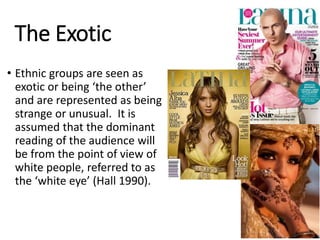
The Exotic
• Ethnic groups are seen as
exotic or being ‘the other’
and are represented as being
strange or unusual. It is
assumed that the dominant
reading of the audience will
be from the point of view of
white people, referred to as
the ‘white eye’ (Hall 1990).
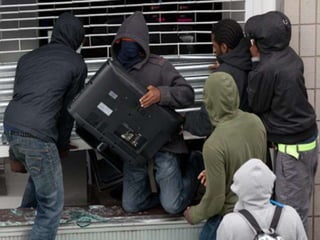
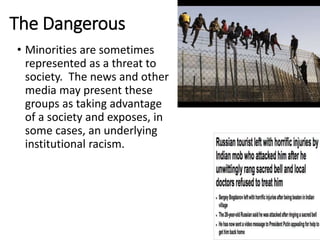
The Dangerous
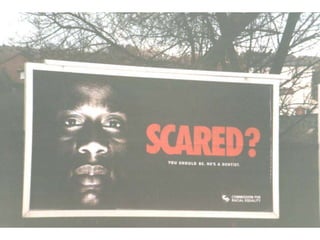
• Minorities are sometimes
represented as a threat to
society. The news and other
media may present these
groups as taking advantage
of a society and exposes, in
some cases, an underlying
institutional racism.
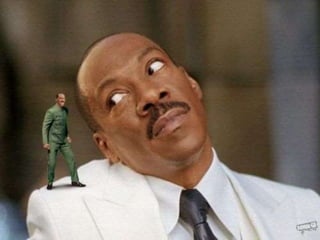
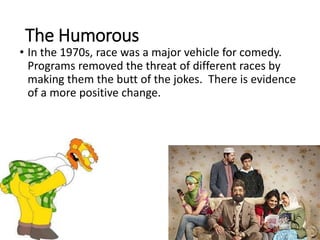
The Humorous
• In the 1970s, race was a major vehicle for comedy.
Programs removed the threat of different races by
making them the butt of the jokes. There is evidence
of a more positive change.
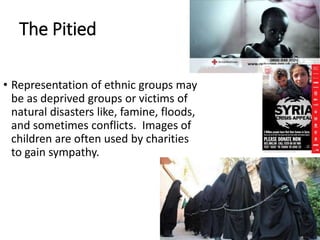
The Pitied
• Representation of ethnic groups may
be as deprived groups or victims of
natural disasters like, famine, floods,
and sometimes conflicts. Images of
children are often used by charities
to gain sympathy.
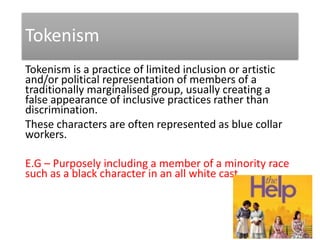
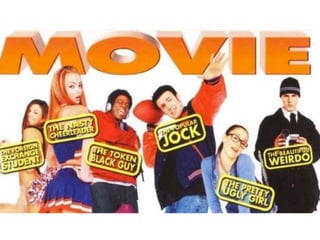
Tokenism
Tokenism is a practice of limited inclusion or artistic
and/or political representation of members of a
traditionally marginalised group, usually creating a
false appearance of inclusive practices rather than
discrimination.
These characters are often represented as blue collar
workers.
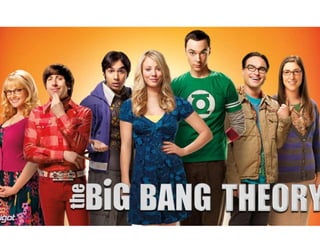
E.G – Purposely including a member of a minority race
such as a black character in an all white cast
List as many famous black
countertypes as you can (2 mins)
List as many ‘stereotypical’
representations as you can
(2mins)

Lesson 9 - Ethnicity

  • 1.
  • 2.
    The Effects Model •TheBobo Doll Experiment • This was conducted in 1961 by Albert Bandura
  • 3.
    Hypodermic needle theory •The media inject messages into their audiences • The audience is seen as passive and unable to resist these media messages • Theory associated with Marxism academics - Marxists are traditionally hostile to the media – seeing it as vehicle to enable ruling class to maintain their dominance over society • The theory first articulated in a different era to our own – a time when the mass media was still relatively new • Effects young minds – Bobo Doll experiment • Continues to apply to today: creates Moral panics • Also creates feelings of ‘I want it’ / ‘I must have it’ / ‘I must look like this’.
  • 4.
    What is adominant group? A group that has more population than the subordinate group. What is a subordinate group? Belonging to a lower or inferior class rank. What is hegemony? The socially accepted and agreed beliefs of those in the ruling class. Recap
  • 5.
     Powerful: physical/intellectual  Oftenthe hero  Serial killer/Villain  In charge (dominant race)  Lead role • Intelligent • Martial artist • Obsessed with electronics • Quirky or weak • Terrorists/violent • Very religious • Physically strong • Strict/stern/not a push over • Serious • Victims (female) • Villains/rarely seen as heroes • Gangster • “Token’’ character • Poor • Criminal • Victim • Hero • Ugly • Uneducated • Silly/not taken seriously • Illegal aliens • Partiers • Involved in drugs • Sex symbols
  • 6.
    - Gangster - “Tokencharacter’’ - Poor/Impoverished - Criminal - Victim - Hero African descent
  • 7.
     Intelligent  Martialartist  Obsessed with electronics  Quirky or weak  Lack emotion  Women can be seen as ditzy in some cases Asian descent
  • 8.
     Ugly  Uneducated Silly/not taken seriously  Illegal immigrants  Partiers  Involved in drugs (dealing/taking)  Sex symbols (Antonio Banderez, Penelope Cruz, Salma Hayek, Selena Gomez). Latino descent
  • 9.
     Terrorists/violent  Veryreligious  Physically strong  Strict/stern/not a push over  Serious  Victims (female)  Villains/rarely seen as heroes Middle Eastern (Arabic) descent
  • 10.
     Powerful: physical/intellectual Often the hero  Serial killer/Villain  In charge (dominant race)  Lead role White British/American
  • 11.
     Stereotyping ofrace is seen as more harmful than stereotyping of gender, as media representation may constitute the only experience of contact with a particular ethnic group that an audience (particularly an audience of children) may have. Representation of Ethnicity
  • 12.
    • Racial stereotypesare often based on social myth, perpetuated down the ages. Thus, the media depiction of, say, Native American Indians, might provide a child with their only experience of Native American Indian culture and characters, and may provide that child with a set of narrow prejudices which will not be challenged elsewhere within their experience. Why is it important?
  • 13.
    However… • Is itjust white western people who adopt potentially distorted ideas of race? • Watch
  • 18.
  • 21.
    Alvarado Theory (1987) FourKey Themes in Racial Representations: •Dangerous •Humorous •Pitied •Exotic
  • 22.
    The Exotic • Ethnicgroups are seen as exotic or being ‘the other’ and are represented as being strange or unusual. It is assumed that the dominant reading of the audience will be from the point of view of white people, referred to as the ‘white eye’ (Hall 1990).
  • 23.
    The Dangerous • Minoritiesare sometimes represented as a threat to society. The news and other media may present these groups as taking advantage of a society and exposes, in some cases, an underlying institutional racism.
  • 24.
    The Humorous • Inthe 1970s, race was a major vehicle for comedy. Programs removed the threat of different races by making them the butt of the jokes. There is evidence of a more positive change.
  • 25.
    The Pitied • Representationof ethnic groups may be as deprived groups or victims of natural disasters like, famine, floods, and sometimes conflicts. Images of children are often used by charities to gain sympathy.
  • 26.
    Tokenism Tokenism is apractice of limited inclusion or artistic and/or political representation of members of a traditionally marginalised group, usually creating a false appearance of inclusive practices rather than discrimination. These characters are often represented as blue collar workers. E.G – Purposely including a member of a minority race such as a black character in an all white cast
  • 30.
    List as manyfamous black countertypes as you can (2 mins) List as many ‘stereotypical’ representations as you can (2mins)