Asessment of Speech disorder
DR/ NAGWAIBRAHIM
ASSISTANT PROFESSOR CAIRO UNIVERSITY
CODE: 603
Dr. Doaa mohammed maostafa
Dr. Naef
Dr. Naglaa mohammed Radwan
Dr.Abd El Rahman
Dr.Takwa
Definition of Speech
Speech is the communication of meanings by means of symbols, which usually take the form
of spoken or written words. PM, Speech to be done, it has many processes in the brain to be
able to form a clear understandable sentence. If some area is affected due to injury or
trauma, this will cause speech disorder.
Mechanisms of Speech :
1. Central Mechanisms:
Depending on the integration of the higher brain centers for symbolization (speech centers),
mainly in the dominant hemisphere.
Lesion leads to Dysphasia or Aphasia.
2. Peripheral Mechanisms:
They are two stages: articulation and phonation
A.Articulation:
Lesion leads to Dysarthria or Anarthria.
B. Phonation:
Lesion leads to Dysphonia or Aphonia.
Phonation in vocal cords: (dysphonia and
aphonia)
Formulation:(aphasia and dysphasia)
Articulation: (dysarthria)
Aphonia
▪︎
Phonation is lost but articulation is preserved
▪︎
The patient talks in whisper
Dysarthria
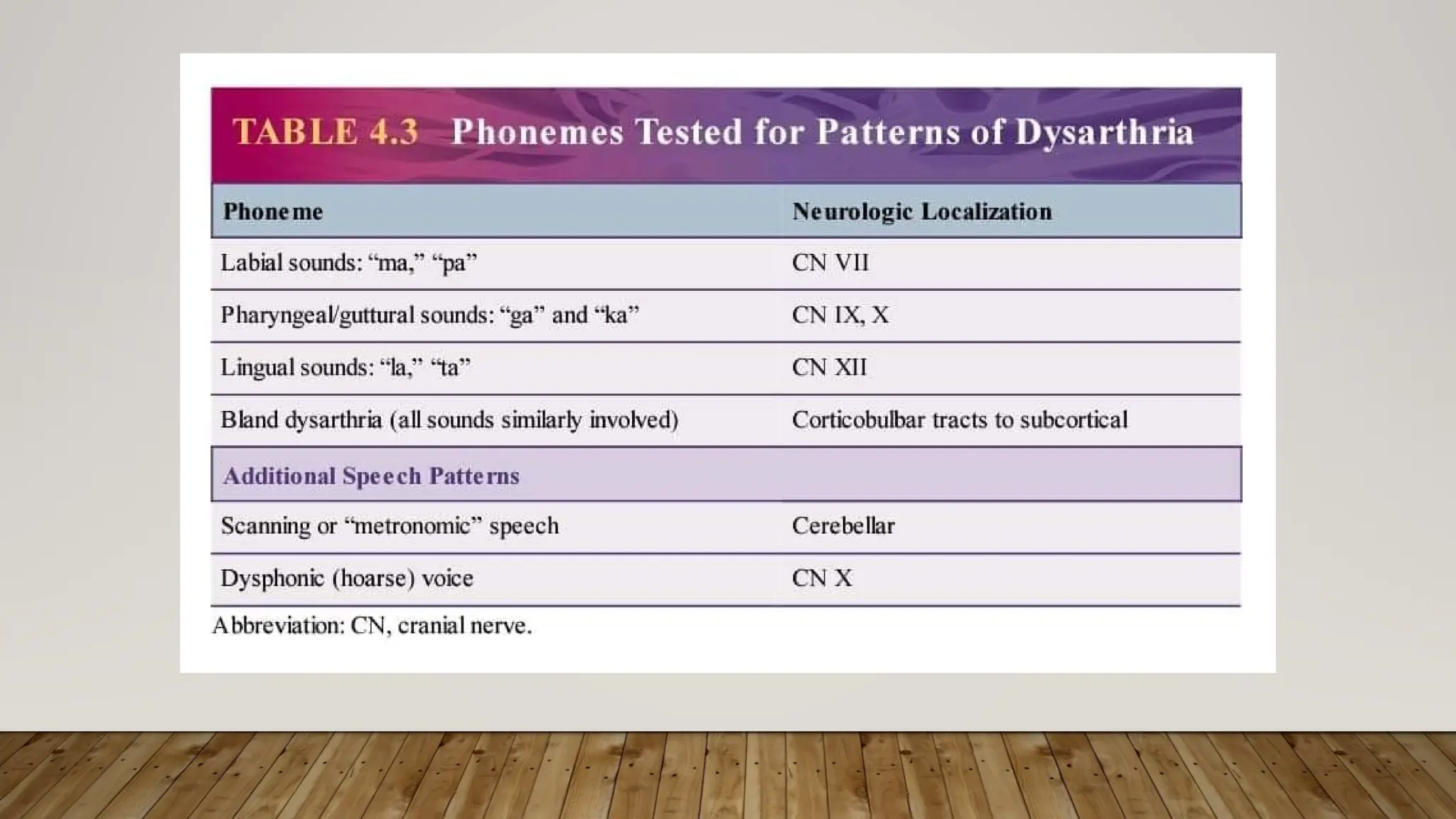
•The problem in articulation
Types and Causes:
1. LMN (flaccid) Dysarthria-Soft, low-pitched, nasal voicing is characteristic.
-Due to weakness of articulatory muscles.
-Caused by myopathies, myasthenia gravis and lower motor neuron disease.
2. UMN (spastic) Dysarthria-Speech is typically strained, slow, and monotonic.
-Caused by bilateral upper motor neuron lesions compromising the corticobulbar tracts.
Aphonia
▪︎
Phonation is lost but articulation is preserved
▪︎
The patient talks in whisper
Types and Causes:
A. Hysterical (can phonate when coughing)
B. Organic
1. Bilateral paralysis of the vocal cords
2. Diseases of larynx
3. Paresis of respiratory movements
4. Spastic dysphonia
5. Glottis spasm
Aphasia
Definition
Difficulty or inability of the formulation of speech in the absence of lesions of
the sense organs or of mental defect.
Aphasia has one essential element (disorders of language)
Plus three conditional elements:
1. acquired
2. Primary
3. excluding thematic context of language)
Non-Aphasic Language Disorders
•Psychosis
•Dementia
•Tiredness
•Educational Deficit
•Dysarthria (Cortical – Basal Ganglia – Cerebellar – Bulbar)
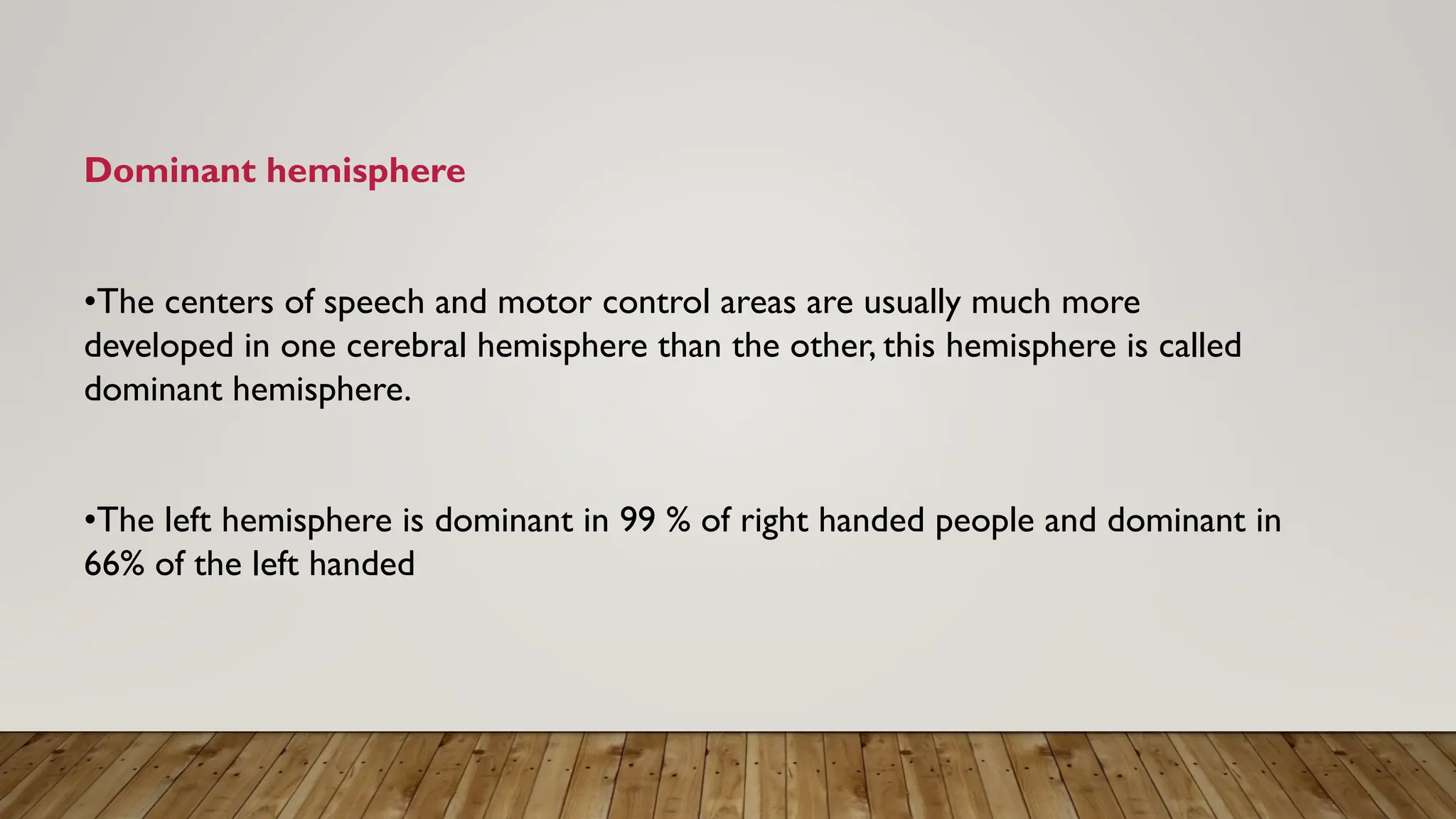
Dominant hemisphere
•The centers of speech and motor control areas are usually much more
developed in one cerebral hemisphere than the other, this hemisphere is called
dominant hemisphere.
•The left hemisphere is dominant in 99 % of right handed people and dominant in
66% of the left handed
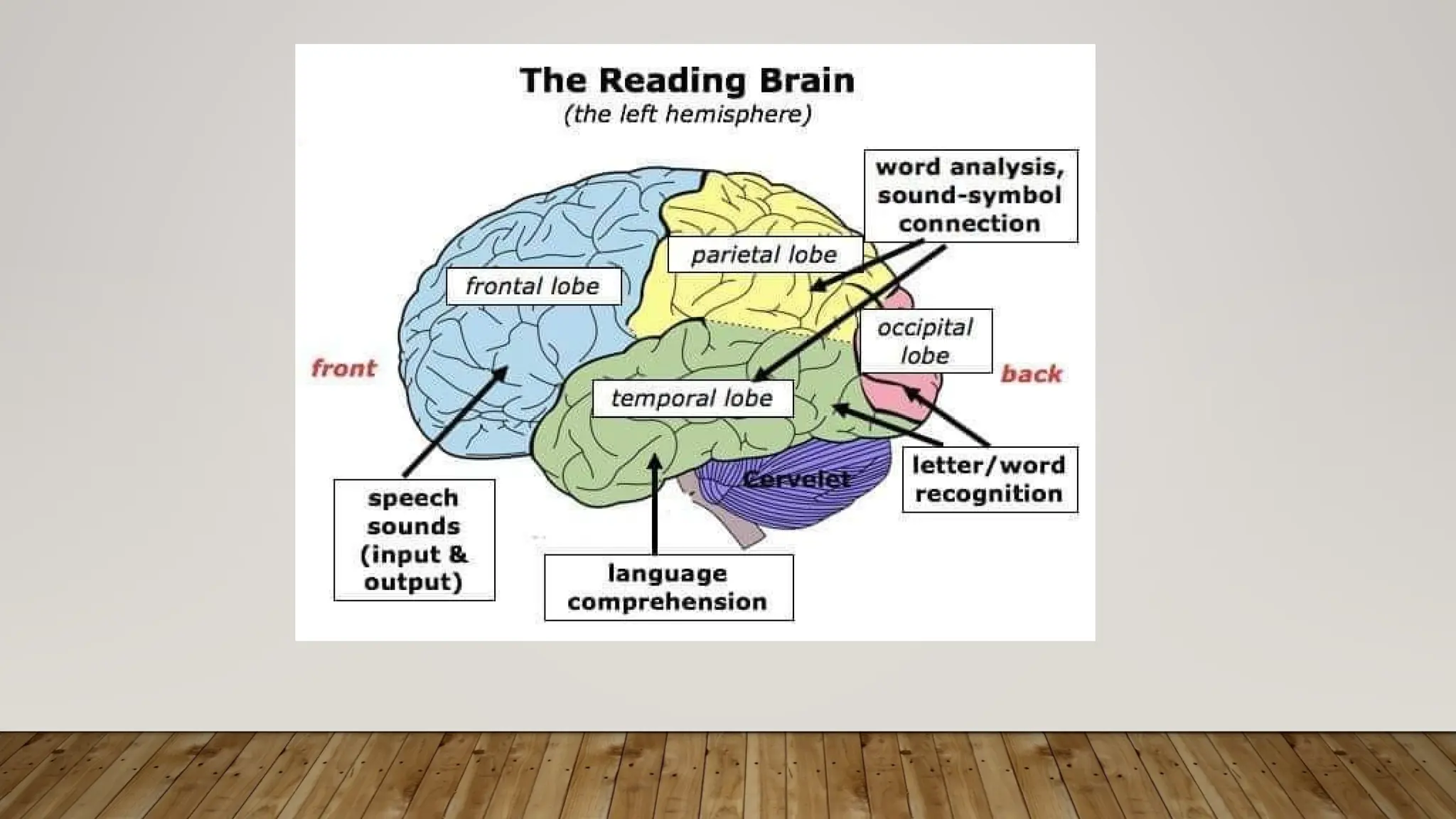
Speech Centers
I. Sensory Centers:
A.Visual Centers:
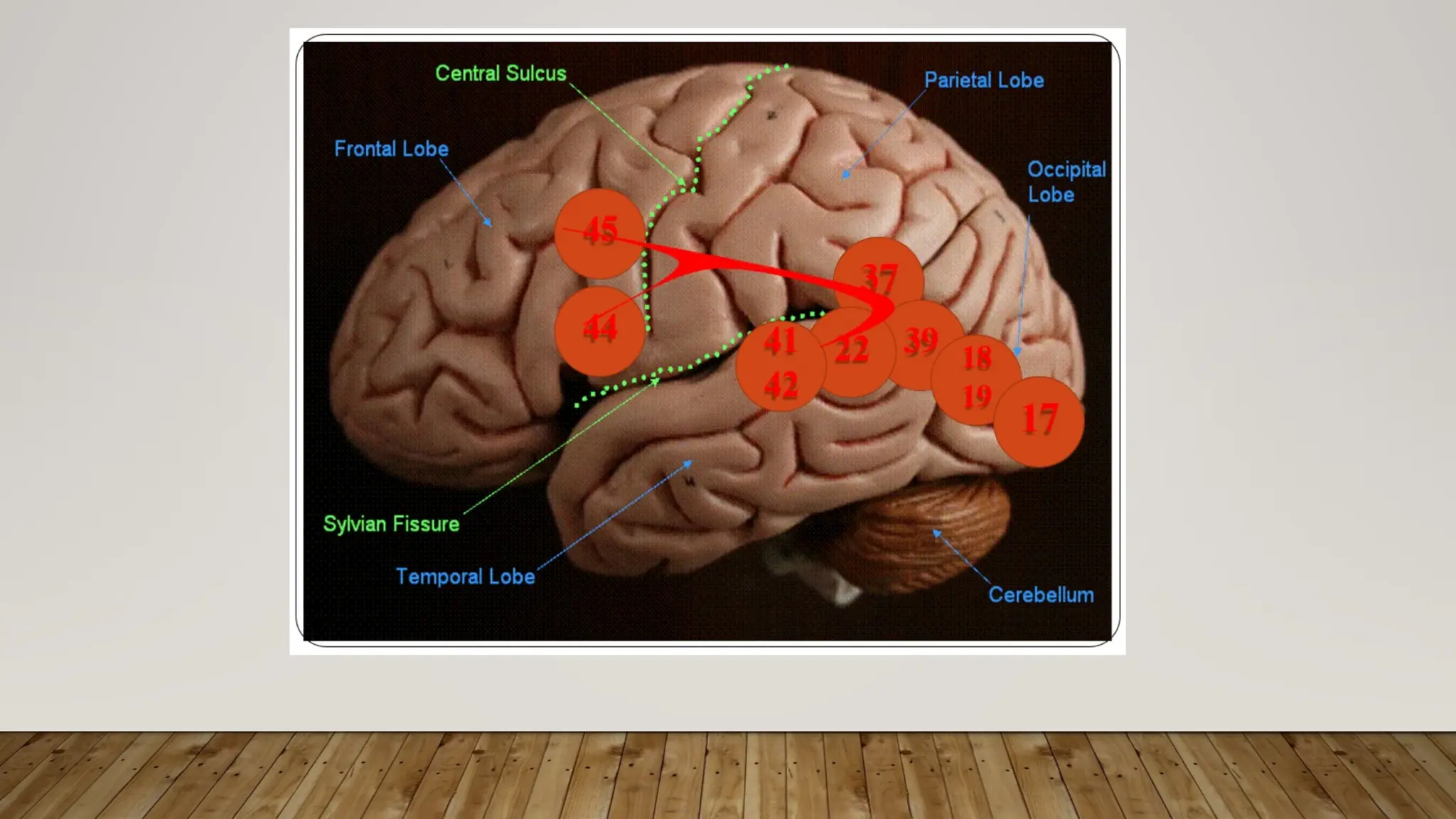
1- Area 17 for visual reception: primary visual area in the occipital
lobe, which receives
impulses from eye.
2-Visual association area :
(area 18 for visual perception or recognition & area 19 for visual recall)
Both in the occipital lobe which understand the meaning of the impulses
coming to it from area 17.
3- Area 39 for recognition and recall of mathematic numbers and figures
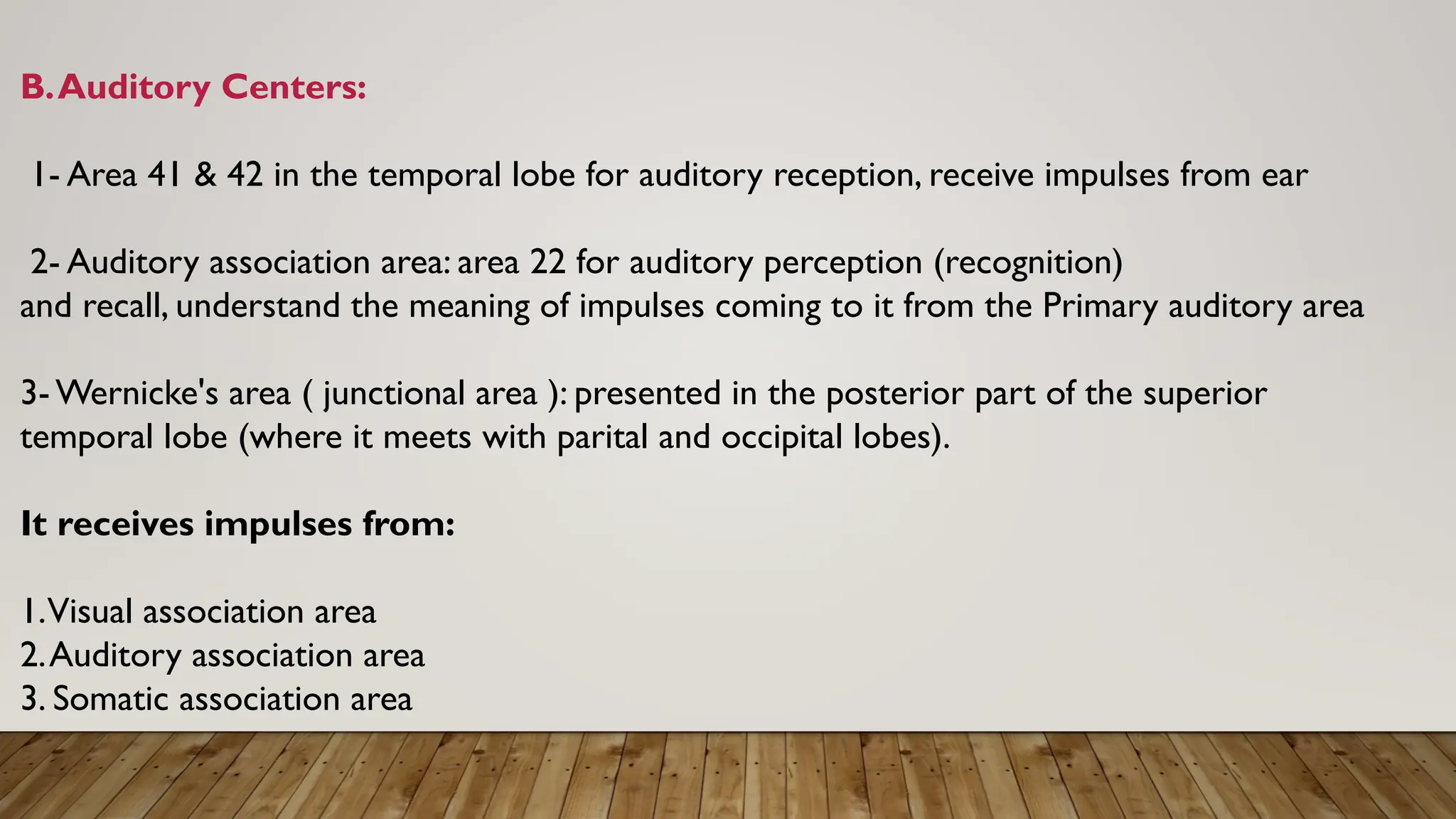
B.Auditory Centers:
1- Area 41 & 42 in the temporal lobe for auditory reception, receive impulses from ear
2- Auditory association area: area 22 for auditory perception (recognition)
and recall, understand the meaning of impulses coming to it from the Primary auditory area
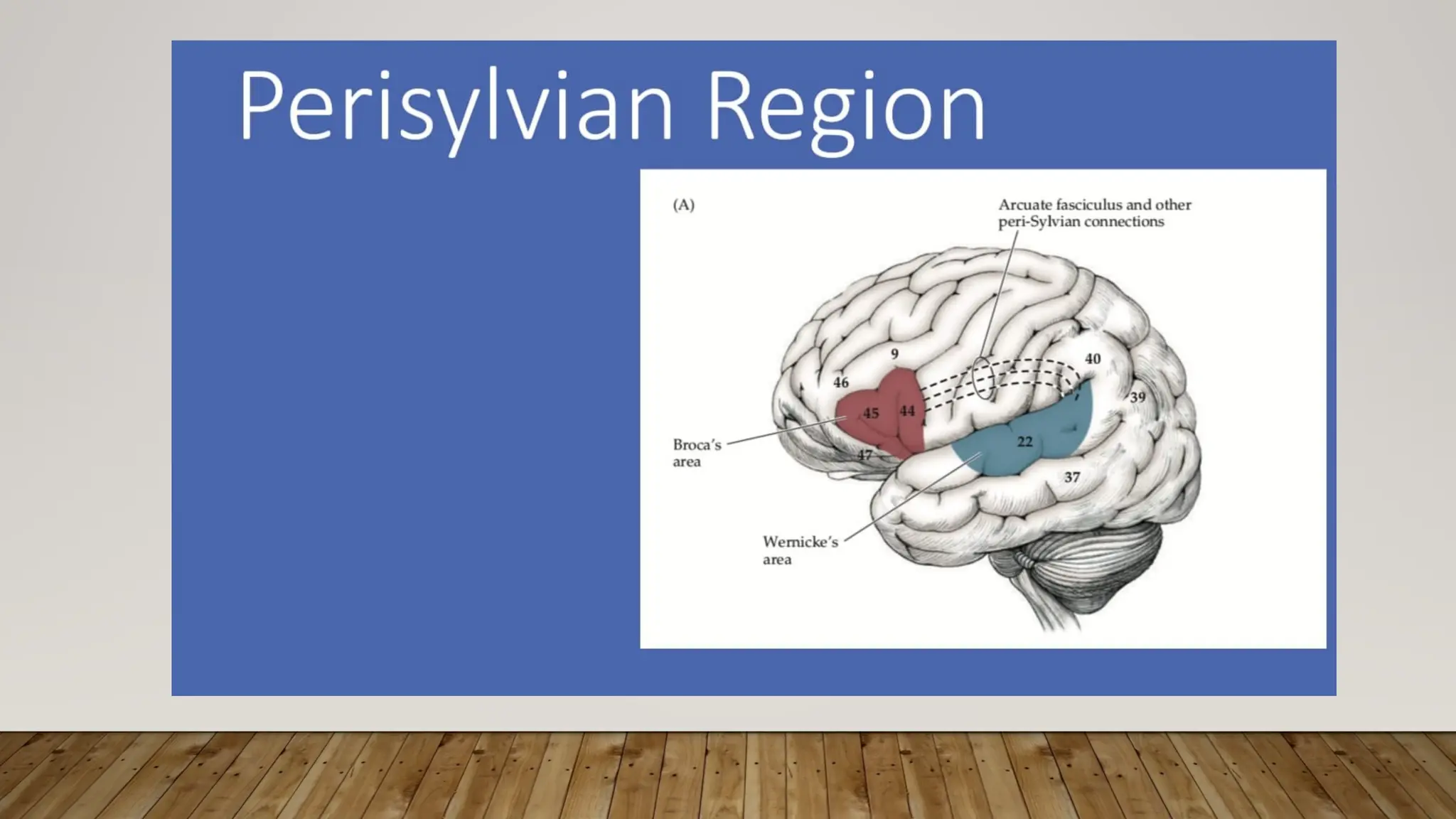
3- Wernicke's area ( junctional area ): presented in the posterior part of the superior
temporal lobe (where it meets with parital and occipital lobes).
It receives impulses from:
1.Visual association area
2.Auditory association area
3. Somatic association area
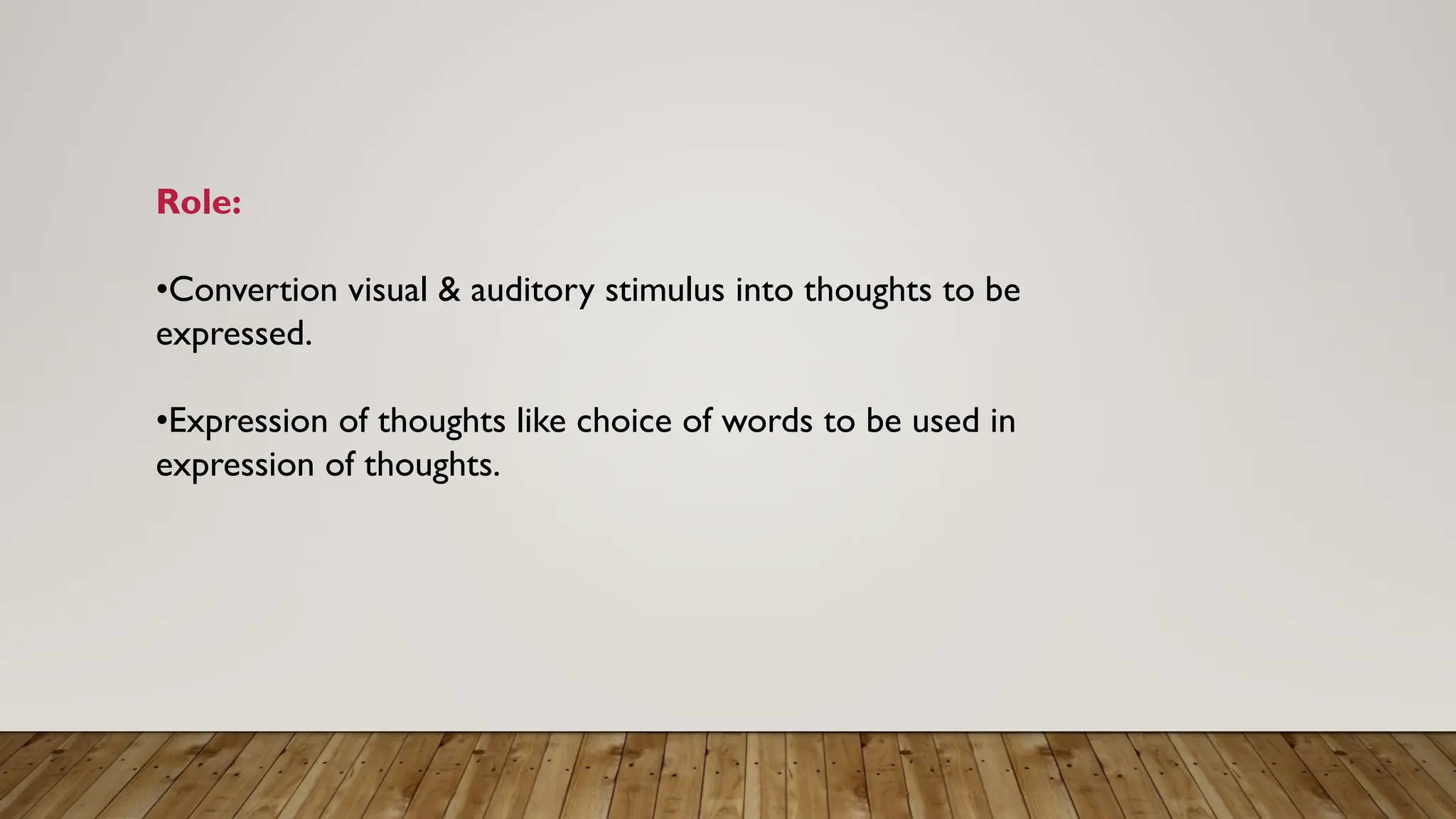
Role:
•Convertion visual & auditory stimulus into thoughts to be
expressed.
•Expression of thoughts like choice of words to be used in
expression of thoughts.
II. Motor Centers:
A. Speech Motor Center (all receives information from Wernicke's area):
Area 44 (Broca's):
▪︎
Presents in the lower part of premotor area (area 6)
▪︎
For word formation
▪︎
Form the program for muscles of articulation (lips, tongue & larynx)
to produce the words chosen by Wernicke’s area.
▪︎
Sends the pattern to face region in primary motor area which initiate the
appropriate movements of muscles of articulation .
B.Writing Motor Center (Exner’s area or hand skills area):
Area 45
▪︎
Present in the upper part of premotor area (area 6)
▪︎
Forms the program for muscles of the hand to write the words chosen by
Wernicke’s area.
▪︎
Sends the pattern to the hand area in primary motor area which initiate the
appropriate movements of muscles of hand .
III.Associative Center:
Area 37 (occipitotemporal area) important for the recognition of faces.
● Area 17 and areas 41&42 are bilaterally but others are in dominant
Summary of anatomical considerations
Systems share in speech process: (Formulation and Articulation)
•Formulation including areas mentioned above for sensory (17, 18, 19, 39 & 41, 42, 22),
(44 & 45) for motor and (37) for associative
•Articulation including
-Motor tracts (pyramidal)
-CN nuclei of articulation (5th, 7th, 10th and 12th)
-Cerebellum for coordination and extrapyramidal for expressive speech
Phonation in vocal cords: (dysphonia and aphonia)
Formulation: (aphasia and dysphasia)
Articulation: (dysarthria)
Asessment of Speech disorder-3.pptx777777777777777777

  • 1.
    Asessment of Speechdisorder DR/ NAGWAIBRAHIM ASSISTANT PROFESSOR CAIRO UNIVERSITY CODE: 603 Dr. Doaa mohammed maostafa Dr. Naef Dr. Naglaa mohammed Radwan Dr.Abd El Rahman Dr.Takwa
  • 2.
    Definition of Speech Speechis the communication of meanings by means of symbols, which usually take the form of spoken or written words. PM, Speech to be done, it has many processes in the brain to be able to form a clear understandable sentence. If some area is affected due to injury or trauma, this will cause speech disorder. Mechanisms of Speech : 1. Central Mechanisms: Depending on the integration of the higher brain centers for symbolization (speech centers), mainly in the dominant hemisphere. Lesion leads to Dysphasia or Aphasia. 2. Peripheral Mechanisms: They are two stages: articulation and phonation
  • 3.
    A.Articulation: Lesion leads toDysarthria or Anarthria. B. Phonation: Lesion leads to Dysphonia or Aphonia. Phonation in vocal cords: (dysphonia and aphonia) Formulation:(aphasia and dysphasia) Articulation: (dysarthria) Aphonia
  • 4.
    ▪︎ Phonation is lostbut articulation is preserved ▪︎ The patient talks in whisper
  • 5.
    Dysarthria •The problem inarticulation Types and Causes: 1. LMN (flaccid) Dysarthria-Soft, low-pitched, nasal voicing is characteristic. -Due to weakness of articulatory muscles. -Caused by myopathies, myasthenia gravis and lower motor neuron disease. 2. UMN (spastic) Dysarthria-Speech is typically strained, slow, and monotonic. -Caused by bilateral upper motor neuron lesions compromising the corticobulbar tracts.
  • 6.
    Aphonia ▪︎ Phonation is lostbut articulation is preserved ▪︎ The patient talks in whisper Types and Causes: A. Hysterical (can phonate when coughing) B. Organic 1. Bilateral paralysis of the vocal cords 2. Diseases of larynx 3. Paresis of respiratory movements 4. Spastic dysphonia 5. Glottis spasm
  • 7.
    Aphasia Definition Difficulty or inabilityof the formulation of speech in the absence of lesions of the sense organs or of mental defect. Aphasia has one essential element (disorders of language) Plus three conditional elements: 1. acquired 2. Primary 3. excluding thematic context of language)
  • 8.
    Non-Aphasic Language Disorders •Psychosis •Dementia •Tiredness •EducationalDeficit •Dysarthria (Cortical – Basal Ganglia – Cerebellar – Bulbar)
  • 10.
    Dominant hemisphere •The centersof speech and motor control areas are usually much more developed in one cerebral hemisphere than the other, this hemisphere is called dominant hemisphere. •The left hemisphere is dominant in 99 % of right handed people and dominant in 66% of the left handed
  • 11.
    Speech Centers I. SensoryCenters: A.Visual Centers: 1- Area 17 for visual reception: primary visual area in the occipital lobe, which receives impulses from eye. 2-Visual association area : (area 18 for visual perception or recognition & area 19 for visual recall) Both in the occipital lobe which understand the meaning of the impulses coming to it from area 17. 3- Area 39 for recognition and recall of mathematic numbers and figures
  • 13.
    B.Auditory Centers: 1- Area41 & 42 in the temporal lobe for auditory reception, receive impulses from ear 2- Auditory association area: area 22 for auditory perception (recognition) and recall, understand the meaning of impulses coming to it from the Primary auditory area 3- Wernicke's area ( junctional area ): presented in the posterior part of the superior temporal lobe (where it meets with parital and occipital lobes). It receives impulses from: 1.Visual association area 2.Auditory association area 3. Somatic association area
  • 14.
    Role: •Convertion visual &auditory stimulus into thoughts to be expressed. •Expression of thoughts like choice of words to be used in expression of thoughts.
  • 16.
    II. Motor Centers: A.Speech Motor Center (all receives information from Wernicke's area): Area 44 (Broca's): ▪︎ Presents in the lower part of premotor area (area 6) ▪︎ For word formation ▪︎ Form the program for muscles of articulation (lips, tongue & larynx) to produce the words chosen by Wernicke’s area. ▪︎ Sends the pattern to face region in primary motor area which initiate the appropriate movements of muscles of articulation .
  • 17.
    B.Writing Motor Center(Exner’s area or hand skills area): Area 45 ▪︎ Present in the upper part of premotor area (area 6) ▪︎ Forms the program for muscles of the hand to write the words chosen by Wernicke’s area. ▪︎ Sends the pattern to the hand area in primary motor area which initiate the appropriate movements of muscles of hand . III.Associative Center: Area 37 (occipitotemporal area) important for the recognition of faces.
  • 19.
    ● Area 17and areas 41&42 are bilaterally but others are in dominant Summary of anatomical considerations Systems share in speech process: (Formulation and Articulation) •Formulation including areas mentioned above for sensory (17, 18, 19, 39 & 41, 42, 22), (44 & 45) for motor and (37) for associative
  • 20.
    •Articulation including -Motor tracts(pyramidal) -CN nuclei of articulation (5th, 7th, 10th and 12th) -Cerebellum for coordination and extrapyramidal for expressive speech
  • 21.
    Phonation in vocalcords: (dysphonia and aphonia) Formulation: (aphasia and dysphasia) Articulation: (dysarthria)