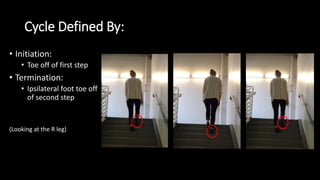
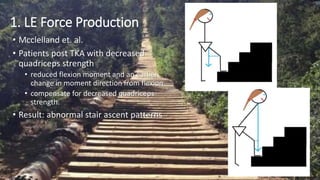
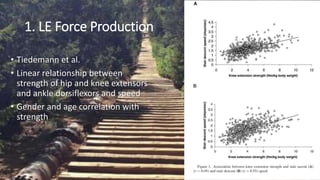
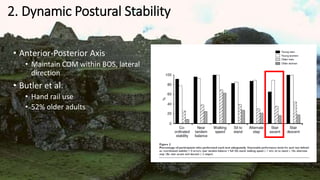
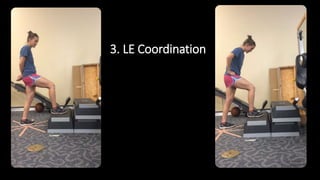
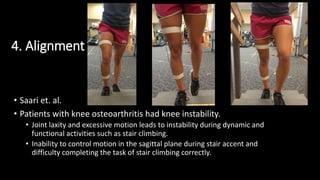
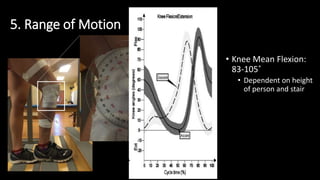
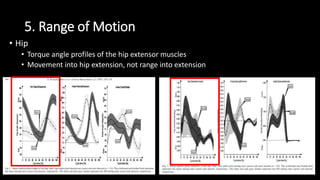
This document summarizes the key determinants of ascending stairs, including leg force production, dynamic postural stability, leg coordination, alignment, and range of motion. It discusses how muscles like the quadriceps, hip extensors, and ankle dorsiflexors produce force to move the center of mass over the base of support. Dynamic postural stability relies on maintaining the center of mass within the base of support during single limb stance. Proper leg coordination involves simultaneous hip and knee movement. Alignment refers to the position of body segments in relation to each other and the stair surface. Range of motion requirements at the hip, knee, and ankle joints are also important.













![CTEV [ clubfoot] DR ARUN LAL ,DR MOHAMED ASHRAF travancore medical college k...](https://cdn.slidesharecdn.com/ss_thumbnails/ctevclubfootdrarunlaldrmohamedashraftravancoremedicalcollegekollamkeralaindia-260208063247-18fc466c-thumbnail.jpg?width=640&height=640&fit=bounds)


