Roaring twenties  Arts – Architecture, sculpture and painting Anais Vidal, Clara Ponte .
THE ROARING TWENTIES 1) Introduction 2) Art deco  3) Expressionism  4) Surrealism
INTRODUCTION   The Roaring 20's was a  colorful decade  in the United States. There were other nicknames for the 1920's like the Jazz Age and the Dollar Decade. This age began with the  ending of World War I  and lasted until the Market Crash of 1929 and the onset of the Great Depression. The changes of the 1920's affected almost  everything , from the change in women, the automobile, and prohibition, and ARTS.
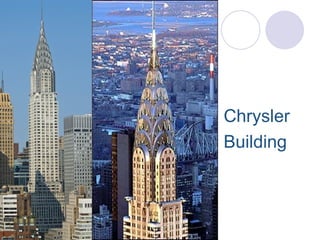
ART DECO  Art  Deco  was the style of design and architecture that marked the era. Originating in  Belgium , it spread to the rest of western Europe and North America towards the mid-1920s. In the U.S., one of the most remarkable buildings featuring this style was constructed as the  tallest  building  of the time: the  Chrysler Building . The forms of art deco were pure and geometric, even though the artists often drew inspiration from nature. In the beginning, lines were curved, though rectilinear designs would later become more and more popular.
Art Deco buildings have many of these features: Cubic forms  Ziggurat shapes: Terraced pyramid with each story smaller than the one below it  Complex groupings of rectangles or trapezoids  Bands of color  Zigzag designs  Strong sense of line  Illusion of pillars
Chrysler Building
Expressionism and Surrealism Painting  in North America during the 1920s developed in a different direction than that of Europe. In Europe, the 1920s were the era of  expressionism , and later  surrealism . As  Man Ray  stated in 1920 after the publication of a unique issue of  New York Dada : " Dada  cannot live in New York".
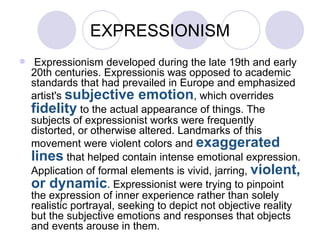
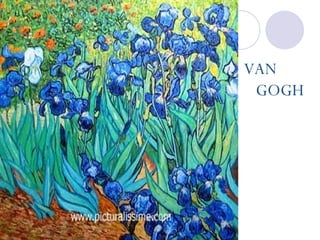
EXPRESSIONISM   Expressionism developed during the late 19th and early 20th centuries. Expressionis was opposed to academic standards that had prevailed in Europe and emphasized artist's  subjective emotion , which overrides  fidelity  to the actual appearance of things. The subjects of expressionist works were frequently distorted, or otherwise altered. Landmarks of this movement were violent colors and  exaggerated lines  that helped contain intense emotional expression. Application of formal elements is vivid, jarring,  violent, or dynamic . Expressionist were trying to pinpoint the expression of inner experience rather than solely realistic portrayal, seeking to depict not objective reality but the subjective emotions and responses that objects and events arouse in them.
VAN GOGH
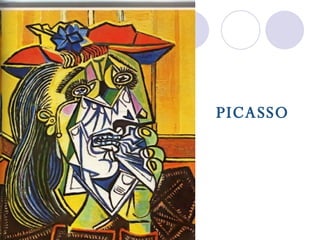
Surrealist painting Three painters too great to be contained by Surrealism -  Picasso ,  Klee  and Miro - produced Surrealist work, while remaining somewhat aloof from the group. Miro and Picasso created improvisatory images and techniques that were ambiguous and suggestive rather than figurative. The Three Dancers, painted by Picasso in 1925, is a brilliant example of this kind of painting. Klee's 'poetry of the heart', was a deceptively simple attempt to transcend the gulf between people and nature, and is at once abstract and representational.
PICASSO
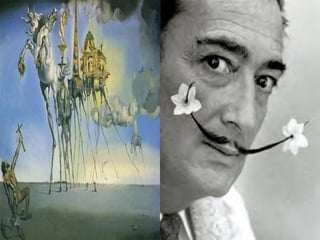
SALVADOR DALI The most famous painter of Surrealist Art was  Salvador Dali . Born in Figueras, Catalonia, Spain, Dali was strongly influenced by Sigmund Freud’s theories and moved to Paris in the late 1920s, joining the Surrealists. The imaginative dream world of Dali’s art contains everyday objects  realistically  depicted, but deformed or weirdly juxtaposed with other objects, creating a hallucinatory view. Surrealist Art showcases eccentricity and idiosyncracy, declaring it is  not indicative of madness . Dali, considered quite idiosyncratic, said there was only one difference between himself and a madman—he was not mad. A capitalist and supporter of Spain’s Francisco Franco’s fascist dictatorship, Dali was considered a  traitor to the philosophy  of Surrealism and was excommunicated from the group by Breton in the late 1930s.
 
SOURCES http://en.wikipedia.org/wiki/Roaring_Twenties http://www.vintageperiods.com/surrealist.php http:// www.artchive.com / artchive / surrealism.html   http://www.1920-30.com/art/ renee-prahar.html

Arts in the roaring twenties

  • 1.
    Roaring twenties Arts – Architecture, sculpture and painting Anais Vidal, Clara Ponte .
  • 2.
    THE ROARING TWENTIES1) Introduction 2) Art deco 3) Expressionism 4) Surrealism
  • 3.
    INTRODUCTION The Roaring 20's was a colorful decade in the United States. There were other nicknames for the 1920's like the Jazz Age and the Dollar Decade. This age began with the ending of World War I and lasted until the Market Crash of 1929 and the onset of the Great Depression. The changes of the 1920's affected almost everything , from the change in women, the automobile, and prohibition, and ARTS.
  • 4.
    ART DECO Art Deco was the style of design and architecture that marked the era. Originating in Belgium , it spread to the rest of western Europe and North America towards the mid-1920s. In the U.S., one of the most remarkable buildings featuring this style was constructed as the tallest building of the time: the Chrysler Building . The forms of art deco were pure and geometric, even though the artists often drew inspiration from nature. In the beginning, lines were curved, though rectilinear designs would later become more and more popular.
  • 5.
    Art Deco buildingshave many of these features: Cubic forms Ziggurat shapes: Terraced pyramid with each story smaller than the one below it Complex groupings of rectangles or trapezoids Bands of color Zigzag designs Strong sense of line Illusion of pillars
  • 6.
  • 7.
    Expressionism and SurrealismPainting in North America during the 1920s developed in a different direction than that of Europe. In Europe, the 1920s were the era of expressionism , and later surrealism . As Man Ray stated in 1920 after the publication of a unique issue of New York Dada : " Dada cannot live in New York".
  • 8.
    EXPRESSIONISM   Expressionismdeveloped during the late 19th and early 20th centuries. Expressionis was opposed to academic standards that had prevailed in Europe and emphasized artist's subjective emotion , which overrides fidelity to the actual appearance of things. The subjects of expressionist works were frequently distorted, or otherwise altered. Landmarks of this movement were violent colors and exaggerated lines that helped contain intense emotional expression. Application of formal elements is vivid, jarring, violent, or dynamic . Expressionist were trying to pinpoint the expression of inner experience rather than solely realistic portrayal, seeking to depict not objective reality but the subjective emotions and responses that objects and events arouse in them.
  • 9.
  • 10.
    Surrealist painting Threepainters too great to be contained by Surrealism - Picasso , Klee and Miro - produced Surrealist work, while remaining somewhat aloof from the group. Miro and Picasso created improvisatory images and techniques that were ambiguous and suggestive rather than figurative. The Three Dancers, painted by Picasso in 1925, is a brilliant example of this kind of painting. Klee's 'poetry of the heart', was a deceptively simple attempt to transcend the gulf between people and nature, and is at once abstract and representational.
  • 11.
  • 12.
    SALVADOR DALI Themost famous painter of Surrealist Art was Salvador Dali . Born in Figueras, Catalonia, Spain, Dali was strongly influenced by Sigmund Freud’s theories and moved to Paris in the late 1920s, joining the Surrealists. The imaginative dream world of Dali’s art contains everyday objects realistically depicted, but deformed or weirdly juxtaposed with other objects, creating a hallucinatory view. Surrealist Art showcases eccentricity and idiosyncracy, declaring it is not indicative of madness . Dali, considered quite idiosyncratic, said there was only one difference between himself and a madman—he was not mad. A capitalist and supporter of Spain’s Francisco Franco’s fascist dictatorship, Dali was considered a traitor to the philosophy of Surrealism and was excommunicated from the group by Breton in the late 1930s.
  • 13.
  • 14.
    SOURCES http://en.wikipedia.org/wiki/Roaring_Twenties http://www.vintageperiods.com/surrealist.phphttp:// www.artchive.com / artchive / surrealism.html   http://www.1920-30.com/art/ renee-prahar.html