Art of Project Management
Make Things Done On Time


                                Calvin Chan
                         Email: calvinbiz0514@gmail.com
Agenda

 Why Project Management?

 Manage the culture

 Manage the tasks

 Manage the cost


2
Why project management?


                  What’s the key objective?

                  Is it helpful?


3
The key objective


              Make things done on time,
              earn and pass the credit!


4
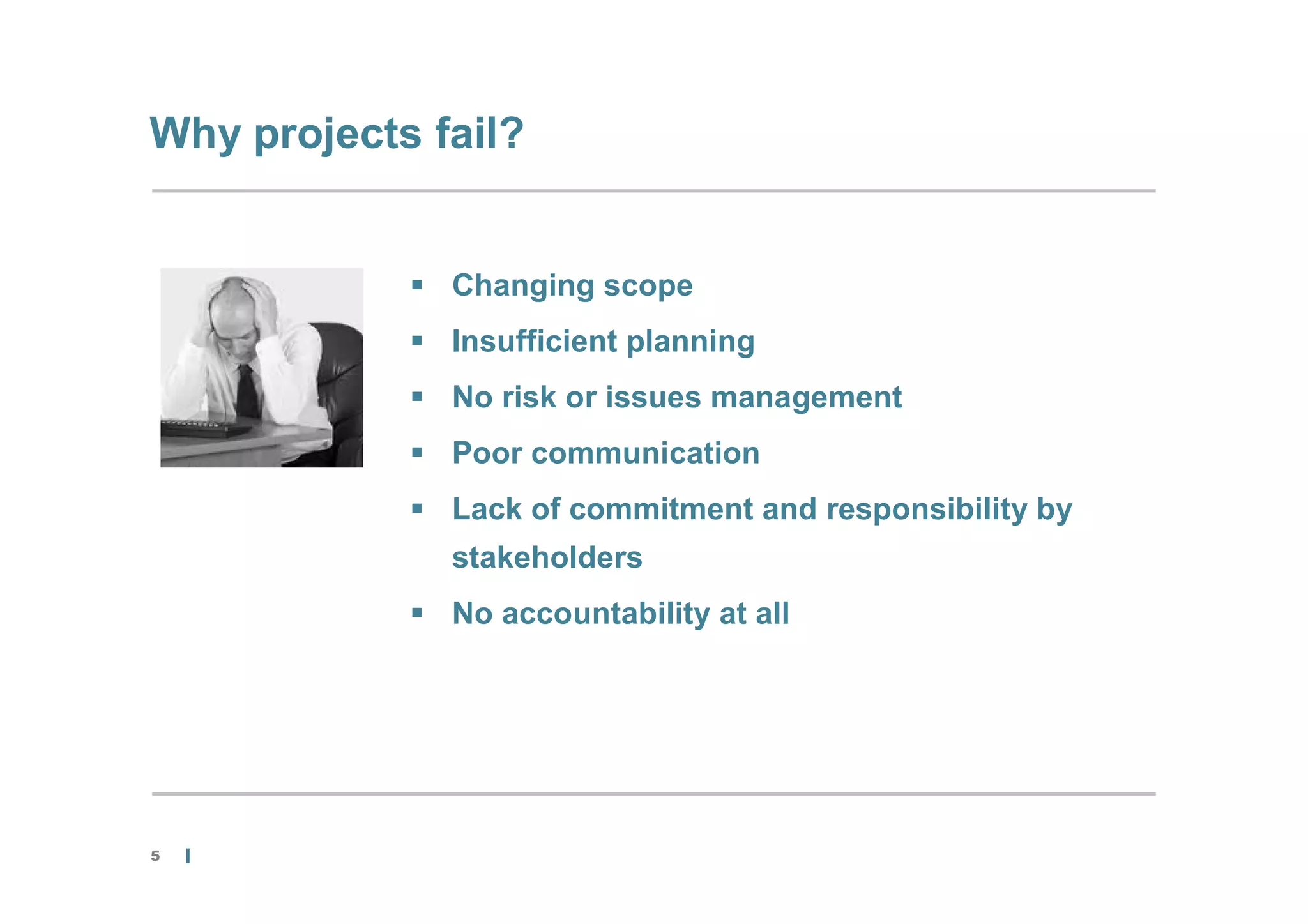
Why projects fail?


             Changing scope
             Insufficient planning
             No risk or issues management
             Poor communication
             Lack of commitment and responsibility by
              stakeholders
             No accountability at all


5
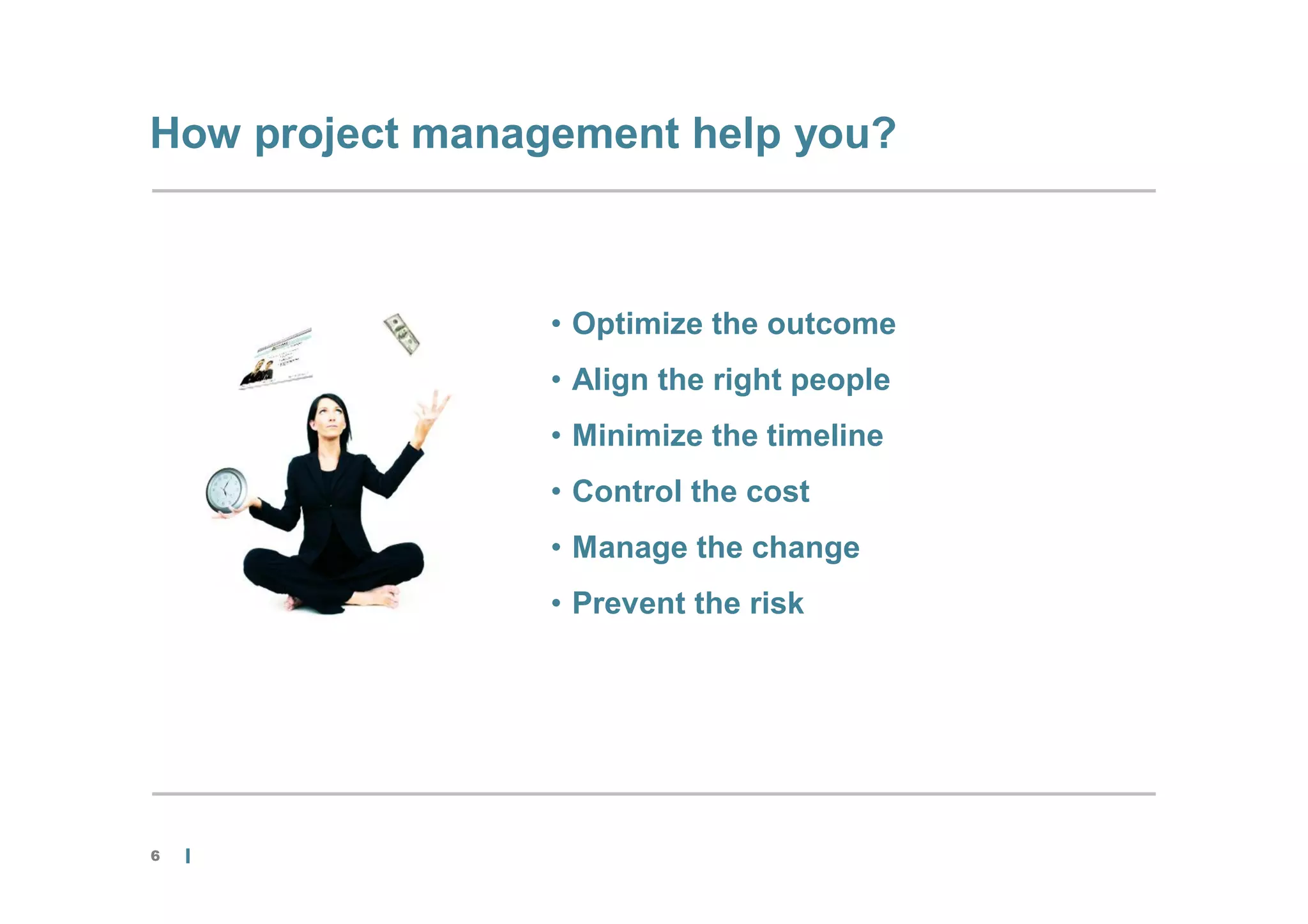
How project management help you?


                 • Optimize the outcome
                 • Align the right people
                 • Minimize the timeline
                 • Control the cost
                 • Manage the change
                 • Prevent the risk


6
Agenda

 Why Project Management?

 Manage the culture

 Manage the tasks

 Manage the cost


7
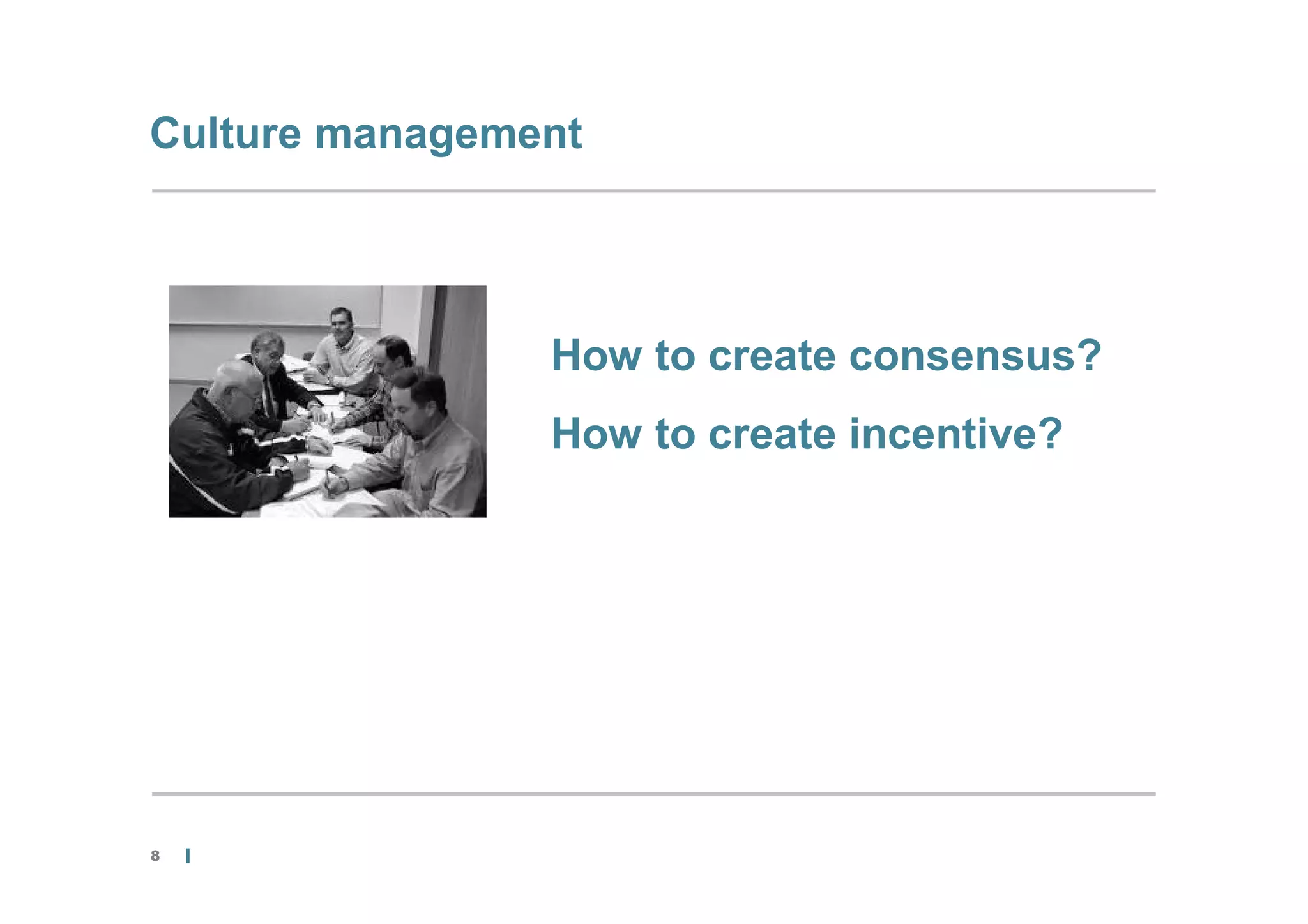
Culture management


                How to create consensus?
                How to create incentive?


8
How to create consensus?

                1. Make clear communication
                   -   Define the key objective
                   -   Define the expectations of outcome
                2. Create task force team
                   -   Pick right people from other teams
                   -   Define role, responsibility and
                       decision point for each stakeholder
                   -   Make each other recognize and
                       respect each professionalism


9
How to create incentive?


                1. Make everyone love the project
                   -   Make everyone participate
                   -   Keep them informed
                   -   Create win-win situation
                2. Assign credits to each team (Accountability)
                   -   Recognize their efforts
                   -   Make boss know their credits
                   -   Create awards


10
Agenda

 Why Project Management?

 Manage the culture

 Manage the tasks

 Manage the cost


11
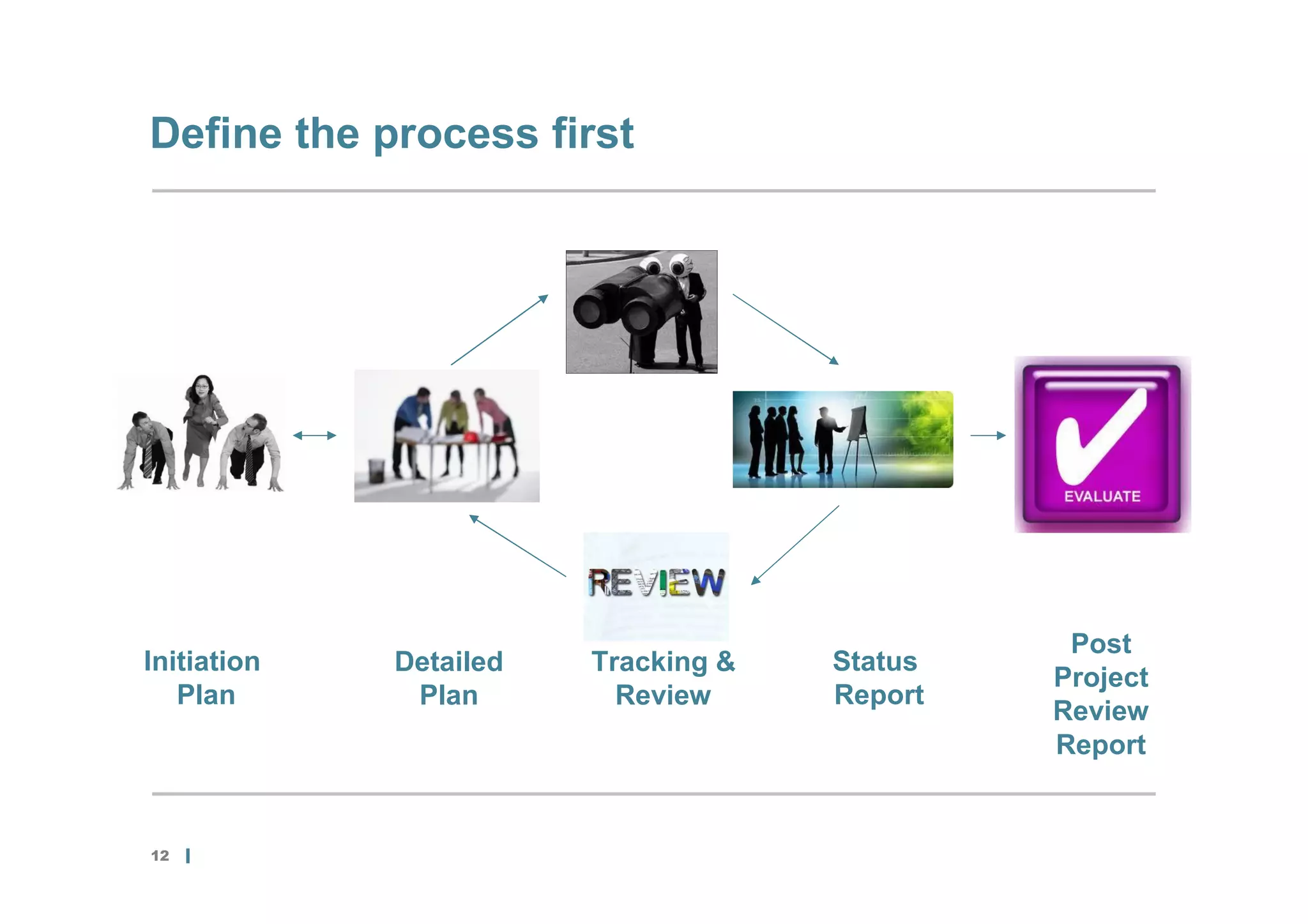
Define the process first


                                               Post
Initiation   Detailed   Tracking &   Status
                                              Project
   Plan       Plan        Review     Report
                                              Review
                                              Report


12
Scheduling, Tracking and Control


                 How about learning curve of the teams?
                 Weekly team meetings
                 Detail planning in 1-2 month
                 Define and manage “critical path”
                   – First critical
                   – Prioritize
                   – Who, what, when


13
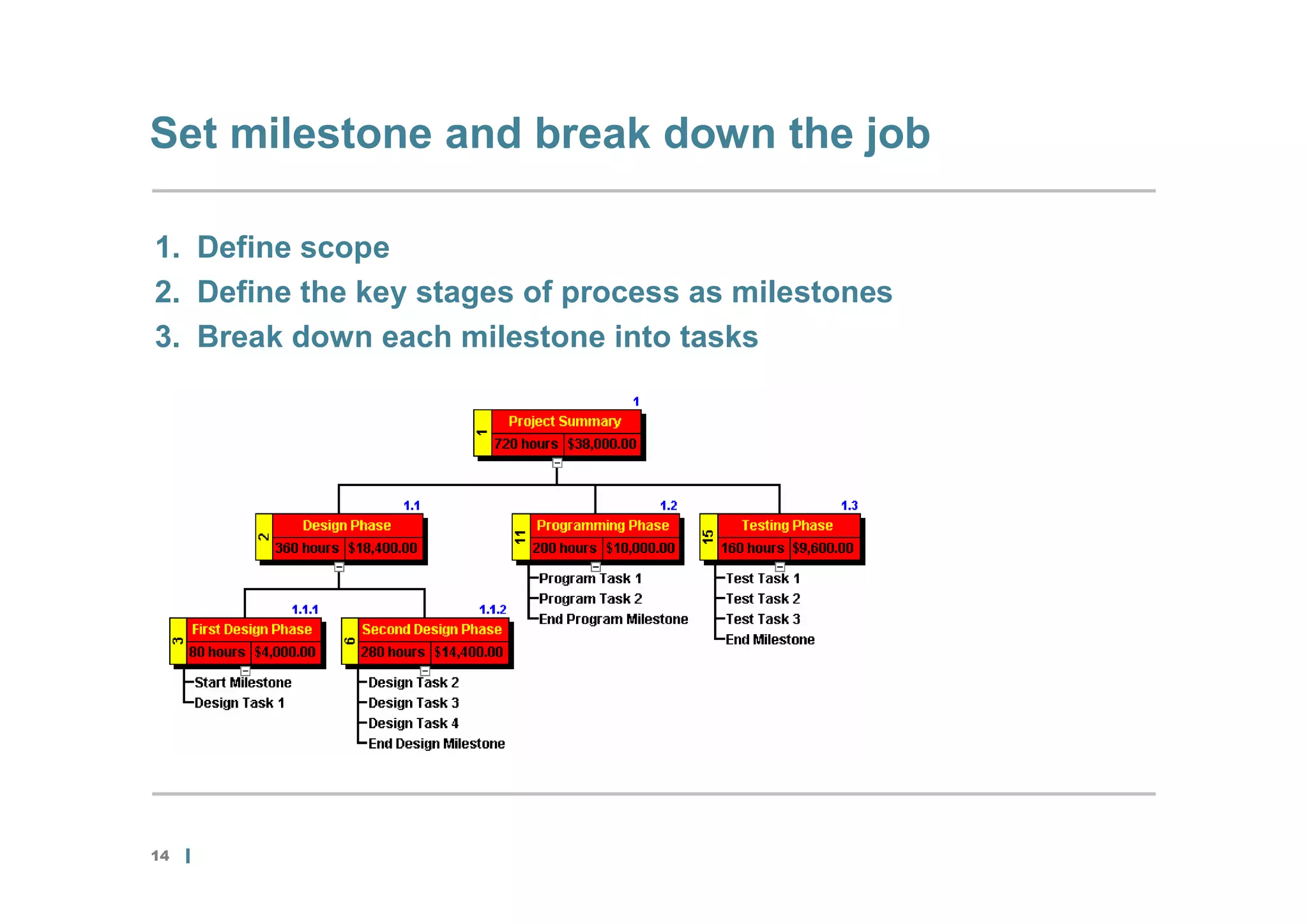
Set milestone and break down the job

1. Define scope
2. Define the key stages of process as milestones
3. Break down each milestone into tasks


14
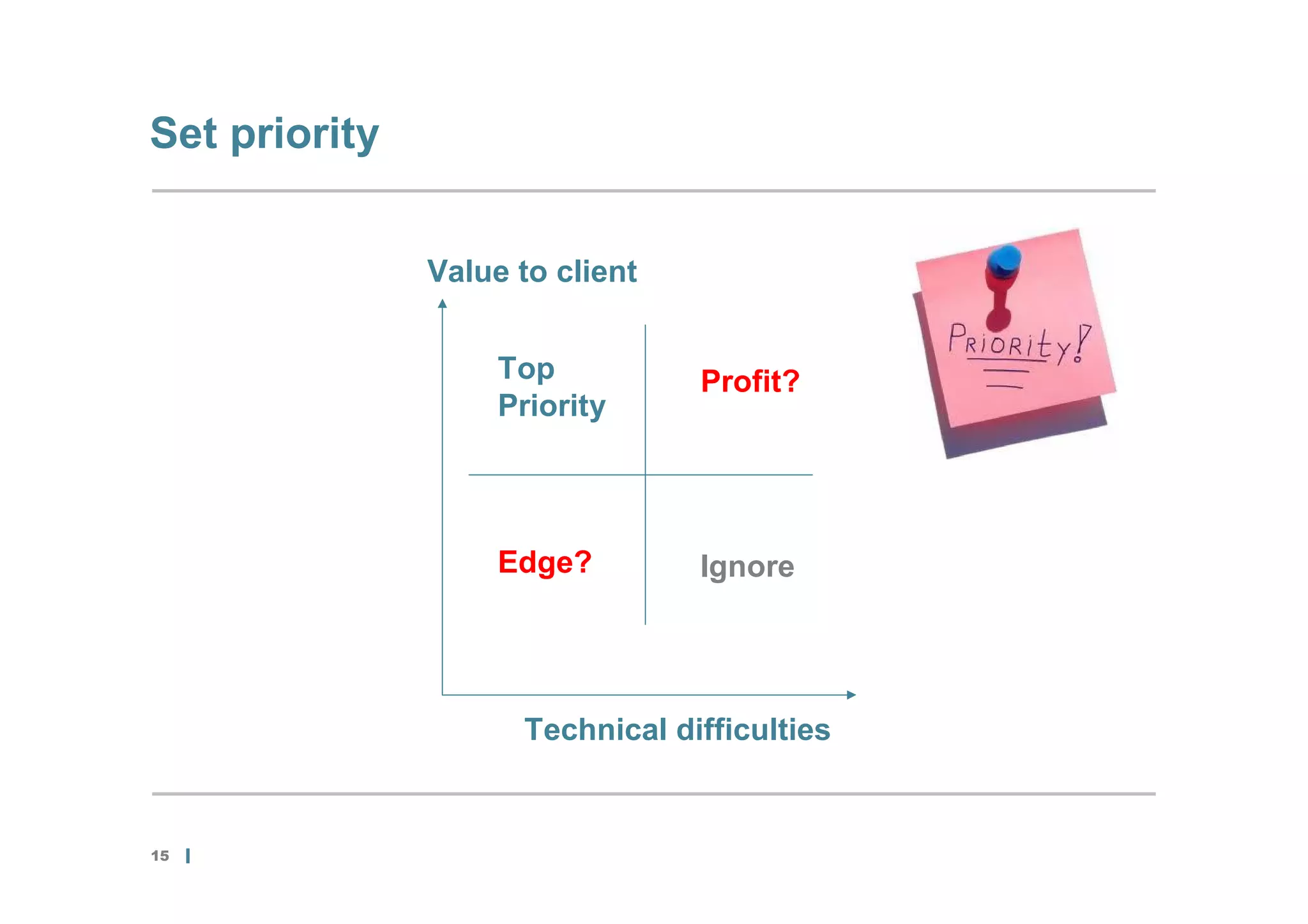
Set priority


               Value to client


                    Top          Profit?
                    Priority


                    Edge?        Ignore


                     Technical difficulties


15
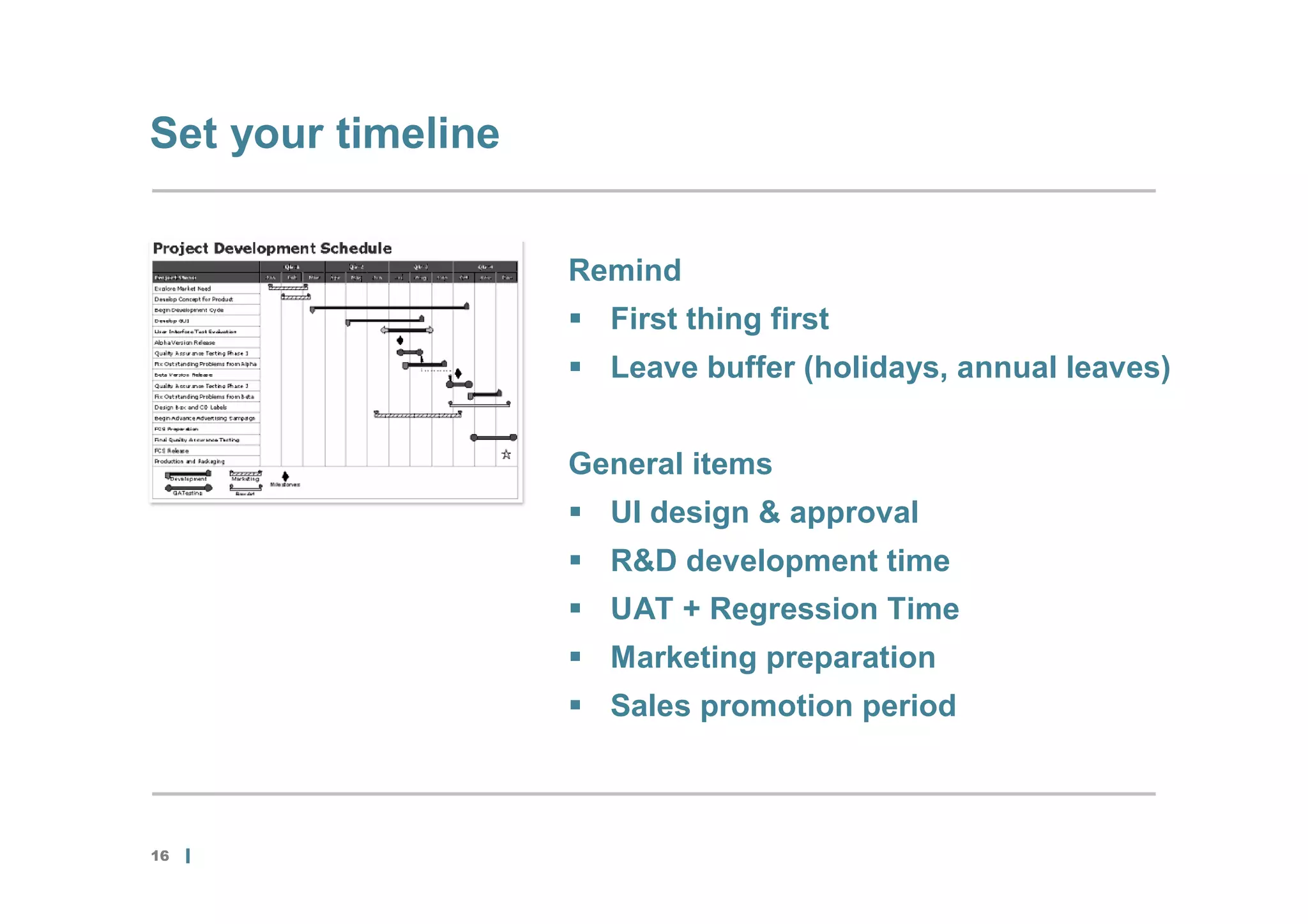
Set your timeline


                    Remind
                     First thing first
                     Leave buffer (holidays, annual leaves)


                    General items
                     UI design & approval
                     R&D development time
                     UAT + Regression Time
                     Marketing preparation
                     Sales promotion period


16
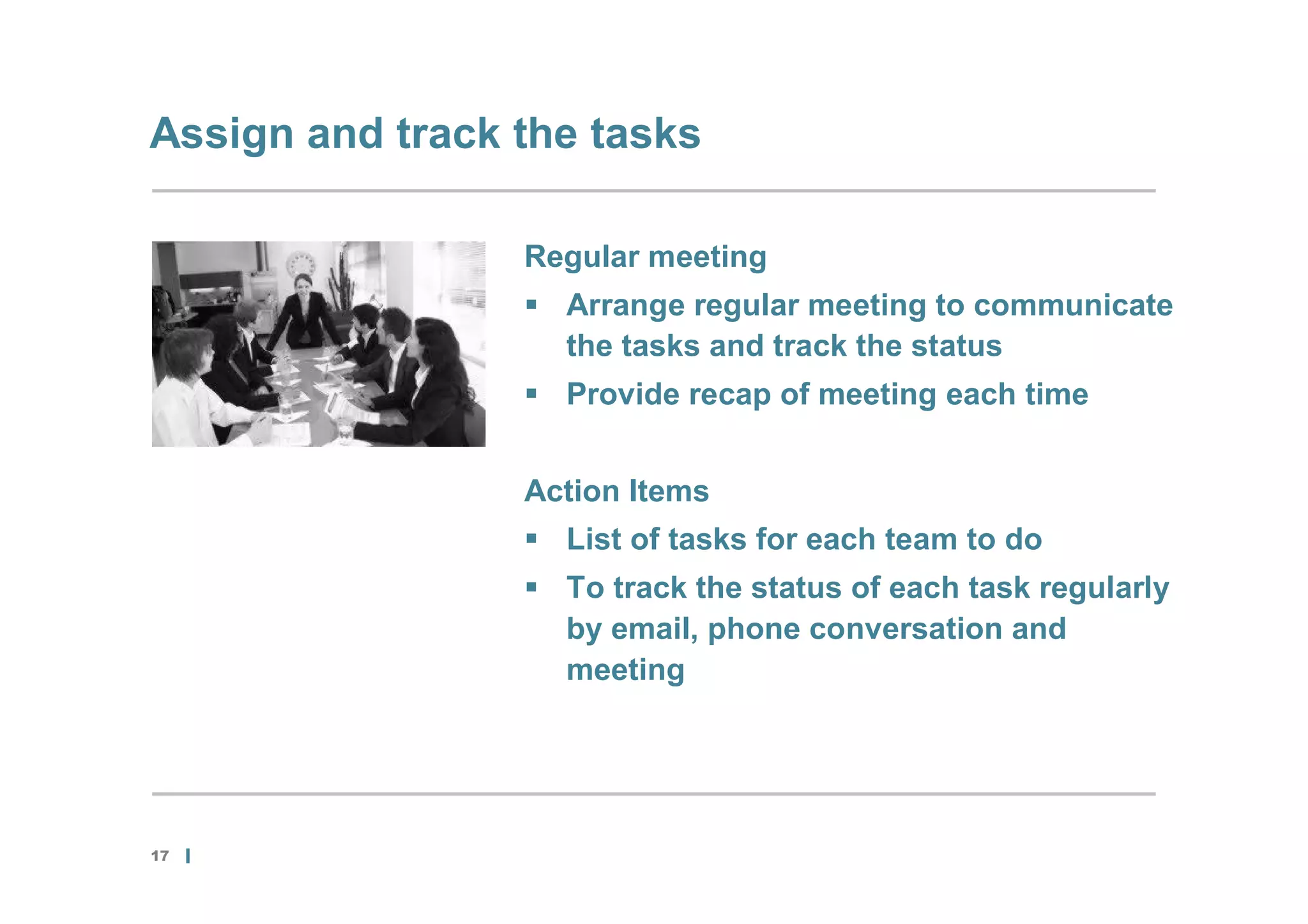
Assign and track the tasks

                 Regular meeting
                  Arrange regular meeting to communicate
                   the tasks and track the status
                  Provide recap of meeting each time


                 Action Items
                  List of tasks for each team to do
                  To track the status of each task regularly
                   by email, phone conversation and
                   meeting


17
Status Reporting

               3 key items to report to stakeholders
                 – Things done
                 – Things to proceed
                 – Outstanding things to discuss and solve
               Report details
                 – Team
                 – Task items
                 – Who responsible
                 – Result
                 – Complete date


18
Issues management

             Raised-Up issues log
              Raised from Who, Which team, Raised-up
               date
              Category of issues, issue items and
               description
              Status of the issues: Open, Work-In-
               Progress, Done or Closed
              Close date of the issues and how it is done


19
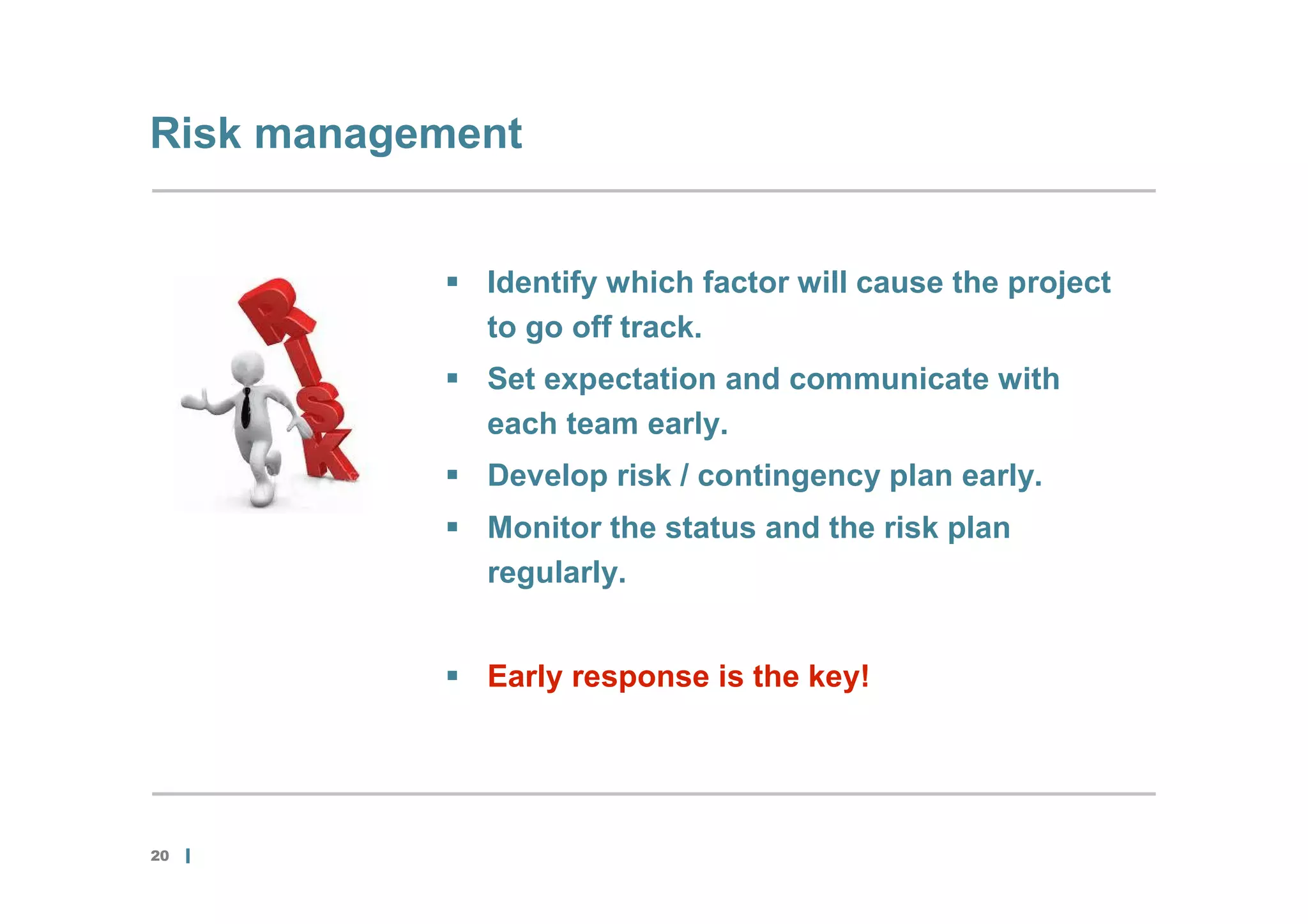
Risk management


            Identify which factor will cause the project
             to go off track.
            Set expectation and communicate with
             each team early.
            Develop risk / contingency plan early.
            Monitor the status and the risk plan
             regularly.


            Early response is the key!


20
Manage Expectations


               Communication Plan
               Make major policy decisions up front
               Don’t make promises to users up front
               Monthly status report and review
               Monthly / bi-monthly presentations


21
Agenda

 Why Project Management?

 Manage the culture

 Manage the tasks

 Manage the cost


22
Types of cost

          • Development cost
             • Research cost
             • R&D development cost / Vendor cost
             • Additional system / software cost
          • Regular overhead cost
             • Monthly overhead cost in technical / operations
             • Monthly G&A (general and administrative overhead
               cost)
             • Monthly support fee in system or licensing
          • Sales / Partner Commission


23
Cost Benefit Analysis

              Monthly Total revenue

                  = Total accumulate client x price

              Monthly Total cost

                  = Initial development cost + monthly running
                  cost + G&A + Commission

              Profit

                  = Cum revenue – Cum cost

              When profit > 0 => Break even


24
Golden thumb of rules

          • Make yourself love your projects no matter it is
            your final idea or not.
          • Believe your project work till the end.
          • Don’t bad month what you are in charge.
          • Keep each party communicated regularly.
          • Well understand every task you assigned to each
            team.
          • Don’t provide any tasks you don’t know how to
            handle.
          • Your “how to” need not be the best but at least
            make profit.

25
Golden thumb of rules

          • Keep record to any issues raised up and be
            responsive to the top priority one.
          • Keep responsive to sensitive problems early.
          • Don’t push if other teams resource have
            already been in baseline. Step back and think
            work around.
          • Keep detail thinking on every possible area.
          • Keep everyone know your timeline.


26
Calvin Chan
     Email: calvinbiz0514@gmail.com

     Masters in
     Information System Management
     Quantitative Analysis for Business


     Media, Information & Technology Industry
     with expertise in
     Product Management
     Project Management
     Online Products Development
     User Research
     Business Quantitative Analysis


27

Art of Project Management - Make Things Done On Time

  • 1.
    Art of ProjectManagement Make Things Done On Time Calvin Chan Email: calvinbiz0514@gmail.com
  • 2.
    Agenda  Why ProjectManagement?  Manage the culture  Manage the tasks  Manage the cost 2
  • 3.
    Why project management? What’s the key objective? Is it helpful? 3
  • 4.
    The key objective Make things done on time, earn and pass the credit! 4
  • 5.
    Why projects fail?  Changing scope  Insufficient planning  No risk or issues management  Poor communication  Lack of commitment and responsibility by stakeholders  No accountability at all 5
  • 6.
    How project managementhelp you? • Optimize the outcome • Align the right people • Minimize the timeline • Control the cost • Manage the change • Prevent the risk 6
  • 7.
    Agenda  Why ProjectManagement?  Manage the culture  Manage the tasks  Manage the cost 7
  • 8.
    Culture management How to create consensus? How to create incentive? 8
  • 9.
    How to createconsensus? 1. Make clear communication - Define the key objective - Define the expectations of outcome 2. Create task force team - Pick right people from other teams - Define role, responsibility and decision point for each stakeholder - Make each other recognize and respect each professionalism 9
  • 10.
    How to createincentive? 1. Make everyone love the project - Make everyone participate - Keep them informed - Create win-win situation 2. Assign credits to each team (Accountability) - Recognize their efforts - Make boss know their credits - Create awards 10
  • 11.
    Agenda  Why ProjectManagement?  Manage the culture  Manage the tasks  Manage the cost 11
  • 12.
    Define the processfirst Post Initiation Detailed Tracking & Status Project Plan Plan Review Report Review Report 12
  • 13.
    Scheduling, Tracking andControl  How about learning curve of the teams?  Weekly team meetings  Detail planning in 1-2 month  Define and manage “critical path” – First critical – Prioritize – Who, what, when 13
  • 14.
    Set milestone andbreak down the job 1. Define scope 2. Define the key stages of process as milestones 3. Break down each milestone into tasks 14
  • 15.
    Set priority Value to client Top Profit? Priority Edge? Ignore Technical difficulties 15
  • 16.
    Set your timeline Remind  First thing first  Leave buffer (holidays, annual leaves) General items  UI design & approval  R&D development time  UAT + Regression Time  Marketing preparation  Sales promotion period 16
  • 17.
    Assign and trackthe tasks Regular meeting  Arrange regular meeting to communicate the tasks and track the status  Provide recap of meeting each time Action Items  List of tasks for each team to do  To track the status of each task regularly by email, phone conversation and meeting 17
  • 18.
    Status Reporting  3 key items to report to stakeholders – Things done – Things to proceed – Outstanding things to discuss and solve  Report details – Team – Task items – Who responsible – Result – Complete date 18
  • 19.
    Issues management Raised-Up issues log  Raised from Who, Which team, Raised-up date  Category of issues, issue items and description  Status of the issues: Open, Work-In- Progress, Done or Closed  Close date of the issues and how it is done 19
  • 20.
    Risk management  Identify which factor will cause the project to go off track.  Set expectation and communicate with each team early.  Develop risk / contingency plan early.  Monitor the status and the risk plan regularly.  Early response is the key! 20
  • 21.
    Manage Expectations  Communication Plan  Make major policy decisions up front  Don’t make promises to users up front  Monthly status report and review  Monthly / bi-monthly presentations 21
  • 22.
    Agenda  Why ProjectManagement?  Manage the culture  Manage the tasks  Manage the cost 22
  • 23.
    Types of cost • Development cost • Research cost • R&D development cost / Vendor cost • Additional system / software cost • Regular overhead cost • Monthly overhead cost in technical / operations • Monthly G&A (general and administrative overhead cost) • Monthly support fee in system or licensing • Sales / Partner Commission 23
  • 24.
    Cost Benefit Analysis Monthly Total revenue = Total accumulate client x price Monthly Total cost = Initial development cost + monthly running cost + G&A + Commission Profit = Cum revenue – Cum cost When profit > 0 => Break even 24
  • 25.
    Golden thumb ofrules • Make yourself love your projects no matter it is your final idea or not. • Believe your project work till the end. • Don’t bad month what you are in charge. • Keep each party communicated regularly. • Well understand every task you assigned to each team. • Don’t provide any tasks you don’t know how to handle. • Your “how to” need not be the best but at least make profit. 25
  • 26.
    Golden thumb ofrules • Keep record to any issues raised up and be responsive to the top priority one. • Keep responsive to sensitive problems early. • Don’t push if other teams resource have already been in baseline. Step back and think work around. • Keep detail thinking on every possible area. • Keep everyone know your timeline. 26
  • 27.
    Calvin Chan Email: calvinbiz0514@gmail.com Masters in Information System Management Quantitative Analysis for Business Media, Information & Technology Industry with expertise in Product Management Project Management Online Products Development User Research Business Quantitative Analysis 27