ART INTEGRATED PROJECT
CLASS – IX-H
SUBJECT - MATHS
Topic :- Sikkim and Handloom
GROUP MEMBERS :-
 Nancy
 Niyati
 Sneha
 Pravinder
 Harpreet
CERTIFICATE
 This is to certify that this project has been made by
our group (nancy,niyati,harpreet,sneha,parvinder) of
class ix H on sikkim and handloom or miniature
painting under my guidance and have been
completed it successfully ..
Mrs Anju Rani Dua
T.G.T MATHS
ACKNOWLEDGMENT
 We would like to express our special thanks of
graitude to our teacher Mrs Anju Rani Dua mam as
our principal Mr Rajeev Mohan Lakhera who gave
us the golden oppurinity to do this wonderfull
project on the topic Sikkim and Handloom , which
also helped me in doing a lot of research and we
came to know about so many new things we are
really thankfull to them
 Secondly , we would also like to thank our parents
who helped me a lot in finalising this project within
the limited time frame.
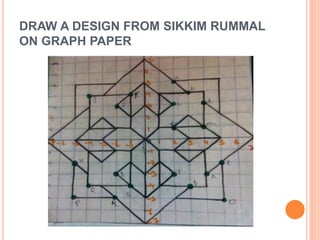
DRAW A DESIGN FROM SIKKIM RUMMAL
ON GRAPH PAPER
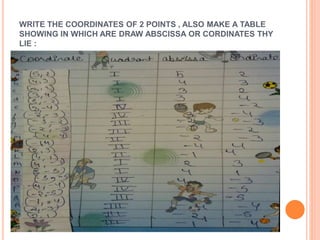
WRITE THE COORDINATES OF 2 POINTS , ALSO MAKE A TABLE
SHOWING IN WHICH ARE DRAW ABSCISSA OR CORDINATES THY
LIE :
ABOUT SIKKIM
 Sikkim is state having very old and deep root handloom
and handicraft traditions. Thanka painting , wood curving
and typical of sikkim . Alll these traditional handloom and
handicraft are
About traditional handloom and handcraft
Handloom and handcraft forms a durable culture trit of
society from the biginning of civilization . The culture
parten of a society is reflected through the quaility
crafthand craftan ship of the people . The term handloom
and hancraft includes products of specific community
which are produced manully with their indigenous
technology.
 The handicraft of a socity often became the chief means of
livelihood. It also fulfils their daily requirments and provide
employment to the members of the households of the society .
So handlooms and handicraft play a magnificant role in the
sociol economic development of a society , sikkim , a small
beauityfull state of india is located in the eastern himalayas
with an area of 7096 sq km . It is bounded by nepal in the
west , bhutan in the east , tibet in the north and west bangal
vin the south . Lepcha , bhwati and nepalese are three ethnic
communities which inhabit in Sikkim . At present the Nepalese
comprise 70% of the population followed by 12% of bhtias
and about 10% lepchas . Nepalese and bhutias are way
distributed through the state but lepchas are mostly confined
to the northen belt of sikkim . Lepchas are original inhabitants
of sikkim . They are basically workshippers of nature or
animist . They prefer living in their own tranguil surroundings
fully in tune and harmony with nature . Lepcha handloom , can
and bambo product are fomous forv their artistic design .
Bhutais are originally from the tibet.
METHODOLOGY
 Surveys were carried out since 2006 in all the
districts of sikkim , following standard method to get
the information of the handloom and handicrafts
product of sikkim . Personal interviews with the
village head, group discussion and assistance of
local infornants were used .
THANKA PAINTING
 The thanka painting are the relegious scrolls found hung in
monasteries and houses of buddhists . Tese are basically life
sketches of lord buddha . Goddess doma or guru
podmasambhavs . A thanka serves as an ostensible symbol of
the deity workshipped by the devotee and it provides focall
points for meditation . The thanka are painted by religious
artisans known as lharip . For thanka painting first of all a
rough piece of cotton is stretched on a frame and it is made
smooth by sizing it with a mixture of chalk and glue . After it is
dried and polished , painting is drown on his clooth . Stone
colour , vegetable dyes and two primary colours such as red
and yellow are usedc in plenty while making a thanks painting
. These two primary colours show the difference between fire
and life , between material and immaterial . The orange
symbolizes knowledge of the higest from of sprituality . The
blue color suggested depth purity and infinity.
WOOD CARVING
 Wood carving is an ancient art formof both the
lepchas and the bhutias of sikkim. The main raw
material used in this craft is wood . The wood of
cedrela toona Roxm,(tooni), juglans regia linn, and
michelia champaca linn are normally used for wood
carving for wood carving a piece of wood is cut into
the desired shape at first . After seasoning process
very fine chisels and tools are used to curve out the
designs . The carved pieces are then assembled
togethr and get ready for a coat or paint . Chokse ,
bagschok, table lamp, sofa seats , screen partition
etc are major wood carved products of sikkim.
RESULT :-
 After one year of investigation , it was found that handloom
and carpet weaving ,thanka painting ,wooden mask making
,wood carving ,bamboo and came craft are indigrenous
product of sikkim.
Handloom writing :-
 The handloom tradition in sikkim is very old and hepachas
women play a phodimant role in handloom weaving , they
begain to learn the art from a very young age and gain
expetitional craftmanship in weaving intisulty colourful fabris
from cotton yarn is sent for winding in wooden frame
accroding to spritified length and breadth requirments the
wound cooton is yan is then fitted in the vutical frame loo and
weaving begins . The handloom products range from plain to
intricate patterns . The mostly used colour are white ,red,black
,yellow and green from the woven fabric variety of items such
as hepcha traditional dress , ags , chusion corn , napkins and
table mats , etc are made .
BAMBOO AND CONE CRAFT
 Bamboo and cane craft deep rooted traditional
culture of all three ethic group of sikkim various
attractive ecofriendly product are made out of
bamboo and came craft such as lepcha hats fruit
and veggetable basket , mugs, flower , vases,tea
trays carry bags,contsners basket,dustbins,mats
etc
CONCLUSION
 Sikkim is one of the favorite tourist destinations in
india the traditional. Handloom and handicrafts
product of sikkim are very popular among the
tourist but despite improvement in technology else
where no noticeable change has been recorded in
sikkim the pratices of using old age tools like
wooden , hammer scissors knife etc should be
development unit need to estiblish in each district of
state for generating sustainable livehood both in
urban and rural areas .
Art integrated project

Art integrated project

  • 1.
    ART INTEGRATED PROJECT CLASS– IX-H SUBJECT - MATHS Topic :- Sikkim and Handloom
  • 2.
    GROUP MEMBERS :- Nancy  Niyati  Sneha  Pravinder  Harpreet
  • 3.
    CERTIFICATE  This isto certify that this project has been made by our group (nancy,niyati,harpreet,sneha,parvinder) of class ix H on sikkim and handloom or miniature painting under my guidance and have been completed it successfully .. Mrs Anju Rani Dua T.G.T MATHS
  • 4.
    ACKNOWLEDGMENT  We wouldlike to express our special thanks of graitude to our teacher Mrs Anju Rani Dua mam as our principal Mr Rajeev Mohan Lakhera who gave us the golden oppurinity to do this wonderfull project on the topic Sikkim and Handloom , which also helped me in doing a lot of research and we came to know about so many new things we are really thankfull to them  Secondly , we would also like to thank our parents who helped me a lot in finalising this project within the limited time frame.
  • 5.
    DRAW A DESIGNFROM SIKKIM RUMMAL ON GRAPH PAPER
  • 6.
    WRITE THE COORDINATESOF 2 POINTS , ALSO MAKE A TABLE SHOWING IN WHICH ARE DRAW ABSCISSA OR CORDINATES THY LIE :
  • 7.
    ABOUT SIKKIM  Sikkimis state having very old and deep root handloom and handicraft traditions. Thanka painting , wood curving and typical of sikkim . Alll these traditional handloom and handicraft are About traditional handloom and handcraft Handloom and handcraft forms a durable culture trit of society from the biginning of civilization . The culture parten of a society is reflected through the quaility crafthand craftan ship of the people . The term handloom and hancraft includes products of specific community which are produced manully with their indigenous technology.
  • 8.
     The handicraftof a socity often became the chief means of livelihood. It also fulfils their daily requirments and provide employment to the members of the households of the society . So handlooms and handicraft play a magnificant role in the sociol economic development of a society , sikkim , a small beauityfull state of india is located in the eastern himalayas with an area of 7096 sq km . It is bounded by nepal in the west , bhutan in the east , tibet in the north and west bangal vin the south . Lepcha , bhwati and nepalese are three ethnic communities which inhabit in Sikkim . At present the Nepalese comprise 70% of the population followed by 12% of bhtias and about 10% lepchas . Nepalese and bhutias are way distributed through the state but lepchas are mostly confined to the northen belt of sikkim . Lepchas are original inhabitants of sikkim . They are basically workshippers of nature or animist . They prefer living in their own tranguil surroundings fully in tune and harmony with nature . Lepcha handloom , can and bambo product are fomous forv their artistic design . Bhutais are originally from the tibet.
  • 9.
    METHODOLOGY  Surveys werecarried out since 2006 in all the districts of sikkim , following standard method to get the information of the handloom and handicrafts product of sikkim . Personal interviews with the village head, group discussion and assistance of local infornants were used .
  • 10.
    THANKA PAINTING  Thethanka painting are the relegious scrolls found hung in monasteries and houses of buddhists . Tese are basically life sketches of lord buddha . Goddess doma or guru podmasambhavs . A thanka serves as an ostensible symbol of the deity workshipped by the devotee and it provides focall points for meditation . The thanka are painted by religious artisans known as lharip . For thanka painting first of all a rough piece of cotton is stretched on a frame and it is made smooth by sizing it with a mixture of chalk and glue . After it is dried and polished , painting is drown on his clooth . Stone colour , vegetable dyes and two primary colours such as red and yellow are usedc in plenty while making a thanks painting . These two primary colours show the difference between fire and life , between material and immaterial . The orange symbolizes knowledge of the higest from of sprituality . The blue color suggested depth purity and infinity.
  • 11.
    WOOD CARVING  Woodcarving is an ancient art formof both the lepchas and the bhutias of sikkim. The main raw material used in this craft is wood . The wood of cedrela toona Roxm,(tooni), juglans regia linn, and michelia champaca linn are normally used for wood carving for wood carving a piece of wood is cut into the desired shape at first . After seasoning process very fine chisels and tools are used to curve out the designs . The carved pieces are then assembled togethr and get ready for a coat or paint . Chokse , bagschok, table lamp, sofa seats , screen partition etc are major wood carved products of sikkim.
  • 12.
    RESULT :-  Afterone year of investigation , it was found that handloom and carpet weaving ,thanka painting ,wooden mask making ,wood carving ,bamboo and came craft are indigrenous product of sikkim. Handloom writing :-  The handloom tradition in sikkim is very old and hepachas women play a phodimant role in handloom weaving , they begain to learn the art from a very young age and gain expetitional craftmanship in weaving intisulty colourful fabris from cotton yarn is sent for winding in wooden frame accroding to spritified length and breadth requirments the wound cooton is yan is then fitted in the vutical frame loo and weaving begins . The handloom products range from plain to intricate patterns . The mostly used colour are white ,red,black ,yellow and green from the woven fabric variety of items such as hepcha traditional dress , ags , chusion corn , napkins and table mats , etc are made .
  • 13.
    BAMBOO AND CONECRAFT  Bamboo and cane craft deep rooted traditional culture of all three ethic group of sikkim various attractive ecofriendly product are made out of bamboo and came craft such as lepcha hats fruit and veggetable basket , mugs, flower , vases,tea trays carry bags,contsners basket,dustbins,mats etc
  • 14.
    CONCLUSION  Sikkim isone of the favorite tourist destinations in india the traditional. Handloom and handicrafts product of sikkim are very popular among the tourist but despite improvement in technology else where no noticeable change has been recorded in sikkim the pratices of using old age tools like wooden , hammer scissors knife etc should be development unit need to estiblish in each district of state for generating sustainable livehood both in urban and rural areas .