Interprofessional Student-Led
Mini-Grants: UNE Infrastructure
• IPE Collaborative
• Center for Excellence
• Core IPE Curriculum & Classrooms
• Signature Events
• IP Team Immersion
• Student-led Mini-Grants
• IP Honors Distinction
• IP Service Learning
• IP Grants
• Clinical Education Sites
• IP Faculty Development
• IPCP Community Summits
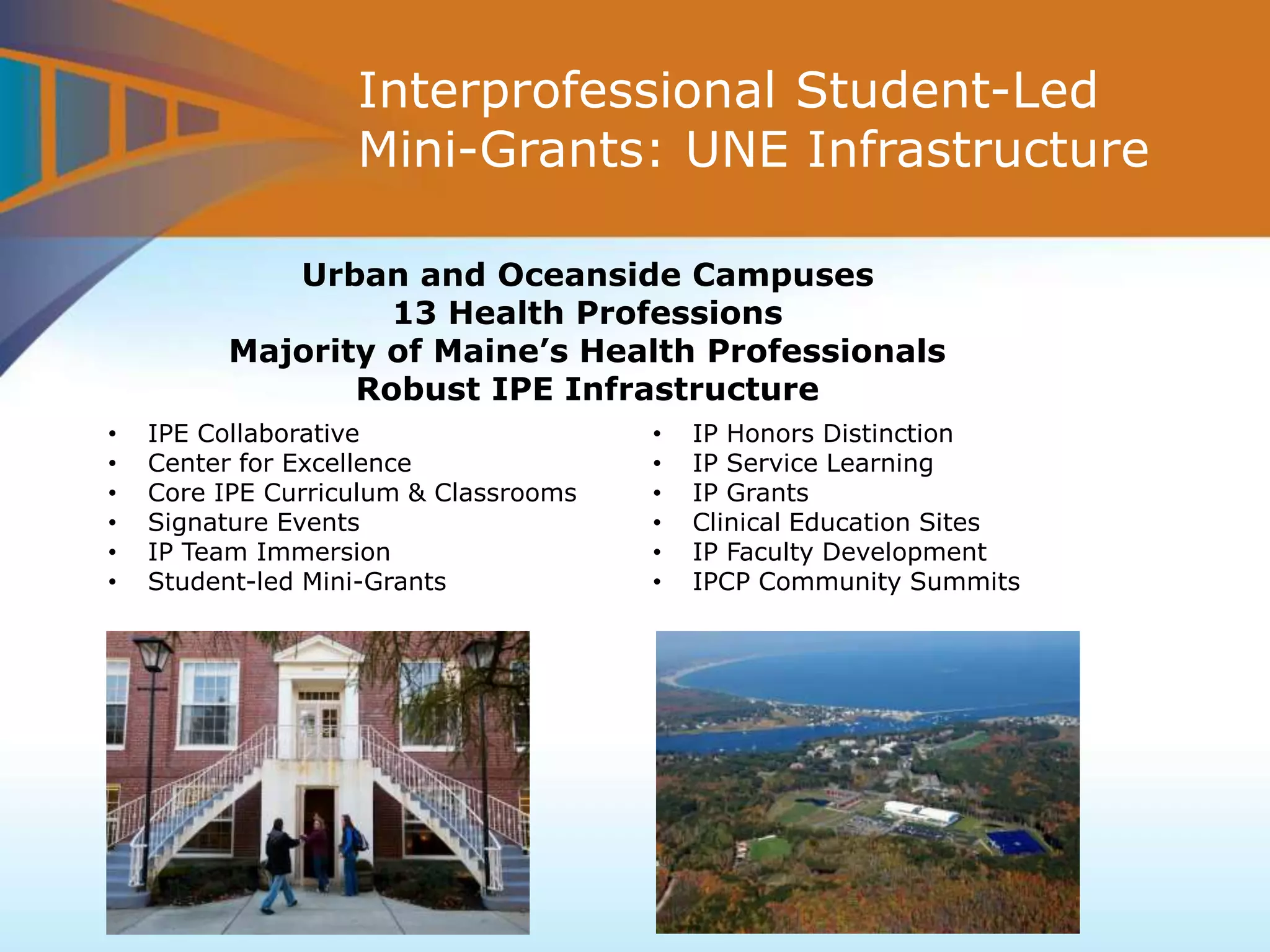
Urban and Oceanside Campuses
13 Health Professions
Majority of Maine’s Health Professionals
Robust IPE Infrastructure
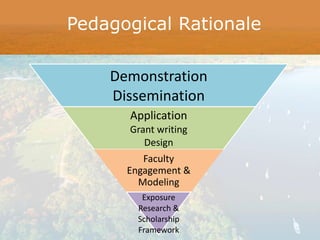
Pedagogical Rationale
Demonstration
Dissemination
Application
Grant writing
Design
Faculty
Engagement &
Modeling
Exposure
Research &
Scholarship
Framework
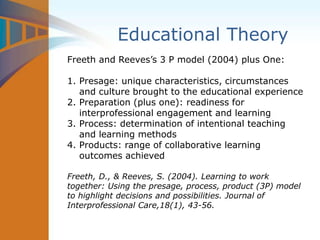
Educational Theory
Freeth and Reeves’s 3 P model (2004) plus One:
1. Presage: unique characteristics, circumstances
and culture brought to the educational experience
2. Preparation (plus one): readiness for
interprofessional engagement and learning
3. Process: determination of intentional teaching
and learning methods
4. Products: range of collaborative learning
outcomes achieved
Freeth, D., & Reeves, S. (2004). Learning to work
together: Using the presage, process, product (3P) model
to highlight decisions and possibilities. Journal of
Interprofessional Care,18(1), 43-56.
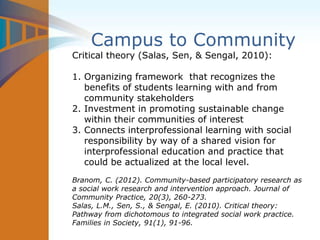
Campus to Community
Critical theory (Salas, Sen, & Sengal, 2010):
1. Organizing framework that recognizes the
benefits of students learning with and from
community stakeholders
2. Investment in promoting sustainable change
within their communities of interest
3. Connects interprofessional learning with social
responsibility by way of a shared vision for
interprofessional education and practice that
could be actualized at the local level.
Branom, C. (2012). Community-based participatory research as
a social work research and intervention approach. Journal of
Community Practice, 20(3), 260-273.
Salas, L.M., Sen, S., & Sengal, E. (2010). Critical theory:
Pathway from dichotomous to integrated social work practice.
Families in Society, 91(1), 91-96.
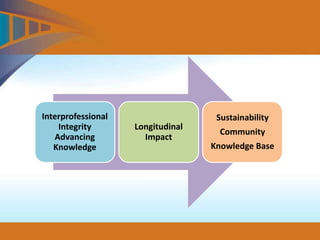
Interprofessional
Integrity
Advancing
Knowledge
Longitudinal
Impact
Sustainability
Community
Knowledge Base
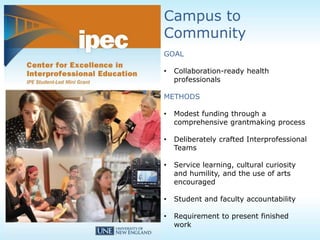
Campus to
Community
GOAL
• Collaboration-ready health
professionals
METHODS
• Modest funding through a
comprehensive grantmaking process
• Deliberately crafted Interprofessional
Teams
• Service learning, cultural curiosity
and humility, and the use of arts
encouraged
• Student and faculty accountability
• Requirement to present finished
work
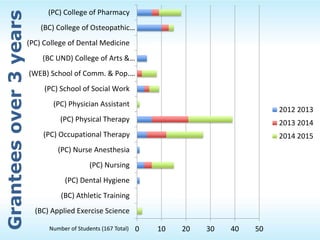
Granteesover3years
0 10 20 30 40 50
(BC) Applied Exercise Science
(BC) Athletic Training
(PC) Dental Hygiene
(PC) Nursing
(PC) Nurse Anesthesia
(PC) Occupational Therapy
(PC) Physical Therapy
(PC) Physician Assistant
(PC) School of Social Work
(WEB) School of Comm. & Pop.…
(BC UND) College of Arts &…
(PC) College of Dental Medicine
(BC) College of Osteopathic…
(PC) College of Pharmacy
2012 2013
2013 2014
2014 2015
Number of Students (167 Total)
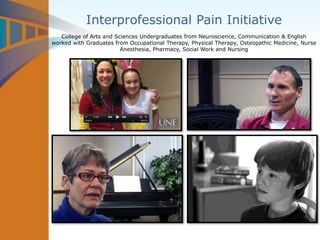
Interprofessional Pain Initiative
College of Arts and Sciences Undergraduates from Neuroscience, Communication & English
worked with Graduates from Occupational Therapy, Physical Therapy, Osteopathic Medicine, Nurse
Anesthesia, Pharmacy, Social Work and Nursing
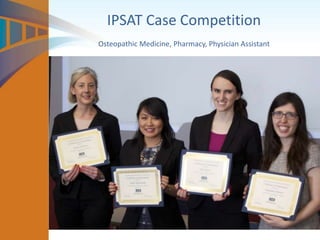
IPSAT Case Competition
Osteopathic Medicine, Pharmacy, Physician Assistant
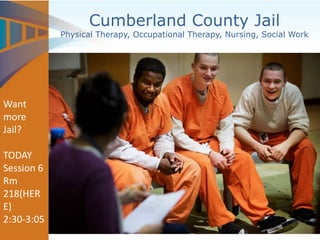
Cumberland County Jail
Physical Therapy, Occupational Therapy, Nursing, Social Work
Want
more
Jail?
TODAY
Session 6
Rm
218(HER
E)
2:30-3:05
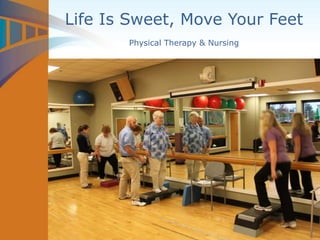
Life Is Sweet, Move Your Feet
Physical Therapy & Nursing
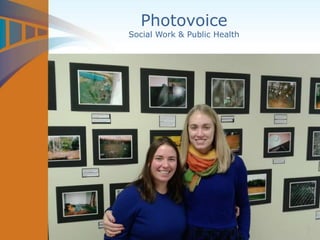
Photovoice
Social Work & Public Health
Themes Identified:
Exercise & Culture
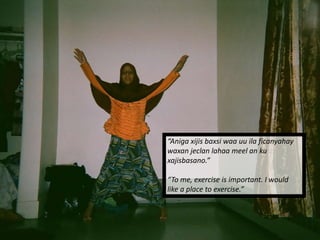
“Aniga xijis baxsi waa uu ila ficanyahay
waxan jeclan lahaa meel an ku
xajisbasano.”
“To me, exercise is important. I would
like a place to exercise.”
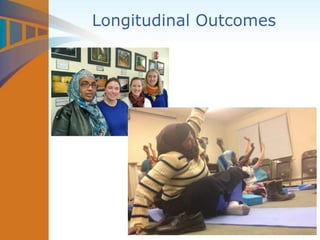
Longitudinal Outcomes
Road Map
• Resources
• Funding
• Students
• Faculty
• Deans
• Community Partnerships
• Logistics
• IPE Dating Service
• IPE Teamwork
• Student driven, concept to completion
• Research & Scholarship
• IP Honors
@UNEIPE or @IPE4all
Center for Excellence in
Interprofessional Education
Kris Hall chall4@une.edu 207/221-4491
Shelley Cohen Konrad scohenkonrad@une.edu
Please “Follow” or “Like”

Armstrong mini grant hall sck 4-8-15

  • 1.
    Interprofessional Student-Led Mini-Grants: UNEInfrastructure • IPE Collaborative • Center for Excellence • Core IPE Curriculum & Classrooms • Signature Events • IP Team Immersion • Student-led Mini-Grants • IP Honors Distinction • IP Service Learning • IP Grants • Clinical Education Sites • IP Faculty Development • IPCP Community Summits Urban and Oceanside Campuses 13 Health Professions Majority of Maine’s Health Professionals Robust IPE Infrastructure
  • 2.
  • 3.
    Educational Theory Freeth andReeves’s 3 P model (2004) plus One: 1. Presage: unique characteristics, circumstances and culture brought to the educational experience 2. Preparation (plus one): readiness for interprofessional engagement and learning 3. Process: determination of intentional teaching and learning methods 4. Products: range of collaborative learning outcomes achieved Freeth, D., & Reeves, S. (2004). Learning to work together: Using the presage, process, product (3P) model to highlight decisions and possibilities. Journal of Interprofessional Care,18(1), 43-56.
  • 4.
    Campus to Community Criticaltheory (Salas, Sen, & Sengal, 2010): 1. Organizing framework that recognizes the benefits of students learning with and from community stakeholders 2. Investment in promoting sustainable change within their communities of interest 3. Connects interprofessional learning with social responsibility by way of a shared vision for interprofessional education and practice that could be actualized at the local level. Branom, C. (2012). Community-based participatory research as a social work research and intervention approach. Journal of Community Practice, 20(3), 260-273. Salas, L.M., Sen, S., & Sengal, E. (2010). Critical theory: Pathway from dichotomous to integrated social work practice. Families in Society, 91(1), 91-96.
  • 5.
  • 6.
    Campus to Community GOAL • Collaboration-readyhealth professionals METHODS • Modest funding through a comprehensive grantmaking process • Deliberately crafted Interprofessional Teams • Service learning, cultural curiosity and humility, and the use of arts encouraged • Student and faculty accountability • Requirement to present finished work
  • 7.
    Granteesover3years 0 10 2030 40 50 (BC) Applied Exercise Science (BC) Athletic Training (PC) Dental Hygiene (PC) Nursing (PC) Nurse Anesthesia (PC) Occupational Therapy (PC) Physical Therapy (PC) Physician Assistant (PC) School of Social Work (WEB) School of Comm. & Pop.… (BC UND) College of Arts &… (PC) College of Dental Medicine (BC) College of Osteopathic… (PC) College of Pharmacy 2012 2013 2013 2014 2014 2015 Number of Students (167 Total)
  • 8.
    Interprofessional Pain Initiative Collegeof Arts and Sciences Undergraduates from Neuroscience, Communication & English worked with Graduates from Occupational Therapy, Physical Therapy, Osteopathic Medicine, Nurse Anesthesia, Pharmacy, Social Work and Nursing
  • 10.
    IPSAT Case Competition OsteopathicMedicine, Pharmacy, Physician Assistant
  • 11.
    Cumberland County Jail PhysicalTherapy, Occupational Therapy, Nursing, Social Work Want more Jail? TODAY Session 6 Rm 218(HER E) 2:30-3:05
  • 12.
    Life Is Sweet,Move Your Feet Physical Therapy & Nursing
  • 13.
  • 14.
    Themes Identified: Exercise &Culture “Aniga xijis baxsi waa uu ila ficanyahay waxan jeclan lahaa meel an ku xajisbasano.” “To me, exercise is important. I would like a place to exercise.”
  • 15.
  • 17.
  • 18.
    Road Map • Resources •Funding • Students • Faculty • Deans • Community Partnerships • Logistics • IPE Dating Service • IPE Teamwork • Student driven, concept to completion • Research & Scholarship • IP Honors
  • 19.
    @UNEIPE or @IPE4all Centerfor Excellence in Interprofessional Education Kris Hall chall4@une.edu 207/221-4491 Shelley Cohen Konrad scohenkonrad@une.edu Please “Follow” or “Like”

Editor's Notes

  • #2 SCK INTRODUCTION: Kris Introduces - Director of Center for Excellence in Interprofessional Education, Shelley Cohen Konrad, Ph.D., and Associate Professor in the School of Social Work has worked for 10 years at UNE to affect culture change among the health professions at UNE, paving the way for a wide variety of interprofessional innovation and impact. Kris Hall, Program Coordinator UNE Center for Excellence in Interprofessional Education. Shelley introduces-Kris Hall is the Program Coordinator for the University of New England Center of Excellence in Interprofessional Education. She oversees the weekly IPE event series on campus, and the Student-Led Mini-Grant program. Kris is an MFA graduate of Maine College of Art and the Skowhegan School of Painting and Sculpture. She brings over 20 years of intensive teamwork in higher education and professional theatre to her work at the Center. Presentation Objectives 1. Share an easily replicated template for application and funding formula, including theoretical structures 2. Demonstrate examples of successful grants
  • #3 SCK Students not intending clinical track – research and community interventionists IPE dating service Faculty engagement and modeling – require all teams to have faculty mentor Grant writing experience
  • #4 SCK
  • #5 SCK
  • #6 SCK Meaningful and purposeful work grounded in theory, social responsibility, action-based knowledge and respect for the importance of cross-professions work.
  • #7 KH Our students are beset on all sides with expectations for their future practice. Accreditation Standards. New ACA payment policies. As many as 210,000 people per year dying from medical error in the United States. Our challenge as interprofessional educators at UNE (where there are 13 health professions programs) is not to add to their burden, but rather inspire confidence in student’s ability to rely on each other to achieve excellent patient care, thereby making some of the other expectations easier to achieve There are various ways to “do” interprofessional - and it is important to do it in a supervised setting before attempting it in the ”real” world, since our students are by and large much more IPE ready than their preceptors or rotation environments may be. In the educational setting, we can conduct case-based learning, simulated clinical environments, and interactive role playing. Some institutions have student led clinics, where IP is part of the infrastructure. Most formal clinical rotation requirements are not purposely interprofessional, and unless the experience is deliberately crafted to be so… With this program we seek to provide a bridge from the classroom to the clinic and create collaboration ready health professionals who have grant seeking experience, have crafted their own teams toward their own objectives, have incorporated service learning, cultural humility and the arts in their scope of practice, have been accountable to themselves, their patients/clients and us, and have presented their finished work at a conference, or conference-like forum. Relationship between gathering evidence and clinical practice – not just one or the other, but a continuum.   Student-Led Mini-Grant program provides modest funding for IP research and scholarship. Our goal is to develop collaboration-ready health professionals who have practiced successful teamwork, leadership and hands-on problem solving as part of their education. These grants fund interprofessional scholarship and research conceived and carried out by students with faculty mentorship. Methods: The presenters will provide the application and marketing materials to enable other institutions to develop their own Student-Led Mini-Grant program. Successful grants are widely varied in their approach and outcomes, presenters will discuss the challenges and opportunities that a small investment in IPE interest generated. Grant recipients share their perspectives on IPE as a result of developing and leading their own research and scholarship efforts. Results: Knowledge gained from the projects completed so far has led students and faculty to consider varied approaches to IP education and practice. Whether interviewing pain patients with an eye toward utilizing the power of their stories to help others, or providing physical therapy intervention at a Medically Oriented Gym for diabetes patients, students, faculty and clients are actively learning about, from, and with each other. Implications: Small-scale, hands-on experiences such as these help to create an IP leadership ethic among students that they will carry with them in addition to expertise in their field, making them dynamic members of their future teams. The discipline and organization necessary to apply for and execute a grant, the reassurance of faculty mentorship while providing a valuable community service are a powerful educational combination.
  • #8 KH 167 students over 3 years have participated in Mini-grant projects. As you can see by this chart – we have some work to do in terms of recruiting/advertising. Obvious Allies – PT, OT, Pharm, COM Needs work – CDM, PA, Athletic Training Barriers: Campuses, online students, faculty oversight capacity, funding Funding is the least of our issues, Trustees, AHEC, Neuroscience center
  • #9 SCK Engaging leaders throughout the university – Faculty Leadership – Bilsky, Research and Scholarship – not all projects are intentionally IPE at conception, but we get them working together and the benefits become evident… In depth interviews of pain patients, video portraits, detailed case reports, partnered with a photographer and a playwright to create large scale portraits, Symposium Breakout Session, display in lobby, blog, Maine Cancer Foundation Grant employed one of the students the following summer doing similar work on Cancer Pain, and these students will be training professionals in June as part of a HRSA funded project.
  • #11 SCK Interprofessional Student Advisory Team has taken the competition on as their project, and have included a requirement that all local team members complete IHI coursework prior to being accepted on a team. 15 local competitors qualified and were randomly assigned to teams Stephanie Brown (Pharmacy); Erin Kany (Pharmacy); Jenny Ottoson (PA); Juliet Baltonado (DO) were our local winners this year. They travel to Minnesota in a couple of days to compete on April 17th - We spent quite a bit the previous year on food for the associated events, and local judges’ gifts. This year we collaborated with the IPSAT students and their faculty advisors to outreach to other departments and colleges to provide this kind of support, including having Provost’s and Deans “sponsor” lunches. This allowed us to cap our commitment and spend our $$ on other projects
  • #12 KH There is a CCJ-UNE Collaboration Planning Group in place (led by Dr. Kerry Dunn, SW) that brings prisoners and students together to design and execute interdisciplinary health workshops at the Cumberland County Jail. The wellness / fitness activities took the form of a “Biggest Loser” competition. This Mini Grant supported student projects in the jail by providing money for prizes that were purchased form the commissary. Students have remarked that the Jail experience is the best IPE they have received at UNE – because they are doing it, not hearing about it. This is especially good to hear, because we don’t bill it as an IPE opportunity – it just IS! (Not accidentally, but they don’t need to know that!) Want more Jail? TODAY Session 6 Rm 218(HERE) 2:30-3:05
  • #13 KH Purpose: The purpose of Life is Sweet, Move Your Feet is to implement an inter-professionally driven ten-week exercise and education program at the Medically Oriented Gym for individuals who are at risk for or are diagnosed with Type 2 Diabetes Mellitus.   Methods: Physical therapy and nursing students from the University of New England received an interprofessional mini-grant to develop an integrated nutrition and exercise program for adults utilizing a medically-oriented gym. Physical therapy students implemented and monitored the cardiovascular and resistance training exercise aspect of the program while simultaneously students from the nursing program designed a Diabetes-specific education program. Six participants diagnosed with or at risk for DM2 took part in the pilot program.
  • #14 KH Photovoice: A Visual Narrative exploring the Perceived Health of Maine Refugee Women Presenters: Lilia Bottino and Collyn Baeder Used art as a modality for assessing barriers to health as well as empowering community members to create collective strategies for change. Displayed pictures and process reflects cultural competency, recognizing community members as experts of their environment, and exploring alternative means to health literacy.
  • #15 KH Exercise & Culture
  • #16 KH Riverton Photovoice identified health disparities, literally through the eyes of the people experiencing those disparities. OT Student Liz Crawford followed up on that work, and provided yoga/zumba in a culturally sensitive manner. We paid for yoga supplies, and interpreter services of CHOWs.
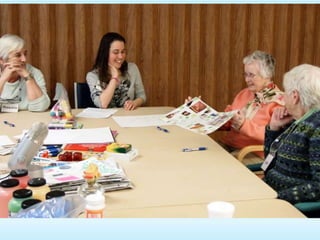
  • #17 KH Public health student Collyn Baeder has implemented Visual Voices in collaboration with Occupational Therapy students in Park Danforth an independent and assisted living facility across the street from our Portland campus. Visual Voices is usually done with youth, the team is in touch with the creator of visual voice: “Community members are experts in their own lives much more so than those who reside outside their communities,” added Michael A. Yonas, DrPH, Visual Voices creator and assistant professor, Department of Family Medicine, University of Pittsburgh School of Medicine. “Visual Voices helps incorporate residents’ unique expertise into the research process in a non-intrusive and fun way and creates valuable data about their lived experiences. It is different than surveys or focus groups because it uses tools—crayons, paint and markers—that are familiar to children, and can lead to in-depth discussions, encourage self-efficacy and help build trusting relationships between academic researchers and the communities they serve.” The community-engaged research methodology of Visual Voices was carefully selected for this project based on previous research that suggests that it could serve as a mechanism for illuminating the perceptions of aging Maine residents and increasing their sense of empowerment.4 The exhibition of the final products of the project (artwork, photographs, and written statements) will allow the participants to share their perceptions with significant others; therefore, helping to inform the work of health professionals and health professions students. Furthermore, the innovative use of the Visual Voices methodology with an aging population (it has been commonly used with youth but not older adults), and the evaluation of its effectiveness and value, will inform future research in the area of community-engaged research and elder health and contributes to the significance of this project.
  • #18 KH Working within a national model, students partnered with a Medically Oriented Gym (affectionately known as "the M.O.G.") is revolutionizing the way people improve and maintain their health. At the M.O.G., every aspect of your health history is connected through exercise. With an exceptionally qualified and professional staff always accessible, we provide the kind of support that empowers you to integrate healthy, smart decisions into real life. Working closely with your doctor and other healthcare providers, we help our members achieve and maintain an exceptional quality of life, while preventing injuries in ways that no other provider of wellness and fitness can. Adapting to accountable care/alternative billing systems Services that increase engagement and improve outcomes AND reduce long term healthcare expenses? Based on a preventive care model rather than a reactive care model http://themoggroup.com/southportlandme/
  • #19 KH
  • #20 KH Happy to share the materials we have developed – I have a few copies here, and can email them to whoever might want them. Please feel free to contact me if you want to start something, or share stories – we can all learn together!