
ARM based 
Multimedia IP Phone 
THAPATHALI CAMPUS 
FINAL PRESENTATION 
MEMBERS 
Bijay Raj Paudel (Roll No: 067/BEX/105) 
Kshitij Poudel (Roll No: 067/BEX/119) 
Sagar Mali (Roll No: 067/BEX/133) 
Sujan Shrestha (Roll No: 067/BEX/140) 
SUPERVISOR 
Bikash Poudel
1. INTRODUCTION 
 IP based Telephone System 
 IP Phone powered by ARM processor 
 Implements VoIP technology 
 UPS System for standalone operation 
2
2. OBJECTIVES 
 To design and implement Multimedia capable IP 
Telephone using ARM processor 
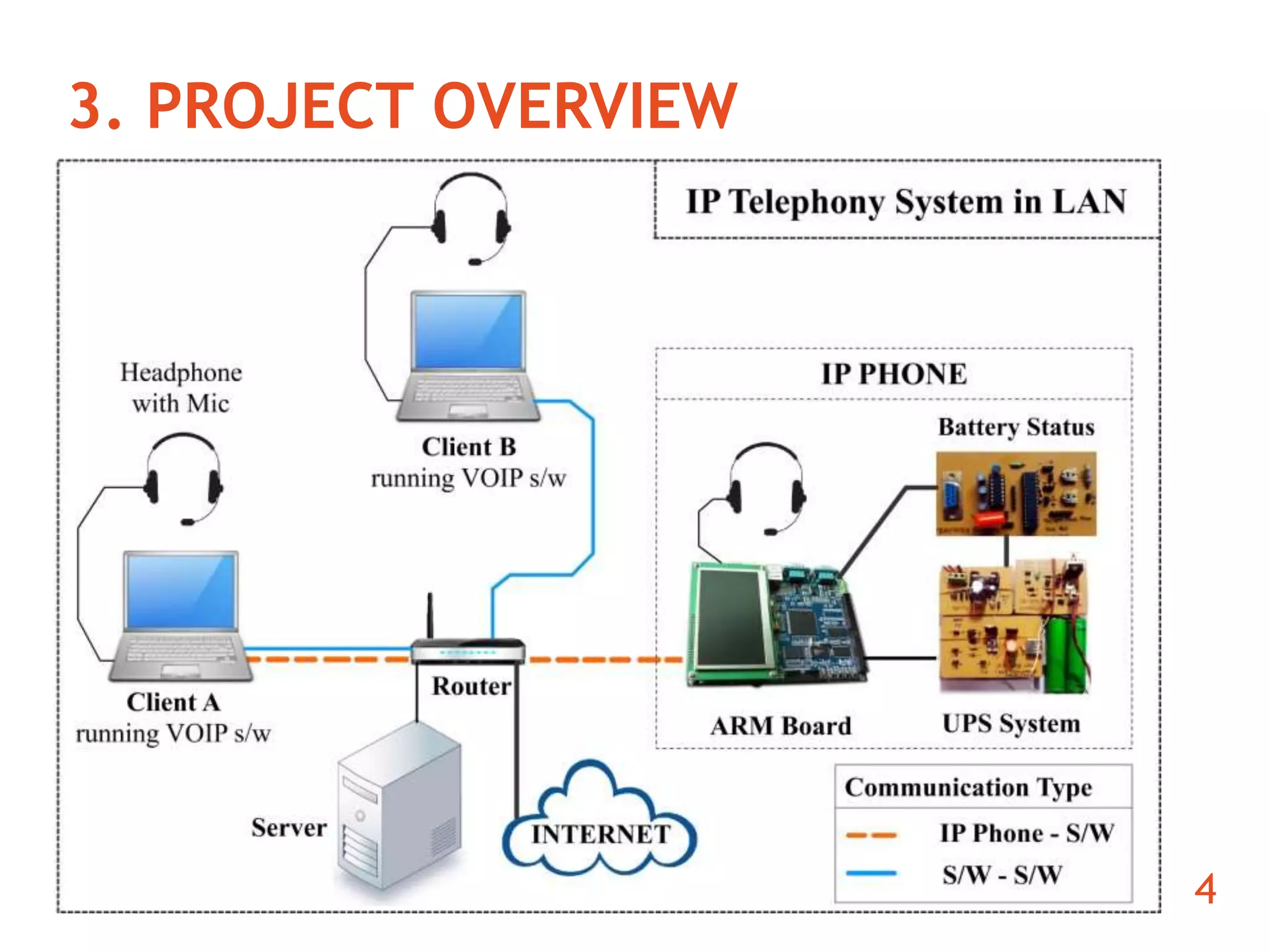
 To demonstrate the implementation of IP telephony 
system in LAN using developed ARM based IP phone as a 
client 
3
3. PROJECT OVERVIEW 
4
4. METHODOLOGY 
4.1 Hardware 
4.2.1 UPS System 
4.2.2 Battery Status Display and Temperature Sensor 
4.2.3 Main Phone Unit 
4.2 Firmware 
4.3.1 Networking Protocols 
4.3.2 User Interface for ARM 
4.3.3 IP Phone Firmware 
4.3.4 Software for PC 
4.3.5 Audio Codecs and Playback 
5
4.1 Hardware 
4.2.1 UPS System 
4.2.2 Battery Status Display Unit 
4.2.3 Main Phone Unit (ARM Development Board) 
6
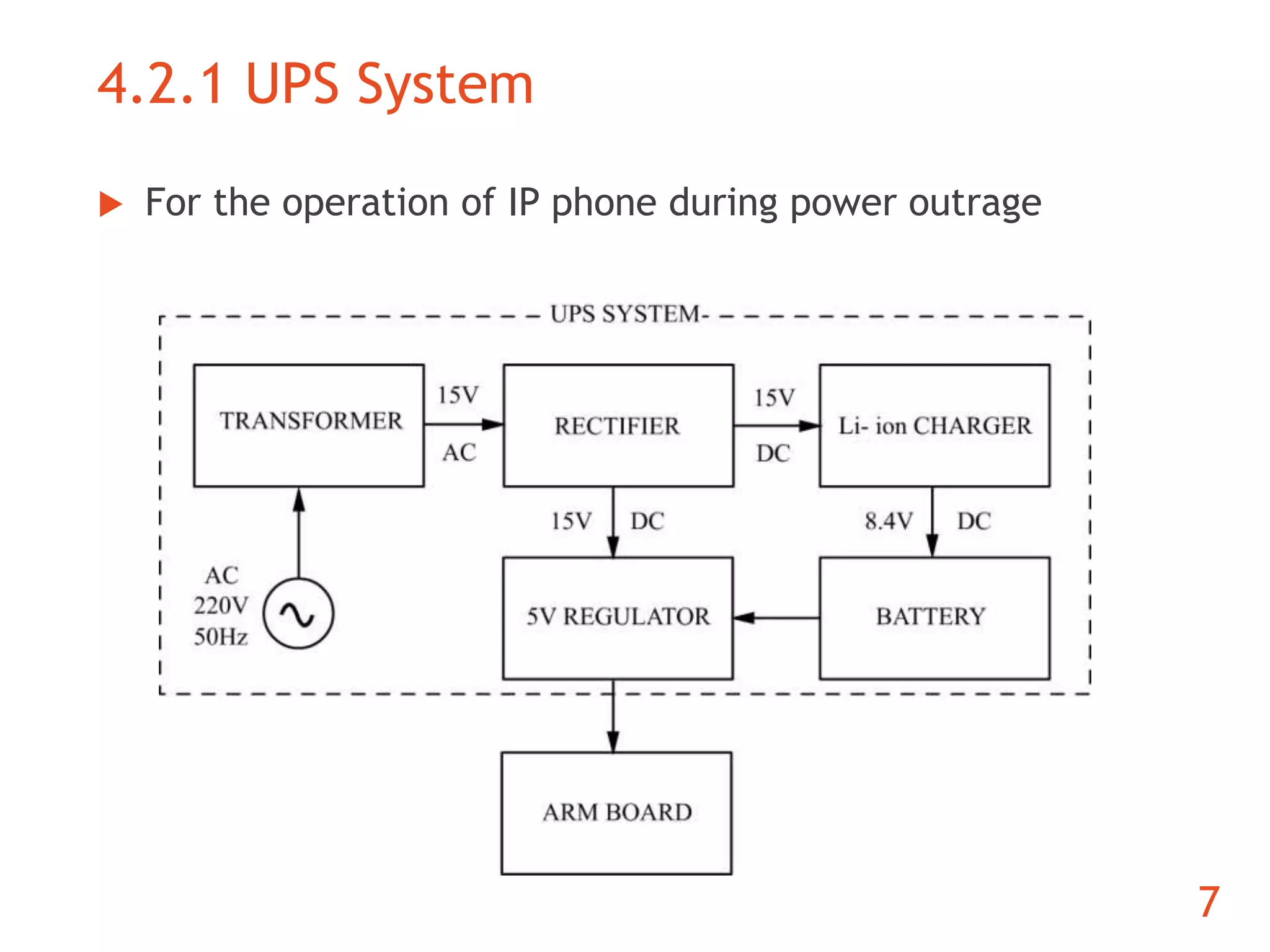
4.2.1 UPS System 
 For the operation of IP phone during power outrage 
7
4.2.1 UPS System 
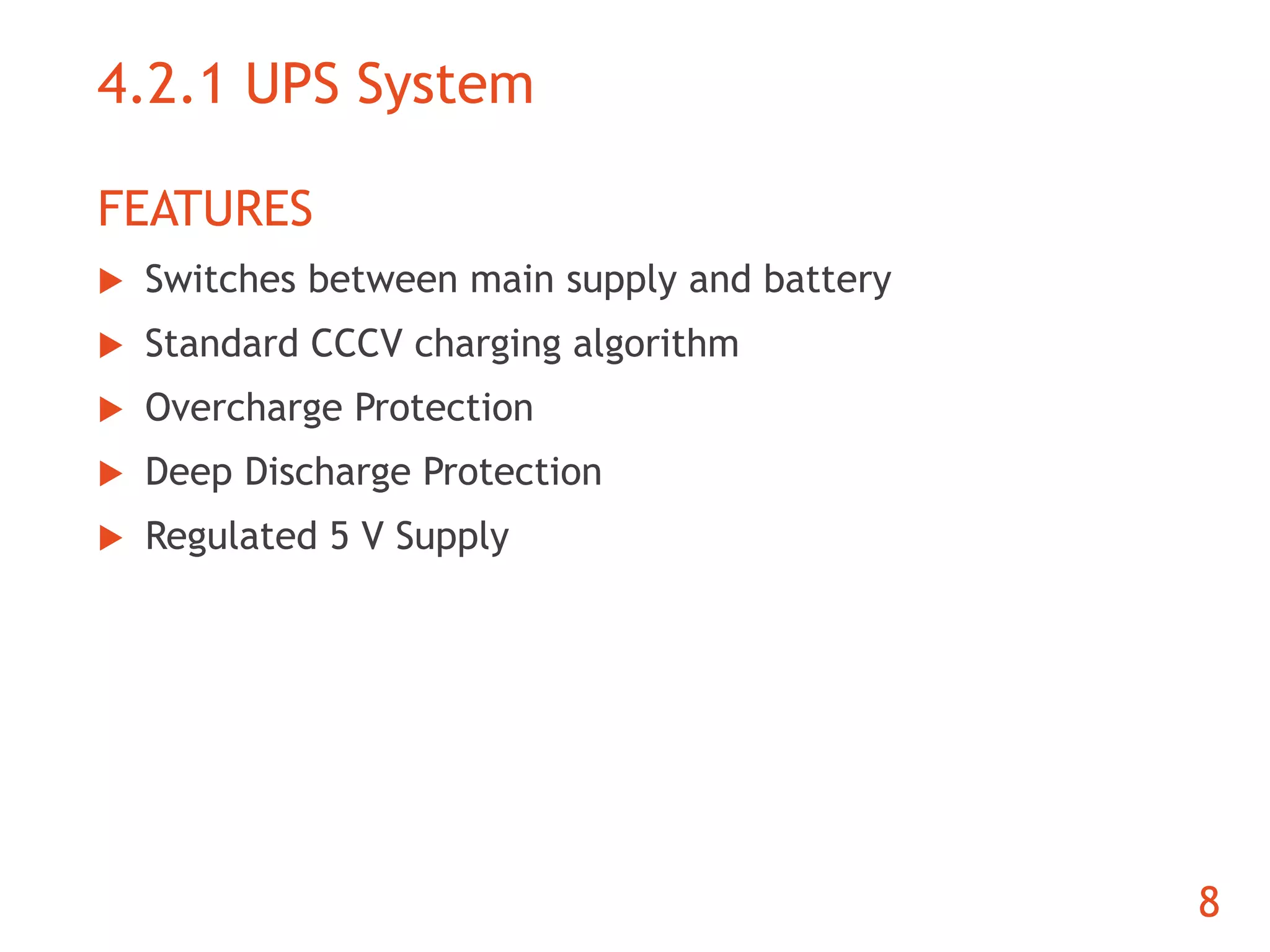
FEATURES 
 Switches between main supply and battery 
 Standard CCCV charging algorithm 
 Overcharge Protection 
 Deep Discharge Protection 
 Regulated 5 V Supply 
8
4.2.2 Battery Status Display and 
Temperature Sensor 
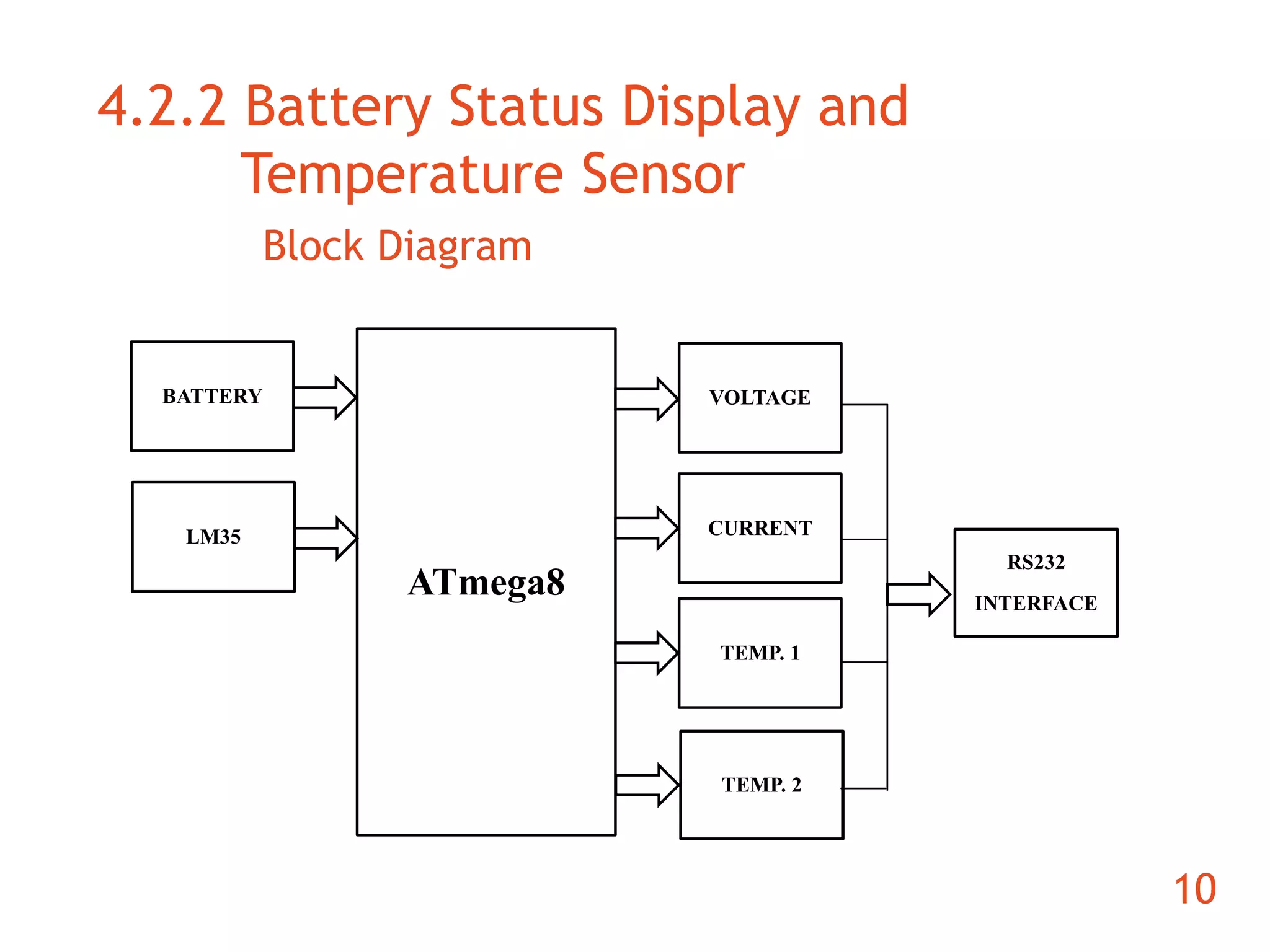
 Receives Voltage and Current level from battery 
 Receives Temperature Status from LM35 
 Uses ATmega8 for ADC 
 Transfers data via USART and RS232 interface 
9
4.2.2 Battery Status Display and 
Temperature Sensor 
Block Diagram 
10 
TEMP. 2 
RS232 
INTERFACE 
ATmega8 
BATTERY 
LM35 
VOLTAGE 
CURRENT 
TEMP. 1
4.2.3 Main Phone Unit 
11 
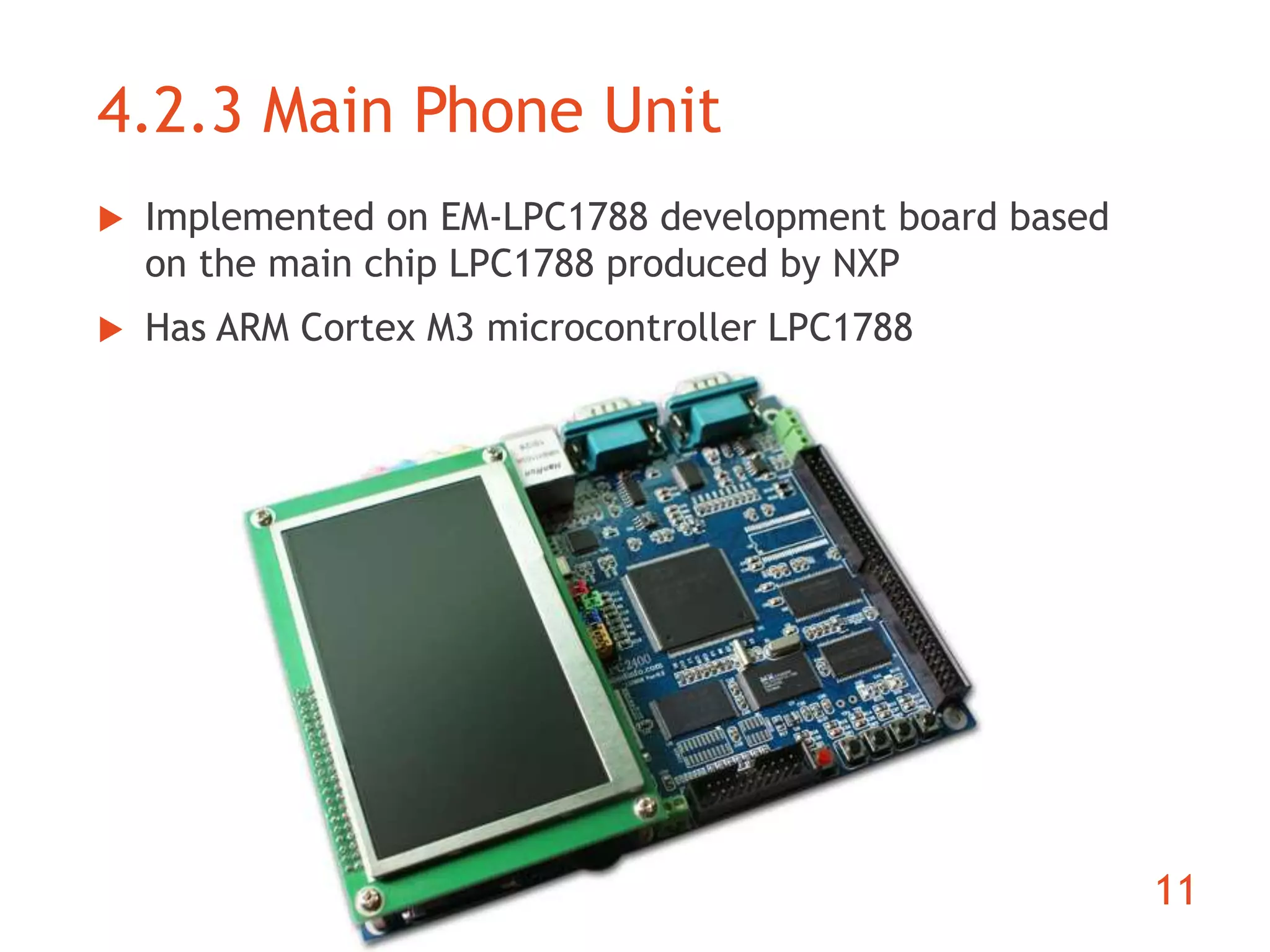
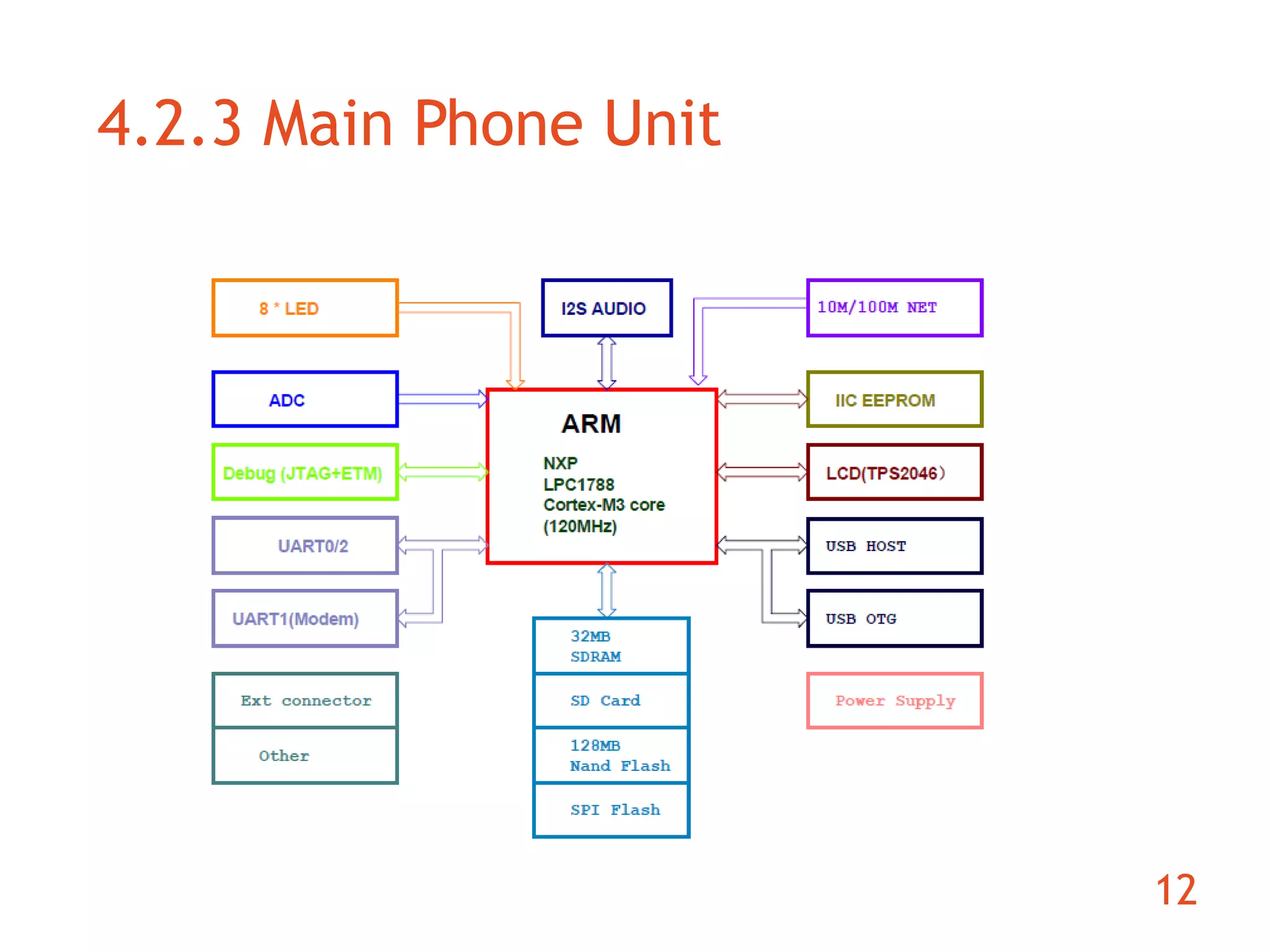
 Implemented on EM-LPC1788 development board based 
on the main chip LPC1788 produced by NXP 
 Has ARM Cortex M3 microcontroller LPC1788
4.2.3 Main Phone Unit 
12
4.2 Firmware 
4.3.1 Network Protocols 
4.3.2 User Interface for ARM 
4.3.3 IP Phone Firmware 
4.3.4 Software for PC 
4.3.5 Audio Codecs and Playback 
13
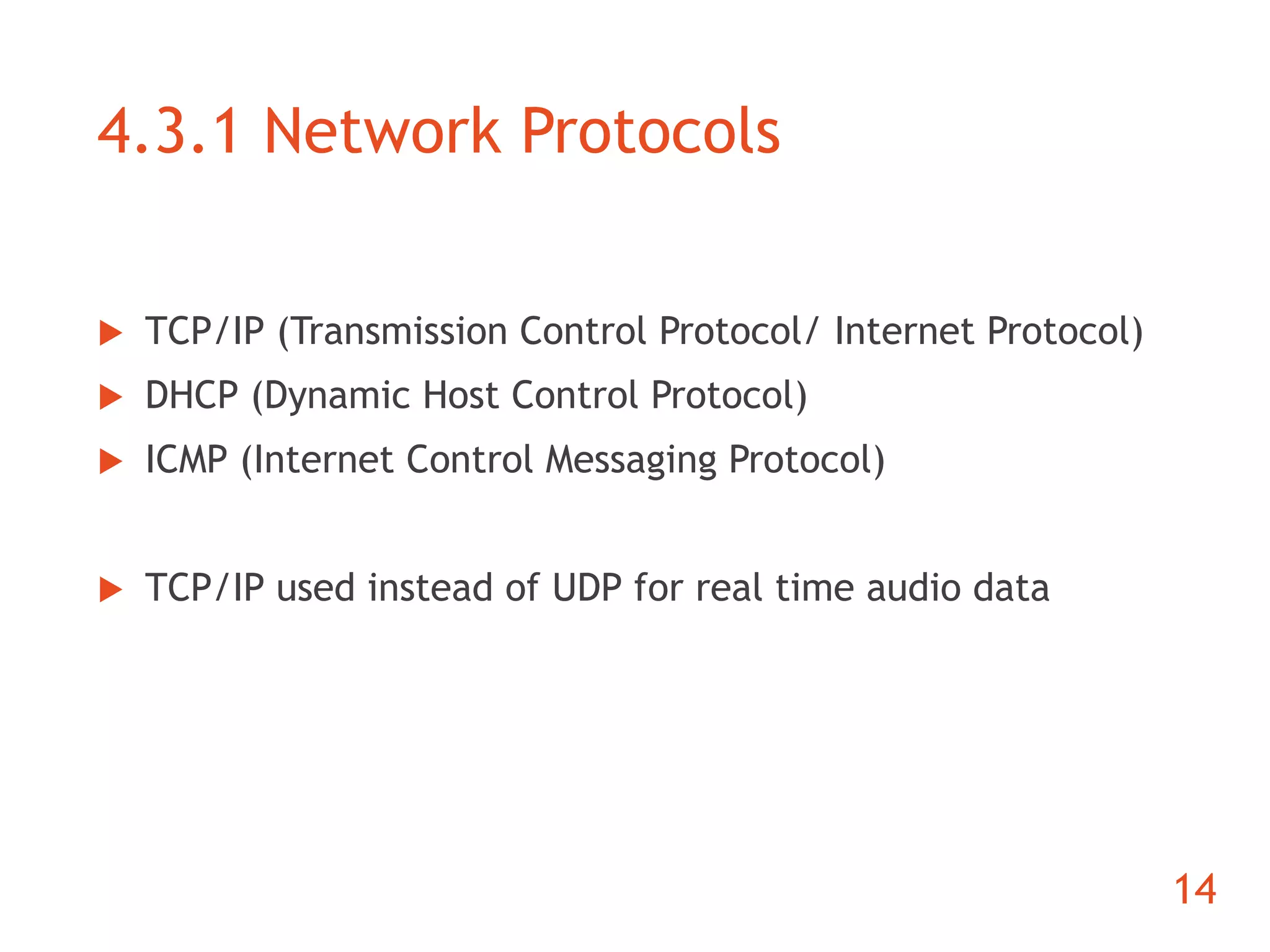
4.3.1 Network Protocols 
 TCP/IP (Transmission Control Protocol/ Internet Protocol) 
 DHCP (Dynamic Host Control Protocol) 
 ICMP (Internet Control Messaging Protocol) 
 TCP/IP used instead of UDP for real time audio data 
14
15 
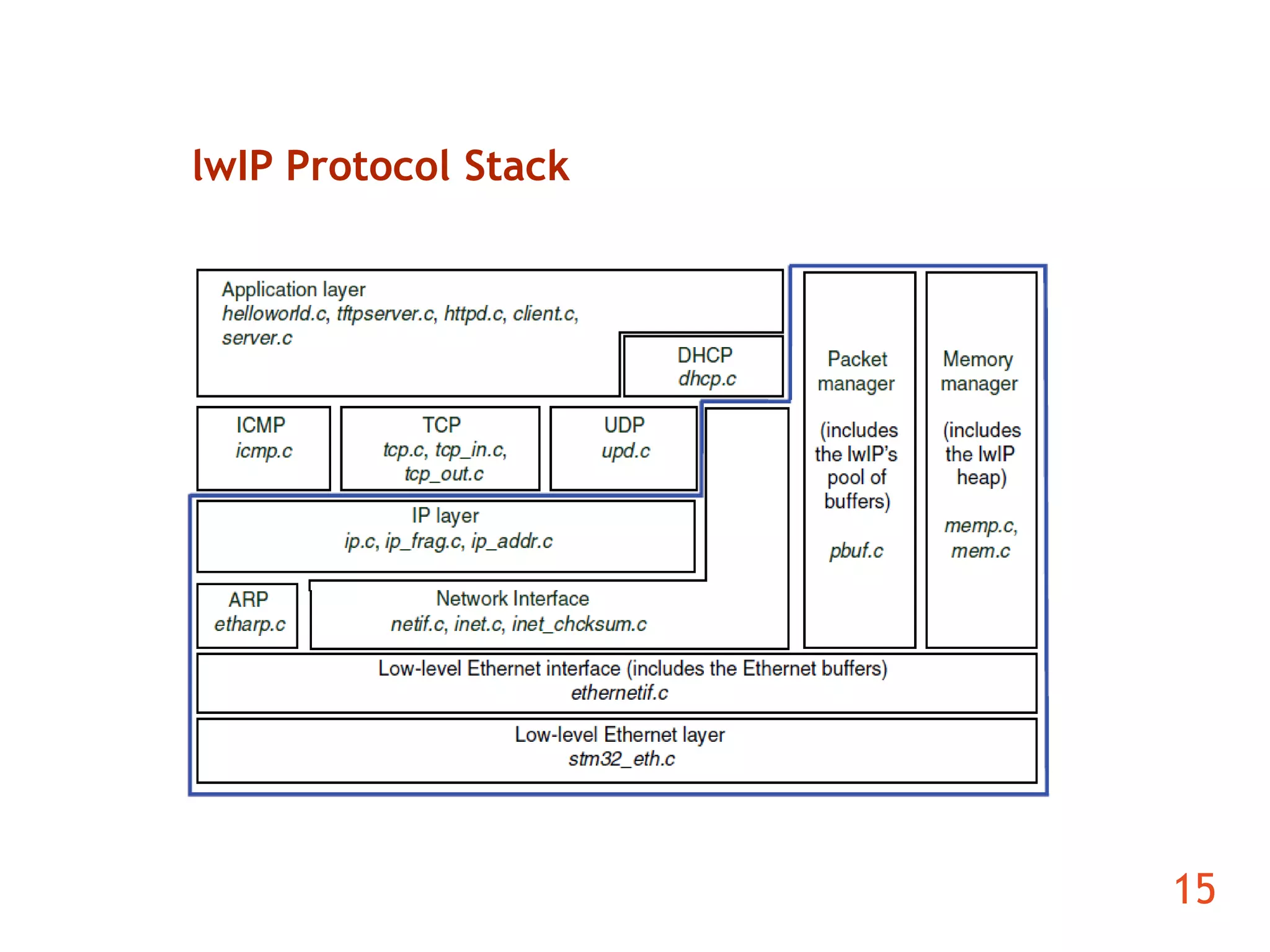
lwIP Protocol Stack
4.3.3 IP Phone Firmware 
16 
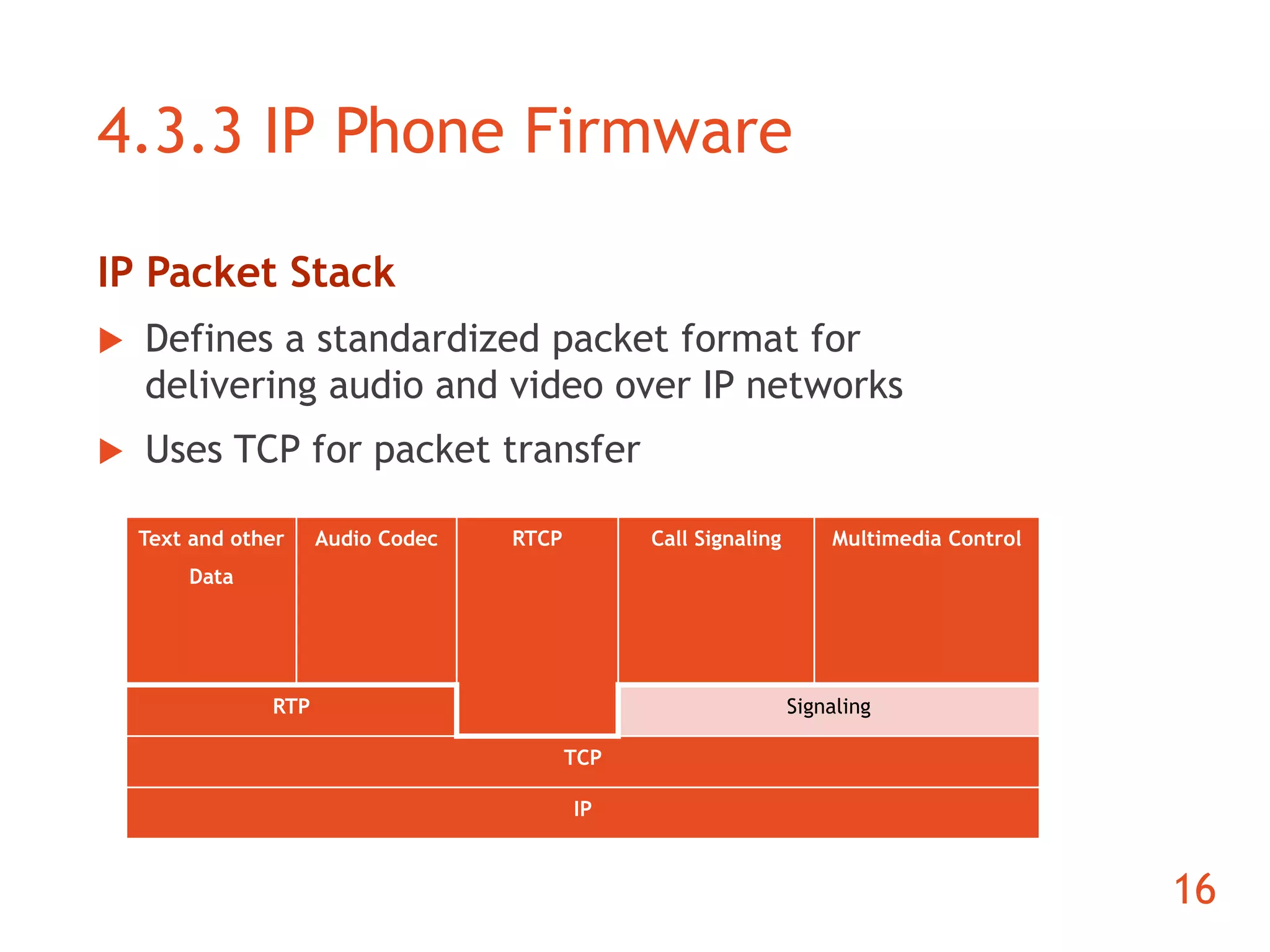
IP Packet Stack 
 Defines a standardized packet format for 
delivering audio and video over IP networks 
 Uses TCP for packet transfer 
Text and other 
Data 
Audio Codec RTCP Call Signaling Multimedia Control 
RTP Signaling 
TCP 
IP
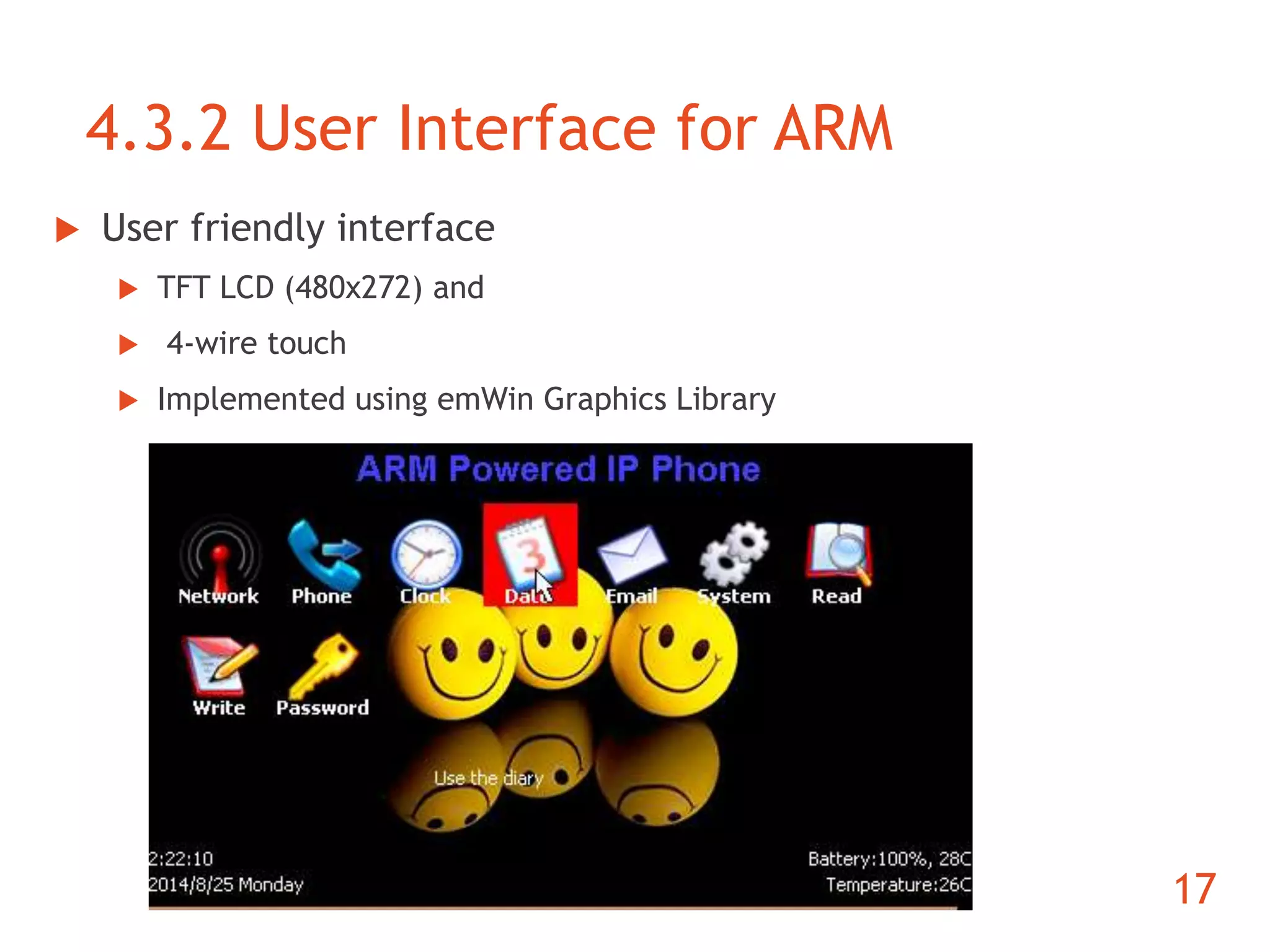
4.3.2 User Interface for ARM 
 User friendly interface 
 TFT LCD (480x272) and 
 4-wire touch 
 Implemented using emWin Graphics Library 
17
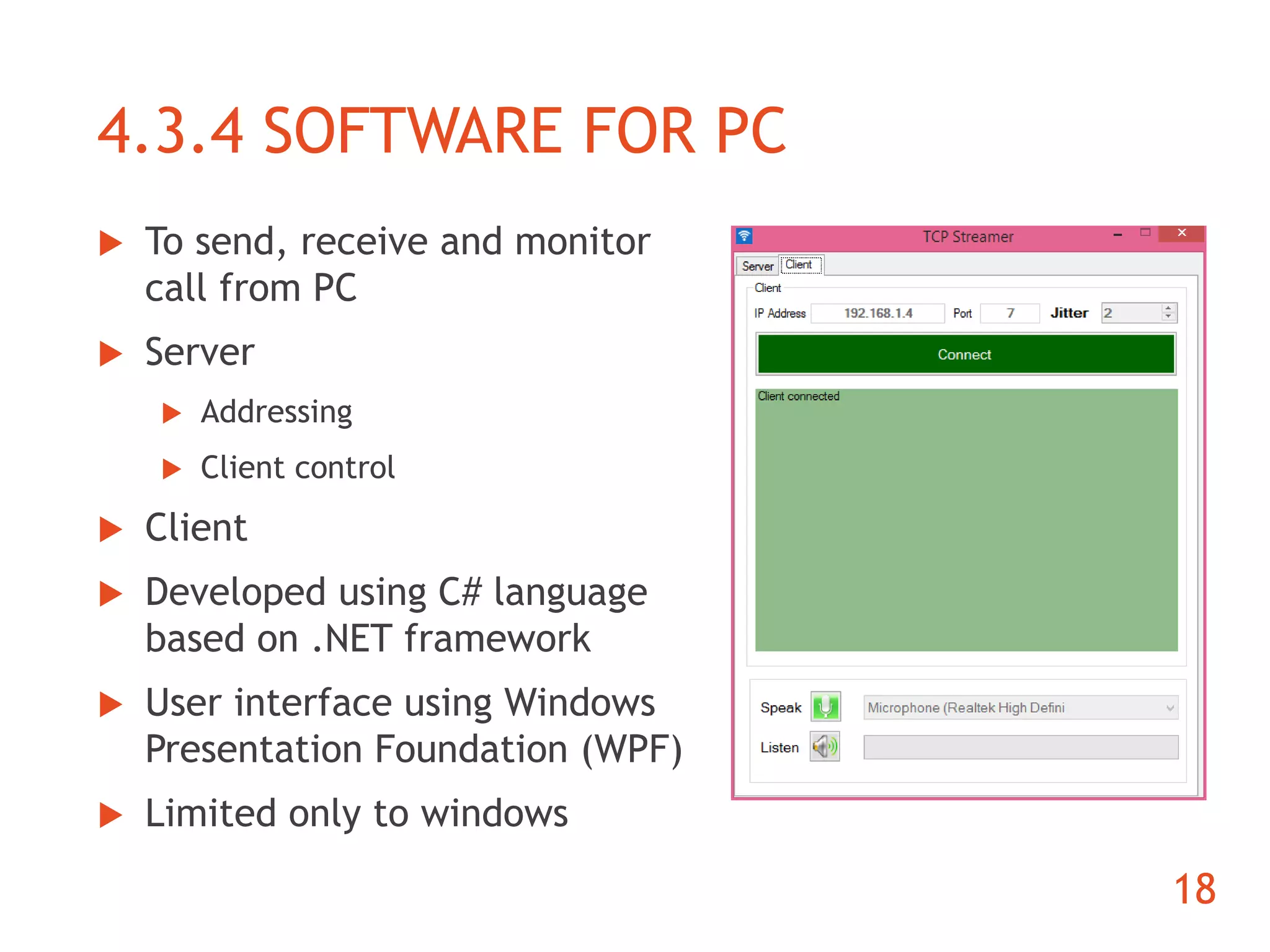
4.3.4 SOFTWARE FOR PC 
 To send, receive and monitor 
call from PC 
 Server 
 Addressing 
 Client control 
 Client 
 Developed using C# language 
based on .NET framework 
 User interface using Windows 
Presentation Foundation (WPF) 
 Limited only to windows 
18
4.3.5 Audio Codecs and Playback 
 Microphone Input 
 Speaker Output 
 ADC, DAC 
 Sampling, coding, decoding 
 UDA1380 one chip solution 
 I2S data 
 I2C control 
23
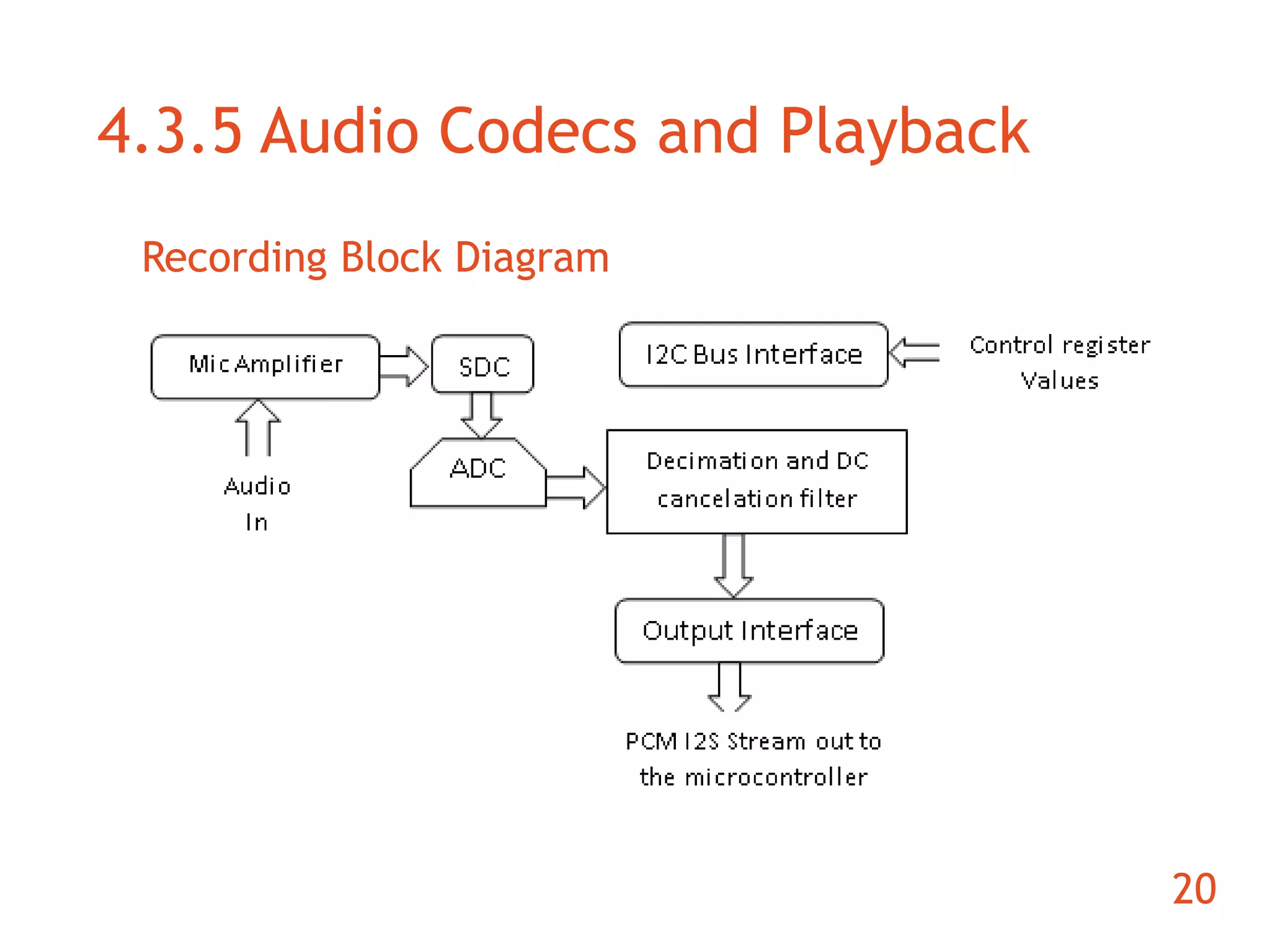
4.3.5 Audio Codecs and Playback 
20 
Recording Block Diagram
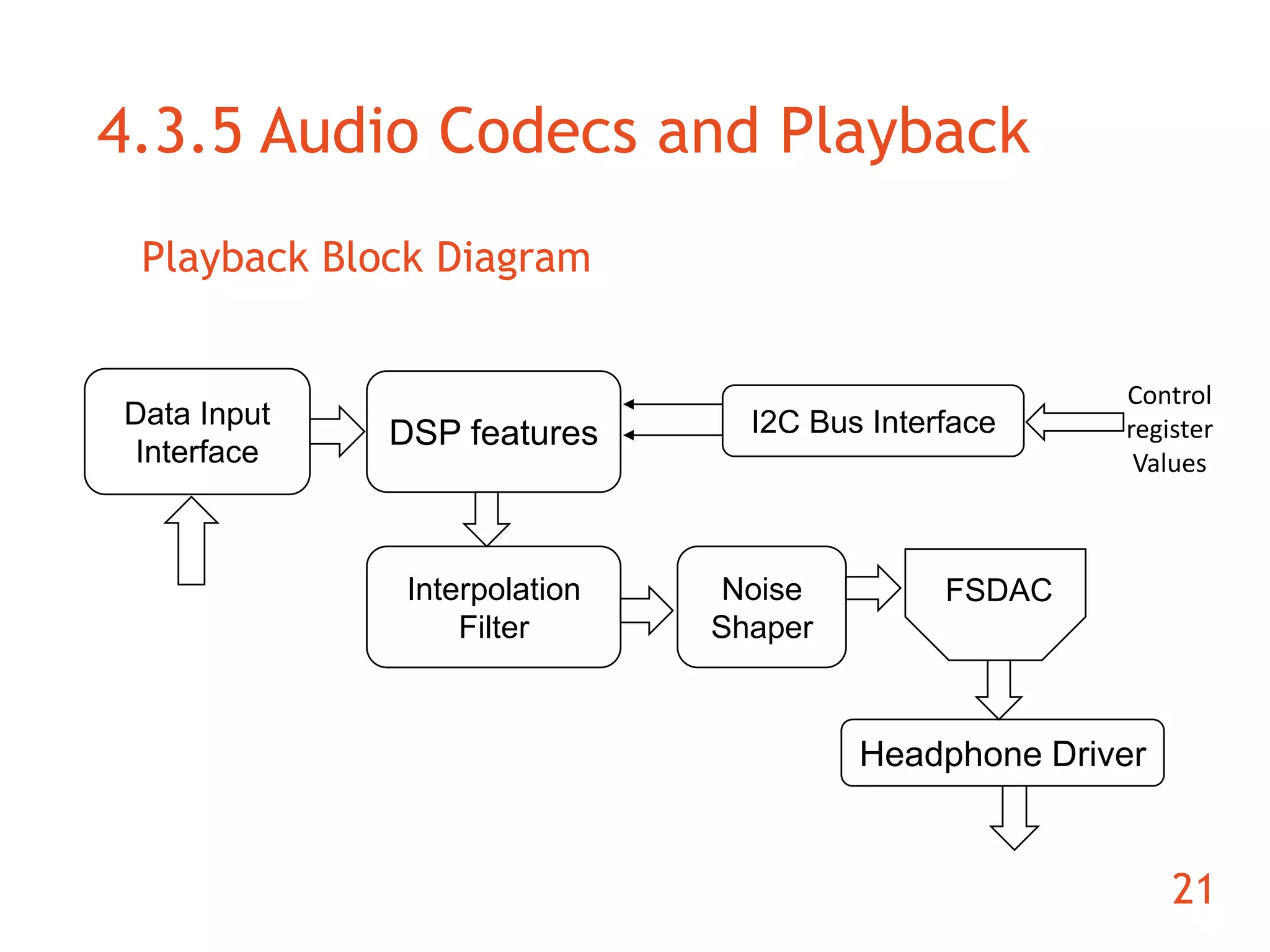
Control 
register 
Values 
4.3.5 Audio Codecs and Playback 
21 
Playback Block Diagram 
Data Input 
Interface 
DSP features 
Interpolation 
Filter 
I2C Bus Interface 
Noise 
Shaper 
FSDAC 
Headphone Driver
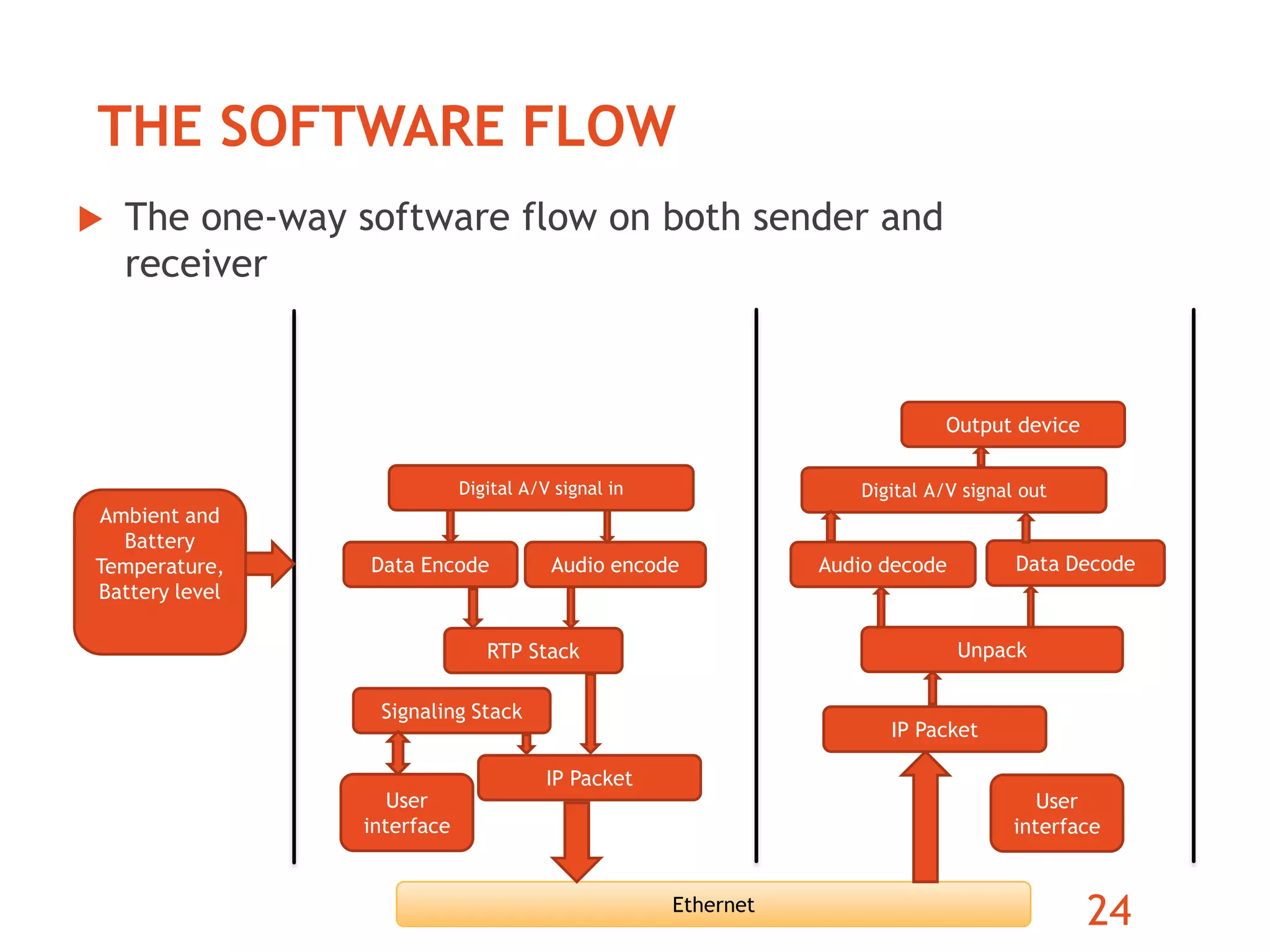
THE SOFTWARE FLOW 
 The one-way software flow on both sender and 
receiver 
Data Encode Audio encode 
RTP Stack 
Output device 
Audio decode 
Digital A/V signal in 
IP Packet 
Data Decode 
Signaling Stack 
Ethernet 
Digital A/V signal out 
Unpack 
IP Packet 
User 
interface 
User 
interface 
24 
Ambient and 
Battery 
Temperature, 
Battery level
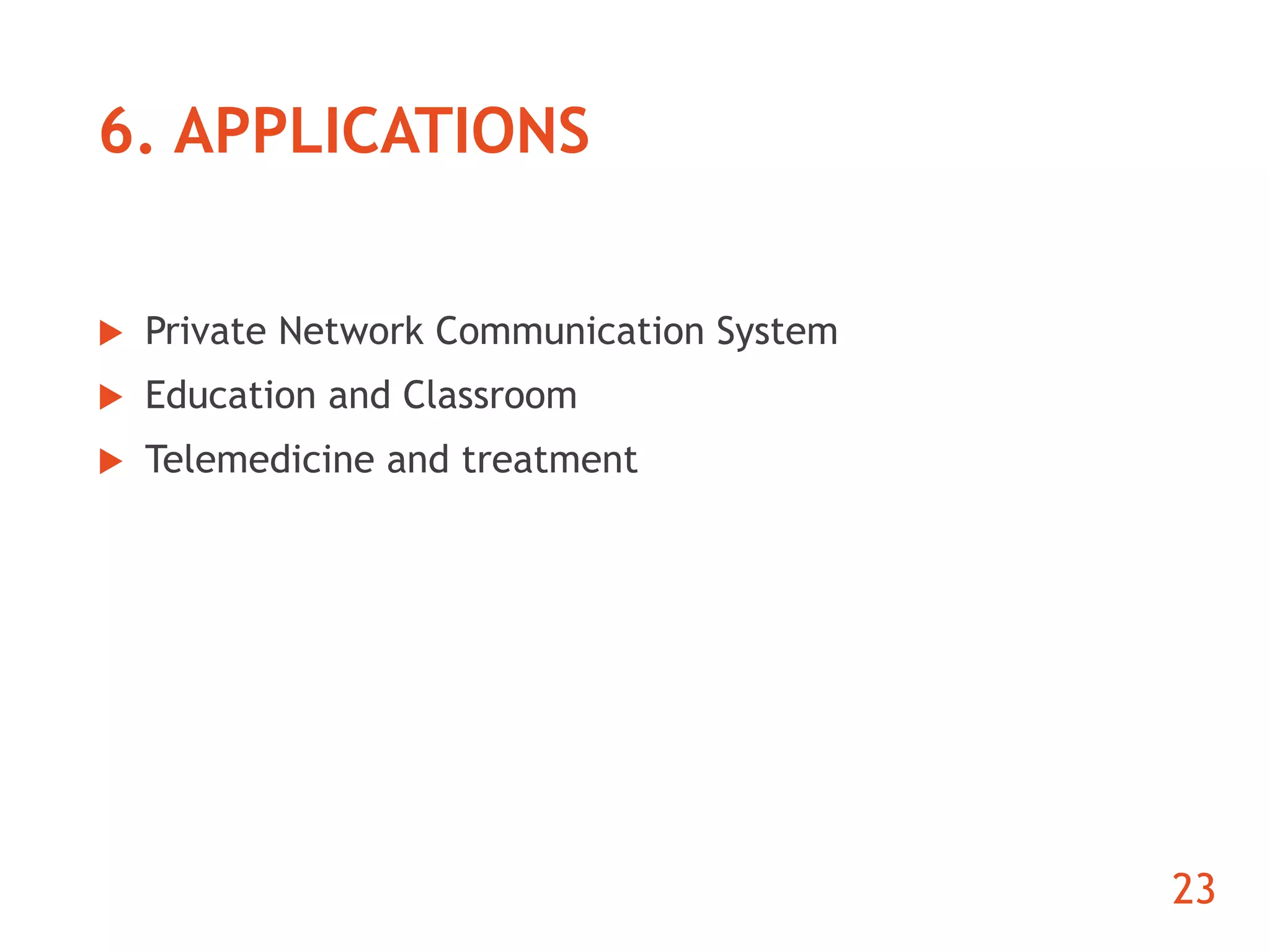
6. APPLICATIONS 
 Private Network Communication System 
 Education and Classroom 
 Telemedicine and treatment 
23
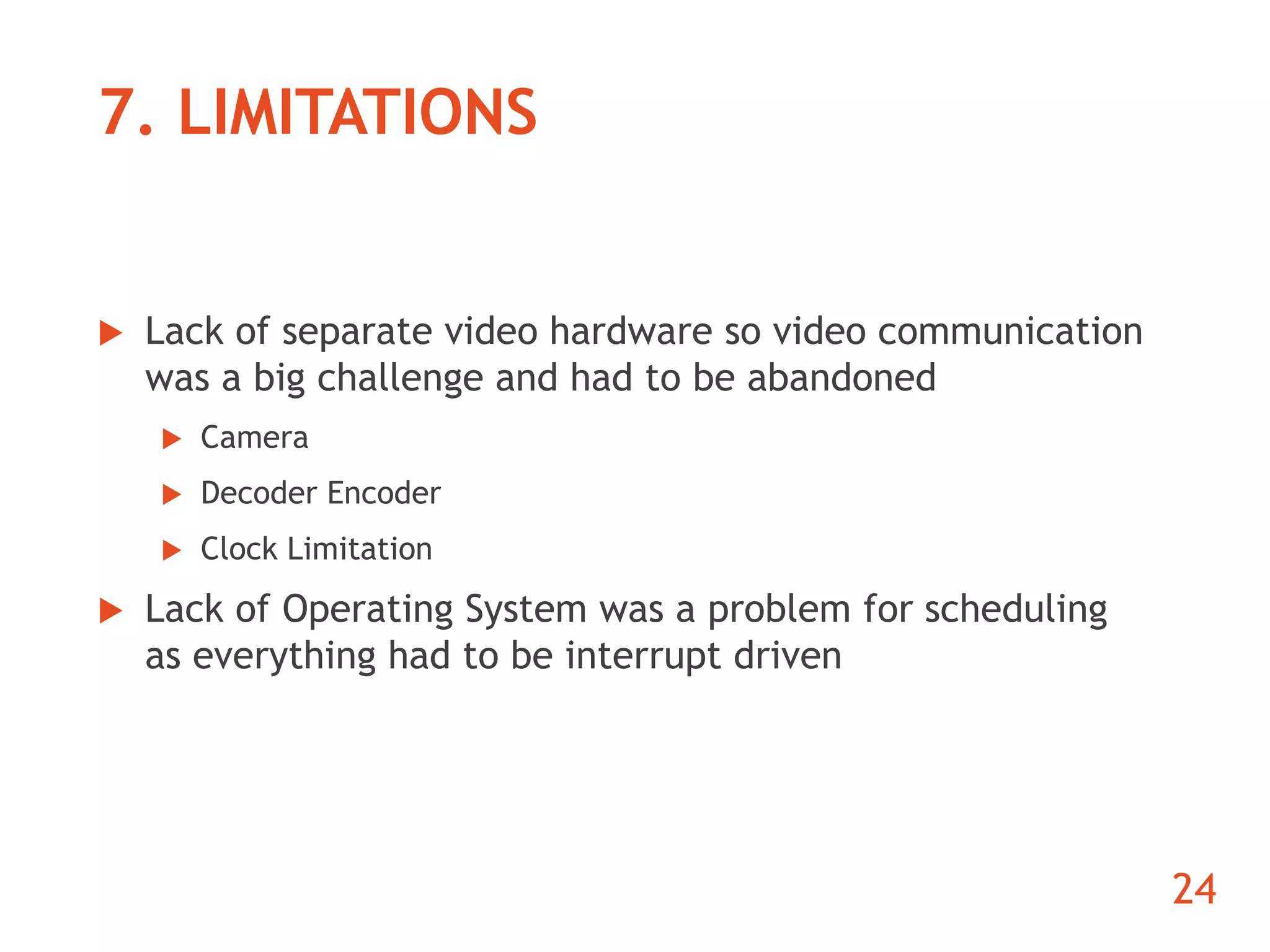
7. LIMITATIONS 
 Lack of separate video hardware so video communication 
was a big challenge and had to be abandoned 
 Camera 
 Decoder Encoder 
 Clock Limitation 
 Lack of Operating System was a problem for scheduling 
as everything had to be interrupt driven 
24
9. FUTURE ENHANCEMENT 
25 
 Video communication 
 Multi-platform based software 
 Encryption for security purpose 
 SMPS based power supply
REFERENCES 
Books 
 Tanenbaum, A. S. & Wetherall, D. J. (2011). Computer Networks 
 Viswanathan, T (2012). Telecommunication Switching Systems and NetworkS 
 Haykin, S (2013). Digital Communication Systems. 
 Sloss, A & Symes, D & Wright, C (2004). ARM System Developer's Guide. 
Websites 
 Wikepedia. (2014). Voice over IP. Available: http://en.wikipedia.org/wiki/Voice_over_IP. 
Last accessed 20th Feb 2014. 
 Valdes,R & Roos,D. (2014). How VoIP Works. Available: 
http://computer.howstuffworks.com/ip-telephony.htm. Last accessed 18th Feb 2014 
Documents 
 Sadasivan, S .(November 2010). Developing optimized signal processing software on the 
Cortex‐M4 processor. Retrieved February 10,2014, from 
http://www.arm.com/files/downloads/Developing_Advanced_Signal_Processing_Softwar 
e_on_the_Cortex-M4_Processor.pdf. 
 Ward, M .(Number 4, 2005). Developing Video Phones with ARM Processor -based 
Solutions. Retrieved February 10, 2014, from 
http://www.iqmagazineonline.com/magazine/pdf/v_4_4_pdf/v_4_4_pg-16-19.pdf 
26
THANK YOU!

ARM based Multimedia IP Phone

  • 1.
    ARM based MultimediaIP Phone THAPATHALI CAMPUS FINAL PRESENTATION MEMBERS Bijay Raj Paudel (Roll No: 067/BEX/105) Kshitij Poudel (Roll No: 067/BEX/119) Sagar Mali (Roll No: 067/BEX/133) Sujan Shrestha (Roll No: 067/BEX/140) SUPERVISOR Bikash Poudel
  • 2.
    1. INTRODUCTION IP based Telephone System  IP Phone powered by ARM processor  Implements VoIP technology  UPS System for standalone operation 2
  • 3.
    2. OBJECTIVES To design and implement Multimedia capable IP Telephone using ARM processor  To demonstrate the implementation of IP telephony system in LAN using developed ARM based IP phone as a client 3
  • 4.
  • 5.
    4. METHODOLOGY 4.1Hardware 4.2.1 UPS System 4.2.2 Battery Status Display and Temperature Sensor 4.2.3 Main Phone Unit 4.2 Firmware 4.3.1 Networking Protocols 4.3.2 User Interface for ARM 4.3.3 IP Phone Firmware 4.3.4 Software for PC 4.3.5 Audio Codecs and Playback 5
  • 6.
    4.1 Hardware 4.2.1UPS System 4.2.2 Battery Status Display Unit 4.2.3 Main Phone Unit (ARM Development Board) 6
  • 7.
    4.2.1 UPS System  For the operation of IP phone during power outrage 7
  • 8.
    4.2.1 UPS System FEATURES  Switches between main supply and battery  Standard CCCV charging algorithm  Overcharge Protection  Deep Discharge Protection  Regulated 5 V Supply 8
  • 9.
    4.2.2 Battery StatusDisplay and Temperature Sensor  Receives Voltage and Current level from battery  Receives Temperature Status from LM35  Uses ATmega8 for ADC  Transfers data via USART and RS232 interface 9
  • 10.
    4.2.2 Battery StatusDisplay and Temperature Sensor Block Diagram 10 TEMP. 2 RS232 INTERFACE ATmega8 BATTERY LM35 VOLTAGE CURRENT TEMP. 1
  • 11.
    4.2.3 Main PhoneUnit 11  Implemented on EM-LPC1788 development board based on the main chip LPC1788 produced by NXP  Has ARM Cortex M3 microcontroller LPC1788
  • 12.
  • 13.
    4.2 Firmware 4.3.1Network Protocols 4.3.2 User Interface for ARM 4.3.3 IP Phone Firmware 4.3.4 Software for PC 4.3.5 Audio Codecs and Playback 13
  • 14.
    4.3.1 Network Protocols  TCP/IP (Transmission Control Protocol/ Internet Protocol)  DHCP (Dynamic Host Control Protocol)  ICMP (Internet Control Messaging Protocol)  TCP/IP used instead of UDP for real time audio data 14
  • 15.
  • 16.
    4.3.3 IP PhoneFirmware 16 IP Packet Stack  Defines a standardized packet format for delivering audio and video over IP networks  Uses TCP for packet transfer Text and other Data Audio Codec RTCP Call Signaling Multimedia Control RTP Signaling TCP IP
  • 17.
    4.3.2 User Interfacefor ARM  User friendly interface  TFT LCD (480x272) and  4-wire touch  Implemented using emWin Graphics Library 17
  • 18.
    4.3.4 SOFTWARE FORPC  To send, receive and monitor call from PC  Server  Addressing  Client control  Client  Developed using C# language based on .NET framework  User interface using Windows Presentation Foundation (WPF)  Limited only to windows 18
  • 19.
    4.3.5 Audio Codecsand Playback  Microphone Input  Speaker Output  ADC, DAC  Sampling, coding, decoding  UDA1380 one chip solution  I2S data  I2C control 23
  • 20.
    4.3.5 Audio Codecsand Playback 20 Recording Block Diagram
  • 21.
    Control register Values 4.3.5 Audio Codecs and Playback 21 Playback Block Diagram Data Input Interface DSP features Interpolation Filter I2C Bus Interface Noise Shaper FSDAC Headphone Driver
  • 22.
    THE SOFTWARE FLOW  The one-way software flow on both sender and receiver Data Encode Audio encode RTP Stack Output device Audio decode Digital A/V signal in IP Packet Data Decode Signaling Stack Ethernet Digital A/V signal out Unpack IP Packet User interface User interface 24 Ambient and Battery Temperature, Battery level
  • 23.
    6. APPLICATIONS Private Network Communication System  Education and Classroom  Telemedicine and treatment 23
  • 24.
    7. LIMITATIONS Lack of separate video hardware so video communication was a big challenge and had to be abandoned  Camera  Decoder Encoder  Clock Limitation  Lack of Operating System was a problem for scheduling as everything had to be interrupt driven 24
  • 25.
    9. FUTURE ENHANCEMENT 25  Video communication  Multi-platform based software  Encryption for security purpose  SMPS based power supply
  • 26.
    REFERENCES Books Tanenbaum, A. S. & Wetherall, D. J. (2011). Computer Networks  Viswanathan, T (2012). Telecommunication Switching Systems and NetworkS  Haykin, S (2013). Digital Communication Systems.  Sloss, A & Symes, D & Wright, C (2004). ARM System Developer's Guide. Websites  Wikepedia. (2014). Voice over IP. Available: http://en.wikipedia.org/wiki/Voice_over_IP. Last accessed 20th Feb 2014.  Valdes,R & Roos,D. (2014). How VoIP Works. Available: http://computer.howstuffworks.com/ip-telephony.htm. Last accessed 18th Feb 2014 Documents  Sadasivan, S .(November 2010). Developing optimized signal processing software on the Cortex‐M4 processor. Retrieved February 10,2014, from http://www.arm.com/files/downloads/Developing_Advanced_Signal_Processing_Softwar e_on_the_Cortex-M4_Processor.pdf.  Ward, M .(Number 4, 2005). Developing Video Phones with ARM Processor -based Solutions. Retrieved February 10, 2014, from http://www.iqmagazineonline.com/magazine/pdf/v_4_4_pdf/v_4_4_pg-16-19.pdf 26
  • 27.

Editor's Notes

  • #21 Single inded differential converter
  • #22 Filter stream DAC