ARGENTINE CULTUREBY TAIRRANS HAYNES
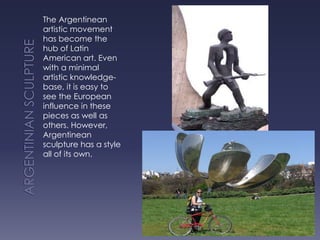
ARGENTINIAN SCULPTUREThe Argentinean artistic movement has become the hub of Latin American art. Even with a minimal artistic knowledge-base, it is easy to see the European influence in these pieces as well as others. However, Argentinean sculpture has a style all of its own.
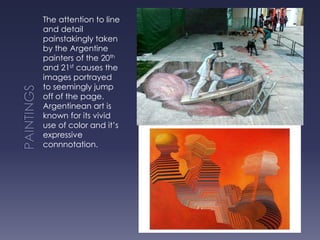
PAINTINGSThe attention to line and detail painstakingly taken by the Argentine painters of the 20th  and 21st causes the images portrayed to seemingly jump off of the page. Argentinean art is known for its vivid use of color and it’s expressive connnotation.
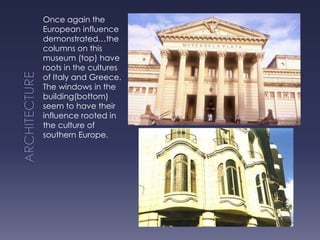
ARCHITECTUREOnce again the European influence demonstrated…the columns on this museum (top) have roots in the cultures of Italy and Greece.The windows in the building(bottom) seem to have their influence rooted in the culture of southern Europe.
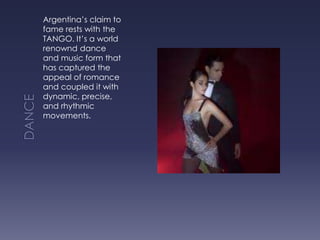
DANCEArgentina’s claim to fame rests with the TANGO. It’s a world renownd dance and music form that has captured the appeal of romance and coupled it with dynamic, precise, and rhythmic movements.
sourcesWikipediaNiche Encounters travel consultants

Argentine culture

  • 1.
  • 2.
    ARGENTINIAN SCULPTUREThe Argentineanartistic movement has become the hub of Latin American art. Even with a minimal artistic knowledge-base, it is easy to see the European influence in these pieces as well as others. However, Argentinean sculpture has a style all of its own.
  • 3.
    PAINTINGSThe attention toline and detail painstakingly taken by the Argentine painters of the 20th and 21st causes the images portrayed to seemingly jump off of the page. Argentinean art is known for its vivid use of color and it’s expressive connnotation.
  • 4.
    ARCHITECTUREOnce again theEuropean influence demonstrated…the columns on this museum (top) have roots in the cultures of Italy and Greece.The windows in the building(bottom) seem to have their influence rooted in the culture of southern Europe.
  • 5.
    DANCEArgentina’s claim tofame rests with the TANGO. It’s a world renownd dance and music form that has captured the appeal of romance and coupled it with dynamic, precise, and rhythmic movements.
  • 6.