Role of technology in achieving
 sustainable intensification?


 How to Achieve Food Security in a
 World of Growing Scarcity:
 Role of Technology Development
 Strategies
         Claudia Ringler
              IFPRI
       ARDD, June 18, 2012
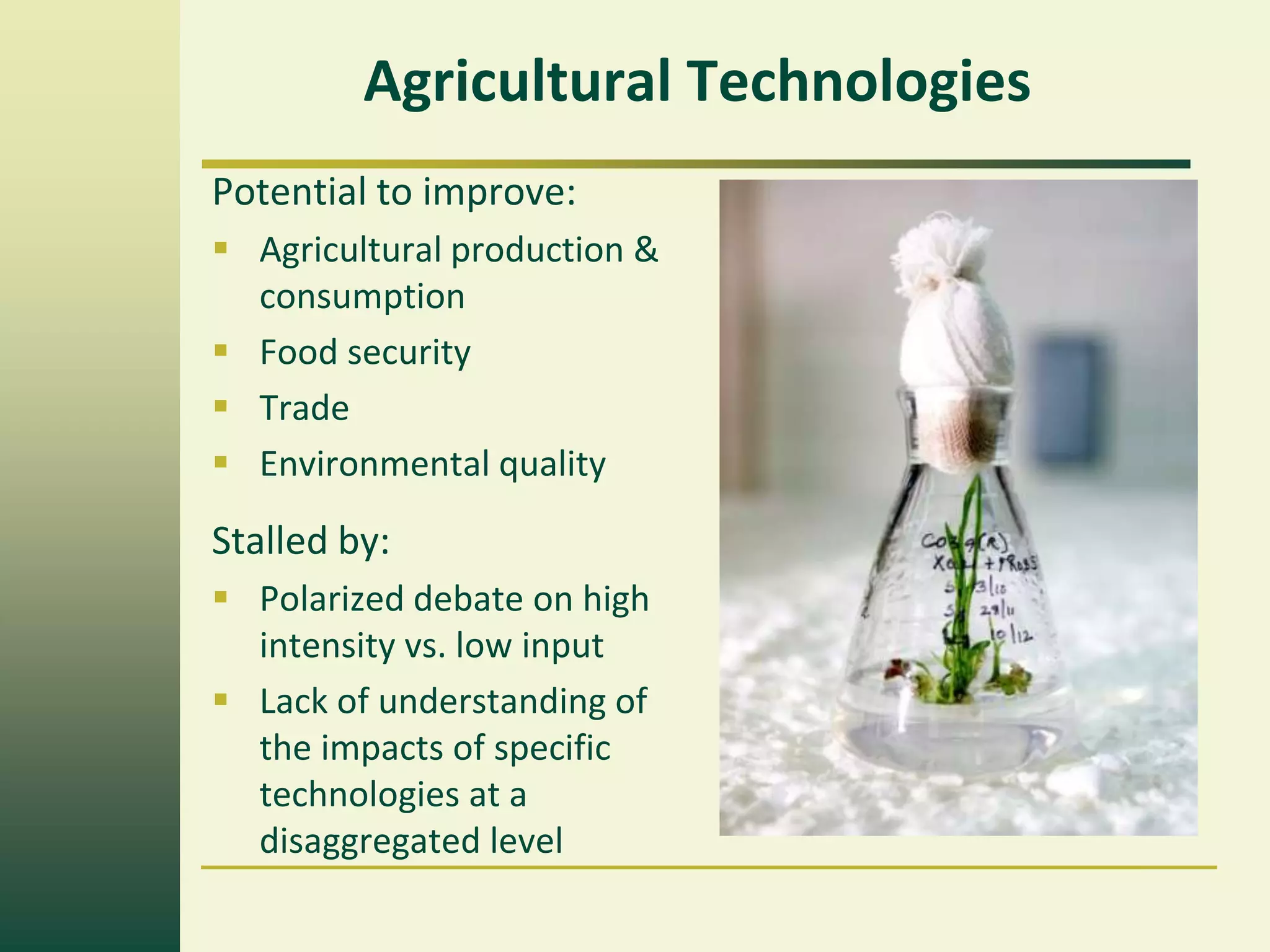
Agricultural Technologies
Potential to improve:
 Agricultural production &
  consumption
 Food security
 Trade
 Environmental quality

Stalled by:
 Polarized debate on high
  intensity vs. low input
 Lack of understanding of
  the impacts of specific
  technologies at a
  disaggregated level
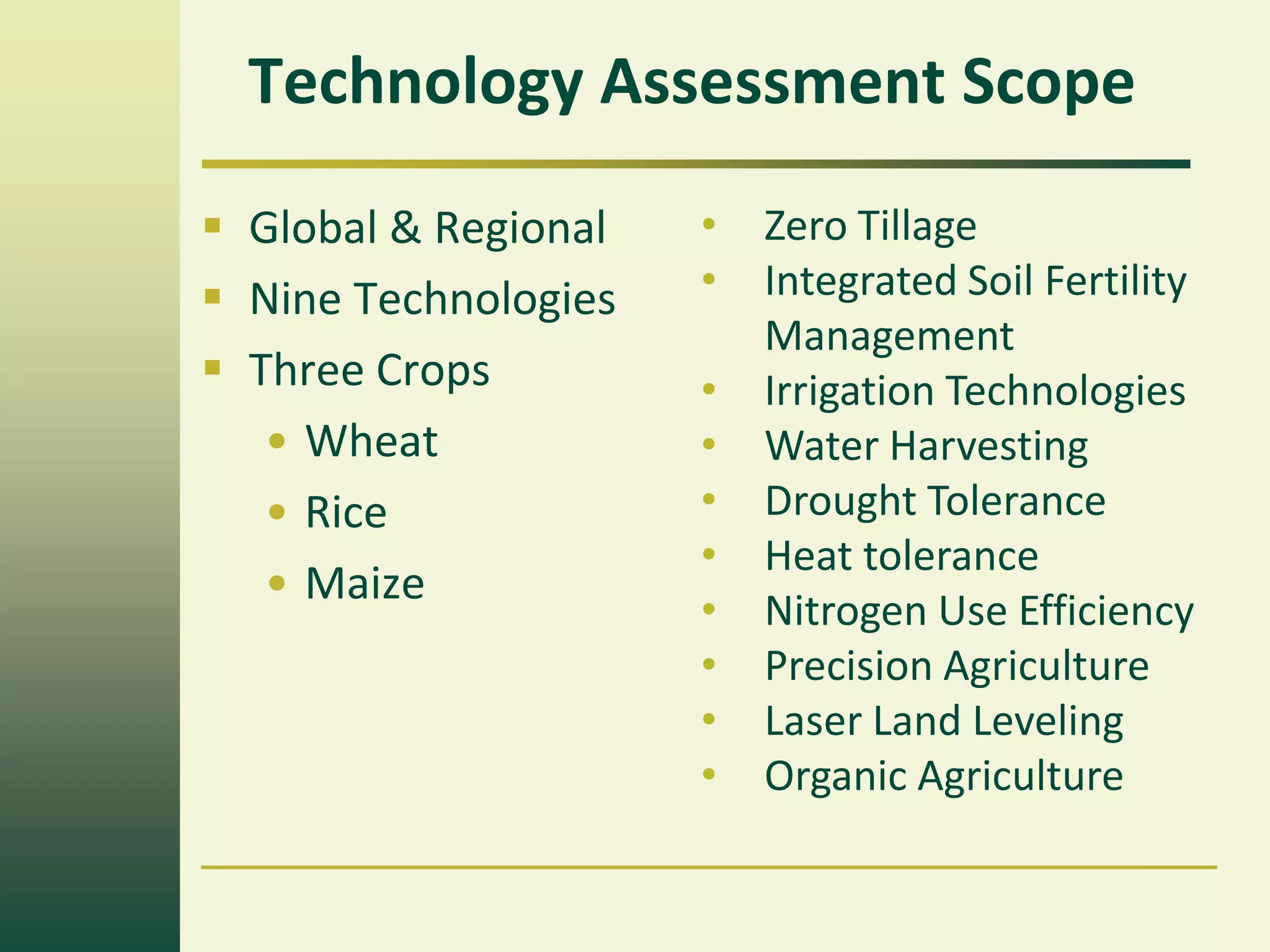
Technology Assessment Scope
 Global & Regional   •   Zero Tillage
 Nine Technologies   •   Integrated Soil Fertility
                          Management
 Three Crops         •   Irrigation Technologies
   • Wheat            •   Water Harvesting
   • Rice             •   Drought Tolerance
                      •   Heat tolerance
   • Maize
                      •   Nitrogen Use Efficiency
                      •   Precision Agriculture
                      •   Laser Land Leveling
                      •   Organic Agriculture
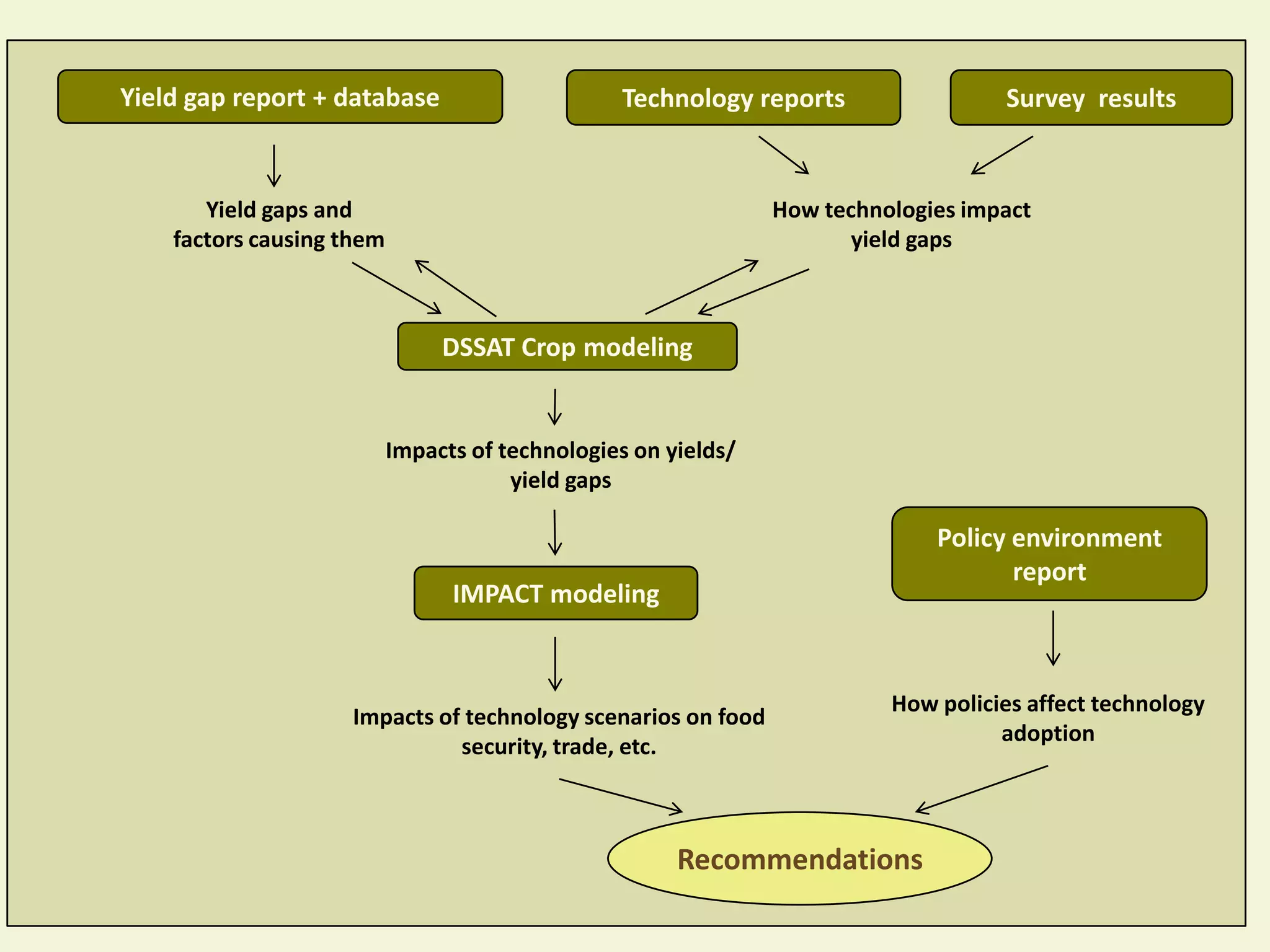
Yield gap report + database                      Technology reports                 Survey results


       Yield gaps and                                           How technologies impact
    factors causing them                                               yield gaps


                                DSSAT Crop modeling


                           Impacts of technologies on yields/
                                       yield gaps

                                                                              Policy environment
                                                                                     report
                                 IMPACT modeling


                                                                          How policies affect technology
                    Impacts of technology scenarios on food
                                                                                    adoption
                              security, trade, etc.


                                                       Recommendations
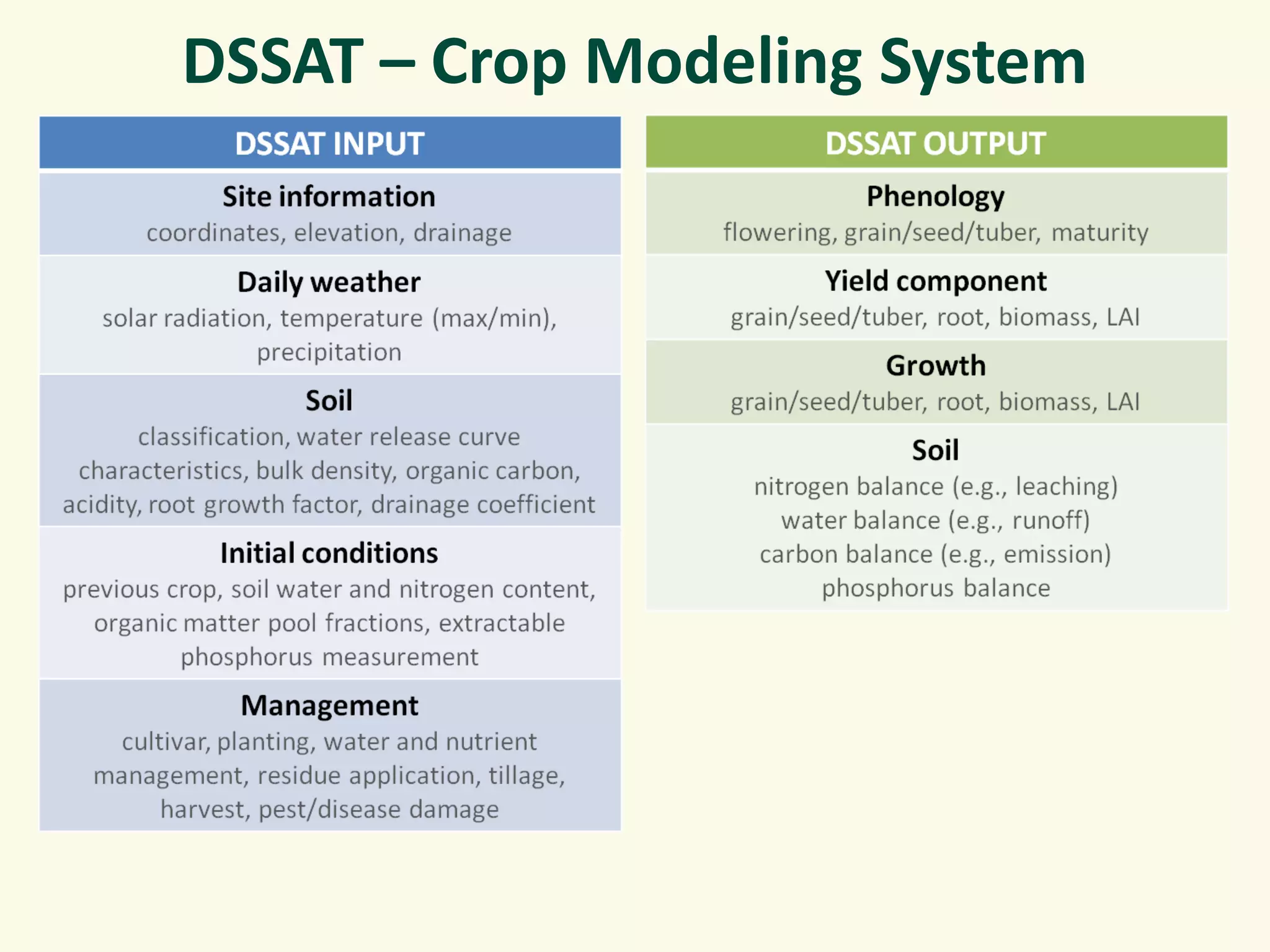
DSSAT – Crop Modeling System
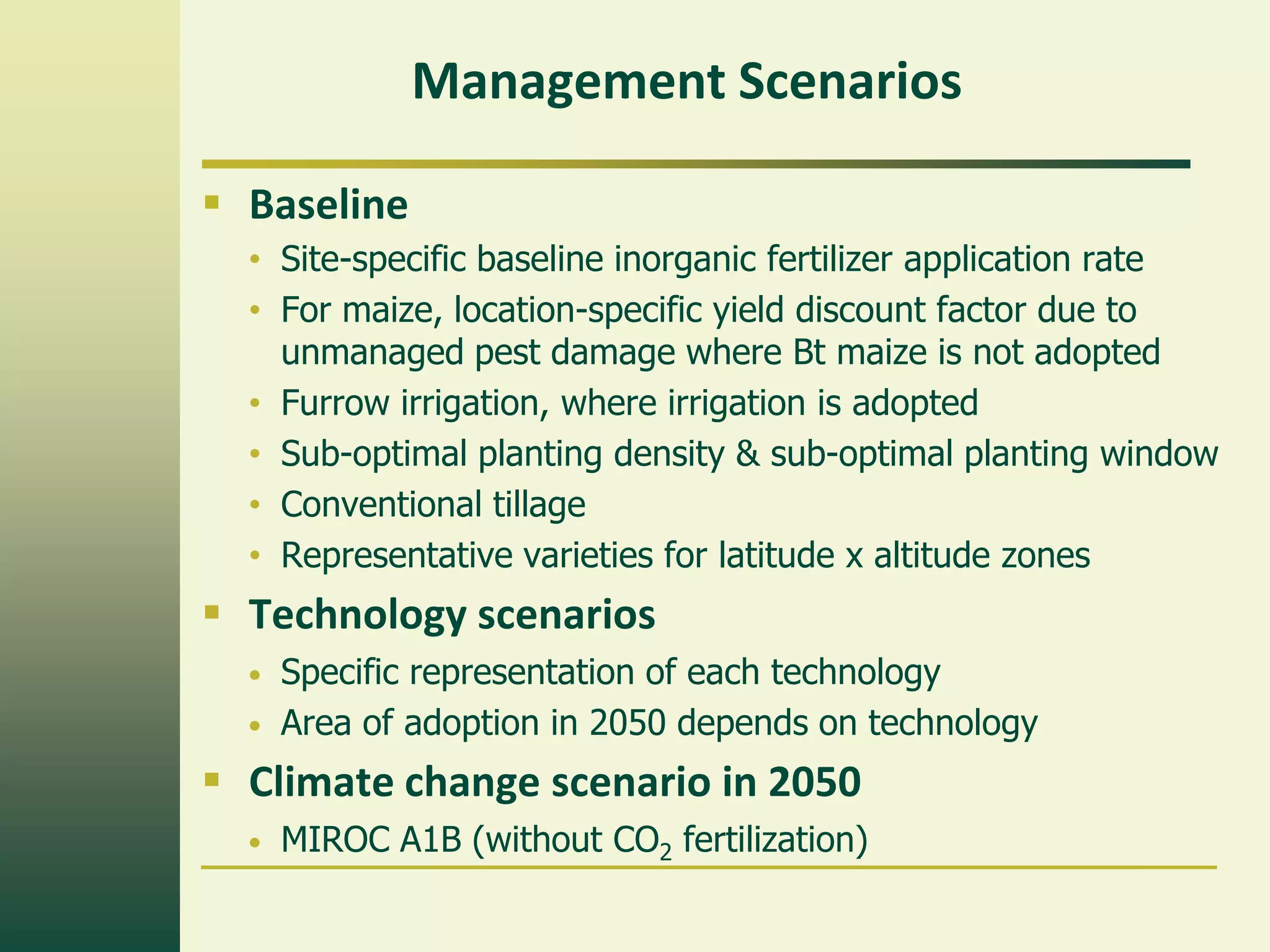
Management Scenarios

 Baseline
  • Site-specific baseline inorganic fertilizer application rate
  • For maize, location-specific yield discount factor due to
    unmanaged pest damage where Bt maize is not adopted
  • Furrow irrigation, where irrigation is adopted
  • Sub-optimal planting density & sub-optimal planting window
  • Conventional tillage
  • Representative varieties for latitude x altitude zones
 Technology scenarios
  •   Specific representation of each technology
  •   Area of adoption in 2050 depends on technology
 Climate change scenario in 2050
  •   MIROC A1B (without CO2 fertilization)
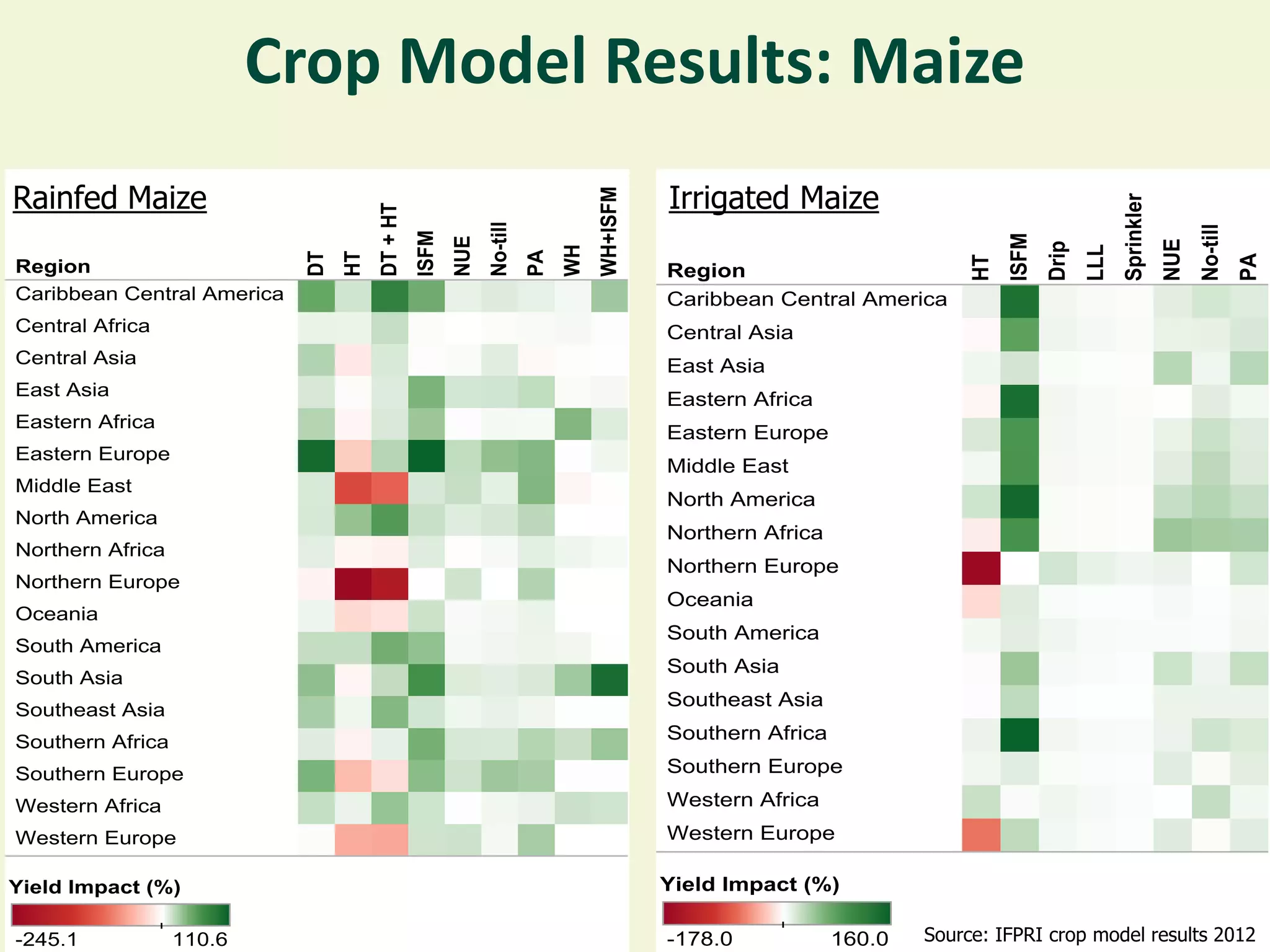
Crop Model Results: Maize
Rainfed Maize                Irrigated Maize


                                               Source: IFPRI crop model results 2012
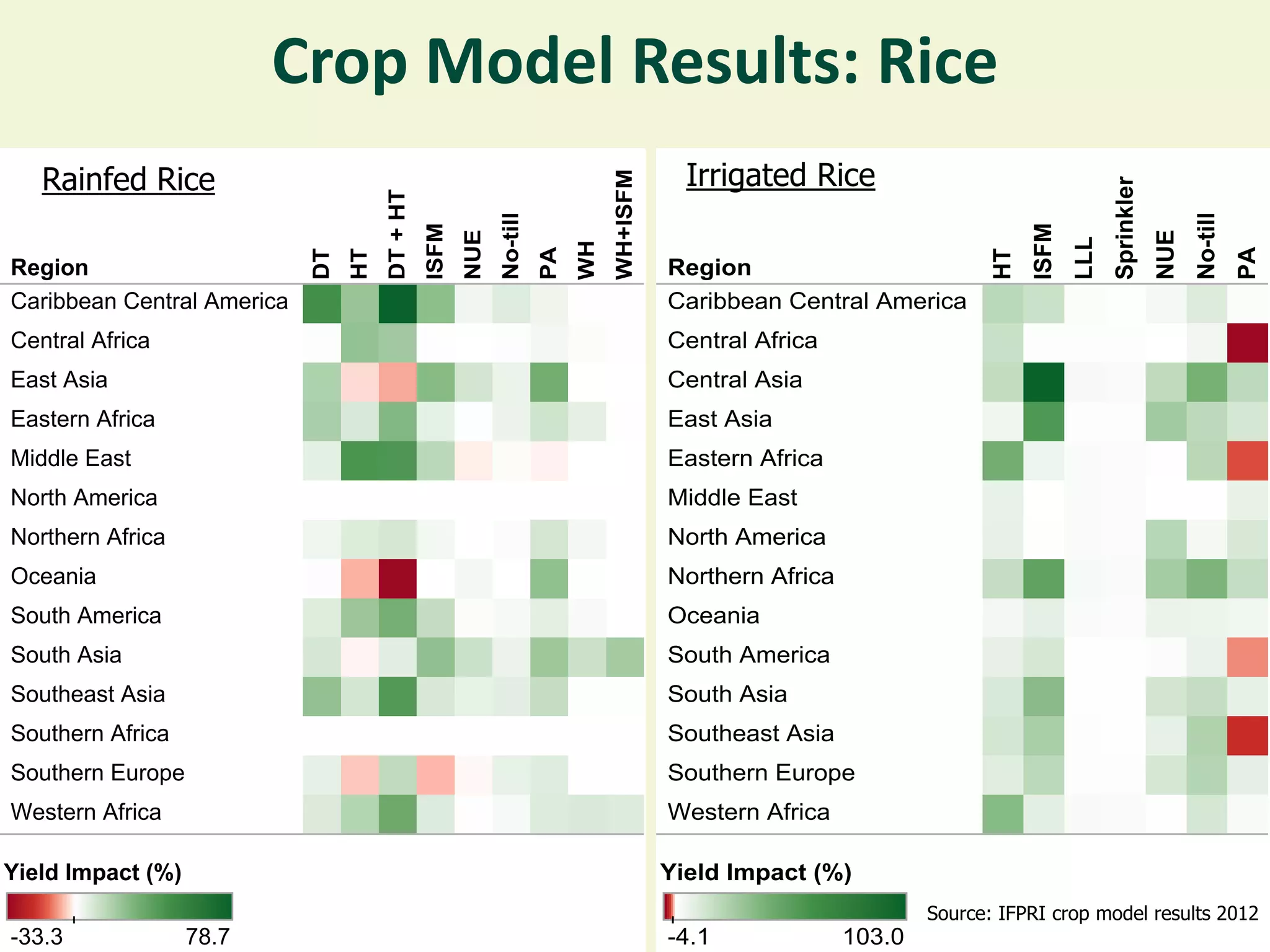
Crop Model Results: Rice
Rainfed Rice                Irrigated Rice


                                             Source: IFPRI crop model results 2012
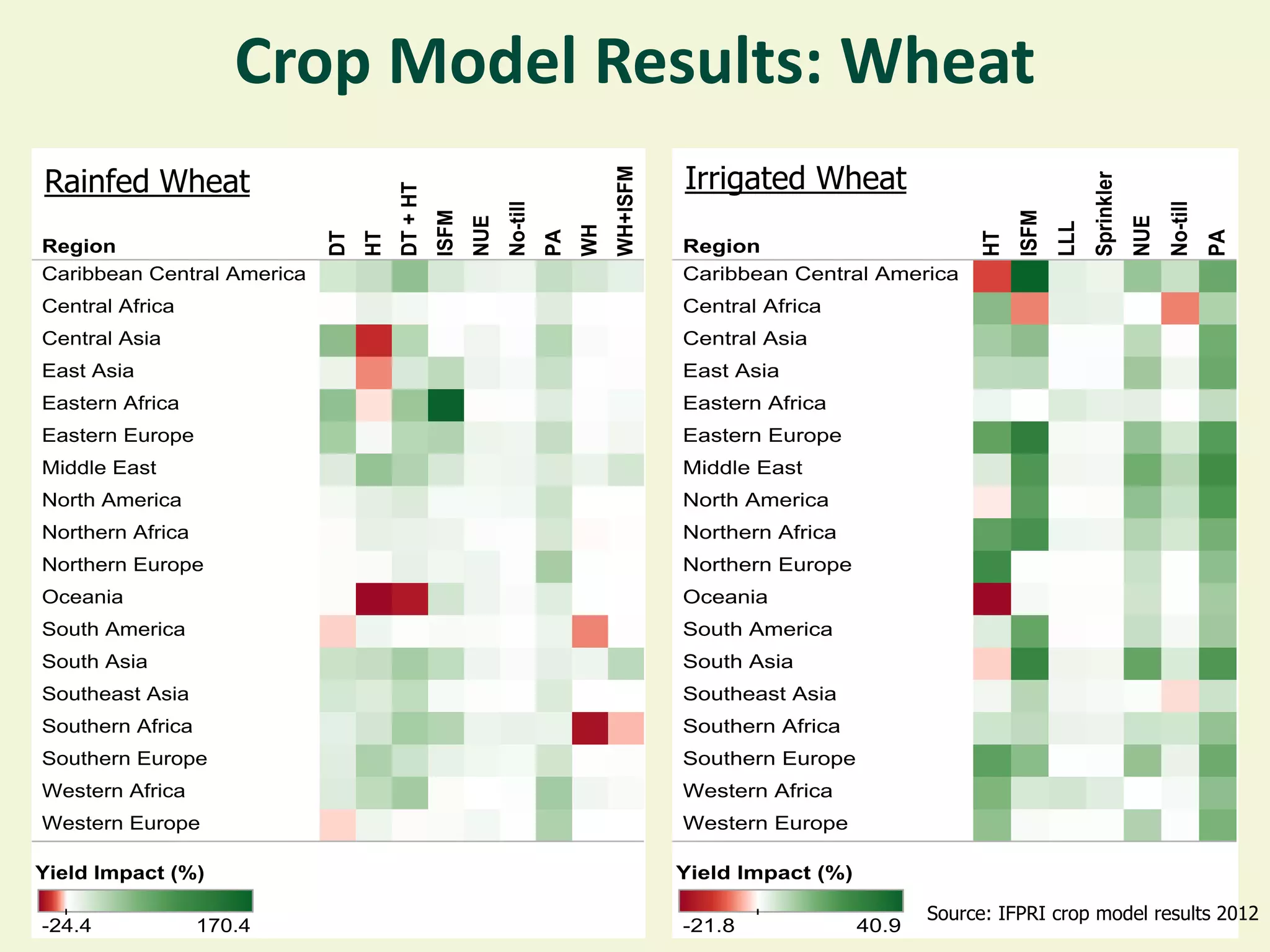
Crop Model Results: Wheat
Rainfed Wheat             Irrigated Wheat


                                            Source: IFPRI crop model results 2012
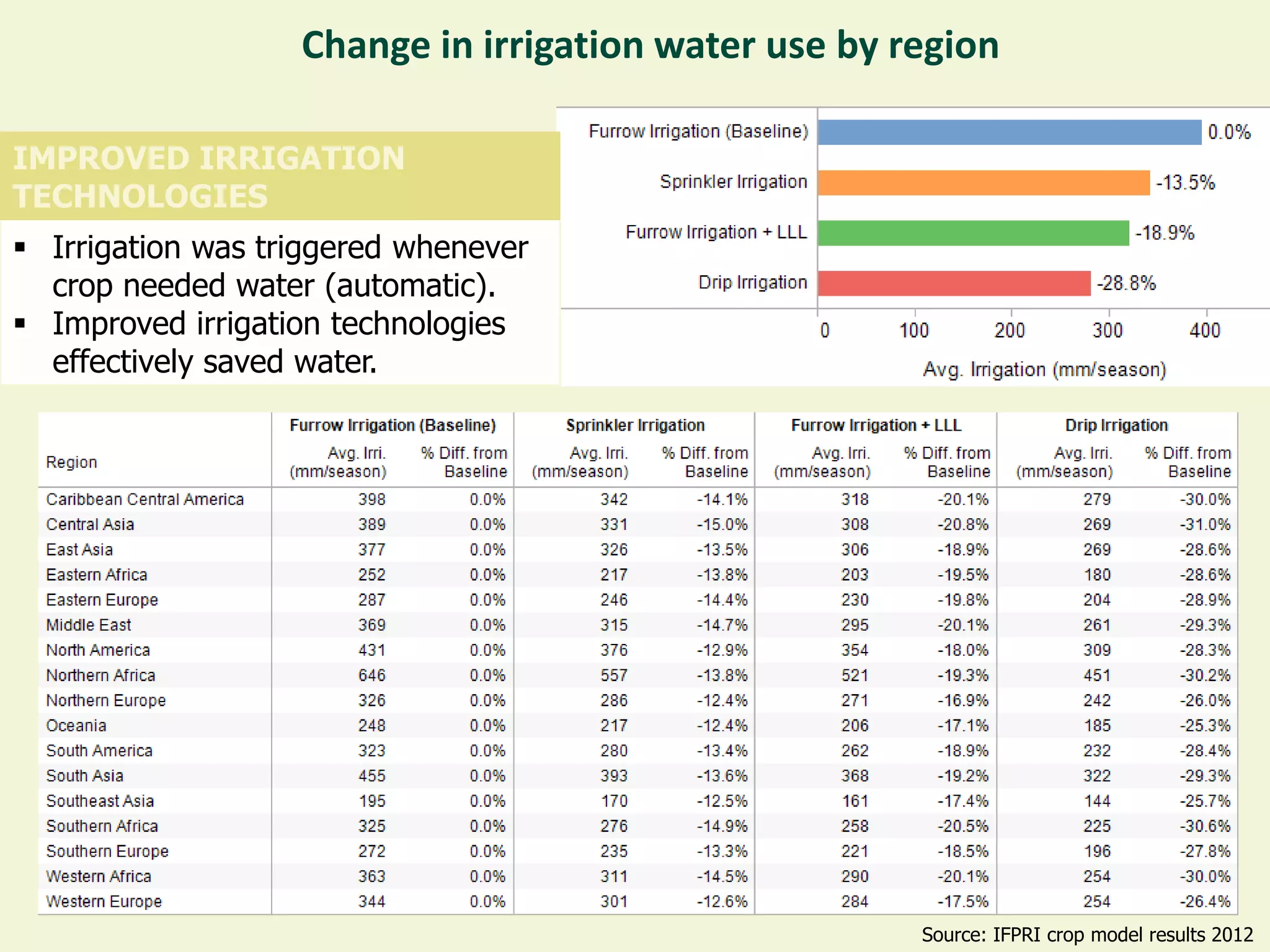
Change in irrigation water use by region

IMPROVED IRRIGATION
TECHNOLOGIES
 Irrigation was triggered whenever
  crop needed water (automatic).
 Improved irrigation technologies
  effectively saved water.


                                                      Source: IFPRI crop model results 2012
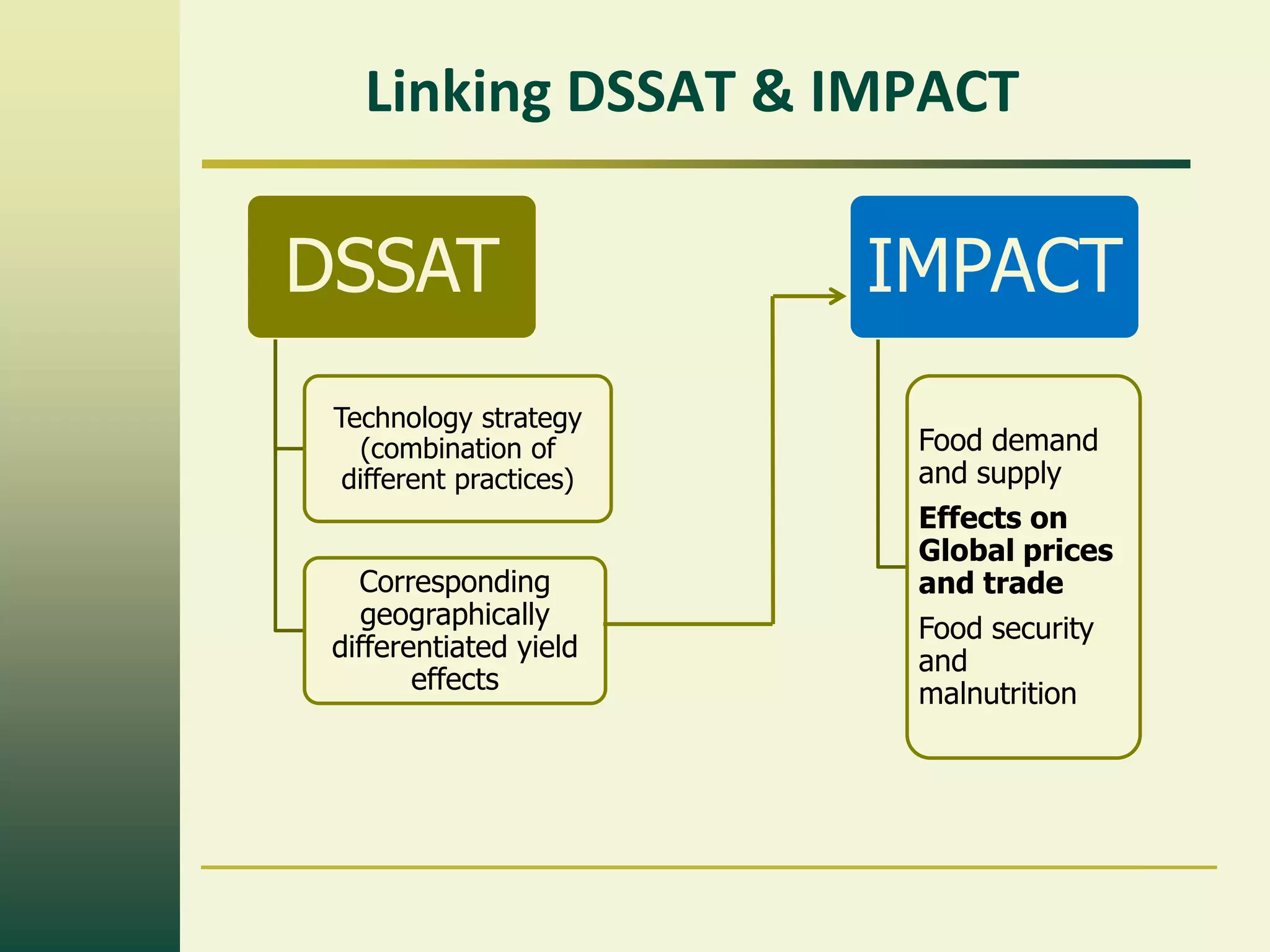
Linking DSSAT & IMPACT

DSSAT                    IMPACT
 Technology strategy
    (combination of       Food demand
  different practices)    and supply
                          Effects on
                          Global prices
   Corresponding          and trade
    geographically        Food security
 differentiated yield     and
        effects           malnutrition
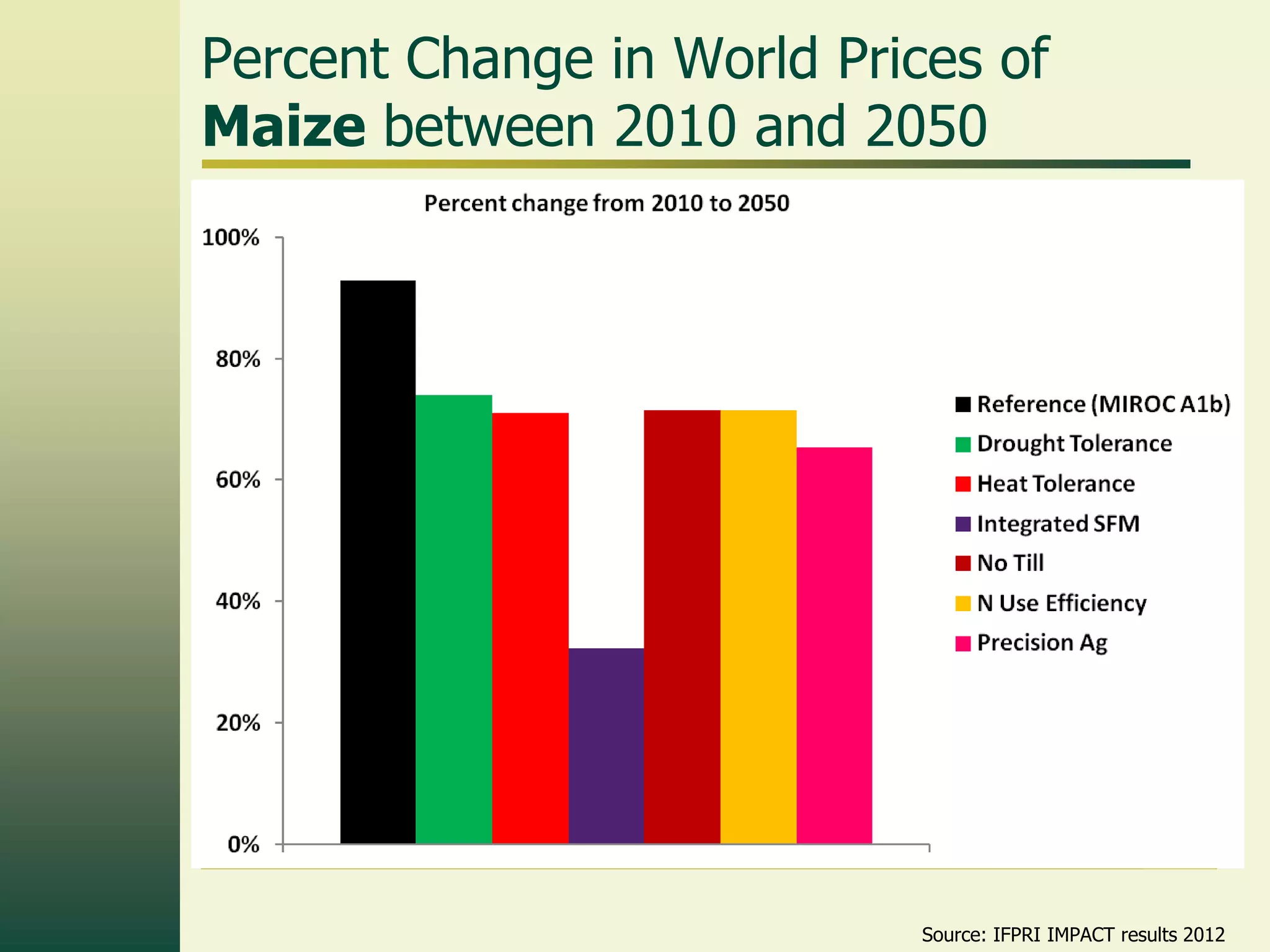
Percent Change in World Prices of
Maize between 2010 and 2050


                            Source: IFPRI IMPACT results 2012
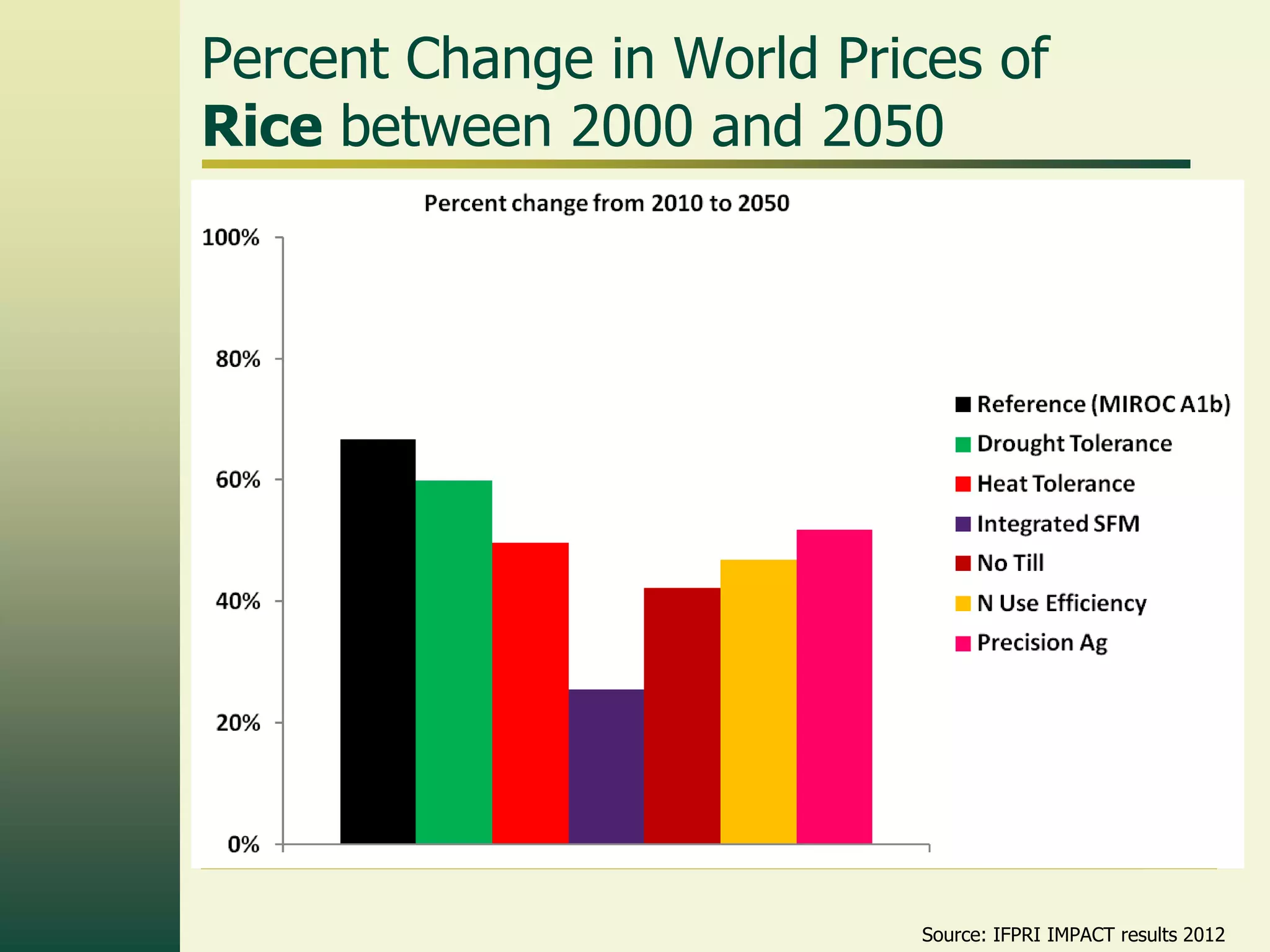
Percent Change in World Prices of
Rice between 2000 and 2050


                            Source: IFPRI IMPACT results 2012
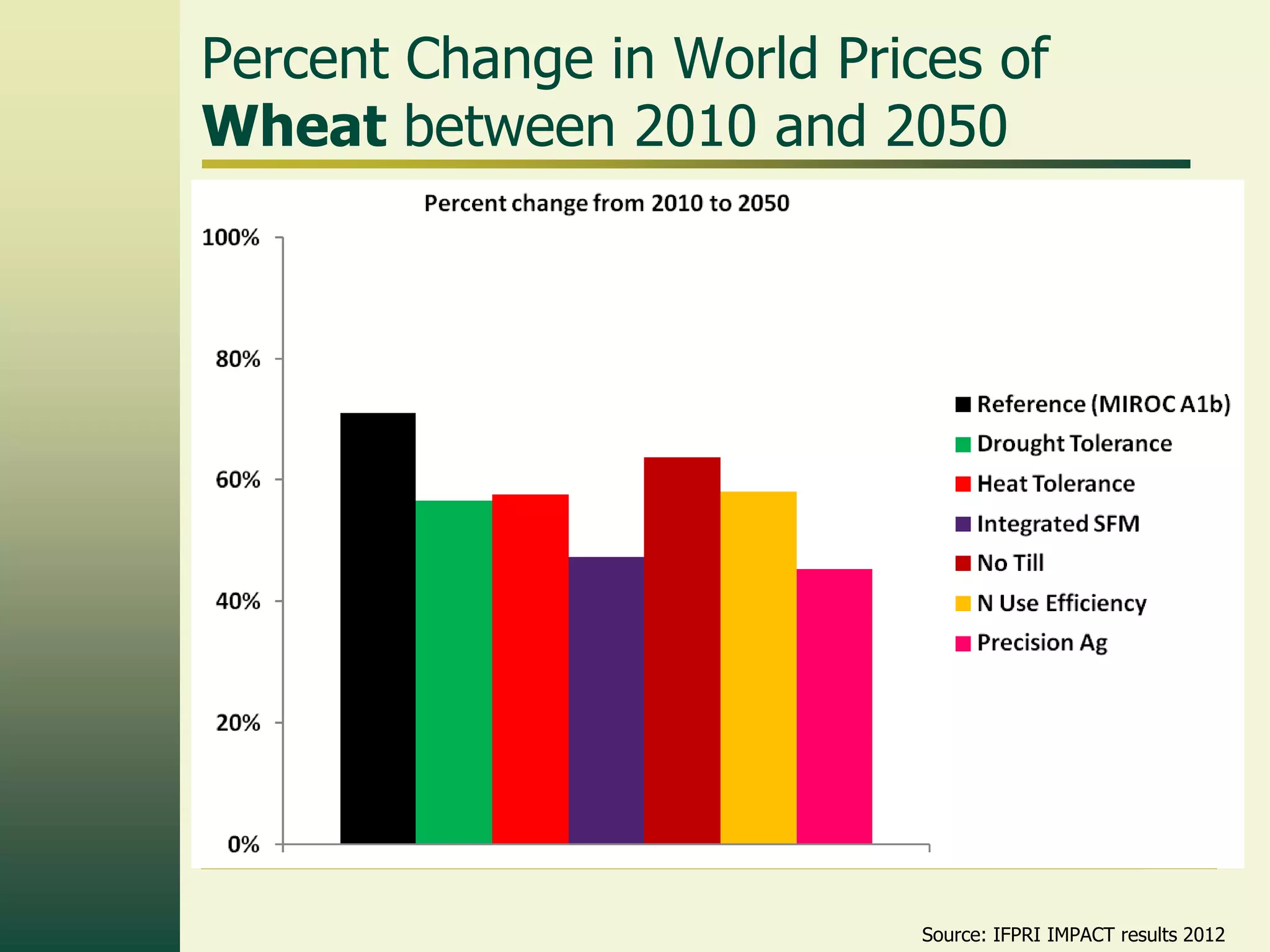
Percent Change in World Prices of
Wheat between 2010 and 2050


                            Source: IFPRI IMPACT results 2012
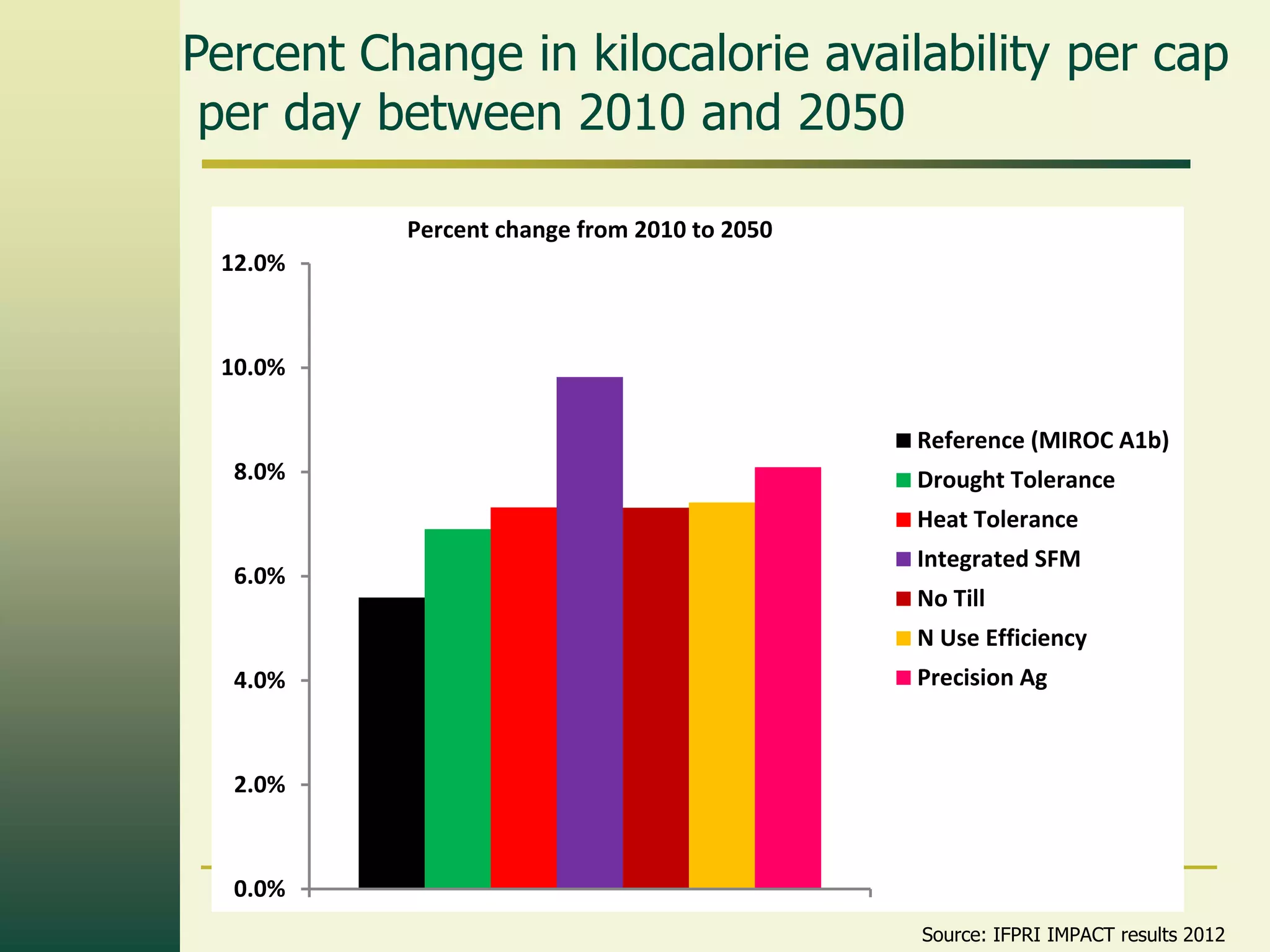
Percent Change in kilocalorie availability per cap
 per day between 2010 and 2050

          Percent change from 2010 to 2050
 12.0%


 10.0%

                                             Reference (MIROC A1b)
  8.0%                                       Drought Tolerance
                                             Heat Tolerance
                                             Integrated SFM
  6.0%
                                             No Till
                                             N Use Efficiency
  4.0%                                       Precision Ag


  2.0%


  0.0%
                                             Source: IFPRI IMPACT results 2012
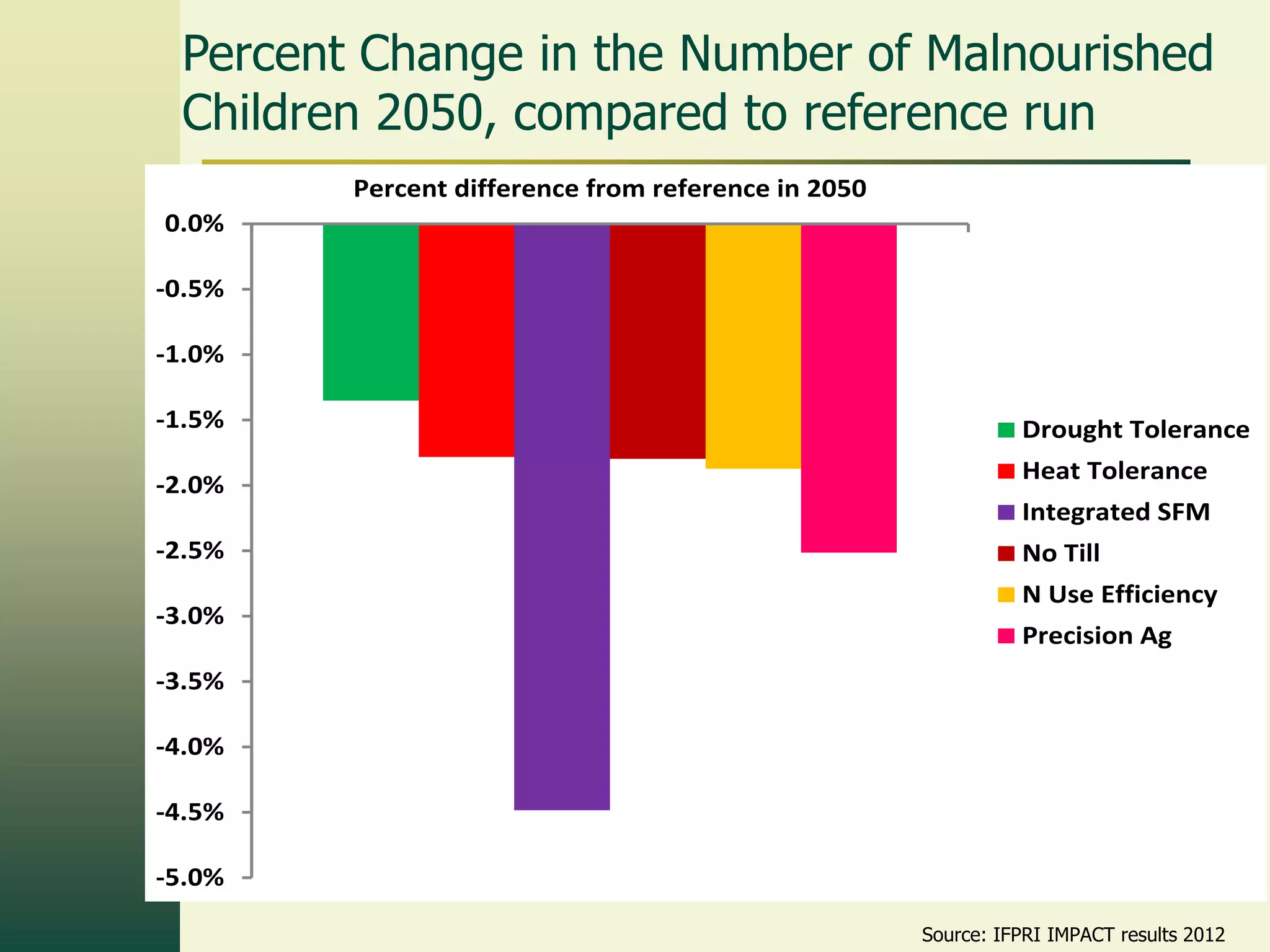
Percent Change in the Number of Malnourished
 Children 2050, compared to reference run
        Percent difference from reference in 2050
0.0%

-0.5%

-1.0%

-1.5%                                                         Drought Tolerance
                                                              Heat Tolerance
-2.0%
                                                              Integrated SFM
-2.5%                                                         No Till
                                                              N Use Efficiency
-3.0%
                                                              Precision Ag
-3.5%

-4.0%

-4.5%

-5.0%

                                                    Source: IFPRI IMPACT results 2012
Conclusions

 Agricultural technology investments—including
  both “advanced” and “traditional”
  technologies/management practices are a game
  changer in terms of yield improvements
  and national and global food security
 Alternative technologies increase water
  productivity, nutrient use efficiency, energy
  efficiency, and YIELD (but not everywhere).
  Overall gains for both people and the
  environment are large
Conclusions

 Suitable technologies will only “work” if farmers
  have the capacity (and freedom) to adopt;
  requires conducive institutions, regulatory
  framework, political will and rural infrastructure
 Implementation will also require increased
  partnerships between the public and private
  sectors and civil society

Learning Event No. 6, Session 1: Ringler. ARDD2012 Rio.

  • 1.
    Role of technologyin achieving sustainable intensification? How to Achieve Food Security in a World of Growing Scarcity: Role of Technology Development Strategies Claudia Ringler IFPRI ARDD, June 18, 2012
  • 2.
    Agricultural Technologies Potential toimprove:  Agricultural production & consumption  Food security  Trade  Environmental quality Stalled by:  Polarized debate on high intensity vs. low input  Lack of understanding of the impacts of specific technologies at a disaggregated level
  • 3.
    Technology Assessment Scope Global & Regional • Zero Tillage  Nine Technologies • Integrated Soil Fertility Management  Three Crops • Irrigation Technologies • Wheat • Water Harvesting • Rice • Drought Tolerance • Heat tolerance • Maize • Nitrogen Use Efficiency • Precision Agriculture • Laser Land Leveling • Organic Agriculture
  • 4.
    Yield gap report+ database Technology reports Survey results Yield gaps and How technologies impact factors causing them yield gaps DSSAT Crop modeling Impacts of technologies on yields/ yield gaps Policy environment report IMPACT modeling How policies affect technology Impacts of technology scenarios on food adoption security, trade, etc. Recommendations
  • 5.
    DSSAT – CropModeling System
  • 6.
    Management Scenarios  Baseline • Site-specific baseline inorganic fertilizer application rate • For maize, location-specific yield discount factor due to unmanaged pest damage where Bt maize is not adopted • Furrow irrigation, where irrigation is adopted • Sub-optimal planting density & sub-optimal planting window • Conventional tillage • Representative varieties for latitude x altitude zones  Technology scenarios • Specific representation of each technology • Area of adoption in 2050 depends on technology  Climate change scenario in 2050 • MIROC A1B (without CO2 fertilization)
  • 7.
    Crop Model Results:Maize Rainfed Maize Irrigated Maize Source: IFPRI crop model results 2012
  • 8.
    Crop Model Results:Rice Rainfed Rice Irrigated Rice Source: IFPRI crop model results 2012
  • 9.
    Crop Model Results:Wheat Rainfed Wheat Irrigated Wheat Source: IFPRI crop model results 2012
  • 10.
    Change in irrigationwater use by region IMPROVED IRRIGATION TECHNOLOGIES  Irrigation was triggered whenever crop needed water (automatic).  Improved irrigation technologies effectively saved water. Source: IFPRI crop model results 2012
  • 11.
    Linking DSSAT &IMPACT DSSAT IMPACT Technology strategy (combination of Food demand different practices) and supply Effects on Global prices Corresponding and trade geographically Food security differentiated yield and effects malnutrition
  • 12.
    Percent Change inWorld Prices of Maize between 2010 and 2050 Source: IFPRI IMPACT results 2012
  • 13.
    Percent Change inWorld Prices of Rice between 2000 and 2050 Source: IFPRI IMPACT results 2012
  • 14.
    Percent Change inWorld Prices of Wheat between 2010 and 2050 Source: IFPRI IMPACT results 2012
  • 15.
    Percent Change inkilocalorie availability per cap per day between 2010 and 2050 Percent change from 2010 to 2050 12.0% 10.0% Reference (MIROC A1b) 8.0% Drought Tolerance Heat Tolerance Integrated SFM 6.0% No Till N Use Efficiency 4.0% Precision Ag 2.0% 0.0% Source: IFPRI IMPACT results 2012
  • 16.
    Percent Change inthe Number of Malnourished Children 2050, compared to reference run Percent difference from reference in 2050 0.0% -0.5% -1.0% -1.5% Drought Tolerance Heat Tolerance -2.0% Integrated SFM -2.5% No Till N Use Efficiency -3.0% Precision Ag -3.5% -4.0% -4.5% -5.0% Source: IFPRI IMPACT results 2012
  • 17.
    Conclusions  Agricultural technologyinvestments—including both “advanced” and “traditional” technologies/management practices are a game changer in terms of yield improvements and national and global food security  Alternative technologies increase water productivity, nutrient use efficiency, energy efficiency, and YIELD (but not everywhere). Overall gains for both people and the environment are large
  • 18.
    Conclusions  Suitable technologieswill only “work” if farmers have the capacity (and freedom) to adopt; requires conducive institutions, regulatory framework, political will and rural infrastructure  Implementation will also require increased partnerships between the public and private sectors and civil society