Unity/Materiality/Scale
Architecture Project
Maya
Sculpture Course
Manami Ishimura
Requirements
• Submit Assignments:
1. Proposal
2. Progress Reports
3. Finalized Project Documentation
• Create an architecture form using Maya software
• Attach textures on the digital 3D form
• Merge the digital 3D form and 2D image using Photoshop
• The design and concept must be considered the elements and
principles of design (especially Unity / Scale / Proportion / Balance)
Unity
• Unity is achieved when the whole is more important than the parts.
More often, unity consists of many forms or objects brought together
to construct a coherent whole.
Variety of Unity
• Grid
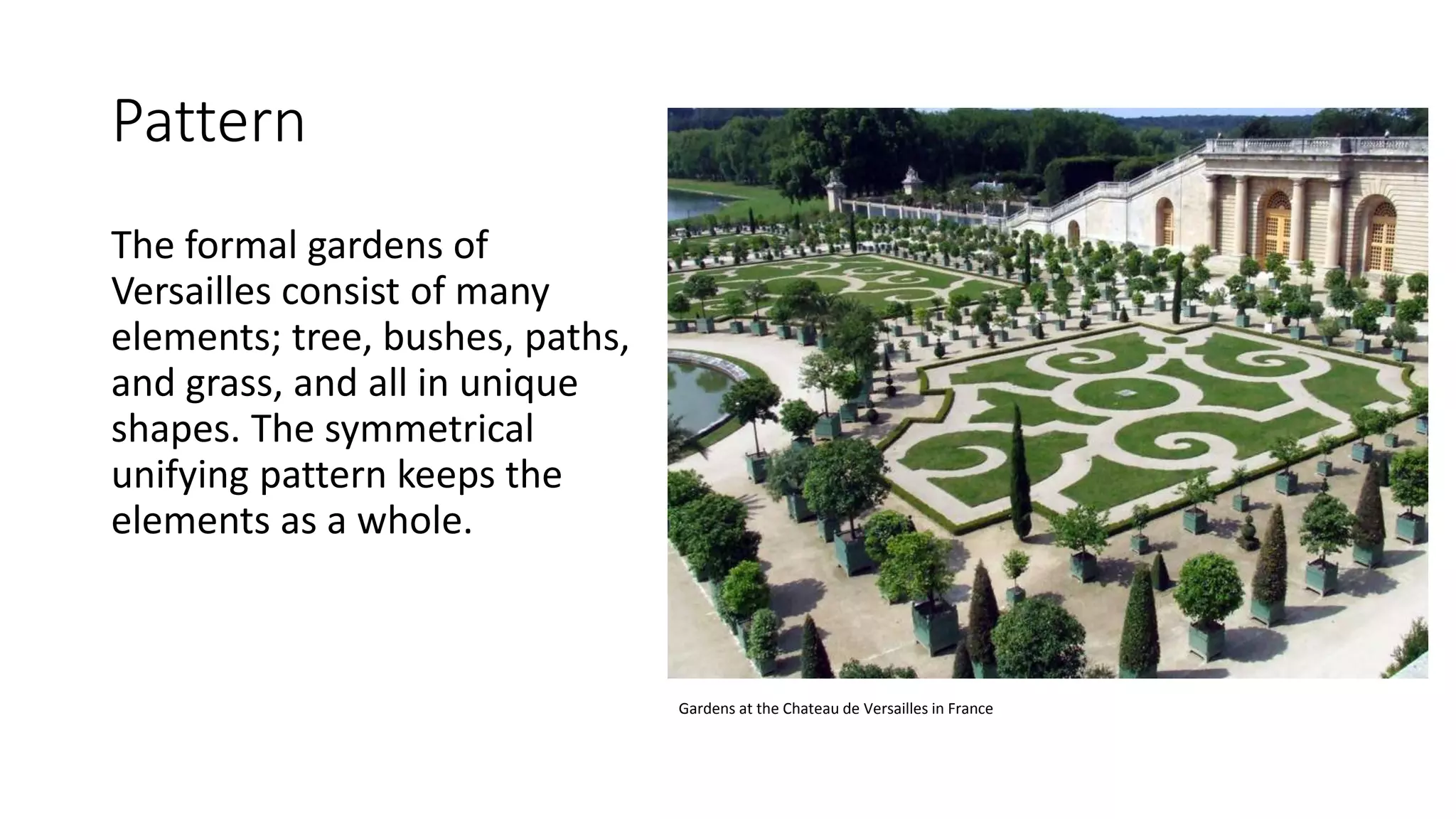
• Pattern
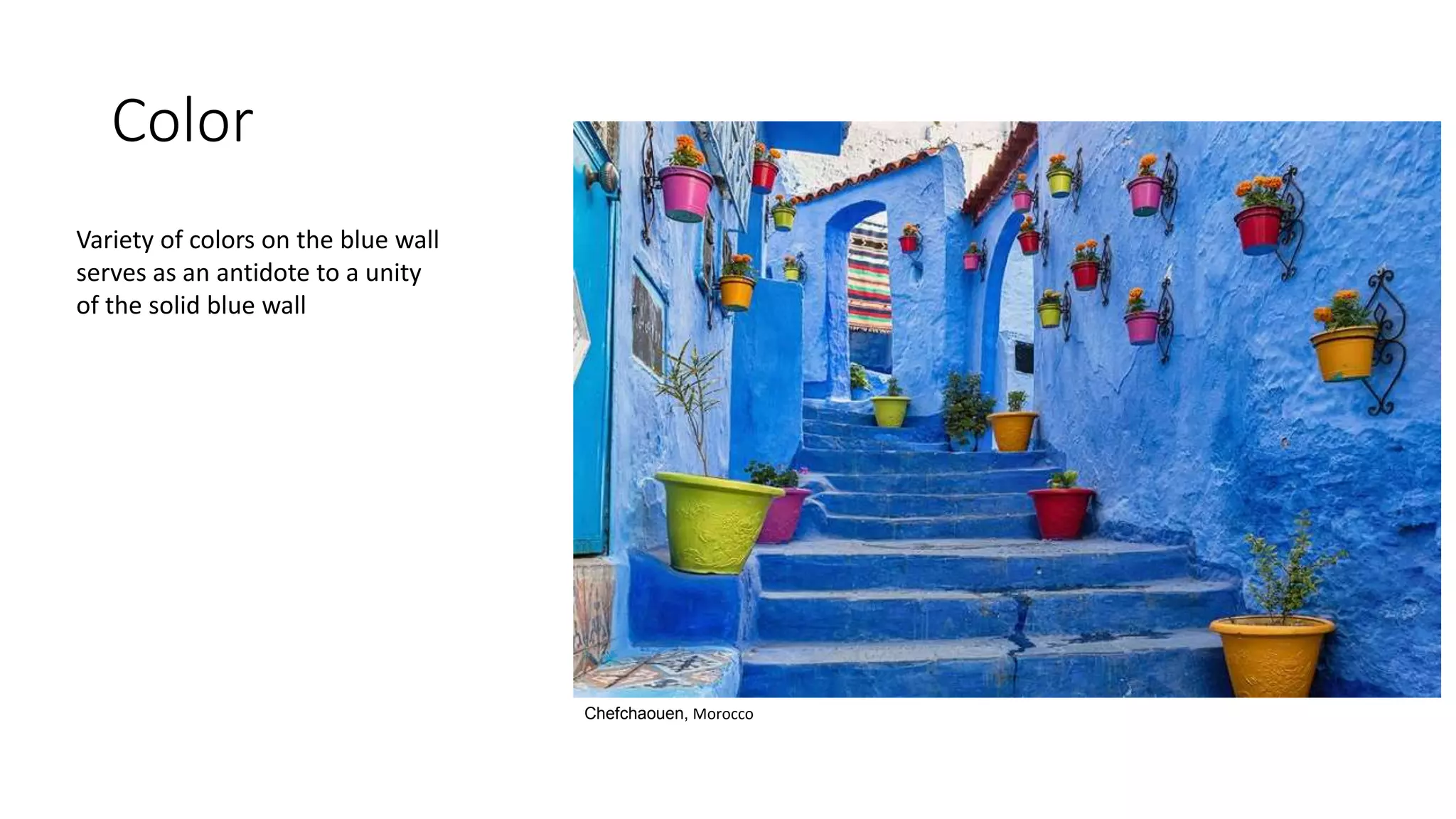
• Color
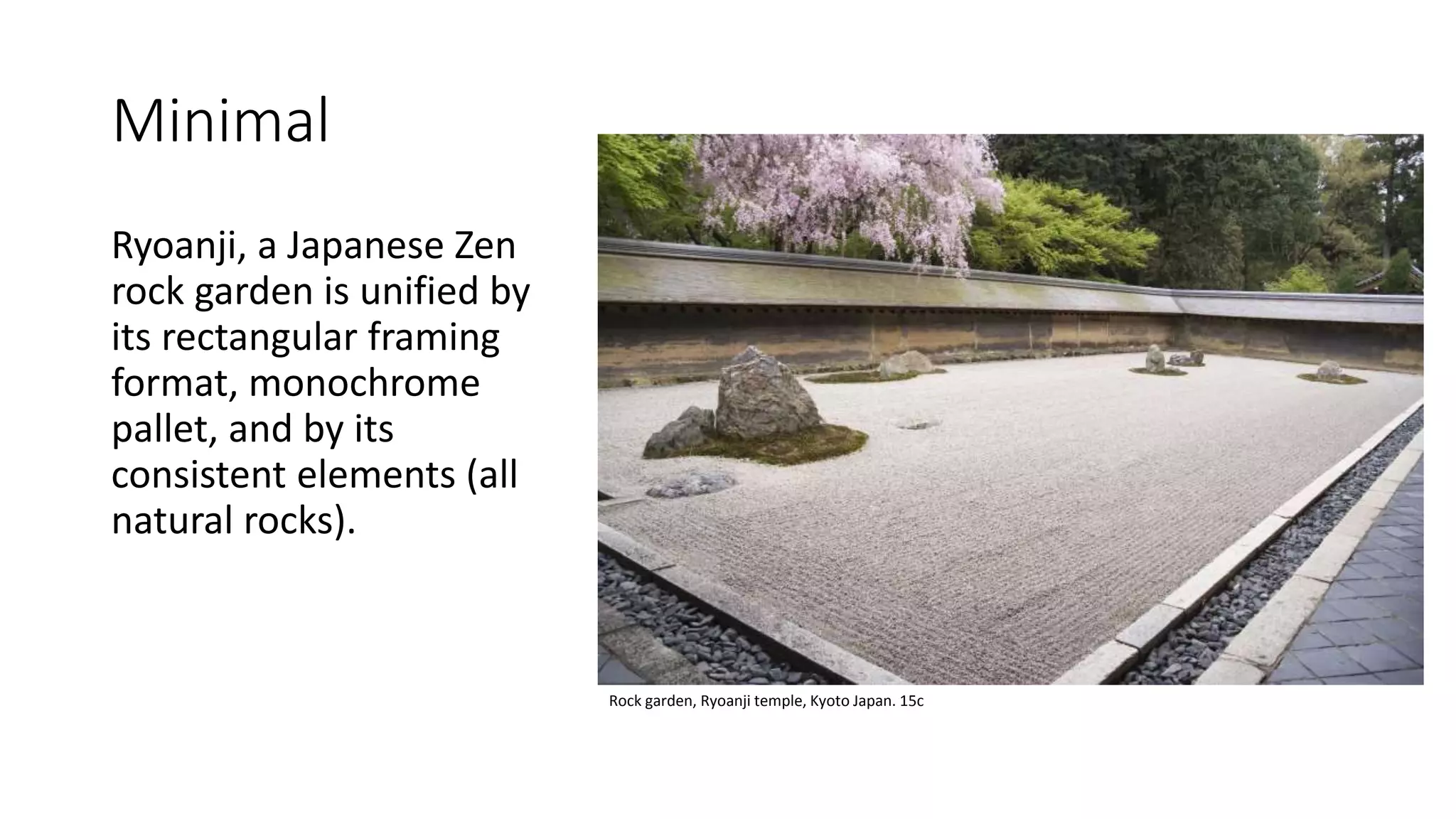
• Minimal
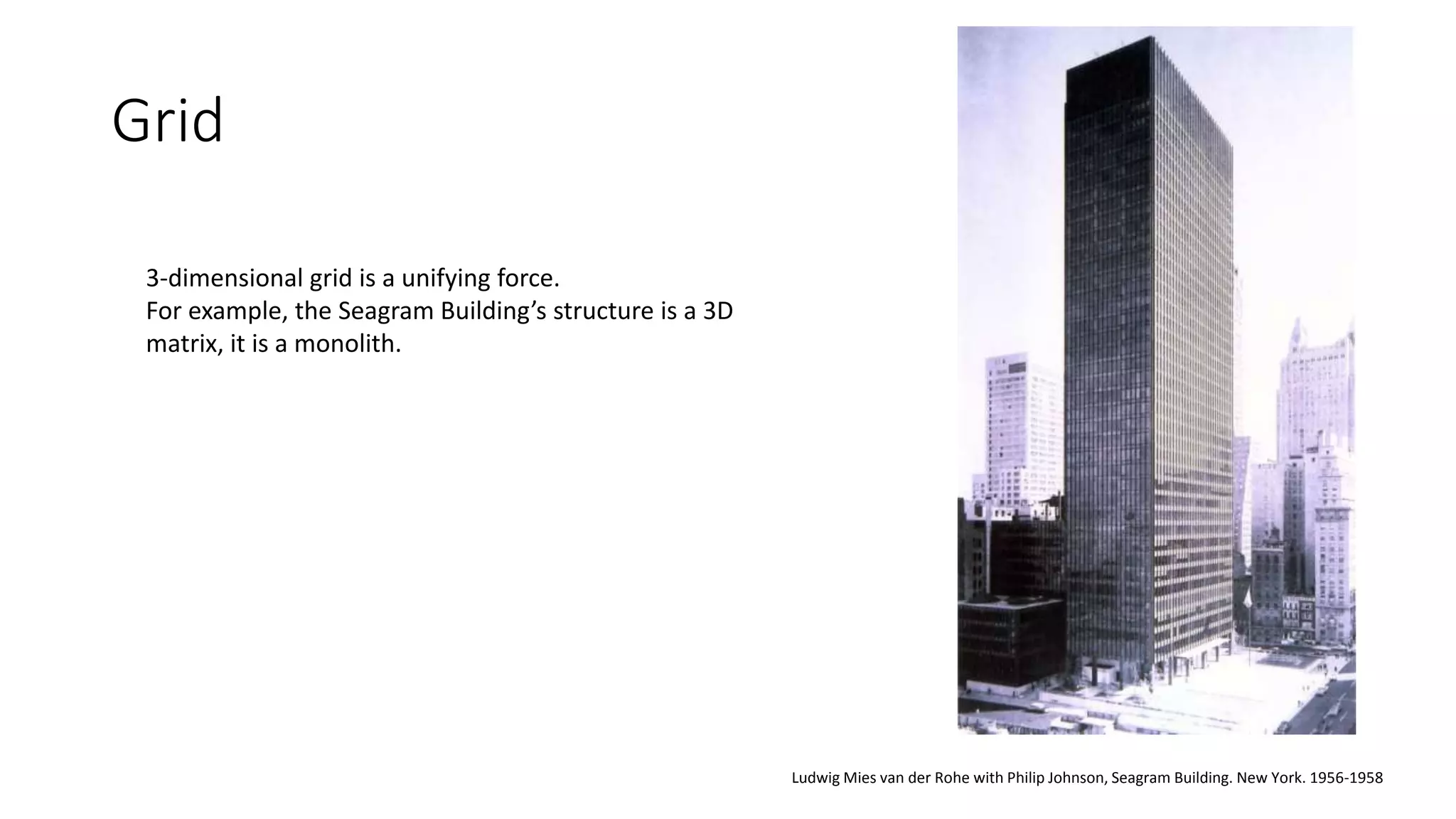
Grid
Ludwig Mies van der Rohe with Philip Johnson, Seagram Building. New York. 1956-1958
3-dimensional grid is a unifying force.
For example, the Seagram Building’s structure is a 3D
matrix, it is a monolith.
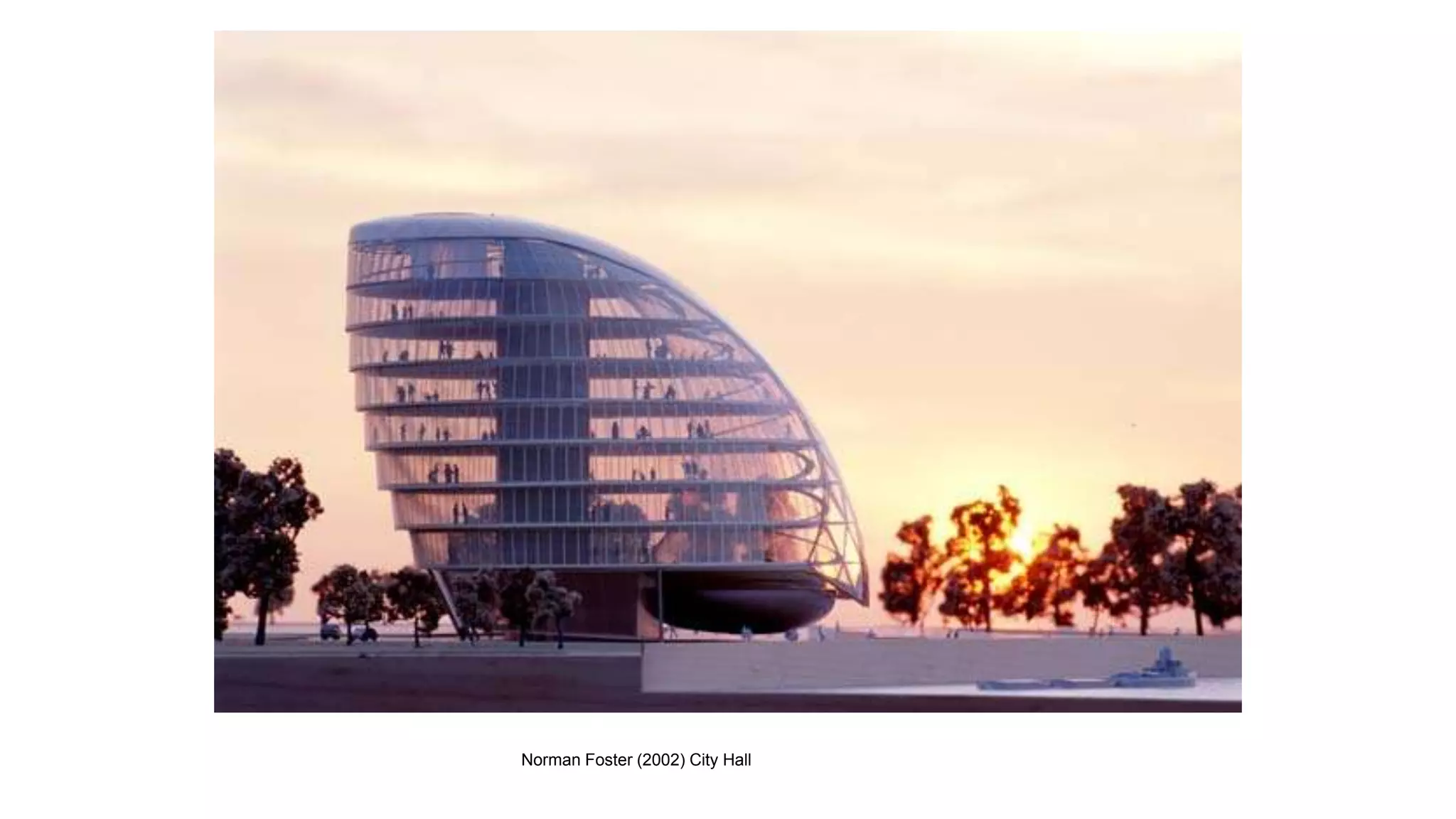
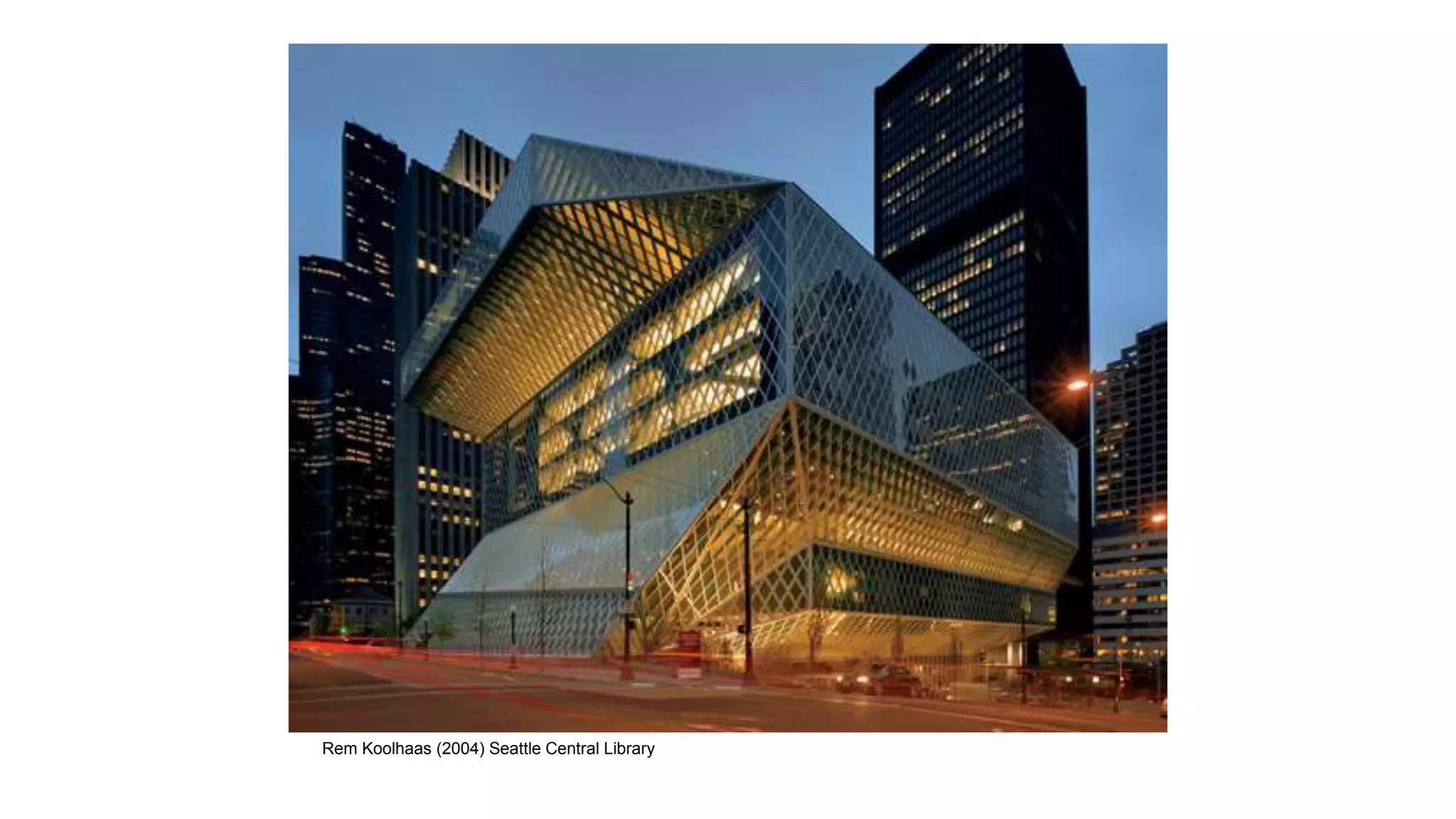
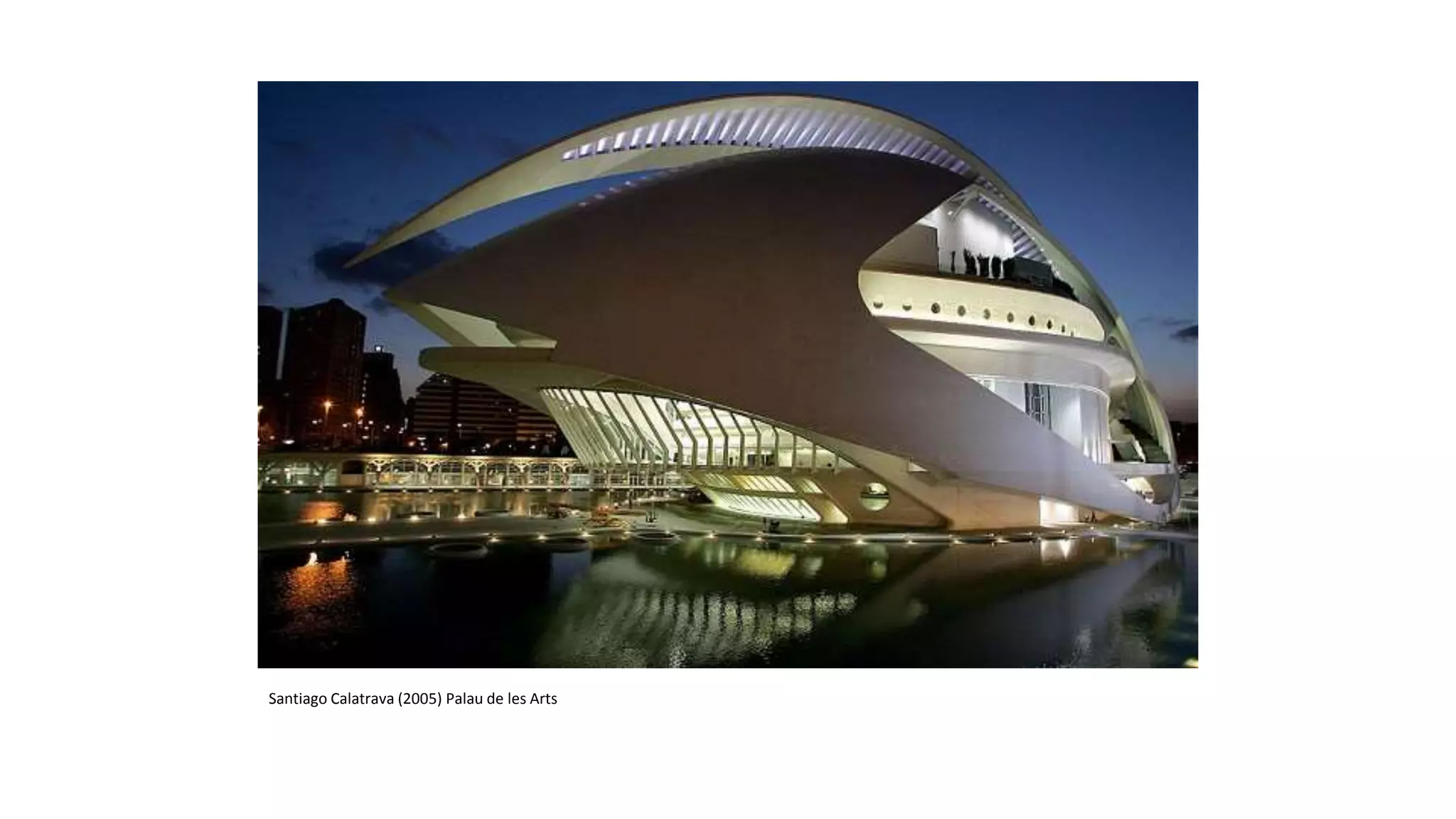
Pattern
The formal gardens of
Versailles consist of many
elements; tree, bushes, paths,
and grass, and all in unique
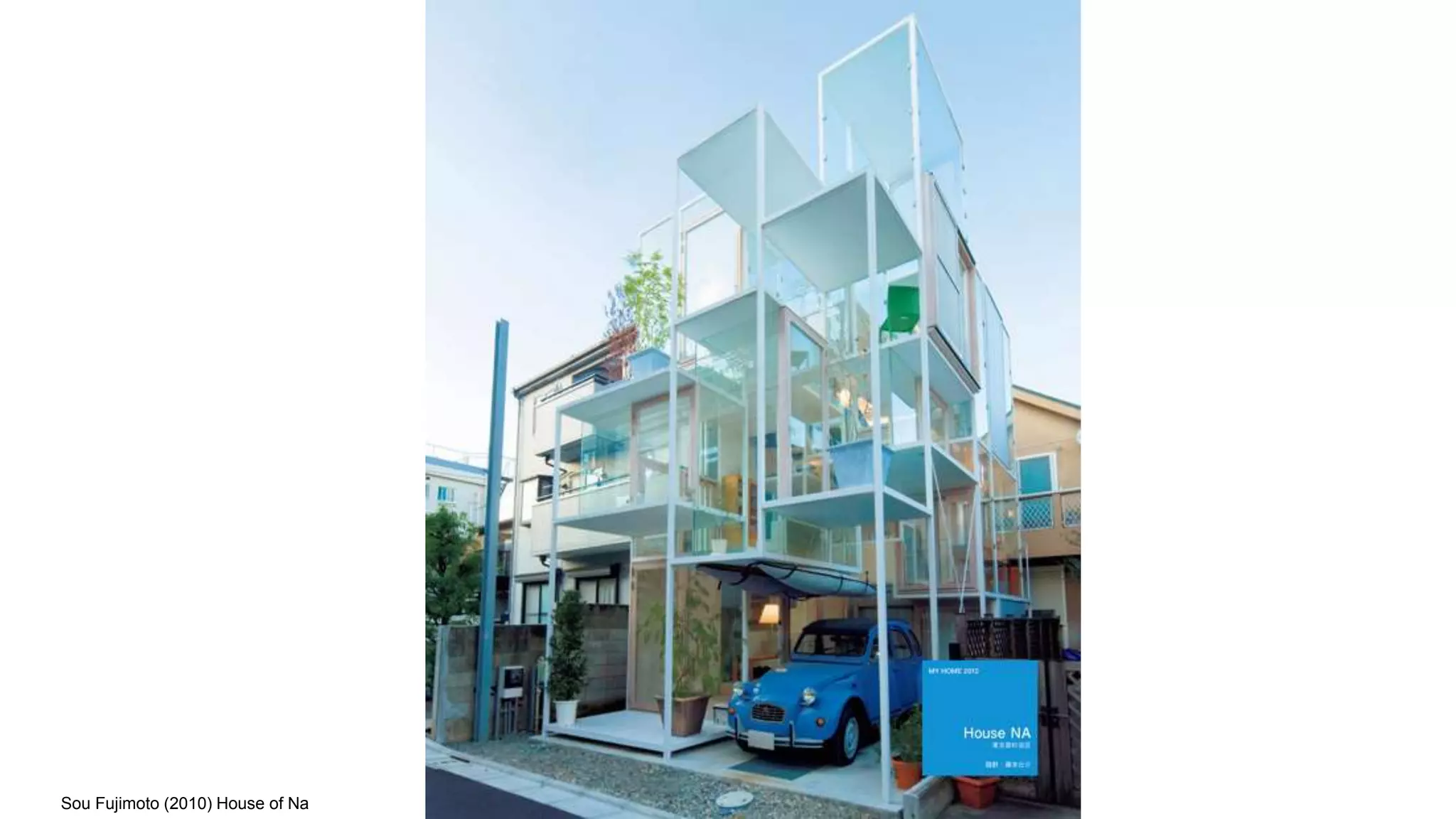
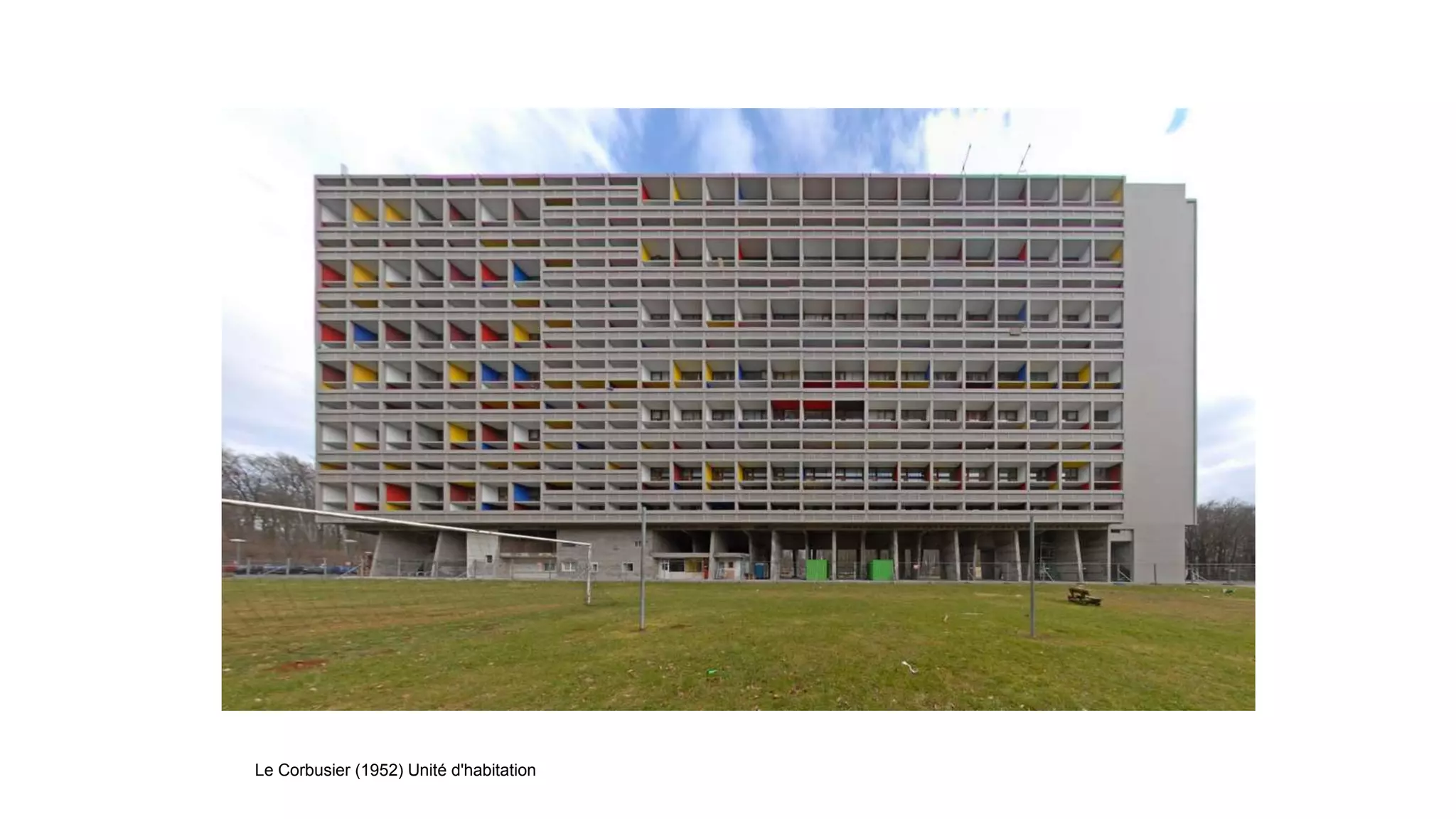
shapes. The symmetrical
unifying pattern keeps the
elements as a whole.
Gardens at the Chateau de Versailles in France
Color
Chefchaouen, Morocco
Variety of colors on the blue wall
serves as an antidote to a unity
of the solid blue wall
Minimal
Ryoanji, a Japanese Zen
rock garden is unified by
its rectangular framing
format, monochrome
pallet, and by its
consistent elements (all
natural rocks).
Rock garden, Ryoanji temple, Kyoto Japan. 15c
Scale
• The actual or relative dimensions of an object, or parts of an object in
relation to one another
• In the vocabulary of sculpture (or 3D art), scale and size are not
synonymous. Size is normally thought of in terms of large and small -
the relative dimensions of a thing. Size can be measured in units, but
scale is more ambiguous.
Variety of Scale
• Human Scale
• Intimate Scale
• Monumental Scale
Human Scale
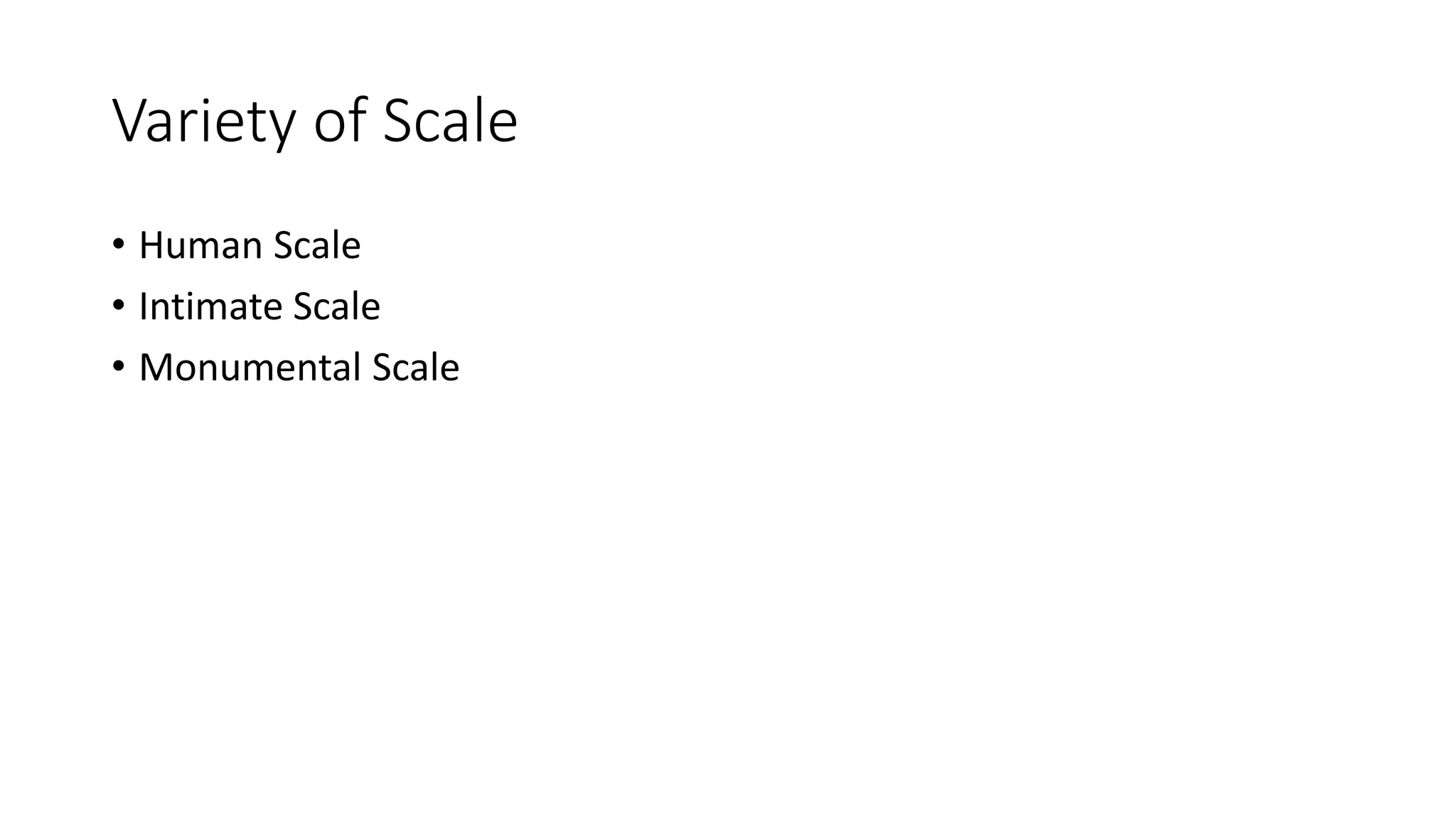
• The human scale is what we are used to. Our houses are typically built to
this natural scale. We should feel comfortable walking through our
doorways. The ceiling neither bumps our heads, nor is lost in the
shadows.
Monumental Scale
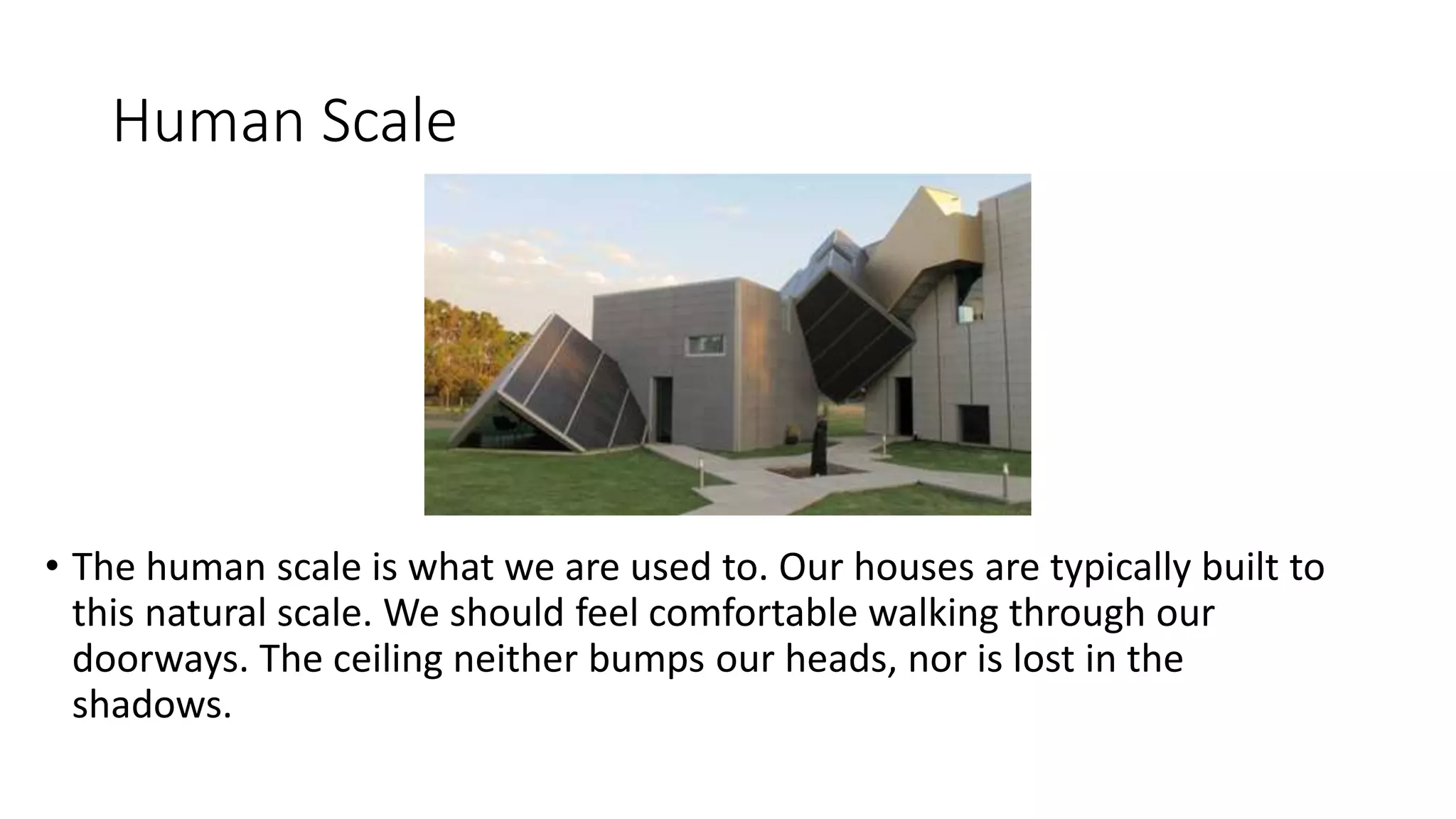
• Monumental scale is impressive. Our public buildings are
monumental. This is a statement of hierarchy, highlighting their
importance in our society. Those institutions represented by those
buildings are bigger than us.
Intimate Scale
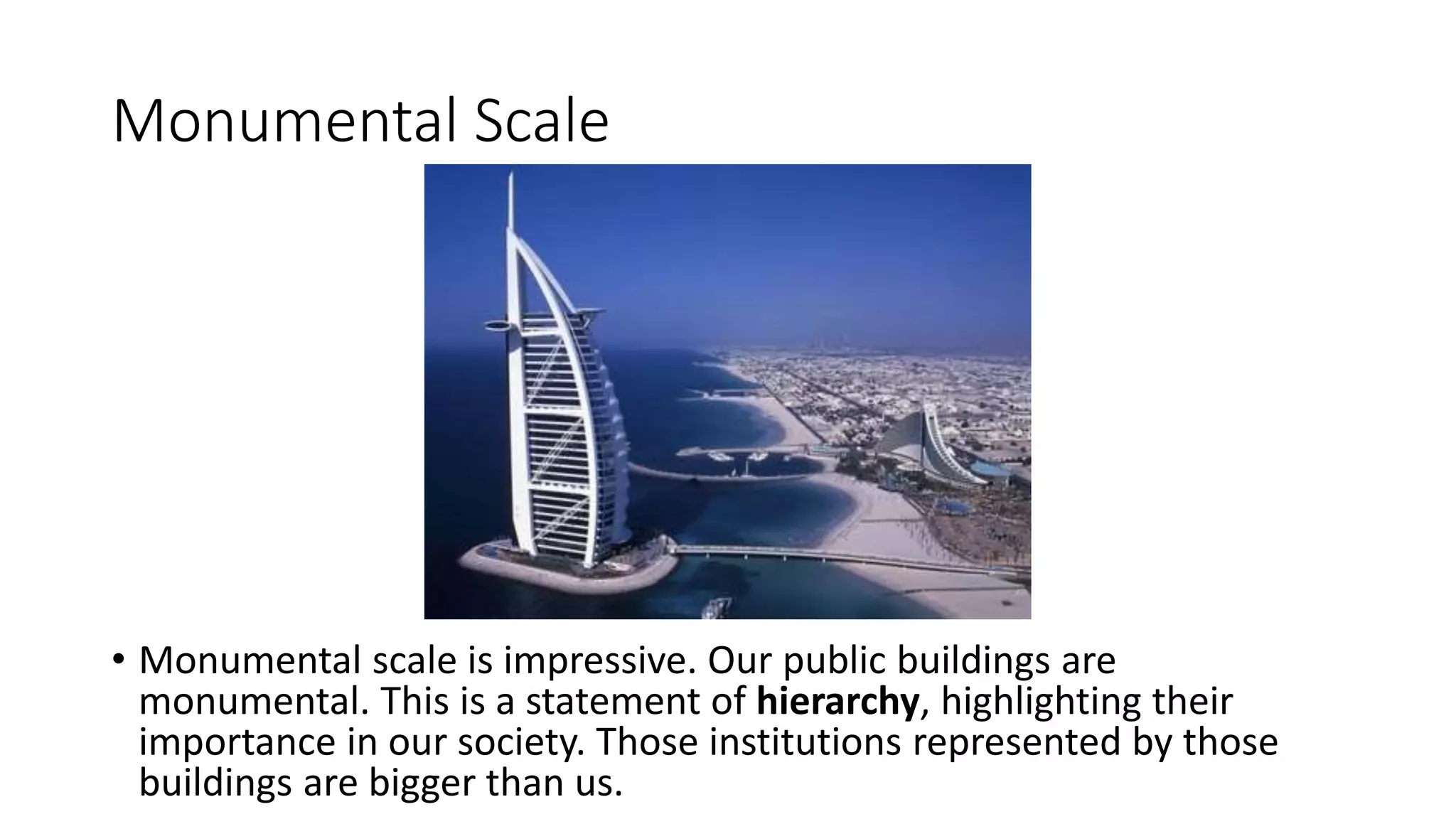
• Intimate sizes are smaller than what is normal. These don’t shock you,
but they are smaller than what we expect, being cocoon like.
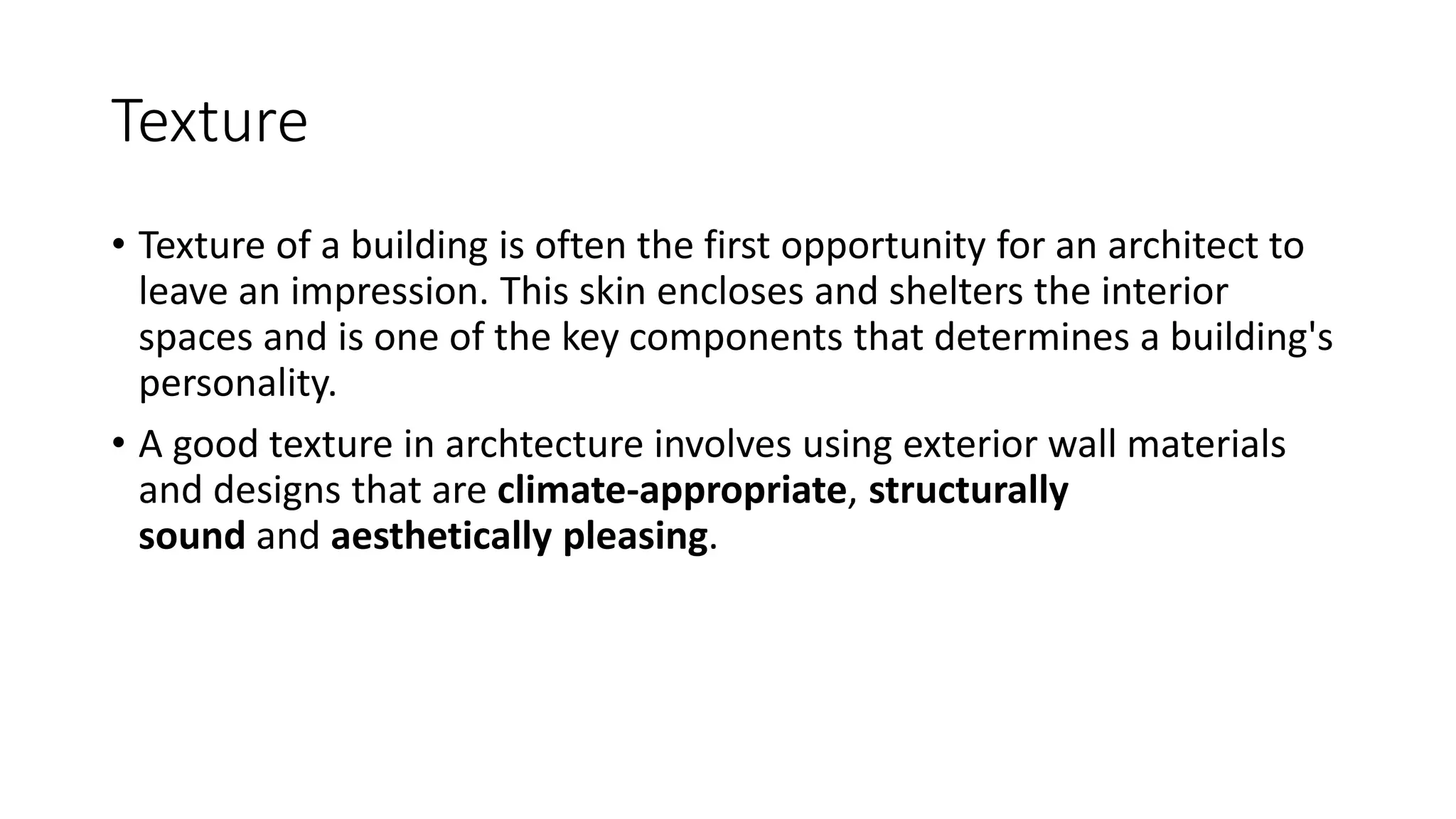
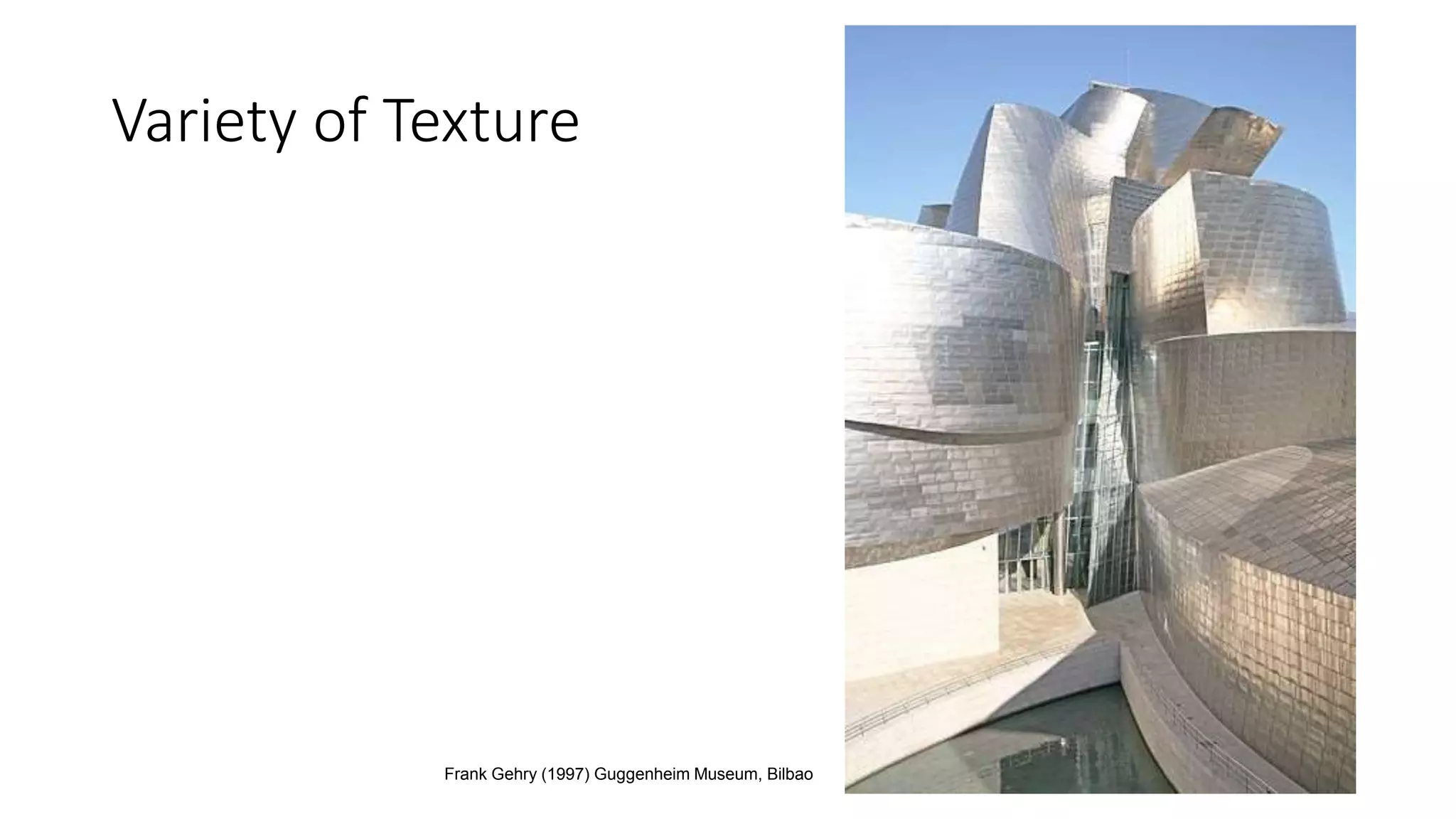
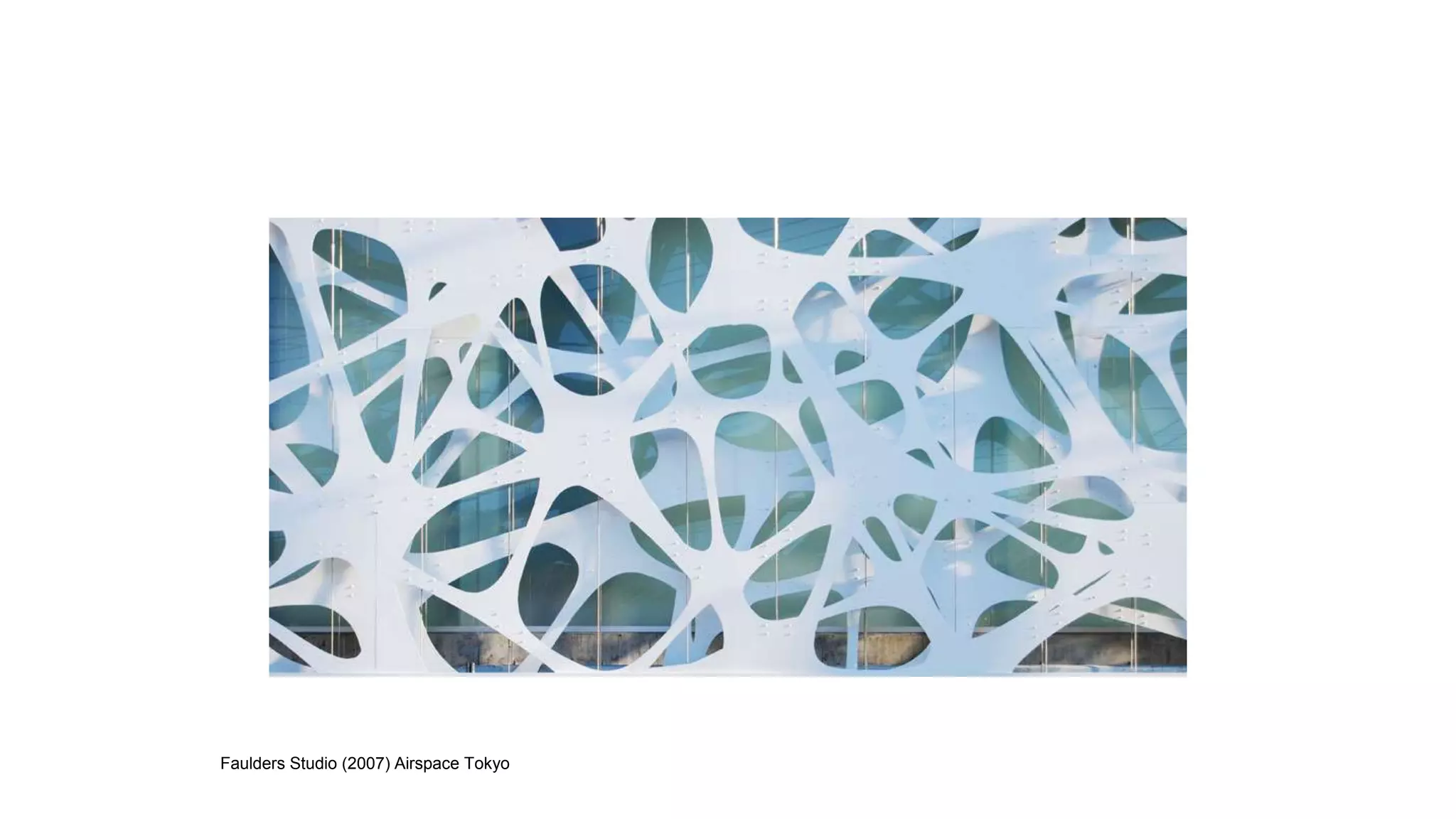
Texture
• Texture of a building is often the first opportunity for an architect to
leave an impression. This skin encloses and shelters the interior
spaces and is one of the key components that determines a building's
personality.
• A good texture in archtecture involves using exterior wall materials
and designs that are climate-appropriate, structurally
sound and aesthetically pleasing.
Variety of Texture
Frank Gehry (1997) Guggenheim Museum, Bilbao
Faulders Studio (2007) Airspace Tokyo
Tomás Amat (2010) La Cigarra Café Entry Pavilion
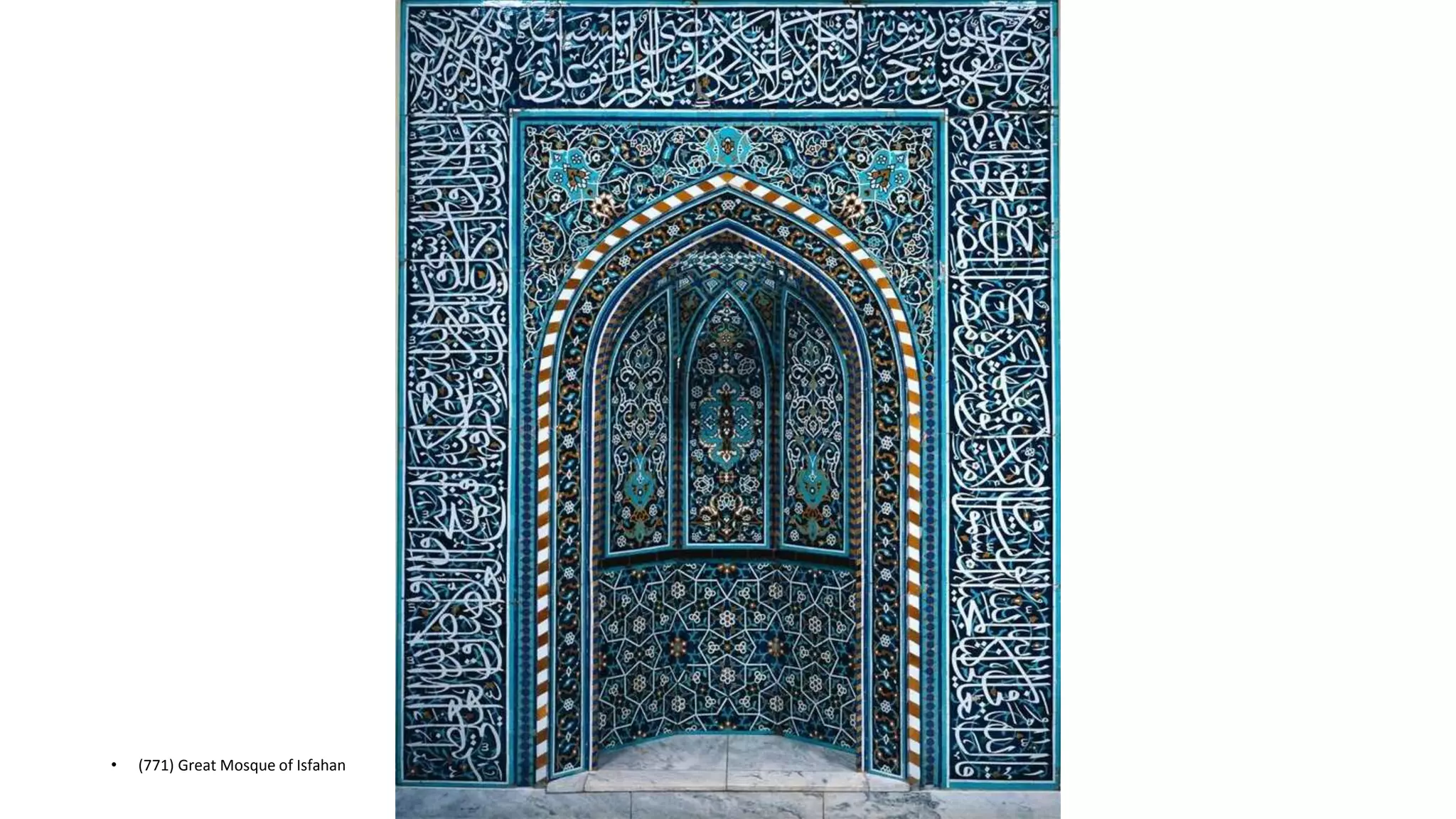
• (771) Great Mosque of Isfahan
Balance
• Dynamic vs Static
• Symmetry vs Asymmetry
Dynamic vs Static
• Architects can never forget that structures exist for human use, and
they thus have to build with human perceptions in mind. As people
see a structure, they think of it as either static or dynamic.
• There is a place for both static and dynamic structures because of
their effect on a viewer emotions. Static spaces are calming and
dynamic spaces are exciting. Designers must consider the reaction
they want to evoke with their structures.
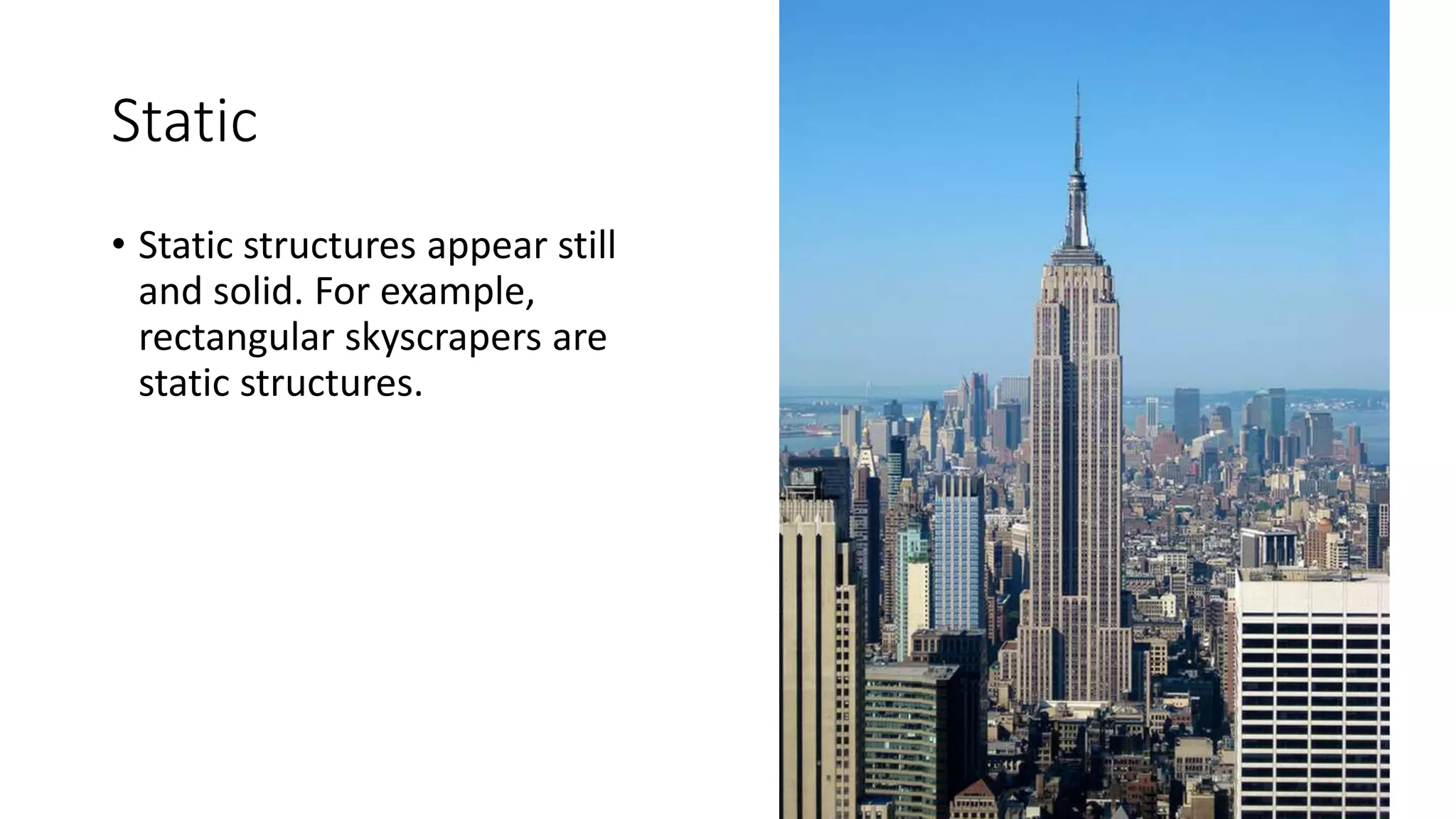
Static
• Static structures appear still
and solid. For example,
rectangular skyscrapers are
static structures.
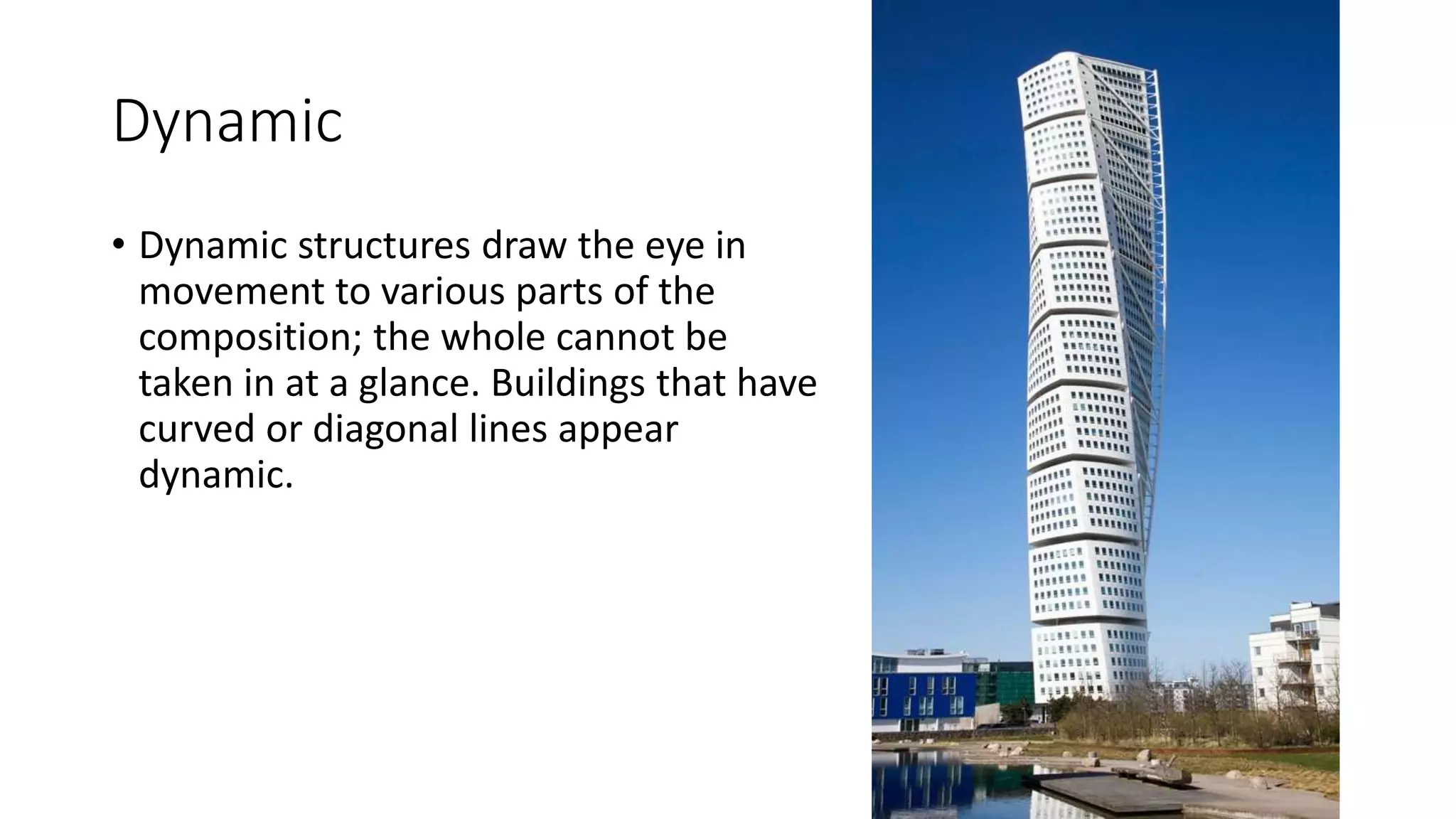
Dynamic
• Dynamic structures draw the eye in
movement to various parts of the
composition; the whole cannot be
taken in at a glance. Buildings that have
curved or diagonal lines appear
dynamic.
Symmetry vs Asymmetry
• Architecture, as any compositional art, makes extensive use
of symmetry. Across all cultures and in all time periods, architectural
compositions are symmetrically arranged.
• Asymmetry is the absence of symmetry of any kind. We can exploit
asymmetry, using it to draw attention to areas in the design or to
convey dynamism or movement.
Asymmetry as the organising factor in Architecture is most commonly
seen in modern architecture.
Symmetry
• Architecture, as any compositional art, makes extensive use
of symmetry. Across all cultures and in all time periods, architectural
compositions are symmetrically arranged.
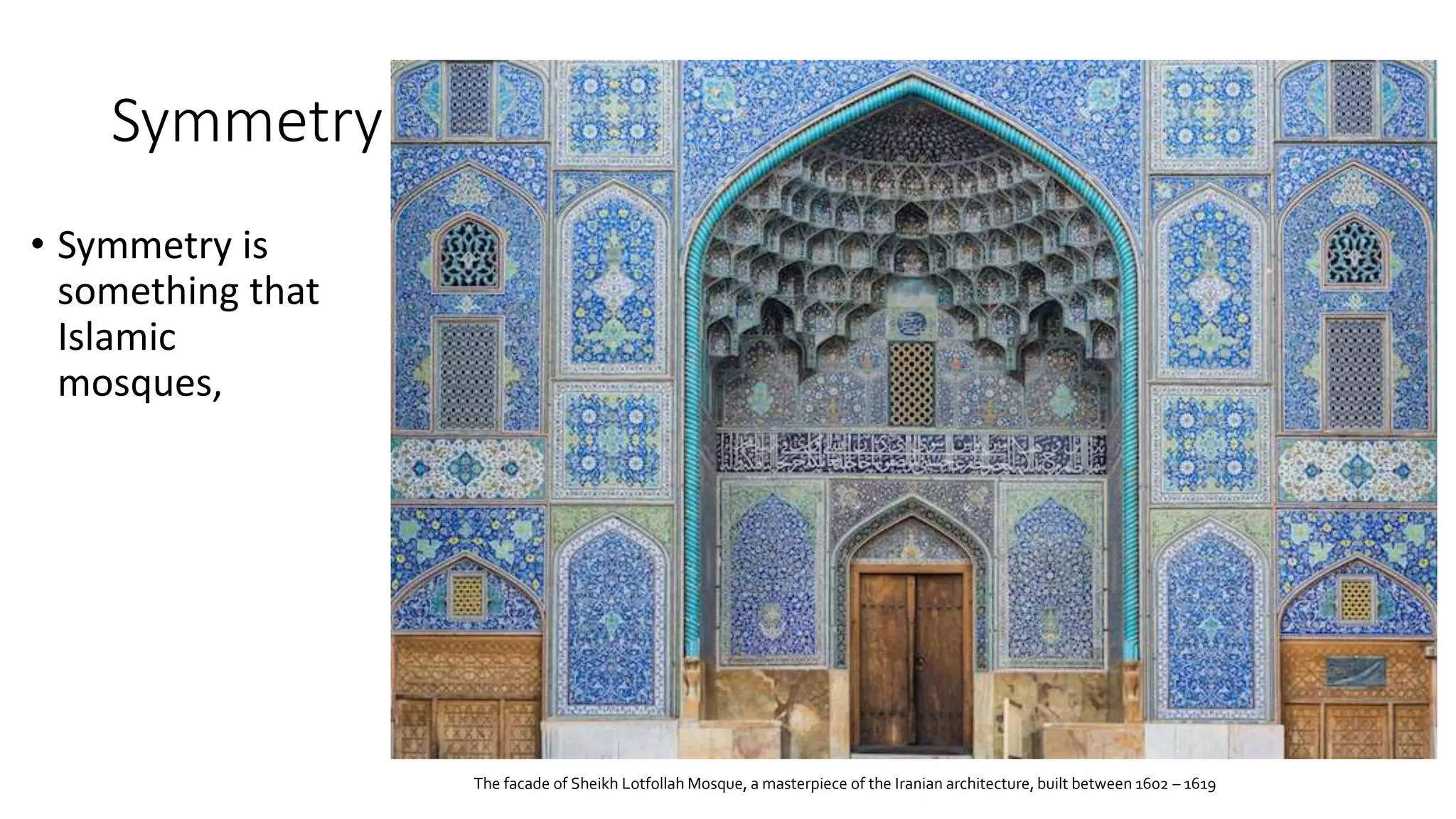
Symmetry
• Symmetry is
something that
Islamic
mosques,
The facade of Sheikh Lotfollah Mosque, a masterpiece of the Iranian architecture, built between 1602 – 1619
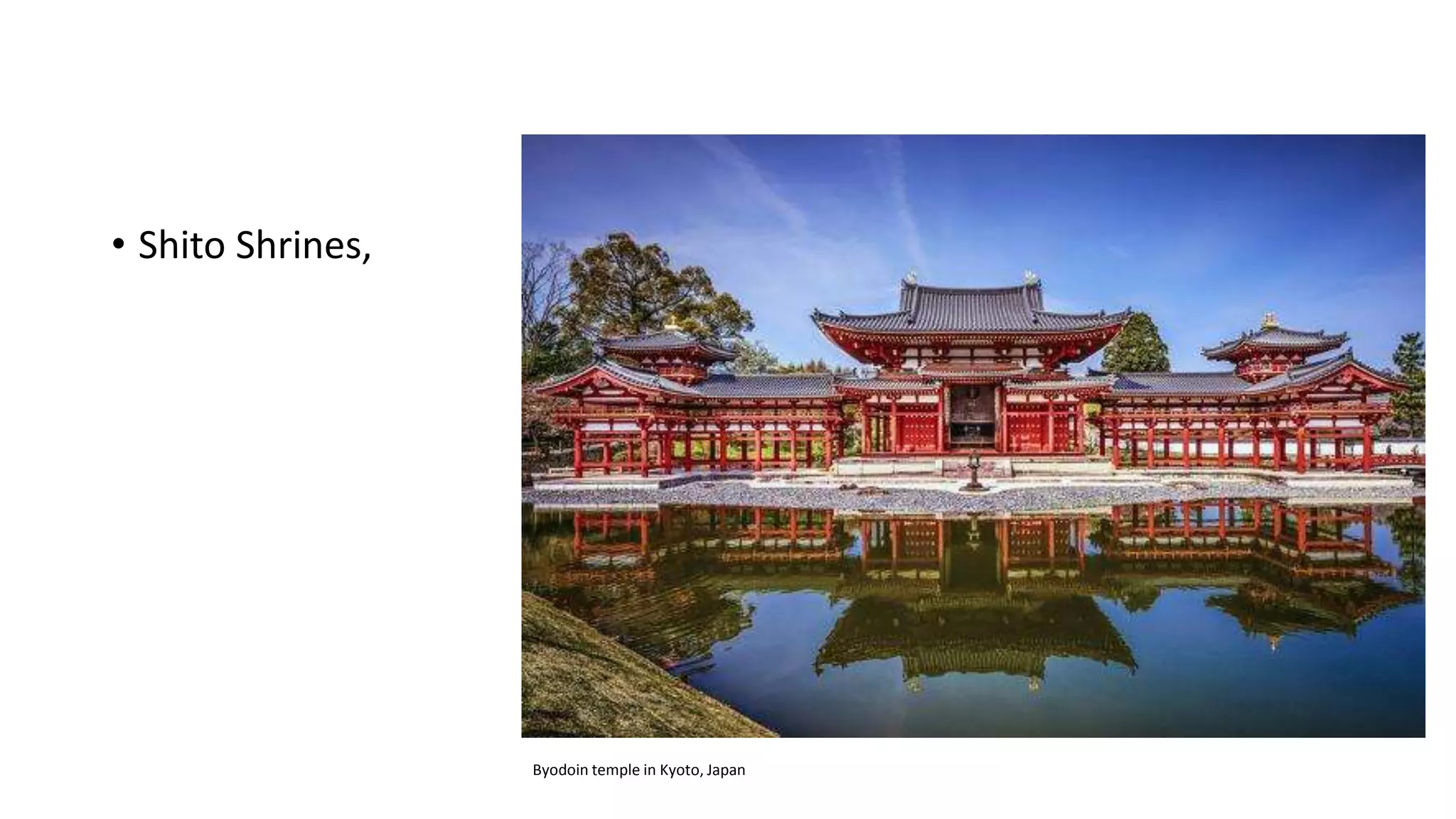
• Shito Shrines,
Byodoin temple in Kyoto, Japan
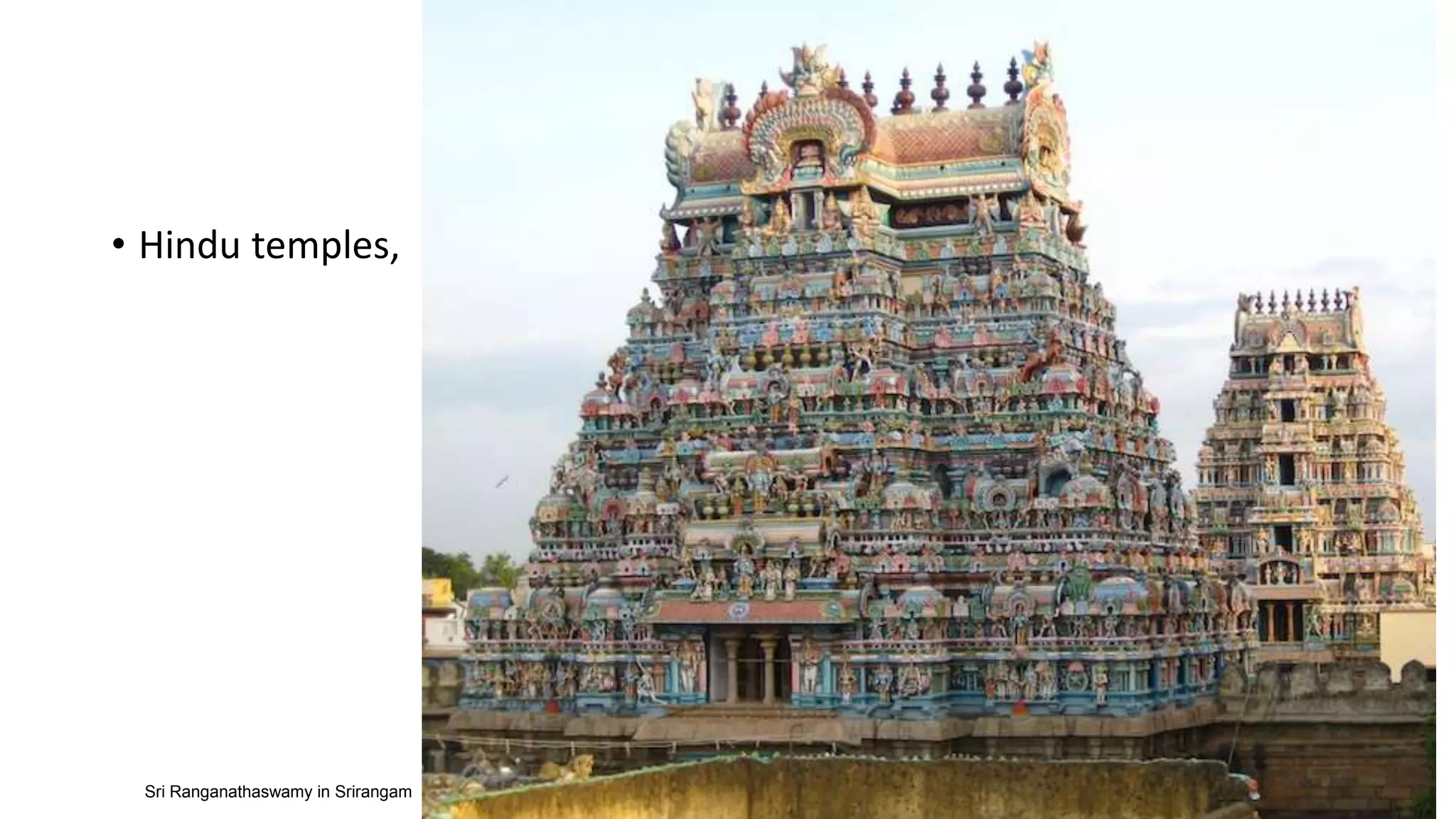
• Hindu temples,
Sri Ranganathaswamy in Srirangam
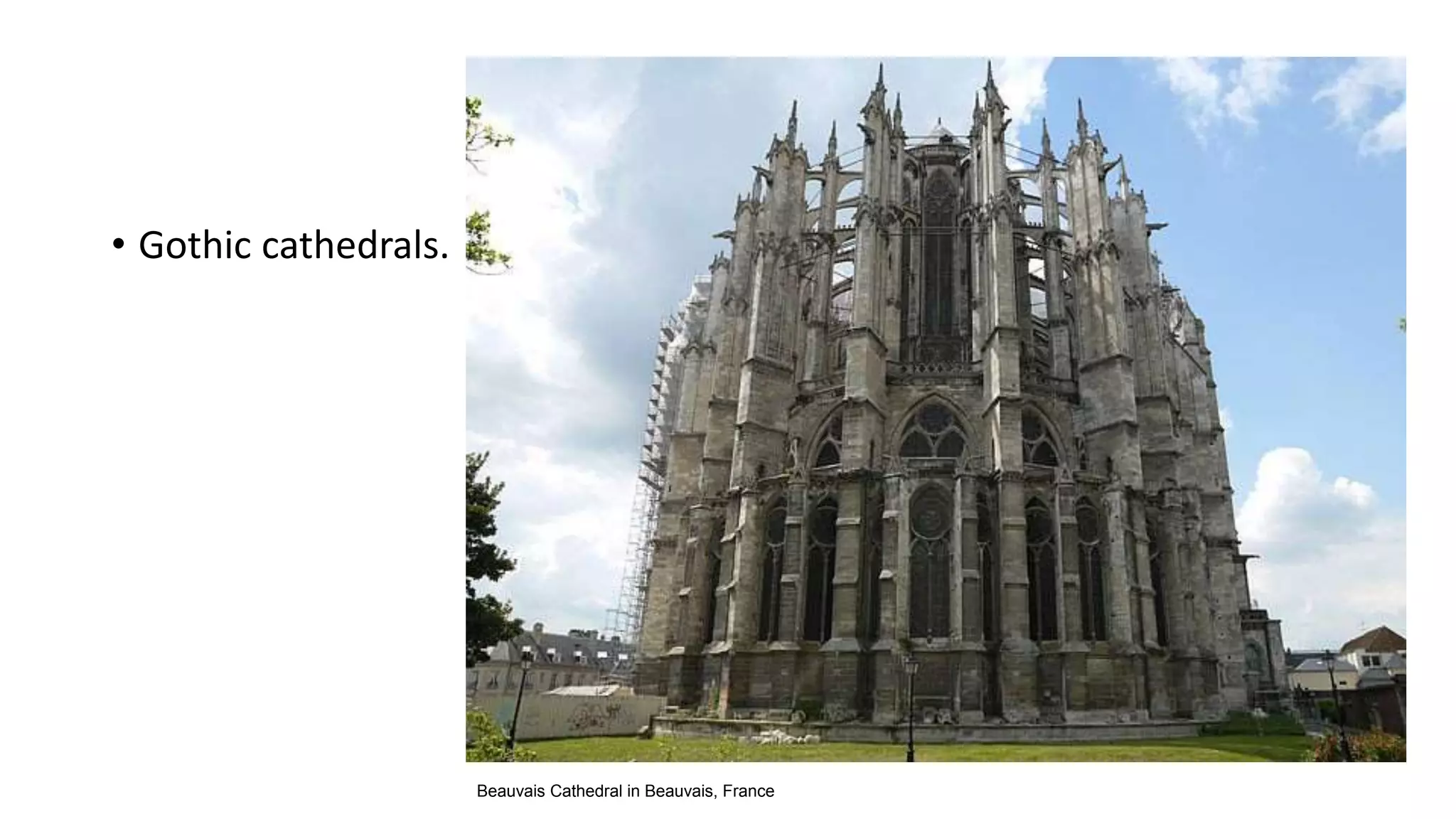
• Gothic cathedrals.
Beauvais Cathedral in Beauvais, France
Asymmetry
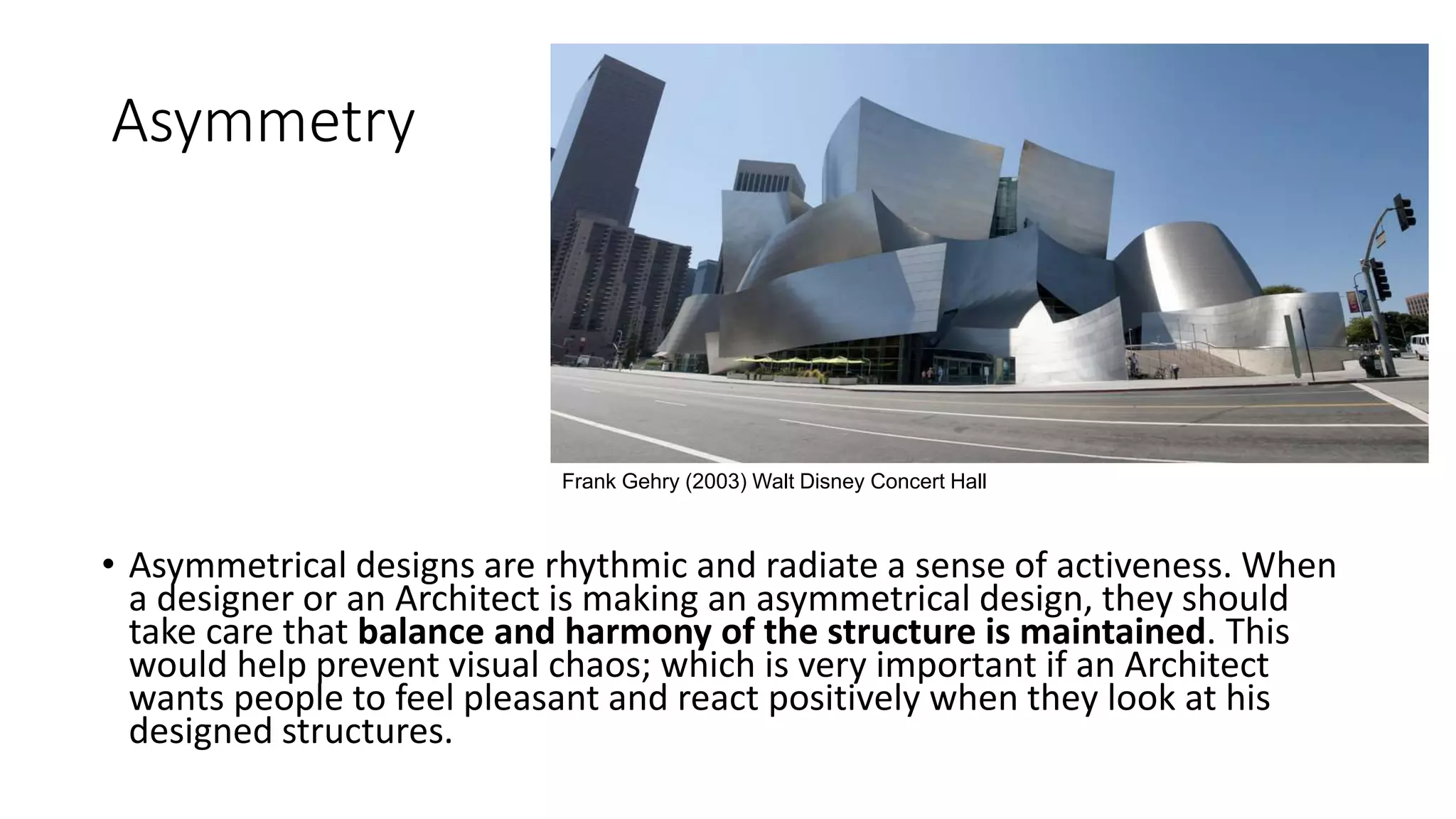
• Asymmetrical designs are rhythmic and radiate a sense of activeness. When
a designer or an Architect is making an asymmetrical design, they should
take care that balance and harmony of the structure is maintained. This
would help prevent visual chaos; which is very important if an Architect
wants people to feel pleasant and react positively when they look at his
designed structures.
Frank Gehry (2003) Walt Disney Concert Hall
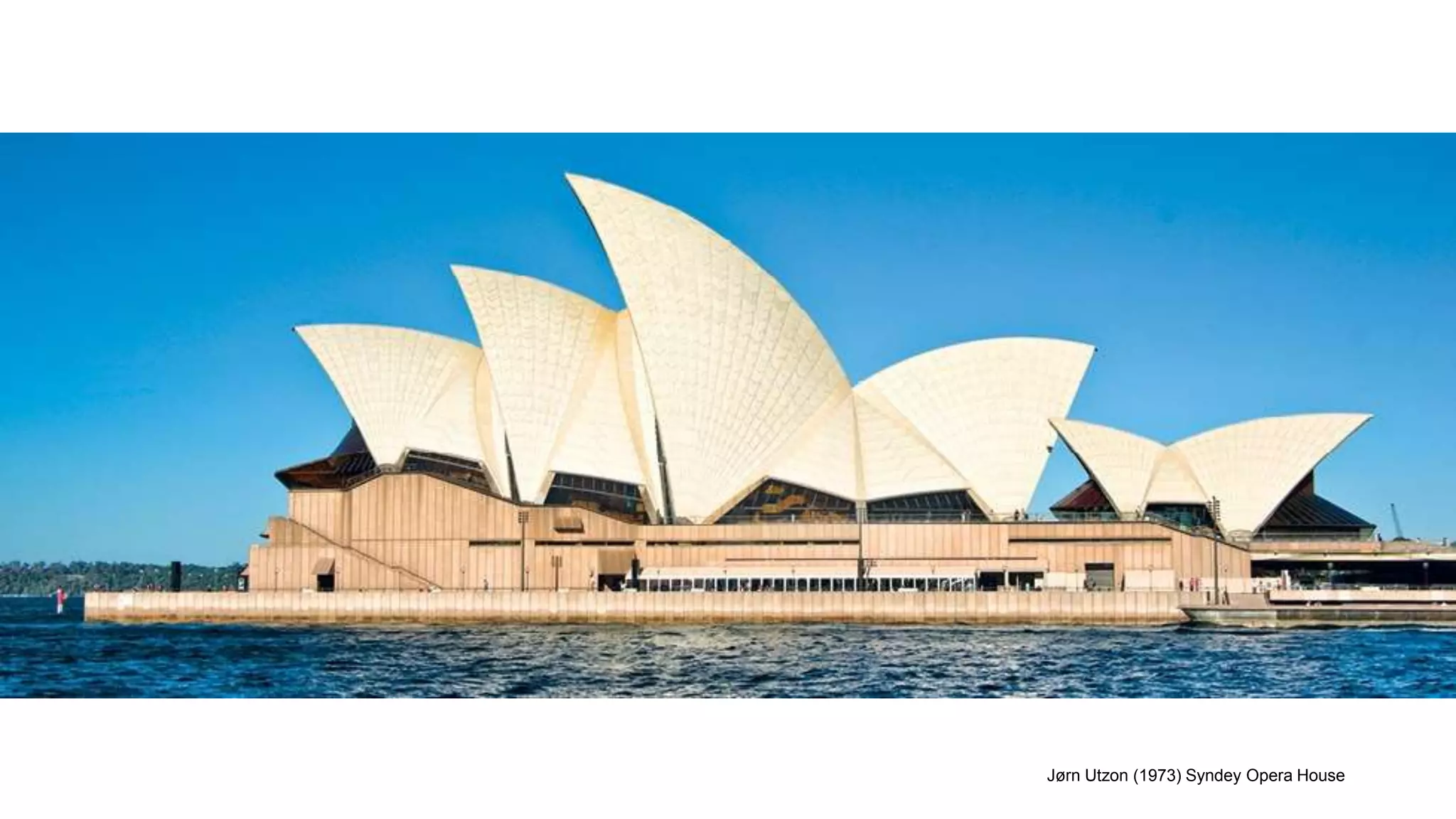
Jørn Utzon (1973) Syndey Opera House
Norman Foster (2002) City Hall
Rem Koolhaas (2004) Seattle Central Library
Santiago Calatrava (2005) Palau de les Arts
Proportion
• Your response to architecture depends heavily on the impression and
the experience you have when walking into and around a space. An
important thing to remember when creating such effects
is proportion.
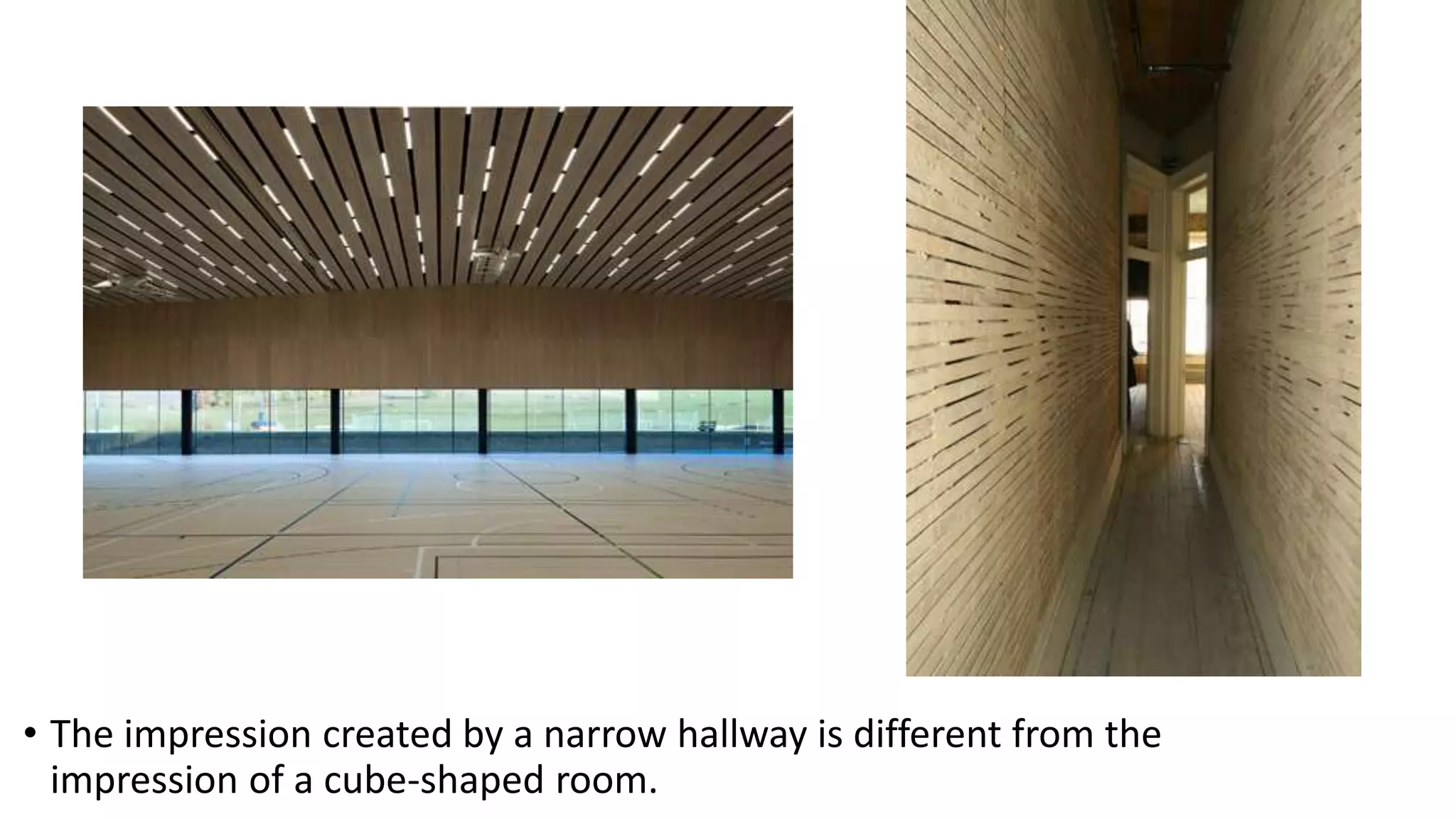
• The impression created by a narrow hallway is different from the
impression of a cube-shaped room.
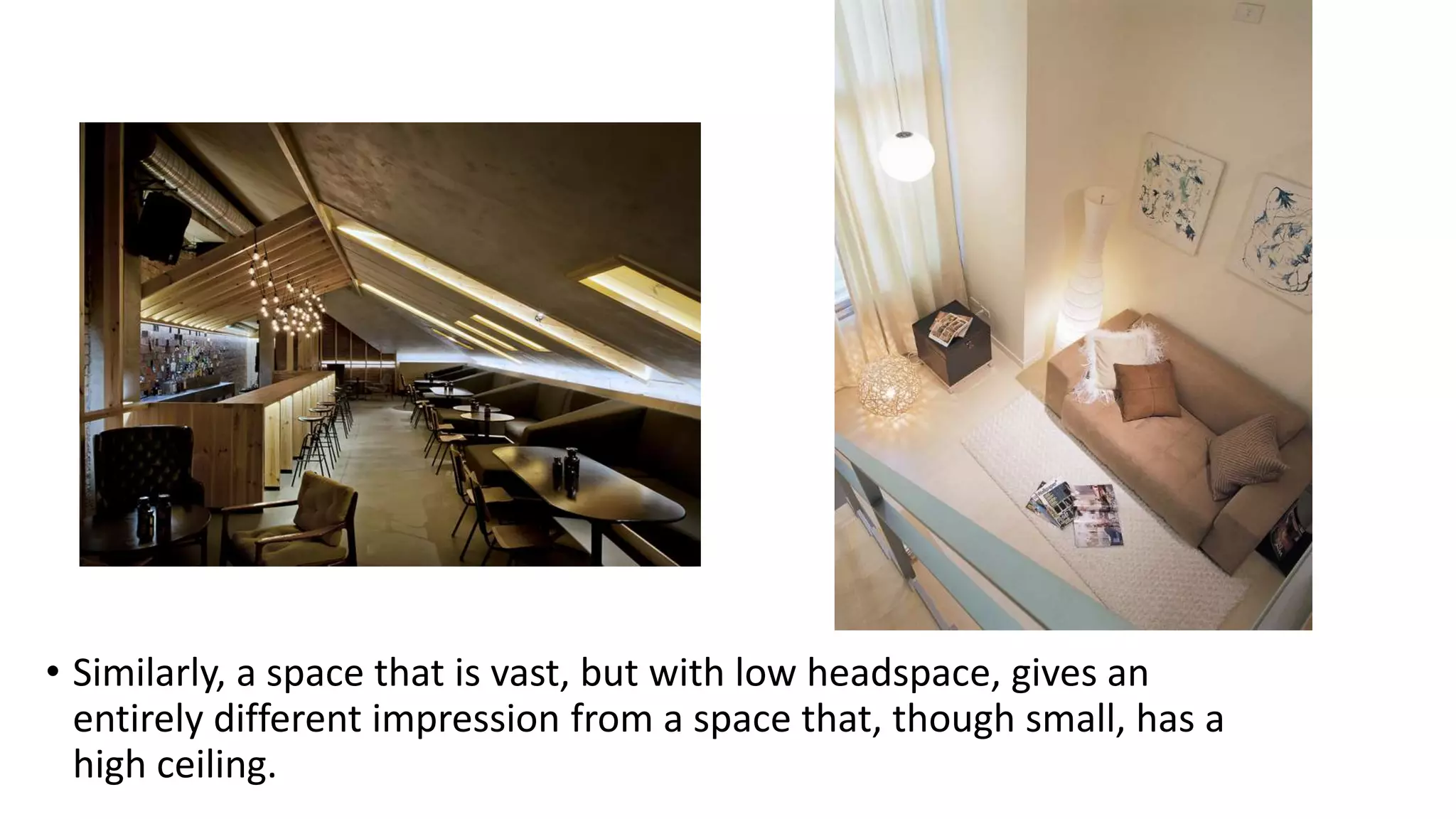
• Similarly, a space that is vast, but with low headspace, gives an
entirely different impression from a space that, though small, has a
high ceiling.
Sou Fujimoto (2010) House of Na
Le Corbusier (1952) Unité d'habitation
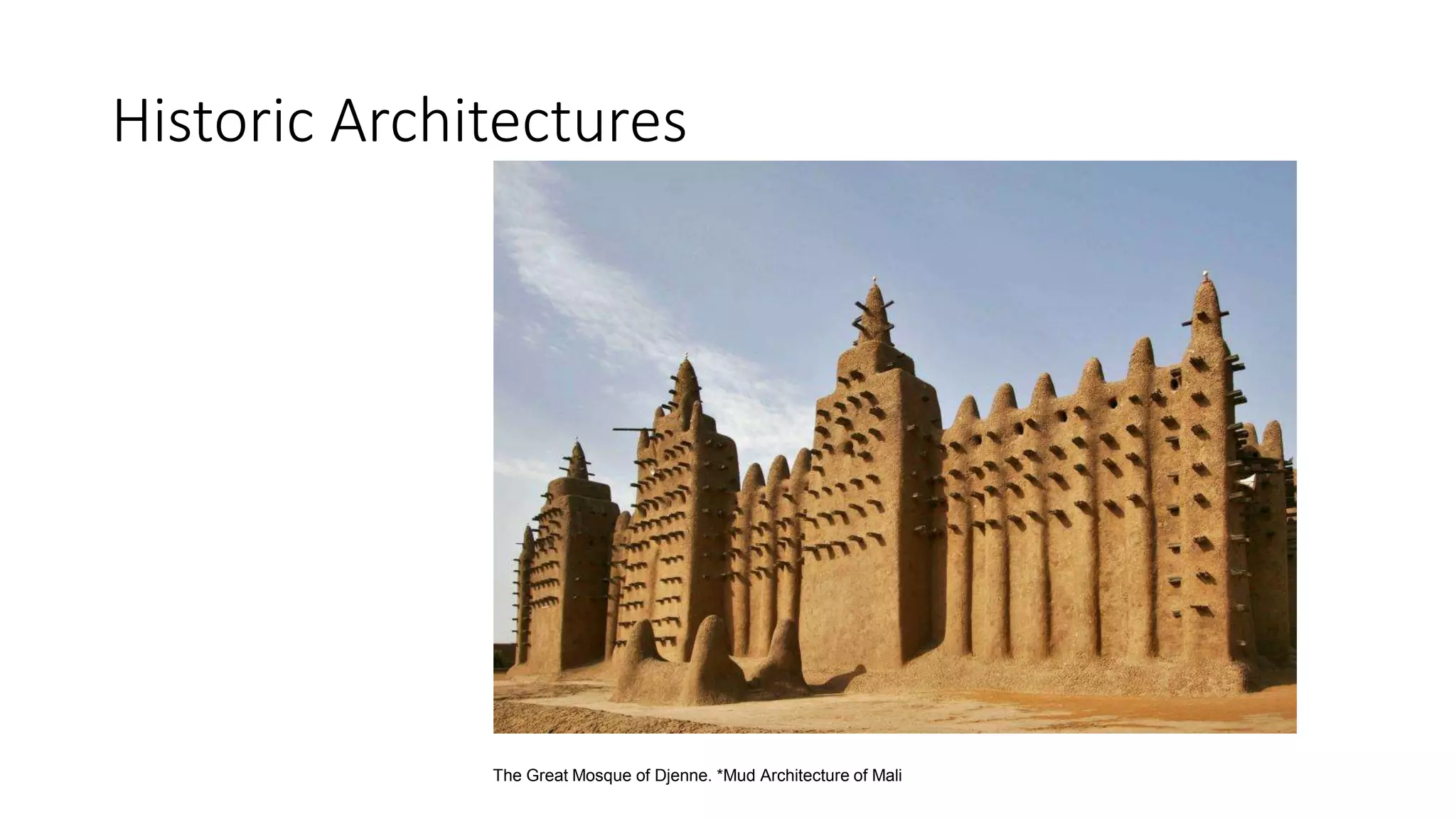
Historic Architectures
The Great Mosque of Djenne. *Mud Architecture of Mali
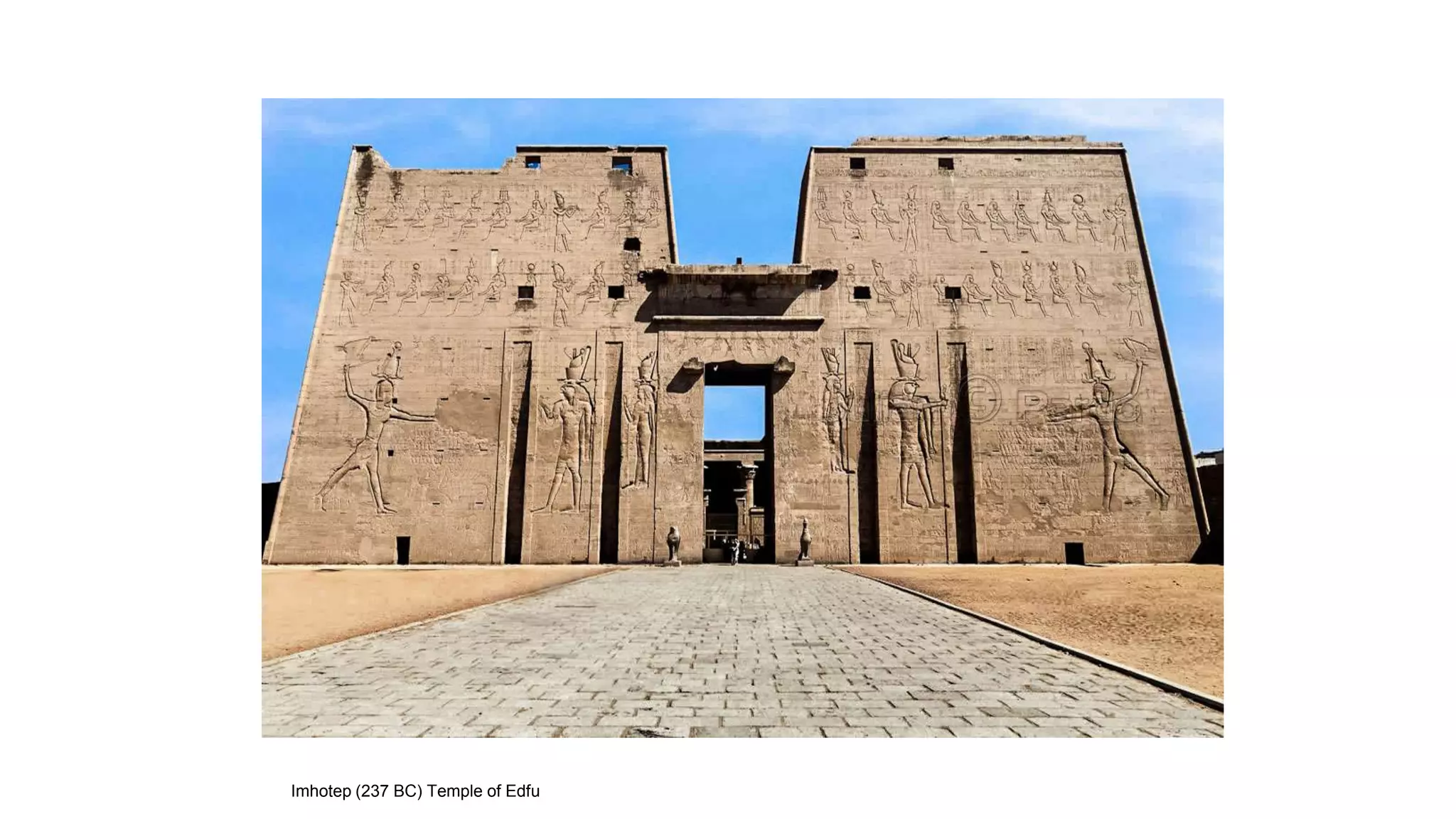
Imhotep (237 BC) Temple of Edfu
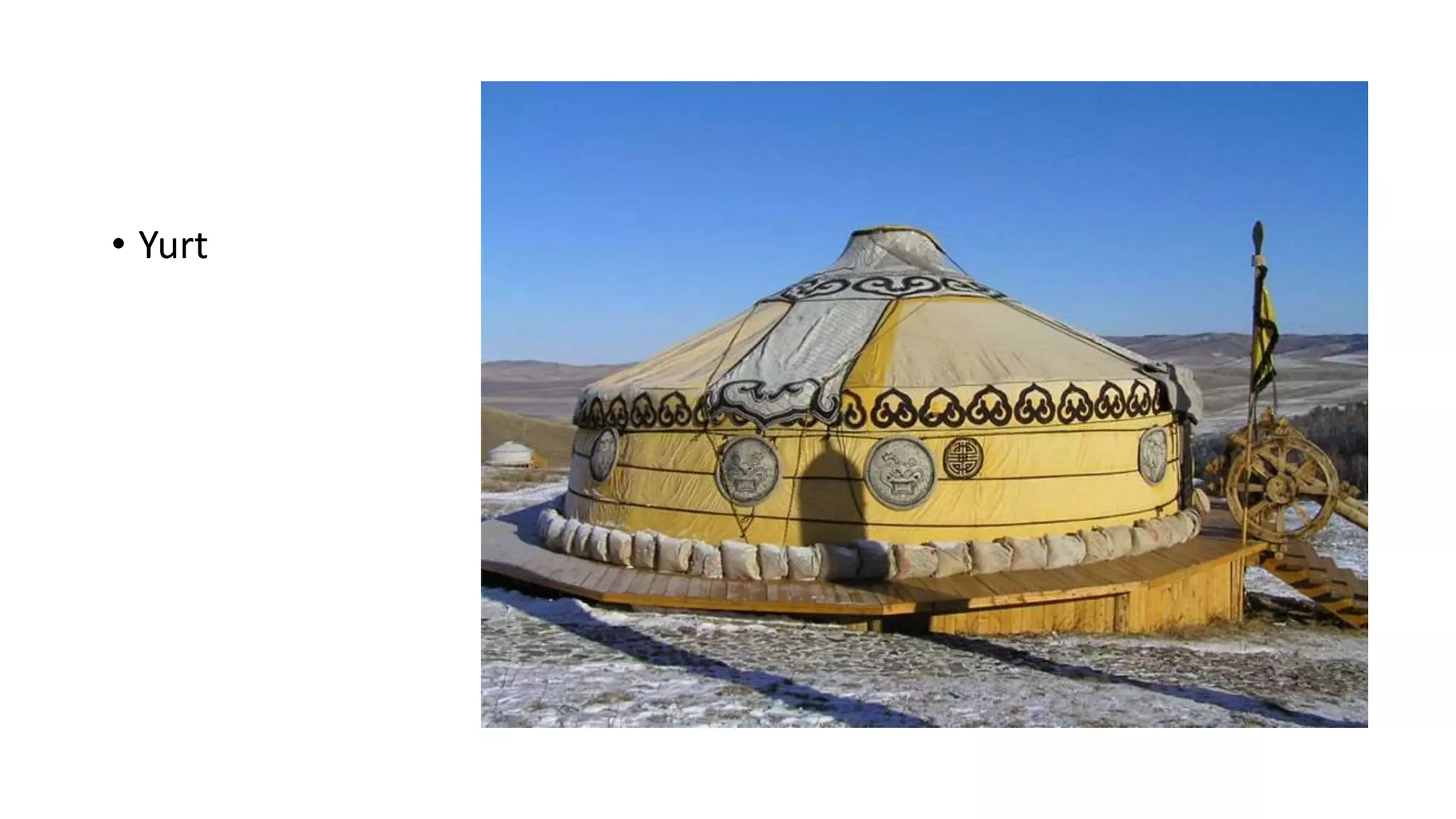
• Yurt
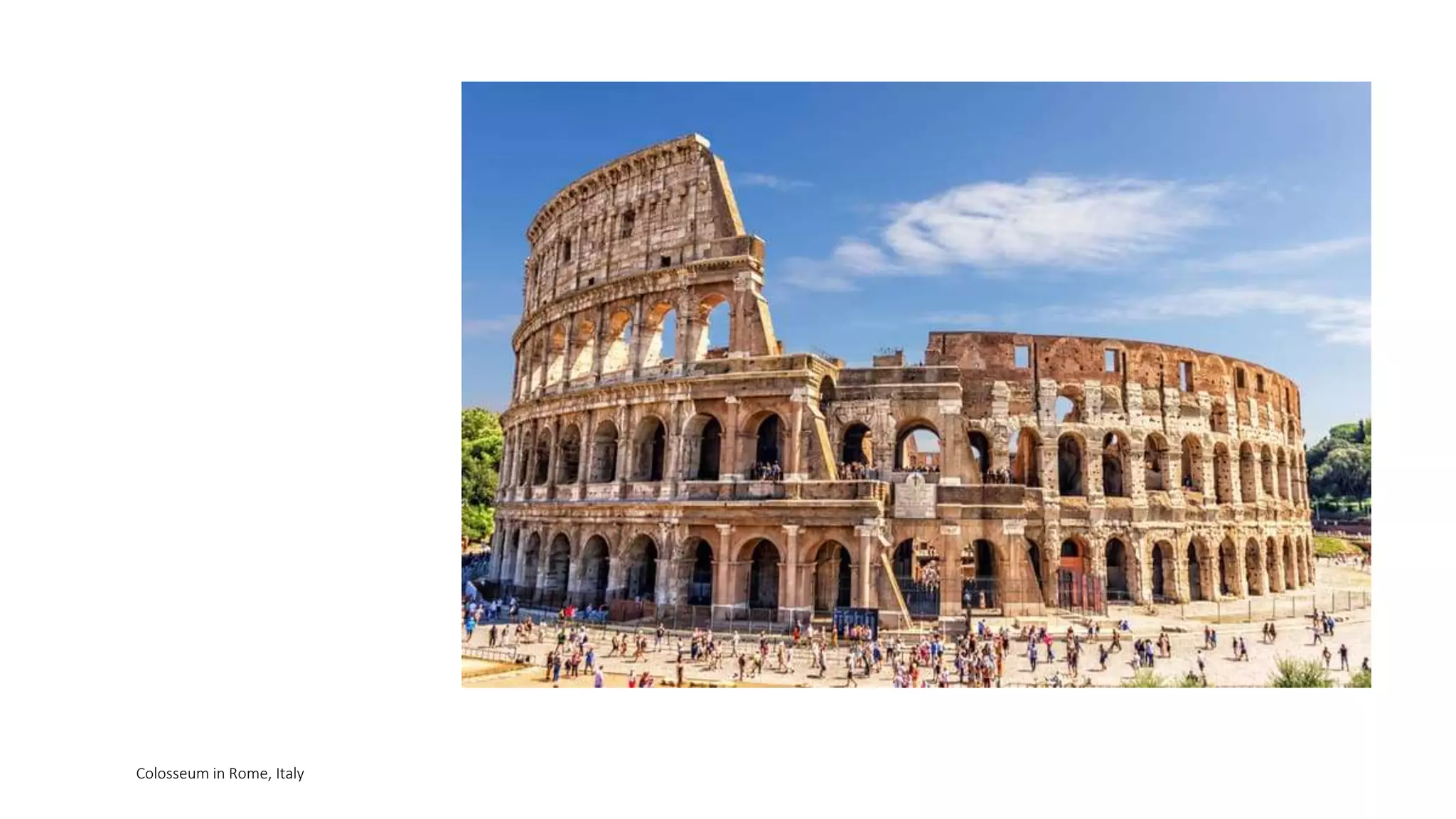
Colosseum in Rome, Italy
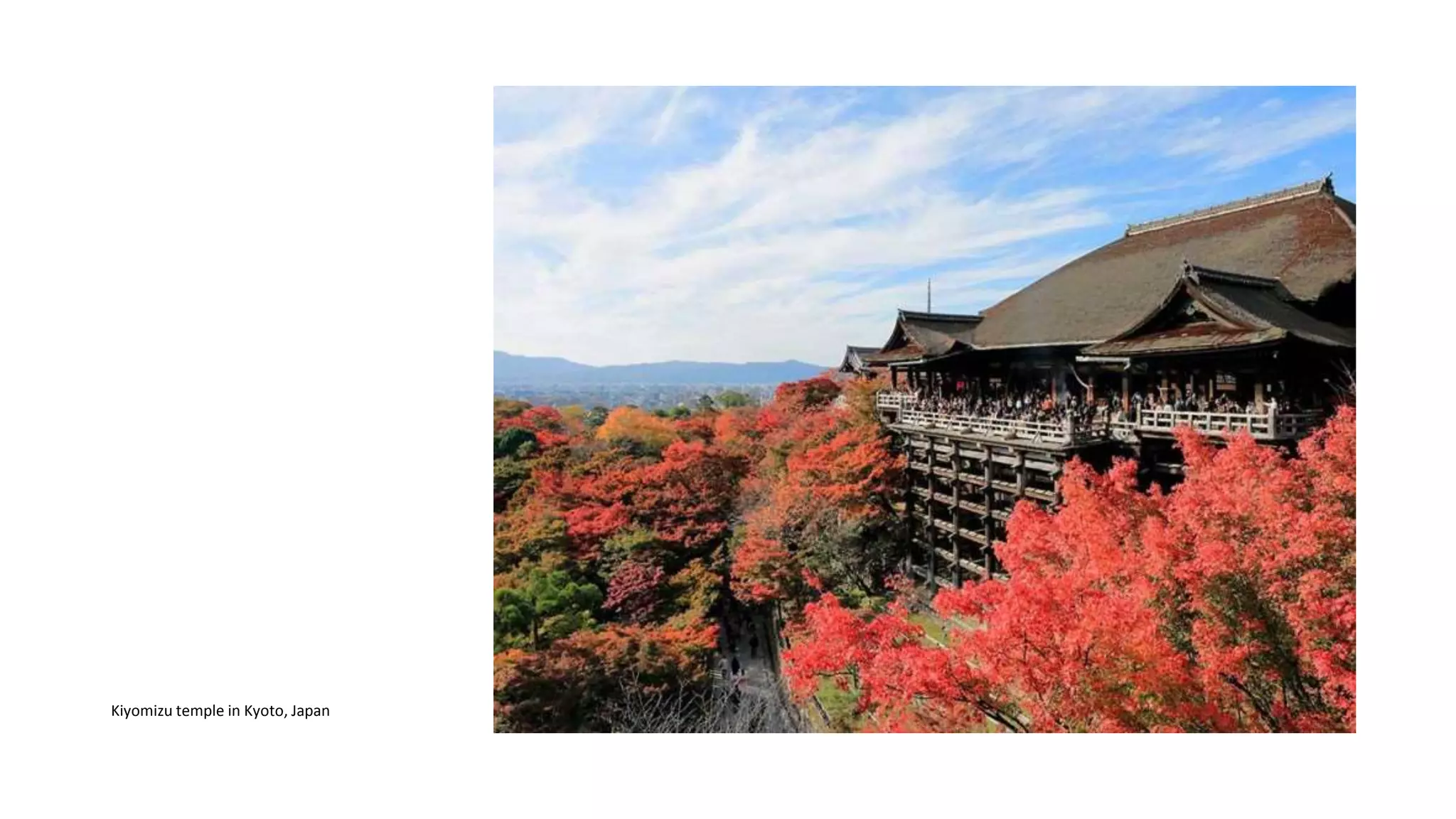
Kiyomizu temple in Kyoto, Japan
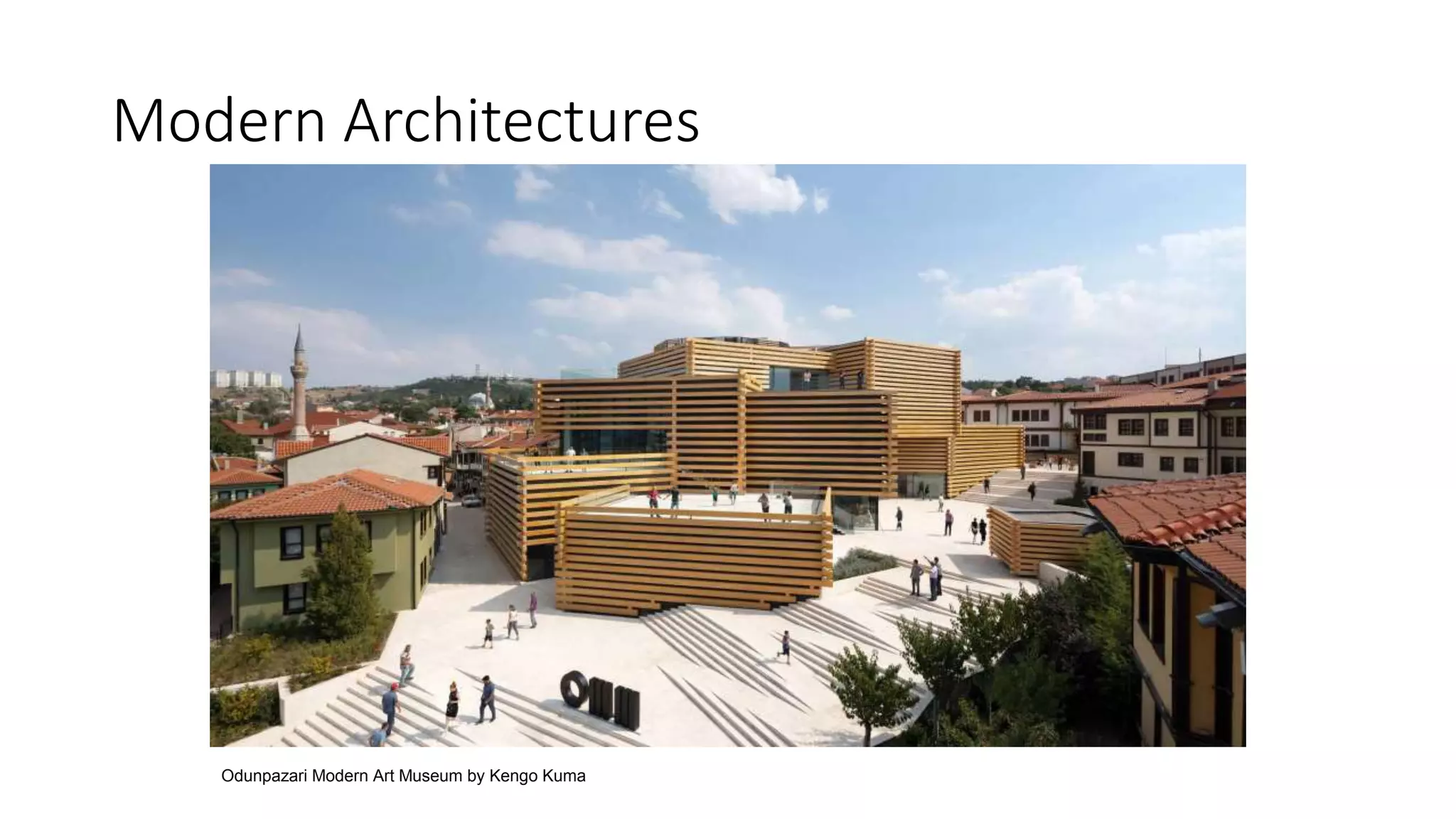
Modern Architectures
Odunpazari Modern Art Museum by Kengo Kuma
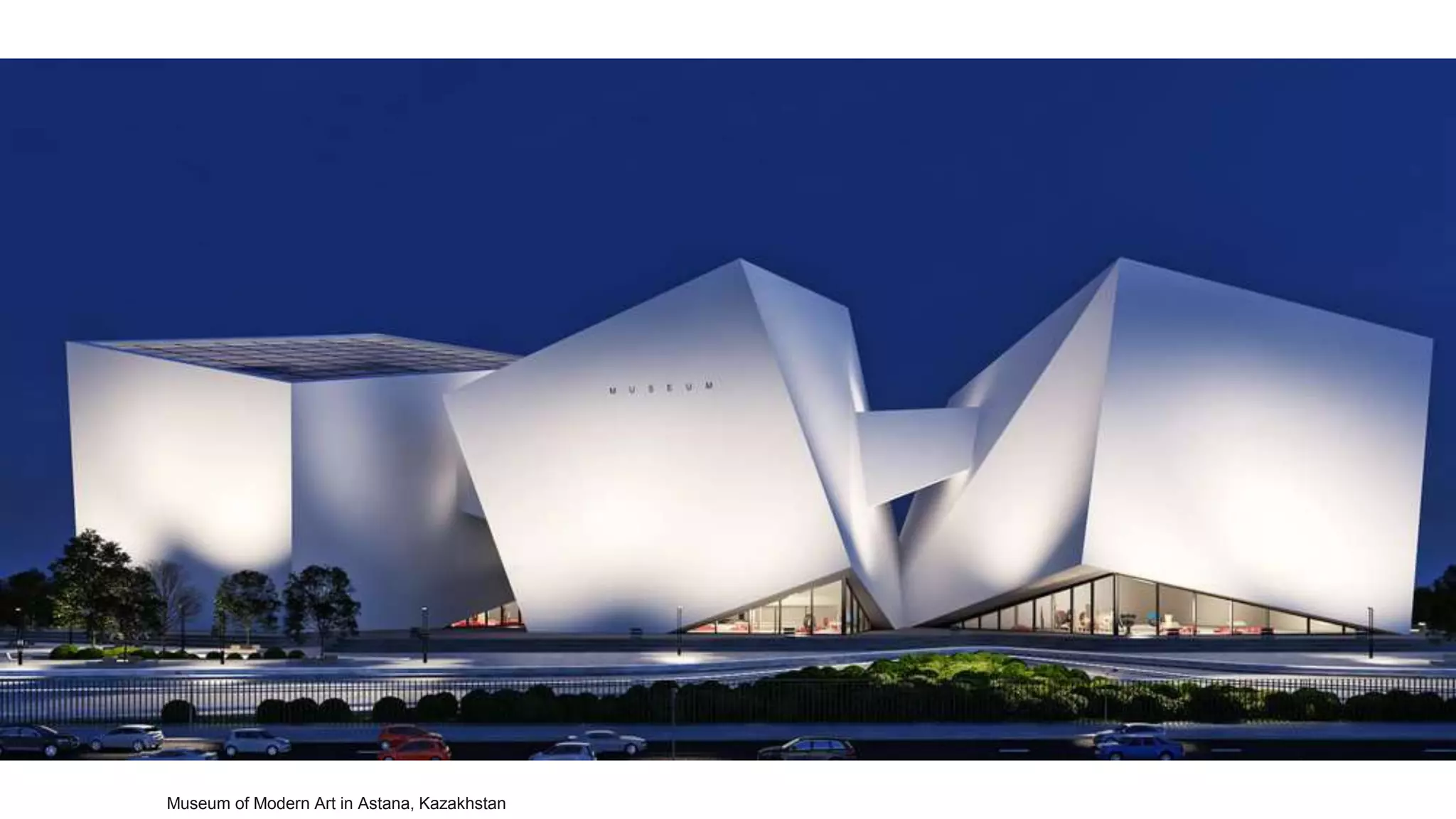
Museum of Modern Art in Astana, Kazakhstan
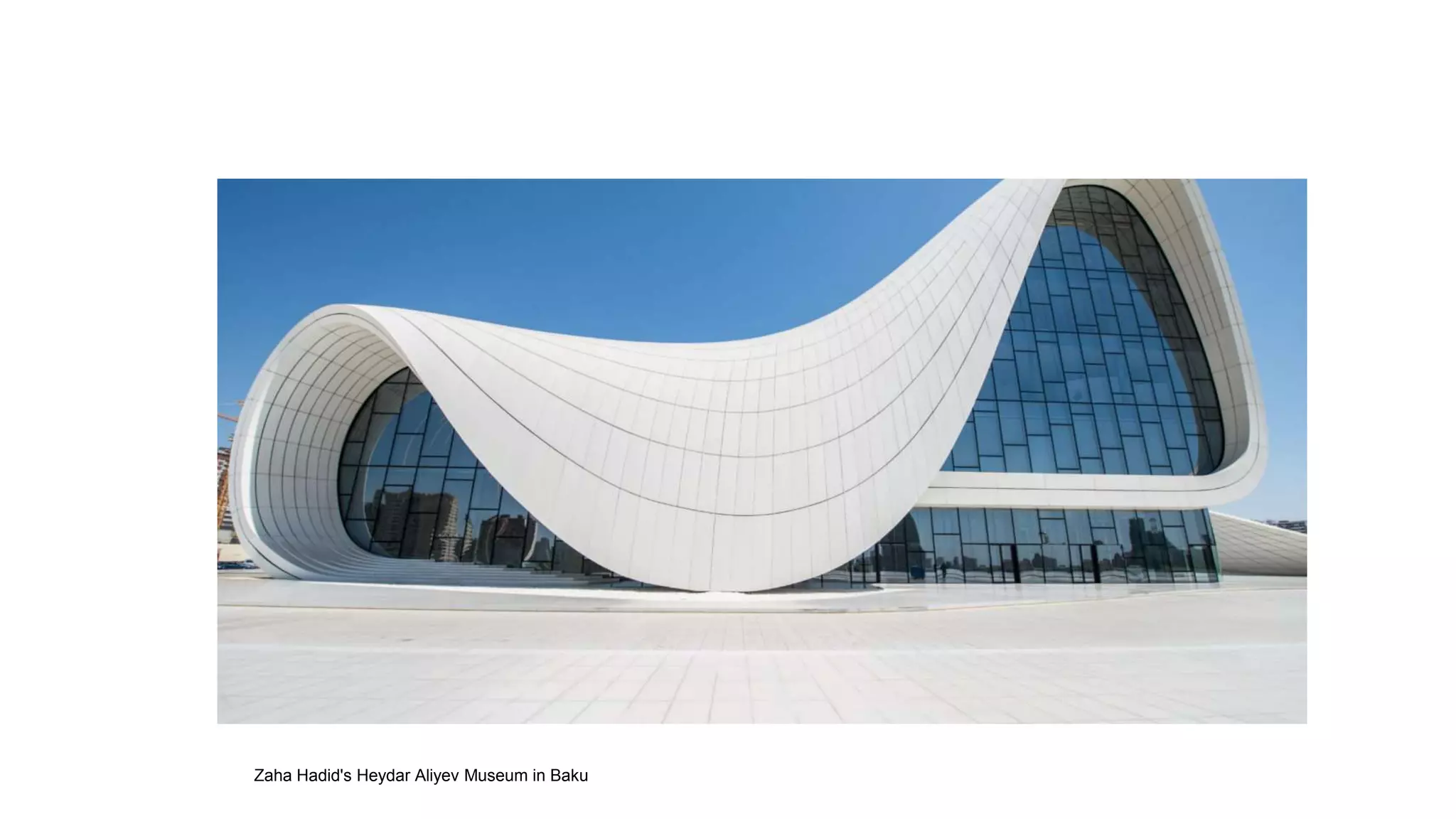
Zaha Hadid's Heydar Aliyev Museum in Baku
Futuristic Architectures
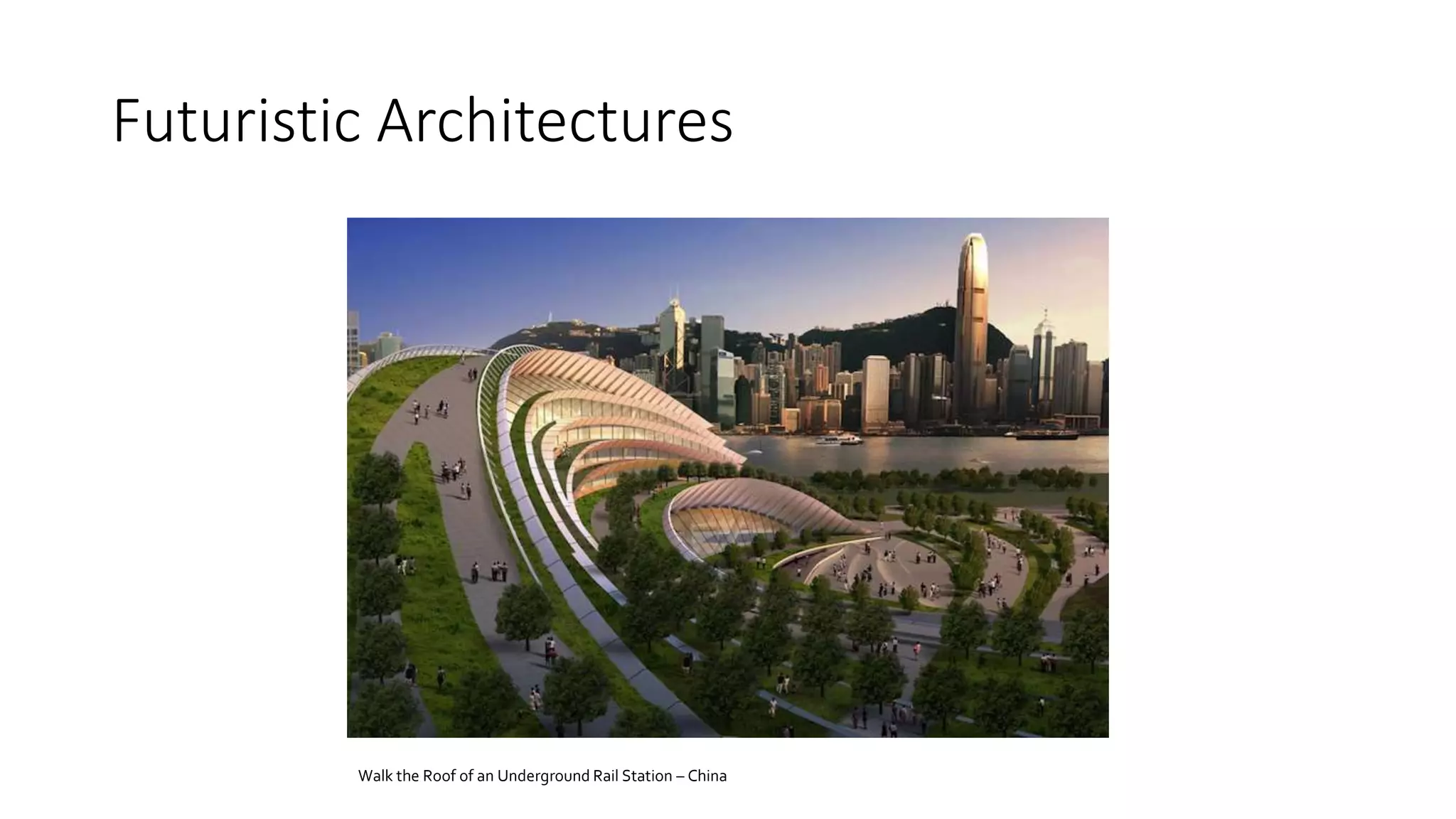
Walk the Roof of an Underground Rail Station – China
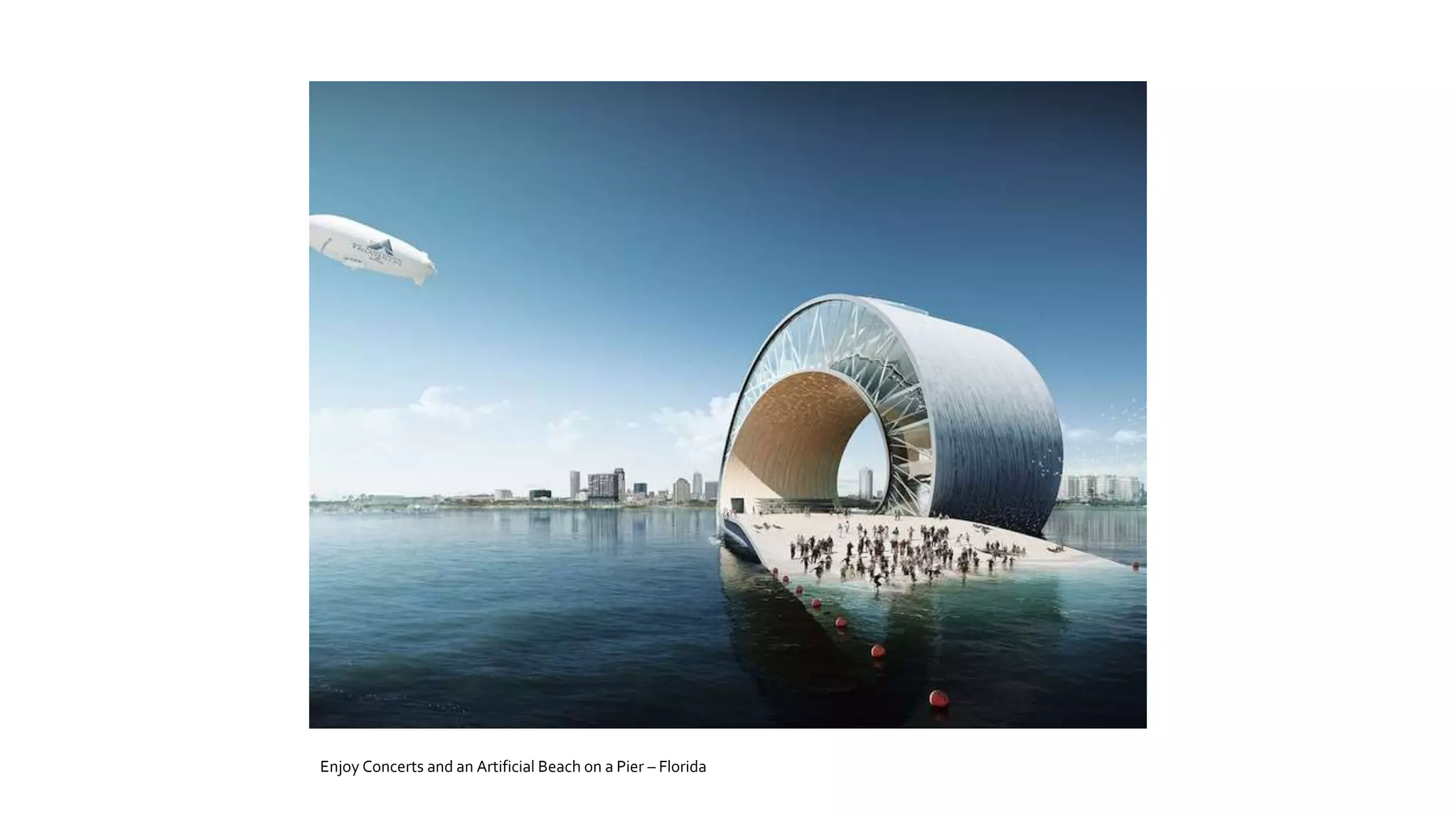
Enjoy Concerts and an Artificial Beach on a Pier – Florida
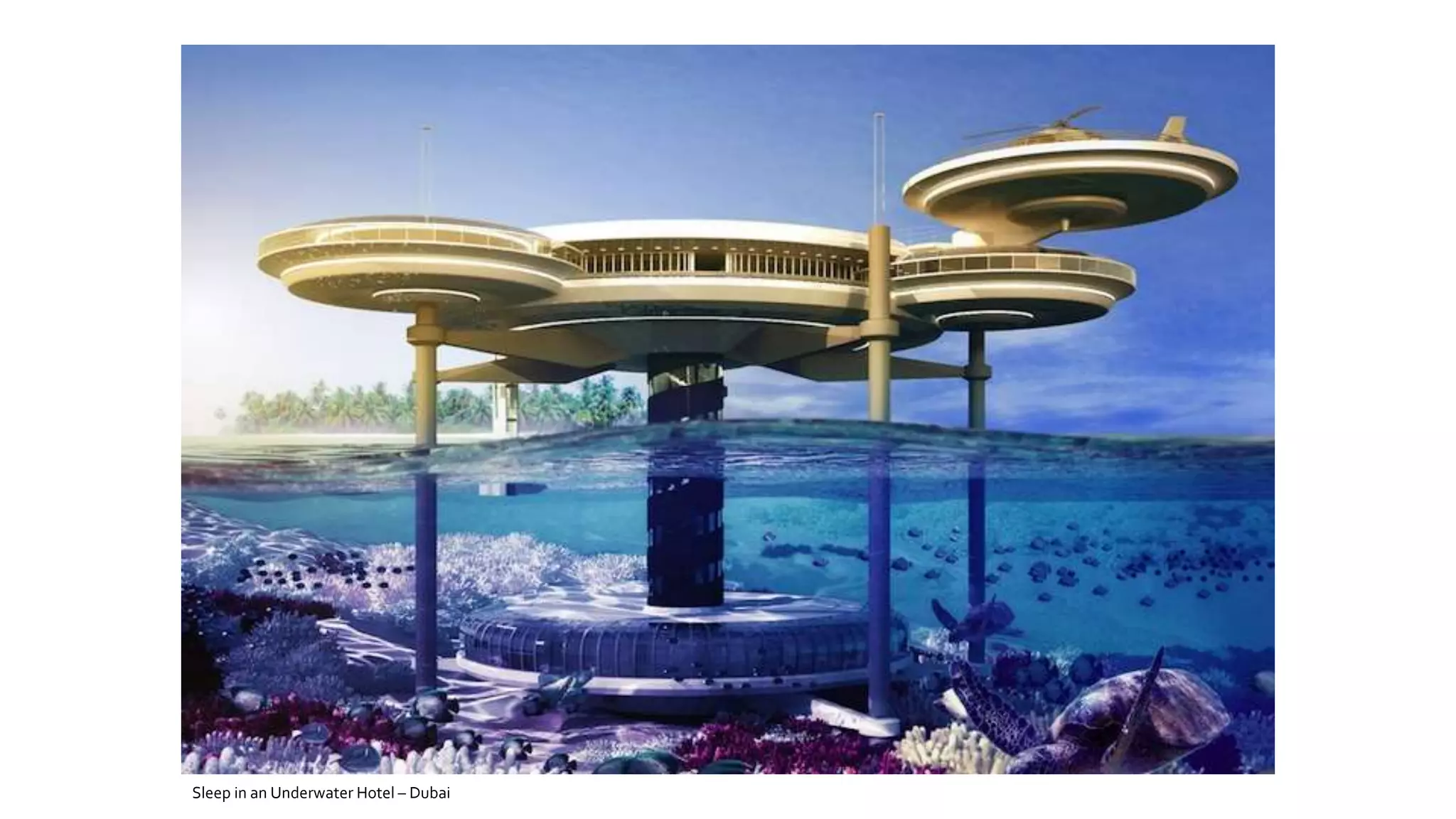
Sleep in an Underwater Hotel – Dubai
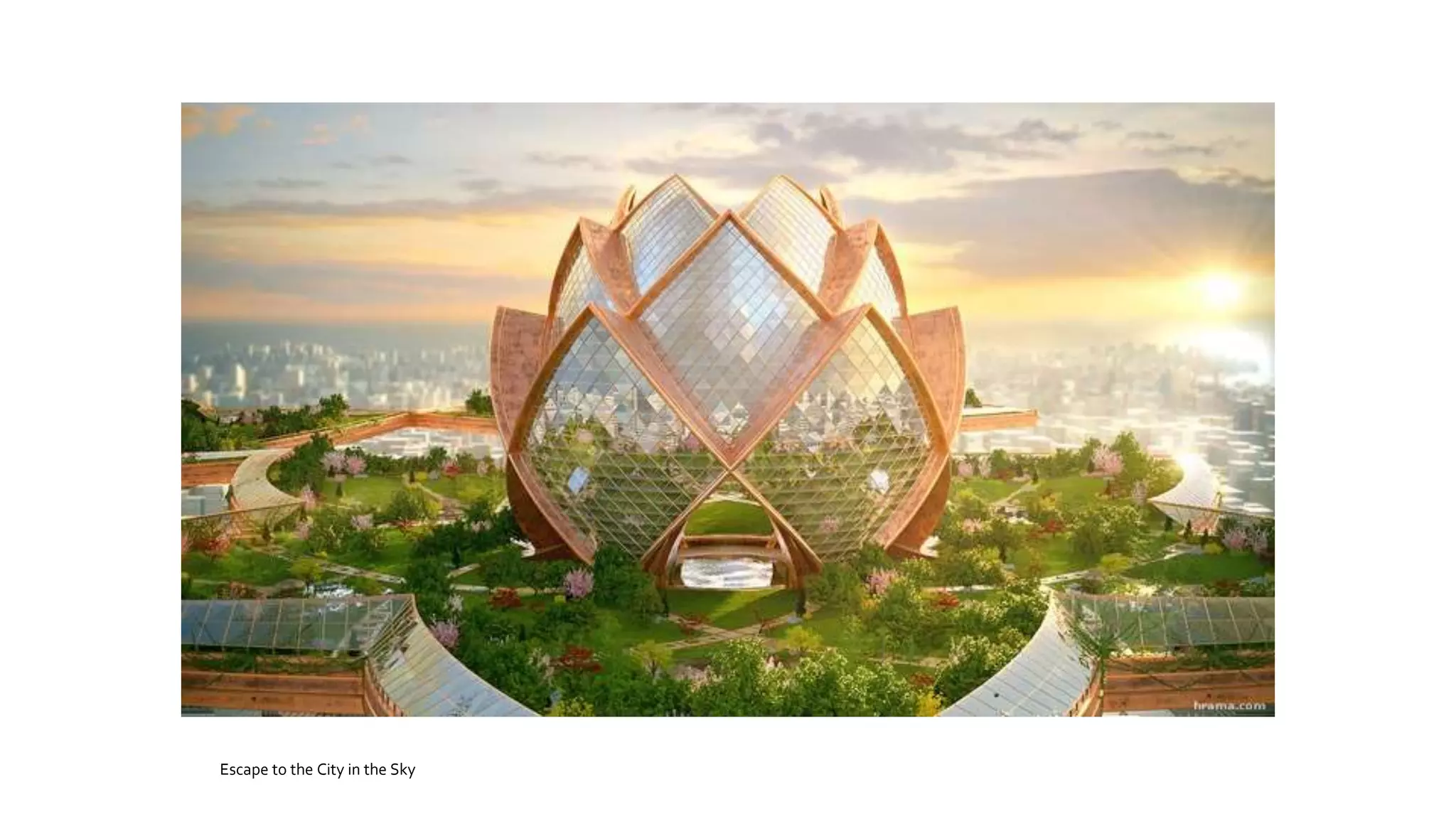
Escape to the City in the Sky
Proposal - Requirements
• Site Analysis
• Site Image
• Design Brainstorming
• Inspiration
• Design Drawing Images (rough and precise)
Site Analysis
Use Google Map and look for a specific site where you like to design an
architecture and Describe the location following the list below
• Site Location Detail: What address?
• Vegetation: Any landscaping, greenery, shrubs, and open space?
• Building Context: what style, period, state of repair are the surrounding
buildings?
• Views: where are the best views to and from the site. Which is the most
likely feature aspect?
• Noise and pollution: Is the site in a particularly noisy area? Or near
industrial buildings that produce leves of pollution?
• Weather: how does the weather affect the site? For example, Is it well
shaded, exposed?
• History of the site: list anything you can use to inform your design if the site
sits in a conservation area or close to listed buildings you may need to go
into more detail regarding cultural significance, historic significance
Site image
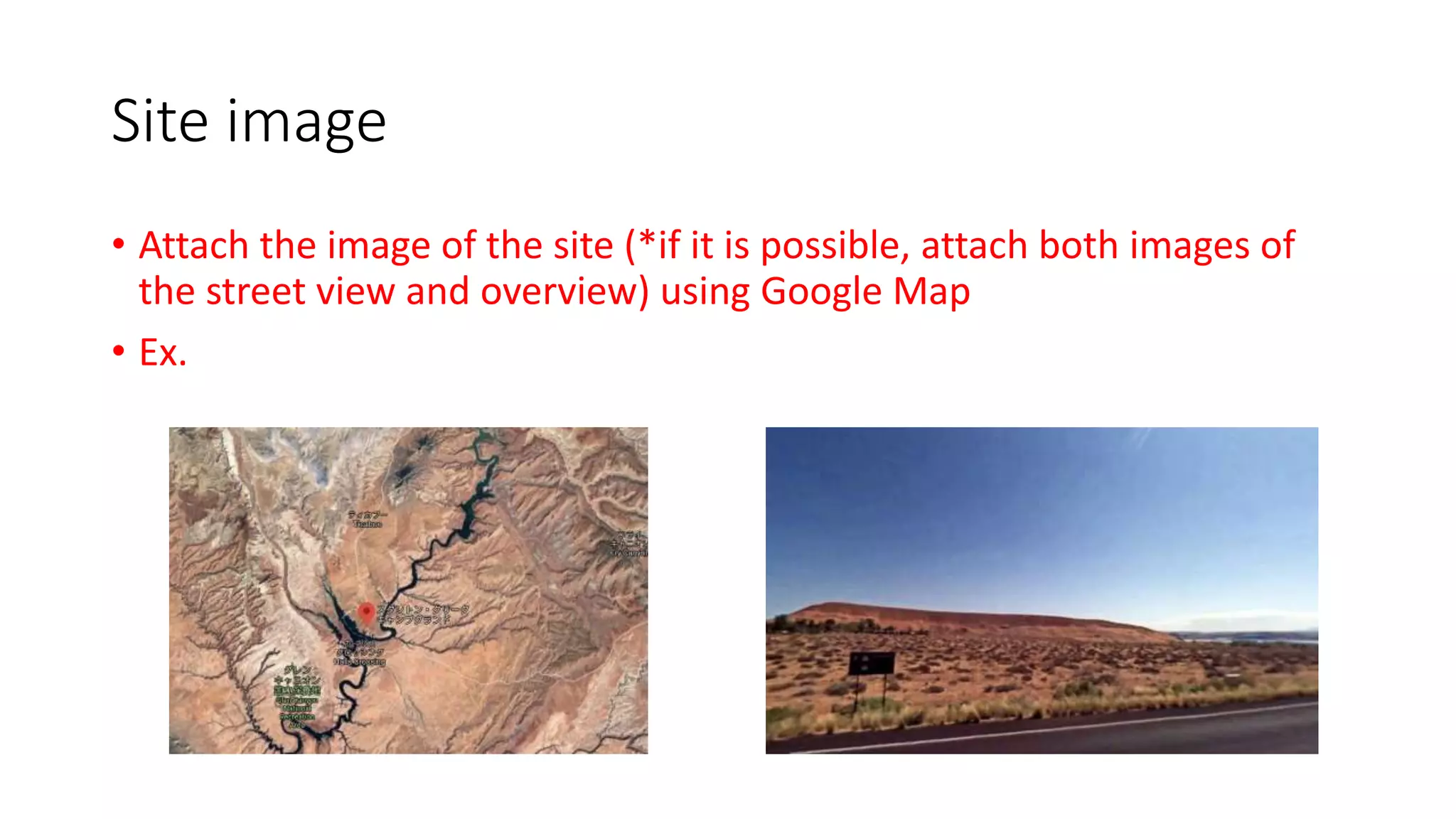
• Attach the image of the site (*if it is possible, attach both images of
the street view and overview) using Google Map
• Ex.
Design Brainstorming
• Building Context: what style, period, state of repair are the surrounding
buildings?
• Texture: what are surfaces and materials around the site? Considering the
environment, how will the texture of the surface of your architecture unify the
location?
• Scale: Considering the location, what scale would be the appropriate for your
concept? And why?
• Balance: Is your architecture dynamic or static? Symmetry or Asymmetry? And
why?
• Proportion: how does the proportion of your architecture generate your
originality or aesthetics? Imagine how visitors feel when they walk into your
architecture.
• Function: what is the function of the building?
Inspiration
Inspiration: What architecture does influence your design? Quote one
of architectures from the Introduction PowerPoint or one of well-
known architetures with its image and describe the reason.
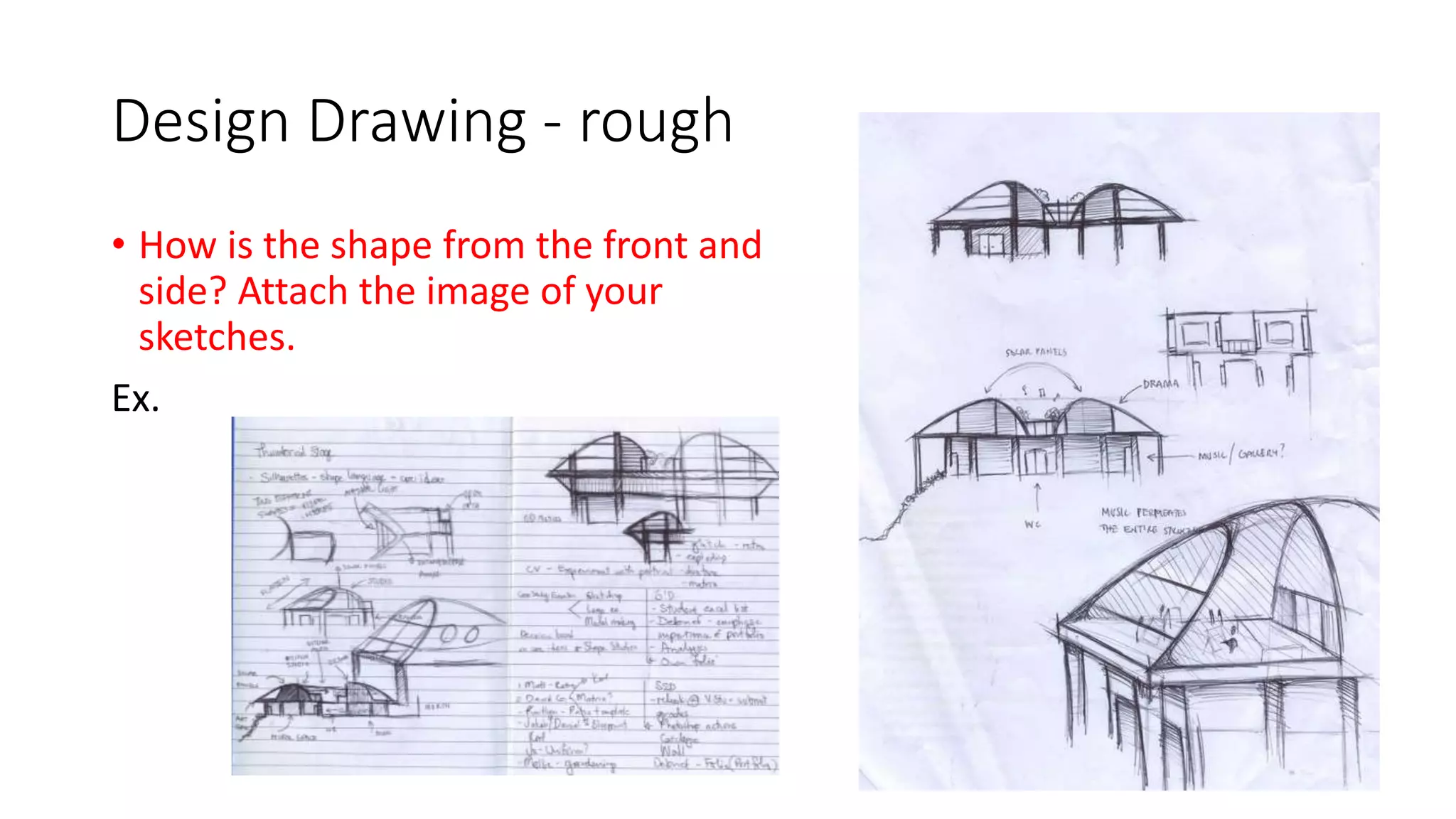
Design Drawing - rough
• How is the shape from the front and
side? Attach the image of your
sketches.
Ex.
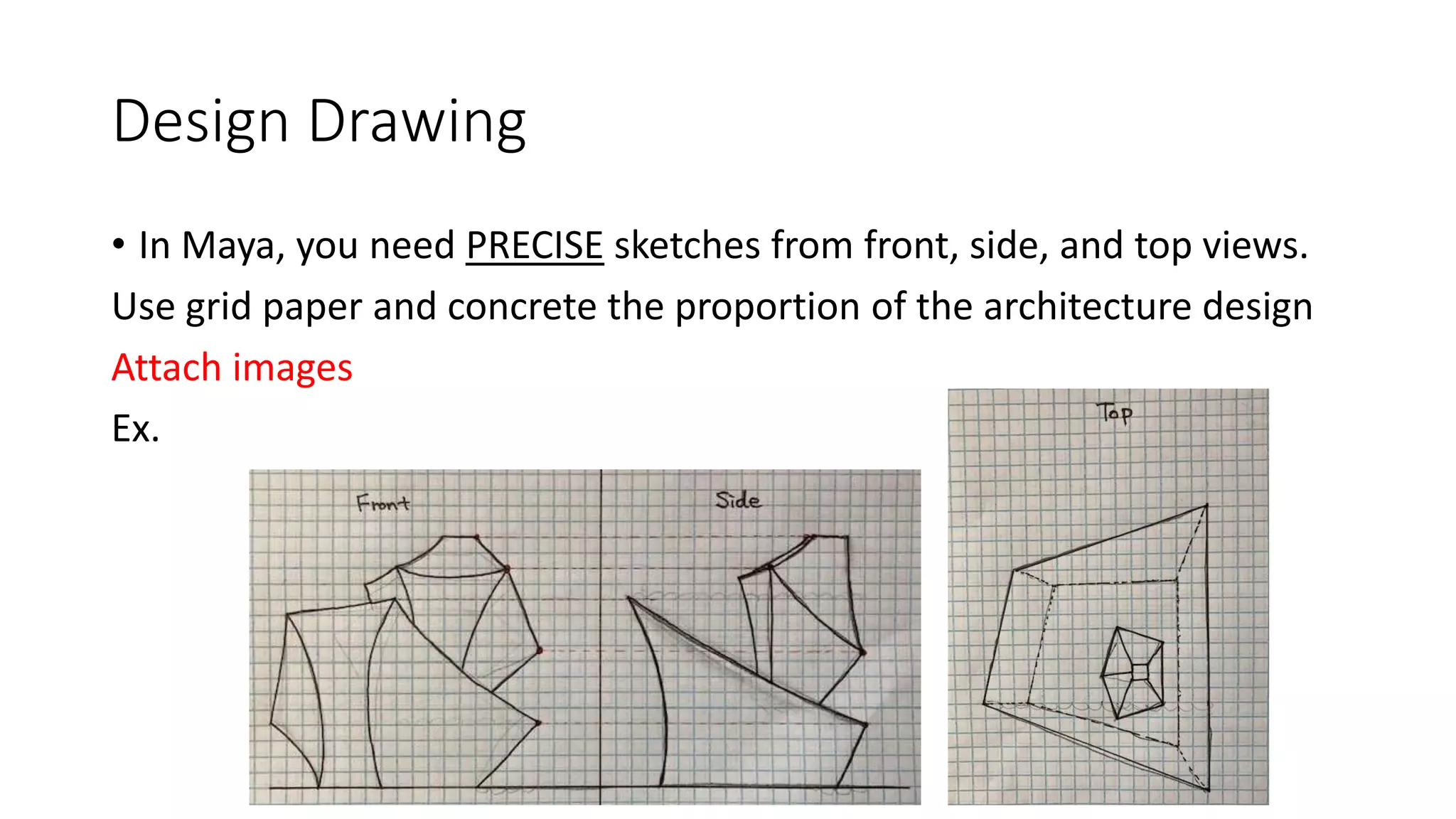
Design Drawing
• In Maya, you need PRECISE sketches from front, side, and top views.
Use grid paper and concrete the proportion of the architecture design
Attach images
Ex.
Start using Maya!
• Please see the instructions for Maya
Reference
• https://trinitys1design.weebly.com/

Architecture project maya

  • 1.
  • 2.
    Requirements • Submit Assignments: 1.Proposal 2. Progress Reports 3. Finalized Project Documentation • Create an architecture form using Maya software • Attach textures on the digital 3D form • Merge the digital 3D form and 2D image using Photoshop • The design and concept must be considered the elements and principles of design (especially Unity / Scale / Proportion / Balance)
  • 3.
    Unity • Unity isachieved when the whole is more important than the parts. More often, unity consists of many forms or objects brought together to construct a coherent whole.
  • 4.
    Variety of Unity •Grid • Pattern • Color • Minimal
  • 5.
    Grid Ludwig Mies vander Rohe with Philip Johnson, Seagram Building. New York. 1956-1958 3-dimensional grid is a unifying force. For example, the Seagram Building’s structure is a 3D matrix, it is a monolith.
  • 6.
    Pattern The formal gardensof Versailles consist of many elements; tree, bushes, paths, and grass, and all in unique shapes. The symmetrical unifying pattern keeps the elements as a whole. Gardens at the Chateau de Versailles in France
  • 7.
    Color Chefchaouen, Morocco Variety ofcolors on the blue wall serves as an antidote to a unity of the solid blue wall
  • 8.
    Minimal Ryoanji, a JapaneseZen rock garden is unified by its rectangular framing format, monochrome pallet, and by its consistent elements (all natural rocks). Rock garden, Ryoanji temple, Kyoto Japan. 15c
  • 9.
    Scale • The actualor relative dimensions of an object, or parts of an object in relation to one another • In the vocabulary of sculpture (or 3D art), scale and size are not synonymous. Size is normally thought of in terms of large and small - the relative dimensions of a thing. Size can be measured in units, but scale is more ambiguous.
  • 10.
    Variety of Scale •Human Scale • Intimate Scale • Monumental Scale
  • 11.
    Human Scale • Thehuman scale is what we are used to. Our houses are typically built to this natural scale. We should feel comfortable walking through our doorways. The ceiling neither bumps our heads, nor is lost in the shadows.
  • 12.
    Monumental Scale • Monumentalscale is impressive. Our public buildings are monumental. This is a statement of hierarchy, highlighting their importance in our society. Those institutions represented by those buildings are bigger than us.
  • 13.
    Intimate Scale • Intimatesizes are smaller than what is normal. These don’t shock you, but they are smaller than what we expect, being cocoon like.
  • 14.
    Texture • Texture ofa building is often the first opportunity for an architect to leave an impression. This skin encloses and shelters the interior spaces and is one of the key components that determines a building's personality. • A good texture in archtecture involves using exterior wall materials and designs that are climate-appropriate, structurally sound and aesthetically pleasing.
  • 15.
    Variety of Texture FrankGehry (1997) Guggenheim Museum, Bilbao
  • 16.
    Faulders Studio (2007)Airspace Tokyo
  • 17.
    Tomás Amat (2010)La Cigarra Café Entry Pavilion
  • 18.
    • (771) GreatMosque of Isfahan
  • 19.
    Balance • Dynamic vsStatic • Symmetry vs Asymmetry
  • 20.
    Dynamic vs Static •Architects can never forget that structures exist for human use, and they thus have to build with human perceptions in mind. As people see a structure, they think of it as either static or dynamic. • There is a place for both static and dynamic structures because of their effect on a viewer emotions. Static spaces are calming and dynamic spaces are exciting. Designers must consider the reaction they want to evoke with their structures.
  • 21.
    Static • Static structuresappear still and solid. For example, rectangular skyscrapers are static structures.
  • 22.
    Dynamic • Dynamic structuresdraw the eye in movement to various parts of the composition; the whole cannot be taken in at a glance. Buildings that have curved or diagonal lines appear dynamic.
  • 23.
    Symmetry vs Asymmetry •Architecture, as any compositional art, makes extensive use of symmetry. Across all cultures and in all time periods, architectural compositions are symmetrically arranged. • Asymmetry is the absence of symmetry of any kind. We can exploit asymmetry, using it to draw attention to areas in the design or to convey dynamism or movement. Asymmetry as the organising factor in Architecture is most commonly seen in modern architecture.
  • 24.
    Symmetry • Architecture, asany compositional art, makes extensive use of symmetry. Across all cultures and in all time periods, architectural compositions are symmetrically arranged.
  • 25.
    Symmetry • Symmetry is somethingthat Islamic mosques, The facade of Sheikh Lotfollah Mosque, a masterpiece of the Iranian architecture, built between 1602 – 1619
  • 26.
    • Shito Shrines, Byodointemple in Kyoto, Japan
  • 27.
    • Hindu temples, SriRanganathaswamy in Srirangam
  • 28.
    • Gothic cathedrals. BeauvaisCathedral in Beauvais, France
  • 29.
    Asymmetry • Asymmetrical designsare rhythmic and radiate a sense of activeness. When a designer or an Architect is making an asymmetrical design, they should take care that balance and harmony of the structure is maintained. This would help prevent visual chaos; which is very important if an Architect wants people to feel pleasant and react positively when they look at his designed structures. Frank Gehry (2003) Walt Disney Concert Hall
  • 30.
    Jørn Utzon (1973)Syndey Opera House
  • 31.
  • 32.
    Rem Koolhaas (2004)Seattle Central Library
  • 33.
    Santiago Calatrava (2005)Palau de les Arts
  • 34.
    Proportion • Your responseto architecture depends heavily on the impression and the experience you have when walking into and around a space. An important thing to remember when creating such effects is proportion.
  • 35.
    • The impressioncreated by a narrow hallway is different from the impression of a cube-shaped room.
  • 36.
    • Similarly, aspace that is vast, but with low headspace, gives an entirely different impression from a space that, though small, has a high ceiling.
  • 37.
  • 38.
    Le Corbusier (1952)Unité d'habitation
  • 39.
    Historic Architectures The GreatMosque of Djenne. *Mud Architecture of Mali
  • 40.
    Imhotep (237 BC)Temple of Edfu
  • 41.
  • 42.
  • 43.
    Kiyomizu temple inKyoto, Japan
  • 44.
  • 45.
    Museum of ModernArt in Astana, Kazakhstan
  • 46.
    Zaha Hadid's HeydarAliyev Museum in Baku
  • 47.
    Futuristic Architectures Walk theRoof of an Underground Rail Station – China
  • 48.
    Enjoy Concerts andan Artificial Beach on a Pier – Florida
  • 49.
    Sleep in anUnderwater Hotel – Dubai
  • 50.
    Escape to theCity in the Sky
  • 51.
    Proposal - Requirements •Site Analysis • Site Image • Design Brainstorming • Inspiration • Design Drawing Images (rough and precise)
  • 52.
    Site Analysis Use GoogleMap and look for a specific site where you like to design an architecture and Describe the location following the list below • Site Location Detail: What address? • Vegetation: Any landscaping, greenery, shrubs, and open space? • Building Context: what style, period, state of repair are the surrounding buildings? • Views: where are the best views to and from the site. Which is the most likely feature aspect? • Noise and pollution: Is the site in a particularly noisy area? Or near industrial buildings that produce leves of pollution? • Weather: how does the weather affect the site? For example, Is it well shaded, exposed? • History of the site: list anything you can use to inform your design if the site sits in a conservation area or close to listed buildings you may need to go into more detail regarding cultural significance, historic significance
  • 53.
    Site image • Attachthe image of the site (*if it is possible, attach both images of the street view and overview) using Google Map • Ex.
  • 54.
    Design Brainstorming • BuildingContext: what style, period, state of repair are the surrounding buildings? • Texture: what are surfaces and materials around the site? Considering the environment, how will the texture of the surface of your architecture unify the location? • Scale: Considering the location, what scale would be the appropriate for your concept? And why? • Balance: Is your architecture dynamic or static? Symmetry or Asymmetry? And why? • Proportion: how does the proportion of your architecture generate your originality or aesthetics? Imagine how visitors feel when they walk into your architecture. • Function: what is the function of the building?
  • 55.
    Inspiration Inspiration: What architecturedoes influence your design? Quote one of architectures from the Introduction PowerPoint or one of well- known architetures with its image and describe the reason.
  • 56.
    Design Drawing -rough • How is the shape from the front and side? Attach the image of your sketches. Ex.
  • 57.
    Design Drawing • InMaya, you need PRECISE sketches from front, side, and top views. Use grid paper and concrete the proportion of the architecture design Attach images Ex.
  • 58.
    Start using Maya! •Please see the instructions for Maya
  • 59.