Architecting the Enterprise
Doctor of Management
(Ph.D) Mikkel H Brahm
Head of Personal Banking
& One Digital
Architecture | Nordea
Slides available at SlideShare
https://www.slideshare.net/mikkelbrahm
Doctoral (PhD) Thesis available at UH
Seeking to Control Enterprise with Architecture
the limits and value of an engineering approach
from the perspective of an Enterprise Architect
http://uhra.herts.ac.uk/handle/2299/17596
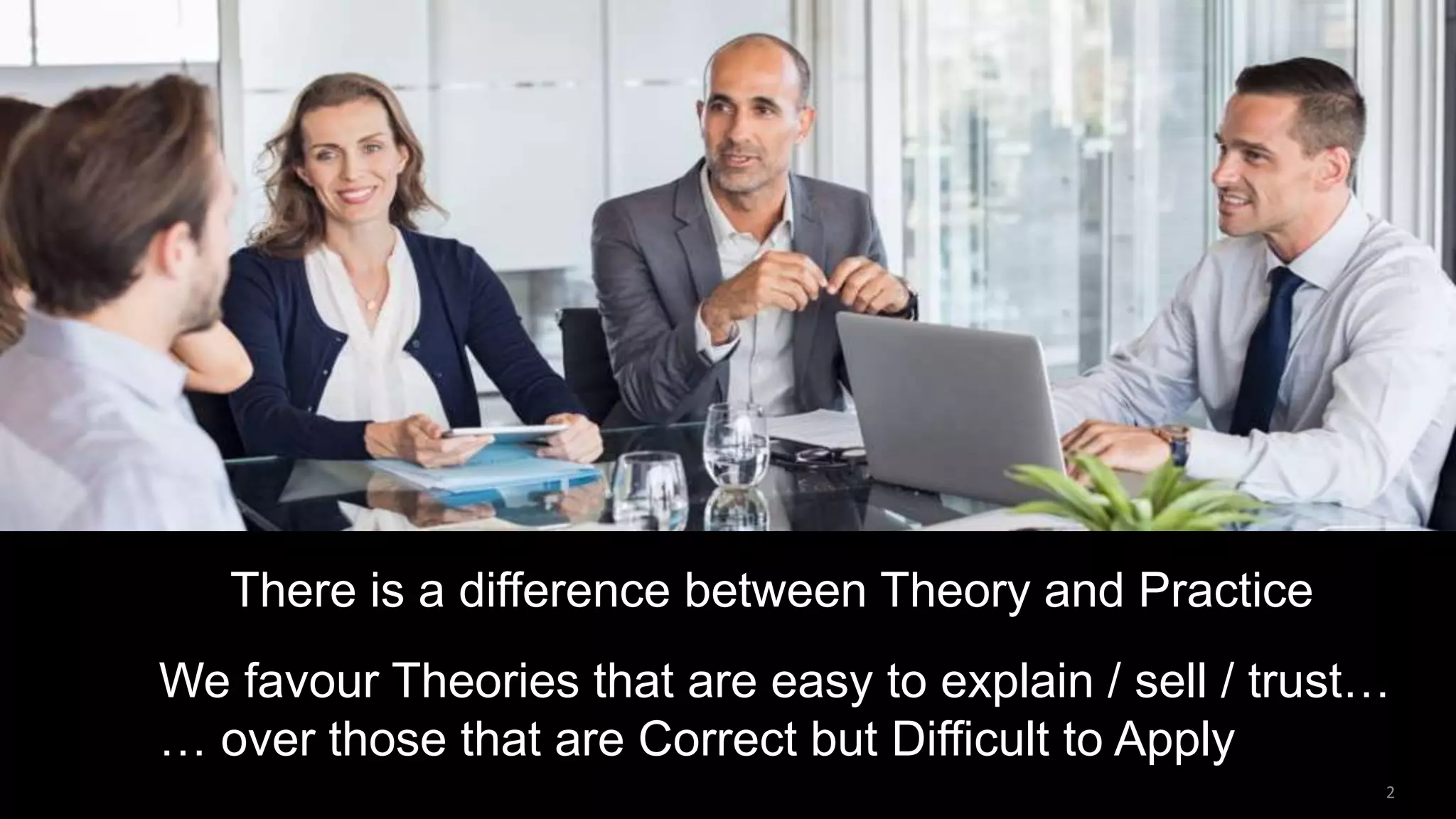
There is a difference between Theory and Practice
2
We favour Theories that are easy to explain / sell / trust…
… over those that are Correct but Difficult to Apply
3. AS-IS MODEL 2. TO-BE MODEL
0. AS-IS REALITY 1. TO-BE REALITY
4. GAPS
• A
• B
• C
5. ROAD MAP
A B C
Orthodox / commonly used Theory is easy to Apply
The objectives of transformational changes are rarely achieved fully
3
[E.g. TOGAF-ADM] Open Group, The (2013) TOGAF® Version 9.1. Zaltbommel: Van Haren Publishing.
Not everything that counts can be counted
( & modelled ) =>
list of gaps is typically incomplete
Our organization / markets may
not be able or willing to do
their part in closing the gaps
and may do other changes
Our objectives may not be realistic
and may also not be ideal
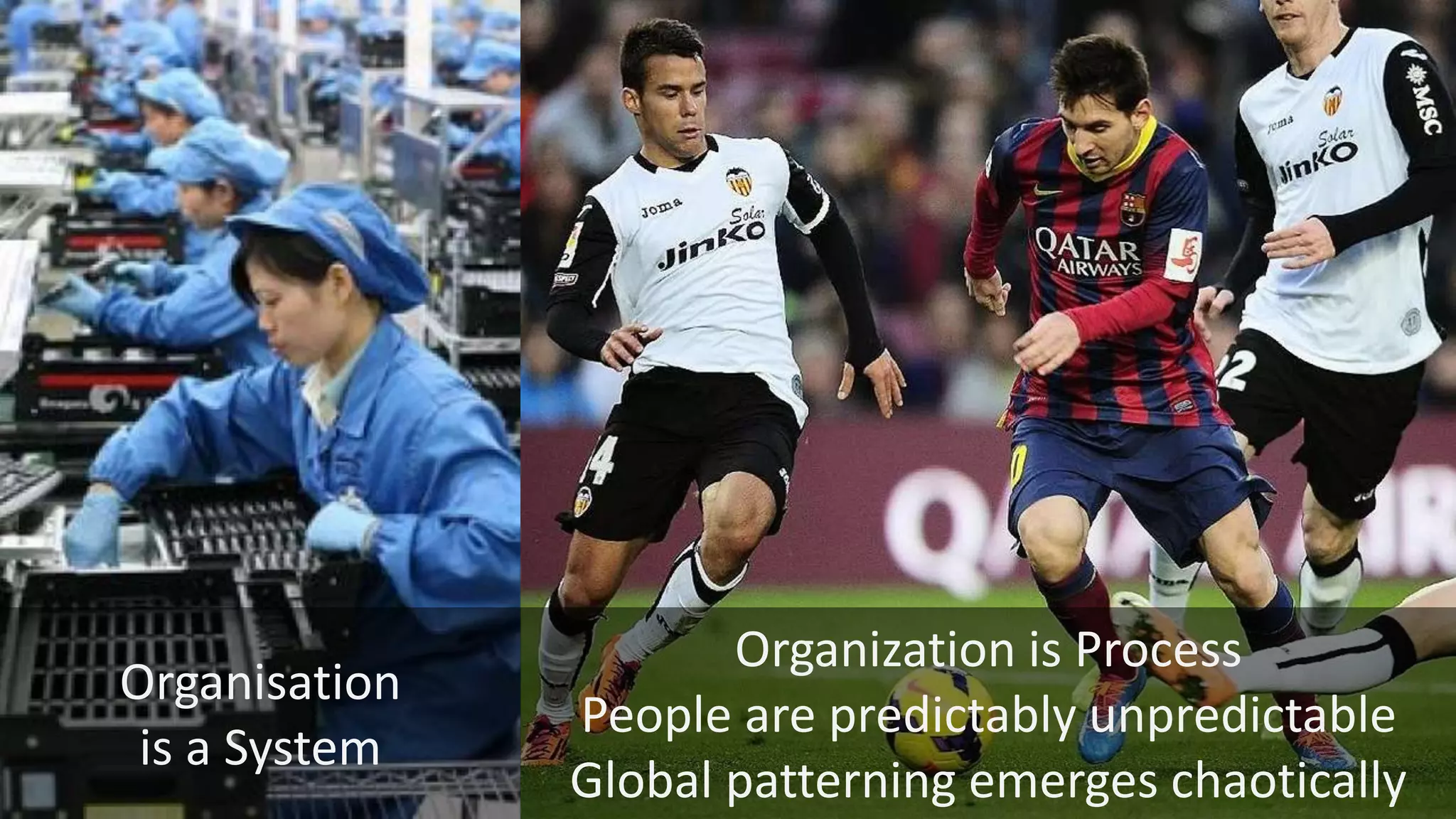
Organization is Process
People are predictably unpredictable
Global patterning emerges chaotically
Organisation
is a System
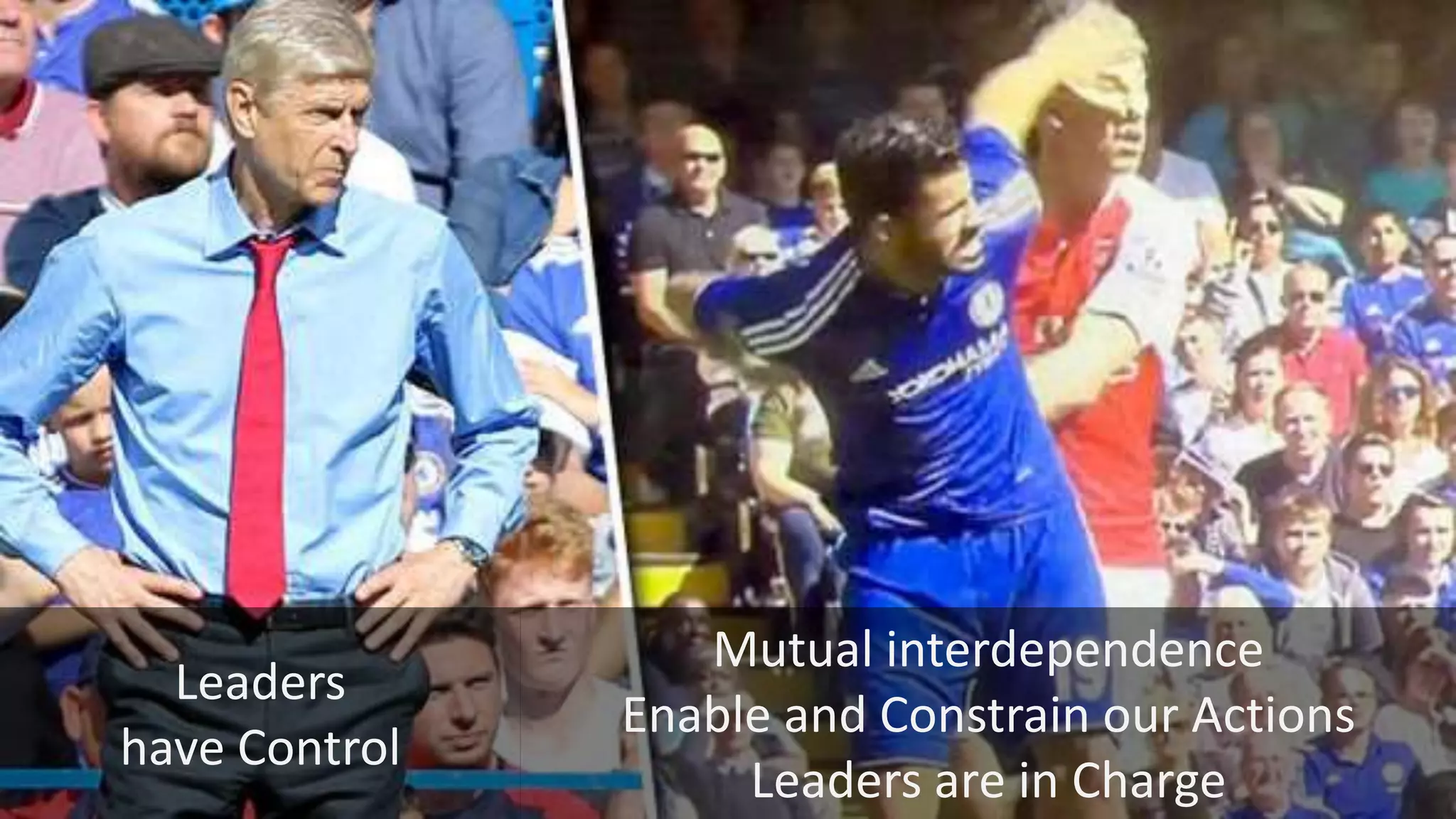
Mutual interdependence
Enable and Constrain our Actions
Leaders are in Charge
Leaders
have Control
People have Secret Desires
and Public Agendas
Web of Intentionality is in Flux
Organization
has Goals
Builders build Buildings
Occupants build Homes
Architects build Alliances (with Respect & Trust)
Architects
build Buildings
We can only have Partial Knowledge
of that which is in Process of Becoming
which is Politics (and War)
More Modelling
is More
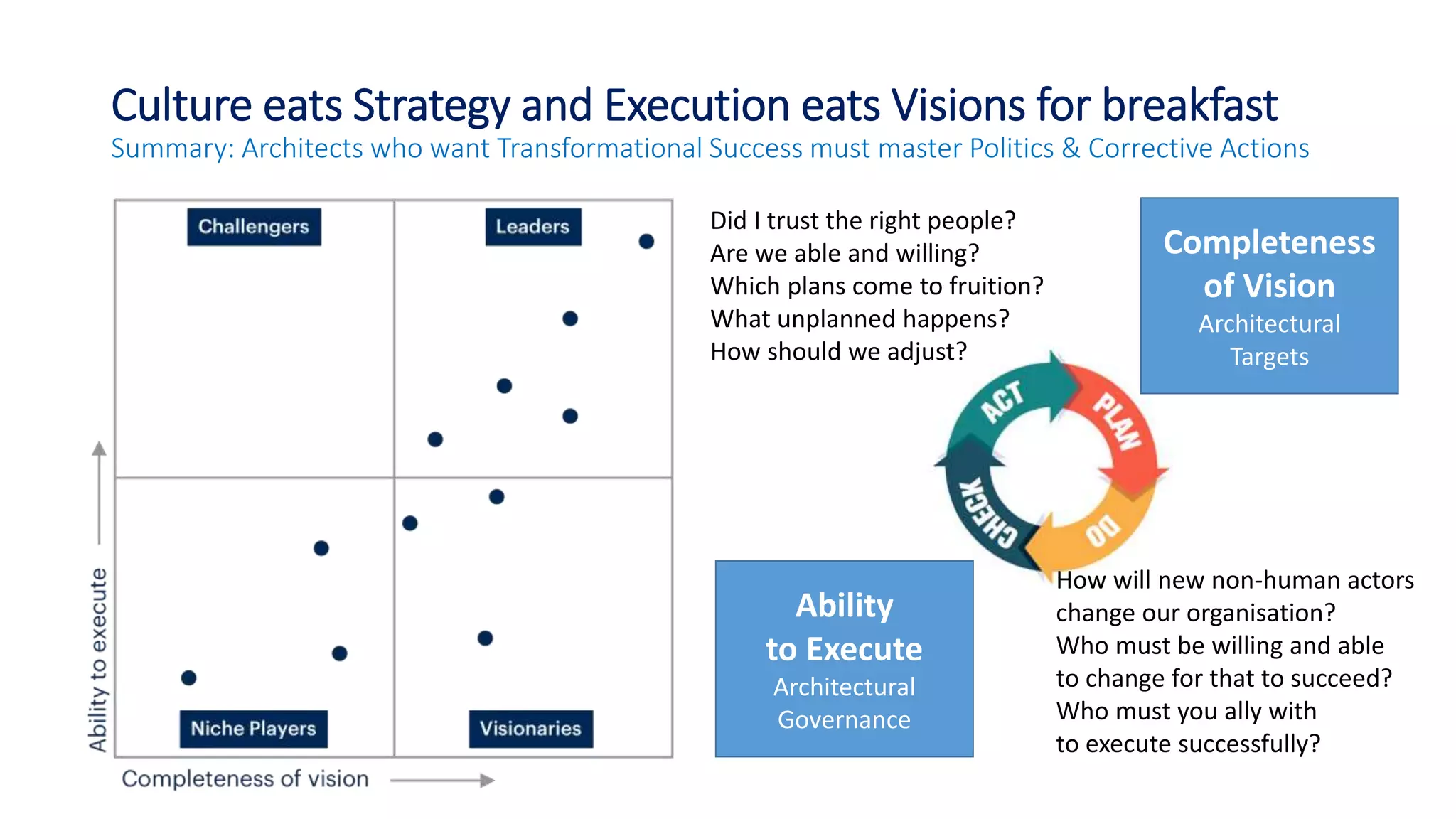
Culture eats Strategy and Execution eats Visions for breakfast
Summary: Architects who want Transformational Success must master Politics & Corrective Actions
https://www.gartner.com/en/research/methodologies/magic-quadrants-research 9
Completeness
of Vision
Architectural
Targets
Ability
to Execute
Architectural
Governance
How will new non-human actors
change our organisation?
Who must be willing and able
to change for that to succeed?
Who must you ally with
to execute successfully?
Did I trust the right people?
Are we able and willing?
Which plans come to fruition?
What unplanned happens?
How should we adjust?

Architecting the Enterprise

  • 1.
    Architecting the Enterprise Doctorof Management (Ph.D) Mikkel H Brahm Head of Personal Banking & One Digital Architecture | Nordea Slides available at SlideShare https://www.slideshare.net/mikkelbrahm Doctoral (PhD) Thesis available at UH Seeking to Control Enterprise with Architecture the limits and value of an engineering approach from the perspective of an Enterprise Architect http://uhra.herts.ac.uk/handle/2299/17596
  • 2.
    There is adifference between Theory and Practice 2 We favour Theories that are easy to explain / sell / trust… … over those that are Correct but Difficult to Apply
  • 3.
    3. AS-IS MODEL2. TO-BE MODEL 0. AS-IS REALITY 1. TO-BE REALITY 4. GAPS • A • B • C 5. ROAD MAP A B C Orthodox / commonly used Theory is easy to Apply The objectives of transformational changes are rarely achieved fully 3 [E.g. TOGAF-ADM] Open Group, The (2013) TOGAF® Version 9.1. Zaltbommel: Van Haren Publishing. Not everything that counts can be counted ( & modelled ) => list of gaps is typically incomplete Our organization / markets may not be able or willing to do their part in closing the gaps and may do other changes Our objectives may not be realistic and may also not be ideal
  • 4.
    Organization is Process Peopleare predictably unpredictable Global patterning emerges chaotically Organisation is a System
  • 5.
    Mutual interdependence Enable andConstrain our Actions Leaders are in Charge Leaders have Control
  • 6.
    People have SecretDesires and Public Agendas Web of Intentionality is in Flux Organization has Goals
  • 7.
    Builders build Buildings Occupantsbuild Homes Architects build Alliances (with Respect & Trust) Architects build Buildings
  • 8.
    We can onlyhave Partial Knowledge of that which is in Process of Becoming which is Politics (and War) More Modelling is More
  • 9.
    Culture eats Strategyand Execution eats Visions for breakfast Summary: Architects who want Transformational Success must master Politics & Corrective Actions https://www.gartner.com/en/research/methodologies/magic-quadrants-research 9 Completeness of Vision Architectural Targets Ability to Execute Architectural Governance How will new non-human actors change our organisation? Who must be willing and able to change for that to succeed? Who must you ally with to execute successfully? Did I trust the right people? Are we able and willing? Which plans come to fruition? What unplanned happens? How should we adjust?