DEPARTMENT OF PHARMACOLOGY, PESCP Page 1
PATHOPHYSIOLOGICAL MECHANISM OF RHEUMATOID
ARTHRITIS AND MECHANISM OF ACTION OF DRUGS INVOLVED IN
THE TREATMENT OF RHEUMATOID ARTHRITIS
SUBMITTED BY:
SHREEMOYEE GHOSH
SUBJECT: ADVANCED PHARMACOLOGY AND TOXICOLOGY (T)
SUBMITTED TO:
DR. KP SHIVALINGE GOWDA
ASSOCIATE PROFESSOR AND HEAD OF THE DEPARTMENT,
DEPARTMENT OF PHARMACOLOGY
PES COLLEGE OF PHARMACY, HANUMANTHANAGAR
BANGALORE-560050
DEPARTMENT OF PHARMACOLOGY, PESCP Page 2
This is to certify that Shreemoyee Ghosh has submitted the hard copy of the seminar topic
entitled “Pathophysiological mechanism of rheumatoid arthritis and mechanism of action of
drugs involved in the treatment of rheumatoid arthritis” and she has presented this seminar on
15.04.2017 at the Department of Pharmacology, PES College of Pharmacy, Bangalore-50 in the
subject “Advanced Pharmacology and Toxicology‟‟ in Masters of Pharmacy (Part-1), for the
year-2016-2017.
Date: Signature of Subject in charge
(Dr. KPS Gowda, HOD)
DEPARTMENT OF PHARMACOLOGY, PESCP Page 3
CONTENTS:
1. INTRODUCTION TO RHEUAMTOID ARTHRITS
2. EPIDEMIOLOGY OF RHEUMATOID ARTHRTIS
3. PATHOGENESIS OF RHEUMATOID ARTHRITIS
4. CLINICAL MANIFESTATIONS OF RHEUMATOID ARTHRITIS
5. DIAGNOSIS OF RHEUMATOID ARTHRITIS
6. TREATMENT AND MECHANISM OF ACTION OF DRUGS
DEPARTMENT OF PHARMACOLOGY, PESCP Page 4
1.INTRODUCTION
Rheumatoid arthritis (RA) is a chronic, systemic inflammatory disease that principally attacks
the joints producing an inflammatory synovitis that often progresses to destruction of the
articular cartilage and ankylosis of the joints. Arthritic disease is one of the commonest chronic
inflammatory conditions in developed countries, and rheumatoid arthritis is a common cause of
disability. One in three patients with rheumatoid arthritis is likely to become severely disabled.
The various pro-inflammatory molecule including reactive oxygen species,cytokines
particularly IL-1β, IL-6andTNF-α,T-cells,B-cells, fibroblasts and macrophages are involved in
causing this disorder. High levels of oxidative stress are expected to be the strongest risk
factors of joint damage in rheumatoid arthritis. Increased production of cytokines stimulates
inflammatory cells such as neutrophils and macrophages to secrete reactive oxygen species in
synovial fluid –which ultimately acts as a mediator of tissue injury. Apart from the destruction
of articular cartilage, rheumatoid arthritis also plays a key role in activating inflammatory
responses and immunological alterations in other organs which includes vascular tissue, liver
and brain. Several studies conducted previously have explained that liver produced high level
of ROS due to administration of adjuvant as well as there was alteration in the levels of
reduced glutathione and increased glycolysis.
2. EPIDEMIOLOGY OF RHEUMATOID ARTHRITIS
Approximately 1% of the worldwide population is affected by RA, with about twice as many
female sufferers as males. The increased frequency in women is more pronounced in the UK
with a female to male ratio of 3:1.The prevalence of RA increases with age in both sexes with
nearly 5% of women and 2% of men over 55 years of age affected. The age of onset is typically
around 30-50 years and reaches its peak in the fourth decade. Some ethnic variations has also
been observed in the prevalence of RA. Among rural black African the prevalence is low about
0.1% compared to3% in Caucasians. Comparative studies among rural and urban populations
suggest that environmental factors associated with modern urban life may also be important.
3. PATHOPHYSIOLOGY
DEPARTMENT OF PHARMACOLOGY, PESCP Page 5
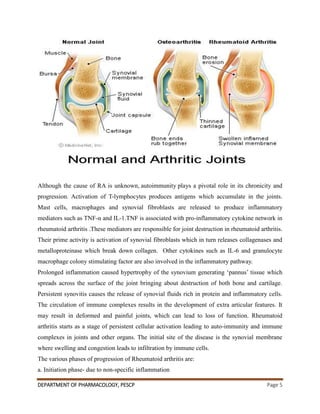
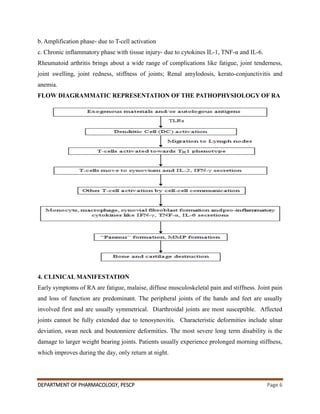
Although the cause of RA is unknown, autoimmunity plays a pivotal role in its chronicity and
progression. Activation of T-lymphocytes produces antigens which accumulate in the joints.
Mast cells, macrophages and synovial fibroblasts are released to produce inflammatory
mediators such as TNF-α and IL-1.TNF is associated with pro-inflammatory cytokine network in
rheumatoid arthritis .These mediators are responsible for joint destruction in rheumatoid arthritis.
Their prime activity is activation of synovial fibroblasts which in turn releases collagenases and
metalloproteinase which break down collagen. Other cytokines such as IL-6 and granulocyte
macrophage colony stimulating factor are also involved in the inflammatory pathway.
Prolonged inflammation caused hypertrophy of the synovium generating „pannus‟ tissue which
spreads across the surface of the joint bringing about destruction of both bone and cartilage.
Persistent synovitis causes the release of synovial fluids rich in protein and inflammatory cells.
The circulation of immune complexes results in the development of extra articular features. It
may result in deformed and painful joints, which can lead to loss of function. Rheumatoid
arthritis starts as a stage of persistent cellular activation leading to auto-immunity and immune
complexes in joints and other organs. The initial site of the disease is the synovial membrane
where swelling and congestion leads to infiltration by immune cells.
The various phases of progression of Rheumatoid arthritis are:
a. Initiation phase- due to non-specific inflammation
DEPARTMENT OF PHARMACOLOGY, PESCP Page 6
b. Amplification phase- due to T-cell activation
c. Chronic inflammatory phase with tissue injury- due to cytokines IL-1, TNF-α and IL-6.
Rheumatoid arthritis brings about a wide range of complications like fatigue, joint tenderness,
joint swelling, joint redness, stiffness of joints; Renal amylodosis, kerato-conjunctivitis and
anemia.
FLOW DIAGRAMMATIC REPRESENTATION OF THE PATHOPHYSIOLOGY OF RA
4. CLINICAL MANIFESTATION
Early symptoms of RA are fatigue, malaise, diffuse musculoskeletal pain and stiffness. Joint pain
and loss of function are predominant. The peripheral joints of the hands and feet are usually
involved first and are usually symmetrical. Diarthroidal joints are most susceptible. Affected
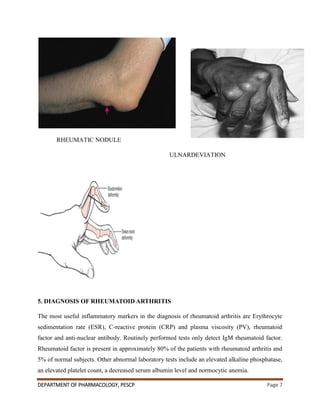
joints cannot be fully extended due to tenosynovitis. Characteristic deformities include ulnar
deviation, swan neck and boutonniere deformities. The most severe long term disability is the
damage to larger weight bearing joints. Patients usually experience prolonged morning stiffness,
which improves during the day, only return at night.
DEPARTMENT OF PHARMACOLOGY, PESCP Page 7
RHEUMATIC NODULE
ULNARDEVIATION
5. DIAGNOSIS OF RHEUMATOID ARTHRITIS
The most useful inflammatory markers in the diagnosis of rheumatoid arthritis are Erythrocyte
sedimentation rate (ESR), C-reactive protein (CRP) and plasma viscosity (PV), rheumatoid
factor and anti-nuclear antibody. Routinely performed tests only detect IgM rheumatoid factor.
Rheumatoid factor is present in approximately 80% of the patients with rheumatoid arthritis and
5% of normal subjects. Other abnormal laboratory tests include an elevated alkaline phosphatase,
an elevated platelet count, a decreased serum albumin level and normocytic anemia.
DEPARTMENT OF PHARMACOLOGY, PESCP Page 8
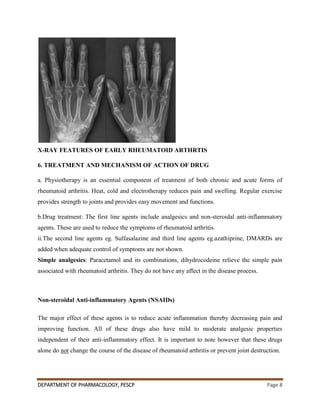
X-RAY FEATURES OF EARLY RHEUMATOID ARTHRTIS
6. TREATMENT AND MECHANISM OF ACTION OF DRUG
a. Physiotherapy is an essential component of treatment of both chronic and acute forms of
rheumatoid arthritis. Heat, cold and electrotherapy reduces pain and swelling. Regular exercise
provides strength to joints and provides easy movement and functions.
b.Drug treatment: The first line agents include analgesics and non-steroidal anti-inflammatory
agents. These are used to reduce the symptoms of rheumatoid arthritis.
ii.The second line agents eg. Sulfasalazine and third line agents eg.azathiprine, DMARDs are
added when adequate control of symptoms are not shown.
Simple analgesics: Paracetamol and its combinations, dihydrocodeine relieve the simple pain
associated with rheumatoid arthritis. They do not have any affect in the disease process.
Non-steroidal Anti-inflammatory Agents (NSAIDs)
The major effect of these agents is to reduce acute inflammation thereby decreasing pain and
improving function. All of these drugs also have mild to moderate analgesic properties
independent of their anti-inflammatory effect. It is important to note however that these drugs
alone do not change the course of the disease of rheumatoid arthritis or prevent joint destruction.
DEPARTMENT OF PHARMACOLOGY, PESCP Page 9
Aspirin is the oldest drug of the non-steroidal class, but because of its high rate of GI toxicity, a
narrow window between toxic and anti-inflammatory serum levels, and the inconvenience of
multiple daily doses, aspirin‟s use as the initial choice of drug therapy has largely been replaced
by other NSAIDs. There are a large number of NSAIDs from which to choose, and at full
dosages all are potentially equally effective. Likewise, the toxicities of the currently available
NSAIDs are similar. However, there is a great deal of variation in tolerance and response to a
particular NSAID. The NSAID class also includes drugs known as COX-2 inhibitors that are
also effective in controlling inflammation. These drugs were designed to decrease the
gastrointestinal risk of NSAIDS, but concerns of possible increases in cardiovascular risk .
Mechanism:
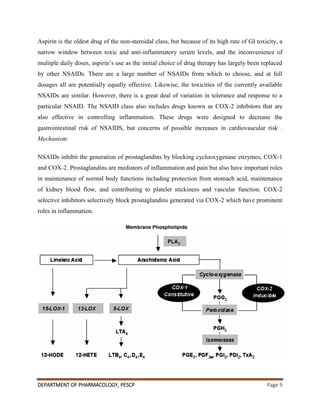
NSAIDs inhibit the generation of prostaglandins by blocking cyclooxygenase enzymes, COX-1
and COX-2. Prostaglandins are mediators of inflammation and pain but also have important roles
in maintenance of normal body functions including protection from stomach acid, maintenance
of kidney blood flow, and contributing to platelet stickiness and vascular function. COX-2
selective inhibitors selectively block prostaglandins generated via COX-2 which have prominent
roles in inflammation.
DEPARTMENT OF PHARMACOLOGY, PESCP Page 10
Corticosteroids
Corticosteroids have both anti-inflammatory and immunoregulatory activity.Their main
mechanism of action id the inhibition of inflammatory cytokines. They can be given orally,
intravenously, intramuscularly or can be injected directly into the joint. Corticosteroids are useful
in early disease as temporary adjunctive therapy while waiting for DMARDs to exert their anti
inflammatory effects. Corticosteroids are also useful as chronic adjunctive therapy in patients
with severe disease that is not well controlled on NSAIDs and DMARDs. The usual dose of
predinisone is 5 to 10mg daily. Once started, corticosteroid therapy may be difficult to
discontinue and even at low doses. Some patients are very sensitive to the tapering of prednisone
which may be done slowly over a few weeks.
Intra-articular corticosteroids (e.g., triamcinolone or methylprednisolone and others) are
effective for controlling a local flare in a joint without changing the overall drug regimen.
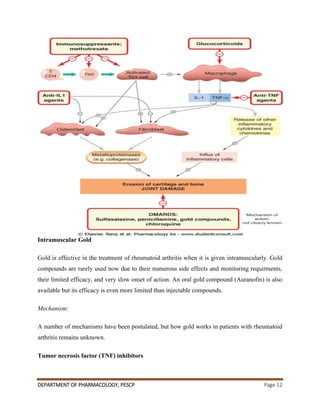
DMARDs: Disease modifying anti-rheumatic drugs: The exact mechanism of action of these
drugs is still not clear. It is believed that they mainly work by inhibition of inflammatory
cytokines.Sulfasalazine and methotrexate are the most commonly used DMARDs. Although both
NSAIDs and DMARD agents improve symptoms of active rheumatoid arthritis, only DMARD
agents have been shown to alter the disease course and improve radiographic outcomes.
DMARDs have an effect upon rheumatoid arthritis that is different and may be slower. In most
cases, when the diagnosis of rheumatoid arthritis is confirmed, DMARD agents should be
started. The presence of erosions or joint space narrowing on x-rays of the involved joints is a
clear indication for DMARD therapy, however one should not wait for x-ray changes to occur.
Methotrexate
Methotrexate is now considered the first-line DMARD agent for most patients with RA. It has
a relatively rapid onset of action at therapeutic doses (6-8 weeks), good efficacy, favorable
toxicity profile, ease of administration, and relatively low cost. When looking at groups of
patients on different DMARDS, the majority of patients continue to take Methotrexate after 5
DEPARTMENT OF PHARMACOLOGY, PESCP Page 11
years, far more than other therapies reflecting both its efficacy and tolerability. Methotrexate is
effective in reducing the signs and symptoms of RA, as well as slowing or halting radiographic
damage. It was as effective as leflunomide and sulfasalazine in one study, and its effectiveness
given early and in higher doses approached the efficacy of etanercept and adalimumab as single
therapies in terms of signs and symptom improvement. Methotrexate is also effective in many
other forms of inflammatory arthritis including psoriatic arthritis and other spondyloarthopathies,
and is used in many other autoimmune diseases.
Mechanism:
The anti-inflammatory effects of methotrexate in rheumatoid arthritis appear to be related at least
in part to interruption of adenosine and possible effects on other inflammatory and
immunoregulatory pathways. The immunosuppressive and toxic effects of methotrexate are due
to the inhibition of an enzyme involved in the metabolism of folic acid, dihydrofolate reductase.
DEPARTMENT OF PHARMACOLOGY, PESCP Page 12
Intramuscular Gold
Gold is effective in the treatment of rheumatoid arthritis when it is given intramuscularly. Gold
compounds are rarely used now due to their numerous side effects and monitoring requirments,
their limited efficacy, and very slow onset of action. An oral gold compound (Auranofin) is also
available but its efficacy is even more limited than injectable compounds.
Mechanism:
A number of mechanisms have been postulated, but how gold works in patients with rheumatoid
arthritis remains unknown.
Tumor necrosis factor (TNF) inhibitors
DEPARTMENT OF PHARMACOLOGY, PESCP Page 13
Tumor necrosis factor alpha (TNF) is a pro-inflammatory cytokine produced by macrophages
and lymphocytes. It is found in large quantities in the rheumatoid joint and is produced locally in
the joint by synovial macrophages and lymphocytes infiltrating the joint synovium. TNF is one
of the critical cytokines that mediate joint damage and destruction due to its activities on many
cells in the joint as well as effects on other organs and body systems. Etanercept if a soluble TNF
receptor-Fc immunoglobulin fusion construct; infliximab, adalimumab, and golimumab are
monoclonal antibodies; and certolizumab pegol is an anti-TNF antigen binding domain-
polyethylene glycol construct. While differing in structure, the efficacy and safety of the drugs
is similar across the class in reducing the signs and symptoms of RA, as well as in slowing or
halting radiographic damage, when used either as monotherapy or in combination with
methotrexate.
PENICILLAMINE :
Penicillamine is dimethylcysteine. About 75% of patients with rheumatoid arthritis respond to
penicillamine. The drug has a highly reactive thiol group and also has metal-chelating
properties, which are put to good use in the treatment of Wilson's disease (pathological copper
deposition causing neurodegeneration) or heavy metal poisoning. Penicillamine is given orally,
and only half the dose administered is absorbed. It reaches peak plasma concentrations in 1-2
hours and is excreted in the urine.
IMMUNOSUPPRESIVE AGENTS
CYCLOSPORIN :
It consists of a cyclic peptide of 11 amino acid residues with potent immunosuppressive activity
but no effect on the acute inflammatory reaction. The drug has numerous actions on several cell
types; in general, the actions of relevance to immunosuppression are: decreased clonal
proliferation of T cells, primarily by inhibiting IL-2 synthesis and possibly also by decreasing
expression of IL-2 receptors reduced induction, and clonal proliferation, of cytotoxic T cells
from CD8+
precursor T cells that are responsible for cell-mediated responses (e.g. decreased
delayed-type hypersensitivity.
DEPARTMENT OF PHARMACOLOGY, PESCP Page 14
RECENT DEVELOPMENTS IN THE TREATMENT OF RHEUMATOID ARTHRITIS:
LEFLUNOMIDE: an iso-oxazole derivative with profound anti-inflammatory activity. It is also
said to have immunomodulatory properties. It primarily acts by inhibition of DNA and RNA
synthesis in immune response cells.It is also known to inhibit the production of pro inflammatory
cytokines ,TNF and IL-1.
ETANERCEPT AND INFLIXIMAB:TNF is a pro-inflammatory mediator that is responsible for
joint destruction in RA. TNF blockade therapy is designed to counter act the biological action
of TNF in rheumatoid arthritis.
Etanercept is a recombinant human soluble TNF receptor. I t acts by competitive inhibition of
TNF at the cell surface receptor. It is administered generally twice a week by subcutaneous
routes.
Infliximab: a human murine monoclonal anti-body administered by slow IV infusion every 4-8
weeks at a dose of 3mg/kg. Its mode of action is the neutralization of biological activity of TNF.
DEPARTMENT OF PHARMACOLOGY, PESCP Page 15
REFERENCE:
1. Walker R, Edward C. Clinical Pharmacy and Therapeutics 3rd
edition. Edinburg:
Churchill Livingstone; 2003.
2. Rang HP, Dale MM, Ritter JM, Moore PK. Pharmacology.5th ed. Edinburgh: Churchill
Livingstone; 2003.
3. Dipiro J, Tolbert RL. Pharmacotherapy a pathophysiologic approach.6th
edition.
4. Sukketsiri W, Chonpathompikulert P, Tanasawet S, Chossiri N, Wongtawatchai T.
Effect of Apium graveolens extract on the oxidative stress in the liver of adjuvant induced
arthritis in rats. Prev. Nutr. Food Sci. 2016; 21(2):79-84.
5. Vetal S,Bodhankar S L,Mohan V,Thakurdesai P A. Anti-inflammatory and anti-arthritic
activity of type-A procyanidine polyphenols from bark of Cinnamomum zeylanicum in
rats.Food Science and Human wellness .2013;59-67.
6. Gabriel SE. The epidemiology of rheumatoid arthritis .Rheum Disclin North
Am.2001;27(2):996-1042.

Apt

  • 1.
    DEPARTMENT OF PHARMACOLOGY,PESCP Page 1 PATHOPHYSIOLOGICAL MECHANISM OF RHEUMATOID ARTHRITIS AND MECHANISM OF ACTION OF DRUGS INVOLVED IN THE TREATMENT OF RHEUMATOID ARTHRITIS SUBMITTED BY: SHREEMOYEE GHOSH SUBJECT: ADVANCED PHARMACOLOGY AND TOXICOLOGY (T) SUBMITTED TO: DR. KP SHIVALINGE GOWDA ASSOCIATE PROFESSOR AND HEAD OF THE DEPARTMENT, DEPARTMENT OF PHARMACOLOGY PES COLLEGE OF PHARMACY, HANUMANTHANAGAR BANGALORE-560050
  • 2.
    DEPARTMENT OF PHARMACOLOGY,PESCP Page 2 This is to certify that Shreemoyee Ghosh has submitted the hard copy of the seminar topic entitled “Pathophysiological mechanism of rheumatoid arthritis and mechanism of action of drugs involved in the treatment of rheumatoid arthritis” and she has presented this seminar on 15.04.2017 at the Department of Pharmacology, PES College of Pharmacy, Bangalore-50 in the subject “Advanced Pharmacology and Toxicology‟‟ in Masters of Pharmacy (Part-1), for the year-2016-2017. Date: Signature of Subject in charge (Dr. KPS Gowda, HOD)
  • 3.
    DEPARTMENT OF PHARMACOLOGY,PESCP Page 3 CONTENTS: 1. INTRODUCTION TO RHEUAMTOID ARTHRITS 2. EPIDEMIOLOGY OF RHEUMATOID ARTHRTIS 3. PATHOGENESIS OF RHEUMATOID ARTHRITIS 4. CLINICAL MANIFESTATIONS OF RHEUMATOID ARTHRITIS 5. DIAGNOSIS OF RHEUMATOID ARTHRITIS 6. TREATMENT AND MECHANISM OF ACTION OF DRUGS
  • 4.
    DEPARTMENT OF PHARMACOLOGY,PESCP Page 4 1.INTRODUCTION Rheumatoid arthritis (RA) is a chronic, systemic inflammatory disease that principally attacks the joints producing an inflammatory synovitis that often progresses to destruction of the articular cartilage and ankylosis of the joints. Arthritic disease is one of the commonest chronic inflammatory conditions in developed countries, and rheumatoid arthritis is a common cause of disability. One in three patients with rheumatoid arthritis is likely to become severely disabled. The various pro-inflammatory molecule including reactive oxygen species,cytokines particularly IL-1β, IL-6andTNF-α,T-cells,B-cells, fibroblasts and macrophages are involved in causing this disorder. High levels of oxidative stress are expected to be the strongest risk factors of joint damage in rheumatoid arthritis. Increased production of cytokines stimulates inflammatory cells such as neutrophils and macrophages to secrete reactive oxygen species in synovial fluid –which ultimately acts as a mediator of tissue injury. Apart from the destruction of articular cartilage, rheumatoid arthritis also plays a key role in activating inflammatory responses and immunological alterations in other organs which includes vascular tissue, liver and brain. Several studies conducted previously have explained that liver produced high level of ROS due to administration of adjuvant as well as there was alteration in the levels of reduced glutathione and increased glycolysis. 2. EPIDEMIOLOGY OF RHEUMATOID ARTHRITIS Approximately 1% of the worldwide population is affected by RA, with about twice as many female sufferers as males. The increased frequency in women is more pronounced in the UK with a female to male ratio of 3:1.The prevalence of RA increases with age in both sexes with nearly 5% of women and 2% of men over 55 years of age affected. The age of onset is typically around 30-50 years and reaches its peak in the fourth decade. Some ethnic variations has also been observed in the prevalence of RA. Among rural black African the prevalence is low about 0.1% compared to3% in Caucasians. Comparative studies among rural and urban populations suggest that environmental factors associated with modern urban life may also be important. 3. PATHOPHYSIOLOGY
  • 5.
    DEPARTMENT OF PHARMACOLOGY,PESCP Page 5 Although the cause of RA is unknown, autoimmunity plays a pivotal role in its chronicity and progression. Activation of T-lymphocytes produces antigens which accumulate in the joints. Mast cells, macrophages and synovial fibroblasts are released to produce inflammatory mediators such as TNF-α and IL-1.TNF is associated with pro-inflammatory cytokine network in rheumatoid arthritis .These mediators are responsible for joint destruction in rheumatoid arthritis. Their prime activity is activation of synovial fibroblasts which in turn releases collagenases and metalloproteinase which break down collagen. Other cytokines such as IL-6 and granulocyte macrophage colony stimulating factor are also involved in the inflammatory pathway. Prolonged inflammation caused hypertrophy of the synovium generating „pannus‟ tissue which spreads across the surface of the joint bringing about destruction of both bone and cartilage. Persistent synovitis causes the release of synovial fluids rich in protein and inflammatory cells. The circulation of immune complexes results in the development of extra articular features. It may result in deformed and painful joints, which can lead to loss of function. Rheumatoid arthritis starts as a stage of persistent cellular activation leading to auto-immunity and immune complexes in joints and other organs. The initial site of the disease is the synovial membrane where swelling and congestion leads to infiltration by immune cells. The various phases of progression of Rheumatoid arthritis are: a. Initiation phase- due to non-specific inflammation
  • 6.
    DEPARTMENT OF PHARMACOLOGY,PESCP Page 6 b. Amplification phase- due to T-cell activation c. Chronic inflammatory phase with tissue injury- due to cytokines IL-1, TNF-α and IL-6. Rheumatoid arthritis brings about a wide range of complications like fatigue, joint tenderness, joint swelling, joint redness, stiffness of joints; Renal amylodosis, kerato-conjunctivitis and anemia. FLOW DIAGRAMMATIC REPRESENTATION OF THE PATHOPHYSIOLOGY OF RA 4. CLINICAL MANIFESTATION Early symptoms of RA are fatigue, malaise, diffuse musculoskeletal pain and stiffness. Joint pain and loss of function are predominant. The peripheral joints of the hands and feet are usually involved first and are usually symmetrical. Diarthroidal joints are most susceptible. Affected joints cannot be fully extended due to tenosynovitis. Characteristic deformities include ulnar deviation, swan neck and boutonniere deformities. The most severe long term disability is the damage to larger weight bearing joints. Patients usually experience prolonged morning stiffness, which improves during the day, only return at night.
  • 7.
    DEPARTMENT OF PHARMACOLOGY,PESCP Page 7 RHEUMATIC NODULE ULNARDEVIATION 5. DIAGNOSIS OF RHEUMATOID ARTHRITIS The most useful inflammatory markers in the diagnosis of rheumatoid arthritis are Erythrocyte sedimentation rate (ESR), C-reactive protein (CRP) and plasma viscosity (PV), rheumatoid factor and anti-nuclear antibody. Routinely performed tests only detect IgM rheumatoid factor. Rheumatoid factor is present in approximately 80% of the patients with rheumatoid arthritis and 5% of normal subjects. Other abnormal laboratory tests include an elevated alkaline phosphatase, an elevated platelet count, a decreased serum albumin level and normocytic anemia.
  • 8.
    DEPARTMENT OF PHARMACOLOGY,PESCP Page 8 X-RAY FEATURES OF EARLY RHEUMATOID ARTHRTIS 6. TREATMENT AND MECHANISM OF ACTION OF DRUG a. Physiotherapy is an essential component of treatment of both chronic and acute forms of rheumatoid arthritis. Heat, cold and electrotherapy reduces pain and swelling. Regular exercise provides strength to joints and provides easy movement and functions. b.Drug treatment: The first line agents include analgesics and non-steroidal anti-inflammatory agents. These are used to reduce the symptoms of rheumatoid arthritis. ii.The second line agents eg. Sulfasalazine and third line agents eg.azathiprine, DMARDs are added when adequate control of symptoms are not shown. Simple analgesics: Paracetamol and its combinations, dihydrocodeine relieve the simple pain associated with rheumatoid arthritis. They do not have any affect in the disease process. Non-steroidal Anti-inflammatory Agents (NSAIDs) The major effect of these agents is to reduce acute inflammation thereby decreasing pain and improving function. All of these drugs also have mild to moderate analgesic properties independent of their anti-inflammatory effect. It is important to note however that these drugs alone do not change the course of the disease of rheumatoid arthritis or prevent joint destruction.
  • 9.
    DEPARTMENT OF PHARMACOLOGY,PESCP Page 9 Aspirin is the oldest drug of the non-steroidal class, but because of its high rate of GI toxicity, a narrow window between toxic and anti-inflammatory serum levels, and the inconvenience of multiple daily doses, aspirin‟s use as the initial choice of drug therapy has largely been replaced by other NSAIDs. There are a large number of NSAIDs from which to choose, and at full dosages all are potentially equally effective. Likewise, the toxicities of the currently available NSAIDs are similar. However, there is a great deal of variation in tolerance and response to a particular NSAID. The NSAID class also includes drugs known as COX-2 inhibitors that are also effective in controlling inflammation. These drugs were designed to decrease the gastrointestinal risk of NSAIDS, but concerns of possible increases in cardiovascular risk . Mechanism: NSAIDs inhibit the generation of prostaglandins by blocking cyclooxygenase enzymes, COX-1 and COX-2. Prostaglandins are mediators of inflammation and pain but also have important roles in maintenance of normal body functions including protection from stomach acid, maintenance of kidney blood flow, and contributing to platelet stickiness and vascular function. COX-2 selective inhibitors selectively block prostaglandins generated via COX-2 which have prominent roles in inflammation.
  • 10.
    DEPARTMENT OF PHARMACOLOGY,PESCP Page 10 Corticosteroids Corticosteroids have both anti-inflammatory and immunoregulatory activity.Their main mechanism of action id the inhibition of inflammatory cytokines. They can be given orally, intravenously, intramuscularly or can be injected directly into the joint. Corticosteroids are useful in early disease as temporary adjunctive therapy while waiting for DMARDs to exert their anti inflammatory effects. Corticosteroids are also useful as chronic adjunctive therapy in patients with severe disease that is not well controlled on NSAIDs and DMARDs. The usual dose of predinisone is 5 to 10mg daily. Once started, corticosteroid therapy may be difficult to discontinue and even at low doses. Some patients are very sensitive to the tapering of prednisone which may be done slowly over a few weeks. Intra-articular corticosteroids (e.g., triamcinolone or methylprednisolone and others) are effective for controlling a local flare in a joint without changing the overall drug regimen. DMARDs: Disease modifying anti-rheumatic drugs: The exact mechanism of action of these drugs is still not clear. It is believed that they mainly work by inhibition of inflammatory cytokines.Sulfasalazine and methotrexate are the most commonly used DMARDs. Although both NSAIDs and DMARD agents improve symptoms of active rheumatoid arthritis, only DMARD agents have been shown to alter the disease course and improve radiographic outcomes. DMARDs have an effect upon rheumatoid arthritis that is different and may be slower. In most cases, when the diagnosis of rheumatoid arthritis is confirmed, DMARD agents should be started. The presence of erosions or joint space narrowing on x-rays of the involved joints is a clear indication for DMARD therapy, however one should not wait for x-ray changes to occur. Methotrexate Methotrexate is now considered the first-line DMARD agent for most patients with RA. It has a relatively rapid onset of action at therapeutic doses (6-8 weeks), good efficacy, favorable toxicity profile, ease of administration, and relatively low cost. When looking at groups of patients on different DMARDS, the majority of patients continue to take Methotrexate after 5
  • 11.
    DEPARTMENT OF PHARMACOLOGY,PESCP Page 11 years, far more than other therapies reflecting both its efficacy and tolerability. Methotrexate is effective in reducing the signs and symptoms of RA, as well as slowing or halting radiographic damage. It was as effective as leflunomide and sulfasalazine in one study, and its effectiveness given early and in higher doses approached the efficacy of etanercept and adalimumab as single therapies in terms of signs and symptom improvement. Methotrexate is also effective in many other forms of inflammatory arthritis including psoriatic arthritis and other spondyloarthopathies, and is used in many other autoimmune diseases. Mechanism: The anti-inflammatory effects of methotrexate in rheumatoid arthritis appear to be related at least in part to interruption of adenosine and possible effects on other inflammatory and immunoregulatory pathways. The immunosuppressive and toxic effects of methotrexate are due to the inhibition of an enzyme involved in the metabolism of folic acid, dihydrofolate reductase.
  • 12.
    DEPARTMENT OF PHARMACOLOGY,PESCP Page 12 Intramuscular Gold Gold is effective in the treatment of rheumatoid arthritis when it is given intramuscularly. Gold compounds are rarely used now due to their numerous side effects and monitoring requirments, their limited efficacy, and very slow onset of action. An oral gold compound (Auranofin) is also available but its efficacy is even more limited than injectable compounds. Mechanism: A number of mechanisms have been postulated, but how gold works in patients with rheumatoid arthritis remains unknown. Tumor necrosis factor (TNF) inhibitors
  • 13.
    DEPARTMENT OF PHARMACOLOGY,PESCP Page 13 Tumor necrosis factor alpha (TNF) is a pro-inflammatory cytokine produced by macrophages and lymphocytes. It is found in large quantities in the rheumatoid joint and is produced locally in the joint by synovial macrophages and lymphocytes infiltrating the joint synovium. TNF is one of the critical cytokines that mediate joint damage and destruction due to its activities on many cells in the joint as well as effects on other organs and body systems. Etanercept if a soluble TNF receptor-Fc immunoglobulin fusion construct; infliximab, adalimumab, and golimumab are monoclonal antibodies; and certolizumab pegol is an anti-TNF antigen binding domain- polyethylene glycol construct. While differing in structure, the efficacy and safety of the drugs is similar across the class in reducing the signs and symptoms of RA, as well as in slowing or halting radiographic damage, when used either as monotherapy or in combination with methotrexate. PENICILLAMINE : Penicillamine is dimethylcysteine. About 75% of patients with rheumatoid arthritis respond to penicillamine. The drug has a highly reactive thiol group and also has metal-chelating properties, which are put to good use in the treatment of Wilson's disease (pathological copper deposition causing neurodegeneration) or heavy metal poisoning. Penicillamine is given orally, and only half the dose administered is absorbed. It reaches peak plasma concentrations in 1-2 hours and is excreted in the urine. IMMUNOSUPPRESIVE AGENTS CYCLOSPORIN : It consists of a cyclic peptide of 11 amino acid residues with potent immunosuppressive activity but no effect on the acute inflammatory reaction. The drug has numerous actions on several cell types; in general, the actions of relevance to immunosuppression are: decreased clonal proliferation of T cells, primarily by inhibiting IL-2 synthesis and possibly also by decreasing expression of IL-2 receptors reduced induction, and clonal proliferation, of cytotoxic T cells from CD8+ precursor T cells that are responsible for cell-mediated responses (e.g. decreased delayed-type hypersensitivity.
  • 14.
    DEPARTMENT OF PHARMACOLOGY,PESCP Page 14 RECENT DEVELOPMENTS IN THE TREATMENT OF RHEUMATOID ARTHRITIS: LEFLUNOMIDE: an iso-oxazole derivative with profound anti-inflammatory activity. It is also said to have immunomodulatory properties. It primarily acts by inhibition of DNA and RNA synthesis in immune response cells.It is also known to inhibit the production of pro inflammatory cytokines ,TNF and IL-1. ETANERCEPT AND INFLIXIMAB:TNF is a pro-inflammatory mediator that is responsible for joint destruction in RA. TNF blockade therapy is designed to counter act the biological action of TNF in rheumatoid arthritis. Etanercept is a recombinant human soluble TNF receptor. I t acts by competitive inhibition of TNF at the cell surface receptor. It is administered generally twice a week by subcutaneous routes. Infliximab: a human murine monoclonal anti-body administered by slow IV infusion every 4-8 weeks at a dose of 3mg/kg. Its mode of action is the neutralization of biological activity of TNF.
  • 15.
    DEPARTMENT OF PHARMACOLOGY,PESCP Page 15 REFERENCE: 1. Walker R, Edward C. Clinical Pharmacy and Therapeutics 3rd edition. Edinburg: Churchill Livingstone; 2003. 2. Rang HP, Dale MM, Ritter JM, Moore PK. Pharmacology.5th ed. Edinburgh: Churchill Livingstone; 2003. 3. Dipiro J, Tolbert RL. Pharmacotherapy a pathophysiologic approach.6th edition. 4. Sukketsiri W, Chonpathompikulert P, Tanasawet S, Chossiri N, Wongtawatchai T. Effect of Apium graveolens extract on the oxidative stress in the liver of adjuvant induced arthritis in rats. Prev. Nutr. Food Sci. 2016; 21(2):79-84. 5. Vetal S,Bodhankar S L,Mohan V,Thakurdesai P A. Anti-inflammatory and anti-arthritic activity of type-A procyanidine polyphenols from bark of Cinnamomum zeylanicum in rats.Food Science and Human wellness .2013;59-67. 6. Gabriel SE. The epidemiology of rheumatoid arthritis .Rheum Disclin North Am.2001;27(2):996-1042.