Schools of the Future


   A Model for Funding,
    Collaboration, and
  Robert Witt robert@hais.org
 Mark Hines mhines@midpac.edu
A Joint Initiative of the
  Hawaii Community
      Foundation
        and the
 Hawaii Association of
 Independent Schools
Resources - hold that pen!


    http://futureschools.ning.com/
Goals for Today
• Problem Statement
• Proposal
• Process
• Progress
• Outgrowths and New Directions
• Questions/Conversation
Initial question:
Headware vs Hardware
The World We Live In...
          The Need To Change...
“In today’s highly competitive global “knowledge
economy” all students need new skills for college,
careers, and citizenship. The failure to give all
students these new skills leaves today’s youth--
and our country--at an alarming competitive
disadvantage. Schools haven’t changed; the
world has. And so our schools are not failing.
Rather, they are obsolete--even the ones that
score the best on standardized tests. This is a
very different problem requiring an altogether
different solution.
~Tony Wagner, The Global Achievement Gap: Why Even Our
Best Schools Don’t Teach The New Survival Skills Our Children
Need--and What We Can Do About It
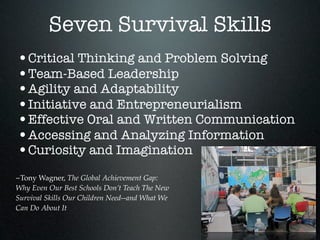
Seven Survival Skills
•Critical Thinking and Problem Solving
•Team-Based Leadership
•Agility and Adaptability
•Initiative and Entrepreneurialism
•Effective Oral and Written Communication
•Accessing and Analyzing Information
•Curiosity and Imagination
~Tony Wagner, The Global Achievement Gap:
Why Even Our Best Schools Don’t Teach The New
Survival Skills Our Children Need--and What We
Can Do About It
Disruptive Technologies
• “Success with disruptive innovations
   always originates at the simplest end
   of the market, typically competing
   against nonconsumption. Then, from
   that base, the technology gets better
   and better until, ultimately, it
   performs well enough that it
   supplants the prior approach.”

Clay Christiansen -- Disrupting Class: How Disruptive Innovation
             Will Change the Way the World Learns
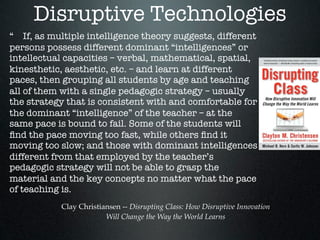
Disruptive Technologies
“ If, as multiple intelligence theory suggests, different
persons possess different dominant “intelligences” or
intellectual capacities – verbal, mathematical, spatial,
kinesthetic, aesthetic, etc. – and learn at different
paces, then grouping all students by age and teaching
all of them with a single pedagogic strategy – usually
the strategy that is consistent with and comfortable for
the dominant “intelligence” of the teacher – at the
same pace is bound to fail. Some of the students will
find the pace moving too fast, while others find it
moving too slow; and those with dominant intelligences
different from that employed by the teacher’s
pedagogic strategy will not be able to grasp the
material and the key concepts no matter what the pace
of teaching is.
           Clay Christiansen -- Disrupting Class: How Disruptive Innovation
                        Will Change the Way the World Learns
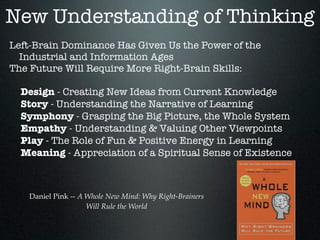
New Understanding of Thinking
Left-Brain Dominance Has Given Us the Power of the
  Industrial and Information Ages
The Future Will Require More Right-Brain Skills:

  Design - Creating New Ideas from Current Knowledge
  Story - Understanding the Narrative of Learning
  Symphony - Grasping the Big Picture, the Whole System
  Empathy - Understanding & Valuing Other Viewpoints
  Play - The Role of Fun & Positive Energy in Learning
  Meaning - Appreciation of a Spiritual Sense of Existence


   Daniel Pink -- A Whole New Mind: Why Right-Brainers
                    Will Rule the World
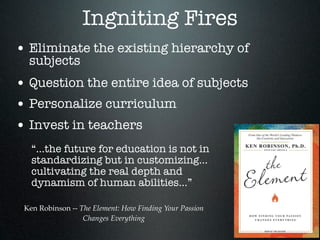
Ingniting Fires
• Eliminate the existing hierarchy of
  subjects
• Question the entire idea of subjects
• Personalize curriculum
• Invest in teachers
   “...the future for education is not in
   standardizing but in customizing...
   cultivating the real depth and
   dynamism of human abilities...”

 Ken Robinson -- The Element: How Finding Your Passion
                  Changes Everything
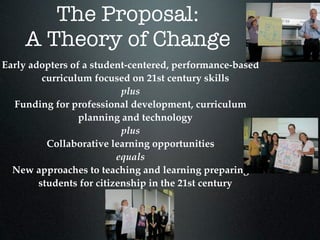
The Proposal:
    A Theory of Change
Early adopters of a student-centered, performance-based
         curriculum focused on 21st century skills
                           plus
  Funding for professional development, curriculum
                 planning and technology
                           plus
          Collaborative learning opportunities
                          equals
  New approaches to teaching and learning preparing
        students for citizenship in the 21st century
Participant Selection:
      Proposals that had:
•Understanding & Accepting That a Problem Exists
•Evaluating Where You Are Now
•Developing a Vision for Where You Want to Be
•Identifying Tools & Strategies That May Assist in
 Making the Transition from Here to There
•Making a Commitment to a Program of Change
•Seeking the Resources to Make It Happen
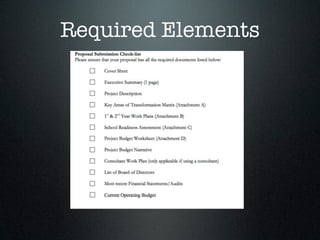
Required Elements
Proposal Language
Activities Funded
... schools that are committed to transforming their
classroom learning environments to align with 21st
Century expectations for successful students.

HCF understands that the journey each school will take in
this initiative may be different...

We believe that the professional learning community that is
built as part of this initiative will be richer with a diverse
group of schools.
Example of Activities
•Professional development – training, skill
 building, learning exchanges
•Curriculum design, development, and pilot
 testing
•Participation of key project staff in relevant
 conferences and workshops
•Development of student standards and
 assessment frameworks
•Hardware, software or technology applications
 may not make up more than 1/3 of your project
 budget
•Consultants or external professional services
Required Elements
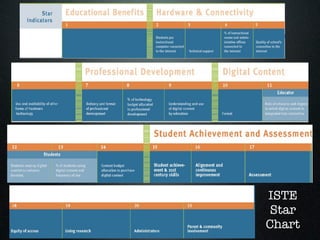
ISTE
 Star
Chart
Criteria
• Vision and Goals
• Readiness to Build Capacity
• Integrity of Proposed Project
• Budgets
• Potential for Impact
Selection
• 2 rounds: Dec ’08 & May ’08
• 18 projects selected (20 schools)
• Diversity in size, mission, location,
  clients, plans
The Process
• Use of Social Networks
• Face to Face Meetings
• Yearly Conferences
• Participation in CoL
• Group Travel
• Special Events
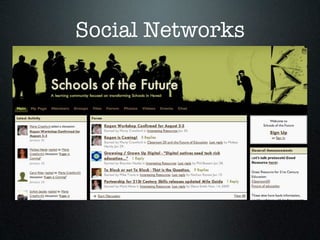
Social Networks
Face To Face Meetings
• Quarterly
• Topic Centered & Topical
• Minimum 3 team members (continuity a
  must)

• All Day - includes outer Island
• Meet 1: Facilitated Conversations
• Meet 2: High Tech High
• Meet 3: Protocols
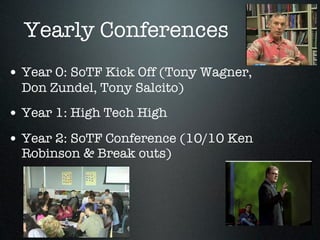
Yearly Conferences
• Year 0: SoTF Kick Off (Tony Wagner,
  Don Zundel, Tony Salcito)
• Year 1: High Tech High
• Year 2: SoTF Conference (10/10 Ken
  Robinson & Break outs)
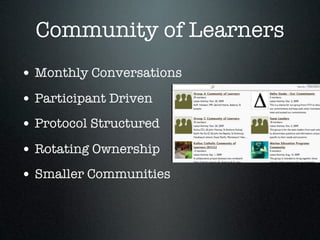
Community of Learners
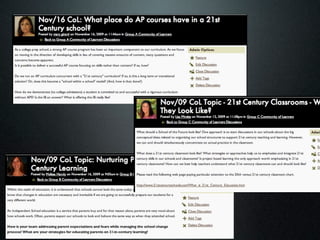
• Monthly Conversations
• Participant Driven
• Protocol Structured
• Rotating Ownership
• Smaller Communities
Group Travel/Special
           Events
• Why: Common Language
  & Vision
• High Tech High (Oct 09)
• ISTE (June ‘10)
• Tony Wagner, Ben Daly,
  Laura McBain...
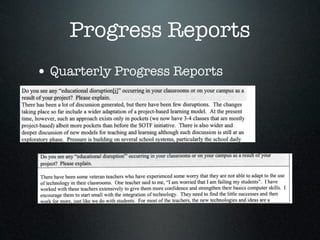
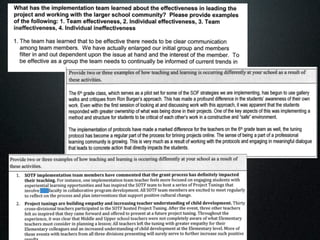
Progress Reports
• Quarterly Progress Reports
ç
    ç
        ç√
Outgrowths and New
         Directions
• Charter School Involvement
• Academy 21 Coordination
• Video Story Archive
• Graduate School of Education
• High Tech High Partnership
Questions?
Conversation?
Resources


• ISTE CEO Forum StaR Chart: http://iste.org
•


      Robert Witt robert@hais.org
     Mark Hines mhines@midpac.edu

Nais Presentation

  • 1.
    Schools of theFuture A Model for Funding, Collaboration, and Robert Witt robert@hais.org Mark Hines mhines@midpac.edu
  • 2.
    A Joint Initiativeof the Hawaii Community Foundation and the Hawaii Association of Independent Schools
  • 3.
    Resources - holdthat pen! http://futureschools.ning.com/
  • 4.
    Goals for Today •Problem Statement • Proposal • Process • Progress • Outgrowths and New Directions • Questions/Conversation
  • 5.
  • 6.
    The World WeLive In... The Need To Change... “In today’s highly competitive global “knowledge economy” all students need new skills for college, careers, and citizenship. The failure to give all students these new skills leaves today’s youth-- and our country--at an alarming competitive disadvantage. Schools haven’t changed; the world has. And so our schools are not failing. Rather, they are obsolete--even the ones that score the best on standardized tests. This is a very different problem requiring an altogether different solution. ~Tony Wagner, The Global Achievement Gap: Why Even Our Best Schools Don’t Teach The New Survival Skills Our Children Need--and What We Can Do About It
  • 7.
    Seven Survival Skills •CriticalThinking and Problem Solving •Team-Based Leadership •Agility and Adaptability •Initiative and Entrepreneurialism •Effective Oral and Written Communication •Accessing and Analyzing Information •Curiosity and Imagination ~Tony Wagner, The Global Achievement Gap: Why Even Our Best Schools Don’t Teach The New Survival Skills Our Children Need--and What We Can Do About It
  • 8.
    Disruptive Technologies • “Successwith disruptive innovations always originates at the simplest end of the market, typically competing against nonconsumption. Then, from that base, the technology gets better and better until, ultimately, it performs well enough that it supplants the prior approach.” Clay Christiansen -- Disrupting Class: How Disruptive Innovation Will Change the Way the World Learns
  • 9.
    Disruptive Technologies “ If,as multiple intelligence theory suggests, different persons possess different dominant “intelligences” or intellectual capacities – verbal, mathematical, spatial, kinesthetic, aesthetic, etc. – and learn at different paces, then grouping all students by age and teaching all of them with a single pedagogic strategy – usually the strategy that is consistent with and comfortable for the dominant “intelligence” of the teacher – at the same pace is bound to fail. Some of the students will find the pace moving too fast, while others find it moving too slow; and those with dominant intelligences different from that employed by the teacher’s pedagogic strategy will not be able to grasp the material and the key concepts no matter what the pace of teaching is. Clay Christiansen -- Disrupting Class: How Disruptive Innovation Will Change the Way the World Learns
  • 10.
    New Understanding ofThinking Left-Brain Dominance Has Given Us the Power of the Industrial and Information Ages The Future Will Require More Right-Brain Skills: Design - Creating New Ideas from Current Knowledge Story - Understanding the Narrative of Learning Symphony - Grasping the Big Picture, the Whole System Empathy - Understanding & Valuing Other Viewpoints Play - The Role of Fun & Positive Energy in Learning Meaning - Appreciation of a Spiritual Sense of Existence Daniel Pink -- A Whole New Mind: Why Right-Brainers Will Rule the World
  • 11.
    Ingniting Fires • Eliminatethe existing hierarchy of subjects • Question the entire idea of subjects • Personalize curriculum • Invest in teachers “...the future for education is not in standardizing but in customizing... cultivating the real depth and dynamism of human abilities...” Ken Robinson -- The Element: How Finding Your Passion Changes Everything
  • 12.
    The Proposal: A Theory of Change Early adopters of a student-centered, performance-based curriculum focused on 21st century skills plus Funding for professional development, curriculum planning and technology plus Collaborative learning opportunities equals New approaches to teaching and learning preparing students for citizenship in the 21st century
  • 13.
    Participant Selection: Proposals that had: •Understanding & Accepting That a Problem Exists •Evaluating Where You Are Now •Developing a Vision for Where You Want to Be •Identifying Tools & Strategies That May Assist in Making the Transition from Here to There •Making a Commitment to a Program of Change •Seeking the Resources to Make It Happen
  • 14.
  • 15.
    Proposal Language Activities Funded ...schools that are committed to transforming their classroom learning environments to align with 21st Century expectations for successful students. HCF understands that the journey each school will take in this initiative may be different... We believe that the professional learning community that is built as part of this initiative will be richer with a diverse group of schools.
  • 16.
    Example of Activities •Professionaldevelopment – training, skill building, learning exchanges •Curriculum design, development, and pilot testing •Participation of key project staff in relevant conferences and workshops •Development of student standards and assessment frameworks •Hardware, software or technology applications may not make up more than 1/3 of your project budget •Consultants or external professional services
  • 17.
  • 18.
  • 19.
    Criteria • Vision andGoals • Readiness to Build Capacity • Integrity of Proposed Project • Budgets • Potential for Impact
  • 20.
    Selection • 2 rounds:Dec ’08 & May ’08 • 18 projects selected (20 schools) • Diversity in size, mission, location, clients, plans
  • 21.
    The Process • Useof Social Networks • Face to Face Meetings • Yearly Conferences • Participation in CoL • Group Travel • Special Events
  • 22.
  • 23.
    Face To FaceMeetings • Quarterly • Topic Centered & Topical • Minimum 3 team members (continuity a must) • All Day - includes outer Island • Meet 1: Facilitated Conversations • Meet 2: High Tech High • Meet 3: Protocols
  • 24.
    Yearly Conferences • Year0: SoTF Kick Off (Tony Wagner, Don Zundel, Tony Salcito) • Year 1: High Tech High • Year 2: SoTF Conference (10/10 Ken Robinson & Break outs)
  • 25.
    Community of Learners •Monthly Conversations • Participant Driven • Protocol Structured • Rotating Ownership • Smaller Communities
  • 27.
    Group Travel/Special Events • Why: Common Language & Vision • High Tech High (Oct 09) • ISTE (June ‘10) • Tony Wagner, Ben Daly, Laura McBain...
  • 28.
  • 30.
    ç ç ç√
  • 31.
    Outgrowths and New Directions • Charter School Involvement • Academy 21 Coordination • Video Story Archive • Graduate School of Education • High Tech High Partnership
  • 32.
  • 33.
    Resources • ISTE CEOForum StaR Chart: http://iste.org • Robert Witt robert@hais.org Mark Hines mhines@midpac.edu

Editor's Notes

  • #2 This slide will be running with the video of Island Pacific Academy that Kelsey has made. We can use this to both draw attention to, and indicate where it is start right at 12 PM. The video is long, but we can stop at any point and mention what it is and where they can find it later.
  • #3 Just an opportunity here to mention that this grant in project is a joint initiative...
  • #4 Always a good idea at the beginning to mention that the slides from the presentation and all the resources are available on our website.
  • #5 Want to give just a brief overview wow much description here about the range of things that we will cover in the presentation. You’ll notice that each of the sections here are reiterated at the start down the presentation.
  • #6 Thought it would be interesting here to start with the initial discussion with white community foundation about the problem they were having with schools proposing technology grants to them, and them working with HAIS to figure out how to field all these requests. In the end, we all agreed that without significant change in thinking (headwear), the use of tools (hardware) would not lead to significant change in the schools.
  • #7 I thought it would be nice to build the context that initiated our conversations with some quotes -- these already been in the presentations that we’ve made before. Although it’s typically not good form in a presentation slide to put this much text, I think it contextualizes the conversation from each of these resources... so I thought we would start with Tony
  • #8 I think it’s significant to mention these seven survival skills within our conversation -- when we talk about experiences like high-tech high, it loops back to this anyhow
  • #9 This was a quote I pulled from the text that I thought was significant -- you’ll have to let me know if you like it
  • #10 This was the quote that I believe Phil put into his presentation that zeroes in on changing instructional practice in order to be a transformational school
  • #11 Figure it’s worth giving credence to pink’s book as well
  • #12 Since we have Sir Ken Robinson coming in October, I thought it would be nice to summarize the main tenant for education out of his book the element
  • #13 This is the information that we started with back in 2008 as we talked about transforming schools. I figured the pictures here would be interesting, as they are the summary presentations from high-tech high in October 2009
  • #14 This is actually from one of the slides in the October presentation in 2008 to heads of school about the grant process that was about to unfold. I thought the information here ended up being fairly true to what we believed in our selection process
  • #15 These next couple of slides are actual screen captures from our initial grant submission document. I thought it would be worthwhile mentioning what was required of schools
  • #16 ThisIs an abbreviated version of rationale for funding activities -- I thought it would give the audience an opportunity to understand better the language that schools read as they made their proposals
  • #17 This is also from the original grant document -- one of the things that I think the audience would be interested in is what kinds of activities we were, and still are expecting our participants
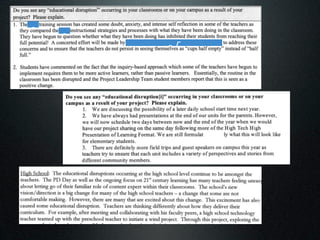
  • #18 You’ll have to let me know if you think if this is 0K -- I thought it would be interesting to show the matrix questions that were developed both for transformation, as well as year one in year two plans. I figure at this point we can mention how we make decisions that school’s only needed to identify their vision in year one in year two, as we knew plans would change over time
  • #19 I also thought it would be interesting to show the star matrix that we are using at some level to guide participants thinking about technology use. it is worth mentioning that although each of these criteria, schools have to score themselves as being low moderate or high application in each of these domains, and there were descriptors as well.
  • #20 This is also language from the grant document that I thought we could mention -- I don’t remember the exact number of applicants we had, although I think would be worthwhile mentioning here. I do think it’s worth talking about these five main criteria setting the frame for who was selected
  • #21 maybe a brief mention of selection Certainly -- we want to mention how many schools we have involved -- although I don’t think we need to mention the school names, as those are all publicly available on our website, but I do think it’s worth talking about some of the thinking behind diversity, size, etc. in the selection process.
  • #22 these next few slides I thought we would talk a bit aboutThe different activities that have been set up through the grant. If you think we should either drop or add to more of these, just let me know. This is just a prompt, the following slides going to detail on each one of these
  • #23 Since the community building aspect, and the use of 21st-century social networking was one of our key ideas within the grant, I thought it would mention briefly the use of the Ning to start building our community -- even before the grant selection process. I also think it’s worth noting that this site is not just for the a team projects, but is meant to be a larger conversation with schools employee -- public, charter, independent -- as well as schools from around the world
  • #24 Let me know if anything here is not to like him -- I do think we want to talk a bit about the experiences we’ve had in our face-to-face meetings. I’m figuring we need to include Bob Agres, high-tech high, and Laura McBain. just maybe a few minutes about each one in our rationale behind them
  • #25 Both an opportunity to talk about pulling a community together, as well as to set the context for the usefulness of the conference, to hold schools accountable to share what they have been doing with the community
  • #26 I figure here, we can spend a little more time talking about the importance of our community of learners approach. This slide should talk more about the general thinking behind how we set it up, the way that it is run, etc. the next slide actually has some examples of what has run
  • #27 I thought it would be interesting to mention briefly what a CoL might have on it. I’m gathering that Mary, Lisa, and Melissa won’t mind their questions being public, as none of these are either controversial or private at this point
  • #28 One of the things we changed into Grant, was looking at how funding should build community by keeping people together, and asking schools to travel together for experiences, to support community building, common vision, and a language and relationship around --. I thought we could mention briefly each one of these as bullets to explain how our schools are working together around common experiences. the video here is the animoto from the Ning site that was made by Le Jardin - I thought at the nice job of showing how folks are beginning to develop a common language from their experiences.
  • #29 One of the things that I think would be valuable to share, are some of the experiences and progress of schools to date both challenges and successes. I tried grab a smattering of quotes on these next three slides that I thought portrayed interesting and provocative experiences and reports. Let me know if you think this is too much
  • #32 Certainly, we want to talk about what has happened in the last year that have both expanded the reach of this program, as well as allowed partner schools to have a more rich, diverse experience and change leadership, and 21st-century connections. Am I missing any of the ones we want to talk about here? One of the things I thought I might do, if we have Internet access, is to show one or two beginnings of Kelsey’s video stories, which I think are powerful ways for outsiders to view what’s going on with our project.
  • #33 I figured this point, it’ll be a whirlwind of information. So my little graphics are meant to just start a question and conversation around things people heard and ideas they might share.
  • #34 I need to have a slide here that has links or references to all of the resources --our Ning site, the different resources that were quoted, links to documents like the STaR matrix, etc. As well as our contact information