Approach to shock
Gladwin Jeemon
Refrences:
• Harrisons Principles of internal medicine 19th
edition
• Washington Manual of Critical Care 2nd edition
SHOCK
• Inadequate tissue perfusion
• Clinical shock is usually accompanied by
hypotension ( meanarterial pressure [MAP]
<60)
• First step- Cause
• Goal: reverse tissue hypoperfusion
•
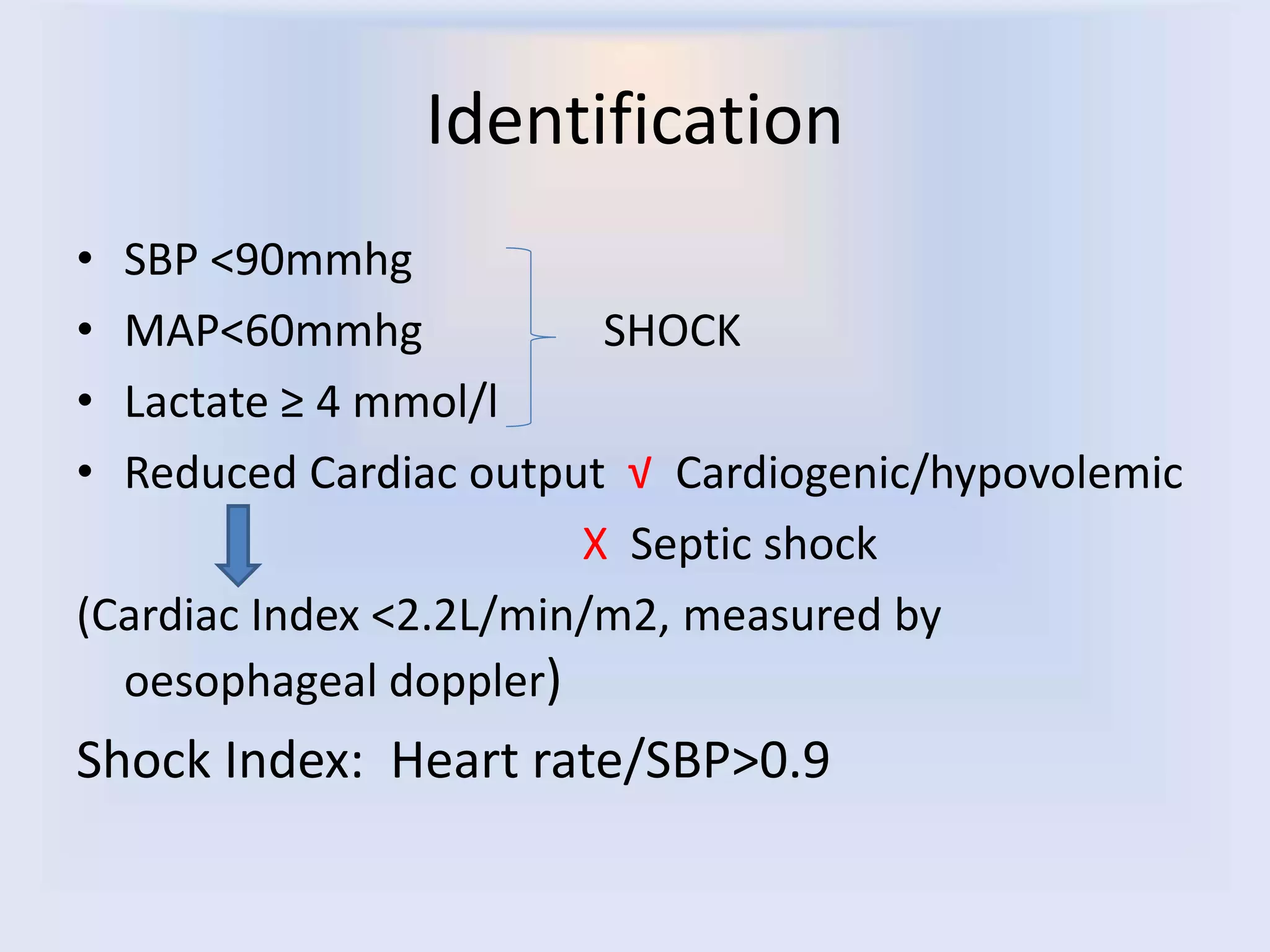
Identification
• SBP <90mmhg
• MAP<60mmhg SHOCK
• Lactate ≥ 4 mmol/l
• Reduced Cardiac output √ Cardiogenic/hypovolemic
X Septic shock
(Cardiac Index <2.2L/min/m2, measured by
oesophageal doppler)
Shock Index: Heart rate/SBP>0.9
Cardiogenic Hypovolemic Septic
Pulse pressure
Diastolic pressure
Extremeties cool cool Warm
Nailbed blood
reurn
Slow Slow Rapid
JVP
Respiratory
crepitations
+++ _ _
S3,S4 gallop rhytm +++ _ -
Chest radiograph Large
heart,pulmonary
edema
Diminished cardiac
size
Normal,
/pnuemonia+
Identified site of
infection
_ _ ++++
Targeted History
• Chest pain: MI,Pulmonary embolism
• Trauma: Spinal, haemmorhage
• Immunocompromised/fever
• Medications: chronic use of steriods
• GI loss
• Abdominal Pain:Pancreatitis,Bowel Perforation
• Exposure:inhlation,hypo/hyperthermia
• Hemorrhagic: hematuria,hematemesis
• Sudden onset of hives
• Vaginal bleeding
EXAMINATIONS
General Examination
• Level of consciuosness
• Toxic Looking
• Cyanosis
• Smell of alcohol
• Evidence of trauma
Blood pressure* normal/elevated (Early)
Tachypnoeic
Respiratory findings
• Rales in pulmonary edema
• Wheezing with anaphylaxis
• Air entry decreased in pnuemo/hydrothorax
CVS
• Raised JVP
• Muffled HS
• S3 S4 gallop rhythm
GIT
Evidence of trauma
Solid organ tenderness
Peritonitis
Rectal bleed
Nervous system
• GCS
• Pupils
• Movements
• Reflexes
Investigations
CBC
Urine routine
RBS
Electrolytes
UREA/Blood Urea Nitrogen
Blood culture
Investigations
Coagulation studies
Chest Xray
ECG
Emergency ultrasound
Monitoring
• Blood Pressure , SPo2 , Intake/output
• Central Venous Pressure
• Arterial-Venous Blood GAS
• Lactate
• End tidal Co2
Miscellaenous causes
• Thyroid Storm
• AV malformation
• Spinal Shock
• Anaphylaxis
• Adrenal Insufficiency
• Pulmonary Embolism
Types of shock
Hypovolemic Shock
Most common
Blood loss
• Hemoglobin and hematocrit
• Hypernatremia
Management
Adjunctive therapies
• FFP/Platelet administration
• Activated factor VII
• Calcium chloride
• Magnesium Chloride
• Monitor and treat TRALI (transfusion related
acute lung injury)
Cardiogenic shock- ETiology
• Acute Myocardial infection
• Congestive heartfailure
• Acute myocarditis
• Calcium channel or beta blocker overdose
• HOCM
• Aortic stenosis
Septic Shock
• Septic shock = sepsis +hypotension
• Gram -ve bacteria(E.coli, Psuedomonas)
• Hyperventilation –respiratory alkalosis-early
sign
• acrocyanosis
• ischemic necrosis digits.
• Cellulitis,
• pustules,
• Bullae
• No specific diagnostic test
• Removal of focus of infection
Complications
• ARDS
• RenAL failure acute tubular necrosis
• Coagulopathy
• Delirium
• Immunosuppression
Antibiotics:
Neurogenic shock
• high cervical spinalcord injury
• inadvertent cephalad migration of spinal
anesthesia
• Head injury
• warm extremities
• Treatment : relative hypovolemia and to the
loss of vasomotor tone.
• Excessive volumes of fluid may be required , if
given alone.
• Norepinephrine maintain mean arterial
pressure
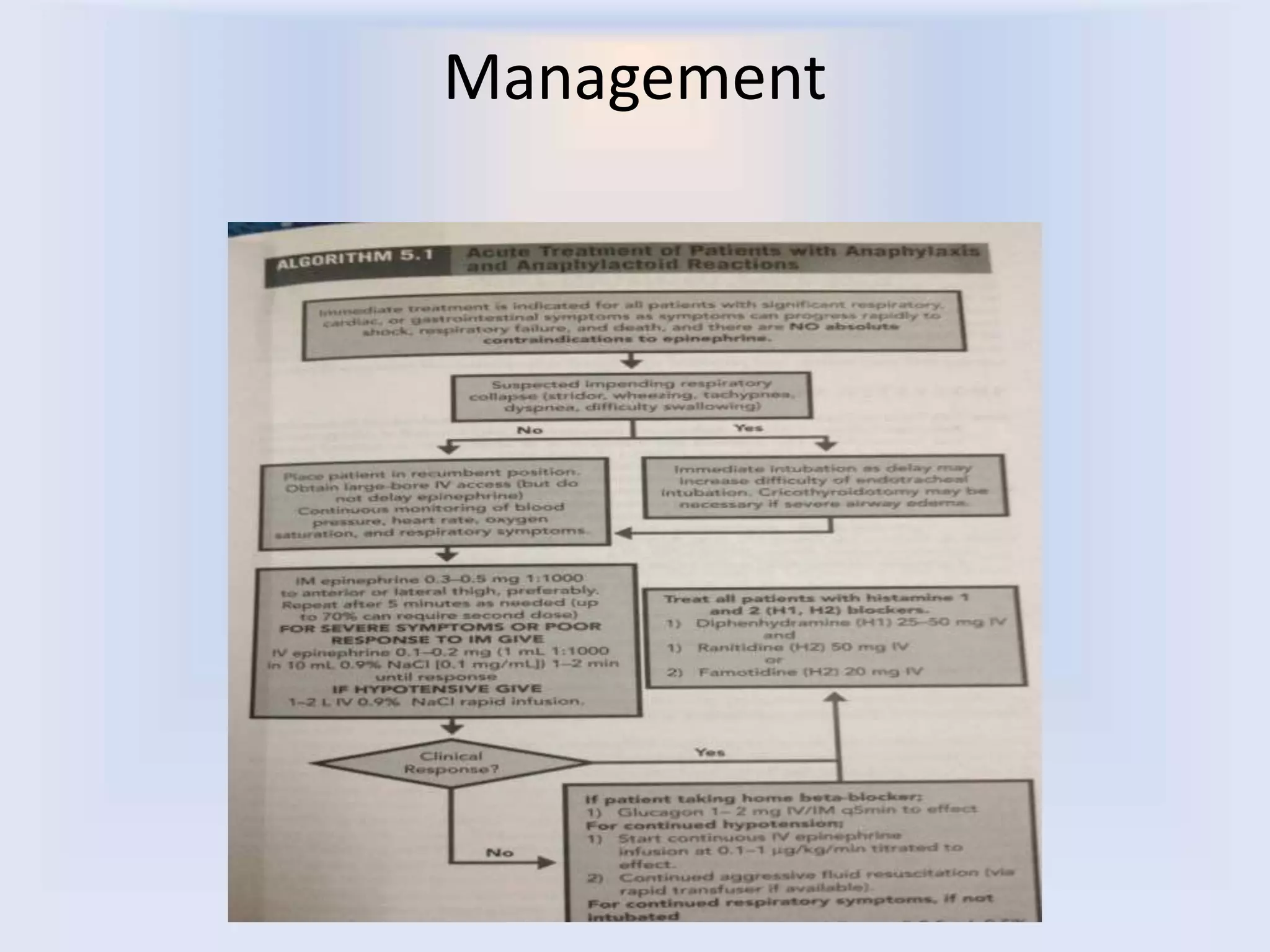
Anaphylactic shock
• Anaphylaxis and Anaphylactois reactions
• IgE mediated hypersenstivity reaction-
anaphylaxis
• Reaction < 1hour – rapid- parenetral
• Flushing, Pruritis –intial symptoms
Anaphylactic shock cont
Management
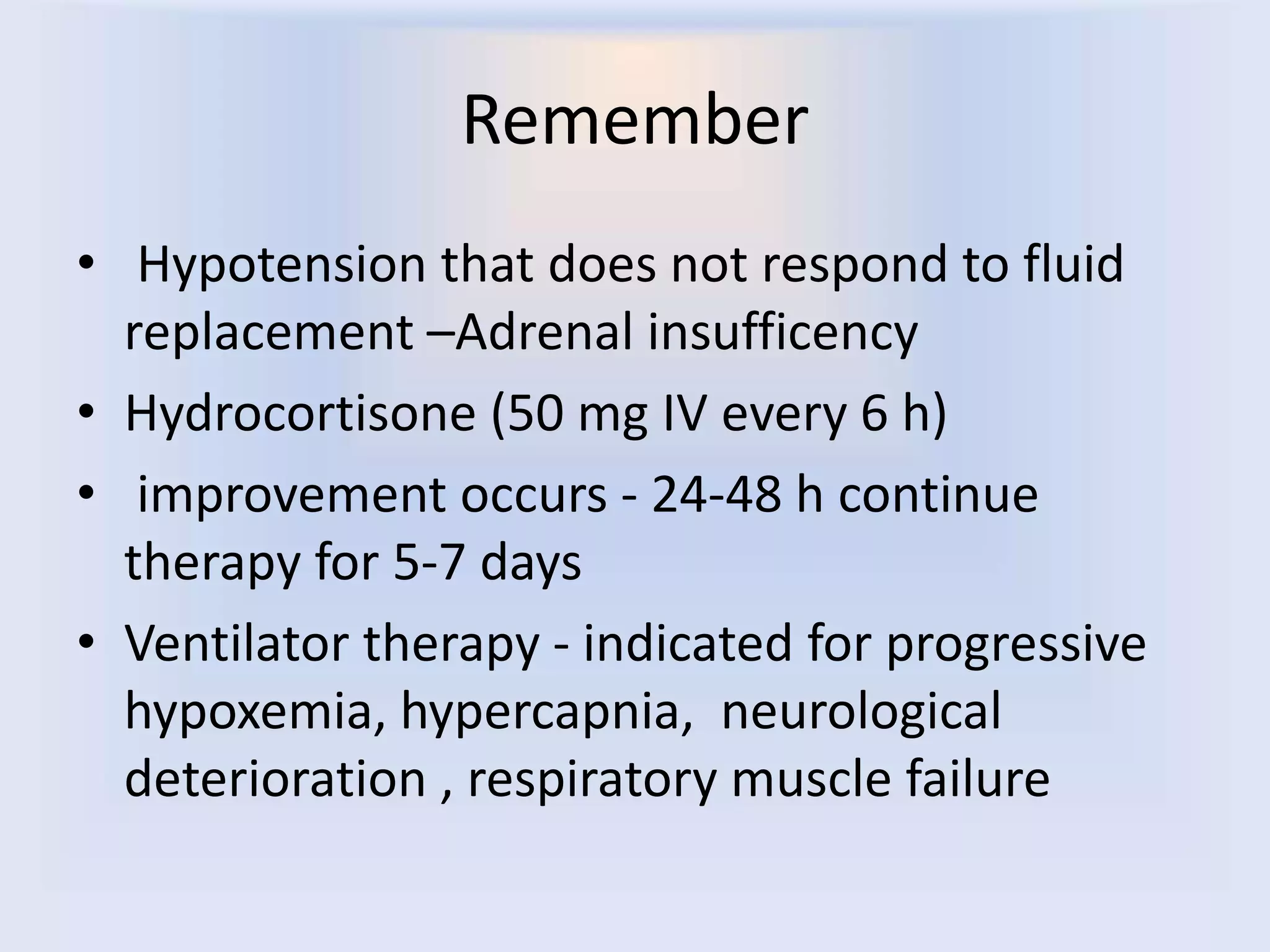
Remember
• Hypotension that does not respond to fluid
replacement –Adrenal insufficency
• Hydrocortisone (50 mg IV every 6 h)
• improvement occurs - 24-48 h continue
therapy for 5-7 days
• Ventilator therapy - indicated for progressive
hypoxemia, hypercapnia, neurological
deterioration , respiratory muscle failure
Thank you

Approach to shock