Applying the Principles of the Constitution 
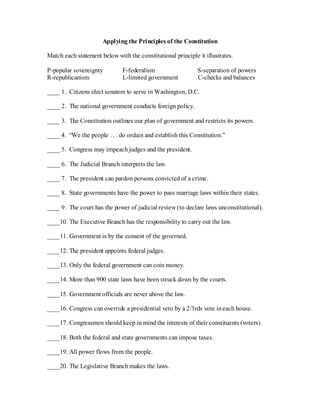
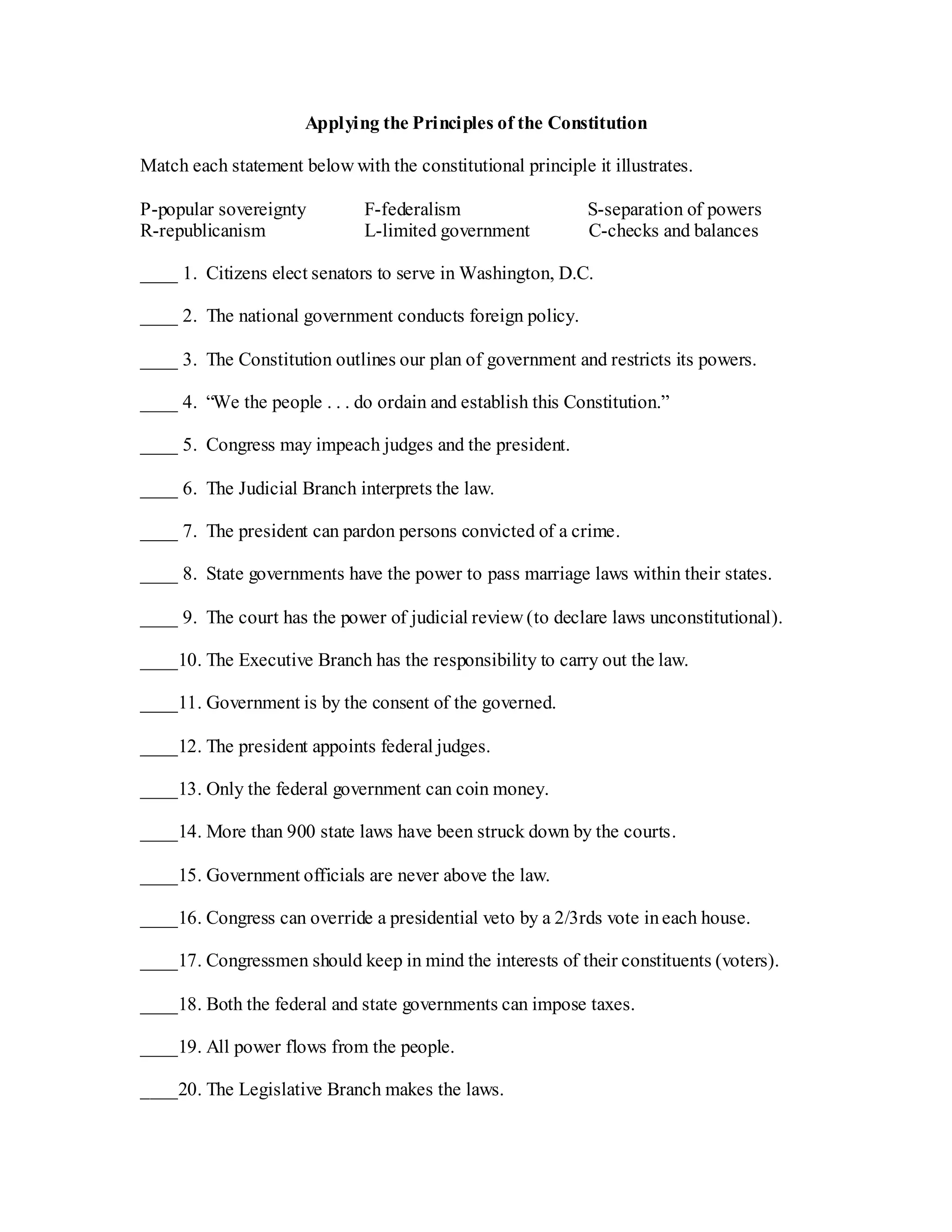
Match each statement below with the constitutional principle it illustrates. 
P-popular sovereignty F-federalism S-separation of powers 
R-republicanism L-limited government C-checks and balances 
____ 1. Citizens elect senators to serve in Washington, D.C. 
____ 2. The national government conducts foreign policy. 
____ 3. The Constitution outlines our plan of government and restricts its powers. 
____ 4. “We the people . . . do ordain and establish this Constitution.” 
____ 5. Congress may impeach judges and the president. 
____ 6. The Judicial Branch interprets the law. 
____ 7. The president can pardon persons convicted of a crime. 
____ 8. State governments have the power to pass marriage laws within their states. 
____ 9. The court has the power of judicial review (to declare laws unconstitutional). 
____10. The Executive Branch has the responsibility to carry out the law. 
____11. Government is by the consent of the governed. 
____12. The president appoints federal judges. 
____13. Only the federal government can coin money. 
____14. More than 900 state laws have been struck down by the courts. 
____15. Government officials are never above the law. 
____16. Congress can override a presidential veto by a 2/3rds vote in each house. 
____17. Congressmen should keep in mind the interests of their constituents (voters). 
____18. Both the federal and state governments can impose taxes. 
____19. All power flows from the people. 
____20. The Legislative Branch makes the laws.
Principles Key 
1. R 
2. F 
3. L 
4. P 
5. C 
6. S 
7. C 
8. F 
9. C 
10. S 
11. P 
12. C 
13. F 
14. C 
15. L 
16. C 
17. R 
18. F 
19. P 
20. S

Applying the Principles of the Constitution - Answer Key

  • 1.
    Applying the Principlesof the Constitution Match each statement below with the constitutional principle it illustrates. P-popular sovereignty F-federalism S-separation of powers R-republicanism L-limited government C-checks and balances ____ 1. Citizens elect senators to serve in Washington, D.C. ____ 2. The national government conducts foreign policy. ____ 3. The Constitution outlines our plan of government and restricts its powers. ____ 4. “We the people . . . do ordain and establish this Constitution.” ____ 5. Congress may impeach judges and the president. ____ 6. The Judicial Branch interprets the law. ____ 7. The president can pardon persons convicted of a crime. ____ 8. State governments have the power to pass marriage laws within their states. ____ 9. The court has the power of judicial review (to declare laws unconstitutional). ____10. The Executive Branch has the responsibility to carry out the law. ____11. Government is by the consent of the governed. ____12. The president appoints federal judges. ____13. Only the federal government can coin money. ____14. More than 900 state laws have been struck down by the courts. ____15. Government officials are never above the law. ____16. Congress can override a presidential veto by a 2/3rds vote in each house. ____17. Congressmen should keep in mind the interests of their constituents (voters). ____18. Both the federal and state governments can impose taxes. ____19. All power flows from the people. ____20. The Legislative Branch makes the laws.
  • 2.
    Principles Key 1.R 2. F 3. L 4. P 5. C 6. S 7. C 8. F 9. C 10. S 11. P 12. C 13. F 14. C 15. L 16. C 17. R 18. F 19. P 20. S