AND THE
BALANCED
SCORECARD
BLACK HOLE?
1.
1.
IT’S ABOUT
MEASUREMENT
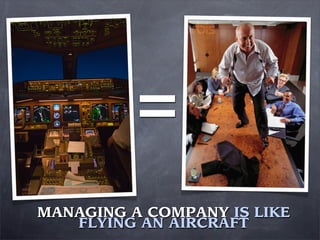
=
MANAGING A COMPANY IS LIKE
FLYING AN AIRCRAFT
2.
BALANCED
SCORECARD
BALANCED SCORECARD GIVES
YOU THE TOOLS YOU NEED
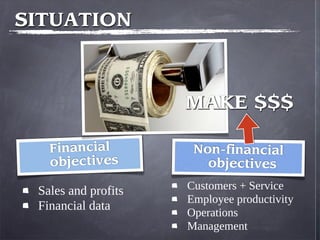
SITUATION
Financial
objectives
Non-financial
objectives
MAKE $$$
Sales and profits
Financial data
Customers + Service
Employee productivity
Operations
Management
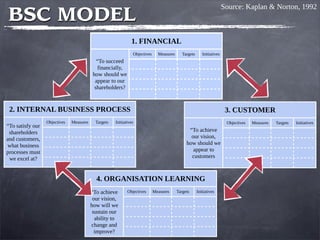
3. CUSTOMER
3. CUSTOMER
3. CUSTOMER
Objectives Measures Targets Initiatives
“To achieve
our vision,
our vision,
how should we
appear to
customers
customers
2. INTERNAL BUSINESS PROCESS
“To satisfy our
Objectives Measures Targets Initiatives
“To satisfy our
shareholders
and customers,
and customers,
what business
what business
processes must
we excel at?
we excel at?
BSC MODEL
Source: Kaplan & Norton, 1992
4. ORGANISATION LEARNING
“To achieve Objectives Measures Targets Initiatives
our vision,
how will we
how will we
sustain our
ability to
ability to
change and
change and
improve?
1. FINANCIAL
1. FINANCIAL
1. FINANCIAL
Objectives Measures Targets Initiatives
“To succeed
financially,
financially,
how should we
appear to our
shareholders?
shareholders?
1. FINANCIAL
1. FINANCIAL
1. FINANCIAL
Objectives Measures Targets Initiatives
“To succeed
financially,
financially,
how should we
appear to our
shareholders?
shareholders?
Most organisations will say
the purpose of BSC is to link
evaluation to strategy.
(Schneiderman, 2003)
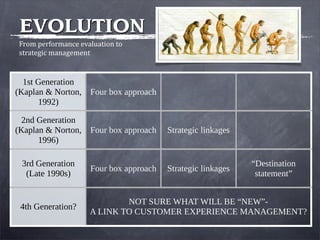
From performance evaluation to 
strategic management
EVOLUTION
1st Generation
(Kaplan & Norton,
1992)
Four box approach
2nd Generation
(Kaplan & Norton,
1996)
Four box approach Strategic linkages
3rd Generation
(Late 1990s)
Four box approach Strategic linkages
“Destination
statement”
4th Generation?
NOT SURE WHAT WILL BE “NEW”-
A LINK TO CUSTOMER EXPERIENCE MANAGEMENT?
3.
CUSTOMER
EXPERIENCE
MANAGEMENT
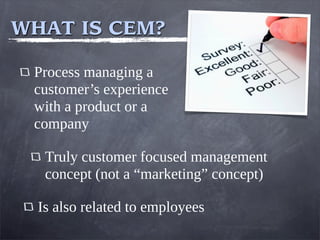
Process managing a
customer’s experience
with a product or a
company
Truly customer focused management
concept (not a “marketing” concept)
Is also related to employees
WHAT IS CEM?
Source: Schmitt, 2003
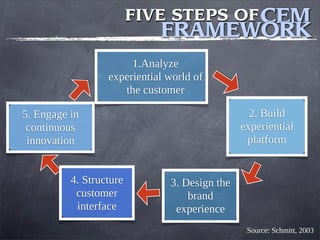
FIVE STEPS OFCEM
FRAMEWORK
1.Analyze
experiential world of
the customer
2. Build
experiential
platform
3. Design the
brand
experience
4. Structure
customer
interface
5. Engage in
continuous
innovation
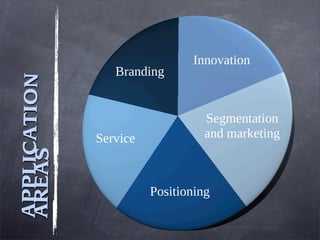
Innovation
Segmentation
and marketing
Positioning
Service
Branding
A
P
P
L
IC
A
T
IO
N
A
R
E
A
S
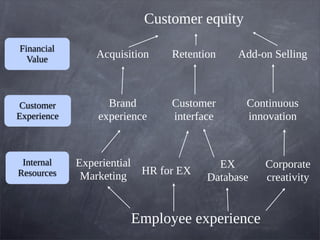
Financial
Value
Internal
Resources
Customer
Experience
Customer equity
Retention Add-on Selling
Acquisition
Brand
experience
Customer
interface
Continuous
innovation
Corporate
creativity
EX
Database
HR for EX
Experiential
Marketing
Employee experience
3.
THE
BLACK
HOLE?
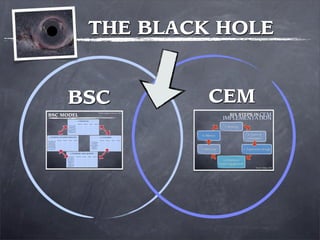
THE BLACK HOLE
BSC CEM
4.
CASE STUDY:
SOUTHWEST
AIRLINES
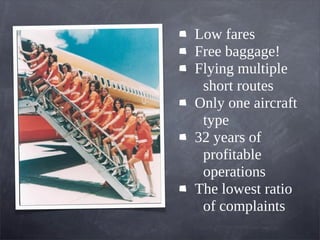
Low fares
Free baggage!
Flying multiple
short routes
Only one aircraft
type
32 years of
profitable
operations
The lowest ratio
of complaints
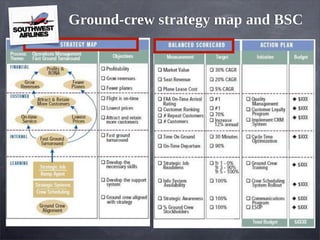
Ground-crew strategy map and BSC
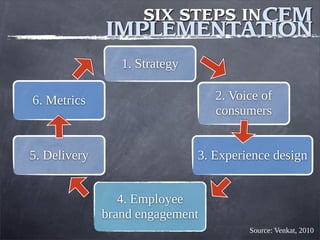
1. Strategy
2. Voice of
consumers
3. Experience design
4. Employee
brand engagement
5. Delivery
6. Metrics
Source: Venkat, 2010
SIX STEPS INCEM
IMPLEMENTATION
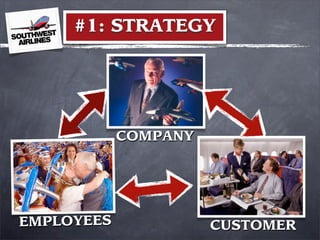
#1: STRATEGY
CUSTOMER
EMPLOYEES
COMPANY
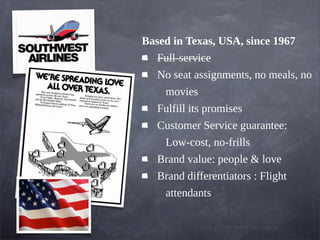
Based in Texas, USA, since 1967
Full-service
No seat assignments, no meals, no
movies
Fulfill its promises
Customer Service guarantee:
Low-cost, no-frills
Brand value: people & love
Brand differentiators : Flight
attendants
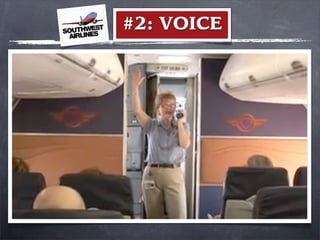
#2: VOICE
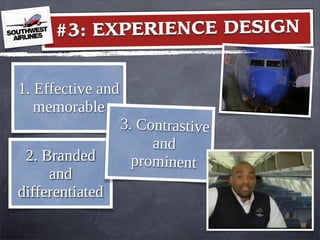
1. Effective and
memorable
2. Branded
and
differentiated
3. Contrastive
and
prominent
#3: EXPERIENCE DESIGN
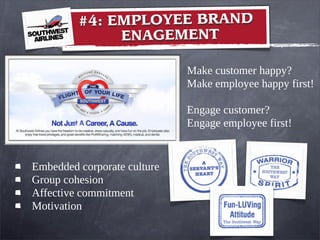
#4: EMPLOYEE BRAND
ENAGEMENT
Make customer happy?
Make employee happy first!
Engage customer?
Engage employee first!
Embedded corporate culture
Group cohesion
Affective commitment
Motivation
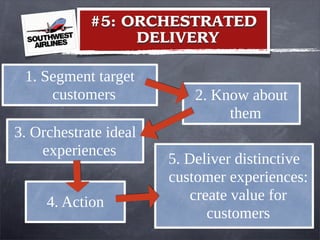
1. Segment target
customers 2. Know about
them
3. Orchestrate ideal
experiences
4. Action
5. Deliver distinctive
customer experiences:
create value for
customers
#5: ORCHESTRATED
DELIVERY
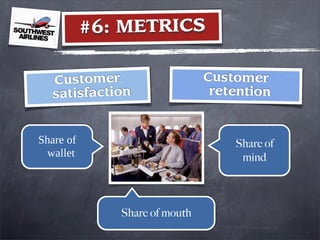
#6: METRICS
Share of
wallet
Share of
mind
Share of mouth
Customer
satisfaction
Customer
retention
5.
RECOMMENDATIONS:
BSC + CEM MODEL
“While more recent Balanced
Scorecard designs are substantial
improvements on original ideas,
there is room for improvement.”
- Lawrie and Cobbold (2004)
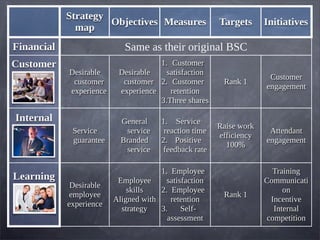
Strategy
map
Objectives Measures Targets Initiatives
Financial Same as their original BSC
Same as their original BSC
Customer
Desirable
customer
experience
Desirable
customer
experience
1. Customer
satisfaction
2. Customer
retention
3.Three shares
Rank 1
Customer
engagement
Internal
Service
guarantee
General
service
Branded
service
1. Service
reaction time
2. Positive
feedback rate
Raise work
efficiency
100%
Attendant
engagement
Learning
Desirable
employee
experience
Employee
skills
Aligned with
strategy
1. Employee
satisfaction
2. Employee
retention
3. Self-
assessment
Rank 1
Training
Communicati
on
Incentive
Internal
competition
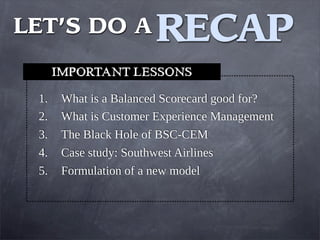
1. What is a Balanced Scorecard good for?
2. What is Customer Experience Management
3. The Black Hole of BSC-CEM
4. Case study: Southwest Airlines
5. Formulation of a new model
IMPORTANT LESSONS
RECAP
LET’S DO A

Applying the balanced scorecard for customer experience management