The technology involving the development, maintenance, and use of computers
and software for the processing and distribution of information
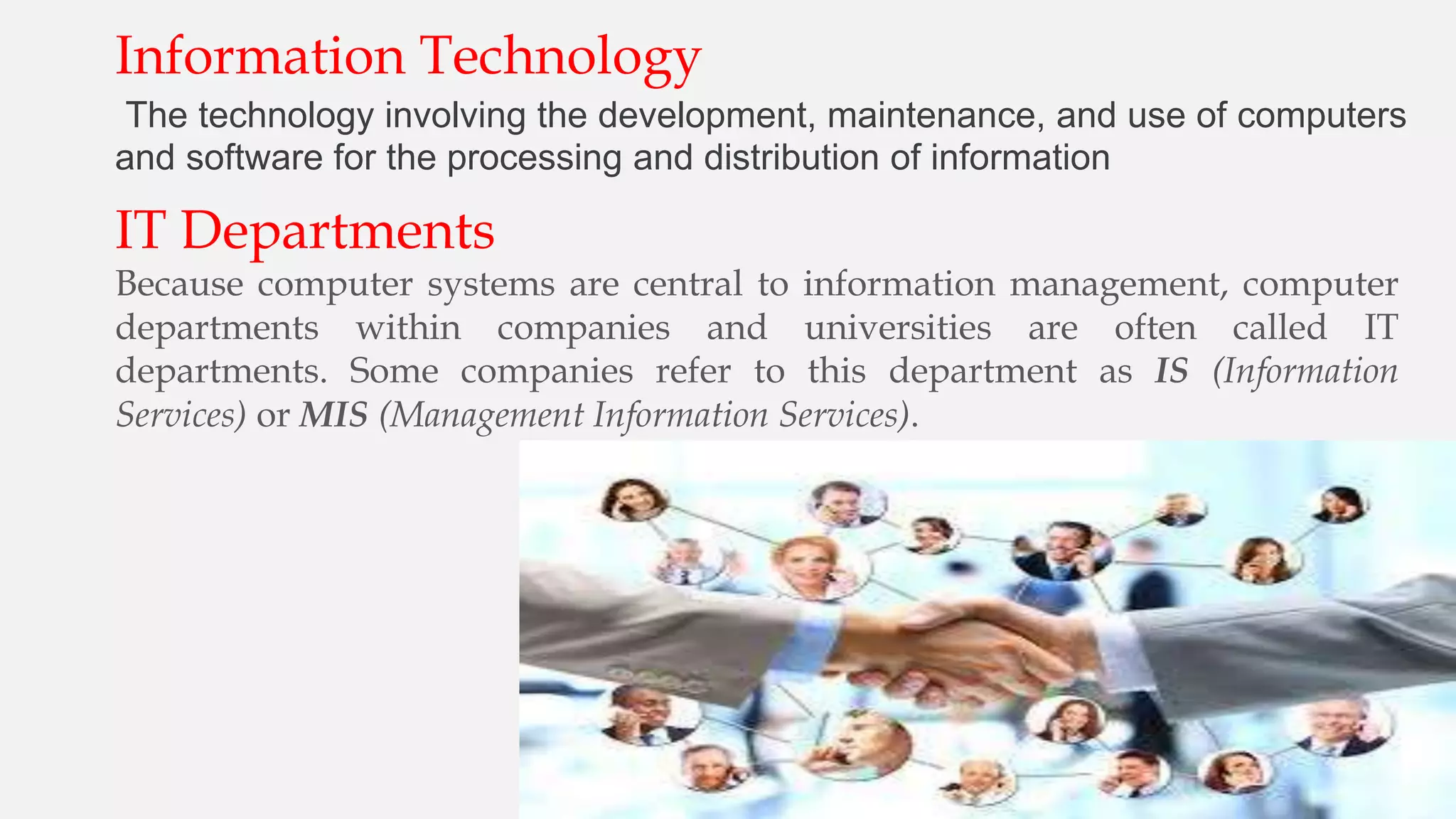
Because computer systems are central to information management, computer
departments within companies and universities are often called IT
departments. Some companies refer to this department as IS (Information
Services) or MIS (Management Information Services).
Information Technology
IT Departments
IT is More than Computers and Networks
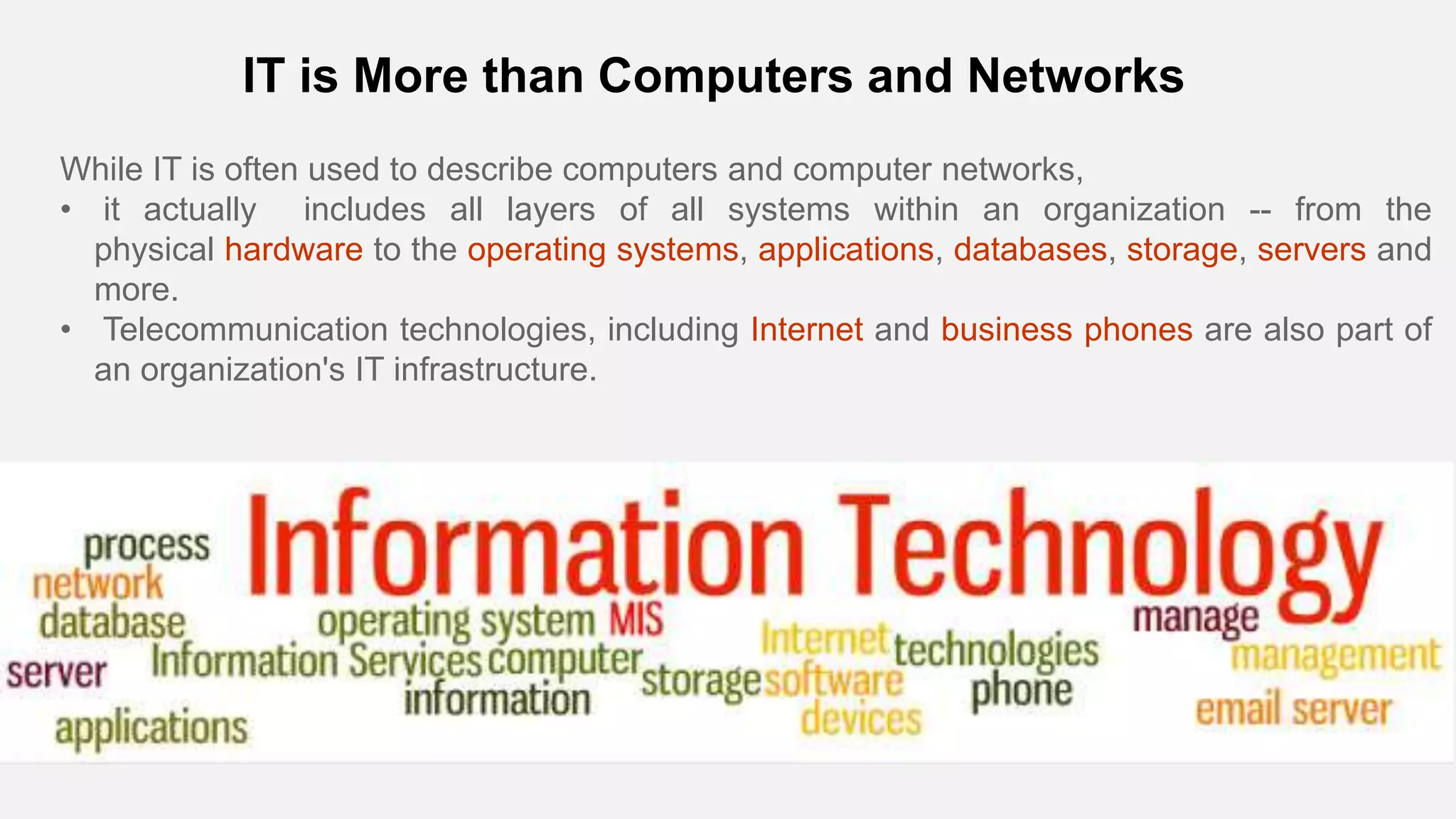
While IT is often used to describe computers and computer networks,
• it actually includes all layers of all systems within an organization -- from the
physical hardware to the operating systems, applications, databases, storage, servers and
more.
• Telecommunication technologies, including Internet and business phones are also part of
an organization's IT infrastructure.
MANAGEMENT INFORMATION SYSTEM
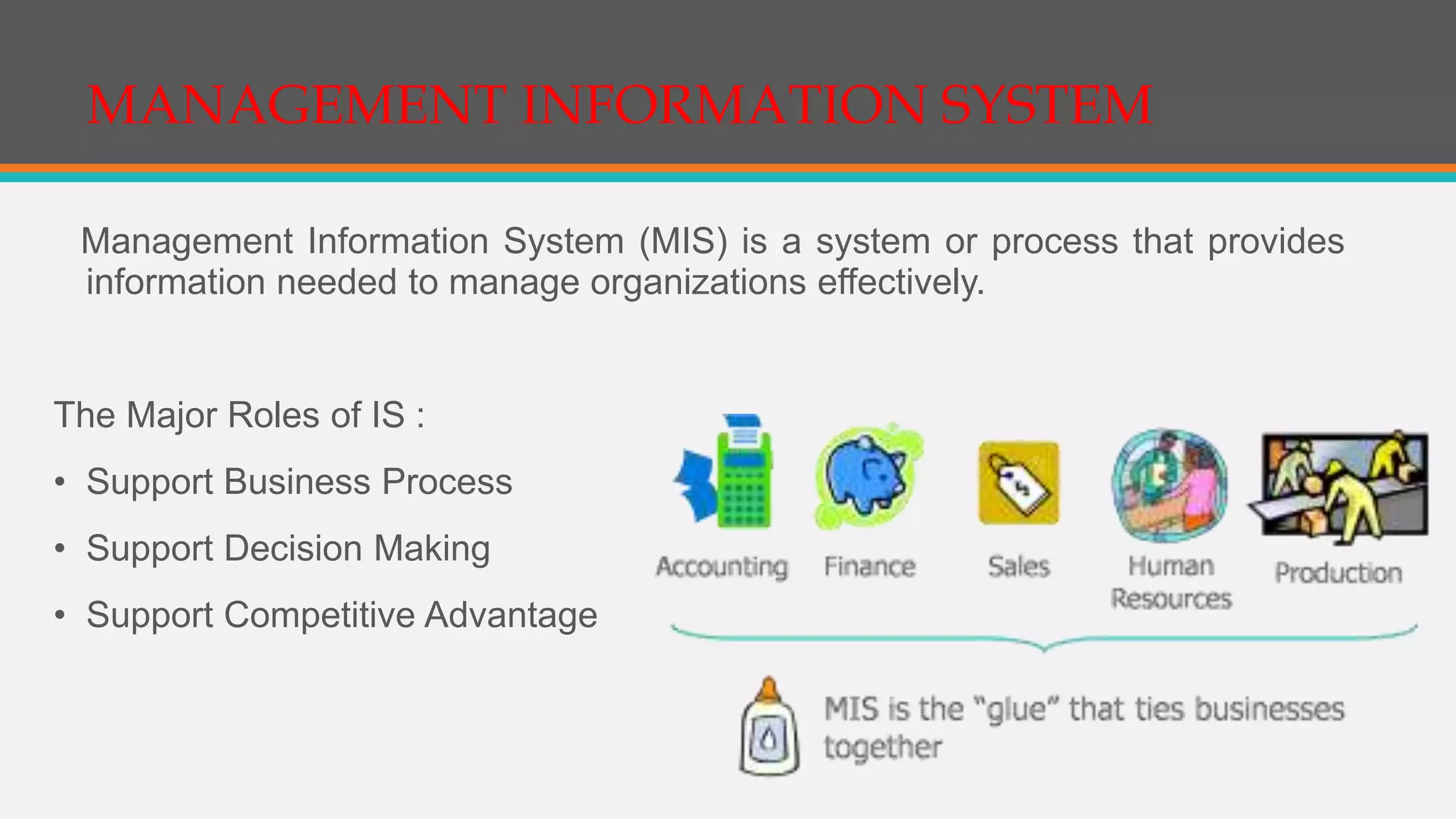
Management Information System (MIS) is a system or process that provides
information needed to manage organizations effectively.
The Major Roles of IS :
• Support Business Process
• Support Decision Making
• Support Competitive Advantage
are used to build
INFORMATION
TECHNOLOGY
Hardware
Software
Databases
Networks
Other related
components
INFORMATION
SYSTEMS
Payroll
System
Inventory
System
Marketing
System
Customer
Service
System
IS vs. IT
• Total Rewards
plan for changes to employees’ salary, insurance, retirement and other benefits options using an HRIS.
• Workforce Planning
employee data such as demographic information, job titles and Equal Employment Opportunity
Commission identification codes.
• Training and Development
HRIS to facilitate the annual performance review process,
to allow employees to sign up for company-sponsored training classes or to build a talent inventory of what
education, experience and training each employee has.
• Risk Management
By keeping electronic records of items such as employee discipline notices, safety training employees
have received, accident logs and workers’ compensation claims.
This data is analyzed by the HR department to identify ways to improve workplace conditions, safety
training classes and disciplinary processes to ensure compliance with all federal and state labor laws
Human Resource Management System
Human Resource Planning
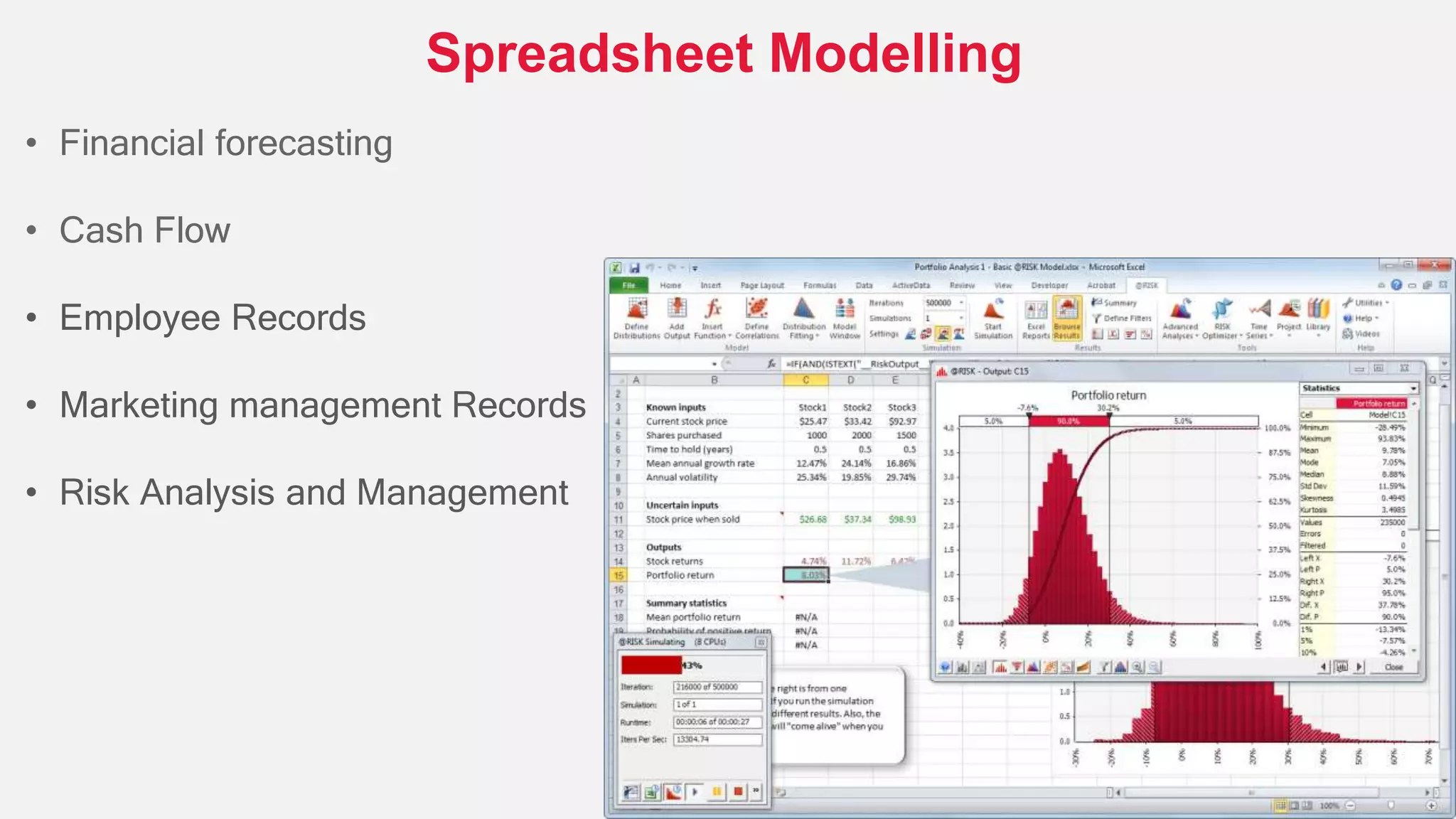
Spreadsheet Modelling
• Financial forecasting
• Cash Flow
• Employee Records
• Marketing management Records
• Risk Analysis and Management
• Businesses to transform and expand their global footprint with innovative solutions in
supply chain, procurement and analytics.
• the client needs, ensure robust processes and improve business agility
• domain expertise that unlocks tough business challenges through enterprise data
management, big data, in-memory computing, cloud business intelligence and
information lifecycle management tools
Information Management
• MIS organize and process information, this information can be used to make decisions in
an IT organization or business.
• MIS reports summarize or aggregate information to support decision-making tasks.
• MISs provide reports in many different ways.
For example, MISs reports can be periodic, summarized, exception, comparative and ad
hoc.
• Data mining is a task of using sophisticated technology to retrieve and evaluate data in a
database to identify useful trends.
• Business managers and owners need to use different types of information systems to
speed up the decision making process.
For Decision Making
• Cloud-based systems provide business insights, information management and data
management to bring about business transformation.
• cloud-based systems provide business insights, information management and data
management to bring about business transformation.
• Cloud computing is Internet-based computing, whereby shared servers provide
resources, software, and data to computers and other devices on demand, as
with the electricity grid.
Technology & Integration
Database Management
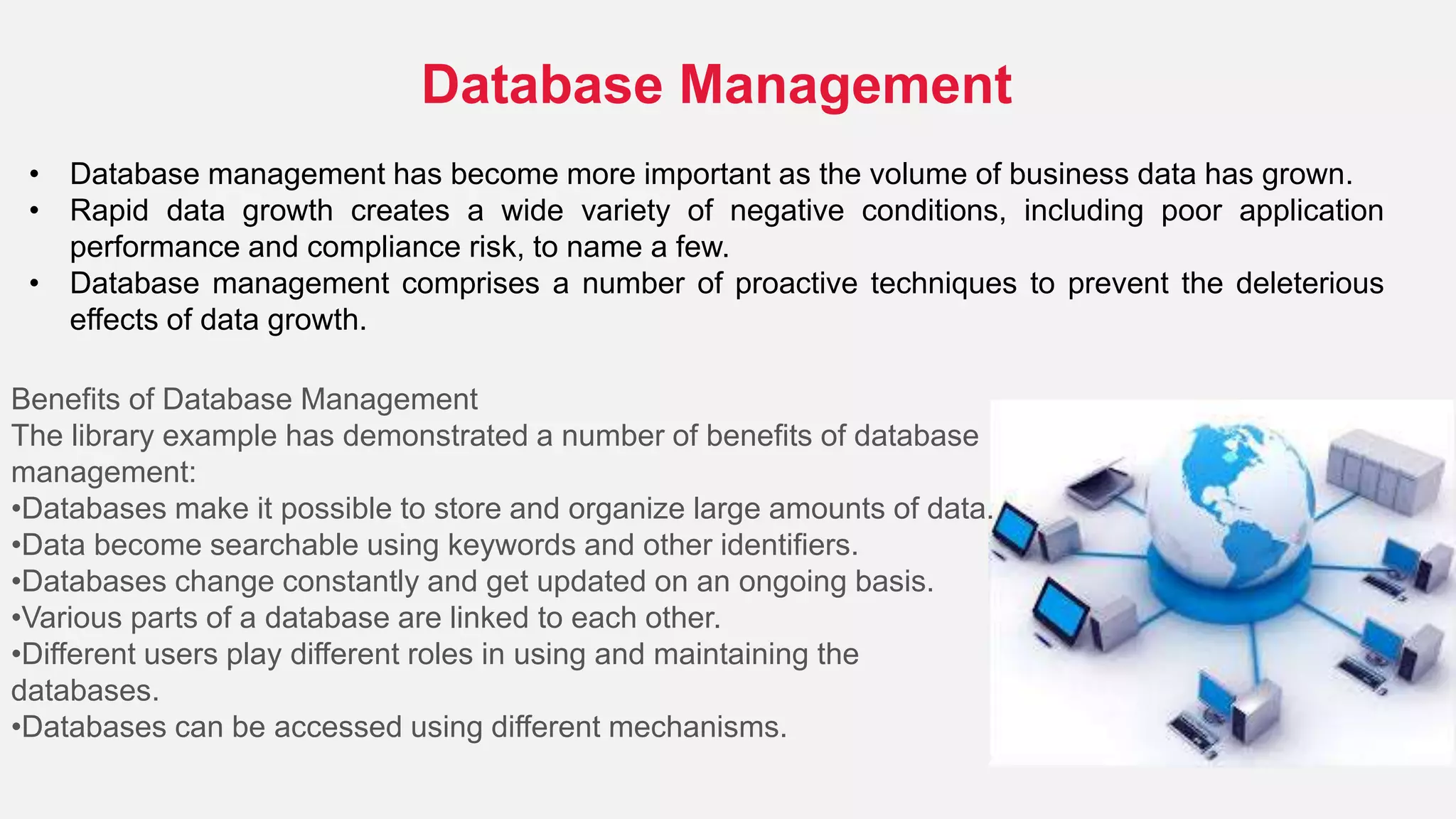
• Database management has become more important as the volume of business data has grown.
• Rapid data growth creates a wide variety of negative conditions, including poor application
performance and compliance risk, to name a few.
• Database management comprises a number of proactive techniques to prevent the deleterious
effects of data growth.
Benefits of Database Management
The library example has demonstrated a number of benefits of database
management:
•Databases make it possible to store and organize large amounts of data.
•Data become searchable using keywords and other identifiers.
•Databases change constantly and get updated on an ongoing basis.
•Various parts of a database are linked to each other.
•Different users play different roles in using and maintaining the
databases.
•Databases can be accessed using different mechanisms.
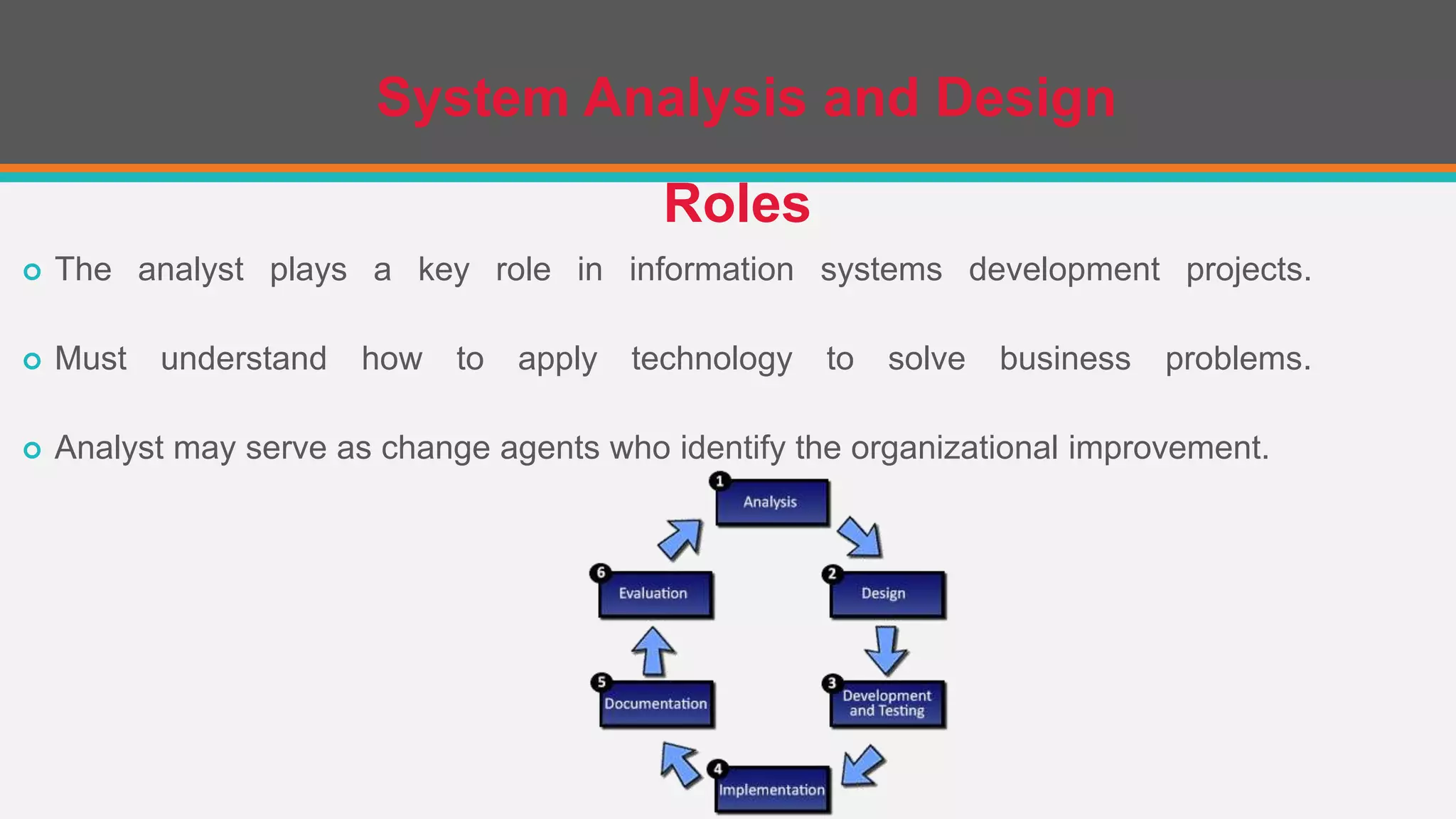
 The analyst plays a key role in information systems development projects.
 Must understand how to apply technology to solve business problems.
 Analyst may serve as change agents who identify the organizational improvement.
System Analysis and Design
Roles
Enterprise Resource Planning
• Many medium-sized and large organization utilize what's called Enterprise Resource Planning
software.
• ERP is a comprehensive system that integrates management information within and outside of
the organization.
• With ERP software, different departments such as finance and accounting, human resources,
manufacturing and sales enter data into one system that acts as a central repository of
information.
• In this way, an organization can allocate limited resources in real time to areas of the business
that need it.
• ERP systems can be quite complex and costly to implement depending on the size of a
company's operations.
• For larger organizations and businesses, web development teams can consist of
hundreds of people (web developers) .
• Smaller organizations may only require a single permanent or contracting developer,
or secondary assignment to related job positions such as a information
systems technician
Website Design

Application of MIS in Service based IT Sectors

  • 2.
    The technology involvingthe development, maintenance, and use of computers and software for the processing and distribution of information Because computer systems are central to information management, computer departments within companies and universities are often called IT departments. Some companies refer to this department as IS (Information Services) or MIS (Management Information Services). Information Technology IT Departments
  • 3.
    IT is Morethan Computers and Networks While IT is often used to describe computers and computer networks, • it actually includes all layers of all systems within an organization -- from the physical hardware to the operating systems, applications, databases, storage, servers and more. • Telecommunication technologies, including Internet and business phones are also part of an organization's IT infrastructure.
  • 4.
    MANAGEMENT INFORMATION SYSTEM ManagementInformation System (MIS) is a system or process that provides information needed to manage organizations effectively. The Major Roles of IS : • Support Business Process • Support Decision Making • Support Competitive Advantage
  • 5.
    are used tobuild INFORMATION TECHNOLOGY Hardware Software Databases Networks Other related components INFORMATION SYSTEMS Payroll System Inventory System Marketing System Customer Service System IS vs. IT
  • 7.
    • Total Rewards planfor changes to employees’ salary, insurance, retirement and other benefits options using an HRIS. • Workforce Planning employee data such as demographic information, job titles and Equal Employment Opportunity Commission identification codes. • Training and Development HRIS to facilitate the annual performance review process, to allow employees to sign up for company-sponsored training classes or to build a talent inventory of what education, experience and training each employee has. • Risk Management By keeping electronic records of items such as employee discipline notices, safety training employees have received, accident logs and workers’ compensation claims. This data is analyzed by the HR department to identify ways to improve workplace conditions, safety training classes and disciplinary processes to ensure compliance with all federal and state labor laws Human Resource Management System Human Resource Planning
  • 8.
    Spreadsheet Modelling • Financialforecasting • Cash Flow • Employee Records • Marketing management Records • Risk Analysis and Management
  • 9.
    • Businesses totransform and expand their global footprint with innovative solutions in supply chain, procurement and analytics. • the client needs, ensure robust processes and improve business agility • domain expertise that unlocks tough business challenges through enterprise data management, big data, in-memory computing, cloud business intelligence and information lifecycle management tools Information Management
  • 10.
    • MIS organizeand process information, this information can be used to make decisions in an IT organization or business. • MIS reports summarize or aggregate information to support decision-making tasks. • MISs provide reports in many different ways. For example, MISs reports can be periodic, summarized, exception, comparative and ad hoc. • Data mining is a task of using sophisticated technology to retrieve and evaluate data in a database to identify useful trends. • Business managers and owners need to use different types of information systems to speed up the decision making process. For Decision Making
  • 11.
    • Cloud-based systemsprovide business insights, information management and data management to bring about business transformation. • cloud-based systems provide business insights, information management and data management to bring about business transformation. • Cloud computing is Internet-based computing, whereby shared servers provide resources, software, and data to computers and other devices on demand, as with the electricity grid. Technology & Integration
  • 12.
    Database Management • Databasemanagement has become more important as the volume of business data has grown. • Rapid data growth creates a wide variety of negative conditions, including poor application performance and compliance risk, to name a few. • Database management comprises a number of proactive techniques to prevent the deleterious effects of data growth. Benefits of Database Management The library example has demonstrated a number of benefits of database management: •Databases make it possible to store and organize large amounts of data. •Data become searchable using keywords and other identifiers. •Databases change constantly and get updated on an ongoing basis. •Various parts of a database are linked to each other. •Different users play different roles in using and maintaining the databases. •Databases can be accessed using different mechanisms.
  • 13.
     The analystplays a key role in information systems development projects.  Must understand how to apply technology to solve business problems.  Analyst may serve as change agents who identify the organizational improvement. System Analysis and Design Roles
  • 14.
    Enterprise Resource Planning •Many medium-sized and large organization utilize what's called Enterprise Resource Planning software. • ERP is a comprehensive system that integrates management information within and outside of the organization. • With ERP software, different departments such as finance and accounting, human resources, manufacturing and sales enter data into one system that acts as a central repository of information. • In this way, an organization can allocate limited resources in real time to areas of the business that need it. • ERP systems can be quite complex and costly to implement depending on the size of a company's operations.
  • 15.
    • For largerorganizations and businesses, web development teams can consist of hundreds of people (web developers) . • Smaller organizations may only require a single permanent or contracting developer, or secondary assignment to related job positions such as a information systems technician Website Design