WELCOME TO MY
PRESENTATION
NAME: MD . MOSTAFIJUR RAHMAN
ID: 191-23-586
DEPT. OF TEXTILE
BATCH: 41(EVENING)
TOPIC
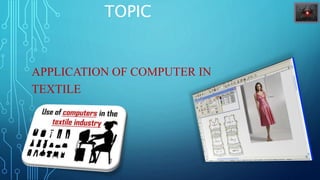
APPLICATION OF COMPUTER IN
TEXTILE
COMPUTER APPLICATION IN DIFFERENT SECTORS OF TEXTILE
TECHNOLOGY
• Research and development of materials and textile process
• Computer aided textile production and process control
• Production planning
• Process control
• Quality control
• Inventory control
• Analysis of engineering data
• Solution of engineering problems
• Textile machine manufacturing
• .Automation of textile machines, equipment's and processes
PURPOSES OF APPLICATION OF
COMPUTER IN TEXTILE (ACT)
• Know the areas of computer application in textile industry and understand how to work with computer systems in
textile processing and new product development
• Learn computer fundamentals and programming languages and necessary tools
• Learn how to apply computer knowledge such as programming in textile processes
• Learn visual programming languages tools to develop user friendly programs and software
• Learn Microsoft office spreadsheet tool such as Excel for consumption, calculations and presentation of results as
graphs, charts etc.
• Learn basic of Database Management System such as ms exal Oracle including MS Access and learn how to
connect databases from applications.
• Use of commercial and open source software for fiber technology, spinning, weaving, knitting, coloration technology
and textile testing
• Use of different mathematical techniques to solve engineering problems and use of mathematical packages like
MATLAB
SCOPE OF COMPUTER BASED
TECHNOLOGY FOR TEXTILE APPLICATION:
GENERALLY THERE ARE THREE TERMS THAT ARE
FREQUENTLY USED:
1. CAD (COMPUTER AIDED DESIGN)
2. CAM (COMPUTER AIDED MANUFACTURING)
3. CIM (COMPUTER INTEGRATED MANUFACTURING)
SOMEMORE IS THERE LIKE,
4.CAT (COMPUTER AIDED TESTING)
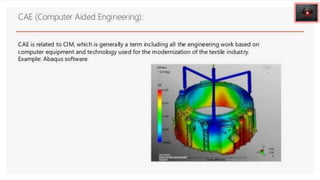
5.CAE (COMPUTER AIDED ENGINEERING
WHAT IS CAD???
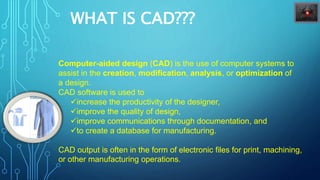
Computer-aided design (CAD) is the use of computer systems to
assist in the creation, modification, analysis, or optimization of
a design.
CAD software is used to
increase the productivity of the designer,
improve the quality of design,
improve communications through documentation, and
to create a database for manufacturing.
CAD output is often in the form of electronic files for print, machining,
or other manufacturing operations.
CAM IN INDUSTRY
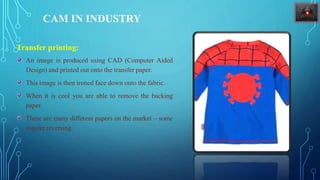
Transfer printing:
An image is produced using CAD (Computer Aided
Design) and printed out onto the transfer paper.
This image is then ironed face down onto the fabric.
When it is cool you are able to remove the backing
paper.
There are many different papers on the market – some
require reversing.
CIM
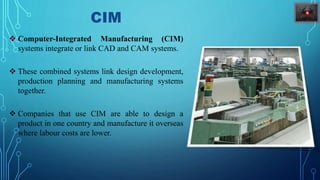
 Computer-Integrated Manufacturing (CIM)
systems integrate or link CAD and CAM systems.
 These combined systems link design development,
production planning and manufacturing systems
together.
 Companies that use CIM are able to design a
product in one country and manufacture it overseas
where labour costs are lower.
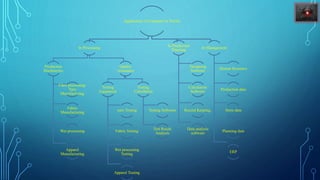
Application of Computer in Textile
In Processing
Production
Machineries
Fibre processing/
Yarn
Manufacturing
Fabric
Manufacturing
Wet processing
Apparel
Manufacturing
Quality
Assurance
Testing
Equipment
yarn Testing
Fabric Testing
Wet processing
Testing
Apparel Testing
Testing
Calculation
Testing Software
Test Result
Analysis
In Production
Planning
Designing
Software
Calculation
Software
Record Keeping.
Data analysis
software
In Management
Human Resource
Production data
Store data
Planning data
ERP
THE END
“THE INTERNET? WE ARE NOT INTERESTED IN IT.”
— BILL GATES, 1993

Application of computer in Textile

  • 1.
    WELCOME TO MY PRESENTATION NAME:MD . MOSTAFIJUR RAHMAN ID: 191-23-586 DEPT. OF TEXTILE BATCH: 41(EVENING)
  • 2.
  • 3.
    COMPUTER APPLICATION INDIFFERENT SECTORS OF TEXTILE TECHNOLOGY • Research and development of materials and textile process • Computer aided textile production and process control • Production planning • Process control • Quality control • Inventory control • Analysis of engineering data • Solution of engineering problems • Textile machine manufacturing • .Automation of textile machines, equipment's and processes
  • 4.
    PURPOSES OF APPLICATIONOF COMPUTER IN TEXTILE (ACT) • Know the areas of computer application in textile industry and understand how to work with computer systems in textile processing and new product development • Learn computer fundamentals and programming languages and necessary tools • Learn how to apply computer knowledge such as programming in textile processes • Learn visual programming languages tools to develop user friendly programs and software • Learn Microsoft office spreadsheet tool such as Excel for consumption, calculations and presentation of results as graphs, charts etc. • Learn basic of Database Management System such as ms exal Oracle including MS Access and learn how to connect databases from applications. • Use of commercial and open source software for fiber technology, spinning, weaving, knitting, coloration technology and textile testing • Use of different mathematical techniques to solve engineering problems and use of mathematical packages like MATLAB
  • 5.
    SCOPE OF COMPUTERBASED TECHNOLOGY FOR TEXTILE APPLICATION: GENERALLY THERE ARE THREE TERMS THAT ARE FREQUENTLY USED: 1. CAD (COMPUTER AIDED DESIGN) 2. CAM (COMPUTER AIDED MANUFACTURING) 3. CIM (COMPUTER INTEGRATED MANUFACTURING) SOMEMORE IS THERE LIKE, 4.CAT (COMPUTER AIDED TESTING) 5.CAE (COMPUTER AIDED ENGINEERING
  • 6.
    WHAT IS CAD??? Computer-aideddesign (CAD) is the use of computer systems to assist in the creation, modification, analysis, or optimization of a design. CAD software is used to increase the productivity of the designer, improve the quality of design, improve communications through documentation, and to create a database for manufacturing. CAD output is often in the form of electronic files for print, machining, or other manufacturing operations.
  • 7.
    CAM IN INDUSTRY Transferprinting: An image is produced using CAD (Computer Aided Design) and printed out onto the transfer paper. This image is then ironed face down onto the fabric. When it is cool you are able to remove the backing paper. There are many different papers on the market – some require reversing.
  • 8.
    CIM  Computer-Integrated Manufacturing(CIM) systems integrate or link CAD and CAM systems.  These combined systems link design development, production planning and manufacturing systems together.  Companies that use CIM are able to design a product in one country and manufacture it overseas where labour costs are lower.
  • 11.
    Application of Computerin Textile In Processing Production Machineries Fibre processing/ Yarn Manufacturing Fabric Manufacturing Wet processing Apparel Manufacturing Quality Assurance Testing Equipment yarn Testing Fabric Testing Wet processing Testing Apparel Testing Testing Calculation Testing Software Test Result Analysis In Production Planning Designing Software Calculation Software Record Keeping. Data analysis software In Management Human Resource Production data Store data Planning data ERP
  • 12.
    THE END “THE INTERNET?WE ARE NOT INTERESTED IN IT.” — BILL GATES, 1993