Ahmad Fadlallah, Hassan Sbeity, Mohammad Malli & Patrick Lteif
International Journal of Computer Networks (IJCN), Volume (8) : Issue (1) : 2016 1
Application of Attack Graphs in Intrusion Detection Systems:
An Implementation
Ahmad Fadlallah afadlallah@aou.edu.lb
Faculty of Computer Studies
Arab Open University
Beirut, Lebanon
Hassan Sbeity hsbeity@aou.edu.lb
Faculty of Computer Studies
Arab Open University
Beirut, Lebanon
Mohammad Malli mmalli@aou.edu.lb
Faculty of Computer Studies
Arab Open University
Beirut, Lebanon
Patrick Lteif plteif@sodetel.net.lb
Sodetel,
Beirut, Lebanon
Abstract
Internet attacks are continuously increasing in the last years, in terms of scale and complexity,
challenging the existing defense solutions with new complications and making them almost
ineffective against multi-stage attacks, in particular the intrusion detection systems which fail to
identify such complex attacks. Attack graph is a modeling technique used to visualize the different
steps an attacker might select to achieve his end game, based on existing vulnerabilities and
weaknesses in the system. This paper studies the application of attack graphs in intrusion
detection and prevention systems (IDS/IPS) in order to better identify complex attacks based on
predefined models, configurations, and alerts. As a “proof of concept”, a tool is developed which
interfaces with the well-known SNORT [1] intrusion detection system and matches the alerts with
an attack graph generated using the NESSUS [2] vulnerability scanner (maintained up-to-date
using the National Vulnerability Database (NVD) [3]) and the MULVAL [4] attack graph generation
library. The tool allows to keep track with the attacker activities along the different stages of the
attack graph.
Keywords: Attack Graphs, IDS, Vulnerability Analysis, Network Security.
1. INTRODUCTION
Internet attacks, are becoming more frequent, larger in scale and causing more damages. More
importantly, more complex attacks have emerged and have been ever-increasingly growing and
capturing the interest of the attackers, threatening the privacy and the availability of the Internet
services. Recent studies and analysis of internet security [5] [6] concluded that the internet
attacks are becoming bigger, faster and more complex. A study [5] conducted by Arbor Networks,
highlights the progress and behavior of the attacks observed during 2015. The study concludes
that the evolution of internet attacks is as follows:
• Bigger Attacks: Attacks are consuming more bandwidth, mostly aiming to saturate network
resources resulting in a denial of service (DoS) of the targeted host. These type of attacks
can be mitigated either by upgrading the capacity of the resource and the paths/bottlenecks
Ahmad Fadlallah, Hassan Sbeity, Mohammad Malli & Patrick Lteif
International Journal of Computer Networks (IJCN), Volume (8) : Issue (1) : 2016 2
that lead to that specific resource, or by investing in scrubbing center solution to cleanse any
un- wanted traffic.
• Faster Attacks: This aspect mainly characterizes attacks that specifically target systems
resources by flooding huge number of packets, which will saturate the systems available
resources and thus impact the availability of the system and the services offered. These
types of attacks can also be mitigated by implementing scrubbing centers and cleansing
unwanted traffic, or by upgrading the hardware capacity. Hardware capacity is dictated by
the technology advancement, but recently, most data-centers use clustering in order to
ensure redundancy or higher performance on a single system.
• More Complex: Attacks are becoming more complex; they consist of several chronological
intrusions, aiming to gather as much information and vulnerability of the target, in order to
achieve a much complicated series of intrusion in the compromised system. These types of
attacks rely on the vulnerabilities of the victim, in order to gain privileges sufficient enough for
the attacker’s end game.
Intrusion Detection and Prevention systems (IDS/IPS) play a fundamental role in the defense
schemes. IDS is a software (or hardware implemented) usually deployed in-line with the
network, able to monitor network flows and detect intrusions based on a set of predefined rules.
These rules must be always updated from the supplier’s database, but system administrators
have the ability to customize the rules in order to adapt to their networks architecture and
requirements. The IDS rules are generally system/service oriented but sometimes the rules are
packet-oriented with specific instructions on the packet size, flags, payload, etc. IPS is usually a
separate process that relies on the IDS’s gathered data in order to prevent intrusion by enforcing
certain predefined policies. The IDS/IPS combination can assume firewalls role, but they are
mostly known for their deep packet inspection capabilities, which stretch their visibility to the
extent of analyzing the content of the payload of the packets.
There are several IDS solutions in the market nowadays, some of them are open-source and
maintained by communities in order to keep the solution up-to-date. Other solutions are
commercial with required periodical support fees. Although intrusion detection systems offer
many advantages, there are still some limitations to be considered. One of the major limitations of
IDS, is that there is no clear indication of how alerts can be combined; there is no direct link
between alerts, which would detect and represent to the administrator the chronological
succession of the attacks in order to get a clearer briefing on the intrusions on the network.
In this paper, we address this limitation by exploring the ways to correlate between attack
intrusions and alerts in order to help administrators to really understand the end game of the
attacker or the attacker’s next move.
Attack graphs is not a new concept, but has been a hype of late because it offers a new dynamic
way to analyze vulnerabilities of the systems monitored. Attack graph is a graphical
representation of states and rules, which illustrates all the possible intrusions that can be
exploited by an attacker, and the possible designated goals for every vulnerability compromised.
There are different graphical representations adopted among researchers with no unique adopted
syntax. In general, attack graph includes shapes which are usually called nodes, and arcs to link
the different nodes. Both nodes and arcs represent actions the attacker takes and changes in the
network state caused by these actions. The goal of these actions is normally for the attacker to
gain restricted privileges on the compromised system.
The simplicity of the graphical interface and the visualization of all possible intrusions in a single
graph have sparked an interest to inquire about ways to incorporate attack graph in intrusion
detection systems. Our main question was: While intrusion detection systems are insufficient to
detect complex attacks, and attack graphs offer a static visualization of vulnerabilities, can the
combination of the two contribute to prevent such attacks?
Ahmad Fadlallah, Hassan Sbeity, Mohammad Malli & Patrick Lteif
International Journal of Computer Networks (IJCN), Volume (8) : Issue (1) : 2016 3
Intrusion detection systems offers an overwhelming and complex experience whenever they are
monitoring a number of hosts that exceeds the single digit. The administrators are subject to large
amount of alerts that cannot be easily combined to figure out the attackers next move. If all the
vulnerabilities are pre-mapped, one can try to predict the attackers moves based on the
comprised states.
What this paper is trying to achieve is to benefit from the real-time aspect of the IDS and the
simplified threat visualization of attack graphs, to help countering complex attacks in a much
more efficient way. There are a lot of IDS solutions, and a couple of attack graph generators, but
surprisingly there are no published integration and solution between the two tools, yet some
researchers have written about the subject. This research contribution is to prove that the concept
is innovative, interesting enough and helpful as a dynamic simplified threat-monitoring tool for
system administrators administering large amount of nodes.
The rest of this paper is organized as follows: section 2 introduces the attack graphs. Section 3
describes how we propose to integrate the attack graph with SNORT intrusion detection system.
Section 4 presents and discusses the implementation results. Finally, section 5 concludes the
paper and presents the future work.
2. ATTACK GRAPHS
An attack graph is a “succinct representation of all paths through a system that end in a state
where an intruder has successfully achieved his goal” [7]. These graphs have, in general, starting
state(s) representing an attacker at a given network location, and goal states. They are used to
determine if the goal states can be reached by attackers trying to penetrate/attack the
network/system to be protected.
2.1. Attack Graph Presentation
The attack graphs (as any other graph) consist of nodes and arcs. However, no single unified
consented graphical representation is used by all the researchers; the information held in the
nodes and arcs vary de- pending on the type of the attack graph. Table 1 illustrates the main
attack graph types identified in the literature [8] [9] [10].
It is worth mentioning that each model has its own advantages and disadvantages. Some of
these approaches were developed to generate scalable attack graphs, while other approaches
use the attack graph for other risk analysis such as finding the number of paths and the shortest
paths. [11] [12] [13] showed that attack graphs have excellent capabilities to carry out risk
assessment especially finding out the probabilities of the attacker being successful. At the
moment, there is no standard model to generate attack graphs and this will remain a challenge
for future works to come up with new representation models for attack graphs that solve the
shortcomings of the existing solutions.
2.2. Attack Graph Inputs
This Attack graphs require certain inputs in order to generate their graphical representation.
There are four different types of essential inputs [14] [15]:
• Advisories: the list of vulnerabilities that have been reported on the machines. This list
should contain extensive information such as the services and programs, their versions,
the plugins installed, and all the technical information such as the network services that
the program is using, the ports it is listening to, etc.
• Configuration: of the machine(s), both from a networking point of view (ACLs, ports
opened, etc.) and from a system point of view (services, privileges, etc.). In addition, the
configuration should include all technical information of the operating system, the
hardware capabilities and specifications.
• System model: which is essential for the attack graph in order to be able to predict
relations between a set of vulnerabilities.
Ahmad Fadlallah, Hassan Sbeity, Mohammad Malli & Patrick Lteif
International Journal of Computer Networks (IJCN), Volume (8) : Issue (1) : 2016 4
• Security Property: The data collected from the incoming alerts about the system
intrusion. This is crucial in order to highlight the compromised states on the graph.
3. INTEGRATING ATTACK GRAPH INTO INTRUSION DETECTION
SYSTEMS
Intrusion detection systems are programs or de- vice/appliance that inspect traffic flowing through
the network, searching for malicious behavior or pol- icy violation on the network or hosts. Their
main purpose is to record events and log information about the events and generate reports and
alerts based on the predefined rules and configurations in order to warn the system and network
administrators of any malicious activity. The inspection is tradition- ally achieved by examining
network communications, identifying heuristics and patterns (often known as signatures) of
common computer attacks, and taking action to alert operators. IDS has been proposed for years
as an efficient security measure and is nowadays widely deployed for securing critical IT
infrastructures.
As already mentioned, one of the main limitations of the Intrusion Detection Systems is that alerts
cannot be linked together and presented to the system administrator as a chronological
succession of the attack stages. Attack graphs can fill this gap; correctly linking the IDS alerts
with the attack graph arcs and nodes will provide the system administrator with an up-to-date
information about the evolution of an attack.
Attack Graph Type Node Information Edge Information
Graph-Based Possible attack state Exploit
State Enumeration Entire state of a network State transitions
Coordinated System state Action
Dependency Condition state of system settings A causal relation between those
conditions
Full and Predictive Host Vulnerabilities
Host-Compromised Network state Application of an exploit
Topological Vulnerability Condition Exploit
Host-Based Network Host Exploit
Multiple-Prerequisites State, prerequisite, or vulnerability The transition between types of nodes
Logical Logical statement Causality relations between network
configurations and the attacker’s
potential privileges
Goal-Oriented Vulnerability Action
TABLE 1: Attack Graph Types and Representations.
3.1. General Architecture
Figure 1 illustrates the general architecture of the proposed solution. The intrusion detection
system is responsible of detecting intrusions and raising alerts that will be stored in a database.
The Vulnerability scanner is responsible of gathering all detected vulnerabilities of the targeted
host(s). The attack graph generator is responsible of drawing the attack graph based on the input
from the vulnerability scanner and the intrusion detection system. The tool developed
synchronizes the inter-operating programs, analyzes the output from the different stakeholders,
treats the information received, and forwards the appropriate information to the graph generator
in order to produce the final attack graph showing the evolution of the attack based on the raised
alerts (so far).
We have implemented the proposed architecture using well-known security tools: SNORT
intrusion detection system, NESSUS vulnerability scanner and MULVAL attack graph generator.
Further description of these tools will be provided in the following sections.
Ahmad Fadlallah, Hassan Sbeity, Mohammad Malli & Patrick Lteif
International Journal of Computer Networks (IJCN), Volume (8) : Issue (1) : 2016 5
FIGURE 1: General Architecture.
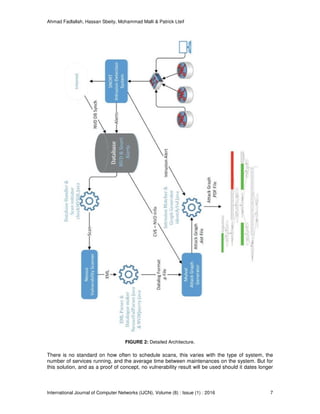
Figure 2 illustrates the architecture with the different interactions between the various modules
which can be summarized as follows:
1. An intrusion is detected by the IDS, and the corresponding alert is stored in a Database.
2. The script checkMYSQL.java
1
is responsible for checking for new intrusions in the
databases, checking for signature in the alert, and initiating the Module1.sh shell script to
take over.
3. The Module1.sh script checks if there has been any vulnerability scan performed prior to
the alert detection, and should the vulnerability result be outdated, Module1.sh will initiate
a NESSUS scan.
4. Once the vulnerability result is ready and valid, Module1.sh checks if the result has
previously been transformed to Datalog
2
(will be explained in section 3.5) input and if not,
Module1.sh initiates NessusVulParser.java and NVDQuerry.java to finally get a file called
nessus.P that has Datalog clauses describing all the vulnerabilities and network
configuration of the targeted host.
5. Once the input of the attack graph generator has been prepared nessus.P, Module1.sh
launches the attack graph generator MULVAL with the nessus.P file as argument.
6. MULVAL analyzes the input and constructs the attack graph solely on the vulnerabilities
detected by Nessus, and stores the information in a file called AttackGraph.dot.
7. Module1.sh forwards the AttackGraph.dot and the intrusion detected by SNORT to a
script called identifyVul.java in order to highlight the detected intrusions on the attack
graph.
8. In the last stage, the Module1.sh forwards the amended AttackGraph.dot to Module2.sh
in or- der to draw the attack graph in EPS and PDF format.
The rest of this section explains the choices of the security tools and how the information is
handled so they can interoperate seamlessly.
1
we have kept the .java extension to indicate that the code is written in java, however the executable is
responsible of performing the action.
2
Datalog is subset of the well-known Prolog’s syntax. It is a declarative logic programming language, often
used as a query language for deductive databases, but that founds several applications in data integration,
information extraction, networking, program analysis, security, and cloud computing [16].
Ahmad Fadlallah, Hassan Sbeity, Mohammad Malli & Patrick Lteif
International Journal of Computer Networks (IJCN), Volume (8) : Issue (1) : 2016 6
3.2. Intrusion Detection System - SNORT
We have adopted SNORT [1], the well-known and well documented open source IDS. Following
Snorts deployment and configuration, and very quickly, the disadvantage of the IDS that
motivated this research in the first place was clear. A numerous number of alerts was observed
without having the ability to really analyze and check for any high-risk intrusions, and if those
alerts can be complementing each other in order to identify a higher purpose, and a more
complex attack. Numerous alerts lead to extensive human intervention. Even when using a
Graphical User Interface for SNORT such as Sguil [17], the number of alerts is too much to
handle with no clear way on how to correlate between alerts. Taking into consideration that
networks are in constant state of growing in terms of number of hosts and traffic flow, this trend of
ever increasing number of alerts does not seem to be the adequate answer and a solution must
be proposed to better benefit from the IDSs functionality while still having reasonably limited
reports to examine and monitor.
In order to benefit from the reporting of the IDS in this research, and to be able to analyze the
alerts, there are two options: One way was to parse the text files of the logged data, which is a
complex process especially that the files are always being amended and updated. Another much
more effective way was to export all the alerts data into a MySQL database. This have been
achieved easily by downloading a special plugin for SNORT that does the required job [18].
Once the alerts were being stored in the database, checkMYSQL.java has the responsibility to
check for new entries in the tables. Should an intrusion be recorded, it is responsible to initiate
the appropriate actions?
3.3. Vulnerability Scanning - NESSUS
An essential part of this solution is the vulnerability scanning. The results of this scan are a
necessary input in order to identify all possible intrusions on the systems which in turn will be
used to construct the attack graph itself. The scan’ results in general contain a lot of information
of the scanned host(s) including network configuration, running service, in- stalled programs and
plugins. The scan software has a predefined set of tests customized for the system being
scanned based on the operating system, and the programs installed and their versions.
In a second part, the vulnerabilities should be checked in order to identify any possible correlation
that might give the attacker incentives, and appropriate privileges in order to perform complex
attacks. That part will be further explained in section 3.4.
Recurrent scan is required because system administrators are always faced with new
vulnerabilities. These vulnerabilities come from newly installed pro- grams, from configuration
changes, or from recent discovery of exploits in certain program or plugin. Administrators are
always trying to update to the latest patches, and close any security holes available, but
sometimes fixes are not available, other times fixes re- quires a certain intervention with outage
on the service provided, which can take some time to schedule appropriately. Therefore, regular
scan should be scheduled every once in a while.
Ahmad Fadlallah, Hassan Sbeity, Mohammad Malli & Patrick Lteif
International Journal of Computer Networks (IJCN), Volume (8) : Issue (1) : 2016 7
FIGURE 2: Detailed Architecture.
There is no standard on how often to schedule scans, this varies with the type of system, the
number of services running, and the average time between maintenances on the system. But for
this solution, and as a proof of concept, no vulnerability result will be used should it dates longer
Ahmad Fadlallah, Hassan Sbeity, Mohammad Malli & Patrick Lteif
International Journal of Computer Networks (IJCN), Volume (8) : Issue (1) : 2016 8
than one day. So whenever an attack graph is being formed, the vulnerabilities listed represent a
recent data up to a 24 hours old.
A small script is responsible to check the date of the file result.nessus and compare it to the last
current date. Should there be any difference, a brand new scan will be initiated.
There are a lot of vulnerability scanner solutions in the market. Among these solutions, the focus
was on searching for a program that uses OVAL (Open Vulnerability and Assessment Language)
[19]. The choice of using OVAL will be further explained in the next subsection. We have selected
NESSUS [2], the well-known vulnerability scanner. NESSUS offers many advantages, aside from
having a huge number of vulnerability checks, one of the advantages was having a community
support, with wide diverse reviews and forum threads.
3.4. Oval & NVD Databases
The OVAL (Open Vulnerability and Assessment Language) is a community effort and standard
that pro- motes the ways on how to assess and report machine configuration and vulnerabilities.
It endorses open and publicly available security content and offers them openly through
repositories for programs who utilize the language. These repositories are a collection of the
three main steps of the assessment process: representing configuration information of systems
for testing; analyzing the system for the presence of the specified machine state (vulnerability,
configuration, patch state, etc.), and reporting the results of this assessment.
The OVAL language is supported by MITRE; a non- profit American organization, which in turn is
responsible in support high level agency across the United States such as the Department of
Defense (DoD) and others. Therefore, the OVAL database is constantly updated with the latest
discoveries and security content measurements.
The security industry is an industry where one needs to be always updated with the latest
findings. There- fore discovering and adopting the OVAL language as the basis for the
vulnerability scanner was essential to the solution. This has led to choosing the NESSUS
scanner. It is constantly updated with the latest findings, thus making this solution scalable and
adaptable to the latest security findings. Another advantage of OVAL is highlighting and marking
known vulnerabilities with CVE (Common Vulnerabilities and Exposure) identification [20].
The National Vulnerability Database [3] is one of the most important and interesting approach
used throughout the solution. It is a repository of standards based vulnerability management data
represented using the Security Content Automation Protocol (SCAP) [21]. It includes a variety of
security content resources, most notably CVEs and impact metrics. In few words, the purpose
and the power of using the NVD database was to be able to get clearer description of the CVE-
IDs and their impact in order to be able to correlate different vulnerabilities and finally construct
the attack graph.
3.5. MULVAL & Datalog
An important part of this research relies on the attack graph generation based on the prepared
input from previous tools and scripts. Although there is a considerable amount of researches and
papers concerning attack graphs, attack graph generation tools are extremely limited on the
Internet [22] [23], where we have seen only two open-source projects, poorly documented with
very limited community support. One of these programs is called MULVAL [4] that stands for
Multi-host, Multi-stage Vulnerability Analysis Language. This program relies on several diverse
technologies and programming languages (Perl, Java, XSB, Shell, Python, etc.).
MULVAL provides a framework for modeling the collaboration of software bugs with system and
network configurations. The information in the National Vulnerability Database, the configuration
info of each host on the network, and other relevant information are all encoded as Datalog facts
[4].
Ahmad Fadlallah, Hassan Sbeity, Mohammad Malli & Patrick Lteif
International Journal of Computer Networks (IJCN), Volume (8) : Issue (1) : 2016 9
The resulting output of MULVAL is a “.dot” file (named Attackgraph.dot in our tool), which is set of
rules describing the drawing of the graph. Based on the Attackgraph.dot file, MULVAL generates
the image file (.eps), which will be later-on transformed to a PDF file using the GraphViz tool [24]
required by MULVAL. The proposed solution takes advantage of this architecture in order to
amend the required changes in the (.dot) file, such as matching the intrusions detected by
SNORT, and then generating the final graph. Any new intrusion will be amended on the attack
graph, so that the system administrator can observe the succession of intrusion on the graph
directly. In a live environment, the graph should be published on a local site, and refreshed every
couple of seconds to make sure the administrator is seeing the latest alerts.
4. RESULTS AND DISCUSSION
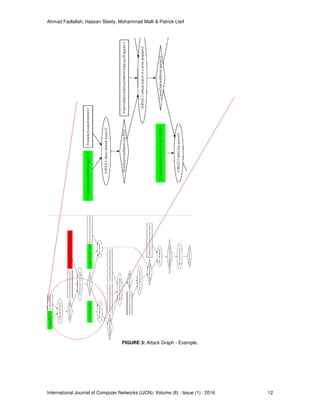
The simulation was run on a machine with the specifications listed in table 2. Figure 3 represents
some attack graph captures collected from the simulations that were performed. We have used
colors to highlight the running services (in green) and the existing vulnerabilities (in red). The
figure summarizes how much attack graph visualization of the intrusion makes the information
more accessible to system administrator, providing the ability to really understand the impact of
the intrusions, the succession of vulnerabilities present in the compromised system, and the
possible attack goals that might be the attackers end game.
Processor 2.4 GHz
RAM 2 GB
OS Ubuntu 10.04
SNORT version 2.8.5.2
NESSUS version 5.2.1
MULVAL version 1.1
TABLE 2: Simulation Machine Specifications.
The key performance elements that need to be addressed for the proposed architecture are
reliability and scalability.The first element (reliability) depends on the key components of the
architecture: SNORT, NESSUS, and MULVAL which were addressed in the corresponding
references.
The scalability of the solution as a whole depends mainly on two factors: the vulnerability
scanning and the attack graph-processing engine.
The vulnerability scanning itself depends on many factors (connection speed, scanner systems
performance and capabilities, and finally the targeted host(s) and the number of programs/plugins
deployed), but the average scanning time consumed during the several scan conducted on hosts,
having average number of programs installed, and fairly updated, took 236 seconds[4]
3
.
Therefore, the system administrators should decide how to approach this issue, either by doing
manual scan, or by scheduling scans during non-peak time hours or days. One thing is certain,
the scans must be regularly done, because of the frequency of discoveries in bugs and exploits,
and because the administrators need to keep the list of vulnerabilities recent in order to have an
up-to-date attack graph.
The solutions scalability also depends on the MULVAL reasoning Engine that requires
heterogeneous languages to interact in order to deliver the required result. Based on the
MULVAL benchmarks [4], the processing engines performance can be summarized in Figure 3
4
:
Finally, it is important to note that due to the use of both OVAL, and NVD databases, this solution
will always be valid as long as these databases are being updated.
3
These values were obtained using a low-performance server compared to nowadays servers, thus a server
with up-to-date specifications should outperform these numbers.
4
Same as previous footnote.
Ahmad Fadlallah, Hassan Sbeity, Mohammad Malli & Patrick Lteif
International Journal of Computer Networks (IJCN), Volume (8) : Issue (1) : 2016 10
5. CONCLUSION & FUTURE WORK
The network security has been the focus of late in the technology industry; companies are
investing billions in order to secure their systems from the threat of the ever-growing and
increasingly complex attacks. Al- though IDS/IPS solutions have been an efficient protection in
the past, new complex attacks require more correlation between alerts in order to understand the
attacks purpose before intervening and stopping it. Attack graph has been proposed in this study
as a method that depends on linking vulnerabilities and which combined with IDS, can achieve a
good under- standing of the impact that an intrusion may cause on the system, and the series of
weaknesses that might be exploited later on.
The tool developed during this research is a proof of concept that attack graphs and IDSs can join
forces in order to detect complex attacks. Although the tool depends on third party programs in
order to produce attack graphs, the concept and the architecture can be applied to include other
IDSs, Vulnerability scanners that administrators might be working on.
The “proof-of-concept” nature of the tool explains some of the choices taken that could be
enhanced in our future work.
Implemented modules are “external” to the security tools and could have been developed as
plug-ins of these tools. In addition, the components of processing engine were separated and
written in different programming languages in order to easily interface the different security tools.
Further development to the tool can widen the range of attacks detectable not only based on the
vulnerabilities identified and detected on NVD, but also by expanding and using other vulnerability
databases. In addition, the tool can also be developed to better identify all kinds of network
attacks and not only the ones referenced in the databases used.
Another enhancement can be made, by specifying on the attack graph itself, the probability of the
next event to happen, by weighting the difficulties of the vulnerabilities. This advancement can be
even further improved by not only using attack graphs to alert administrators specifying the
probability of the next event to happen, but also by automatically intervening and securing the
system from being compromised. In order to make this happen, a list of actions is required to
stabilize every vulnerability identified.
6. REFERENCES
[1] Snort-Project. “Snort network intrusion detection system”, Internet: http://www.snort.org.
2016. [February 16, 2016].
[2] Tenable Network Security Inc. “Nessus vulnerability scanner”. Internet:
http://www.tenable.com/products/nessus. 2016. [February 16, 2016].
[3] National Institute of Standards and Technologies (NIST). “National Vulnerability Database”,
Internet: http://nvd.nist.gov. 2016. [February 16, 2016].
[4] X. Ou, S. Govindavajhala, A.W. Appel. “MULVAL: A logic-based network security analyzer”.
In Proceedings of the 14th USENIX Security Symposium (SSYM’05). 2005.
[5] ArborNetworks. “Worldwide infrastructure security report - volume XI”. Internet:
https://www.arbornetworks.com/images/documents/WISR2016_EN_Web.pdf. January 26,
2016. [February 16, 2016].
[6] Cisco Inc. “Cisco 2016 annual security report”. Internet: www.cisco.com/go/asr2016. January
2016. [February 16, 2016].
[7] S. Jha, O. Sheyner and J. Wing. “Two formal analyses of attack graphs”. In Proceedings of
the 15th IEEE Computer Security Foundations Workshop, 2002, pp 49–63.
Ahmad Fadlallah, Hassan Sbeity, Mohammad Malli & Patrick Lteif
International Journal of Computer Networks (IJCN), Volume (8) : Issue (1) : 2016 11
[8] R. Lippmann, K. Ingols. “An annotated review of past papers on attack graphs”. MIT Lincoln
laboratory Project Report, 31 March 2005.
[9] O. Sheyner, J. Haines, S. Jha, R. Lippmann, J. Wing. “Automated generation and analysis of
attack graphs”. In proceedings of the IEEE Symposium on Security and Privacy, 2002. pp
273–284.
[10]S. Noel, M. Jacobs, P. Kalapa, S. Jajodia. “Multiple coordinated views for network attack
graphs”. In Proceedings of the IEEE Workshops on Visualization for Computer Security,2005.
pp12-14.
[11]L. Huiying. “Research on network risk assessment based on attack probability”. Second
International Workshop on Computer Science and Engineering (WCSE ‘09). 2009. vol. 2, pp.
376–381.
[12]K. Ingols, R. Lippmann, K. Piwowarski. “Practical attack graph generation for network
defense”. 22nd Annual Computer Security Applications Conference (ACSAC ’06), 2006. pp
121-130.
[13]J. Lee, H. Lee, In HP. “Scalable attack graph for risk assessment”. In Proceedings of the 23rd
International Conference on Information Networking (ICOIN’09). 2009. pp 78–82.
[14]X. Ou, W.F. Boyer, M.A. McQueen. “A scalable approach to attack graph generation”. In
Proceedings of the 13th ACM Conference on Computer and Communications Security
(CCS). pp 336–345.
[15]C. Phillips, L.P. Swiler. “A graph-based system for network-vulnerability analysis”. In
Proceedings of the ACM Workshop on New Security Paradigms (NSPW ’98). 1998. pp71–79.
[16]S.S. Huang, T.J. Green, B.T. Loo. “Datalog and emerging applications: An interactive
tutorial”. In Proceedings of the ACM International Conference on Management of Data
(SIGMOD’11). 2011. pp1213–1216.
[17]L. Surhone, M. Timpledon, S. Marseken. “Sguil”. VDM Publishing, 2010.
[18]A. Baker. “Barnyard: Output spool reader for snort”, Internet:
http://barnyard.sourceforge.net. 2016. [February 16, 2016].
[19]MITRE Corporation. “Open vulnerability and assessment language (OVAL)” Internet:
http://oval.mitre.org/. 2016. [February 16, 2016].
[20]MITRE Corporation. “Common vulnerabilities and exposures (CVE): The standard for
information security vulnerability names”. Internet: http://cve.mitre.org. 2016. [February 16,
2016].
[21]S. Radack, R. Kuhn. “Managing security: The security content automation protocol”. in IT
Professional, vol.13, no.1, pp.9-11, Jan.-Feb. 2011.
[22]O. Sheyner and J.M. Wing. “Tools for generating and analyzing attack graphs”. In
Proceedings of Workshop on Formal Methods for Components and Objects, 2004,344-371.
[23]A.Singhal and X.Ou. “Security Risk Analysis of Enterprise Networks Using Probabilistic
Attack Graphs”. National Institute of Science and Technology Interagency Report 7788.
August 2011.
[24]J. Ellson, E. Gansner, L. Koutsofios, S.C. North, G. Woodhull. “GraphViz-Open source graph
drawing tools”. Graph Drawing, Lecture Notes in Computer Science, vol. 2265, Springer
Berlin Heidelberg, 2002; pp 483–484.
Ahmad Fadlallah, Hassan Sbeity, Mohammad Malli & Patrick Lteif
International Journal of Computer Networks (IJCN), Volume (8) : Issue (1) : 2016 12
FIGURE 3: Attack Graph - Example.

Application of Attack Graphs in Intrusion Detection Systems: An Implementation

  • 1.
    Ahmad Fadlallah, HassanSbeity, Mohammad Malli & Patrick Lteif International Journal of Computer Networks (IJCN), Volume (8) : Issue (1) : 2016 1 Application of Attack Graphs in Intrusion Detection Systems: An Implementation Ahmad Fadlallah afadlallah@aou.edu.lb Faculty of Computer Studies Arab Open University Beirut, Lebanon Hassan Sbeity hsbeity@aou.edu.lb Faculty of Computer Studies Arab Open University Beirut, Lebanon Mohammad Malli mmalli@aou.edu.lb Faculty of Computer Studies Arab Open University Beirut, Lebanon Patrick Lteif plteif@sodetel.net.lb Sodetel, Beirut, Lebanon Abstract Internet attacks are continuously increasing in the last years, in terms of scale and complexity, challenging the existing defense solutions with new complications and making them almost ineffective against multi-stage attacks, in particular the intrusion detection systems which fail to identify such complex attacks. Attack graph is a modeling technique used to visualize the different steps an attacker might select to achieve his end game, based on existing vulnerabilities and weaknesses in the system. This paper studies the application of attack graphs in intrusion detection and prevention systems (IDS/IPS) in order to better identify complex attacks based on predefined models, configurations, and alerts. As a “proof of concept”, a tool is developed which interfaces with the well-known SNORT [1] intrusion detection system and matches the alerts with an attack graph generated using the NESSUS [2] vulnerability scanner (maintained up-to-date using the National Vulnerability Database (NVD) [3]) and the MULVAL [4] attack graph generation library. The tool allows to keep track with the attacker activities along the different stages of the attack graph. Keywords: Attack Graphs, IDS, Vulnerability Analysis, Network Security. 1. INTRODUCTION Internet attacks, are becoming more frequent, larger in scale and causing more damages. More importantly, more complex attacks have emerged and have been ever-increasingly growing and capturing the interest of the attackers, threatening the privacy and the availability of the Internet services. Recent studies and analysis of internet security [5] [6] concluded that the internet attacks are becoming bigger, faster and more complex. A study [5] conducted by Arbor Networks, highlights the progress and behavior of the attacks observed during 2015. The study concludes that the evolution of internet attacks is as follows: • Bigger Attacks: Attacks are consuming more bandwidth, mostly aiming to saturate network resources resulting in a denial of service (DoS) of the targeted host. These type of attacks can be mitigated either by upgrading the capacity of the resource and the paths/bottlenecks
  • 2.
    Ahmad Fadlallah, HassanSbeity, Mohammad Malli & Patrick Lteif International Journal of Computer Networks (IJCN), Volume (8) : Issue (1) : 2016 2 that lead to that specific resource, or by investing in scrubbing center solution to cleanse any un- wanted traffic. • Faster Attacks: This aspect mainly characterizes attacks that specifically target systems resources by flooding huge number of packets, which will saturate the systems available resources and thus impact the availability of the system and the services offered. These types of attacks can also be mitigated by implementing scrubbing centers and cleansing unwanted traffic, or by upgrading the hardware capacity. Hardware capacity is dictated by the technology advancement, but recently, most data-centers use clustering in order to ensure redundancy or higher performance on a single system. • More Complex: Attacks are becoming more complex; they consist of several chronological intrusions, aiming to gather as much information and vulnerability of the target, in order to achieve a much complicated series of intrusion in the compromised system. These types of attacks rely on the vulnerabilities of the victim, in order to gain privileges sufficient enough for the attacker’s end game. Intrusion Detection and Prevention systems (IDS/IPS) play a fundamental role in the defense schemes. IDS is a software (or hardware implemented) usually deployed in-line with the network, able to monitor network flows and detect intrusions based on a set of predefined rules. These rules must be always updated from the supplier’s database, but system administrators have the ability to customize the rules in order to adapt to their networks architecture and requirements. The IDS rules are generally system/service oriented but sometimes the rules are packet-oriented with specific instructions on the packet size, flags, payload, etc. IPS is usually a separate process that relies on the IDS’s gathered data in order to prevent intrusion by enforcing certain predefined policies. The IDS/IPS combination can assume firewalls role, but they are mostly known for their deep packet inspection capabilities, which stretch their visibility to the extent of analyzing the content of the payload of the packets. There are several IDS solutions in the market nowadays, some of them are open-source and maintained by communities in order to keep the solution up-to-date. Other solutions are commercial with required periodical support fees. Although intrusion detection systems offer many advantages, there are still some limitations to be considered. One of the major limitations of IDS, is that there is no clear indication of how alerts can be combined; there is no direct link between alerts, which would detect and represent to the administrator the chronological succession of the attacks in order to get a clearer briefing on the intrusions on the network. In this paper, we address this limitation by exploring the ways to correlate between attack intrusions and alerts in order to help administrators to really understand the end game of the attacker or the attacker’s next move. Attack graphs is not a new concept, but has been a hype of late because it offers a new dynamic way to analyze vulnerabilities of the systems monitored. Attack graph is a graphical representation of states and rules, which illustrates all the possible intrusions that can be exploited by an attacker, and the possible designated goals for every vulnerability compromised. There are different graphical representations adopted among researchers with no unique adopted syntax. In general, attack graph includes shapes which are usually called nodes, and arcs to link the different nodes. Both nodes and arcs represent actions the attacker takes and changes in the network state caused by these actions. The goal of these actions is normally for the attacker to gain restricted privileges on the compromised system. The simplicity of the graphical interface and the visualization of all possible intrusions in a single graph have sparked an interest to inquire about ways to incorporate attack graph in intrusion detection systems. Our main question was: While intrusion detection systems are insufficient to detect complex attacks, and attack graphs offer a static visualization of vulnerabilities, can the combination of the two contribute to prevent such attacks?
  • 3.
    Ahmad Fadlallah, HassanSbeity, Mohammad Malli & Patrick Lteif International Journal of Computer Networks (IJCN), Volume (8) : Issue (1) : 2016 3 Intrusion detection systems offers an overwhelming and complex experience whenever they are monitoring a number of hosts that exceeds the single digit. The administrators are subject to large amount of alerts that cannot be easily combined to figure out the attackers next move. If all the vulnerabilities are pre-mapped, one can try to predict the attackers moves based on the comprised states. What this paper is trying to achieve is to benefit from the real-time aspect of the IDS and the simplified threat visualization of attack graphs, to help countering complex attacks in a much more efficient way. There are a lot of IDS solutions, and a couple of attack graph generators, but surprisingly there are no published integration and solution between the two tools, yet some researchers have written about the subject. This research contribution is to prove that the concept is innovative, interesting enough and helpful as a dynamic simplified threat-monitoring tool for system administrators administering large amount of nodes. The rest of this paper is organized as follows: section 2 introduces the attack graphs. Section 3 describes how we propose to integrate the attack graph with SNORT intrusion detection system. Section 4 presents and discusses the implementation results. Finally, section 5 concludes the paper and presents the future work. 2. ATTACK GRAPHS An attack graph is a “succinct representation of all paths through a system that end in a state where an intruder has successfully achieved his goal” [7]. These graphs have, in general, starting state(s) representing an attacker at a given network location, and goal states. They are used to determine if the goal states can be reached by attackers trying to penetrate/attack the network/system to be protected. 2.1. Attack Graph Presentation The attack graphs (as any other graph) consist of nodes and arcs. However, no single unified consented graphical representation is used by all the researchers; the information held in the nodes and arcs vary de- pending on the type of the attack graph. Table 1 illustrates the main attack graph types identified in the literature [8] [9] [10]. It is worth mentioning that each model has its own advantages and disadvantages. Some of these approaches were developed to generate scalable attack graphs, while other approaches use the attack graph for other risk analysis such as finding the number of paths and the shortest paths. [11] [12] [13] showed that attack graphs have excellent capabilities to carry out risk assessment especially finding out the probabilities of the attacker being successful. At the moment, there is no standard model to generate attack graphs and this will remain a challenge for future works to come up with new representation models for attack graphs that solve the shortcomings of the existing solutions. 2.2. Attack Graph Inputs This Attack graphs require certain inputs in order to generate their graphical representation. There are four different types of essential inputs [14] [15]: • Advisories: the list of vulnerabilities that have been reported on the machines. This list should contain extensive information such as the services and programs, their versions, the plugins installed, and all the technical information such as the network services that the program is using, the ports it is listening to, etc. • Configuration: of the machine(s), both from a networking point of view (ACLs, ports opened, etc.) and from a system point of view (services, privileges, etc.). In addition, the configuration should include all technical information of the operating system, the hardware capabilities and specifications. • System model: which is essential for the attack graph in order to be able to predict relations between a set of vulnerabilities.
  • 4.
    Ahmad Fadlallah, HassanSbeity, Mohammad Malli & Patrick Lteif International Journal of Computer Networks (IJCN), Volume (8) : Issue (1) : 2016 4 • Security Property: The data collected from the incoming alerts about the system intrusion. This is crucial in order to highlight the compromised states on the graph. 3. INTEGRATING ATTACK GRAPH INTO INTRUSION DETECTION SYSTEMS Intrusion detection systems are programs or de- vice/appliance that inspect traffic flowing through the network, searching for malicious behavior or pol- icy violation on the network or hosts. Their main purpose is to record events and log information about the events and generate reports and alerts based on the predefined rules and configurations in order to warn the system and network administrators of any malicious activity. The inspection is tradition- ally achieved by examining network communications, identifying heuristics and patterns (often known as signatures) of common computer attacks, and taking action to alert operators. IDS has been proposed for years as an efficient security measure and is nowadays widely deployed for securing critical IT infrastructures. As already mentioned, one of the main limitations of the Intrusion Detection Systems is that alerts cannot be linked together and presented to the system administrator as a chronological succession of the attack stages. Attack graphs can fill this gap; correctly linking the IDS alerts with the attack graph arcs and nodes will provide the system administrator with an up-to-date information about the evolution of an attack. Attack Graph Type Node Information Edge Information Graph-Based Possible attack state Exploit State Enumeration Entire state of a network State transitions Coordinated System state Action Dependency Condition state of system settings A causal relation between those conditions Full and Predictive Host Vulnerabilities Host-Compromised Network state Application of an exploit Topological Vulnerability Condition Exploit Host-Based Network Host Exploit Multiple-Prerequisites State, prerequisite, or vulnerability The transition between types of nodes Logical Logical statement Causality relations between network configurations and the attacker’s potential privileges Goal-Oriented Vulnerability Action TABLE 1: Attack Graph Types and Representations. 3.1. General Architecture Figure 1 illustrates the general architecture of the proposed solution. The intrusion detection system is responsible of detecting intrusions and raising alerts that will be stored in a database. The Vulnerability scanner is responsible of gathering all detected vulnerabilities of the targeted host(s). The attack graph generator is responsible of drawing the attack graph based on the input from the vulnerability scanner and the intrusion detection system. The tool developed synchronizes the inter-operating programs, analyzes the output from the different stakeholders, treats the information received, and forwards the appropriate information to the graph generator in order to produce the final attack graph showing the evolution of the attack based on the raised alerts (so far). We have implemented the proposed architecture using well-known security tools: SNORT intrusion detection system, NESSUS vulnerability scanner and MULVAL attack graph generator. Further description of these tools will be provided in the following sections.
  • 5.
    Ahmad Fadlallah, HassanSbeity, Mohammad Malli & Patrick Lteif International Journal of Computer Networks (IJCN), Volume (8) : Issue (1) : 2016 5 FIGURE 1: General Architecture. Figure 2 illustrates the architecture with the different interactions between the various modules which can be summarized as follows: 1. An intrusion is detected by the IDS, and the corresponding alert is stored in a Database. 2. The script checkMYSQL.java 1 is responsible for checking for new intrusions in the databases, checking for signature in the alert, and initiating the Module1.sh shell script to take over. 3. The Module1.sh script checks if there has been any vulnerability scan performed prior to the alert detection, and should the vulnerability result be outdated, Module1.sh will initiate a NESSUS scan. 4. Once the vulnerability result is ready and valid, Module1.sh checks if the result has previously been transformed to Datalog 2 (will be explained in section 3.5) input and if not, Module1.sh initiates NessusVulParser.java and NVDQuerry.java to finally get a file called nessus.P that has Datalog clauses describing all the vulnerabilities and network configuration of the targeted host. 5. Once the input of the attack graph generator has been prepared nessus.P, Module1.sh launches the attack graph generator MULVAL with the nessus.P file as argument. 6. MULVAL analyzes the input and constructs the attack graph solely on the vulnerabilities detected by Nessus, and stores the information in a file called AttackGraph.dot. 7. Module1.sh forwards the AttackGraph.dot and the intrusion detected by SNORT to a script called identifyVul.java in order to highlight the detected intrusions on the attack graph. 8. In the last stage, the Module1.sh forwards the amended AttackGraph.dot to Module2.sh in or- der to draw the attack graph in EPS and PDF format. The rest of this section explains the choices of the security tools and how the information is handled so they can interoperate seamlessly. 1 we have kept the .java extension to indicate that the code is written in java, however the executable is responsible of performing the action. 2 Datalog is subset of the well-known Prolog’s syntax. It is a declarative logic programming language, often used as a query language for deductive databases, but that founds several applications in data integration, information extraction, networking, program analysis, security, and cloud computing [16].
  • 6.
    Ahmad Fadlallah, HassanSbeity, Mohammad Malli & Patrick Lteif International Journal of Computer Networks (IJCN), Volume (8) : Issue (1) : 2016 6 3.2. Intrusion Detection System - SNORT We have adopted SNORT [1], the well-known and well documented open source IDS. Following Snorts deployment and configuration, and very quickly, the disadvantage of the IDS that motivated this research in the first place was clear. A numerous number of alerts was observed without having the ability to really analyze and check for any high-risk intrusions, and if those alerts can be complementing each other in order to identify a higher purpose, and a more complex attack. Numerous alerts lead to extensive human intervention. Even when using a Graphical User Interface for SNORT such as Sguil [17], the number of alerts is too much to handle with no clear way on how to correlate between alerts. Taking into consideration that networks are in constant state of growing in terms of number of hosts and traffic flow, this trend of ever increasing number of alerts does not seem to be the adequate answer and a solution must be proposed to better benefit from the IDSs functionality while still having reasonably limited reports to examine and monitor. In order to benefit from the reporting of the IDS in this research, and to be able to analyze the alerts, there are two options: One way was to parse the text files of the logged data, which is a complex process especially that the files are always being amended and updated. Another much more effective way was to export all the alerts data into a MySQL database. This have been achieved easily by downloading a special plugin for SNORT that does the required job [18]. Once the alerts were being stored in the database, checkMYSQL.java has the responsibility to check for new entries in the tables. Should an intrusion be recorded, it is responsible to initiate the appropriate actions? 3.3. Vulnerability Scanning - NESSUS An essential part of this solution is the vulnerability scanning. The results of this scan are a necessary input in order to identify all possible intrusions on the systems which in turn will be used to construct the attack graph itself. The scan’ results in general contain a lot of information of the scanned host(s) including network configuration, running service, in- stalled programs and plugins. The scan software has a predefined set of tests customized for the system being scanned based on the operating system, and the programs installed and their versions. In a second part, the vulnerabilities should be checked in order to identify any possible correlation that might give the attacker incentives, and appropriate privileges in order to perform complex attacks. That part will be further explained in section 3.4. Recurrent scan is required because system administrators are always faced with new vulnerabilities. These vulnerabilities come from newly installed pro- grams, from configuration changes, or from recent discovery of exploits in certain program or plugin. Administrators are always trying to update to the latest patches, and close any security holes available, but sometimes fixes are not available, other times fixes re- quires a certain intervention with outage on the service provided, which can take some time to schedule appropriately. Therefore, regular scan should be scheduled every once in a while.
  • 7.
    Ahmad Fadlallah, HassanSbeity, Mohammad Malli & Patrick Lteif International Journal of Computer Networks (IJCN), Volume (8) : Issue (1) : 2016 7 FIGURE 2: Detailed Architecture. There is no standard on how often to schedule scans, this varies with the type of system, the number of services running, and the average time between maintenances on the system. But for this solution, and as a proof of concept, no vulnerability result will be used should it dates longer
  • 8.
    Ahmad Fadlallah, HassanSbeity, Mohammad Malli & Patrick Lteif International Journal of Computer Networks (IJCN), Volume (8) : Issue (1) : 2016 8 than one day. So whenever an attack graph is being formed, the vulnerabilities listed represent a recent data up to a 24 hours old. A small script is responsible to check the date of the file result.nessus and compare it to the last current date. Should there be any difference, a brand new scan will be initiated. There are a lot of vulnerability scanner solutions in the market. Among these solutions, the focus was on searching for a program that uses OVAL (Open Vulnerability and Assessment Language) [19]. The choice of using OVAL will be further explained in the next subsection. We have selected NESSUS [2], the well-known vulnerability scanner. NESSUS offers many advantages, aside from having a huge number of vulnerability checks, one of the advantages was having a community support, with wide diverse reviews and forum threads. 3.4. Oval & NVD Databases The OVAL (Open Vulnerability and Assessment Language) is a community effort and standard that pro- motes the ways on how to assess and report machine configuration and vulnerabilities. It endorses open and publicly available security content and offers them openly through repositories for programs who utilize the language. These repositories are a collection of the three main steps of the assessment process: representing configuration information of systems for testing; analyzing the system for the presence of the specified machine state (vulnerability, configuration, patch state, etc.), and reporting the results of this assessment. The OVAL language is supported by MITRE; a non- profit American organization, which in turn is responsible in support high level agency across the United States such as the Department of Defense (DoD) and others. Therefore, the OVAL database is constantly updated with the latest discoveries and security content measurements. The security industry is an industry where one needs to be always updated with the latest findings. There- fore discovering and adopting the OVAL language as the basis for the vulnerability scanner was essential to the solution. This has led to choosing the NESSUS scanner. It is constantly updated with the latest findings, thus making this solution scalable and adaptable to the latest security findings. Another advantage of OVAL is highlighting and marking known vulnerabilities with CVE (Common Vulnerabilities and Exposure) identification [20]. The National Vulnerability Database [3] is one of the most important and interesting approach used throughout the solution. It is a repository of standards based vulnerability management data represented using the Security Content Automation Protocol (SCAP) [21]. It includes a variety of security content resources, most notably CVEs and impact metrics. In few words, the purpose and the power of using the NVD database was to be able to get clearer description of the CVE- IDs and their impact in order to be able to correlate different vulnerabilities and finally construct the attack graph. 3.5. MULVAL & Datalog An important part of this research relies on the attack graph generation based on the prepared input from previous tools and scripts. Although there is a considerable amount of researches and papers concerning attack graphs, attack graph generation tools are extremely limited on the Internet [22] [23], where we have seen only two open-source projects, poorly documented with very limited community support. One of these programs is called MULVAL [4] that stands for Multi-host, Multi-stage Vulnerability Analysis Language. This program relies on several diverse technologies and programming languages (Perl, Java, XSB, Shell, Python, etc.). MULVAL provides a framework for modeling the collaboration of software bugs with system and network configurations. The information in the National Vulnerability Database, the configuration info of each host on the network, and other relevant information are all encoded as Datalog facts [4].
  • 9.
    Ahmad Fadlallah, HassanSbeity, Mohammad Malli & Patrick Lteif International Journal of Computer Networks (IJCN), Volume (8) : Issue (1) : 2016 9 The resulting output of MULVAL is a “.dot” file (named Attackgraph.dot in our tool), which is set of rules describing the drawing of the graph. Based on the Attackgraph.dot file, MULVAL generates the image file (.eps), which will be later-on transformed to a PDF file using the GraphViz tool [24] required by MULVAL. The proposed solution takes advantage of this architecture in order to amend the required changes in the (.dot) file, such as matching the intrusions detected by SNORT, and then generating the final graph. Any new intrusion will be amended on the attack graph, so that the system administrator can observe the succession of intrusion on the graph directly. In a live environment, the graph should be published on a local site, and refreshed every couple of seconds to make sure the administrator is seeing the latest alerts. 4. RESULTS AND DISCUSSION The simulation was run on a machine with the specifications listed in table 2. Figure 3 represents some attack graph captures collected from the simulations that were performed. We have used colors to highlight the running services (in green) and the existing vulnerabilities (in red). The figure summarizes how much attack graph visualization of the intrusion makes the information more accessible to system administrator, providing the ability to really understand the impact of the intrusions, the succession of vulnerabilities present in the compromised system, and the possible attack goals that might be the attackers end game. Processor 2.4 GHz RAM 2 GB OS Ubuntu 10.04 SNORT version 2.8.5.2 NESSUS version 5.2.1 MULVAL version 1.1 TABLE 2: Simulation Machine Specifications. The key performance elements that need to be addressed for the proposed architecture are reliability and scalability.The first element (reliability) depends on the key components of the architecture: SNORT, NESSUS, and MULVAL which were addressed in the corresponding references. The scalability of the solution as a whole depends mainly on two factors: the vulnerability scanning and the attack graph-processing engine. The vulnerability scanning itself depends on many factors (connection speed, scanner systems performance and capabilities, and finally the targeted host(s) and the number of programs/plugins deployed), but the average scanning time consumed during the several scan conducted on hosts, having average number of programs installed, and fairly updated, took 236 seconds[4] 3 . Therefore, the system administrators should decide how to approach this issue, either by doing manual scan, or by scheduling scans during non-peak time hours or days. One thing is certain, the scans must be regularly done, because of the frequency of discoveries in bugs and exploits, and because the administrators need to keep the list of vulnerabilities recent in order to have an up-to-date attack graph. The solutions scalability also depends on the MULVAL reasoning Engine that requires heterogeneous languages to interact in order to deliver the required result. Based on the MULVAL benchmarks [4], the processing engines performance can be summarized in Figure 3 4 : Finally, it is important to note that due to the use of both OVAL, and NVD databases, this solution will always be valid as long as these databases are being updated. 3 These values were obtained using a low-performance server compared to nowadays servers, thus a server with up-to-date specifications should outperform these numbers. 4 Same as previous footnote.
  • 10.
    Ahmad Fadlallah, HassanSbeity, Mohammad Malli & Patrick Lteif International Journal of Computer Networks (IJCN), Volume (8) : Issue (1) : 2016 10 5. CONCLUSION & FUTURE WORK The network security has been the focus of late in the technology industry; companies are investing billions in order to secure their systems from the threat of the ever-growing and increasingly complex attacks. Al- though IDS/IPS solutions have been an efficient protection in the past, new complex attacks require more correlation between alerts in order to understand the attacks purpose before intervening and stopping it. Attack graph has been proposed in this study as a method that depends on linking vulnerabilities and which combined with IDS, can achieve a good under- standing of the impact that an intrusion may cause on the system, and the series of weaknesses that might be exploited later on. The tool developed during this research is a proof of concept that attack graphs and IDSs can join forces in order to detect complex attacks. Although the tool depends on third party programs in order to produce attack graphs, the concept and the architecture can be applied to include other IDSs, Vulnerability scanners that administrators might be working on. The “proof-of-concept” nature of the tool explains some of the choices taken that could be enhanced in our future work. Implemented modules are “external” to the security tools and could have been developed as plug-ins of these tools. In addition, the components of processing engine were separated and written in different programming languages in order to easily interface the different security tools. Further development to the tool can widen the range of attacks detectable not only based on the vulnerabilities identified and detected on NVD, but also by expanding and using other vulnerability databases. In addition, the tool can also be developed to better identify all kinds of network attacks and not only the ones referenced in the databases used. Another enhancement can be made, by specifying on the attack graph itself, the probability of the next event to happen, by weighting the difficulties of the vulnerabilities. This advancement can be even further improved by not only using attack graphs to alert administrators specifying the probability of the next event to happen, but also by automatically intervening and securing the system from being compromised. In order to make this happen, a list of actions is required to stabilize every vulnerability identified. 6. REFERENCES [1] Snort-Project. “Snort network intrusion detection system”, Internet: http://www.snort.org. 2016. [February 16, 2016]. [2] Tenable Network Security Inc. “Nessus vulnerability scanner”. Internet: http://www.tenable.com/products/nessus. 2016. [February 16, 2016]. [3] National Institute of Standards and Technologies (NIST). “National Vulnerability Database”, Internet: http://nvd.nist.gov. 2016. [February 16, 2016]. [4] X. Ou, S. Govindavajhala, A.W. Appel. “MULVAL: A logic-based network security analyzer”. In Proceedings of the 14th USENIX Security Symposium (SSYM’05). 2005. [5] ArborNetworks. “Worldwide infrastructure security report - volume XI”. Internet: https://www.arbornetworks.com/images/documents/WISR2016_EN_Web.pdf. January 26, 2016. [February 16, 2016]. [6] Cisco Inc. “Cisco 2016 annual security report”. Internet: www.cisco.com/go/asr2016. January 2016. [February 16, 2016]. [7] S. Jha, O. Sheyner and J. Wing. “Two formal analyses of attack graphs”. In Proceedings of the 15th IEEE Computer Security Foundations Workshop, 2002, pp 49–63.
  • 11.
    Ahmad Fadlallah, HassanSbeity, Mohammad Malli & Patrick Lteif International Journal of Computer Networks (IJCN), Volume (8) : Issue (1) : 2016 11 [8] R. Lippmann, K. Ingols. “An annotated review of past papers on attack graphs”. MIT Lincoln laboratory Project Report, 31 March 2005. [9] O. Sheyner, J. Haines, S. Jha, R. Lippmann, J. Wing. “Automated generation and analysis of attack graphs”. In proceedings of the IEEE Symposium on Security and Privacy, 2002. pp 273–284. [10]S. Noel, M. Jacobs, P. Kalapa, S. Jajodia. “Multiple coordinated views for network attack graphs”. In Proceedings of the IEEE Workshops on Visualization for Computer Security,2005. pp12-14. [11]L. Huiying. “Research on network risk assessment based on attack probability”. Second International Workshop on Computer Science and Engineering (WCSE ‘09). 2009. vol. 2, pp. 376–381. [12]K. Ingols, R. Lippmann, K. Piwowarski. “Practical attack graph generation for network defense”. 22nd Annual Computer Security Applications Conference (ACSAC ’06), 2006. pp 121-130. [13]J. Lee, H. Lee, In HP. “Scalable attack graph for risk assessment”. In Proceedings of the 23rd International Conference on Information Networking (ICOIN’09). 2009. pp 78–82. [14]X. Ou, W.F. Boyer, M.A. McQueen. “A scalable approach to attack graph generation”. In Proceedings of the 13th ACM Conference on Computer and Communications Security (CCS). pp 336–345. [15]C. Phillips, L.P. Swiler. “A graph-based system for network-vulnerability analysis”. In Proceedings of the ACM Workshop on New Security Paradigms (NSPW ’98). 1998. pp71–79. [16]S.S. Huang, T.J. Green, B.T. Loo. “Datalog and emerging applications: An interactive tutorial”. In Proceedings of the ACM International Conference on Management of Data (SIGMOD’11). 2011. pp1213–1216. [17]L. Surhone, M. Timpledon, S. Marseken. “Sguil”. VDM Publishing, 2010. [18]A. Baker. “Barnyard: Output spool reader for snort”, Internet: http://barnyard.sourceforge.net. 2016. [February 16, 2016]. [19]MITRE Corporation. “Open vulnerability and assessment language (OVAL)” Internet: http://oval.mitre.org/. 2016. [February 16, 2016]. [20]MITRE Corporation. “Common vulnerabilities and exposures (CVE): The standard for information security vulnerability names”. Internet: http://cve.mitre.org. 2016. [February 16, 2016]. [21]S. Radack, R. Kuhn. “Managing security: The security content automation protocol”. in IT Professional, vol.13, no.1, pp.9-11, Jan.-Feb. 2011. [22]O. Sheyner and J.M. Wing. “Tools for generating and analyzing attack graphs”. In Proceedings of Workshop on Formal Methods for Components and Objects, 2004,344-371. [23]A.Singhal and X.Ou. “Security Risk Analysis of Enterprise Networks Using Probabilistic Attack Graphs”. National Institute of Science and Technology Interagency Report 7788. August 2011. [24]J. Ellson, E. Gansner, L. Koutsofios, S.C. North, G. Woodhull. “GraphViz-Open source graph drawing tools”. Graph Drawing, Lecture Notes in Computer Science, vol. 2265, Springer Berlin Heidelberg, 2002; pp 483–484.
  • 12.
    Ahmad Fadlallah, HassanSbeity, Mohammad Malli & Patrick Lteif International Journal of Computer Networks (IJCN), Volume (8) : Issue (1) : 2016 12 FIGURE 3: Attack Graph - Example.