APPLE INC.
STRATEGIC MANAGEMENT
BY
ASWEEL M
DIFFERENTIATION STRATEGY
Apple has successfully used the product differentiation strategy to
separate their product in the market from other competitors‟ products,
starting with their mackintosh computers to their music player
“IPod”, and smart phones “IPhone”.
•Unique Features and characteristics
•Superior Quality
•Innovation
•Premium Price
INTEGRATION STRATEGY
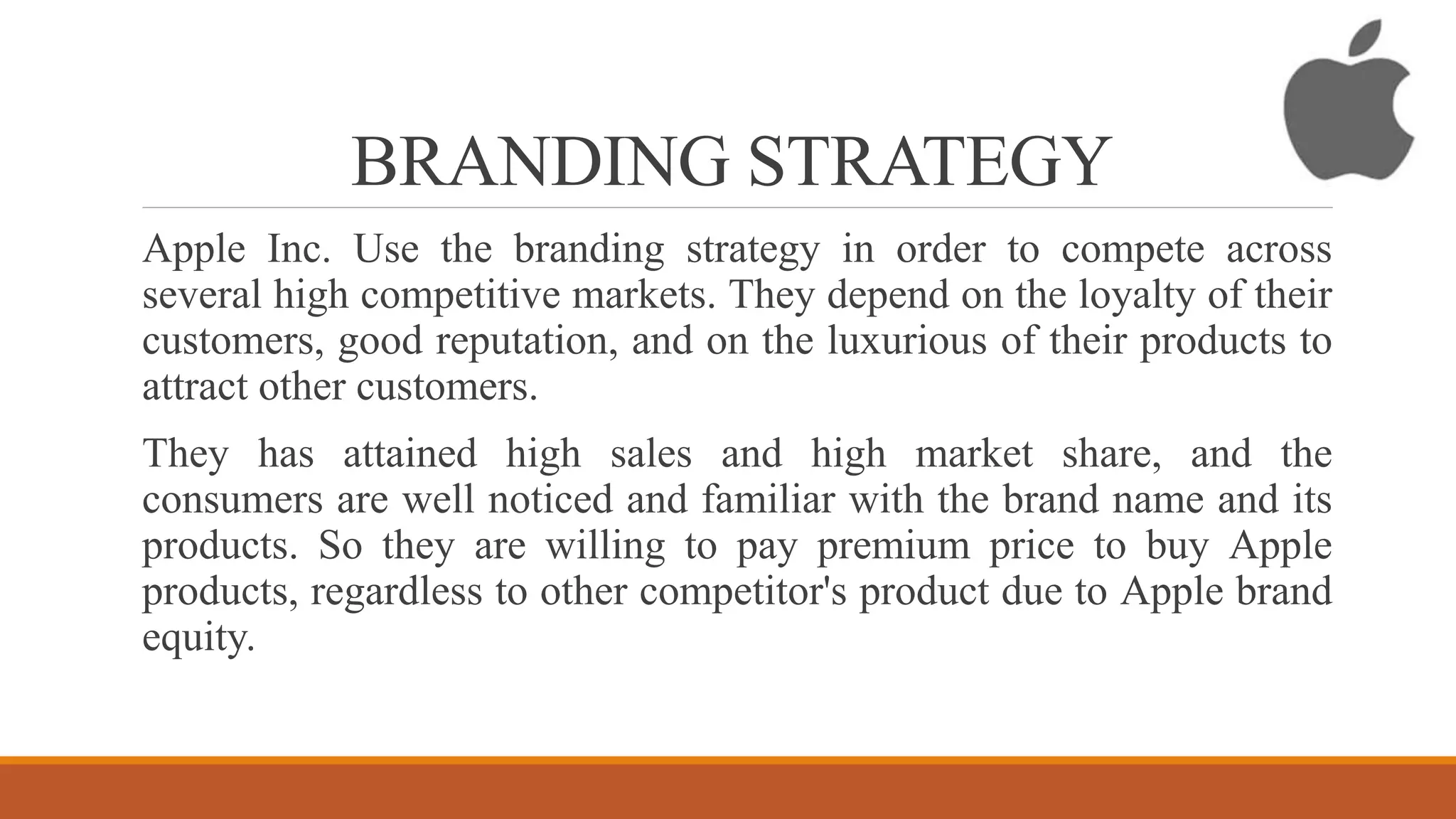
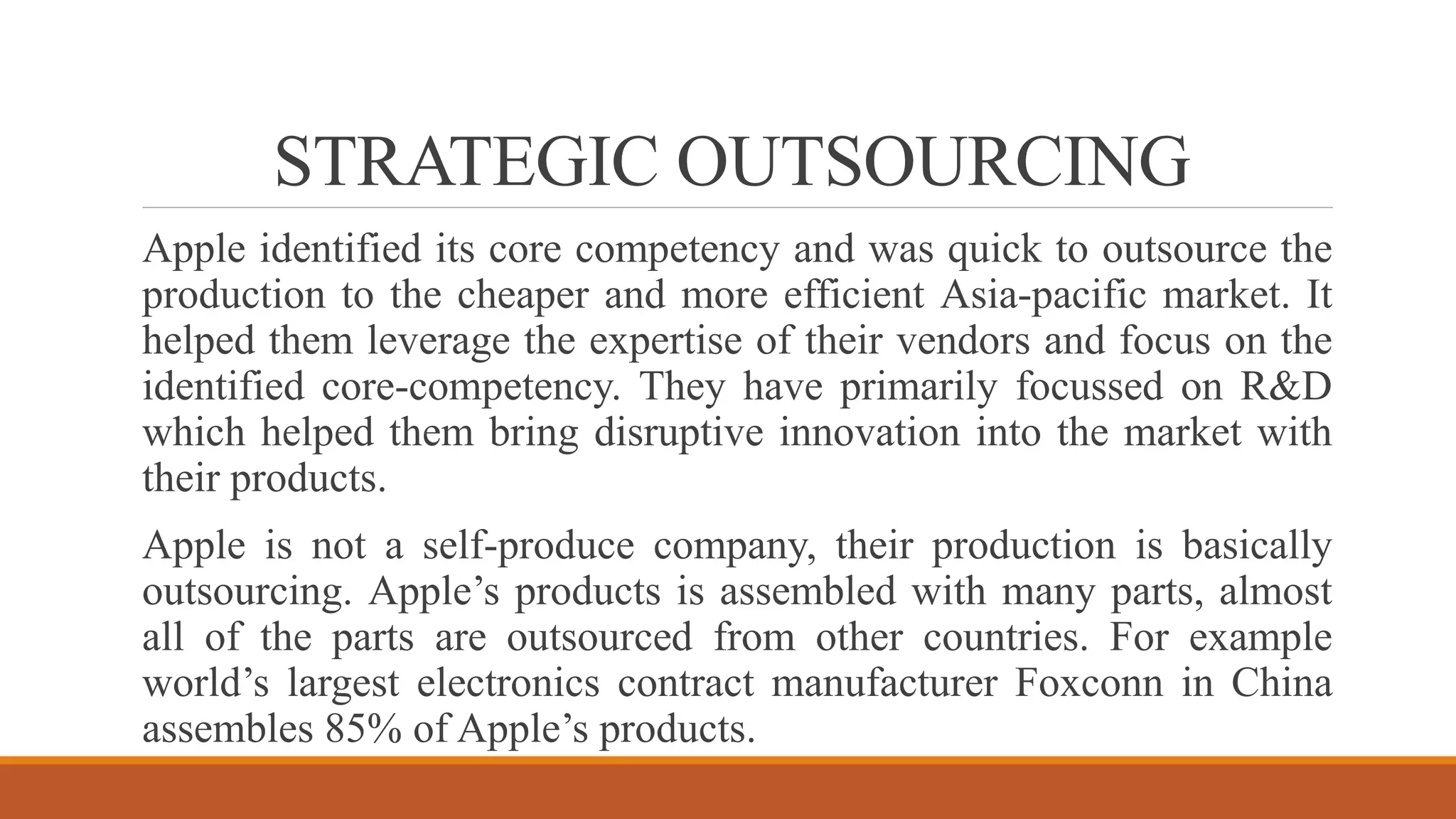
Apple is vertically integrated, it controls all the major critical parts of
the chain used to make and sell products. Apple builds great
hardware, owns the core software experience, optimizes its software
for that hardware, equips it with web services (iTunes and iCloud),
and finally controls the selling experience through its own retail
stores.
BRANDING STRATEGY
Apple Inc. Use the branding strategy in order to compete across
several high competitive markets. They depend on the loyalty of their
customers, good reputation, and on the luxurious of their products to
attract other customers.
They has attained high sales and high market share, and the
consumers are well noticed and familiar with the brand name and its
products. So they are willing to pay premium price to buy Apple
products, regardless to other competitor's product due to Apple brand
equity.
STRATEGIC OUTSOURCING
Apple identified its core competency and was quick to outsource the
production to the cheaper and more efficient Asia-pacific market. It
helped them leverage the expertise of their vendors and focus on the
identified core-competency. They have primarily focussed on R&D
which helped them bring disruptive innovation into the market with
their products.
Apple is not a self-produce company, their production is basically
outsourcing. Apple’s products is assembled with many parts, almost
all of the parts are outsourced from other countries. For example
world’s largest electronics contract manufacturer Foxconn in China
assembles 85% of Apple’s products.
PRICING STRATEGY
Apple uses a premium pricing strategy. In this component of the
marketing mix, the emphasis is on how prices represent the company
and its products, while meeting consumer expectations. In Apple's
case, the premium pricing strategy involves relatively high prices.
This pricing strategy helps maintain the high-end image of the
company and its products.
INTENSIVE GROWTH STRATEGIES
Apple’s intensive strategies for growth support the firm’s ability to
maintain its strong position in the global market. With a high rate of
innovation and emphasis on excellence in product design, Apple
succeeds even with its relatively high selling prices. This successful
position indicates Apple’s effectiveness in using its generic strategy
and intensive growth strategies.
1. Product Development
2. Market Penetration
3. Market Development
RETAILING STRATEGY
Apple does not just sell products in its stores, rather it provides a first class retail
experience that delights shoppers and visitors alike.
Apple empowers its store’s visitors by letting them touch everything, try
anything, and stay as long as they like.
BLUE OCEAN STRATEGY
Apple Inc. is instead of looking to serve existing prime customers in
the existing market place, it is largely concerned with modifying a
product or service offering, and establishing new market space by
targeting dissatisfied customers and non-customers.
COOPERATIVE STRATEGY
Apple uses a business-level cooperative strategy in one major Apple
product which is iTunes. Apple must work with many different
entertainment firms to offer the largest array of music, movies, and
television shows that users may purchase or rent directly to their
computer. This is also where cross-border alliances are seen. Apple
wants everyone around the world to buy from iTunes and works with
international entertainment firms to offer products specific to the
different users of the world.

Apple : STRATEGIES

  • 1.
  • 2.
    DIFFERENTIATION STRATEGY Apple hassuccessfully used the product differentiation strategy to separate their product in the market from other competitors‟ products, starting with their mackintosh computers to their music player “IPod”, and smart phones “IPhone”. •Unique Features and characteristics •Superior Quality •Innovation •Premium Price
  • 3.
    INTEGRATION STRATEGY Apple isvertically integrated, it controls all the major critical parts of the chain used to make and sell products. Apple builds great hardware, owns the core software experience, optimizes its software for that hardware, equips it with web services (iTunes and iCloud), and finally controls the selling experience through its own retail stores.
  • 4.
    BRANDING STRATEGY Apple Inc.Use the branding strategy in order to compete across several high competitive markets. They depend on the loyalty of their customers, good reputation, and on the luxurious of their products to attract other customers. They has attained high sales and high market share, and the consumers are well noticed and familiar with the brand name and its products. So they are willing to pay premium price to buy Apple products, regardless to other competitor's product due to Apple brand equity.
  • 5.
    STRATEGIC OUTSOURCING Apple identifiedits core competency and was quick to outsource the production to the cheaper and more efficient Asia-pacific market. It helped them leverage the expertise of their vendors and focus on the identified core-competency. They have primarily focussed on R&D which helped them bring disruptive innovation into the market with their products. Apple is not a self-produce company, their production is basically outsourcing. Apple’s products is assembled with many parts, almost all of the parts are outsourced from other countries. For example world’s largest electronics contract manufacturer Foxconn in China assembles 85% of Apple’s products.
  • 6.
    PRICING STRATEGY Apple usesa premium pricing strategy. In this component of the marketing mix, the emphasis is on how prices represent the company and its products, while meeting consumer expectations. In Apple's case, the premium pricing strategy involves relatively high prices. This pricing strategy helps maintain the high-end image of the company and its products.
  • 7.
    INTENSIVE GROWTH STRATEGIES Apple’sintensive strategies for growth support the firm’s ability to maintain its strong position in the global market. With a high rate of innovation and emphasis on excellence in product design, Apple succeeds even with its relatively high selling prices. This successful position indicates Apple’s effectiveness in using its generic strategy and intensive growth strategies. 1. Product Development 2. Market Penetration 3. Market Development
  • 8.
    RETAILING STRATEGY Apple doesnot just sell products in its stores, rather it provides a first class retail experience that delights shoppers and visitors alike. Apple empowers its store’s visitors by letting them touch everything, try anything, and stay as long as they like.
  • 9.
    BLUE OCEAN STRATEGY AppleInc. is instead of looking to serve existing prime customers in the existing market place, it is largely concerned with modifying a product or service offering, and establishing new market space by targeting dissatisfied customers and non-customers.
  • 10.
    COOPERATIVE STRATEGY Apple usesa business-level cooperative strategy in one major Apple product which is iTunes. Apple must work with many different entertainment firms to offer the largest array of music, movies, and television shows that users may purchase or rent directly to their computer. This is also where cross-border alliances are seen. Apple wants everyone around the world to buy from iTunes and works with international entertainment firms to offer products specific to the different users of the world.