Download to read offline
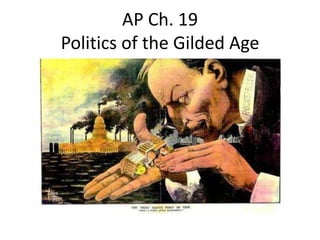
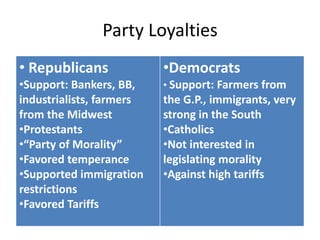
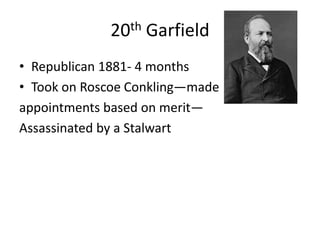
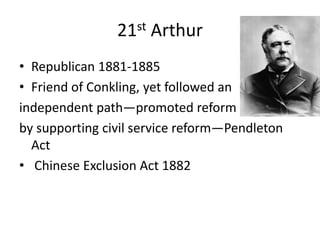
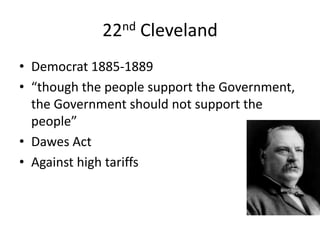
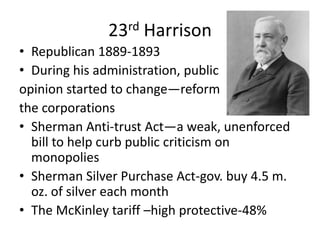
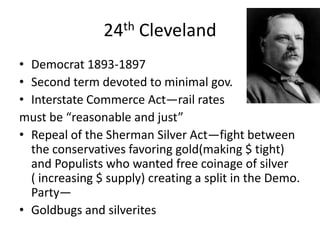

The Gilded Age in the United States was characterized by a weak federal government and strong political party machines controlled by bosses. Voter turnout remained high due to regional, ethnic, and cultural loyalties rather than national issues. The Republican Party drew support from big business, bankers, and Protestants in the North while the Democratic Party was stronger in the South with support from farmers, immigrants, and Catholics. Presidents made thousands of political appointments based on patronage rather than merit to reward their party machines. By the late 1800s, public frustration was growing over issues like high tariffs, trusts, and railroad abuses, signaling that changes were coming to disrupt the political balance of the Gilded Age.


