AORTIC STENOSISAORTIC STENOSIS
DefinitioneDefinitione
• AORTIC STENOSIS is theAORTIC STENOSIS is the
anatomical defect of aorta, in wich aortaanatomical defect of aorta, in wich aorta
is narrowed.Normal diameter aorta is 2.2-is narrowed.Normal diameter aorta is 2.2-
3.7sm in ascendens part and 1.5-2.6sm in3.7sm in ascendens part and 1.5-2.6sm in
valvular regio.valvular regio.
ETHIOLOGYETHIOLOGY
• Rheumatic feverRheumatic fever
• AtherosclerosisAtherosclerosis
• Myocardiopathy hyperthrophicalMyocardiopathy hyperthrophical
(subvalvular stenosis)(subvalvular stenosis)
• Congenital malformationsCongenital malformations
PATHOPHYSIOLOGYPATHOPHYSIOLOGY
(hemodinamical desorders)(hemodinamical desorders)
• Blood flow is injected from narrowing aorticalBlood flow is injected from narrowing aortical
part due to systole and systolicus murmur ispart due to systole and systolicus murmur is
formaded.Exertione for the left ventricule isformaded.Exertione for the left ventricule is
encreased. This is cause of hypertrophy andencreased. This is cause of hypertrophy and
dilatatione left ventricule,encrease cardiacdilatatione left ventricule,encrease cardiac
output and systolicus arterial pressure.output and systolicus arterial pressure.
• Aortic stenosis is cause of decrease blood flowAortic stenosis is cause of decrease blood flow
in coronary arterias and myocardialin coronary arterias and myocardial
eshemia,arrhytmias ,sudden death may occur.eshemia,arrhytmias ,sudden death may occur.
SponsoredSponsored
Medical Lecture Notes –Medical Lecture Notes – All SubjectsAll Subjects
USMLE Exam (America) –USMLE Exam (America) – PracticePractice
Clinical symptoms and signsClinical symptoms and signs
ComplanesComplanes
dyspnea and palpitatione for exertionedyspnea and palpitatione for exertione
cardialgia (angina often)cardialgia (angina often)
headache,vertigo(dizziness)headache,vertigo(dizziness)
syncopesyncope
ExaminationeExaminatione
• Pallor and acrocyanosisPallor and acrocyanosis
• Systolic thrill in the second right interspace andSystolic thrill in the second right interspace and
along the carotidsalong the carotids
• Apex beat sustainad and heaving in characterApex beat sustainad and heaving in character
dyslocated outwards and downwardsdyslocated outwards and downwards
• Heart borders dyslocated to the leftHeart borders dyslocated to the left
• Systolicus murmur best heard in the aortic areaSystolicus murmur best heard in the aortic area
and at the apex and condacted to the corotisand at the apex and condacted to the corotis
• The first sound is normal,than soft(relief); theThe first sound is normal,than soft(relief); the
second sound is softsecond sound is soft
Diagnostics methods:Diagnostics methods:
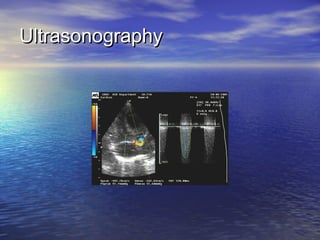
• Echocardiography(ultrasonography)Echocardiography(ultrasonography)
derect signs: theckened,calcified andderect signs: theckened,calcified and
immobile aortic valve cusps and narrowingimmobile aortic valve cusps and narrowing
aorta. Accelerated transaortal systolicusaorta. Accelerated transaortal systolicus
blood flowblood flow
nonderect signs: left ventrecularnonderect signs: left ventrecular
hypertrophy,dilatationehypertrophy,dilatatione
UltrasonographyUltrasonography
Diagnostic methodsDiagnostic methods
Diagnostics methodsDiagnostics methods
• ECGECG
left ventrecular hypertrophy (S3,R1),left ventrecular hypertrophy (S3,R1),
left axis deviationleft axis deviation
left bundle branch blocksleft bundle branch blocks
• X-ray chestX-ray chest
prominent ascending aorta with postprominent ascending aorta with post
stenotic dilationstenotic dilation
left ventricular enlargementleft ventricular enlargement
TREATMENTTREATMENT
• Medicamental treatment:Medicamental treatment:
diet 10, b-blockers,vasodilatators,diet 10, b-blockers,vasodilatators,
nitrites and other symptomatical drugsnitrites and other symptomatical drugs
*Surgical treatment:*Surgical treatment:
balloon dilatationeballoon dilatatione
aortic valve replacement withaortic valve replacement with
prosthetic or tissue valveprosthetic or tissue valve

Aortic Stenosis

  • 1.
  • 2.
    DefinitioneDefinitione • AORTIC STENOSISis theAORTIC STENOSIS is the anatomical defect of aorta, in wich aortaanatomical defect of aorta, in wich aorta is narrowed.Normal diameter aorta is 2.2-is narrowed.Normal diameter aorta is 2.2- 3.7sm in ascendens part and 1.5-2.6sm in3.7sm in ascendens part and 1.5-2.6sm in valvular regio.valvular regio.
  • 3.
    ETHIOLOGYETHIOLOGY • Rheumatic feverRheumaticfever • AtherosclerosisAtherosclerosis • Myocardiopathy hyperthrophicalMyocardiopathy hyperthrophical (subvalvular stenosis)(subvalvular stenosis) • Congenital malformationsCongenital malformations
  • 4.
    PATHOPHYSIOLOGYPATHOPHYSIOLOGY (hemodinamical desorders)(hemodinamical desorders) •Blood flow is injected from narrowing aorticalBlood flow is injected from narrowing aortical part due to systole and systolicus murmur ispart due to systole and systolicus murmur is formaded.Exertione for the left ventricule isformaded.Exertione for the left ventricule is encreased. This is cause of hypertrophy andencreased. This is cause of hypertrophy and dilatatione left ventricule,encrease cardiacdilatatione left ventricule,encrease cardiac output and systolicus arterial pressure.output and systolicus arterial pressure. • Aortic stenosis is cause of decrease blood flowAortic stenosis is cause of decrease blood flow in coronary arterias and myocardialin coronary arterias and myocardial eshemia,arrhytmias ,sudden death may occur.eshemia,arrhytmias ,sudden death may occur.
  • 5.
    SponsoredSponsored Medical Lecture Notes–Medical Lecture Notes – All SubjectsAll Subjects USMLE Exam (America) –USMLE Exam (America) – PracticePractice
  • 6.
    Clinical symptoms andsignsClinical symptoms and signs ComplanesComplanes dyspnea and palpitatione for exertionedyspnea and palpitatione for exertione cardialgia (angina often)cardialgia (angina often) headache,vertigo(dizziness)headache,vertigo(dizziness) syncopesyncope
  • 7.
    ExaminationeExaminatione • Pallor andacrocyanosisPallor and acrocyanosis • Systolic thrill in the second right interspace andSystolic thrill in the second right interspace and along the carotidsalong the carotids • Apex beat sustainad and heaving in characterApex beat sustainad and heaving in character dyslocated outwards and downwardsdyslocated outwards and downwards • Heart borders dyslocated to the leftHeart borders dyslocated to the left • Systolicus murmur best heard in the aortic areaSystolicus murmur best heard in the aortic area and at the apex and condacted to the corotisand at the apex and condacted to the corotis • The first sound is normal,than soft(relief); theThe first sound is normal,than soft(relief); the second sound is softsecond sound is soft
  • 8.
    Diagnostics methods:Diagnostics methods: •Echocardiography(ultrasonography)Echocardiography(ultrasonography) derect signs: theckened,calcified andderect signs: theckened,calcified and immobile aortic valve cusps and narrowingimmobile aortic valve cusps and narrowing aorta. Accelerated transaortal systolicusaorta. Accelerated transaortal systolicus blood flowblood flow nonderect signs: left ventrecularnonderect signs: left ventrecular hypertrophy,dilatationehypertrophy,dilatatione
  • 9.
  • 10.
  • 11.
    Diagnostics methodsDiagnostics methods •ECGECG left ventrecular hypertrophy (S3,R1),left ventrecular hypertrophy (S3,R1), left axis deviationleft axis deviation left bundle branch blocksleft bundle branch blocks • X-ray chestX-ray chest prominent ascending aorta with postprominent ascending aorta with post stenotic dilationstenotic dilation left ventricular enlargementleft ventricular enlargement
  • 12.
    TREATMENTTREATMENT • Medicamental treatment:Medicamentaltreatment: diet 10, b-blockers,vasodilatators,diet 10, b-blockers,vasodilatators, nitrites and other symptomatical drugsnitrites and other symptomatical drugs *Surgical treatment:*Surgical treatment: balloon dilatationeballoon dilatatione aortic valve replacement withaortic valve replacement with prosthetic or tissue valveprosthetic or tissue valve