

Anticholinergics and Sedatives
in Anesthetic Practice,
Roles and Uses
Presenter- Dr. Suresh Pradhan
Moderator- Prof. UC Sharma
Anticholinergics in
Anesthetic Practice
Autonomic Nervous System (ANS)
• the portion of the nervous system that controls most visceral
functions of the body
• activated mainly by centers located in the spinal cord, brain stem,
and hypothalamus
• helps to control
• blood pressure
• gastrointestinal motility
• gastrointestinal secretion
• urinary bladder emptying
• sweating
• body temperature
• some of these activities are controlled almost entirely and some
only partially by the ANS
• ANS is divided into three main divisions
• Sympathetic ANS
• Parasympathetic ANS
• Enteric nervous system
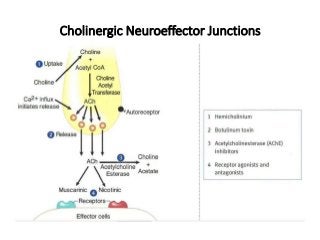
• Acetylcholine is the main neurotransmitter secreted at
• somatic nerves (at neuromuscular junction)
• at all preganglionic autonomic (sympathetic as well as
parasympathetic) nerves
• postganglionic fibres in parasympathetic system
• acetylcholine is the principal neurotransmitter secreted
by preganglionic as well as postganglionic fibers in
Parasympathetic Nervous System.
• so, also known as cholinergic nervous system
Cholinergic Neuroeffector Junctions
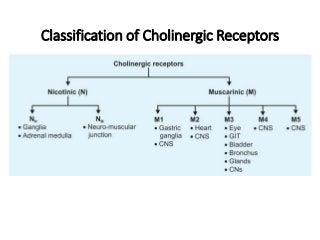
Classification of Cholinergic Receptors
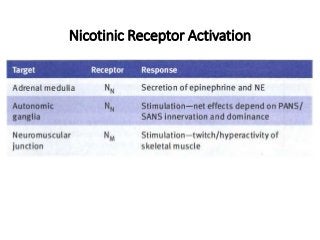
Nicotinic Receptor Activation
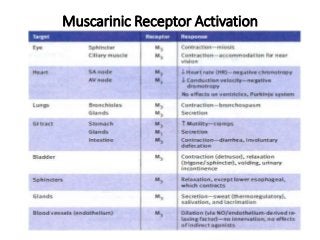
Muscarinic Receptor Activation
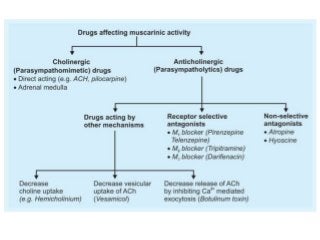
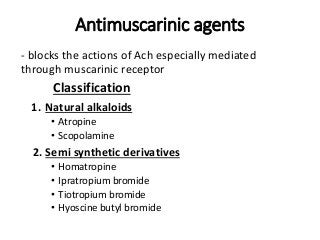
Antimuscarinic agents
- blocks the actions of Ach especially mediated
through muscarinic receptor
Classification
1. Natural alkaloids
• Atropine
• Scopolamine
2. Semi synthetic derivatives
• Homatropine
• Ipratropium bromide
• Tiotropium bromide
• Hyoscine butyl bromide
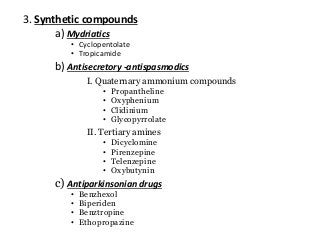
3. Synthetic compounds
a) Mydriatics
• Cyclopentolate
• Tropicamide
b) Antisecretory -antispasmodics
I. Quaternary ammonium compounds
• Propantheline
• Oxyphenium
• Clidinium
• Glycopyrrolate
II. Tertiary amines
• Dicyclomine
• Pirenzepine
• Telenzepine
• Oxybutynin
c) Antiparkinsonian drugs
• Benzhexol
• Biperiden
• Benztropine
• Ethopropazine
Mechanism of Action
• combine reversibly with muscarinic cholinergic
receptors and prevent access of acetylcholine
• act as competitive antagonists
• the most commonly used muscarinic antagonists
in anesthesia are
• Atropine
• Scopolamine
• Glycopyrrolate
Pharmacokinetics
• Atropine
 Usually given IV and IM
 is relatively lipid soluble and readily crosses membrane barriers
and well distributed into the CNS and other organs
 up to 50% of the dose is protein bound
 peak effects on the heart occur within four minutes of IV and
about one hour after IM administration
 peak plasma concentration of atropine after IM administration
is reached within 30 minutes
 elimination half-life varies between two and five hours
 plasma levels after IM and IV injection are comparable after
one hour
 metabolised in the liver by oxidation and conjugation to give
inactive metabolites
 about 50% of the dose is excreted within four hours in the urine
• Scopolamine
 lipid soluble and penetrates BBB
• Glycopyrrolate
 poorly lipid soluble
 minimal ability to cross BBB and hence least CNS effects
 onset of action 2-3 mins; duration of action 30-60 mins
 80% excreted unchanged in urine
Pharmacodynamics
• Central Nervous System
 Atropine-CNS stimulant at higher doses
 Scopolamine-CNS depression effect even at low doses
 Atropine stimulates many medullary centers – vagal, respiratory,
vasomotor
 depresses vestibular excitation and has antimotion sickness property
 suppresses the tremor and rigidity of parkinsonism by blocking the
cholinergic over activity in basal ganglia
 in high doses cause cortical excitation, restlessness, disorientation,
hallucinations and delirium followed by respiratory depression and
coma
• Eye
 topical instillation of atropine causes mydriasis, lack of light reflex and
cycloplegia lasting 7-10days; resulting in photophobia and blurring of
near vision
 Increase in IOP, specially in narrow angle glaucoma
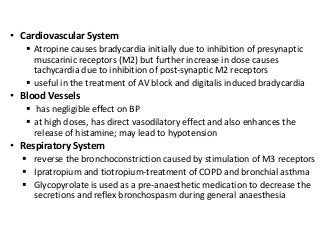
• Cardiovascular System
 Atropine causes bradycardia initially due to inhibition of presynaptic
muscarinic receptors (M2) but further increase in dose causes
tachycardia due to inhibition of post-synaptic M2 receptors
 useful in the treatment of AV block and digitalis induced bradycardia
• Blood Vessels
 has negligible effect on BP
 at high doses, has direct vasodilatory effect and also enhances the
release of histamine; may lead to hypotension
• Respiratory System
 reverse the bronchoconstriction caused by stimulation of M3 receptors
 Ipratropium and tiotropium-treatment of COPD and bronchial asthma
 Glycopyrolate is used as a pre-anaesthetic medication to decrease the
secretions and reflex bronchospasm during general anaesthesia
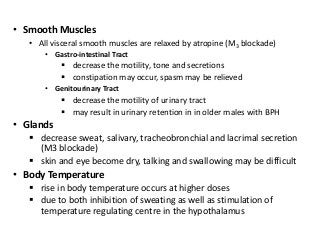
• Smooth Muscles
• All visceral smooth muscles are relaxed by atropine (M3 blockade)
• Gastro-intestinal Tract
 decrease the motility, tone and secretions
 constipation may occur, spasm may be relieved
• Genitourinary Tract
 decrease the motility of urinary tract
 may result in urinary retention in in older males with BPH
• Glands
 decrease sweat, salivary, tracheobronchial and lacrimal secretion
(M3 blockade)
 skin and eye become dry, talking and swallowing may be difficult
• Body Temperature
 rise in body temperature occurs at higher doses
 due to both inhibition of sweating as well as stimulation of
temperature regulating centre in the hypothalamus
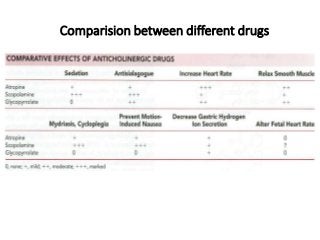
Comparision between different drugs
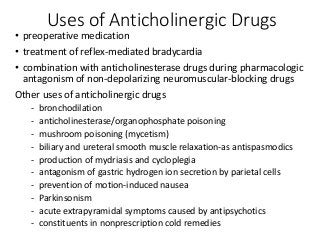
Uses of Anticholinergic Drugs
• preoperative medication
• treatment of reflex-mediated bradycardia
• combination with anticholinesterase drugs during pharmacologic
antagonism of non-depolarizing neuromuscular-blocking drugs
Other uses of anticholinergic drugs
- bronchodilation
- anticholinesterase/organophosphate poisoning
- mushroom poisoning (mycetism)
- biliary and ureteral smooth muscle relaxation-as antispasmodics
- production of mydriasis and cycloplegia
- antagonism of gastric hydrogen ion secretion by parietal cells
- prevention of motion-induced nausea
- Parkinsonism
- acute extrapyramidal symptoms caused by antipsychotics
- constituents in nonprescription cold remedies
Sedatives
in
Anesthetic Practice
• chemically heterogeneous class of drugs produce
dose dependent CNS depressant effect, relieve
anxiety and induce sleep
• decrease activity, moderates excitement, and calms
the recipient
• Includes
 Benzodiazepines
 Barbiturates
 Miscellaneous
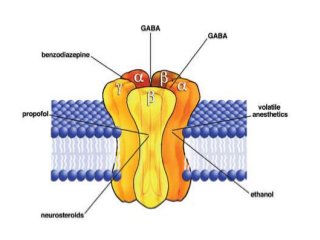
• GABA- main inhibitory neurotransmitter
• GABA receptor- supramolecular complex having
pentameric structure enclosing a chloride channel
• span the post synaptic membrane
• depending on types, number of subunits and
brain region localization, activation of
receptors results in different pharmacological
effects
• other drugs also bind to receptor
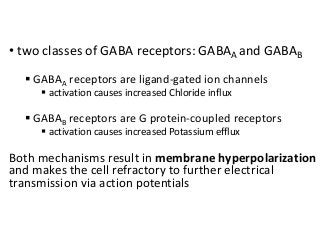
• two classes of GABA receptors: GABAA and GABAB
 GABAA receptors are ligand-gated ion channels
 activation causes increased Chloride influx
 GABAB receptors are G protein-coupled receptors
 activation causes increased Potassium efflux
Both mechanisms result in membrane hyperpolarization
and makes the cell refractory to further electrical
transmission via action potentials
Benzodiazepines
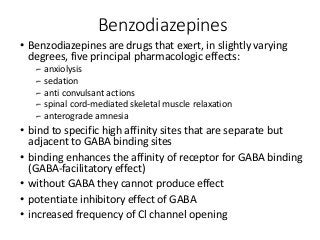
• Benzodiazepines are drugs that exert, in slightly varying
degrees, five principal pharmacologic effects:
⌐ anxiolysis
⌐ sedation
⌐ anti convulsant actions
⌐ spinal cord-mediated skeletal muscle relaxation
⌐ anterograde amnesia
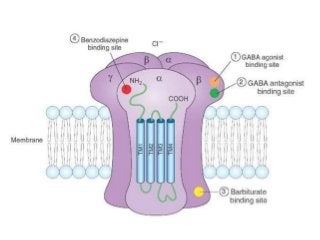
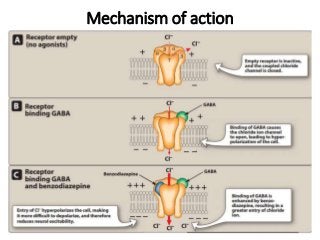
• bind to specific high affinity sites that are separate but
adjacent to GABA binding sites
• binding enhances the affinity of receptor for GABA binding
(GABA-facilitatory effect)
• without GABA they cannot produce effect
• potentiate inhibitory effect of GABA
• increased frequency of Cl channel opening
Mechanism of action
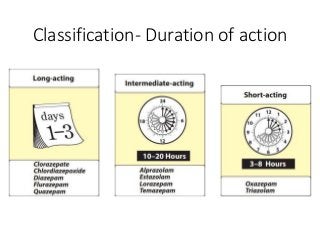
Classification- Duration of action
Classification- Therapeutic Use
• Sedative/ Hypnotics
- Temazepam
- Flurazepam
- Nitrazepam
• Anxiolytics
- Diazepam
- Oxazepam
- Lorazepam
• Anticonvulsants
- Diazepam
- Nitrazepam
- Clonazepam
• Central muscle relaxants
- Diazepam
- Flurazepam
- Clonazepam
Pharmacokinetics
Absorption
 commonly administered orally, intramuscularly, and intravenously
 Diazepam and Lorazepam-well absorbed from the gastrointestinal
tract, with peak plasma levels usually achieved in 1 and 2 hour,
respectively
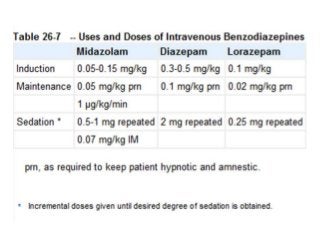
 intranasal (0.2–0.3 mg/kg), buccal (0.07 mg/kg), and sublingual
(0.1mg/kg) midazolam provide effective preoperative sedation
 intramuscular injections of diazepam are painful and unreliably
absorbed.
 Midazolam and Lorazepam are well absorbed after IM injection,
with peak levels achieved in 30 and 90 min, respectively
 induction of general anesthesia with midazolam is convenient
only with intravenous administration
Distribution
• Diazepam is relatively lipid soluble and readily
penetrates the blood–brain barrier
• Midazolam is water soluble at reduced pH, its imidazole
ring closes at physiological pH, increasing its lipid
solubility
• moderate lipid solubility of lorazepam accounts for its
slower brain uptake and onset of action
• redistribution is fairly rapid for the benzodiazepines and
is responsible for awakening
• all three benzodiazepines are highly protein bound (90–
98%)
Biotransformation
• liver for biotransformation into water-soluble glucuronidated
end products
• the phase I metabolites of diazepam are pharmacologically
active
• slow hepatic extraction and a large volume of distribution
result in a long elimination half-life for diazepam (30 h)
• although lorazepam also has a low hepatic extraction ratio,
its lower lipid solubility limits its Vd, resulting in a shorter
elimination half-life (15 h)
• the clinical duration of lorazepam is often quite prolonged
due to increased receptor affinity
• Midazolam shares diazepam’s Vd, but its elimination half-life
(2 h) is the shortest of the group because of its increased
hepatic extraction ratio
Excretion
• metabolites of benzodiazepine biotransformation are
excreted chiefly in the urine
• Enterohepatic circulation produces a secondary peak
in diazepam plasma concentration 6–12 h following
administration
• Kidney failure may lead to prolonged sedation in
patients receiving larger doses of midazolam due to
the accumulation of a conjugated metabolite
Effects on Organ Systems
• Cardiovascular System
 minimal cardiovascular depressant effects even at
general anesthetic doses
 decrease arterial blood pressure, cardiac output, and
peripheral vascular resistance slightly, and sometimes
increase heart rate
 intravenous midazolam tends to reduce blood pressure
and peripheral vascular resistance more than diazepam
• Respiratory System
 depress the ventilatory response to CO2
 depression is usually insignificant unless the
drugs are administered intravenously or in
association with other respiratory depressants
 ventilation must be monitored in all patients
receiving intravenous benzodiazepines, and
resuscitation equipment must be immediately
available
• Central Nervous System
 reduce cerebral oxygen consumption, cerebral blood flow,
and intracranial pressure
 effective in preventing and controlling grand malseizures
 oral sedative doses often produce antegrade amnesia, a
useful premedication property
 mild muscle-relaxing property is mediated at the spinal cord
level
 antianxiety, amnestic, and sedative effects seen at lower
doses progress to stupor and unconsciousness
 a slower rate of loss of consciousness and a longer recovery
 have no direct analgesic properties
ADVERSE EFFECTS
- sedation
- hangover: confusional states in elderly, lethargy, lassitude
- ataxia in increased doses
- loss of memory
- GIT upset/ epigastric distress
- paradoxical behavioral disturbance
- floppy baby syndrome in neonates
- dependence
- tolerance- with short t1/2
- cross tolerance between BDZ and other CNS depressants
Uses
• preoperative premedication
• Sedation
 intraoperatively during regional or local anesthesia
 postoperative
 ICU patients
 ambulatory anesthesia
 balanced anesthesia
 remote anesthesia
• Other uses :
 Muscle relaxants
 Anticonvulsant
 Anxiety Disorders
 Insomnia
 Alcohol withdrawl
 Delerium
 diagnostic aid for treatment in psychiatry
 Alprazolam- antidepressant
Benzodiazepine Receptor
Antagonist- Flumazenil
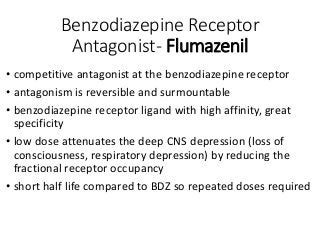
• competitive antagonist at the benzodiazepine receptor
• antagonism is reversible and surmountable
• benzodiazepine receptor ligand with high affinity, great
specificity
• low dose attenuates the deep CNS depression (loss of
consciousness, respiratory depression) by reducing the
fractional receptor occupancy
• short half life compared to BDZ so repeated doses required
Barbiturates
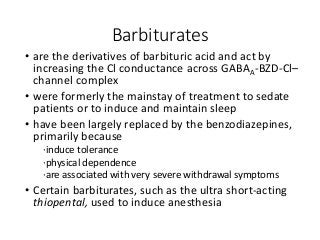
• are the derivatives of barbituric acid and act by
increasing the Cl conductance across GABAA-BZD-Cl–
channel complex
• were formerly the mainstay of treatment to sedate
patients or to induce and maintain sleep
• have been largely replaced by the benzodiazepines,
primarily because
·induce tolerance
·physical dependence
·are associated with very severe withdrawal symptoms
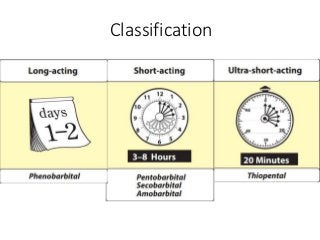
• Certain barbiturates, such as the ultra short-acting
thiopental, used to induce anesthesia
Classification
Mechanism of action
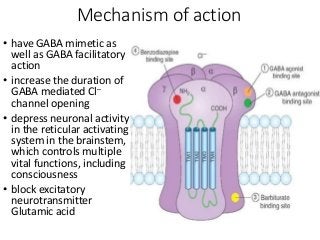
• have GABA mimetic as
well as GABA facilitatory
action
• increase the duration of
GABA mediated Cl–
channel opening
• depress neuronal activity
in the reticular activating
system in the brainstem,
which controls multiple
vital functions, including
consciousness
• block excitatory
neurotransmitter
Glutamic acid
Pharmacokinetics
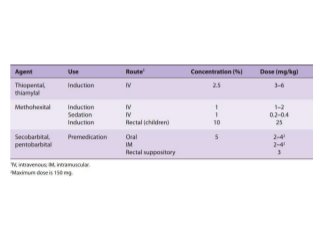
• Absorption
 thiopental, thiamylal, and methohexital
administered intravenously for induction of
general anesthesia in adults and children
 rectal thiopental or, more often, methohexital
has been used for induction in children
 intramuscular (or oral) pentobarbital was often
used in the past for premedication of all age
groups
• Distribution
 duration of sleep doses of the highly lipid-soluble
barbiturates (thiopental, thiamylal, and methohexital)
is determined by redistribution, not by metabolism or
elimination.
 although thiopental is highly protein bound (80%), its
great lipid solubility and high non-ionized fraction
(60%) account for rapid brain uptake (within 30 s)
 redistribution to the peripheral compartment
specifically, the muscle group lowers plasma and brain
concentration to 10% of peak levels within 20–30 min
• Biotransformation
 by hepatic oxidation to inactive water-soluble
metabolites
 redistribution is responsible for the awakening
from a single sleep dose
 full recovery of psychomotor function is more
rapid due to its enhanced metabolism
• Excretion
 inactive metabolites are excreted in urine
• CNS
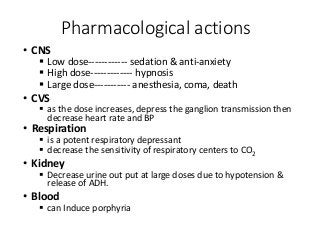
 Low dose------------ sedation & anti-anxiety
 High dose------------- hypnosis
 Large dose----------- anesthesia, coma, death
• CVS
 as the dose increases, depress the ganglion transmission then
decrease heart rate and BP
• Respiration
 is a potent respiratory depressant
 decrease the sensitivity of respiratory centers to CO2
• Kidney
 Decrease urine out put at large doses due to hypotension &
release of ADH.
• Blood
 can Induce porphyria
Pharmacological actions
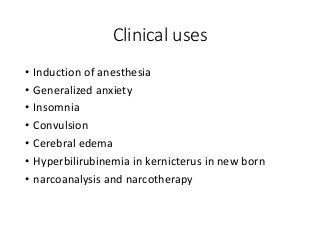
Clinical uses
• Induction of anesthesia
• Generalized anxiety
• Insomnia
• Convulsion
• Cerebral edema
• Hyperbilirubinemia in kernicterus in new born
• narcoanalysis and narcotherapy
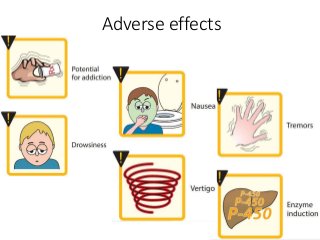
Adverse effects
Other Drugs
• Zolpidem
• Zaleplon
• Eszopiclone
• Ramelteon
• Propofol
 25–100 mcg/kg/min
• Ketamine
 2.5–15 mcg/kg/min
Alpha 2 agonists
• Clonidine
⌐an imidazoline compound
⌐provides sedation without depression of ventilation
⌐improve perioperative hemodynamic and
sympathoadrenal stability
⌐for premedication and supplementation to general
anesthesia
⌐Oral clonidine: 3-5mcg/kg
⌐use has been limited due to its longer half life- 9-12hrs
• Dexmedetomidine
⌐highly selective, specific and potent alpha 2 agonist
⌐used as a perioperative sedative and analgesic
⌐produces sedation by decreasing the SNSA and the
level of arousal
⌐results in calm patient who can be easily aroused to
full consciousness and has no respiratory depression
⌐200-700mcg/kg/hr IV useful for sedation of patients
postoperatively or in ICU when the patient is
mechanically ventilated
Thank You!!!

Anticholinergics and sedatives in anesthetic practice

  • 1.
    Anticholinergics and Sedatives inAnesthetic Practice, Roles and Uses Presenter- Dr. Suresh Pradhan Moderator- Prof. UC Sharma
  • 2.
  • 3.
    Autonomic Nervous System(ANS) • the portion of the nervous system that controls most visceral functions of the body • activated mainly by centers located in the spinal cord, brain stem, and hypothalamus • helps to control • blood pressure • gastrointestinal motility • gastrointestinal secretion • urinary bladder emptying • sweating • body temperature • some of these activities are controlled almost entirely and some only partially by the ANS • ANS is divided into three main divisions • Sympathetic ANS • Parasympathetic ANS • Enteric nervous system
  • 4.
    • Acetylcholine isthe main neurotransmitter secreted at • somatic nerves (at neuromuscular junction) • at all preganglionic autonomic (sympathetic as well as parasympathetic) nerves • postganglionic fibres in parasympathetic system • acetylcholine is the principal neurotransmitter secreted by preganglionic as well as postganglionic fibers in Parasympathetic Nervous System. • so, also known as cholinergic nervous system
  • 5.
  • 6.
  • 7.
  • 8.
  • 10.
    Antimuscarinic agents - blocksthe actions of Ach especially mediated through muscarinic receptor Classification 1. Natural alkaloids • Atropine • Scopolamine 2. Semi synthetic derivatives • Homatropine • Ipratropium bromide • Tiotropium bromide • Hyoscine butyl bromide
  • 11.
    3. Synthetic compounds a)Mydriatics • Cyclopentolate • Tropicamide b) Antisecretory -antispasmodics I. Quaternary ammonium compounds • Propantheline • Oxyphenium • Clidinium • Glycopyrrolate II. Tertiary amines • Dicyclomine • Pirenzepine • Telenzepine • Oxybutynin c) Antiparkinsonian drugs • Benzhexol • Biperiden • Benztropine • Ethopropazine
  • 12.
    Mechanism of Action •combine reversibly with muscarinic cholinergic receptors and prevent access of acetylcholine • act as competitive antagonists
  • 13.
    • the mostcommonly used muscarinic antagonists in anesthesia are • Atropine • Scopolamine • Glycopyrrolate
  • 14.
    Pharmacokinetics • Atropine  Usuallygiven IV and IM  is relatively lipid soluble and readily crosses membrane barriers and well distributed into the CNS and other organs  up to 50% of the dose is protein bound  peak effects on the heart occur within four minutes of IV and about one hour after IM administration  peak plasma concentration of atropine after IM administration is reached within 30 minutes  elimination half-life varies between two and five hours  plasma levels after IM and IV injection are comparable after one hour  metabolised in the liver by oxidation and conjugation to give inactive metabolites  about 50% of the dose is excreted within four hours in the urine
  • 15.
    • Scopolamine  lipidsoluble and penetrates BBB • Glycopyrrolate  poorly lipid soluble  minimal ability to cross BBB and hence least CNS effects  onset of action 2-3 mins; duration of action 30-60 mins  80% excreted unchanged in urine
  • 16.
    Pharmacodynamics • Central NervousSystem  Atropine-CNS stimulant at higher doses  Scopolamine-CNS depression effect even at low doses  Atropine stimulates many medullary centers – vagal, respiratory, vasomotor  depresses vestibular excitation and has antimotion sickness property  suppresses the tremor and rigidity of parkinsonism by blocking the cholinergic over activity in basal ganglia  in high doses cause cortical excitation, restlessness, disorientation, hallucinations and delirium followed by respiratory depression and coma • Eye  topical instillation of atropine causes mydriasis, lack of light reflex and cycloplegia lasting 7-10days; resulting in photophobia and blurring of near vision  Increase in IOP, specially in narrow angle glaucoma
  • 17.
    • Cardiovascular System Atropine causes bradycardia initially due to inhibition of presynaptic muscarinic receptors (M2) but further increase in dose causes tachycardia due to inhibition of post-synaptic M2 receptors  useful in the treatment of AV block and digitalis induced bradycardia • Blood Vessels  has negligible effect on BP  at high doses, has direct vasodilatory effect and also enhances the release of histamine; may lead to hypotension • Respiratory System  reverse the bronchoconstriction caused by stimulation of M3 receptors  Ipratropium and tiotropium-treatment of COPD and bronchial asthma  Glycopyrolate is used as a pre-anaesthetic medication to decrease the secretions and reflex bronchospasm during general anaesthesia
  • 18.
    • Smooth Muscles •All visceral smooth muscles are relaxed by atropine (M3 blockade) • Gastro-intestinal Tract  decrease the motility, tone and secretions  constipation may occur, spasm may be relieved • Genitourinary Tract  decrease the motility of urinary tract  may result in urinary retention in in older males with BPH • Glands  decrease sweat, salivary, tracheobronchial and lacrimal secretion (M3 blockade)  skin and eye become dry, talking and swallowing may be difficult • Body Temperature  rise in body temperature occurs at higher doses  due to both inhibition of sweating as well as stimulation of temperature regulating centre in the hypothalamus
  • 19.
  • 20.
    Uses of AnticholinergicDrugs • preoperative medication • treatment of reflex-mediated bradycardia • combination with anticholinesterase drugs during pharmacologic antagonism of non-depolarizing neuromuscular-blocking drugs Other uses of anticholinergic drugs - bronchodilation - anticholinesterase/organophosphate poisoning - mushroom poisoning (mycetism) - biliary and ureteral smooth muscle relaxation-as antispasmodics - production of mydriasis and cycloplegia - antagonism of gastric hydrogen ion secretion by parietal cells - prevention of motion-induced nausea - Parkinsonism - acute extrapyramidal symptoms caused by antipsychotics - constituents in nonprescription cold remedies
  • 21.
  • 22.
    • chemically heterogeneousclass of drugs produce dose dependent CNS depressant effect, relieve anxiety and induce sleep • decrease activity, moderates excitement, and calms the recipient • Includes  Benzodiazepines  Barbiturates  Miscellaneous
  • 23.
    • GABA- maininhibitory neurotransmitter • GABA receptor- supramolecular complex having pentameric structure enclosing a chloride channel • span the post synaptic membrane • depending on types, number of subunits and brain region localization, activation of receptors results in different pharmacological effects • other drugs also bind to receptor
  • 26.
    • two classesof GABA receptors: GABAA and GABAB  GABAA receptors are ligand-gated ion channels  activation causes increased Chloride influx  GABAB receptors are G protein-coupled receptors  activation causes increased Potassium efflux Both mechanisms result in membrane hyperpolarization and makes the cell refractory to further electrical transmission via action potentials
  • 27.
    Benzodiazepines • Benzodiazepines aredrugs that exert, in slightly varying degrees, five principal pharmacologic effects: ⌐ anxiolysis ⌐ sedation ⌐ anti convulsant actions ⌐ spinal cord-mediated skeletal muscle relaxation ⌐ anterograde amnesia • bind to specific high affinity sites that are separate but adjacent to GABA binding sites • binding enhances the affinity of receptor for GABA binding (GABA-facilitatory effect) • without GABA they cannot produce effect • potentiate inhibitory effect of GABA • increased frequency of Cl channel opening
  • 28.
  • 29.
  • 30.
    Classification- Therapeutic Use •Sedative/ Hypnotics - Temazepam - Flurazepam - Nitrazepam • Anxiolytics - Diazepam - Oxazepam - Lorazepam • Anticonvulsants - Diazepam - Nitrazepam - Clonazepam • Central muscle relaxants - Diazepam - Flurazepam - Clonazepam
  • 31.
    Pharmacokinetics Absorption  commonly administeredorally, intramuscularly, and intravenously  Diazepam and Lorazepam-well absorbed from the gastrointestinal tract, with peak plasma levels usually achieved in 1 and 2 hour, respectively  intranasal (0.2–0.3 mg/kg), buccal (0.07 mg/kg), and sublingual (0.1mg/kg) midazolam provide effective preoperative sedation  intramuscular injections of diazepam are painful and unreliably absorbed.  Midazolam and Lorazepam are well absorbed after IM injection, with peak levels achieved in 30 and 90 min, respectively  induction of general anesthesia with midazolam is convenient only with intravenous administration
  • 32.
    Distribution • Diazepam isrelatively lipid soluble and readily penetrates the blood–brain barrier • Midazolam is water soluble at reduced pH, its imidazole ring closes at physiological pH, increasing its lipid solubility • moderate lipid solubility of lorazepam accounts for its slower brain uptake and onset of action • redistribution is fairly rapid for the benzodiazepines and is responsible for awakening • all three benzodiazepines are highly protein bound (90– 98%)
  • 33.
    Biotransformation • liver forbiotransformation into water-soluble glucuronidated end products • the phase I metabolites of diazepam are pharmacologically active • slow hepatic extraction and a large volume of distribution result in a long elimination half-life for diazepam (30 h) • although lorazepam also has a low hepatic extraction ratio, its lower lipid solubility limits its Vd, resulting in a shorter elimination half-life (15 h) • the clinical duration of lorazepam is often quite prolonged due to increased receptor affinity • Midazolam shares diazepam’s Vd, but its elimination half-life (2 h) is the shortest of the group because of its increased hepatic extraction ratio
  • 34.
    Excretion • metabolites ofbenzodiazepine biotransformation are excreted chiefly in the urine • Enterohepatic circulation produces a secondary peak in diazepam plasma concentration 6–12 h following administration • Kidney failure may lead to prolonged sedation in patients receiving larger doses of midazolam due to the accumulation of a conjugated metabolite
  • 35.
    Effects on OrganSystems • Cardiovascular System  minimal cardiovascular depressant effects even at general anesthetic doses  decrease arterial blood pressure, cardiac output, and peripheral vascular resistance slightly, and sometimes increase heart rate  intravenous midazolam tends to reduce blood pressure and peripheral vascular resistance more than diazepam
  • 36.
    • Respiratory System depress the ventilatory response to CO2  depression is usually insignificant unless the drugs are administered intravenously or in association with other respiratory depressants  ventilation must be monitored in all patients receiving intravenous benzodiazepines, and resuscitation equipment must be immediately available
  • 37.
    • Central NervousSystem  reduce cerebral oxygen consumption, cerebral blood flow, and intracranial pressure  effective in preventing and controlling grand malseizures  oral sedative doses often produce antegrade amnesia, a useful premedication property  mild muscle-relaxing property is mediated at the spinal cord level  antianxiety, amnestic, and sedative effects seen at lower doses progress to stupor and unconsciousness  a slower rate of loss of consciousness and a longer recovery  have no direct analgesic properties
  • 38.
    ADVERSE EFFECTS - sedation -hangover: confusional states in elderly, lethargy, lassitude - ataxia in increased doses - loss of memory - GIT upset/ epigastric distress - paradoxical behavioral disturbance - floppy baby syndrome in neonates - dependence - tolerance- with short t1/2 - cross tolerance between BDZ and other CNS depressants
  • 39.
    Uses • preoperative premedication •Sedation  intraoperatively during regional or local anesthesia  postoperative  ICU patients  ambulatory anesthesia  balanced anesthesia  remote anesthesia
  • 40.
    • Other uses:  Muscle relaxants  Anticonvulsant  Anxiety Disorders  Insomnia  Alcohol withdrawl  Delerium  diagnostic aid for treatment in psychiatry  Alprazolam- antidepressant
  • 43.
    Benzodiazepine Receptor Antagonist- Flumazenil •competitive antagonist at the benzodiazepine receptor • antagonism is reversible and surmountable • benzodiazepine receptor ligand with high affinity, great specificity • low dose attenuates the deep CNS depression (loss of consciousness, respiratory depression) by reducing the fractional receptor occupancy • short half life compared to BDZ so repeated doses required
  • 44.
    Barbiturates • are thederivatives of barbituric acid and act by increasing the Cl conductance across GABAA-BZD-Cl– channel complex • were formerly the mainstay of treatment to sedate patients or to induce and maintain sleep • have been largely replaced by the benzodiazepines, primarily because ·induce tolerance ·physical dependence ·are associated with very severe withdrawal symptoms • Certain barbiturates, such as the ultra short-acting thiopental, used to induce anesthesia
  • 45.
  • 46.
    Mechanism of action •have GABA mimetic as well as GABA facilitatory action • increase the duration of GABA mediated Cl– channel opening • depress neuronal activity in the reticular activating system in the brainstem, which controls multiple vital functions, including consciousness • block excitatory neurotransmitter Glutamic acid
  • 47.
    Pharmacokinetics • Absorption  thiopental,thiamylal, and methohexital administered intravenously for induction of general anesthesia in adults and children  rectal thiopental or, more often, methohexital has been used for induction in children  intramuscular (or oral) pentobarbital was often used in the past for premedication of all age groups
  • 48.
    • Distribution  durationof sleep doses of the highly lipid-soluble barbiturates (thiopental, thiamylal, and methohexital) is determined by redistribution, not by metabolism or elimination.  although thiopental is highly protein bound (80%), its great lipid solubility and high non-ionized fraction (60%) account for rapid brain uptake (within 30 s)  redistribution to the peripheral compartment specifically, the muscle group lowers plasma and brain concentration to 10% of peak levels within 20–30 min
  • 49.
    • Biotransformation  byhepatic oxidation to inactive water-soluble metabolites  redistribution is responsible for the awakening from a single sleep dose  full recovery of psychomotor function is more rapid due to its enhanced metabolism • Excretion  inactive metabolites are excreted in urine
  • 50.
    • CNS  Lowdose------------ sedation & anti-anxiety  High dose------------- hypnosis  Large dose----------- anesthesia, coma, death • CVS  as the dose increases, depress the ganglion transmission then decrease heart rate and BP • Respiration  is a potent respiratory depressant  decrease the sensitivity of respiratory centers to CO2 • Kidney  Decrease urine out put at large doses due to hypotension & release of ADH. • Blood  can Induce porphyria Pharmacological actions
  • 51.
    Clinical uses • Inductionof anesthesia • Generalized anxiety • Insomnia • Convulsion • Cerebral edema • Hyperbilirubinemia in kernicterus in new born • narcoanalysis and narcotherapy
  • 52.
  • 54.
    Other Drugs • Zolpidem •Zaleplon • Eszopiclone • Ramelteon • Propofol  25–100 mcg/kg/min • Ketamine  2.5–15 mcg/kg/min
  • 55.
    Alpha 2 agonists •Clonidine ⌐an imidazoline compound ⌐provides sedation without depression of ventilation ⌐improve perioperative hemodynamic and sympathoadrenal stability ⌐for premedication and supplementation to general anesthesia ⌐Oral clonidine: 3-5mcg/kg ⌐use has been limited due to its longer half life- 9-12hrs
  • 56.
    • Dexmedetomidine ⌐highly selective,specific and potent alpha 2 agonist ⌐used as a perioperative sedative and analgesic ⌐produces sedation by decreasing the SNSA and the level of arousal ⌐results in calm patient who can be easily aroused to full consciousness and has no respiratory depression ⌐200-700mcg/kg/hr IV useful for sedation of patients postoperatively or in ICU when the patient is mechanically ventilated
  • 57.

Editor's Notes

  • #4 Although the gastro intestinal tract is influenced by sympathetic and parasympathetic nervous system activity, it is the enteric nervous system through the myenteric and submucous plexi that regulates digestive activity even in the presence of spinal cord transection
  • #7 M1 and M3 M5-- Gq coupled -- increases phospholipase C - increased P3, DAG, Ca M2 and M4-- Gi coupled--decreases adenylyl cyclase - decreased cAMP NN and NM-- No 2nd messengers--activation (opening) of Na/K channels
  • #9 M4 in cns and heart, m5 in cns
  • #11 Belladonna alkaloids
  • #13 combination of an anticholinergic drug with the muscarinic receptor does not result in cell membrane changes and associated inhibition of adenylate cyclase or alterations in calcium permeability that would lead to cholinergic responses the effect of anticholinergic drugs can be overcome by increasing the concentration of acetylcholine in the area of the muscarinic receptors.
  • #15 onset of action about 1 min; duration of action of 30-60 mins
  • #19 atropine is contraindicated in children due to the risk of hyperthermia (due to decreased sweating)
  • #24 2 alpha 2 beta and 1 gamma
  • #28 Hence no GABAmimetic effect
  • #35  (α-hydroxymidazolam)
  • #36 except when they are coadministered with opioids (these agents interact to produce myocardial depression and arterial hypotension) increase heart rate more with midazolam
  • #37 Although apnea may be relatively uncommon after benzodiazepine induction, even small intravenous doses of diazepam and midazolam have resulted in respiratory arrest. The steep dose–response curve, slightly prolonged onset (compared with propofol or thiopental), and potency of midazolam necessitate careful titration to avoid overdosage and apnea
  • #40 ambulatory anesthesia anesthesia performed on an outpatient basis for ambulatory surgery. balanced anesthesia anesthesia that uses a combination of drugs, each in an amount sufficient to produce its major ordesired effect to the optimum degree and to keep undesirable effects to a minimum Remote anestheia-anesthetic care in locations outside of the OR
  • #41 For muscle relaxation in specific NM disorders- multiple sclerosis, cerebral palsy
  • #44 by the agonist without decreasing the agonist effects that occur at low fractional receptor occupancy (drowsiness, amnesia) to prevail over
  • #47 GABA facilitatory as well as GABA mimetic action
  • #50 following methohexital
  • #51 augment action of other CNS depressants
  • #52 Anesthetic doses of barbiturates attenuate cerebral edema resulting from surgery ,head injury, or cerebral ischemia, and they may decrease infarct size and increase survival diagnostic and therapeutic aids in psychiatry
  • #53 Due to over sedation ,diminished concentration. Severe withdrawal reactions characterized by seizures, tremors, hallucinations and psychosis Skin eruptions & porpyrias
  • #55 commonly used nonbenzodiazepine hypnotic agents
  • #56 (attenuate HR and BP to surgical stimuli) Oral clonidine: 3-5mcg/kg
  • #57 quality of sedation produced by alpha 2 agonist is different from that produced by midazolam and propofol. SNSA: Sympathetic Nervous System Activity