Anaesthetic Considerations
For Laparoscopic
Cholecystectomy
Dr. Suresh Pradhan
Introduction
• the development of “minimally invasive surgery” or
“minimal access surgery” has revolutionized the field
of surgery
• Carl Langenbuch : 1st successful cholecystectomy in
1882
• Philippe Mouret : Introduced Laparoscopic
Cholecystectomy in 1987
Advantages
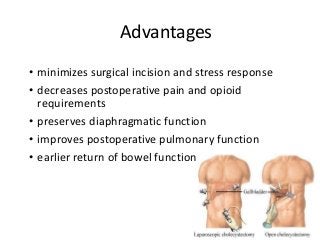
• minimizes surgical incision and stress response
• decreases postoperative pain and opioid
requirements
• preserves diaphragmatic function
• improves postoperative pulmonary function
• earlier return of bowel function
Advantages Contd…
• fewer wound-related complications
• earlier ambulation
• shorter hospital stays
• early return to normal activities and work
• reduces health costs
Minimally Invasive surgery
may not be Minimally
stressful to the patient !!!
The Pneumoperitoneum and the patient
positions required for laparoscopy induce
pathophysiologic changes that complicate
anaesthetic management.
PNEUMOPERITONEUM
• insufflation of the peritoneal cavity with gas
• CO2- used most commonly
• CO2 –
• non combustible - allows the use of Diathermy or Laser
• highly Soluble – rapid elimination of absorbed gas
• colourless
• non – toxic
• less expensive
PNEUMOPERITONEUM
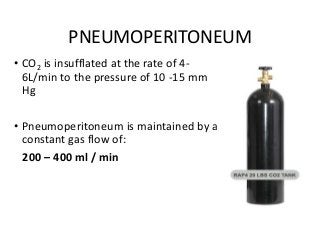
• CO2 is insufflated at the rate of 4-
6L/min to the pressure of 10 -15 mm
Hg
• Pneumoperitoneum is maintained by a
constant gas flow of:
200 – 400 ml / min
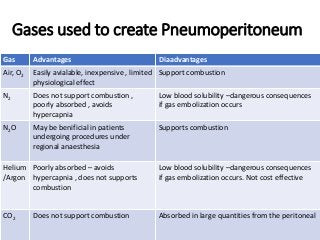
Gases used to create Pneumoperitoneum
Gas Advantages Diaadvantages
Air, O2 Easily avialable, inexpensive , limited
physiological effect
Support combustion
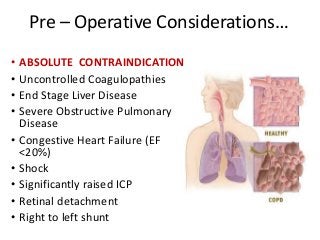
N2 Does not support combustion ,
poorly absorbed , avoids
hypercapnia
Low blood solubility –dangerous consequences
if gas embolization occurs
N2O May be benificial in patients
undergoing procedures under
regional anaesthesia
Supports combustion
Helium
/Argon
Poorly absorbed – avoids
hypercapnia , does not supports
combustion
Low blood solubility –dangerous consequences
if gas embolization occurs. Not cost effective
CO2 Does not support combustion Absorbed in large quantities from the peritoneal
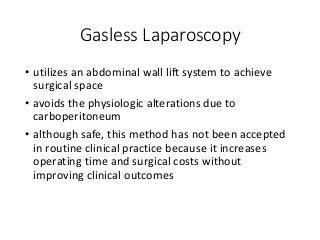
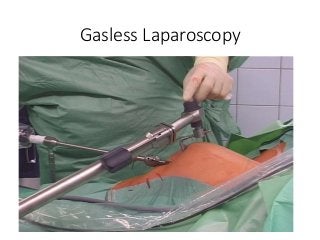
Gasless Laparoscopy
• utilizes an abdominal wall lift system to achieve
surgical space
• avoids the physiologic alterations due to
carboperitoneum
• although safe, this method has not been accepted
in routine clinical practice because it increases
operating time and surgical costs without
improving clinical outcomes
Gasless Laparoscopy
PHYSIOLOGICAL CHANGES
FROM PNEUMOPERITONEUM
and POSITIONING
• the physiologic consequences of laparoscopy can
be complex and depend on the interactions
between:
i. patient’s pre-existing cardiopulmonary status, and
ii. surgical factors
• magnitude of IAP
• degree of CO2 absorption
• alteration of patient position
• type of surgical procedure
the various physiological changes can be studied
under:
• Respiratory and Gas exchange effects
• Haemodynamic Changes/ Cardiovascular effects
• Effects in Regional Perfusion
Respiratory Complications
1. Carbon dioxide subcutaneous emphysema—due
to extra-peritoneal insufflation
2. Pneumothorax, pneumomediastinum,
pneumopericardium, capnothorax
3. Endobronchial intubation—due to cephalad
movement of the diaphragm
4. Gas embolism
5. Aspiration of gastric contents
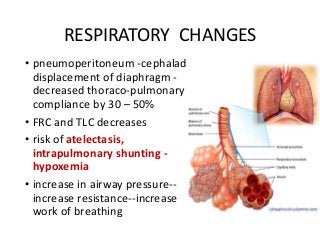
RESPIRATORY CHANGES
• pneumoperitoneum -cephalad
displacement of diaphragm -
decreased thoraco-pulmonary
compliance by 30 – 50%
• FRC and TLC decreases
• risk of atelectasis,
intrapulmonary shunting -
hypoxemia
• increase in airway pressure--
increase resistance--increase
work of breathing
RESPIRATORY CHANGES
• risk of increased physiological dead space, V/Q
mismatch and shunting
• unlikely with IAP 14mm Hg and Head up position of 10
– 20 degrees
• but may be of concern in patients with respiratory and
cardiovascular diseases
RESPIRATORY PROBLEMS
ENDOBRONCHIAL INTUBATION
• cephalad displacement of the
diaphragm due to pneumoperitoneum
can result into cephalad displacement
of carina
• decreased oxygen saturation (SaO2)
• increase in the airway pressure
RESPIRATORY PROBLEMS
INCREASE in PaCO2
• absorption of the gas from the peritoneal cavity
depends on :
• diffusibility
• absorption Area
• perfusion of the walls of the cavity
• duration of Surgery
.. Increase in PaCO2
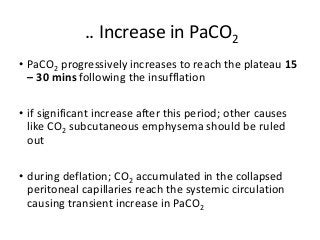
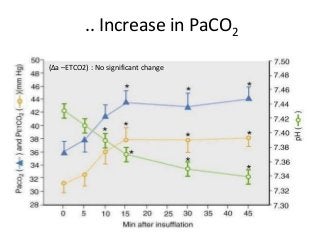
• PaCO2 progressively increases to reach the plateau 15
– 30 mins following the insufflation
• if significant increase after this period; other causes
like CO2 subcutaneous emphysema should be ruled
out
• during deflation; CO2 accumulated in the collapsed
peritoneal capillaries reach the systemic circulation
causing transient increase in PaCO2
.. End tidal CO2 tension (PETCO2)
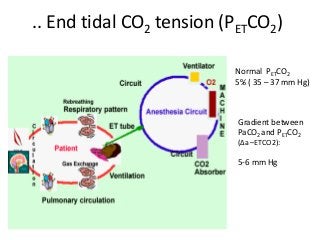
Normal PETCO2
5% ( 35 – 37 mm Hg)
Gradient between
PaCO2 and PETCO2
(Δa –ETCO2):
5-6 mm Hg
.. Increase in PaCO2
(Δa –ETCO2) : No significant change
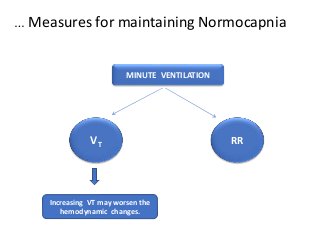
… Measures for maintaining Normocapnia
MINUTE VENTILATION
VT RR
Increasing VT may worsen the
hemodynamic changes.
RESPIRATORY PROBLEMS
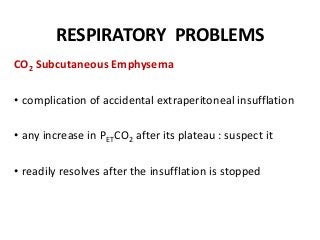
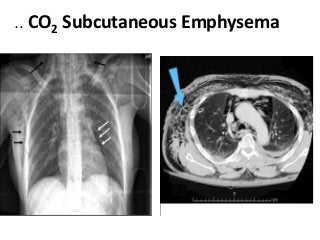
CO2 Subcutaneous Emphysema
• complication of accidental extraperitoneal insufflation
• any increase in PETCO2 after its plateau : suspect it
• readily resolves after the insufflation is stopped
.. CO2 Subcutaneous Emphysema
RESPIRATORY PROBLEMS
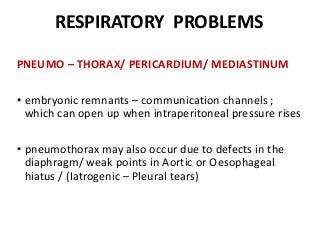
PNEUMO – THORAX/ PERICARDIUM/ MEDIASTINUM
• embryonic remnants – communication channels ;
which can open up when intraperitoneal pressure rises
• pneumothorax may also occur due to defects in the
diaphragm/ weak points in Aortic or Oesophageal
hiatus / (Iatrogenic – Pleural tears)
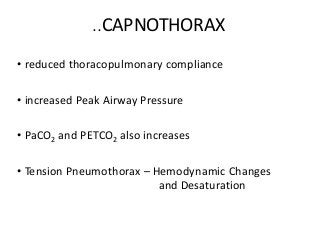
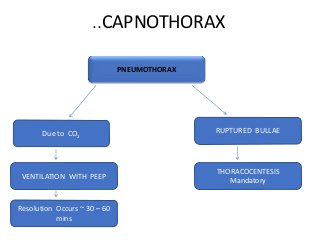
..CAPNOTHORAX
• reduced thoracopulmonary compliance
• increased Peak Airway Pressure
• PaCO2 and PETCO2 also increases
• Tension Pneumothorax – Hemodynamic Changes
and Desaturation
..CAPNOTHORAX
PNEUMOTHORAX
Due to CO2
RUPTURED BULLAE
VENTILATION WITH PEEP
THORACOCENTESIS
Mandatory
Resolution Occurs ~ 30 – 60
mins
RESPIRATORY PROBLEMS
• GAS EMBOLISM
• rare but most dangerous
• accidental needle or
trochar placement into a
vessel
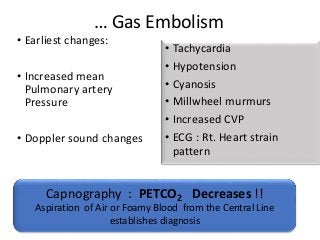
… Gas Embolism
• Earliest changes:
• Increased mean
Pulmonary artery
Pressure
• Doppler sound changes
• Tachycardia
• Hypotension
• Cyanosis
• Millwheel murmurs
• Increased CVP
• ECG : Rt. Heart strain
pattern
Capnography : PETCO2 Decreases !!
Aspiration of Air or Foamy Blood from the Central Line
establishes diagnosis
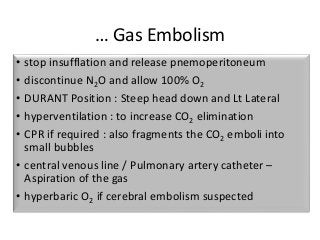
… Gas Embolism
• stop insufflation and release pnemoperitoneum
• discontinue N2O and allow 100% O2
• DURANT Position : Steep head down and Lt Lateral
• hyperventilation : to increase CO2 elimination
• CPR if required : also fragments the CO2 emboli into
small bubbles
• central venous line / Pulmonary artery catheter –
Aspiration of the gas
• hyperbaric O2 if cerebral embolism suspected
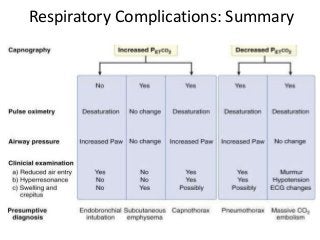
Respiratory Complications: Summary
HAEMODYNAMIC PROBLEMS
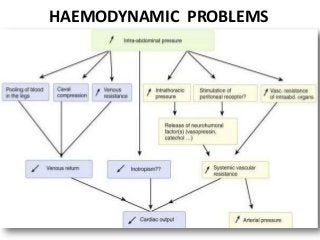
DECREASED CARDIAC OUTPUT
• significant haemodynamic alterations occur after IAP >
10 mm Hg and and is proportional to IAP changes
• Cardiac Output falls by 10 - 30% due to peritoneal
insufflation whether the position is head up or down
.. Decreased Cardiac Output
• Mechanism :
1. increased IAP( >15mm of Hg) and Vena-caval
compression
2. head up position: pooling of the blood in venous
system
3. increased Venous Resistance
.. Decreased Cardiac Output
• fall in CO attenuated by increasing circulating volume
before pneumoperitoneum is created
• slight head down position before insufflation
• sequential Pneumatic compression devices
• leg elastic bandages
HAEMODYNAMIC PROBLEMS
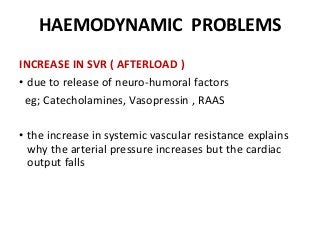
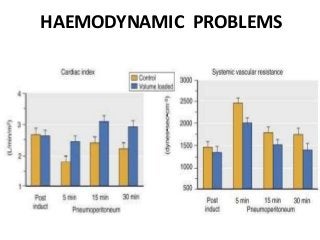
INCREASE IN SVR ( AFTERLOAD )
• due to release of neuro-humoral factors
eg; Catecholamines, Vasopressin , RAAS
• the increase in systemic vascular resistance explains
why the arterial pressure increases but the cardiac
output falls
HAEMODYNAMIC PROBLEMS
• Increased IAP and Head up position results in Venous
Statis, may predispose to the development of
thromboembolic complications
Effect of pneumoperitoneum on
Regional Perfusion
1.Renal effects: decrease in renal blood flow --
glomerular filtration rate due to the reduction in
cardiac output-- reduction in intra-operative urine
output
2.Splanchnic and hepatic blood flow: unclear
3.Gastrointestinal effects: Raised intra-abdominal
pressure can predispose the patient to
regurgitation and aspiration
4.Neurologic effects: hypercapnia, head-low position,
and elevated systemic vascular resistance ----
increase in ICP with a resultant decrease in cerebral
perfusion pressure
5.Ocular effects: increase in IOP
6.Neuroendocrine effects: Increased levels of stress
hormones. Increase in ADH and aldosterone levels
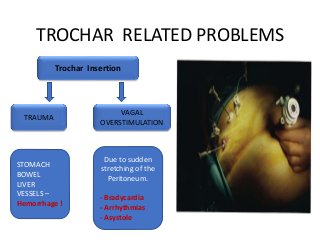
TROCHAR RELATED PROBLEMS
Trochar Insertion
TRAUMA
VAGAL
OVERSTIMULATION
STOMACH
BOWEL
LIVER
VESSELS –
Hemorrhage !
Due to sudden
stretching of the
Peritoneum.
- Bradycardia
- Arrhythmias
- Asystole
Problem with position
1.Reverse Trendelenburg (head up):
• blood pooling in the lower extremities--- Preload is
decreased, resulting in lowered pressure (MAP)
• increase the risk of venous thrombosis and
pulmonary emboli.
• however, pulmonary function is improved
2. Trendelenburg position (head down):
• cardiac output and central venous pressure
increase
• decreased functional residual capacity, decreased
total lung capacity, and decreased pulmonary
compliance, predisposing the patient to developing
atelectasis
• endobronchial intubation
Problem with positioning
3. Nerve injuries :
 ulnar nerve- when the upper limbs are adducted against
the body
 brachial plexus- when using shoulder braces
 common peroneal nerve- in the lithotomy position
• in steep head-up position, the patient must be securely
strapped to prevent the patient from slipping off the
table
• access to intravenous lines may be a problem, and the
use of extension tubing may be needed
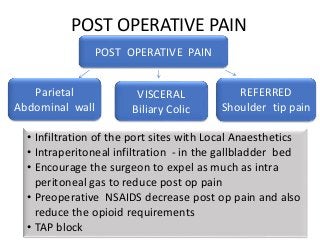
POST OPERATIVE PAIN
• Infiltration of the port sites with Local Anaesthetics
• Intraperitoneal infiltration - in the gallbladder bed
• Encourage the surgeon to expel as much as intra
peritoneal gas to reduce post op pain
• Preoperative NSAIDS decrease post op pain and also
reduce the opioid requirements
• TAP block
POST OPERATIVE PAIN
Parietal
Abdominal wall
VISCERAL
Biliary Colic
REFERRED
Shoulder tip pain
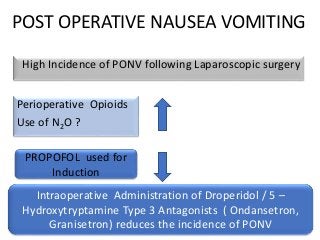
POST OPERATIVE NAUSEA VOMITING
High Incidence of PONV following Laparoscopic surgery
Perioperative Opioids
Use of N2O ?
PROPOFOL used for
Induction
Intraoperative Administration of Droperidol / 5 –
Hydroxytryptamine Type 3 Antagonists ( Ondansetron,
Granisetron) reduces the incidence of PONV
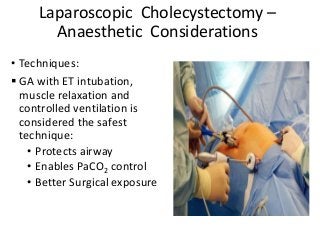
Laparoscopic Cholecystectomy –
Anaesthetic Considerations
• Techniques:
 GA with ET intubation,
muscle relaxation and
controlled ventilation is
considered the safest
technique:
• Protects airway
• Enables PaCO2 control
• Better Surgical exposure
Laparoscopic Cholecystectomy –
Anaesthetic Considerations
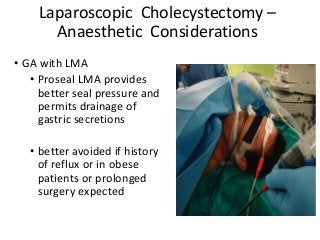
• GA with LMA
• Proseal LMA provides
better seal pressure and
permits drainage of
gastric secretions
• better avoided if history
of reflux or in obese
patients or prolonged
surgery expected
Laparoscopic Cholecystectomy –
Anaesthetic Considerations
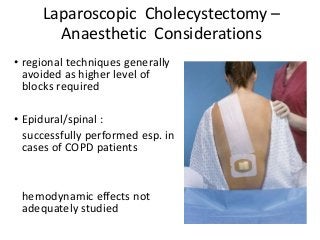
• regional techniques generally
avoided as higher level of
blocks required
• Epidural/spinal :
successfully performed esp. in
cases of COPD patients
hemodynamic effects not
adequately studied
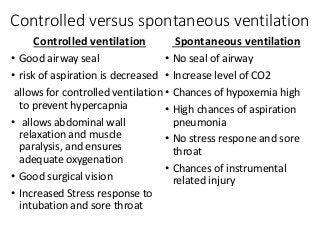
Controlled versus spontaneous ventilation
Controlled ventilation
• Good airway seal
• risk of aspiration is decreased
allows for controlled ventilation
to prevent hypercapnia
• allows abdominal wall
relaxation and muscle
paralysis, and ensures
adequate oxygenation
• Good surgical vision
• Increased Stress response to
intubation and sore throat
Spontaneous ventilation
• No seal of airway
• Increase level of CO2
• Chances of hypoxemia high
• High chances of aspiration
pneumonia
• No stress respone and sore
throat
• Chances of instrumental
related injury
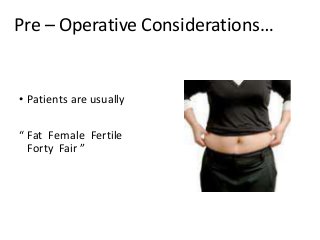
Pre – Operative Considerations…
• Patients are usually
“ Fat Female Fertile
Forty Fair ”
Pre – Operative Considerations…
• ABSOLUTE CONTRAINDICATION
• Uncontrolled Coagulopathies
• End Stage Liver Disease
• Severe Obstructive Pulmonary
Disease
• Congestive Heart Failure (EF
<20%)
• Shock
• Significantly raised ICP
• Retinal detachment
• Right to left shunt
Pre – Operative Considerations…
• POTENTIALLY DIFFICULT (Previous Relative Contraindications)
• Acute Cholecystitis
• Empyema/ Gangrene of Gallbladder
• Pregnancy
• Obesity
• Ventriculo – Peritoneal Shunt
• Previous abdominal surgeries
• Biliary Enteric Fistula
Preoperative assesment
• History- comorbid condition , medication , surgical history,
personal history, family history
• General physical and systemic examination
• Investigation:
• hemogram, liver and renal function tests, chest X-ray and
ECG
• if history or ECG is suggestive of cardiac disease-- 2D-
Echocardiogrpaphy or stress testing is indicated
• Deep venous thrombosis prophylaxis with heparin or low-
molecular weight heparins should be considered
Preoperative consideration
• Monitoring:
-electrocardiogram, noninvasive arterial pressure monitor,
airway pressure monitor, pulse oximeter, ETCO2
concentration monitor, peripheral nerve stimulator
(optional) and core body temperature monitoring
• continuous arterial pressure, cardiac filling pressures and
blood gases monitoring --- For patients with compromised
cardiopulmonary function
Pre – Operative Considerations…
• Premedication with : (Increased risk for aspiration)
• H2 Antagonists/ Proton Pump Inhibitors
• Metoclopromide
• Esp. in Obese patients
• Premedications with analgesics – Paracetamol or
NSAIDS – Better post operative pain control
• all patients have risk of conversion into open
procedure
Pre – Operative Considerations…
• Hypovolemia should be avoided.
• Pre- operative fluid deficits must be corrected
• Preloading – decrease the fall in the cardiac output.
• Adequate level of anaesthesia / Premedication with
Vagolytics – May prevent vagal stimulation
Peri- operative considerations..
• Choice of anaesthetic technique – GA + ETT safest
• Propofol as inducing agent – less incidence of Post – op
nausea and vomiting.
• Avoid gastric distention during bag and mask
ventilation.
• N2O : Gastric distention / Post op nausea vomiting
• Use of gastric tube to deflate the stomach.
Peri- operative considerations..
• Increased CO2 absorption will require increased minute
ventilation. ( VT increase may increase hemodynamic
changes / Requires RR control )
• normocarbia desirable
• if difficult, may require intermittent release of the
insufflating gas
• possible causes of Hypoxemia during the surgery !!
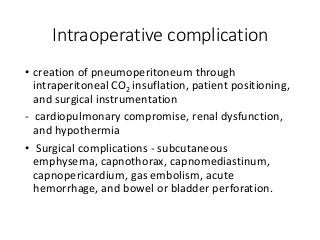
Intraoperative complication
• creation of pneumoperitoneum through
intraperitoneal CO2 insuflation, patient positioning,
and surgical instrumentation
- cardiopulmonary compromise, renal dysfunction,
and hypothermia
• Surgical complications - subcutaneous
emphysema, capnothorax, capnomediastinum,
capnopericardium, gas embolism, acute
hemorrhage, and bowel or bladder perforation.
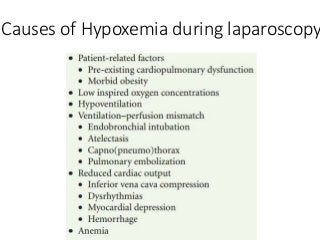
Causes of Hypoxemia during laparoscopy
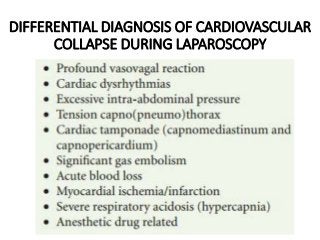
DIFFERENTIAL DIAGNOSIS OF CARDIOVASCULAR
COLLAPSE DURING LAPAROSCOPY
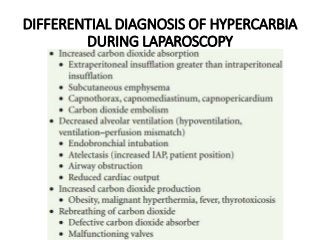
DIFFERENTIAL DIAGNOSIS OF HYPERCARBIA
DURING LAPAROSCOPY
PREVENTION OF CARDIOPULMONARY
CHANGES IN PATIENTS WITH SIGNIFICANT
CARDIOPULMONARY DISEASE
Peri- operative considerations..
• Anti – emetics
• Prophylactically given during the end of the
surgery
• 5 – HT3 Antagonists
• Check for endobronchial intubation after gas
insufflation and after positional changes
Post Operative Considerations …
• Encourage the surgeon to expel as much of intra-
peritoneal gas following surgery.
• Pain : Intra- peritoneal and port sites infiltration with
local anaesthetics
• Continuation of antiemetics and analgesics.
• Increased O2 demand after surgery (PaO2 decrease).
Extubation
• prolonged laparoscopy in the Trendelenburg
position requires special considerations
• delay extubation if the patient has edema, venous
congestion, and duskiness of the head and neck
• sometimes the tongue becomes edematous
Thank You!!!

Anaesthesia for lap chole

  • 1.
  • 2.
    Introduction • the developmentof “minimally invasive surgery” or “minimal access surgery” has revolutionized the field of surgery • Carl Langenbuch : 1st successful cholecystectomy in 1882 • Philippe Mouret : Introduced Laparoscopic Cholecystectomy in 1987
  • 3.
    Advantages • minimizes surgicalincision and stress response • decreases postoperative pain and opioid requirements • preserves diaphragmatic function • improves postoperative pulmonary function • earlier return of bowel function
  • 4.
    Advantages Contd… • fewerwound-related complications • earlier ambulation • shorter hospital stays • early return to normal activities and work • reduces health costs
  • 5.
    Minimally Invasive surgery maynot be Minimally stressful to the patient !!!
  • 6.
    The Pneumoperitoneum andthe patient positions required for laparoscopy induce pathophysiologic changes that complicate anaesthetic management.
  • 7.
    PNEUMOPERITONEUM • insufflation ofthe peritoneal cavity with gas • CO2- used most commonly • CO2 – • non combustible - allows the use of Diathermy or Laser • highly Soluble – rapid elimination of absorbed gas • colourless • non – toxic • less expensive
  • 8.
    PNEUMOPERITONEUM • CO2 isinsufflated at the rate of 4- 6L/min to the pressure of 10 -15 mm Hg • Pneumoperitoneum is maintained by a constant gas flow of: 200 – 400 ml / min
  • 9.
    Gases used tocreate Pneumoperitoneum Gas Advantages Diaadvantages Air, O2 Easily avialable, inexpensive , limited physiological effect Support combustion N2 Does not support combustion , poorly absorbed , avoids hypercapnia Low blood solubility –dangerous consequences if gas embolization occurs N2O May be benificial in patients undergoing procedures under regional anaesthesia Supports combustion Helium /Argon Poorly absorbed – avoids hypercapnia , does not supports combustion Low blood solubility –dangerous consequences if gas embolization occurs. Not cost effective CO2 Does not support combustion Absorbed in large quantities from the peritoneal
  • 10.
    Gasless Laparoscopy • utilizesan abdominal wall lift system to achieve surgical space • avoids the physiologic alterations due to carboperitoneum • although safe, this method has not been accepted in routine clinical practice because it increases operating time and surgical costs without improving clinical outcomes
  • 11.
  • 12.
  • 13.
    • the physiologicconsequences of laparoscopy can be complex and depend on the interactions between: i. patient’s pre-existing cardiopulmonary status, and ii. surgical factors • magnitude of IAP • degree of CO2 absorption • alteration of patient position • type of surgical procedure
  • 14.
    the various physiologicalchanges can be studied under: • Respiratory and Gas exchange effects • Haemodynamic Changes/ Cardiovascular effects • Effects in Regional Perfusion
  • 15.
    Respiratory Complications 1. Carbondioxide subcutaneous emphysema—due to extra-peritoneal insufflation 2. Pneumothorax, pneumomediastinum, pneumopericardium, capnothorax 3. Endobronchial intubation—due to cephalad movement of the diaphragm 4. Gas embolism 5. Aspiration of gastric contents
  • 16.
    RESPIRATORY CHANGES • pneumoperitoneum-cephalad displacement of diaphragm - decreased thoraco-pulmonary compliance by 30 – 50% • FRC and TLC decreases • risk of atelectasis, intrapulmonary shunting - hypoxemia • increase in airway pressure-- increase resistance--increase work of breathing
  • 17.
    RESPIRATORY CHANGES • riskof increased physiological dead space, V/Q mismatch and shunting • unlikely with IAP 14mm Hg and Head up position of 10 – 20 degrees • but may be of concern in patients with respiratory and cardiovascular diseases
  • 18.
    RESPIRATORY PROBLEMS ENDOBRONCHIAL INTUBATION •cephalad displacement of the diaphragm due to pneumoperitoneum can result into cephalad displacement of carina • decreased oxygen saturation (SaO2) • increase in the airway pressure
  • 19.
    RESPIRATORY PROBLEMS INCREASE inPaCO2 • absorption of the gas from the peritoneal cavity depends on : • diffusibility • absorption Area • perfusion of the walls of the cavity • duration of Surgery
  • 20.
    .. Increase inPaCO2 • PaCO2 progressively increases to reach the plateau 15 – 30 mins following the insufflation • if significant increase after this period; other causes like CO2 subcutaneous emphysema should be ruled out • during deflation; CO2 accumulated in the collapsed peritoneal capillaries reach the systemic circulation causing transient increase in PaCO2
  • 21.
    .. End tidalCO2 tension (PETCO2) Normal PETCO2 5% ( 35 – 37 mm Hg) Gradient between PaCO2 and PETCO2 (Δa –ETCO2): 5-6 mm Hg
  • 22.
    .. Increase inPaCO2 (Δa –ETCO2) : No significant change
  • 23.
    … Measures formaintaining Normocapnia MINUTE VENTILATION VT RR Increasing VT may worsen the hemodynamic changes.
  • 24.
    RESPIRATORY PROBLEMS CO2 SubcutaneousEmphysema • complication of accidental extraperitoneal insufflation • any increase in PETCO2 after its plateau : suspect it • readily resolves after the insufflation is stopped
  • 25.
  • 26.
    RESPIRATORY PROBLEMS PNEUMO –THORAX/ PERICARDIUM/ MEDIASTINUM • embryonic remnants – communication channels ; which can open up when intraperitoneal pressure rises • pneumothorax may also occur due to defects in the diaphragm/ weak points in Aortic or Oesophageal hiatus / (Iatrogenic – Pleural tears)
  • 27.
    ..CAPNOTHORAX • reduced thoracopulmonarycompliance • increased Peak Airway Pressure • PaCO2 and PETCO2 also increases • Tension Pneumothorax – Hemodynamic Changes and Desaturation
  • 28.
    ..CAPNOTHORAX PNEUMOTHORAX Due to CO2 RUPTUREDBULLAE VENTILATION WITH PEEP THORACOCENTESIS Mandatory Resolution Occurs ~ 30 – 60 mins
  • 29.
    RESPIRATORY PROBLEMS • GASEMBOLISM • rare but most dangerous • accidental needle or trochar placement into a vessel
  • 30.
    … Gas Embolism •Earliest changes: • Increased mean Pulmonary artery Pressure • Doppler sound changes • Tachycardia • Hypotension • Cyanosis • Millwheel murmurs • Increased CVP • ECG : Rt. Heart strain pattern Capnography : PETCO2 Decreases !! Aspiration of Air or Foamy Blood from the Central Line establishes diagnosis
  • 31.
    … Gas Embolism •stop insufflation and release pnemoperitoneum • discontinue N2O and allow 100% O2 • DURANT Position : Steep head down and Lt Lateral • hyperventilation : to increase CO2 elimination • CPR if required : also fragments the CO2 emboli into small bubbles • central venous line / Pulmonary artery catheter – Aspiration of the gas • hyperbaric O2 if cerebral embolism suspected
  • 32.
  • 33.
    HAEMODYNAMIC PROBLEMS DECREASED CARDIACOUTPUT • significant haemodynamic alterations occur after IAP > 10 mm Hg and and is proportional to IAP changes • Cardiac Output falls by 10 - 30% due to peritoneal insufflation whether the position is head up or down
  • 34.
    .. Decreased CardiacOutput • Mechanism : 1. increased IAP( >15mm of Hg) and Vena-caval compression 2. head up position: pooling of the blood in venous system 3. increased Venous Resistance
  • 35.
    .. Decreased CardiacOutput • fall in CO attenuated by increasing circulating volume before pneumoperitoneum is created • slight head down position before insufflation • sequential Pneumatic compression devices • leg elastic bandages
  • 36.
    HAEMODYNAMIC PROBLEMS INCREASE INSVR ( AFTERLOAD ) • due to release of neuro-humoral factors eg; Catecholamines, Vasopressin , RAAS • the increase in systemic vascular resistance explains why the arterial pressure increases but the cardiac output falls
  • 37.
  • 38.
  • 39.
    HAEMODYNAMIC PROBLEMS • IncreasedIAP and Head up position results in Venous Statis, may predispose to the development of thromboembolic complications
  • 40.
    Effect of pneumoperitoneumon Regional Perfusion 1.Renal effects: decrease in renal blood flow -- glomerular filtration rate due to the reduction in cardiac output-- reduction in intra-operative urine output 2.Splanchnic and hepatic blood flow: unclear 3.Gastrointestinal effects: Raised intra-abdominal pressure can predispose the patient to regurgitation and aspiration
  • 41.
    4.Neurologic effects: hypercapnia,head-low position, and elevated systemic vascular resistance ---- increase in ICP with a resultant decrease in cerebral perfusion pressure 5.Ocular effects: increase in IOP 6.Neuroendocrine effects: Increased levels of stress hormones. Increase in ADH and aldosterone levels
  • 42.
    TROCHAR RELATED PROBLEMS TrocharInsertion TRAUMA VAGAL OVERSTIMULATION STOMACH BOWEL LIVER VESSELS – Hemorrhage ! Due to sudden stretching of the Peritoneum. - Bradycardia - Arrhythmias - Asystole
  • 43.
    Problem with position 1.ReverseTrendelenburg (head up): • blood pooling in the lower extremities--- Preload is decreased, resulting in lowered pressure (MAP) • increase the risk of venous thrombosis and pulmonary emboli. • however, pulmonary function is improved
  • 44.
    2. Trendelenburg position(head down): • cardiac output and central venous pressure increase • decreased functional residual capacity, decreased total lung capacity, and decreased pulmonary compliance, predisposing the patient to developing atelectasis • endobronchial intubation
  • 45.
    Problem with positioning 3.Nerve injuries :  ulnar nerve- when the upper limbs are adducted against the body  brachial plexus- when using shoulder braces  common peroneal nerve- in the lithotomy position • in steep head-up position, the patient must be securely strapped to prevent the patient from slipping off the table • access to intravenous lines may be a problem, and the use of extension tubing may be needed
  • 46.
    POST OPERATIVE PAIN •Infiltration of the port sites with Local Anaesthetics • Intraperitoneal infiltration - in the gallbladder bed • Encourage the surgeon to expel as much as intra peritoneal gas to reduce post op pain • Preoperative NSAIDS decrease post op pain and also reduce the opioid requirements • TAP block POST OPERATIVE PAIN Parietal Abdominal wall VISCERAL Biliary Colic REFERRED Shoulder tip pain
  • 47.
    POST OPERATIVE NAUSEAVOMITING High Incidence of PONV following Laparoscopic surgery Perioperative Opioids Use of N2O ? PROPOFOL used for Induction Intraoperative Administration of Droperidol / 5 – Hydroxytryptamine Type 3 Antagonists ( Ondansetron, Granisetron) reduces the incidence of PONV
  • 48.
    Laparoscopic Cholecystectomy – AnaestheticConsiderations • Techniques:  GA with ET intubation, muscle relaxation and controlled ventilation is considered the safest technique: • Protects airway • Enables PaCO2 control • Better Surgical exposure
  • 49.
    Laparoscopic Cholecystectomy – AnaestheticConsiderations • GA with LMA • Proseal LMA provides better seal pressure and permits drainage of gastric secretions • better avoided if history of reflux or in obese patients or prolonged surgery expected
  • 50.
    Laparoscopic Cholecystectomy – AnaestheticConsiderations • regional techniques generally avoided as higher level of blocks required • Epidural/spinal : successfully performed esp. in cases of COPD patients hemodynamic effects not adequately studied
  • 51.
    Controlled versus spontaneousventilation Controlled ventilation • Good airway seal • risk of aspiration is decreased allows for controlled ventilation to prevent hypercapnia • allows abdominal wall relaxation and muscle paralysis, and ensures adequate oxygenation • Good surgical vision • Increased Stress response to intubation and sore throat Spontaneous ventilation • No seal of airway • Increase level of CO2 • Chances of hypoxemia high • High chances of aspiration pneumonia • No stress respone and sore throat • Chances of instrumental related injury
  • 52.
    Pre – OperativeConsiderations… • Patients are usually “ Fat Female Fertile Forty Fair ”
  • 53.
    Pre – OperativeConsiderations… • ABSOLUTE CONTRAINDICATION • Uncontrolled Coagulopathies • End Stage Liver Disease • Severe Obstructive Pulmonary Disease • Congestive Heart Failure (EF <20%) • Shock • Significantly raised ICP • Retinal detachment • Right to left shunt
  • 54.
    Pre – OperativeConsiderations… • POTENTIALLY DIFFICULT (Previous Relative Contraindications) • Acute Cholecystitis • Empyema/ Gangrene of Gallbladder • Pregnancy • Obesity • Ventriculo – Peritoneal Shunt • Previous abdominal surgeries • Biliary Enteric Fistula
  • 55.
    Preoperative assesment • History-comorbid condition , medication , surgical history, personal history, family history • General physical and systemic examination • Investigation: • hemogram, liver and renal function tests, chest X-ray and ECG • if history or ECG is suggestive of cardiac disease-- 2D- Echocardiogrpaphy or stress testing is indicated • Deep venous thrombosis prophylaxis with heparin or low- molecular weight heparins should be considered
  • 56.
    Preoperative consideration • Monitoring: -electrocardiogram,noninvasive arterial pressure monitor, airway pressure monitor, pulse oximeter, ETCO2 concentration monitor, peripheral nerve stimulator (optional) and core body temperature monitoring • continuous arterial pressure, cardiac filling pressures and blood gases monitoring --- For patients with compromised cardiopulmonary function
  • 57.
    Pre – OperativeConsiderations… • Premedication with : (Increased risk for aspiration) • H2 Antagonists/ Proton Pump Inhibitors • Metoclopromide • Esp. in Obese patients • Premedications with analgesics – Paracetamol or NSAIDS – Better post operative pain control • all patients have risk of conversion into open procedure
  • 58.
    Pre – OperativeConsiderations… • Hypovolemia should be avoided. • Pre- operative fluid deficits must be corrected • Preloading – decrease the fall in the cardiac output. • Adequate level of anaesthesia / Premedication with Vagolytics – May prevent vagal stimulation
  • 59.
    Peri- operative considerations.. •Choice of anaesthetic technique – GA + ETT safest • Propofol as inducing agent – less incidence of Post – op nausea and vomiting. • Avoid gastric distention during bag and mask ventilation. • N2O : Gastric distention / Post op nausea vomiting • Use of gastric tube to deflate the stomach.
  • 60.
    Peri- operative considerations.. •Increased CO2 absorption will require increased minute ventilation. ( VT increase may increase hemodynamic changes / Requires RR control ) • normocarbia desirable • if difficult, may require intermittent release of the insufflating gas • possible causes of Hypoxemia during the surgery !!
  • 61.
    Intraoperative complication • creationof pneumoperitoneum through intraperitoneal CO2 insuflation, patient positioning, and surgical instrumentation - cardiopulmonary compromise, renal dysfunction, and hypothermia • Surgical complications - subcutaneous emphysema, capnothorax, capnomediastinum, capnopericardium, gas embolism, acute hemorrhage, and bowel or bladder perforation.
  • 62.
    Causes of Hypoxemiaduring laparoscopy
  • 63.
    DIFFERENTIAL DIAGNOSIS OFCARDIOVASCULAR COLLAPSE DURING LAPAROSCOPY
  • 64.
    DIFFERENTIAL DIAGNOSIS OFHYPERCARBIA DURING LAPAROSCOPY
  • 65.
    PREVENTION OF CARDIOPULMONARY CHANGESIN PATIENTS WITH SIGNIFICANT CARDIOPULMONARY DISEASE
  • 66.
    Peri- operative considerations.. •Anti – emetics • Prophylactically given during the end of the surgery • 5 – HT3 Antagonists • Check for endobronchial intubation after gas insufflation and after positional changes
  • 67.
    Post Operative Considerations… • Encourage the surgeon to expel as much of intra- peritoneal gas following surgery. • Pain : Intra- peritoneal and port sites infiltration with local anaesthetics • Continuation of antiemetics and analgesics. • Increased O2 demand after surgery (PaO2 decrease).
  • 68.
    Extubation • prolonged laparoscopyin the Trendelenburg position requires special considerations • delay extubation if the patient has edema, venous congestion, and duskiness of the head and neck • sometimes the tongue becomes edematous
  • 69.

Editor's Notes

  • #3 The growth of laparoscopic surgical procedures is due to the use of smaller incisions that reduce surgical stress and postoperative pain as well as reduce overall morbidity, thus resulting in rapid recovery, earlier ambulation, shorter hospital stay, and rapid return to daily living activities
  • #8 that separates the viscera from the abdominal wall that allows surgical exposure and manipulation
  • #12 GASLESS LAPAROSCOPY Fan retractor used to lift the abdominal wall Avoids IAP increase and hemodynamic and respiratory changes Benefit in cardiac / respiratory disease pts
  • #17 The increase in intraabdominal pressure results in cephalad displacement of the diaphragm reducing FRC and compliance by as much as 30 to 50%. Peak airway and plateau pressure rises by 50 to 80% respectively and pulmonary compliance is reduced by 47 %
  • #23 In patient with cardiorespiratory disease or in case of cardiorespiratory disturbances , pneumoperitoneum impairs pulmonary ventilation and perfusion , resulting in increased physiologic dead space and reduced alveolar ventilation and increased PaCO2 to ETCO2 gradient. This lead to a greater increase in PaCO2 and more hyperventilation is required to prevent hypercapnia.
  • #24 During laparascopy with LA , minute ventilation increases by as much as 60% to maintain normocapnia. During GA with spontaneous breathing the compensatory hyperventilation is insufficient to avoid hypercapnia because of anaesthetic induced respiratory depression. In patients on controlled ventilation , a 15 to 20% increase in minute ventilation is needed to prevent hypercapnia.
  • #27 During laparoscopy, CO2 under pressure can pass from the abdominal cavity into the pleural and pericardial spaces through anatomic or congenital paths (e.g., the hiatus around the esophagus) or through acquired defects in the diaphragm. (Embryologically, before formation of the diaphragm, the peritoneal and pleural cavities derived from one sac.) CO2 gas insufflated retroperitoneally gains rapid direct access to a vast space, and may result in widespread subcutaneous emphysema.
  • #33 Mill Wheel Murmur A temporary loud, machinery-like, churning or splashing sound due to blood mixing with air in the right ventricle, best heard over the precordium, which is a late sign of significant—i.e., > 200 mL—venous air embolism, accompanied by increased pressure, cyanosis, tachycardia, syncope. It may be of pleural, pericardial, or cardiac origin.
  • #34  Hypercapnia due to CO2 pneumoperitoneum activates the sympathetic nervous system leading to an increase in blood pressure, heart rate, myocardial contractility, and arrhythmias. It also sensitizes the myocardium to catecholamines, particularly when volatile anesthetic agents are used . At IAP levels below 15 mm Hg, venous return is augmented as blood is squeezed out of the splanchnic venous bed, producing an increase in cardiac output.
  • #37  The increase in systemic vascular resistance causes an increase in arterial pressures. Right atrial and pulmonary artery occlusion pressures are elevated due to increased intrathoracic pressures and these cannot be considered to be reliable indices of cardiac filling pressure during pneumoperitoneum
  • #41 . Patients with pre-existing renal dysfunction are at risk of further deterioration. However, normally these changes are reversible and the urine output improves once intra-abdominal pressure comes down at the end of surgery Splanchnic and hepatic blood flow: unclear. Animal studies suggest that while hypercapnia has a vasodilatory effect, this is opposed by the vasoconstricting effect of the raised intra-abdominal pressure.
  • #42 Neurological:This may be exaggerated in patients with ventriculoperitoneal shunts which do not have a unidirectional valve.
  • #44 Pulmonary effects include impaired diaphragmatic function secondary to the cephalad displacement of abdominal viscera, resulting in decreased functional residual capacity, decreased total lung capacity, and decreased pulmonary compliance, predisposing the patient to developing atelectasis. Cephalad movement of the trachea may result in endobronchial intubation
  • #47  Recommended modalities of prevention and treatment include the use of suction to remove any blood and insufflated gas at the end of surgery as well as by instillation of normal saline to ‘dilute’ any local pain mediators.
  • #50  General anesthesia without intubation can be performed with a laryngeal mask airway. However, the decrease in compliance during pneumoperitoneum can lead to airway pressures exceeding 20 cm H2O. The ProSeal LMA may be a better alternative to the classic LMA because it allows an airway seal up to 30 cm H2O.
  • #51 The metabolic response is reduced by regional anesthesia. Regional anesthesia reduces the need for sedatives and narcotics, produces better muscle relaxation, and can be proposed for laparoscopic procedures other than sterilization. Shoulder-tip pain from diaphragmatic irritation and discomfort from abdominal distention are incompletely alleviated using epidural anesthesia alone.Extensive sensory block (T4-L5) is necessary for surgical laparoscopy and may also lead to discomfort --increased patient anxiety, pain, and discomfort during the manipulation of pelvic and abdominal organs. For these reasons, local anesthesia is routinely supplemented with intravenous sedation. The combined effect of pneumoperitoneum and sedation can lead to hypoventilation and arterial oxygen desaturation.[296] Complex laparoscopic procedure must not be managed with local anesthesia.
  • #52 The ProSeal laryngeal mask airway may be an alternative to guarantee an airway seal up to 30 cm H2O
  • #60  It is recommended to avoid N2O for two reasons. First, it diffuses into the abdominal cavity in concentrations sufficient to support combustion of intestinal gas. second, it will diffuse into CO2/air bubbles, increasing their size and the potential for an obstruction of pulmonary circulation. There is some concern about N2O diffusing into the bowel and causing distension during laparoscopic surgery, but studies have shown no difference in operating conditions irrespective of whether N2O was used or not. The diffusion capacity of N2O is approximately 15 times that of O2 and 30 times that of nitrogen. Therefore, in a closed space that contains air, N2O enters faster than N2 can leave , thereby increasing the size of the closed space. It has been calculated that the volume of an enclosed air pocket can be doubled by inhalation of 50% N2O and quadrupled by inhalation of 75% N2O after several hours
  • #69 If unsure, check the eyes for conjunctival and lid edema, and keep the patient in head-up position until the conjunctivae no longer seem raised or watery