Anti- Leprosy drugs
Dr. Jessica Dali
Department of Pharmacology
NMCTH
Contents
• Introduction
• MDT schedules of Leprosy
• Individual drugs
• Lepra reactions
Leprosy/Hansen’s Disease
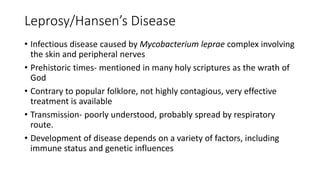
• Infectious disease caused by Mycobacterium leprae complex involving
the skin and peripheral nerves
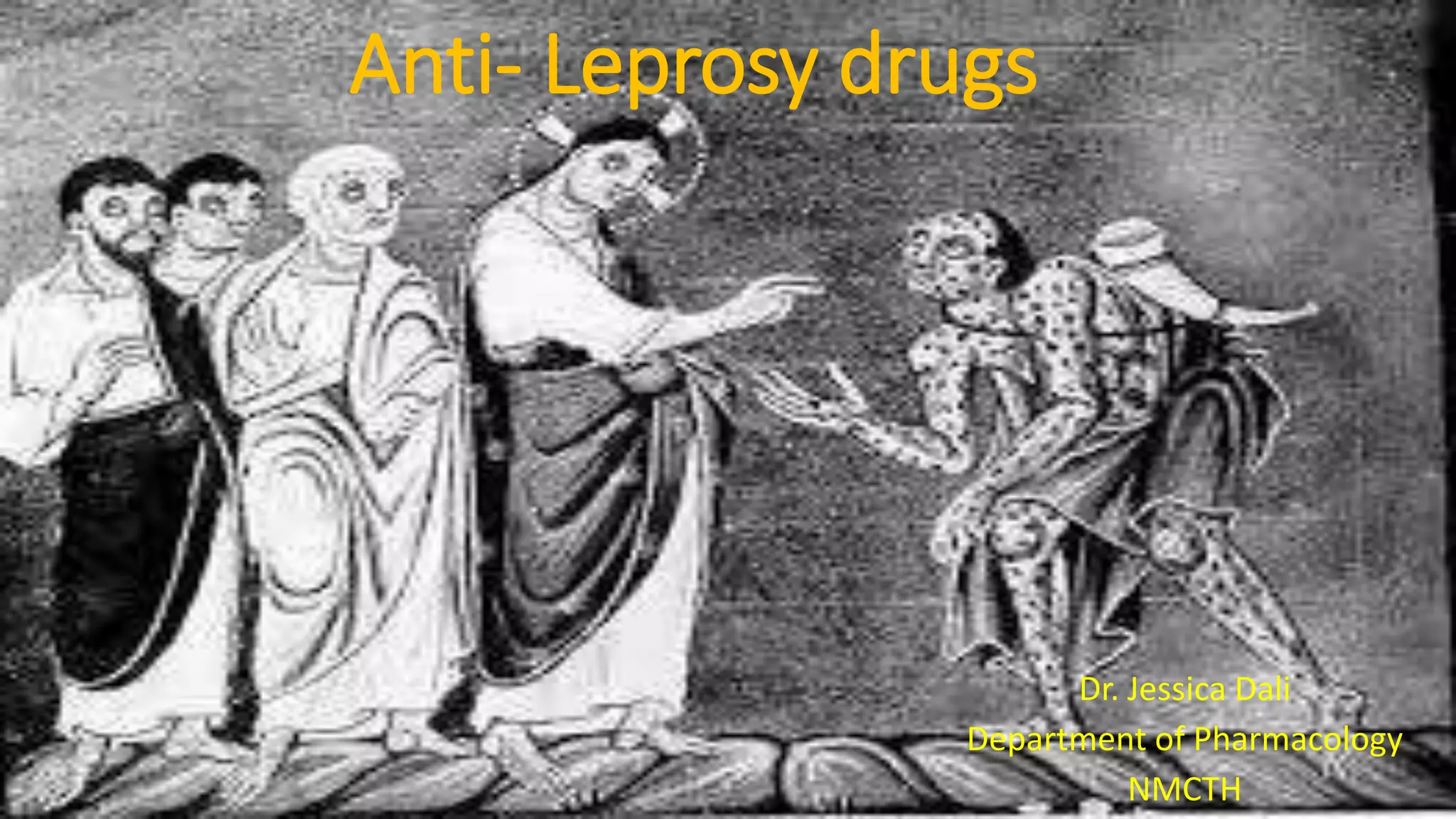
• Prehistoric times- mentioned in many holy scriptures as the wrath of
God
• Contrary to popular folklore, not highly contagious, very effective
treatment is available
• Transmission- poorly understood, probably spread by respiratory
route.
• Development of disease depends on a variety of factors, including
immune status and genetic influences
Drugs classification
1. Sulfones : Dapsone(DDS)
2. Phenazine drivatives : Clofazimine
3. Antitubercular drugs : Rifampin, Ethionamide
4. Other Antimicrobials : Ofloxacin, Moxifloxacin, Minocycline,
Clarithromycin
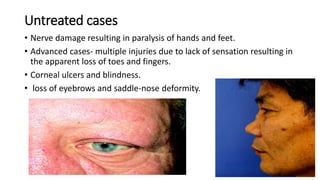
Untreated cases
• Nerve damage resulting in paralysis of hands and feet.
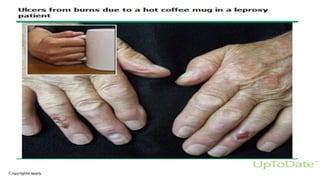
• Advanced cases- multiple injuries due to lack of sensation resulting in
the apparent loss of toes and fingers.
• Corneal ulcers and blindness.
• loss of eyebrows and saddle-nose deformity.
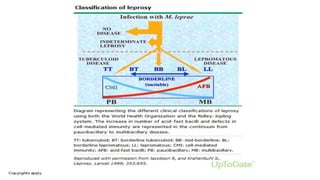
WHO classification of leprosy
• Multibacillary Leprosy (MB)- More than 6 skin lesions with positive
skin smears, (RJ classification- LL,BL and BB)
• Paucibacillary Leprosy (PB)- Less than 6 skin lesions with negative
skin smears, (RJ classification- TT, BT and I)
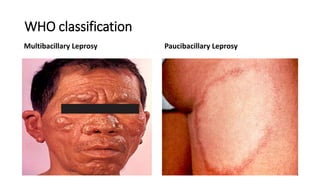
WHO classification
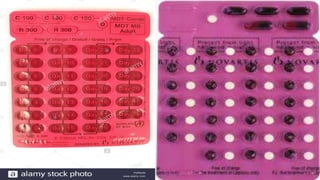
Multibacillary Leprosy Paucibacillary Leprosy
Multi Drug Treatment Schedules of Leprosy
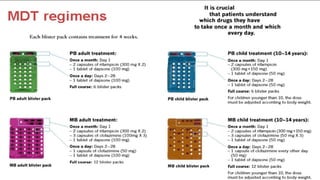
1. Multibacillary leprosy ( LL,BL and BB)
• Rifampicin 600 mg once monthly +
• Clofazimine 300mg once monthly SUPERVISED
• Dapsone 100mg daily + Clofazimine 50mg daily – unsupervised
• Duration of treatment 1 year
• Patient should be followed up for a period of 3-5 years
• If Clofazimine is unacceptable- Ethionamide 250 mg daily
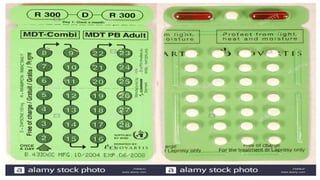
2. Paucibacillary leprosy (TT, BT and I)
• Rifampicin 600 mg once monthly supervised
• Dapsone 100 mg daily unsupervised
• Duration of treatment is 6 months
• Later the patient should be followed up for 1-2 years
Alternative regimens
• Clofazimine 50 mg + any 2 newer drugs ( Minocycline, Ofloxacin,
Clarithromycin, etc. ) daily for 6 months followed by Clofazimine
50mg + Ofloxacin/Minocycline daily for another 18 months
• Single lesion PB leprosy
• Rifampicin 600mg,
• Ofloxacin 400mg, and
• Minocycline 100mg oral as a single dose
Dapsone
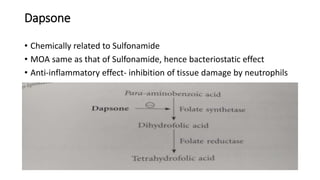
• Chemically related to Sulfonamide
• MOA same as that of Sulfonamide, hence bacteriostatic effect
• Anti-inflammatory effect- inhibition of tissue damage by neutrophils
Adverse effects of Dapsone
• Dose related hemolytic anemia mainly in G6PD deficient patients
• Headache, nervousness, insomnia
• Itching, peripheral neuropathy, Methaemoglobinaemia
• Sulphone syndrome -
• Seen 4-6 weeks after dapsone treatment
• Fever, dermatitis, lymphadenopathy, jaundice, anemia and hepatitis
• Management: stopping Dapsone in severe cases
• Corticosteroids (prednisolone 40 – 60 mg/day) – severe cases – till
reaction controlled – tapered over 8-12 weeks
Other uses of Dapsone
1. Combined with Proguanil for treatment of Malaria
2. P. jiroveci infection
3. Pemphigoid
4. Dermatitis herpetiformis
5. Linear IgA bullous disease
Clofazimine
• Dye with leprostatic activity against lepra bacilli
• Anti inflammatory effect, also useful in the treatment of type 2 lepra
reaction
• Binds to mycobacterial DNA to inhibit its replication
• Also has activity against dapsone- resistant organisms
• T ½- 70 days
Adverse effect-
• reddish black discoloration of skin,
• pigmentation of conjunctiva and cornea,
• discoloration of hair, sweat, tears, etc.
Rifampicin
• Active against most Gram positive as well as many Gram negative
bacteria
• Inhibit bacterial DNA-dependent RNA polymerase- bactericidal action
• Mostly used as an anti-mycobacterial drug
• Used for
1. TB
2. prophylaxis of meningococcal meningitis
Adverse effect of Rifampicin
• Generally well tolerated
• Rash, fever, nausea and vomiting
• Hepatotoxicity
• Orange discoloration of skin, urine, body fluids
• Inducer of CYP 450 enzymes – leads to therapeutic failure of many
drugs e.g. azole antifungals, steroids, barbiturates, oral
contraceptives, sulfonylureas etc.
Ethionamide
• Inhibits mycolic acid biosynthesis, consequent impairment of cell wall
synthesis
• A part of MDT regimen for TB, also used for Leprosy
• Adverse effects-
• GI upset and neurological symptoms
• Severe postural hypotension, mental depression, drowsiness
• Pyridoxine (Vit. B6) relieves neurological symptoms; its concomitant
administration is necessary
• Hepatitis
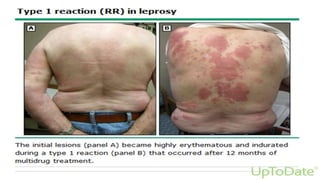
Type 1 Lepra reaction
• Delayed type Hypersensitivity seen with Tuberculoid Leprosy
• Inflammation of existing skin lesions- red, swollen and tender
• Nerves are frequently affected
• Treated with prednisolone and NSAIDs
• Prednisolone 40-60mg/day for at least 3 months to prevent
recurrence
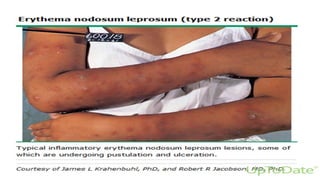
Type 2 Lepra Reaction (Erythema Nodosum
Leprosum, ENL)
• Type 3 hypersensitivity reaction
• New red, painful, tender cutaneous and subcutaneous nodules
• Nerves maybe affected
• Treated with thalidomide, steroids, aspirin, clofazimine, chloroquine
• Prednisone (40 to 60 mg/day) started and quickly tapered (over a
two-week period) when the reaction is controlled
• Clofazimine 100mg 3 times a day, 12 weeks, twice a day 12 weeks and
once a day 12 weeks, not exceeding 12 months in total
• Thalidomide is TERATOGENIC, caution in women of reproductive
age.
Compassion to your patients
• Reassure that MDT completely cures leprosy
• Any residual lesions will fade away slowly
• Rehabilitation of disabled patients back in the society
• Surgery of malformed organs/ cosmetic surgery
• Encourage to come back in case of any relapse
References
1. www.uptodate.com
2. Tara Shanbhag, Pharmacology Prep Manual for Undergraduates, 2nd
edition
3. KD Tripathi, Essentials of Medical Pharmacology, 6th edition
4. https://www.who.int/lep/epidemiology/en/
5. Goodman and Gilman’s the pharmacological basis of therapeutics,
12th edition
6. National Leprosy Eradication Programme, India

Anti leprosy drugs

  • 1.
    Anti- Leprosy drugs Dr.Jessica Dali Department of Pharmacology NMCTH
  • 2.
    Contents • Introduction • MDTschedules of Leprosy • Individual drugs • Lepra reactions
  • 4.
    Leprosy/Hansen’s Disease • Infectiousdisease caused by Mycobacterium leprae complex involving the skin and peripheral nerves • Prehistoric times- mentioned in many holy scriptures as the wrath of God • Contrary to popular folklore, not highly contagious, very effective treatment is available • Transmission- poorly understood, probably spread by respiratory route. • Development of disease depends on a variety of factors, including immune status and genetic influences
  • 6.
    Drugs classification 1. Sulfones: Dapsone(DDS) 2. Phenazine drivatives : Clofazimine 3. Antitubercular drugs : Rifampin, Ethionamide 4. Other Antimicrobials : Ofloxacin, Moxifloxacin, Minocycline, Clarithromycin
  • 7.
    Untreated cases • Nervedamage resulting in paralysis of hands and feet. • Advanced cases- multiple injuries due to lack of sensation resulting in the apparent loss of toes and fingers. • Corneal ulcers and blindness. • loss of eyebrows and saddle-nose deformity.
  • 9.
    WHO classification ofleprosy • Multibacillary Leprosy (MB)- More than 6 skin lesions with positive skin smears, (RJ classification- LL,BL and BB) • Paucibacillary Leprosy (PB)- Less than 6 skin lesions with negative skin smears, (RJ classification- TT, BT and I)
  • 10.
  • 11.
    Multi Drug TreatmentSchedules of Leprosy 1. Multibacillary leprosy ( LL,BL and BB) • Rifampicin 600 mg once monthly + • Clofazimine 300mg once monthly SUPERVISED • Dapsone 100mg daily + Clofazimine 50mg daily – unsupervised • Duration of treatment 1 year • Patient should be followed up for a period of 3-5 years • If Clofazimine is unacceptable- Ethionamide 250 mg daily
  • 12.
    2. Paucibacillary leprosy(TT, BT and I) • Rifampicin 600 mg once monthly supervised • Dapsone 100 mg daily unsupervised • Duration of treatment is 6 months • Later the patient should be followed up for 1-2 years
  • 13.
    Alternative regimens • Clofazimine50 mg + any 2 newer drugs ( Minocycline, Ofloxacin, Clarithromycin, etc. ) daily for 6 months followed by Clofazimine 50mg + Ofloxacin/Minocycline daily for another 18 months • Single lesion PB leprosy • Rifampicin 600mg, • Ofloxacin 400mg, and • Minocycline 100mg oral as a single dose
  • 17.
    Dapsone • Chemically relatedto Sulfonamide • MOA same as that of Sulfonamide, hence bacteriostatic effect • Anti-inflammatory effect- inhibition of tissue damage by neutrophils
  • 18.
    Adverse effects ofDapsone • Dose related hemolytic anemia mainly in G6PD deficient patients • Headache, nervousness, insomnia • Itching, peripheral neuropathy, Methaemoglobinaemia • Sulphone syndrome - • Seen 4-6 weeks after dapsone treatment • Fever, dermatitis, lymphadenopathy, jaundice, anemia and hepatitis • Management: stopping Dapsone in severe cases • Corticosteroids (prednisolone 40 – 60 mg/day) – severe cases – till reaction controlled – tapered over 8-12 weeks
  • 19.
    Other uses ofDapsone 1. Combined with Proguanil for treatment of Malaria 2. P. jiroveci infection 3. Pemphigoid 4. Dermatitis herpetiformis 5. Linear IgA bullous disease
  • 20.
    Clofazimine • Dye withleprostatic activity against lepra bacilli • Anti inflammatory effect, also useful in the treatment of type 2 lepra reaction • Binds to mycobacterial DNA to inhibit its replication • Also has activity against dapsone- resistant organisms • T ½- 70 days Adverse effect- • reddish black discoloration of skin, • pigmentation of conjunctiva and cornea, • discoloration of hair, sweat, tears, etc.
  • 21.
    Rifampicin • Active againstmost Gram positive as well as many Gram negative bacteria • Inhibit bacterial DNA-dependent RNA polymerase- bactericidal action • Mostly used as an anti-mycobacterial drug • Used for 1. TB 2. prophylaxis of meningococcal meningitis
  • 22.
    Adverse effect ofRifampicin • Generally well tolerated • Rash, fever, nausea and vomiting • Hepatotoxicity • Orange discoloration of skin, urine, body fluids • Inducer of CYP 450 enzymes – leads to therapeutic failure of many drugs e.g. azole antifungals, steroids, barbiturates, oral contraceptives, sulfonylureas etc.
  • 23.
    Ethionamide • Inhibits mycolicacid biosynthesis, consequent impairment of cell wall synthesis • A part of MDT regimen for TB, also used for Leprosy • Adverse effects- • GI upset and neurological symptoms • Severe postural hypotension, mental depression, drowsiness • Pyridoxine (Vit. B6) relieves neurological symptoms; its concomitant administration is necessary • Hepatitis
  • 24.
    Type 1 Leprareaction • Delayed type Hypersensitivity seen with Tuberculoid Leprosy • Inflammation of existing skin lesions- red, swollen and tender • Nerves are frequently affected • Treated with prednisolone and NSAIDs • Prednisolone 40-60mg/day for at least 3 months to prevent recurrence
  • 26.
    Type 2 LepraReaction (Erythema Nodosum Leprosum, ENL) • Type 3 hypersensitivity reaction • New red, painful, tender cutaneous and subcutaneous nodules • Nerves maybe affected • Treated with thalidomide, steroids, aspirin, clofazimine, chloroquine • Prednisone (40 to 60 mg/day) started and quickly tapered (over a two-week period) when the reaction is controlled • Clofazimine 100mg 3 times a day, 12 weeks, twice a day 12 weeks and once a day 12 weeks, not exceeding 12 months in total • Thalidomide is TERATOGENIC, caution in women of reproductive age.
  • 28.
    Compassion to yourpatients • Reassure that MDT completely cures leprosy • Any residual lesions will fade away slowly • Rehabilitation of disabled patients back in the society • Surgery of malformed organs/ cosmetic surgery • Encourage to come back in case of any relapse
  • 30.
    References 1. www.uptodate.com 2. TaraShanbhag, Pharmacology Prep Manual for Undergraduates, 2nd edition 3. KD Tripathi, Essentials of Medical Pharmacology, 6th edition 4. https://www.who.int/lep/epidemiology/en/ 5. Goodman and Gilman’s the pharmacological basis of therapeutics, 12th edition 6. National Leprosy Eradication Programme, India

Editor's Notes

  • #27 Thalidomide- initial dose of 300 to 400 mg daily, subsequently, tapered to a maintenance level, generally 100 mg daily. Every few months, attempts made to taper off the drug.