POWERPOINT
PRESENTATION ABOUT
BULLYING AND IT’S ACT
What is
Bullying?
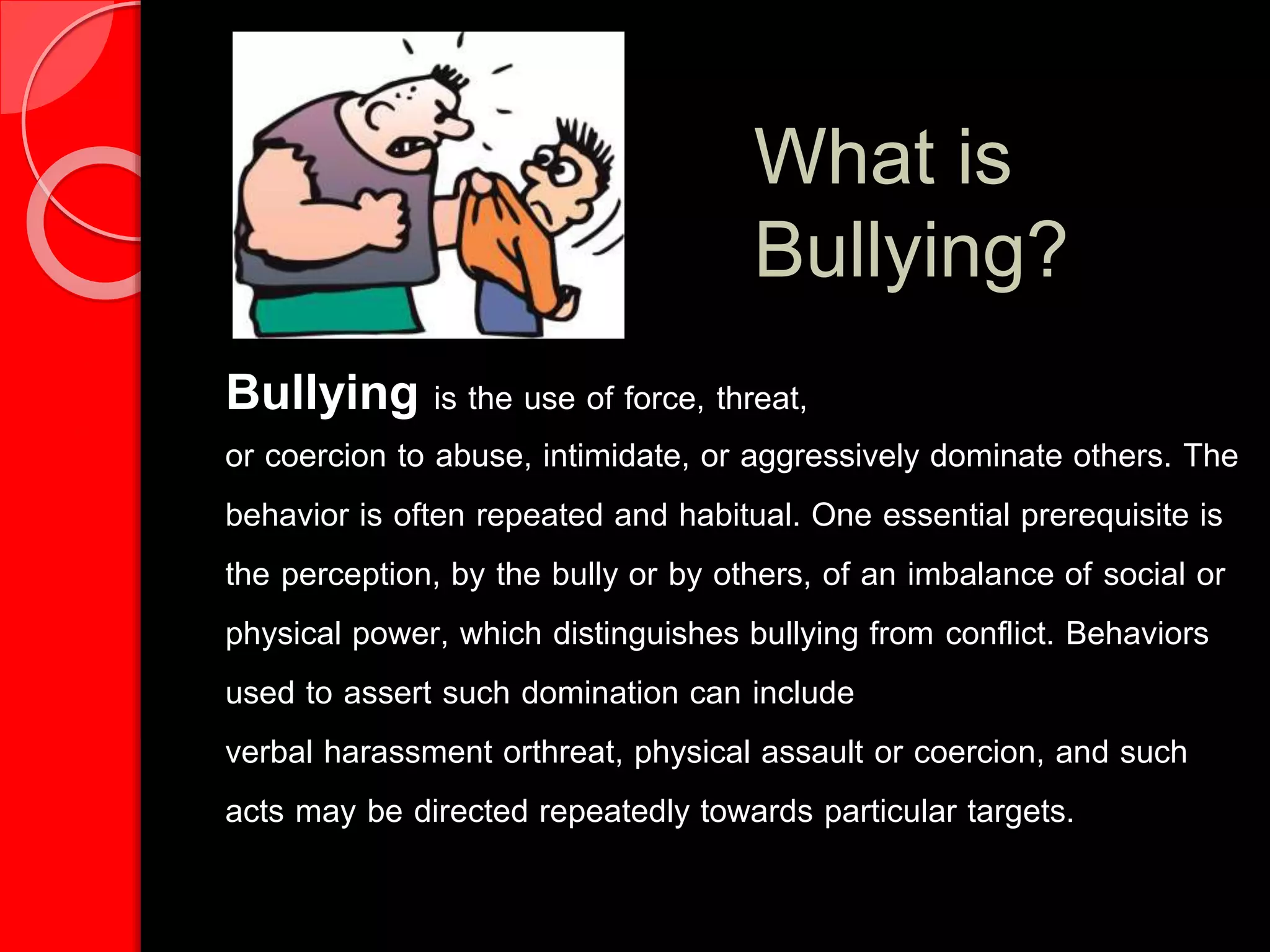
Bullying is the use of force, threat,
or coercion to abuse, intimidate, or aggressively dominate others. The
behavior is often repeated and habitual. One essential prerequisite is
the perception, by the bully or by others, of an imbalance of social or
physical power, which distinguishes bullying from conflict. Behaviors
used to assert such domination can include
verbal harassment orthreat, physical assault or coercion, and such
acts may be directed repeatedly towards particular targets.
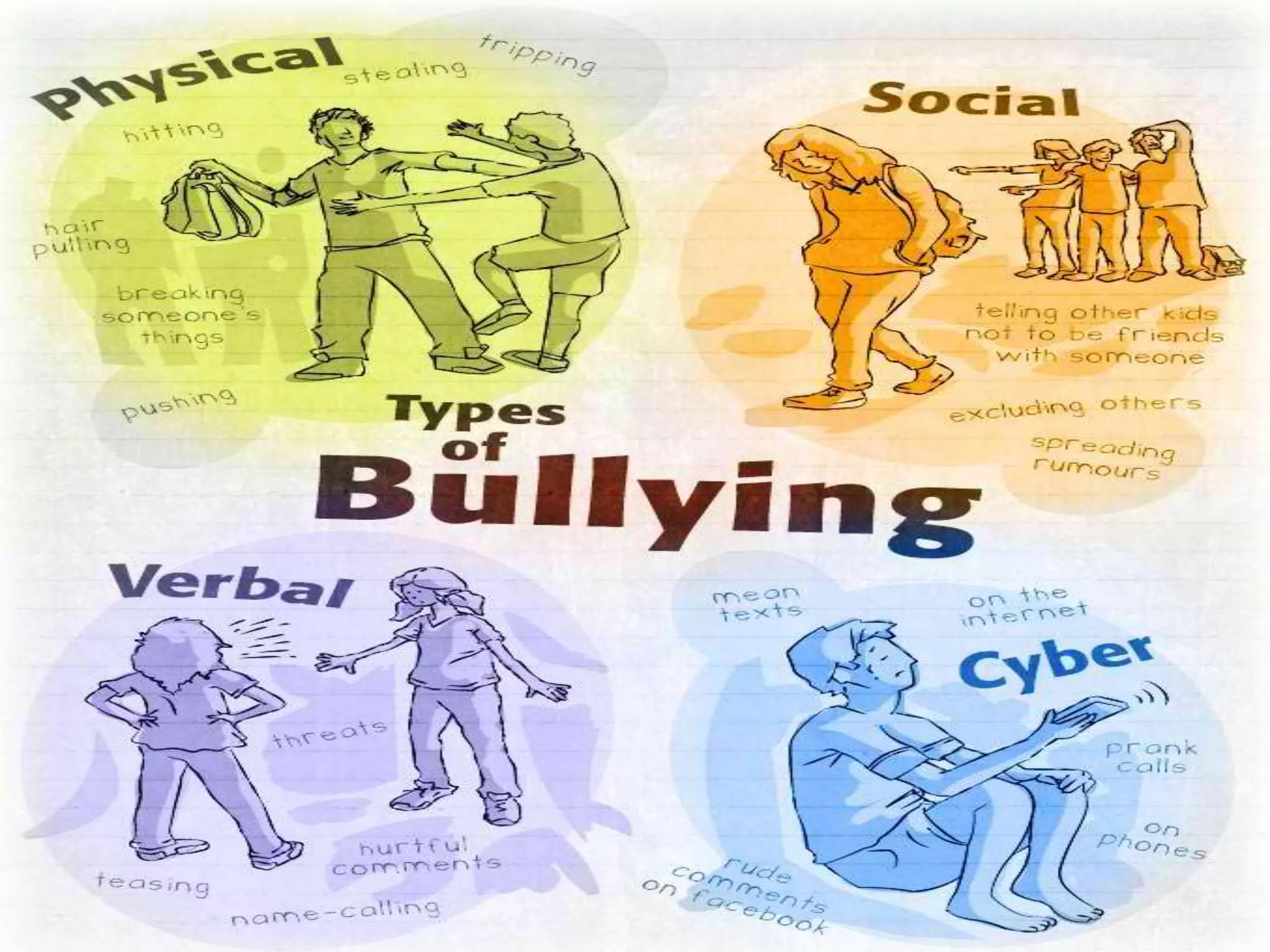
TYPES OF BULLYING :
1.)Physical bullying
- includes hitting, kicking, tripping,
pinching and pushing or damaging
property.
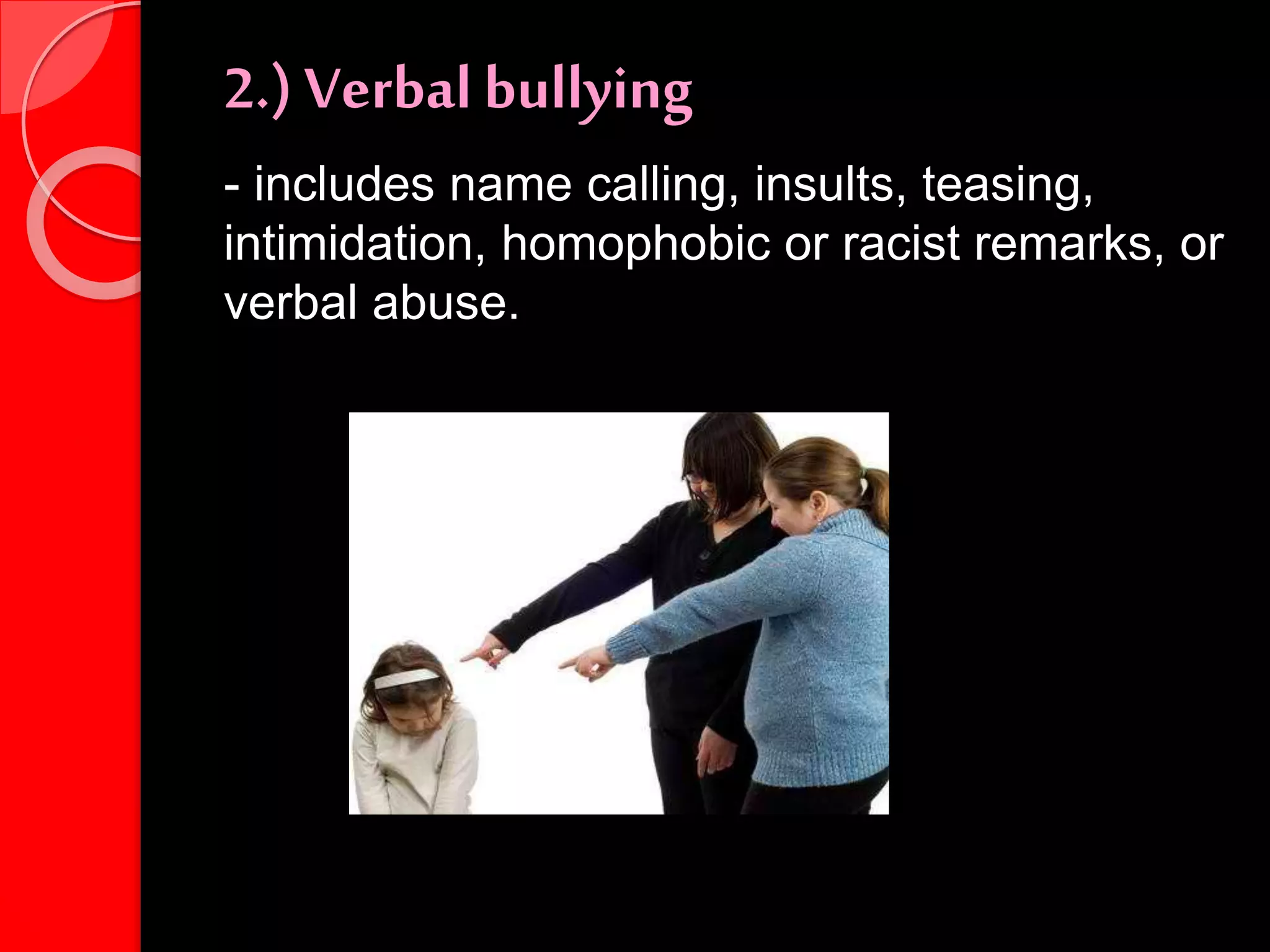
2.) Verbal bullying
- includes name calling, insults, teasing,
intimidation, homophobic or racist remarks, or
verbal abuse.
3.) Social/Covert bullying
- This sort of bullying is often harder to
recognize and can be carried out
behind the bullied person's back. It is
designed to harm someone's social
reputation and/or cause humiliation.
Covert bullying includes:
- lying and spreading rumours
- negative facial or physical
gestures, menacing or
contemptuous looks
- playing nasty jokes to
embarrass and humiliate
- mimicking unkindly
- encouraging others to socially
exclude someone
- damaging someone's social
reputation or social acceptance.
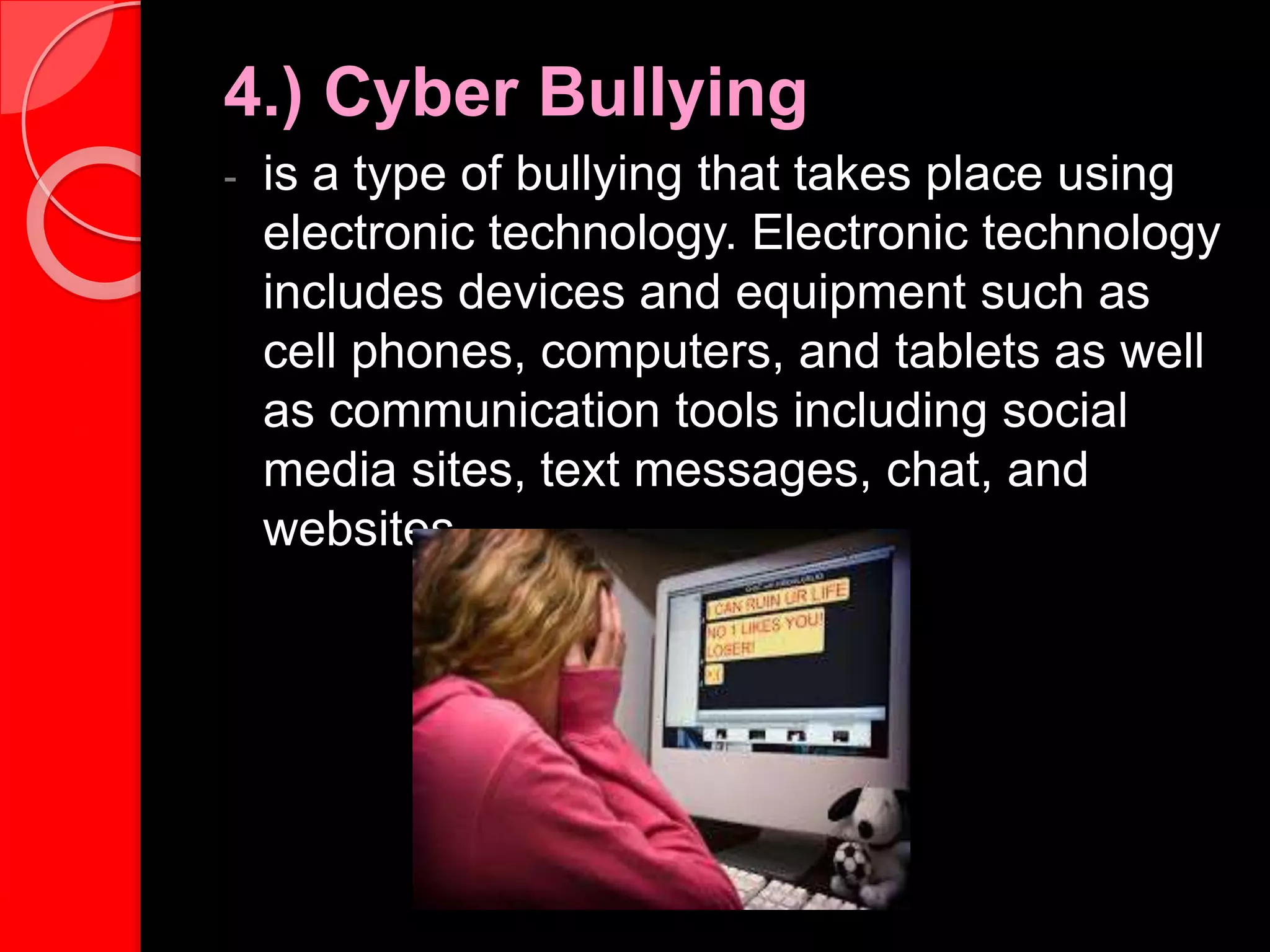
4.) Cyber Bullying
- is a type of bullying that takes place using
electronic technology. Electronic technology
includes devices and equipment such as
cell phones, computers, and tablets as well
as communication tools including social
media sites, text messages, chat, and
websites.
CAUSES OF BULLYING:
 Want to get noticed
 They like having power over there
peers
 They have problems at home
 Think it's cool and funny
 Aggressive personality
 Lack of adult supervision
 Jealousy
 Revenge
 Take their feelings out on others
EFFECTS OF BULLYING:
 Low self-confidence
 Depression
 Suicidal thoughts and suicide attempts
 Abnormal fears and worries
 Sleep disorders
 Nervous habits
 Frequent crying
 Bed-wetting
 Poor appetite or digestive problems
 School problems
 Rage
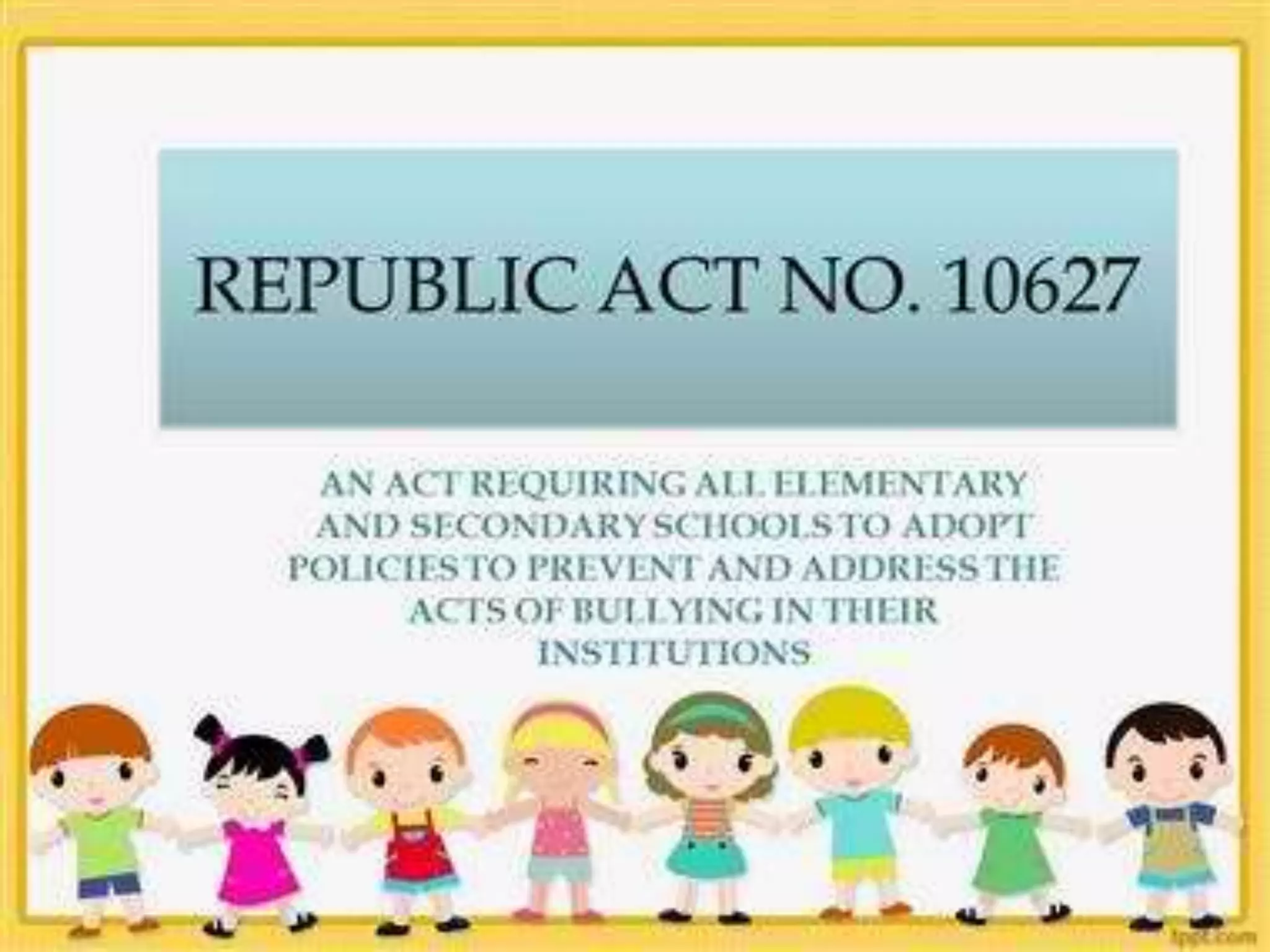
“ANTI-BULLYING
ACT OF 2013”
SECTION 1. Short Title – this act shall be
known as the “Anti-Bullying Act of
2013.”
SECTION 2. Acts of Bullying – for purposes
of this act, “bullying” shall refer to any
severe or repeated use of a written,
verbal, physical act and etc.
SECTION 3. Adoption of Anti Bullying
Policies - All elementary and secondary
schools are hereby directed to adopt
policies to address the existence of
bullying in their respective institutions.
Such policies shall be regularly updated
and, at a minimum, shall include
SEC. 4. Mechanisms to Address Bullying. – The
school principal or any person who holds a
comparable role shall be responsible for the
implementation and oversight of policies intended
to address bullying.
If it is determined that bullying or retaliation has
occurred, the school principal or the designated
school officer or person shall:
(a) Notify the law enforcement agency if the school
principal or designee believes that criminal charges
under the Revised Penal Code may be pursued
against the perpetrator;
(b) Take appropriate disciplinary administrative
action;
(c) Notify the parents or guardians of the
perpetrator; and
(d) Notify the parents or guardians of the victim
regarding the action taken to prevent any further
acts of bullying or retaliation.
SEC. 5. Reporting Requirement. – All schools
shall inform their respective schools division
superintendents in writing about the anti-bullying
policies formulated within six (6) months from the
effectivity of this Act. Such notification shall
likewise be an administrative requirement prior to
the operation of new schools.
SECTION 6. Sanction for Noncompliance. – In
the rules and regulations to be implemented
pursuant to this Act, the Secretary of the DepED
shall prescribe the appropriate administrative
sanctions on school administrators who shall fail
to comply with the requirements under this Act. In
addition there to, erring private schools shall
likewise suffer the penalty of suspension of their
permits to operate.
SECTION 7. Implementing Rules and Regulations
– Within ninety (90) days from the effectivity of this
Act, the DepED shall promulgate the necessary
rules and regulations to implement the provisions
of this Act.
SECTION 8. Separability Clause. – If, for any
reason, any provision of this Act is declared to be
unconstitutional or invalid, the other sections or
provisions.
SECTION 9. Repealing Clause. – All laws,
decrees, orders, rules and regulations or parts
thereof which are inconsistent with or contrary to
the provisions of this Act are hereby repealed,
amended or modified accordingly.
SECTION 10. Effectivity. – This Act shall take
effect fifteen (15) days after its publication in at
least two (2) national newspapers of general
GROUP 1 Presentors:
Colalo,Jamaida
Tawantawan,Norhaina
Nasara,Randel
Jumalon,Jackielyn
Casanguan,Sonayah
Sagrado,XanderLyex
Galario,Charlie
Bat-og, Rogelio
Puebla, Hazel

Anti bullying Act Powerpont Presentation

  • 1.
  • 2.
    What is Bullying? Bullying isthe use of force, threat, or coercion to abuse, intimidate, or aggressively dominate others. The behavior is often repeated and habitual. One essential prerequisite is the perception, by the bully or by others, of an imbalance of social or physical power, which distinguishes bullying from conflict. Behaviors used to assert such domination can include verbal harassment orthreat, physical assault or coercion, and such acts may be directed repeatedly towards particular targets.
  • 4.
    TYPES OF BULLYING: 1.)Physical bullying - includes hitting, kicking, tripping, pinching and pushing or damaging property.
  • 5.
    2.) Verbal bullying -includes name calling, insults, teasing, intimidation, homophobic or racist remarks, or verbal abuse.
  • 6.
    3.) Social/Covert bullying -This sort of bullying is often harder to recognize and can be carried out behind the bullied person's back. It is designed to harm someone's social reputation and/or cause humiliation.
  • 7.
    Covert bullying includes: -lying and spreading rumours - negative facial or physical gestures, menacing or contemptuous looks - playing nasty jokes to embarrass and humiliate - mimicking unkindly - encouraging others to socially exclude someone - damaging someone's social reputation or social acceptance.
  • 8.
    4.) Cyber Bullying -is a type of bullying that takes place using electronic technology. Electronic technology includes devices and equipment such as cell phones, computers, and tablets as well as communication tools including social media sites, text messages, chat, and websites.
  • 9.
    CAUSES OF BULLYING: Want to get noticed  They like having power over there peers  They have problems at home  Think it's cool and funny  Aggressive personality  Lack of adult supervision  Jealousy  Revenge  Take their feelings out on others
  • 10.
    EFFECTS OF BULLYING: Low self-confidence  Depression  Suicidal thoughts and suicide attempts  Abnormal fears and worries  Sleep disorders  Nervous habits  Frequent crying  Bed-wetting  Poor appetite or digestive problems  School problems  Rage
  • 11.
  • 14.
    SECTION 1. ShortTitle – this act shall be known as the “Anti-Bullying Act of 2013.” SECTION 2. Acts of Bullying – for purposes of this act, “bullying” shall refer to any severe or repeated use of a written, verbal, physical act and etc. SECTION 3. Adoption of Anti Bullying Policies - All elementary and secondary schools are hereby directed to adopt policies to address the existence of bullying in their respective institutions. Such policies shall be regularly updated and, at a minimum, shall include
  • 15.
    SEC. 4. Mechanismsto Address Bullying. – The school principal or any person who holds a comparable role shall be responsible for the implementation and oversight of policies intended to address bullying. If it is determined that bullying or retaliation has occurred, the school principal or the designated school officer or person shall: (a) Notify the law enforcement agency if the school principal or designee believes that criminal charges under the Revised Penal Code may be pursued against the perpetrator; (b) Take appropriate disciplinary administrative action; (c) Notify the parents or guardians of the perpetrator; and (d) Notify the parents or guardians of the victim regarding the action taken to prevent any further acts of bullying or retaliation.
  • 16.
    SEC. 5. ReportingRequirement. – All schools shall inform their respective schools division superintendents in writing about the anti-bullying policies formulated within six (6) months from the effectivity of this Act. Such notification shall likewise be an administrative requirement prior to the operation of new schools. SECTION 6. Sanction for Noncompliance. – In the rules and regulations to be implemented pursuant to this Act, the Secretary of the DepED shall prescribe the appropriate administrative sanctions on school administrators who shall fail to comply with the requirements under this Act. In addition there to, erring private schools shall likewise suffer the penalty of suspension of their permits to operate.
  • 17.
    SECTION 7. ImplementingRules and Regulations – Within ninety (90) days from the effectivity of this Act, the DepED shall promulgate the necessary rules and regulations to implement the provisions of this Act. SECTION 8. Separability Clause. – If, for any reason, any provision of this Act is declared to be unconstitutional or invalid, the other sections or provisions. SECTION 9. Repealing Clause. – All laws, decrees, orders, rules and regulations or parts thereof which are inconsistent with or contrary to the provisions of this Act are hereby repealed, amended or modified accordingly. SECTION 10. Effectivity. – This Act shall take effect fifteen (15) days after its publication in at least two (2) national newspapers of general
  • 19.