ANGEL INVESTORS
Presented By
Dr. N.Renuka Devi
Associate Professor
Department of Bank
Management
Ethiraj College for Women
Chennai
Who Is An Angel Investor?
⮚An angel investor is an individual who provides capital for a
business start-up, usually in exchange for convertible
debt or ownership equity.
⮚ Angel investors usually give support to start-ups at the initial
moment
⮚They are usually found in between tycoons family and friends.
⮚ They are better than other lenders for startups.
⮚They usually invests in person rather than viability of business.
⮚They primarily focused on helping the business succeed,
rather than obtaining a huge profit from their investment.
⮚They are the exact opposite of venture capitalist.
3
What does an angel investor
look for?
✔ Does the founder know their business in-depth?
✔ Is the idea disruptive in nature and solving for an
existing problem?
✔ Is there a planned roadmap for the next 6-12
months?
✔ Is the problem big enough to solve ?
✔ Will the customers pay for getting their solution ?
✔ Will it make a difference to customers, ?
✔ Is there a measurable set of customers already
there ?
✔ Will there be repeat purchases?
“
4
✓ The Domain Angel
✓ The Super Angel
✓ The Previous-Colleague
Angel
✓ The Friends & Family Angel
✓ The Grouped Angels
TYPES OF ANGEL INVESTORS
“
5
✓ The Fellow-Entrepreneur
Angel
✓ The “True Believer” Angel
✓ The Financial Angel
✓ The “Sport Fisherman” Angel
✓ The Foolish Angel
S
6
❑ An investment from angel investors is not
debt
❑ Angel investor provide your business with
a better chance for success
❑ Angel investor might perform their due
diligence quite rapidly
❑ Angel investor are in all part of the world
❑ We can get to contact with their
community and network.
7
DISADVANTAGE
S
❑ A price for a high tolerance for risk
❑ Future profit will be limited
❑ We will not have complete control over our
business
❑Angel investor come in expecting a way to
exit
❑ Don't expect to receive follow - up
investment
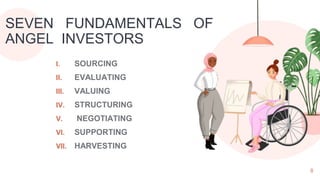
I. SOURCING
II. EVALUATING
III. VALUING
IV. STRUCTURING
V. NEGOTIATING
VI. SUPPORTING
VII. HARVESTING
SEVEN FUNDAMENTALS OF
ANGEL INVESTORS
8
1. A DEPENDABLE AND CAPABLE
TEAM
2. A COMPLETED BUSINESS PLAN
3. VALUE PROPOSITIONS OF THE
PRODUCTS AND SERVICES
4. STATE OF THE INDUSTRY
5. UNDERSTANDING THE RISK
9
BASIC REQUIREMENTS OF
ANGEL INVESTORS
.
DIFFERENCE BETWEEN
ANGEL INVESTORS AND
VENTURE CAPITALIST
1. An angel investor works alone, while venture
capitalists are part of a company
2. They invest different amounts
3. They have different responsibilities and
motivations
4. Angel investors only invest in early-stage
companies.
5. They differ in due diligence 10
ROLES
OF
AN
ANGEL
INVESTOR
11
12
⮚ Filling the equity gap in the start-
up phase
⮚ Investing in companies at a stage
where VCs are no longer active
⮚ Being an integral part of chain of
integrated finance tools
⮚ Contributing to the culture of
entrepreneurship in the region
⮚ Agglomerating the existing
investment capital in a region
13
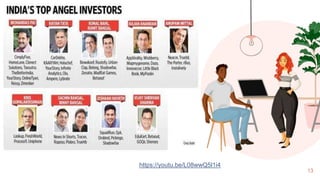
https://youtu.be/L08wwQ5l1i4
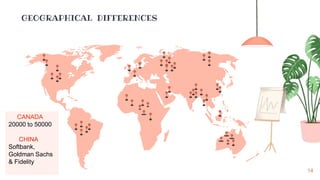
GEOGRAPHICAL DIFFERENCES
14
CANADA
20000 to 50000
CHINA
Softbank,
Goldman Sachs
& Fidelity

Angel Investors.pptx

  • 1.
    ANGEL INVESTORS Presented By Dr.N.Renuka Devi Associate Professor Department of Bank Management Ethiraj College for Women Chennai
  • 2.
    Who Is AnAngel Investor? ⮚An angel investor is an individual who provides capital for a business start-up, usually in exchange for convertible debt or ownership equity. ⮚ Angel investors usually give support to start-ups at the initial moment ⮚They are usually found in between tycoons family and friends. ⮚ They are better than other lenders for startups. ⮚They usually invests in person rather than viability of business. ⮚They primarily focused on helping the business succeed, rather than obtaining a huge profit from their investment. ⮚They are the exact opposite of venture capitalist.
  • 3.
    3 What does anangel investor look for? ✔ Does the founder know their business in-depth? ✔ Is the idea disruptive in nature and solving for an existing problem? ✔ Is there a planned roadmap for the next 6-12 months? ✔ Is the problem big enough to solve ? ✔ Will the customers pay for getting their solution ? ✔ Will it make a difference to customers, ? ✔ Is there a measurable set of customers already there ? ✔ Will there be repeat purchases?
  • 4.
    “ 4 ✓ The DomainAngel ✓ The Super Angel ✓ The Previous-Colleague Angel ✓ The Friends & Family Angel ✓ The Grouped Angels TYPES OF ANGEL INVESTORS
  • 5.
    “ 5 ✓ The Fellow-Entrepreneur Angel ✓The “True Believer” Angel ✓ The Financial Angel ✓ The “Sport Fisherman” Angel ✓ The Foolish Angel
  • 6.
    S 6 ❑ An investmentfrom angel investors is not debt ❑ Angel investor provide your business with a better chance for success ❑ Angel investor might perform their due diligence quite rapidly ❑ Angel investor are in all part of the world ❑ We can get to contact with their community and network.
  • 7.
    7 DISADVANTAGE S ❑ A pricefor a high tolerance for risk ❑ Future profit will be limited ❑ We will not have complete control over our business ❑Angel investor come in expecting a way to exit ❑ Don't expect to receive follow - up investment
  • 8.
    I. SOURCING II. EVALUATING III.VALUING IV. STRUCTURING V. NEGOTIATING VI. SUPPORTING VII. HARVESTING SEVEN FUNDAMENTALS OF ANGEL INVESTORS 8
  • 9.
    1. A DEPENDABLEAND CAPABLE TEAM 2. A COMPLETED BUSINESS PLAN 3. VALUE PROPOSITIONS OF THE PRODUCTS AND SERVICES 4. STATE OF THE INDUSTRY 5. UNDERSTANDING THE RISK 9 BASIC REQUIREMENTS OF ANGEL INVESTORS .
  • 10.
    DIFFERENCE BETWEEN ANGEL INVESTORSAND VENTURE CAPITALIST 1. An angel investor works alone, while venture capitalists are part of a company 2. They invest different amounts 3. They have different responsibilities and motivations 4. Angel investors only invest in early-stage companies. 5. They differ in due diligence 10
  • 11.
  • 12.
    12 ⮚ Filling theequity gap in the start- up phase ⮚ Investing in companies at a stage where VCs are no longer active ⮚ Being an integral part of chain of integrated finance tools ⮚ Contributing to the culture of entrepreneurship in the region ⮚ Agglomerating the existing investment capital in a region
  • 13.
  • 14.
    GEOGRAPHICAL DIFFERENCES 14 CANADA 20000 to50000 CHINA Softbank, Goldman Sachs & Fidelity